WORLDEF ISTANBUL 2026 - Early Bird Registration Ends Soon

Register Now

Amazon Blocks Google’s AI Shopping Agents: The Future of AI in E-Commerce

Recently, Amazon has taken a decisive step by blocking Google’s AI-powered shopping agents from accessing its e-commerce platform. This move reflects Amazon’s strategic focus on developing and prioritizing its own artificial intelligence (AI) shopping assistants within its ecosystem. By adding Google’s AI agents to its “robots.txt” file, Amazon effectively prevents external AI tools from operating on its site, signaling a clear boundary for third-party AI automation.

This decision aligns with similar actions by other major e-commerce players like Shopify, which has also restricted AI bots that automate purchasing processes, such as “buy-for-me” agents. These measures indicate a broader industry trend: e-commerce platforms want to control AI-driven shopping experiences, favoring their proprietary systems over external competitors.

AI in E-Commerce: Strategic Control and Competitive Advantage

The growing integration of AI agents into online shopping highlights both opportunities and challenges for e-commerce platforms. While AI can enhance customer experience by providing personalized recommendations and automating purchases, allowing external AI agents unrestricted access poses risks in terms of data security, user privacy, and platform control.

Amazon’s strategy to limit third-party AI reflects an effort to maintain competitive advantage by shaping how AI shopping tools interact with its marketplace. This approach ensures that the benefits of AI-driven commerce—such as improved efficiency and personalization—are channeled through their own technology, rather than enabling competitors.

In conclusion, Amazon’s blocking of Google’s AI shopping agents underscores a critical development in the evolving relationship between AI technologies and e-commerce platforms. It raises important questions about control, competition, and the future landscape of AI-enhanced online retail.

Unlocking E-Commerce in Africa: The Importance of Financing and Digital Infrastructure

Africa is experiencing rapid growth in the digital commerce sector, with e-commerce volumes expanding year after year. However, there are key challenges preventing the continent from fully realizing this potential. Chief among these is the difficulty medium-sized businesses face in accessing financing. While microfinance institutions support smaller enterprises, appropriate credit and investment options remain limited for mid-sized firms. Traditional banks often hesitate to invest in this area due to perceived high risks.

Innovative Approaches to E-Commerce Financing and Digital Transformation

To overcome these challenges, data-driven financing models are gaining prominence. Utilizing digital data such as e-commerce sales, inventory status, and customer feedback can improve credit assessment processes and help businesses access funding more easily. Moreover, data sharing between payment systems, logistics providers, and banks enables more accurate risk analysis.

Public-private partnerships that develop blended finance models facilitate access to capital through risk-sharing mechanisms, increasing the growth potential of businesses. The widespread adoption of mobile payment systems and strengthening of digital infrastructure in Africa also support e-commerce’s reach to broader audiences. This not only accelerates economic development but also delivers social benefits.

In conclusion, unlocking e-commerce in Africa requires easing access to financing and supporting digital transformation. These two elements form the foundation for a stronger digital commerce ecosystem and sustainable growth across the continent.

Takealot Group Transforms South African Logistics with the Launch of TFS

In mid-2025, Takealot Group officially launched Takealot Fulfilment Solutions (TFS), a new business unit that brings together its logistics operations under one brand. Services that were previously used internally—such as warehousing, order fulfillment, delivery, and international shipping—are now available to third-party businesses. This strategic shift marks Takealot’s evolution from a traditional e-commerce platform to a technology-driven logistics partner.

The new model caters not only to Takealot sellers but also to small and medium enterprises and even individual entrepreneurs. With its inclusive approach, TFS offers users fast delivery, efficient warehouse management, and full supply chain visibility. It aims to close the gaps in South Africa’s logistics infrastructure while supporting regional trade growth.

Takealot’s Logistics Solutions Provide Strong Support for Digital Commerce

Takealot’s TFS initiative is poised to have a significant impact on the South African e-commerce ecosystem. At a time when international giants like Amazon are entering the market, Takealot is reinforcing its competitive position by investing in robust infrastructure. The company is also leveraging its last-mile expertise developed through its previous platform, Mr D, and expanding that into a comprehensive logistics service network.

Through TFS, companies in sectors such as retail, food, healthcare, and fast-moving consumer goods can reduce logistics costs while improving operational efficiency. This positions Takealot not only as a service provider but also as a key player shaping the future of logistics in South Africa.

In conclusion, the launch of TFS represents a strategic move by Takealot that strengthens digital trade and enables local businesses to access global markets more efficiently.

GMG and Amazon Form Strategic Partnership to Transform Digital Retail Experience in MENA Region

Global health and retail company GMG has announced a strategic partnership with Amazon aimed at transforming the online shopping experience across the Middle East and North Africa (MENA) region. This collaboration focuses on offering attractive prices and deals in GMG’s core categories such as Sports, Health & Beauty, and Daily Essentials.

GMG’s New Vision for Digital Retail

As part of the partnership, GMG and Amazon will ensure faster delivery of high-demand products in food, lifestyle, and health categories. They also aim to increase access to GMG’s globally recognized and trusted brands, responding to the growing demand for fast, convenient, and quality service.

Through this agreement, GMG will accelerate its omnichannel strategy by leveraging Amazon’s best practices in artificial intelligence (AI), logistics, and customer service technologies. This move supports GMG’s vision to shape the future of retail in the region by seamlessly integrating its strong physical retail presence with digital experiences.

Mohammad A. Baker, GMG’s Vice Chairman and CEO, stated, “This partnership with Amazon marks a significant milestone in our digital commerce strategy. As consumer behaviors evolve, we are committed to delivering exceptional experiences powered by technology, speed, and relevance.”

Ronaldo Mouchawar, Vice President of Amazon Middle East, Africa, and Turkey, added, “We are proud to collaborate with GMG, a partner that shares our innovative spirit, customer-centric focus, and long-term thinking.”

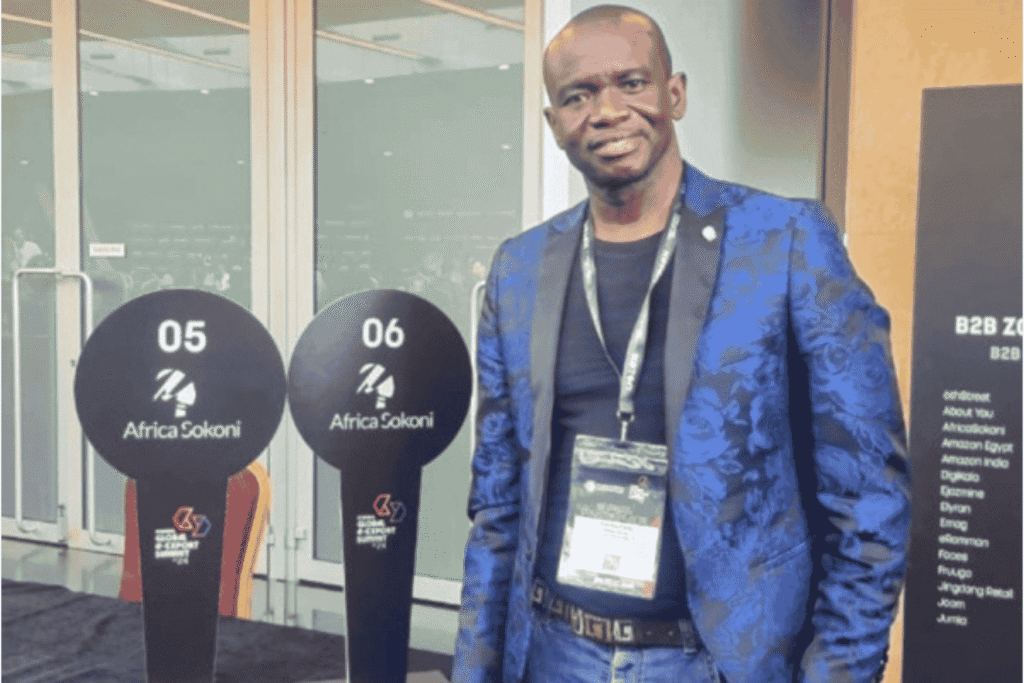
Gambian Entrepreneur Ebrima Fatty Builds Africa-Focused Digital Marketplace

Ebrima Fatty, with over two decades of experience in both finance and technology, is reshaping e-commerce across Africa through AfricaSokoni, the London-based online marketplace he founded in 2017. The platform connects local producers, retailers, and artisans—particularly in East Africa, including Kenya—to regional consumer demand via a user-friendly online interface.

Ebrima Fatty’s AfricaSokoni: Supporting SMEs and Connecting Markets

AfricaSokoni—which means “market” in Swahili—empowers small and medium-sized enterprises (SMEs), farmers, and artisans by providing tools for inventory management, automated ordering, and supplier relationship support. The platform also offers financing, marketing assistance, packaging solutions, and logistic partnerships, creating new export opportunities for local producers.

Consumers benefit from access to a wide array of goods—ranging from electronics and fashion to home appliances and telecom products—through a streamlined online shopping experience. AfricaSokoni integrates order tracking, stock updates, and supplier coordination features that help stabilize supply chains and improve reliability for both businesses and end-users.

Besides entrepreneurship, Ebrima Fatty serves as a product manager at the Islamic Development Bank in Saudi Arabia, combining his public-sector insights with private-sector innovation. He earned a Master’s degree in Accounting and Finance from the University of Maiduguri, Nigeria in 2000, and began his professional career as a senior auditor at Deloitte that same year. Between 2001 and 2005, he served as financial controller for The Gambia’s Capacity Building for Economic Management Project, contributing to reforms in economic policy and private sector development.

Under his leadership, AfricaSokoni focuses on transforming local markets into regionally integrated digital networks. Fatty’s dual background in finance and technology fuels the platform’s mission: to empower African microentrepreneurs, enhance digital trade infrastructure, and expand cross-border e-commerce opportunities. His work signals a growing paradigm in African tech—where homegrown solutions and digital innovation drive inclusive economic growth.

Revolut Expands MENA Presence with Strategic Move into Morocco

Revolut is preparing to enter the Moroccan market as part of its broader push into the MENA region. The company aims to begin with payment and foreign exchange services, gradually establishing itself as a major player in North Africa’s digital financial ecosystem. To support this move, Revolut plans to build a local team of around 60 people. However, it faces strong competition from local fintech leader Cash Plus, which already serves millions of users across the country.

Revolut’s Morocco Strategy: Digital Ambitions Against Local Giants

To lead its Morocco operations, Revolut has appointed Amine Berrada, a former Uber executive, as its country manager. The company intends to start as a licensed payment operator and eventually apply for a full digital banking license from Bank Al-Maghrib. With services such as money transfers, FX, and remote account management, Revolut aims to offer a full-fledged fintech experience built around digital convenience.

Meanwhile, local competitor Cash Plus maintains a dominant position in the market, with its M-Wallet app and a network of over 8,000 branches across the country. The company has built trust among consumers through its broad infrastructure and consistent service in both urban and rural areas.

However, Morocco’s strict financial regulations, non-convertible currency, and data localization requirements could pose significant operational challenges for Revolut. Compliance with anti-money laundering and consumer protection laws will be key to gaining long-term traction.

Still, Revolut’s entry could serve as a catalyst for broader digital transformation in Morocco’s banking sector, inspiring innovation, improving user experience, and setting new standards for mobile and open banking services across the region.

Google Chrome Introduces AI-Powered Store Reviews for Safer Online Shopping

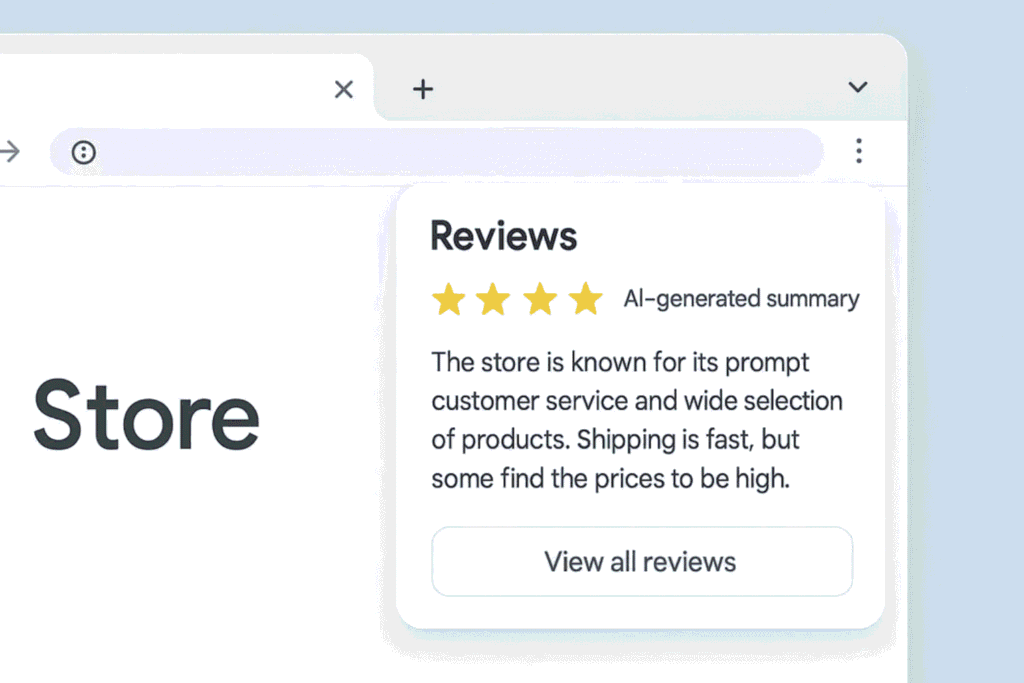
Google Chrome has launched a new AI-powered feature called Store Reviews to enhance safety and transparency in online shopping. Currently available for desktop users in the U.S., this feature summarizes user feedback about e-commerce sites when clicking the store info icon, helping users make informed decisions quickly.

Store Reviews: Instantly Assess Store Trustworthiness

The Store Reviews tool evaluates online stores based on key criteria such as customer satisfaction, product quality, pricing competitiveness, shipping reliability, and return policies. It analyzes user reviews from trusted third-party sources like Trustpilot, ScamAdviser, Reputation.com, and Reseller Ratings to generate a concise summary of each store’s reputation.

Instead of reading through hundreds of individual reviews, users are shown a short AI-generated summary that captures the overall sentiment. For example, a furniture store might be described as offering “high-quality minimalist items, fair prices, and responsive customer service.”

The data is pulled from platforms like Google Shopping and other review aggregators, processed using AI to highlight both positive and negative feedback in a balanced and readable format. The goal is to simplify the evaluation process and reduce the risk of scams or poor shopping experiences.

Currently, the feature is only available in English and limited to desktop Chrome users in the United States. Google has not yet announced when or if the feature will expand to mobile or other regions.

This update is part of Chrome’s broader effort to transform the browser into a more intelligent and shopping-friendly tool. It complements other AI-powered features recently introduced, such as virtual try-ons, price tracking, and smart product suggestions.

By implementing Store Reviews, Google is aiming to build a safer and more trustworthy e-commerce environment while staying competitive with platforms like Amazon.

Brandee: A Unique Combination of Strategy, Support, and Execution in E-Commerce Consulting

Brandee by Rihab is a boutique e-commerce consultancy that helps online brands grow with strategy, clarity, and real support. At the forefront is Rihab Seb, a consultant and coach who provides tailored guidance to entrepreneurs at every stage of their growth. Behind the scenes, a small yet talented team assists with implementation, from launching new stores to scaling ad campaigns and setting up automation systems. Rihab Seb, the Founder, E-Commerce Consultant, and Strategist of Brandee by Rihab, was a guest at WORLDEF E-COMMERCE! Seb says, “We’re not a typical agency, and we’re more than just a coaching service. Brandee by Rihab offers a unique blend of strategy, guidance, and done-for-you execution — all tailored to the needs of growing e-commerce brands.”

Brandee by Rihab’s mission is to lead e-commerce entrepreneurs to success not only by providing knowledge but also by offering implementation support—while staying away from chaos. It aims to help its clients build sustainable, profitable, and distinctive brands. Working with clients globally, Brandee by Rihab primarily serves entrepreneurs in the USA, UK, Europe, the Middle East, and Australia. Services are offered in English, French, and Arabic.

Brandee by Rihab’s Solutions for E-Commerce Brands

1:1 Coaching and Consulting: Delivered directly by Rihab Seb. Seb provides strategic support to entrepreneurs and teams who want to grow their brands, boost performance, and make better decisions without wasting time or money.
Done-for-You Services: The Brandee team offers the following hands-on services for brands in need of implementation support:

  • Shopify store optimization
  • Email marketing setup and automation
  • Facebook and Google ad campaign management
  • Marketing planning and creative strategy
  • Full-funnel campaign execution

Thanks to this hybrid model, support is provided to entrepreneurs who want to learn and manage their business independently, as well as those who prefer to outsource specific parts to experts.

“One of the Most Common Challenges in the Industry is Overcoming Information Overload!”

Rihab Seb, also an e-commerce consultant and strategist, explained the challenges in the industry: “One of the most common challenges is overcoming information overload! Entrepreneurs are constantly exposed to conflicting advice, trendy ‘hacks’, and promises of quick fixes. It’s very easy to jump from one tactic to another without a clear plan, which creates confusion—especially when trying to manage the business alone. In addition, the pressure to keep up with AI and new technology tools is increasing. AI can be a powerful tool, but it also adds complexity. Many entrepreneurs try every innovation just to stay current without knowing how or why to integrate these tools into their business. This is where we help them make conscious choices; we position technology in a way that supports growth—not in a way that distracts them.”

Seb continued: “Another common mistake is working with large agencies before being ready to scale. For small and medium-sized brands, this can mean unnecessary costs and loss of control. What’s really needed at this stage is lean, efficient systems and the capacity to understand the internal workings of the business. That’s why we focus on educating entrepreneurs and their teams to understand every aspect of the business. When they have the right knowledge and structure, they are not only ready to grow but to scale sustainably.”

“Brandee By Rihab Uniquely Combines Strategy, Support, and Execution”

When asked “What sets Brandee by Rihab apart from its competitors?”, Rihab Seb responded: “We are neither a classic agency nor simply a coaching service. What differentiates Brandee by Rihab is the unique combination of strategy, support, and execution. As the founder, I personally provide high-level intellectual input, clarity, and direction.

At the same time, we also provide the support of a competent team capable of implementing the systems we design—so you’re not left with a strategy that just stays on paper. We offer a personalized yet professional approach. We develop a special and focused method for each brand—because in e-commerce, ‘one-size-fits-all’ doesn’t work.”

What Does It Take to Succeed in E-Commerce?

In response to the question, “What are your recommendations for success in e-commerce?”, E-Commerce Strategist Rihab Seb shared the following:

  • “Start thinking about marketing in parallel with product development. If you can create a product that truly stands out, solves a clear problem, or tells a compelling story, marketing will be much easier later on. Your product should generate interest even before you start advertising.”
  • “Once you have a strong product, focus on the fundamentals: clear brand positioning, an optimized store, and consistent traffic supported by email, content, and ad systems that turn visitors into loyal customers.”
  • “Don’t try to scale quickly just to grow. Sustainable scaling is much more important. If your fundamentals are not in place, fast growth can disrupt your business instead of strengthening it. Make sure your systems, profitability, and messaging are ready to support that growth.”
  • “Finally, if you’re unsure what to do, get help from someone who’s walked the path before. The most successful entrepreneurs are those who seek clarity, make informed decisions, and stay consistent—even when growth takes time.”

About Rihab Seb

Rihab Seb shared her career story as follows: “I began my professional journey in the corporate world, but it was the transition into entrepreneurship and the experience of building and growing several online businesses that reshaped my perspective. That journey made it clear there was a real gap in the market: founders didn’t need more theory—they needed practical, personalized support they could actually use.

That’s when I created Brandee by Rihab, a consultancy that combines strategic coaching with hands-on services to help eCommerce founders build sustainable, profitable brands. Today, I work one-on-one with brand owners around the world and lead a skilled team that supports our clients with execution when needed—from building automated email flows to managing paid ad campaigns and optimizing their online stores and branding.”

FJX: Integrated Business and Technology Solutions

FJX is a professional services firm that delivers integrated business and technology solutions. It serves consumer, retail, and tech companies across the MENA region, Europe, and the CIS. FJX’s mission is to bridge the gap between business and technology by combining strategic expertise with advanced technology solutions. The goal is to provide high-impact services that enhance operational efficiency, customer experiences, and business growth. FJX has a strong presence in the MENA region, CIS, and Europe. While the focus is on these regions FJX is always open to new regions and opportunities.

Solutions for E-Commerce Companies

FJX offers a comprehensive set of solutions for e-commerce companies, including:

  • Advisory: Providing strategic diagnostics, development, and implementation support.
  • Technology solutions: Offering tech recruitment, infrastructure management, and customized AI and IT solutions.
  • Marketing & media: Expertise in marketing strategies that resonate with high-demand markets.
  • Distribution: Serving as a bridge between brands and retailers to optimize supply chains and enhance reach.

Key Features that Differentiate FJX from Its Competitors

  • Expertise: A team of former C-level executives and top-tier technology talents.
  • Integrated approach: Combining strategy consulting with product and software development to offer end-to-end solutions.
  • Regional focus: A deep understanding of the MENA, CIS, and European markets, which enables them to provide highly localized solutions.

FJX offers customized AI and IT solutions that are tailored to meet the specific business needs of their clients. These solutions are designed to enhance operational efficiency and help companies address various challenges in their business operations.

Challenges and Solutions

FJX faces challenges such as market volatility, cultural differences, regulatory compliance, technology integration, and operational risks but we address these challenges through:

  • ⁠Continuous market monitoring to stay ahead of market trends.
  • ⁠Cultural sensitivity training to ensure effective communication and business practices across diverse regions.
  • ⁠Establishing legal and compliance teams to manage regulatory standards.

Recommendations for E-Commerce Brands to Achieve Success

  • Strategic market entry: Utilize local expertise to understand and navigate regional market dynamics effectively.
  • Technology integration: Implement advanced AI and IT solutions to improve operational efficiency and customer experience.
  • Compliance management: Ensure adherence to local regulatory standards to mitigate business risks.
  • Distribution partnerships: Collaborate with local distributors to enhance supply chain management and increase market reach.

About Florian Jansen

Florian co-founded Lamoda, a leading fashion e-commerce platform, achieving significant milestones, including a public listing in 2019 and reaching USD 2 billion in NMV by 2022. He is also an angel investor and Venture Partner at Antler, supporting various tech startups, and serves on supervisory and advisory boards in the GCC and CIS regions. Through FJX Group, Florian and his partners provide IT and business solutions to clients in retail, logistics, and technology.

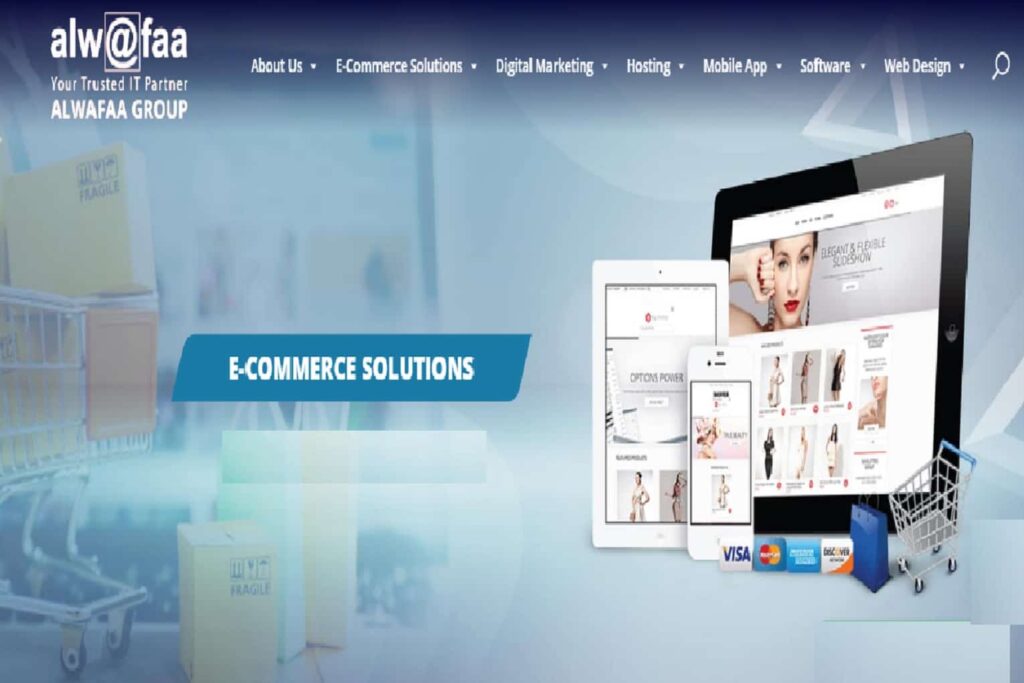
Alwafaa: Digital Partner for SMEs in the MENA Region

Founded in 2002, Alwafaa Group is one of Dubai’s leading digital marketing and IT service providers. From humble beginnings, the company has evolved into a dynamic organization focused on delivering innovative solutions to businesses. Alwafaa Group envisions empowering small and medium-sized enterprises (SMEs) by facilitating seamless technology adoption, enabling them to grow and compete effectively in the digital world.

Speaking to WORLDEF E-COMMERCE, Alwafaa Group’s Founder and CEO, Muneer Alwafaa, stated: “Our journey includes ventures into AI, e-commerce, and digital transformation, with our latest project, Daidu.ai, providing AI-driven tools like chatbots and enabler programs to support SMEs. These initiatives highlight our commitment to driving growth through innovation.”

What Does Alwafaa Group Offer to E-Commerce Brands?

E-commerce is one of the key focus areas for Alwafaa Group. Within this scope, the services they provide include:

  • Website and app development: We design scalable, user-friendly e-commerce platforms tailored to client needs.
  • Digital marketing: Helping e-commerce businesses optimize visibility and ROI through SEO, social media, and performance-based advertising.
  • AI solutions: Through Daidu.ai, we deliver AI-powered tools for predictive analytics, customer engagement, and process automation.
  • Marketplace integration: Supporting businesses to establish a presence on platforms like Amazon, Noon, and other major marketplaces.

Alwafaa Group aims to ensure the seamless integration of technology into e-commerce operations, enhancing efficiency and improving the customer experience.

“E-commerce in MENA is experiencing unprecedented growth”

Alwafaa Group CEO, Muneer Alwafaa, shared his insights on the developments in the e-commerce sector in Dubai and the MENA region with the following remarks:

“The MENA region is witnessing unprecedented growth in e-commerce due to. Dubai’s e-commerce strategy has fostered a business-friendly environment, encouraging digital transformation. AI tools are becoming essential for customer personalization, inventory management, and predictive analysis. With high smartphone penetration, mobile shopping has emerged as a dominant trend. Advanced fintech solutions have boosted consumer confidence in online transactions. Businesses are shifting towards eco-friendly practices to meet evolving consumer expectations. These factors are reshaping the e-commerce landscape, making it more competitive and innovation-driven.”

“The E-Commerce Market in MENA Will Exceed $50 Billion”

Muneer Alwafaa stated that he anticipates significant developments in the MENA e-commerce ecosystem by 2025:

“The MENA region’s market value is expected to exceed $50 billion, driven by technology adoption and consumer demand. Businesses will rely heavily on AI for advanced customer insights, logistics, and marketing automation. Eco-friendly packaging and operations will become key differentiators for businesses. An increase in international trade facilitated by advanced logistics and payment solutions. Augmented reality (AR) and virtual reality (VR) will enhance the online shopping experience. The future of e-commerce will revolve around customer-centric strategies powered by data and innovation.”

“Our E-Commerce Team Consists of Specialized Professionals”

Alwafaa highlighted that the company’s e-commerce team is made up of experts specializing in various fields and stated: “Creating robust, scalable websites and apps for e-commerce businesses. Performance-driven digital marketing experts who ensure client success. Specialists providing AI solutions like chatbots and predictive analytics. Ensuring seamless support and service delivery. We prioritize collaboration and continuous learning, enabling us to deliver exceptional results for our clients.”

Challenges in the e-commerce sector

Muneer Alwafaa also provided the following insights regarding the challenges in the e-commerce sector: “While the e-commerce landscape is thriving, it comes with its own set of challenges:

  • Competition: The rapid entry of new players demands constant innovation to stay ahead.
  • Logistics: Managing delivery efficiency and costs, particularly in remote areas, remains a challenge.
  • Data security: Ensuring secure transactions and protecting consumer data is critical for building trust.
  • Customer expectations: The need for fast, personalized, and seamless shopping experiences requires significant investment in technology.

At Alwafaa Group, we address these challenges by leveraging cutting-edge solutions, fostering innovation, and maintaining a customer-first approach.”

Adding value to the e-commerce ecosystem

Alwafaa, “To truly drive the e-commerce industry forward, collaboration and knowledge-sharing are essential. Businesses must embrace emerging technologies like AI, focus on sustainability, and prioritize customer experience to succeed. At Alwafaa Group, we are committed to being a catalyst for this transformation by delivering innovative solutions, empowering SMEs, and building a strong community of like-minded entrepreneurs. Together, we can shape the future of e-commerce.” dedi.

Who is Muneer Alwafaa?

Finally, Muneer Alwafaa shared his career journey and vision: “I am Muneer Alwafaa, an entrepreneur, influencer, and AI specialist with over 22 years of experience in Dubai. My journey began in 2000 in a small village in Kerala, India, where I dreamt of building a business that made technology accessible to all. Today, as the Founder and CEO of Alwafaa Group and Daidu.ai, I’m proud to have created platforms that empower businesses to achieve their goals.

My passion lies in supporting SMEs, especially in adopting AI and e-commerce strategies. I believe in the power of continuous learning and innovation to stay relevant in this fast-changing world. I’m an influencer having more than 1.2 millions followers across different social media platform, a radio presenter and  TV host, a motivational speaker and becoming an author of the book ‘AI in Business’ soon.

Looking ahead, I aim to; expand Daidu.ai’s reach and introduce AI to more businesses, foster innovation in the e-commerce ecosystem. Mentor aspiring entrepreneurs and share knowledge through masterclasses and thought leadership initiatives.”