WORLDEF ISTANBUL 2026 - Early Bird Registration Ends Soon

Register Now

Flipkart Acquires Minivet AI to Strengthen E-Commerce Capabilities

One of India’s largest e-commerce platforms, Flipkart, has announced the acquisition of a majority stake in Minivet AI, an AI and machine learning solutions provider. Founded in 2024, the Bengaluru-based startup specializes in transforming static product catalogs into video content, achieving this transformation at a much lower cost than traditional production methods. This move is seen as part of Flipkart’s broader strategy to expand its generative AI (GenAI) capabilities and improve the e-commerce experience.

Aiming for Enriched Shopping Experiences with Minivet AI

While the financial details of the deal have not been disclosed, this acquisition is considered an important step toward Flipkart’s goal of establishing long-term technological advantages in AI-powered shopping experiences. By incorporating Minivet AI’s technology, Flipkart aims to accelerate the shift towards video-based, conversation-driven, and visually enriched shopping experiences.

Minivet AI’s platform will enable Flipkart to transform its product catalogs into dynamic video content. This innovation will provide a more interactive and dynamic shopping experience, increasing customer engagement and boosting conversions. The startup also offers AI solutions such as semantic search and conversational interfaces, making it a comprehensive GenAI partner for online retail platforms.

“Minivet AI Solutions Will Improve Customer Engagement and Conversions”

Flipkart’s Senior Vice President, Ravi Iyer, emphasized the importance of this acquisition, stating, “Acquiring Minivet AI allows us to bring in specialized capabilities and proprietary technologies critical for visual and video-focused commerce.” He also noted that the integration of Minivet AI solutions would improve customer engagement and conversions over time.

Minivet A I’s founder, Aditya Rachakonda, expressed his excitement about the partnership, stating that the acquisition would help scale GenAI solutions. Rachakonda said, “We are excited to be part of Flipkart’s vision of transforming the online shopping experience.”

As the e-commerce sector increasingly shifts towards AI-powered discovery and visual content, Flipkart’s acquisition of Minivet AI comes at a time when brands are striving to stand out in a saturated market. This partnership will make shopping on Flipkart more intuitive and immersive, laying the foundation for a more personalized and visually appealing user experience.

TikTok Restructures E-Commerce and Data Teams

TikTok, following a strong Black Friday performance, has restructured its global e-commerce product and data science teams to improve collaboration in areas like artificial intelligence (AI) and increase operational efficiency. This change was made after significant developments during the holiday shopping season and was confirmed by an internal memo seen by Business Insider.

The restructuring, carried out in the first week of December, is part of a larger initiative to enhance TikTok’s operational efficiency. ByteDance’s e-commerce head Bob Kang stated that the changes would help create better alignment across the company’s various regions and functions, with a particular focus on AI integration and optimizing internal processes.

Zhou Sheng Steps Down

As a result of the restructuring, Zhou Sheng, who had led TikTok’s global e-commerce product and design team, stepped down. Zhou played a significant role in the development of TikTok’s e-commerce product, greatly contributing to the platform’s global expansion. The company acknowledged Zhou’s contributions to the e-commerce ecosystem but confirmed his departure from the leadership role.

Following the restructuring, regional e-commerce product and user growth managers will report to Chen Songlin, a senior ByteDance executive. Chen, who previously worked on Tik Tok’s Chinese counterpart Douyin, is expected to facilitate smoother and more efficient decision-making and communication among teams.

Strategic Timing for Global E-Commerce Expansion

These changes come at a critical time as TikTok strives to become a major player in the global e-commerce market. The platform has shown rapid growth in user engagement and online shopping during the holiday season, continuing to expand its e-commerce features. Tik Tok aims to leverage the growing trend of social commerce, with features like live-stream shopping and product discovery tools. E-commerce integration is seen as a key pillar of Tik Tok’s future growth strategy.

TikTok Increases Collaborations with Brands and Influencers

Tik Tok’s restructuring aligns with broader trends in the tech and e-commerce industries, where companies are focusing on AI and operational improvements to stay competitive. As the holiday season continues, the platform is expected to use its expanded e-commerce capabilities to capture more market share in the online retail space.

TikTok’s focus on e-commerce is also evident in its increasing collaborations with brands and influencers. These partnerships allow creators to sell products directly through the platform. The restructuring could streamline TikTok’s e-commerce efforts, making it a more efficient and powerful competitor in the e-commerce market.

As the holiday shopping frenzy continues, TikTok’s efforts to strengthen its e-commerce infrastructure could play a pivotal role in shaping the platform’s future in the online retail market.

TikTok Shop Increases Seller Commissions Across Europe

Amazon in Talks for $10 Billion Investment and Chip Deal with OpenAI

Amazon is in discussions with OpenAI, the technology company behind ChatGPT, for a $10 billion investment. This deal could involve the use of Amazon’s Trainium chips by OpenAI, potentially raising OpenAI’s valuation to over $500 billion. The talks are still in the early stages, and terms may change.

Amazon’s proposed investment in OpenAI stands as a significant part of the retailer’s efforts to increase its influence in the artificial intelligence sector. According to sources like Bloomberg and The Information, the deal could include OpenAI adopting Amazon’s Trainium chips for its AI models. These chips are a key component of Amazon’s push into AI and are compatible with its AWS (Amazon Web Services) cloud division. While cloud computing forms the backbone of Amazon’s business model, the company’s dominance in this area has been threatened by competitors such as Nvidia.

If the deal goes through, OpenAI’s market valuation could exceed $500 billion, making it one of the world’s most valuable startups. Amazon’s involvement in this deal could help Open AI meet the increasing demand for data center capacity. OpenAI requires large amounts of computational power to run its AI systems.

Amazon’s Investment in AI

The Trainium chip plays a critical role in Amazon’s strategy to compete with Nvidia. While Nvidia’s graphics processing units (GPUs) are the market leader in chips required for powerful AI models, Amazon aims to offer a more cost-effective solution. Trainium chips promise to perform AI computations more efficiently and at a lower cost than Nvidia’s products.

As Amazon aggressively ramps up its investments in AI and cloud computing, competitors like Meta and Google are also seeking alternative chips and solutions. By investing in Open AI and offering its chips, Amazon hopes to further solidify its dominance in the AI space and attract developers seeking more affordable AI solutions.

OpenAI’s Investment Search and Strategic Moves

The discussions with Amazon began after Open AI’s internal restructuring. This restructuring included a significant investment from Microsoft, which now owns a 27% stake in OpenAI. However, OpenAI has sought additional funding to cover its growing artificial intelligence research and development costs. The company has committed to spending a total of $1.4 trillion on computational infrastructure over the next eight years, a figure far exceeding its annual revenue of $13 billion.

In addition to the potential investment from Amazon, Open AI has signed a seven-year, $38 billion cloud services agreement with AWS. OpenAI’s spending commitments are part of its efforts to scale its AI capabilities in order to compete with rivals such as Google. Amazon’s potential investment highlights the high stakes in the race for dominance in the rapidly evolving artificial intelligence field.

Amazon to Invest $50 Billion to Expand AI and Supercomputer Infrastructure for U.S. Government Agencies

Kaspi.kz Completes 4.17 Billion Lira Capital Increase in Hepsiburada

Kaspi.kz‘s strategic investment in Hepsiburada reached a significant milestone after the company’s $1.1 billion investment earlier in the year. The 4.17 billion lira capital increase further solidifies Kaspi’s presence in Türkiye and underscores its long-term commitment to the Turkish digital ecosystem.

The capital increase was approved at an Extraordinary General Assembly (EGM) meeting held on November 17, 2025. This new funding will support Hepsiburada’s growth strategies and will be used to enhance the digital tools and services available to the thousands of small and medium-sized businesses (SMBs) and retailers operating on the platform.

“Our Goal Is to Help Sellers Scale Their Operations Safely”

Mikheil Lomtadze, Founder and CEO of Kaspi.kz and Chairman of Hepsiburada’s Board, stated that the investment was not only a sign of their confidence in Hepsiburada, but also a strong partnership founded on a shared mission to improve people’s daily lives through simple and innovative digital products.

Lomtadze said, “With this investment, our goal is to provide the necessary digital infrastructure to help SMBs in Türkiye innovate, grow, and become more competitive in the global market. We aim to make it easier for our sellers to access the best e-commerce, fintech, and cashless payment solutions, enabling them to scale their operations safely.”

Kaspi.kz’s Expertise in User-Focused Digital Services

Kaspi.kz’s expertise in user-focused digital services, combined with Hepsiburada’s strong commercial infrastructure, is set to make a significant contribution to Türkiye’s digital transformation. Lomtadze reiterated his belief that the partnership will play a key role in advancing Türkiye’s digital economy.

“Digiital services and e-commerce success are directly tied to the success of local businesses. We are providing all the necessary digital infrastructure for them to succeed on the global stage,” he added.

Kaspi.kz’s ongoing investments will continue to support the development of innovative digital solutions on the Hepsiburada platform and contribute to the growth of Türkiye’s digital ecosystem.

E-Commerce in Kazakhstan Grows Sevenfold Over the Last Five Years

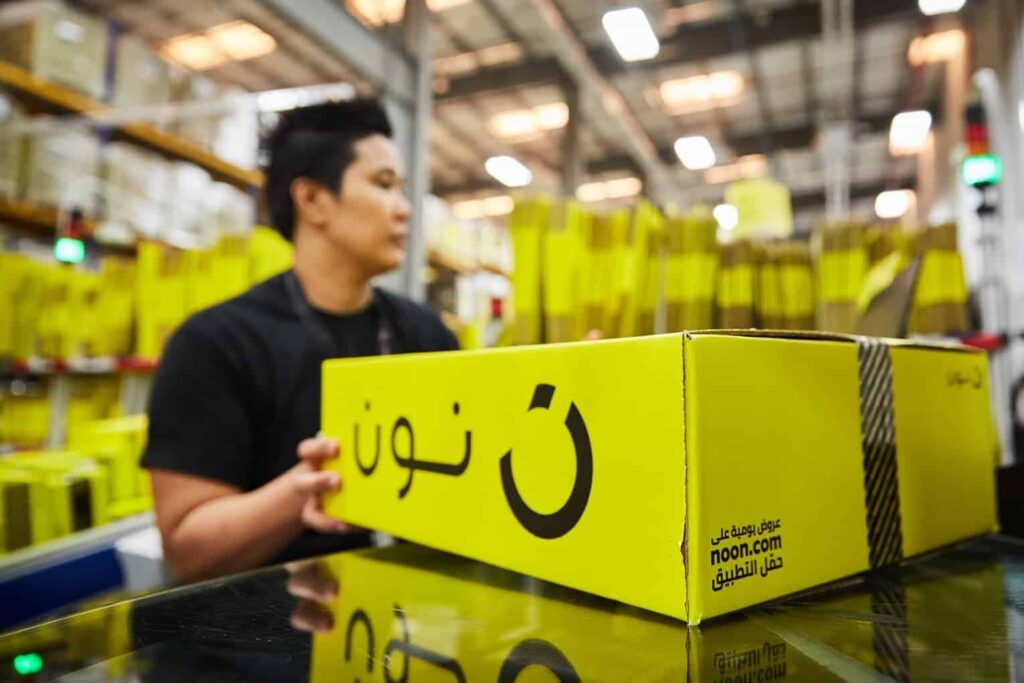
Noon Secures $500 Million Investment Ahead of Potential IPO

Saudi Arabia’s sovereign wealth fund, the Public Investment Fund (PIF), and Noon’s founder and Chairman, Mohamed Alabbar, participated in Noon’s latest funding round. Alabbar is also the Chairman of Dubai-based real estate developer Emaar Properties.

According to sources familiar with the matter, the funding was secured from Noon’s existing investors, although the valuation details of the funding round were not disclosed. A PIF spokesperson declined to comment, and Noon and Alabbar did not respond to media inquiries. Noon was founded in 2016 with the support of PIF and an investor group led by Alabbar. It is reported that PIF holds approximately 50% of the company’s shares, with the remainder owned by private investors.

A Total of $2.7 Billion Raised Since Inception

Noon entered the market shortly after Amazon acquired Dubai-based Souq.com for $580 million. Since then, the company has aimed to be a regional alternative to global e-commerce giants. Over time, Noon has expanded its services beyond basic e-commerce to include fast delivery, food, and daily essentials. According to Mohamed Alabbar’s previous statements to the Financial Times, Noon has raised a total of $2.7 billion since its inception. The company’s latest valuation stands at approximately $10 billion.

Noon’s new investment round comes at a time when competition in the Gulf region’s digital commerce ecosystem is intensifying rapidly. Global and regional players are increasing their investments in e-commerce, online groceries, food delivery, and quick commerce to gain market share.

Price Competition is Increasing in the Market

As Amazon expands its operations in market and essential goods in the region, China-based Meituan has introduced food delivery and dark store models in the Middle East. Meanwhile, Saudi Arabia-based quick commerce startup Ninja has entered an aggressive growth phase following a $250 million investment earlier this year. These developments are driving up price competition in the market, forcing companies to allocate more resources toward logistics infrastructure, technology investments, and customer acquisition costs.

Noon’s IPO Could Be One of the Largest Technology IPOs from the Middle East

The $500 million investment is seen as a significant step in strengthening Noon’s financial structure ahead of a potential IPO. Alabbar had previously mentioned that the company was aiming for an IPO within the next two years. However, no official statement has been made yet regarding the timing of the IPO or which stock exchange it will be listed on.

If realized, No on’s IPO could become one of the largest technology IPOs to come out of the Middle East. This also aligns with the Gulf countries’ goals of deepening their capital markets and achieving technology-driven economic diversification, particularly in Saudi Arabia and the UAE.

With headquarters in Saudi Arabia and the UAE, No on operates as a multi-channel digital platform covering online marketplace, food delivery, and online grocery services. The company is positioned in the region’s rapidly growing digital retail market, continuing operations in Saudi Arabia, the UAE, and Egypt. Mohamed Alabbar, the founder and Chairman of No on, is also the Chairman of Emaar Properties, a Dubai-based real estate developer.

Yango and Noon Launch Autonomous Delivery Service in Dubai

Shopify Introduced the Winter ’26 Edition Featuring More Than 150 AI-Powered Tools for Merchants

Shopify announced the Winter ’26 Edition, a major platform update that includes more than 150 new features aimed at transforming the way online merchants build, manage, and grow their businesses. At the center of the release are advanced artificial intelligence tools designed to streamline operations, enhance creativity, and open new commerce channels.

Also referred to by Shopify as the “Renaissance Edition,” the Winter ’26 Edition offers a wide range of updates that deeply integrate artificial intelligence into the merchant experience. At the heart of the release is an enhanced version of Shopify’s built-in AI assistant, Sidekick. Sidekick has now been redesigned not merely as a reactive helper, but as a proactive business partner.

Tools Are Offered That Automatically Build Workflows Without Requiring Coding

Among Sidekick’s advanced capabilities are anticipating merchant needs, generating code on demand, and enabling the editing of storefront themes using natural language. In addition, features such as Sidekick Pulse, which provides personalized and actionable recommendations based on store data, and tools that automatically create workflows such as tagging high-spending customers without requiring any coding, are also offered.

Other artificial intelligence developments include SimGym, a simulation tool that models customer behavior using aggregated shopping data and allows merchants to test store changes before going live, as well as Rollouts, which enables A/B testing and staged releases directly through the Shopify admin panel.

Shopify Agentic Storefronts Integrates Products Into AI Tools

One of the standout innovations in the Winter ’26 Edition is Shopify Agentic Storefronts. This feature allows merchants to integrate their product catalogs, through a single setup in the Shopify dashboard, into AI-powered chat platforms such as ChatGPT, Microsoft Copilot, and Perplexity. In this way, products can be discovered and purchased directly within AI conversations; thus, sales opportunities beyond traditional storefronts are created, while merchants retain control over their brand identity, checkout experience, and customer relationships.

According to Shopify, merchants themselves decide where and how their products appear within conversations, and data obtained from these AI interactions is reintegrated into the admin panel for attribution and insights. This agent-based commerce model represents a significant transformation toward making artificial intelligence a native part of the shopping experience.

Winter ’26 Edition Also Includes Improvements Focused on E-Commerce Operations

Beyond artificial intelligence features, the Winter ’26 Edition also includes various improvements across core areas of e-commerce operations. Merchants can now access localized payment setups for different markets, expanded checkout and customer account customizations, and a significant increase in product variant limits, a long-standing request for stores with complex product catalogs.

Additional improvements also cover marketing and analytics areas, such as dynamic product recommendations in email campaigns, advanced SMS marketing tools, and expanded international payment support covering the United Kingdom and certain regions of Europe. These updates aim to help merchants engage more effectively with customers in different markets and optimize their performance.

Implications for Merchants and Developers

The Winter ’26 Edition not only enhances tools for everyday merchants, but also moves the platform toward an AI-native environment that can reduce reliance on third-party applications and external code. Developers benefit from AI support for end-to-end workflow automation, universally searchable commerce data, and the ability to build and deploy applications that integrate seamlessly with Shopify’s extensive ecosystem.

This update reveals Shopify’s strategy of positioning itself at the forefront of AI-driven commerce. By offering stronger capabilities for innovation and competition to both small and large-scale businesses, Shopify promotes a future in which automation and human creativity work together by integrating artificial intelligence into every area of the platform, from storefront design and customer engagement to analytics and operational simulations.

Shopify Pushes the Boundaries With the Winter ’26 Edition

With the Winter ’26 Edition becoming available, Shopify is pushing the boundaries of what merchants can achieve with integrated artificial intelligence. While the comprehensive package of new tools and enhancements aims to empower businesses with advanced automation, richer customer insights, and expanded sales channels, it represents a significant evolution in the world of e-commerce.

Shopify Unveils AI-Powered Universal Cart for Agentic E-Commerce

Shein Opens a Large Logistics Center in Poland

Fast fashion and e-commerce giant Shein announced that it has put into operation a large-scale logistics center near the city of Wrocław in Poland. While the new facility is positioned as the company’s main operational hub in Europe, it also reflects the tendency of Chinese e-commerce platforms to shift their logistics activities to Europe in order to adapt to changing trade conditions.

According to a statement made by Shein, the new logistics center will cover an area of approximately 740,000 square meters once it reaches full capacity. Equipped with robotic systems and automated sorting lines, the facility aims to enable faster processing and dispatch of high-volume orders across Europe.

It Will Become Shein’s Main Logistics Hub in Europe

The company stated that the center is planned to operate at full capacity by the end of this year. At this stage, it is expected to create approximately 5,000 new jobs, including logistics, warehouse operations, technology, and support services. This facility in Poland will operate as Shein’s main logistics hub in Europe. At the same time, brands and sellers in Poland and other European countries will also be able to use this center to offer their products for sale across Europe via the Shein platform.

Working With More Than 170 SMEs in Poland

Shein emphasized that it is carrying out extensive cooperation with local business partners within the project. The company announced that it is working with more than 170 small and medium-sized enterprises in Poland, primarily in transportation and packaging services.

It was stated that these collaborations aim to integrate the new logistics center into the regional supply chain and support the local economy. Shein has recently placed greater emphasis on partnering with local service providers in its investments outside Asia. While the company did not disclose the total investment amount made for the facility in Poland, it described this move as a long-term strategic investment aimed at the European market.

Chinese Companies Rented 200,000 Square Meters of Warehouse Space in the UK

Shein’s move is considered part of a broader trend in which Chinese e-commerce companies are opening warehouses and distribution centers across Europe. Earlier this year, it was reported that Chinese companies rented approximately 200,000 square meters of warehouse space in the United Kingdom alone.

For cross-border e-commerce platforms, establishing storage and distribution infrastructure within Europe has two main advantages. The first is that delivery times are significantly shortened thanks to products being shipped from Europe instead of Asia. The second is preparation for regulations aimed at abolishing certain customs duty exemptions applicable to low-value shipments. Storing products within the European Union reduces customs processes and increases delivery reliability. Rival platform Temu also announced last month that it was expanding its European delivery network through new partnerships.

“The New Logistics Center Strengthened the Company’s Commitment to the Region”

Leonard Lin, President of Shein Europe, Middle East and Africa, stated that the new logistics center strengthened the company’s long-term commitment to the region. Lin noted that thanks to this investment, faster and more reliable delivery services will be provided to customers in Europe. Lin also emphasized that the center offers significant opportunities for European sellers and that local brands will be able to reach customers across the continent more easily by using Shein’s infrastructure.

France to Open and Inspect Every Parcel from Shein as Crackdown on Chinese E-Commerce Escalates

TikTok Shop Increases Seller Commissions Across Europe

TikTok is preparing to further strengthen its global leadership ambition in the field of social commerce by increasing sales commissions in European Union markets. Sellers in Germany, France, Italy, Spain and Ireland will see that, as of 8 January 2026, the TikTok Shop commission rate they pay per transaction has increased from 5% to 9%. Thus, the commission rate in Europe will reach the same level as the United Kingdom, which is TikTok Shop’s most mature market.

TikTok Shop informed sellers of the commission increase this week, describing the change as a critical step in its strategy of building a content-focused “marketplace of the future.” TikTok aims to offer more advanced tools, improved analytics systems, stronger logistics services and support infrastructures for sellers and content creators with the additional revenue to be generated.

While the commission rate in some sub-category products will be reduced to 7%, sellers who join the platform after 8 January will be able to make an advantageous start by paying 4% commission during their first two months.

United Kingdom Performance Shows the Way

The success of TikTok Shop in the United Kingdom has become a fundamental reference point for its European expansion. The process, which started slowly in 2021, has now transformed into one of the country’s fastest-growing e-commerce channels.

According to industry data, the platform’s Black Friday sales increased by more than 50% compared to last year; one of the most important factors enabling this growth was the 85% increase in the number of sellers. In addition, the participation of major brands such as Samsung, Marks & Spencer, Clarks and Sainsbury’s proves that TikTok Shop is also gaining acceptance on the corporate side.

European Growth Accelerates During a Period of Changing Competition

The commission increase comes in the middle of TikTok’s rapid expansion strategy. While Temu and Shein are experiencing slowdown in Europe due to rising regulatory pressure and operational costs, TikTok Shop, on the contrary, is creating a strong growth momentum. The company is preparing to launch integrated fulfillment services similar to Amazon FBA after becoming operational in five countries within just a few months in Europe.

TikTok Shop May Surpass Its Chinese Competitors!

According to projections by market research organizations such as ECDB, TikTok Shop may surpass not only Temu and Shein in global GMV by 2025, but also established international platforms such as AliExpress and eBay. This scenario could make the platform one of the fastest-scaling digital marketplaces in the world.

While the European expansion is still at an early stage, analysts consider it highly likely that TikTok Shop will enter new markets in Europe as well. It is emphasized that the instant shopping experience integrated with short videos offers an advantage that traditional e-commerce platforms cannot easily replicate.

TikTok Revolutionises Shopping Journey in MENA

Meesho Makes a Record Debut on the Stock Exchange; Company Valuation Reaches $8.8 Billion

The India-based e-commerce platform Meesho made one of the strongest stock market debuts in recent years following its public offering in Mumbai. The company both entered among the country’s most valuable technology startups and demonstrated the investment appetite for digital commerce targeting the mass market.

Meesho shares rose between 53% and 60% on the first day of trading; at the end of the day, they reached 170.09 rupees on the BSE and 175 rupees on the NSE. Thus, the share price rose well above the IPO price of 111 rupees. The surge pushed the valuation of the SoftBank- and Peak XV Partners–backed company into the $8.5–$8.8 billion range.

Meesho Collected More Than 79 Times Oversubscription

Investors placed demand amounting to approximately $28 billion for the company’s $603–604 million IPO. This means that more than 79 times subscription was collected. Institutional investors’ strong interest continued despite uncertainty in the anchor investor process.

A Breakthrough Moment for India’s Affordable E-Commerce Segment

Meesho grew with a two-sided marketplace model that connects small manufacturers in India’s tier-two and tier-three cities with consumers seeking affordable prices. With ultra-low-cost products such as dresses starting from four dollars, the company built a large user base. The company carved out a unique position in a market where giants like Amazon and Walmart-owned Flipkart operate.

“Meesho Has Several Levers To İncrease Profitability”

The company’s most important differentiator is that it does not charge commissions from sellers. In addition, advertising revenues are only 2.5% of the total merchandise value, whereas the global average is between 5–10%. This gives Meesho a significant advantage for expanding margins in the future.

“Meesho has several levers to increase profitability,” said Sunny Agrawal, Head of Research at SBICAPS Securities, noting that analysts issued a “buy” recommendation with a target price of 200 rupees and that operating profitability could be possible by March 2027.

However, Meesho reported a loss of 39.4 billion rupees and revenue of 94 billion rupees in the fiscal year ending in March.

Record Ipo Wave Reshaping India’s Capital Markets

Meesho’s stock market debut took place at a time when India is experiencing a strong IPO cycle. More than 300 IPOs in the country have raised over $19 billion by early December this year. India’s annual IPO volume is expected to surpass last year’s record of $20.5 billion in 2025. The country is the world’s fourth-largest IPO market. Successful public offerings by technology-focused companies such as Groww and PhysicsWallah have strengthened investors’ appetite for digital platforms.

However, despite optimism, risks remain: Nearly half of the 333 companies that went public this year are currently trading below their offering price. Sharp fluctuations in major companies like Lenskart Solutions have also fueled debates over whether startup valuations are excessively inflated. Analysts state that Meesho’s strong performance may ease market tension to some extent. HDFC Securities CEO Dhiraj Relli described this as “an important milestone for India’s homegrown e-commerce sector.”

Deeper Penetration Into Smaller Cities Targeted With New Capital

Meesho plans to use part of the proceeds from the IPO to improve its logistics capacity, expand its seller network, and penetrate India’s smaller cities more rapidly. According to experts, this strategy is of critical importance given the country’s rapidly expanding consumer base.

Choice Equity Broking emphasizes that Meesho has “built a strong competitive moat” and that improvements in its unit economics position the company on a clear path toward sustainable profitability.

As India’s technology-focused IPO cycle is expected to continue into 2026 and beyond, Meesho’s successful listing may also pave the way for a new generation of digital startups targeting the growing mass-market segment.

Meesho to Raise $484 Million in Indian IPO

Amazon to Invest $35 Billion in India by 2030

Amazon has announced a major new plan that will mark a turning point in India’s digital and economic transformation. The company revealed that it will invest more than $35 billion in the country by 2030.

The announcement was made during the sixth edition of the Amazon Smbhav Summit, reaffirming the company’s long-term commitment to strengthening infrastructure, advancing artificial intelligence innovation, and empowering small businesses in India.

Amazon Is India’s Largest Foreign Investor

This new investment builds on the nearly $40 billion Amazon has already deployed in India. According to the Economic Impact Report by Keystone Strategy, Amazon is the largest foreign investor, the largest enabler of e-commerce exports, and one of the top job creators in the country.

To date, Amazon’s investments have helped:

  • Digitize more than 12 million small businesses,
  • Enable $20 billion in e-commerce exports,
  • Support 2.8 million jobs across India in 2024.

For the next five years, Amazon has identified three strategic priorities: AI-driven digitization, export expansion, and job creation.

“We Will Increase E-Commerce Exports to $80 Billion by 2030”

By 2030, the company aims to support 3.8 million direct, indirect, and seasonal jobs in India. This growth will be powered by Amazon’s expanding logistics network, strengthened technology infrastructure, and increasing operational capacity.

Amit Agarwal, Amazon Senior Vice President for Emerging Markets, said: “We are proud to have been part of India’s digital transformation journey over the last 15 years. In the coming years, we will continue enabling growth by bringing AI to millions and increasing e-commerce exports to $80 billion by 2030.”

Major Expansion of Digital and Physical Infrastructure

So far, Amazon has built one of India’s most comprehensive logistics and technology ecosystems, including:

  • Fulfillment and distribution centers
  • Transportation and delivery networks
  • Data centers
  • Digital payments infrastructure
  • Advanced technology and AI solutions

Under its new plan, the company aims to further expand this infrastructure, help small businesses scale faster, and integrate India more deeply into global supply chains.

Making Artificial Intelligence Accessible to Everyone

At the core of Amazon’s strategy is the goal of bringing AI technologies to all segments of society.

By 2030, Amazon plans to:

  • Provide AI tools to 15 million small businesses,
  • Transform the shopping experience for hundreds of millions of consumers through technologies like Lens AI, Rufus, and multilingual interfaces,
  • Deliver AI education to 4 million government school students through curriculum programs, career tours, hands-on AI labs, and teacher training initiatives.

These efforts support India’s national vision of “AI for All.”

A Transformational Decade Ahead for India

The Keystone report highlights that Amazon’s impact extends well beyond its marketplace creating significant employment across packaging, logistics, manufacturing, transportation, and technology sectors. Analysts view Amazon’s 2030 roadmap as a strong vote of confidence in India’s long-term economic outlook.

One expert commented: “Amazon is positioned as a catalyst for India’s digital future. This investment marks the beginning of a transformative decade for the country.”

As India continues to emerge as one of the fastest-growing digital economies in the world, Amazon’s $35 billion investment is expected to accelerate progress in AI capability, exports, entrepreneurship, and digital inclusion.

U.S. Urges India to Ease E-Commerce Inventory Rules