WORLDEF Prime Antalya 2026 - Upcoming Event

Register Now

Temu Revises Its Supply Chain Strategy in Response to New Tariffs

Online shopping platform Temu is altering its supply chain strategy in response to new tariffs imposed by the Trump administration. The company plans to shift a significant portion of its supply chain away from China due to the new tariffs introduced by former U.S. President Donald Trump. This move could result in an increase in prices for the budget-friendly shopping app.

Temu, owned by PDD Holdings, is moving away from its original model, which provided control over pricing, shipping, and marketing. Instead, the company is transitioning to a “semi-supervised” model, which allows sellers to manage bulk shipments to U.S. warehouses.

This change in the supply chain could have widespread effects on all of Temu’s U.S. operations. Due to the high delivery costs and the potential loss of logistics efficiency previously offered by the company, Temu may see higher prices on its platform. This shift coincides with potential changes in the U.S. “de minimis” rule, which could affect both Temu and its competitor Shein.

Price Increases Likely on Temu

Temu has not yet made the transition to the “semi-supervised” model mandatory. However, some Temu sellers have been informed that those who join the new model will be given priority. The company ultimately plans to shift all of its U.S. operations to this new model.

This change poses a risk of price inflation on the marketplace owned by PDD Holdings Inc., as sellers may no longer benefit from the shipping and transportation economies offered by Temu. Additionally, they may be forced to absorb the higher delivery costs resulting from Trump’s punitive measures.

By making this move, Temu distances itself from the model pioneered by Amazon.com Inc., which maintains significant control over its logistics and delivery network. This network supports Amazon’s market share, which holds 38% of online spending in the U.S.

Both Temu and its competitor Shein, China-based businesses, have surged in popularity thanks to American consumers’ demand for cheap products. However, they now face the termination of the “de minimis” rule for small parcels. Although the change has been delayed, the loss of this rule will have a significant impact on the majority of products sold by these companies in the U.S.

JD.com Launches Commission-Free Meal Delivery Service

JD.com, one of China’s leading e-commerce platforms, has announced its entry into the meal delivery sector.

The company is inviting catering businesses to join its new platform, JD Takeaway. As part of the initiative, businesses that register by May 1 will receive commission-free service until the end of 2025.

A statement from JD.com introduced JD Takeaway as a competitor to market leaders such as Meituan and Alibaba’s Ele.me. JD.com plans to leverage its extensive logistics network, known for delivering same-day or next-day service in many regions across China, to support the meal delivery service. This move into the food delivery sector comes amid increasing competition from e-commerce giants like Alibaba Group, PDD Holdings, and Douyin.

JD.com Challenges Competitors with Commission-Free Offer

Chinese e-commerce giant JD.com has encouraged restaurants to join its new meal delivery service by offering a one-year commission-free period. This effectively challenges the dominant players in the highly competitive market, Meituan and Ele.me.

Restaurants that sign up for JD Takeaway by May 1 will be exempt from commission fees for one year on meal orders. Last month, JD.com added instant delivery features, including takeaway services, to its mobile app just before the Chinese New Year holiday.

Meituan and Ele.me charge restaurants and other businesses a commission fee. Meituan, which holds a larger market share, saw its stock drop 4.1% to USD 19.92 in Hong Kong today. Ele.me, owned by Alibaba Group, is not listed.

JD Takeaway Promises Faster Delivery Times

On the other hand, JD Takeaway promises a delivery time of 49 minutes for listed restaurants, while both Meituan and Ele.me show a 25-minute delivery window. JD Takeaway also offers a more limited menu, with restaurants serving only two meal options, compared to the broader selection and newer dishes available on Meituan and Ele.me.


E-Commerce Expected to Reach $11 Trillion in the Next Three Years

Amazon Launches Pilot of Amazon Now in Bengaluru

Global e-commerce giant Amazon has launched a pilot of its “Amazon Now” service in Bengaluru as competition intensifies in the quick commerce sector. The quick commerce service, Amazon Now, arrives at a time when the expansion of these platforms is gaining popularity, especially among urban consumers.

An Amazon spokesperson stated, “Amazon has always focused on offering a wide range of products and providing fast, convenient delivery. We are constantly innovating to offer even greater value to customers. This limited pilot in select Bengaluru zip codes is a test to enable faster delivery of everyday essentials that customers often need quickly from our sellers.”

Amazon Now Promises 10-Minute Deliveries

While Amazon already offers grocery and food delivery with a two-hour delivery promise through Amazon Fresh, Amazon Now introduces a 10-minute delivery guarantee, marking the company’s first entry into the quick commerce space. Amazon is also collaborating with other logistics providers to ensure rapid deliveries.

Flipkart Minutes Expands Beyond Grocery

Before Amazon’s move, local e-commerce competitor Flipkart launched Flipkart Minutes in August last year, aiming to maintain its market share as existing quick commerce platforms expanded into categories beyond groceries. Tata Digital, through its e-commerce super app Neu, has also launched its own quick commerce service, Neu Flash, powered by Big Basket.

Blinkit Faces Margin Decline

Blinkit, one of the leading players in quick commerce, slipped into losses in the fourth quarter of December 2024 after previously posting profits. This decline in profit margins was attributed to the expansion of dark stores, which negatively impacted margins.

Meanwhile, Swiggy’s Instamart service saw its margins shrink in the third quarter of FY25 due to higher customer acquisition costs, market expansion, and growth expenses.

Shopify Expands Merchant Growth with AI-Powered E-Commerce Tools

Shopify, the Canadian e-commerce giant, is gaining momentum as merchants increasingly adopt its AI-driven tools for e-commerce automation and efficiency.

The platform is drawing attention with its AI-powered solutions that streamline operations and boost sales. Merchants are turning to Shopify for its AI-driven automation tools. In North America, businesses such as Klatch Coffee and Daily Harvest have migrated to the platform, taking advantage of features like discount creation, product descriptions, and sales tracking. Shopify’s AI suite, known as “Shopify Magic,” is leveling the playing field for smaller businesses by providing access to tools once reserved for large retailers.

Shopify Sees 20% Increase in Store Registrations

Shopify is projected to see a 27.3% revenue growth in the holiday quarter, outpacing global e-commerce growth, which is expected to reach approximately 8.4% by the end of the year. In the July-September 2024 period, the number of stores registered on the platform grew by 20%.

Subscription plans, ranging from $39 to $2,000 per month, offer businesses full control over their online operations. Merchants migrating from smaller competitors highlight Shopify’s user-friendliness, integrated payment processing, and AI-powered content creation as key advantages. AI-generated product images have helped businesses reduce costs, while automation tools have saved time on marketing and customer engagement.

Experts Cautious About Shopify’s Profit Margins

Despite rapid growth, analysts are cautious about Shopify’s profit margins. While earnings have more than doubled in recent quarters, projections suggest a slowdown in profit growth. Partnerships with payment providers like PayPal could limit transaction fee revenue. However, Shopify’s focus on innovation and automation continues to strengthen its position in the competitive e-commerce landscape.

E-Commerce Expected to Reach $11 Trillion in the Next Three Years

According to GlobalData’s E-commerce Report for 2025, the global e-commerce ecosystem is experiencing sustainable growth, partly due to the influence of these industry giants. As the sector matures, e-commerce behemoths Amazon and Alibaba are expected to focus even more on gaining market share in developing digital economies.

Doubling in Seven Years

GlobalData’s report highlights the rapid growth of the sector. Valued at $6.5 trillion in 2023, the sector’s volume is forecasted to grow at a compound annual growth rate (CAGR) of 11% and reach $11 trillion by 2028. If these projections are realized, the e-commerce industry will have doubled its size between 2021 and 2028. According to the report, a large portion of this growth will be attributed to major players in the market. E-commerce platforms like Amazon provide opportunities not only for large corporations but also for smaller players wishing to enter the sector.

“The E-commerce Sector Has Split in Two”

The report states, “The e-commerce sector has divided into two distinct segments: one dominated by massive internet ecosystems and the other by everything else. Giants have significant advantages, such as network effects driven by the size of their user base, artificial intelligence superiority, and established mobile payment platforms. Companies like Tencent, Amazon, Alphabet, and Alibaba have firmly established themselves in global online marketplaces.”

“Marketplaces Have Democratized the Sector”

The report also acknowledges that while these giants have become “almost untouchable,” there is still room for smaller players. In fact, the dominance of the larger players has, in some ways, facilitated this: “E-commerce service providers, such as Shopify, and marketplaces like Amazon and Alibaba, have democratized the market by offering everyone the opportunity to become a seller. As more sellers move online, the e-commerce landscape will continue to evolve to meet the ever-expanding needs of the product range being offered.”

E-commerce market in MENA grows by 30%

The e-commerce sector in the MENA region experienced a significant 30% growth in 2024, increasing its market value considerably. In the $50 billion ecosystem, the United Arab Emirates (UAE) and Saudi Arabia led the way in this growth.

According to a joint report by Flowwow and Admitad, e-commerce in the UAE grew by 7%, while in Saudi Arabia, the sector saw a 9% increase. A marked rise in online orders was observed in these countries, further solidifying their leading position in the sector.

Saudi Arabia, the UAE, and Kuwait made the largest contributions to the gross merchandise volume (GMV) from online sales. Due to population density and digital transformation, Turkey and Egypt also followed this ranking. Countries such as Morocco, Pakistan, Qatar, Algeria, and Bahrain benefited from the increase in mobile e-commerce.

Online gaming sector leads growth in MENA

Additional findings from the report include:

  • The volume of online orders in the UAE and Saudi Arabia exceeded the MENA average of 5%, achieving 7% and 9% growth, respectively.
  • An increase was also noted in the average order value (AOV) in MENA. AOV rose from $30 in 2023 to $35.60 in 2024.
  • In the UAE, AOV increased from $89 to $102, while in Saudi Arabia, it grew from $49.60 to $52.50.
  • The online gaming sector saw the fastest growth in the MENA region, with order volume increasing by 32%.
  • B2B e-commerce services and the online fashion industry experienced notable growth of 25% and 23%, respectively.

“E-commerce sector in MENA evolving toward new trends”

Anna Gidirim, CEO of Admitad, stated, “The MENA e-commerce sector is evolving toward trends such as AI-powered personalization, community-focused strategies, personalized marketing approaches, and platforms like TikTok and Pinterest becoming shopping hubs for Gen Z.”

Slava Bogdan, CEO of Flowwow, emphasized, “The development of e-commerce and the gift market, combined with support for local entrepreneurship, is driving economic growth and creating new opportunities for individuals and local businesses in the region.” He added, “The record results achieved in 2024 lay the foundation for even greater growth. We expect a fourfold increase in the region and a 300% annual revenue growth by 2025-2026.”

UAE gift market reaches over 200 active sellers

On the other hand, the UAE gift market is projected to grow by 14.7% between 2024 and 2030. Flowers accounted for 43.5% of purchases, sweets and baked goods made up 3.7%, and balloons contributed 1.7%. The country’s gift market now includes over 200 active sellers, 150 of which are based in Dubai. These local sellers have contributed to the region’s e-commerce revenue growth by offering a wide range of over 24,000 products, from flowers to jewelry.

The MENA e-commerce sector is valued at $50 billion. The ecosystem is expected to continue evolving in 2025 with the development of user-friendly technologies, community-driven mechanics, and personalized mobile shopping experiences.

Temu enters South Korean market

Chinese e-commerce platform Temu is preparing to enter the South Korean market directly, with plans to develop an integrated logistics system for product deliveries in the country. According to a report by the South Korean news agency Yonhap, Temu, the e-commerce brand owned by PDD Holdings Inc., has begun hiring employees for key roles in human resources, management, public relations, marketing, and logistics in South Korea.

The platform is also planning to develop an integrated logistics system to handle product deliveries within South Korea. Currently, local logistics partners such as CJ Logistics and Hanjin Logistics are working with Temu to manage its operations in the region.

In July 2023, Chinese e-commerce platform launched a Korean-language online shopping platform, further expanding its footprint in the country. The company established its business entity, Whaleco Korea LLC, in February 2024. However, Whaleco Korea has yet to hire local employees.

Temu is the most downloaded app among adults in South Korea

By January 2025, Temu ranked third in terms of monthly active users in the South Korean market. Moreover, it became the most downloaded app among South Korean adults in the first 11 months of 2024, according to reports.

Industry experts believe that Temu’s recent moves reflect a strategy similar to that of another Chinese e-commerce giant, AliExpress, in South Korea. These steps are seen as part of platform efforts to localize its operations and prepare for a direct market entry.

Amazon maintains its strength in Germany and the United Kingdom

E-commerce giant Amazon recorded growth in Germany and the United Kingdom in 2024, surpassing the overall market growth rate. The company reported revenues of €39.6 billion in Germany and €36.7 billion in the UK. Despite competition from Chinese rivals, the American e-commerce powerhouse continues to hold its dominant market position.

According to Amazon’s annual financial report, the company generated €617.5 billion ($638 billion) in revenue in 2024, marking an 11% increase compared to 2023. Meanwhile, its net profit doubled, reaching €57.1 billion ($59 billion).

$247 billion in online store sales

Additional key highlights from Amazon’s financial report include:

  • Revenue from Amazon Web Services (AWS) and advertising services increased, while online store sales rose by 6.5% to €239.1 billion ($247 billion).
  • Third-party seller services grew by 11.5%, reaching €151 billion ($156 billion).
  • Germany, the UK, and Japan were highlighted as key markets contributing significantly to consolidated net sales.
  • Revenue from the “Rest of the World” segment increased by 14.5%.

Germany remains Amazon’s most important international market

Amazon continues to lead Germany’s e-commerce sector. The company’s German operations accounted for 6.4% of its total revenue, generating $40.9 billion. However, its growth rate in Germany slowed compared to the 11.9% increase recorded in 2023. This previous surge was partially driven by a strong 20.6% rise in retail media sales.

As Amazon’s largest international market, Germany is also the top European battleground for rapidly expanding Chinese platforms such as Temu and Shein. After two years of decline, the German e-commerce market showed slight growth last year, and Amazon outperformed the overall market trend.

Double-digit growth in the UK

In the UK, Amazon achieved a double-digit revenue increase of 12.7%, outpacing the global e-commerce growth rate. The company’s UK revenue reached $37.9 billion, with its growth rate exceeding the 11.7% increase recorded in 2023.

EU may impose new import fee on e-commerce packages

The European Commission continues its efforts to curb the import of harmful products. As part of these efforts, it aims to introduce new fees on e-commerce imports, with a significant portion of these “harmful” products coming from China.

The US Postal Service (USPS) had previously announced that it would suspend packages from China and Hong Kong. The European Commission has now taken similar steps, which could impact low-cost e-commerce platforms like Temu and Shein.

“Number of imported e-commerce packages has reached 12 million per day”

Henna Virkkunen, EU’s Chief of Technology, stated that the number of imported e-commerce parcels had doubled from 2023 to 2024, reaching 12 million per day. She explained, “Many of these products have been found to be unsafe, counterfeit, or even dangerous. This action aims to address growing concerns about the impact of these products on the health and safety of European consumers.”

Virkkunen also added, “It also aims to tackle the significant environmental and climate damage caused by these shipments and the unfair competitive environment created by rogue traders for our SMEs and businesses.”

“90% of packages are coming from China”

The Commission has called on EU lawmakers and member states to review the “inspection fee” for e-commerce parcels. This fee would cover the “necessary costs” of ensuring compliance with EU regulations. According to the Commission, around 90% of the affected packages come from China, many of them sold by the rapidly growing e-commerce platforms Temu and Shein. Both platforms, founded in China, are suspected by Brussels of not doing enough to prevent the sale of products that do not meet European standards.

The new regulations are not only focused on health and safety concerns but also take into account the negative environmental impact of these products. The European Commission highlighted the environmental and climate-related harm caused by the transportation and production of these packages. It also stressed that “rogue” sellers are damaging SMEs in the EU, calling for an elimination of unfair competition.

The Commission is also urging the implementation of a customs reform package aimed at reducing Europe’s dependence on low-value products. This reform would include removing the customs duty exemption for parcels worth less than €150, a measure designed to prevent cheap Chinese products from creating unfair competition in the EU market.

Shein and Temu have not immediately responded to the new regulations, but Shein had previously stated its willingness to cooperate with the EU and national governments to enhance consumer safety.

Investigation into Shein and Temu

Meanwhile, an investigation has already been launched into Temu. The platform, known for selling a wide variety of low-priced products and rapidly expanding in Europe, has faced criticism from consumer protection organizations like BEUC. Some of the products sold on Temu were found to be dangerous, and the platform has been accused of failing to prevent the sale of unsafe items.

Additionally, the Commission has published a new communication calling for stricter enforcement of consumer protection and environmental standards in online commerce, focusing on Chinese marketplaces. It also announced the launch of an investigation into the clothing retailer Shein. The Commission has also issued a “toolbox” to address the challenges posed by online shopping from Chinese websites that fail to meet EU standards in terms of quality, environment, and fair trade practices.

Amazon Türkiye Promises Growth for SMEs!

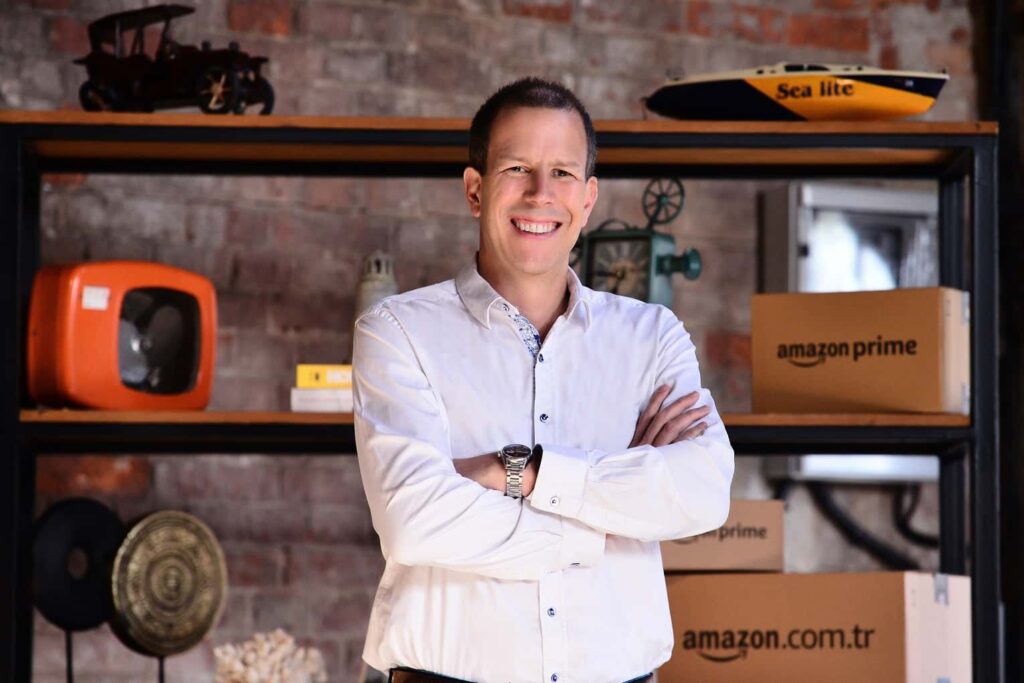
Amazon Türkiye launched in 2018 as Amazon’s sixth marketplace in Europe. Over the past six years, it has achieved remarkable growth by offering opportunities to online consumers and SMEs in Türkiye. According to a survey conducted among young professionals and university students, Amazon Türkiye has become one of the “top three most sought-after companies in Türkiye.” A key contributor to this success is Richard Marriott! Serving as the “Country Manager of Amazon Türkiye” since 2019, Richard Marriott brings over 25 years of experience across various sectors, including consumer goods, telecommunications, retail banking, consulting, and energy.

In an interview with WORLDEF E-COMMERCE magazine, Marriott stated, “Our core principles are customer obsession, a passion for innovation, operational excellence, and long-term thinking.” He discussed the significance of Amazon’s famous “empty chair” in meetings, what customer obsession truly means, Amazon Türkiye’s goals, and its commitments to Turkish SMEs.

“Amazon is Defined by Four Core Principles”

Richard Marriott first elaborated on Amazon’s core principles: “At Amazon, we wear many hats, but fundamentally, I define Amazon as a company that operates based on four key principles. These principles guide everything we do. They are: customer obsession, a passion for innovation, operational excellence, and long-term thinking.”

“We Keep an Empty Chair in Meetings to Represent the Customer”

Marriott emphasized that customer obsession has been Amazon’s fundamental principle since its inception, a concept deeply understood by Amazon’s Founder, Jeff Bezos. “Everything we do is for our customers, which is why we always keep a famous empty chair in all our meetings to represent them. Every member of Amazon—more than 1.5 million employees worldwide—embraces this as a core value.”

“The Desire to Innovate for Our Customers Is in Our DNA”

“We always strive to nurture and enhance our passion for innovation. We love bringing new solutions to our customers,” said Richard Marriott, continuing: “At Amazon, the desire to innovate for our customers is embedded in our DNA. Regardless of their daily tasks, we expect everyone to play a role in innovation. If you ask me what Amazon’s greatest innovation is, I would say ‘Prime.’

Prime is a special program designed for our customers, built on the foundations of unlimited, fast, free, and flexible delivery. Today, Prime offers over 200 million members worldwide the best shopping and entertainment experience.”

“We Achieve 98% Delivery Accuracy”

Highlighting “operational excellence” as Amazon’s third core principle, Marriott stated: “For us, prioritizing operations is equivalent to prioritizing customer experience, as it is the key to ensuring that our customers trust our brand and the services we offer.” He emphasized that Amazon operates over 400 world-class logistics centers across cities and regions worldwide to deliver what customers need, exactly when they need it.

“We ship products to customers in over 200 countries and regions. This is no easy task, but if you define yourself as a ‘customer-obsessed company,’ you must execute every aspect of your business flawlessly. That is why we continuously invest in our operations, leverage technology, and innovate on behalf of our customers. We continue investing in our shipping capabilities, working with partners to establish a delivery network built on security, speed, and efficiency. Thanks to our investments, we now achieve 98% delivery accuracy.”

“We Never Prioritize Short-Term Gains Over Long-Term Customer Trust”

Amazon Türkiye Country Manager Richard Marriott emphasized long-term thinking as another fundamental principle: “We believe that the true value of our work lies in the long-term trust our customers, suppliers, and society place in us. We never prioritize short-term profits over long-term customer trust! Looking at our three most successful business areas—Amazon Prime, Amazon Marketplace, and Amazon Web Services—we see that all of them were established years ago. They went through testing phases, and it took five to ten years to achieve success. That’s because we have always focused on the long-term value we can offer customers, ensuring the sustained success of all our operations.”

“Amazon Türkiye Is Our Sixth Marketplace in Europe”

When asked about Amazon’s journey in Türkiye, Marriott shared: “Amazon Türkiye launched in 2018 as our sixth marketplace in Europe. While we are a global company, we recognize that each local market is unique and that every customer has distinct needs. That’s why we spent our initial years ensuring that we understood our customers in Türkiye and their expectations from us. We filled in the missing features, expanded our product selection, improved our pricing, and built a strong reputation for fast and reliable delivery, setting new standards for e-commerce in Türkiye.”

“We Reached Our Annual Prime Membership Target in Just 48 Hours”

Marriott noted that Amazon Prime’s launch in Türkiye in 2020 was a defining moment in their success: “This was the second-fastest launch in Amazon’s history, and we reached our annual Prime membership target within just 48 hours. We knew that customers in Türkiye loved Amazon’s services, and it was time to scale and expand our business. That’s why in 2022, we opened our first Amazon-operated logistics center in Tuzla, Istanbul, with an investment of over $100 million. This was a key moment for us, demonstrating our commitment to Türkiye and our long-term strategy in the region.”

“We Are One of the Top Three Most Desired Companies in Türkiye”

Reflecting on Amazon Türkiye’s growth, Marriott stated: “Today, our business has grown significantly in every aspect, and we continue to enhance our customer experience. In just six years, our team in Istanbul has expanded from 50 employees to nearly 1,000. In fact, independent research shows that among young professionals and university students, Amazon is one of the top three most sought-after companies in Türkiye.”

“More Than 50,000 Turkish SMEs Sold Over 30 Million Products on Amazon in 2023”

Richard Marriott emphasized the importance of SMEs for Amazon and the services provided to support them. He pointed out that more than 61% of sales on Amazon’s marketplaces worldwide come from independent sellers, the majority of whom are small and medium-sized enterprises (SMEs). In Türkiye, over 50,000 SMEs are selling on Amazon, and in 2023 alone, these SMEs sold more than 30 million products.”

 “We Bring Customers to SMEs!”

Amazon Türkiye Country Manager Richard Marriott shared details about the services Amazon provides to SMEs, stating: “We bring customers to SMEs! We have hundreds of millions of customers worldwide, over 200 million Prime members, and we deliver products to customers in more than 200 countries and regions. We provide SMEs with the most effective and accessible tools and services, such as Amazon Logistics and Amazon Ads, to help them reach these customers. Amazon Logistics is an optional service that allows sellers to focus on growing their business while we handle storage, packaging, shipping, returns, and customer service on their behalf.”

“More Than 15,000 SMEs in Türkiye Use Amazon Logistics”

Marriott noted that more than 15,000 SMEs in Türkiye currently use Amazon Logistics and added: “In addition, Amazon Ads helps brands reach customers no matter where they are. Our advertising solutions are designed not only to reach shoppers within our stores but also to engage them outside of Amazon. By capturing consumers’ attention where they prefer to spend their time, we create opportunities for brands to reach new customers and interact with them across various devices, retail, and media channels.”

“In 2023, Turkish SMEs’ Export Sales Exceeded 21 Billion TL”

Discussing Amazon’s approach to cross-border e-commerce and international trade, Marriott responded to the question, “How do you help SMEs expand beyond borders?”

Referring to the Ministry of Trade’s goal to increase e-exports to 10% of Türkiye’s total exports by 2028, he stated: “We fully support the Ministry’s vision. We believe Amazon is uniquely positioned to help SMEs in this area. Today, more than 35,000 SMEs from Türkiye sell internationally through Amazon. This means that over 65% of Turkish SMEs selling on Amazon (50,000 in total) are engaged in exports. In 2023 alone, these SMEs achieved export sales exceeding 21 billion TL. The top export categories for SMEs in Türkiye were home and beauty products, while the top export destinations included the U.S., Canada, Mexico, the UK, and Germany.”

“Our Global Infrastructure Helps SMEs Reach Customers Anywhere”

Marriott continued: “Last year, in collaboration with PwC, we released a report on the e-commerce habits of SMEs in Türkiye, both domestically and internationally. We asked SMEs about the most common challenges they face in e-export activities. The top three challenges were: (1) market research and access, (2) marketing and promotion, and (3) logistics.

The good news is that Amazon offers solutions to all of these challenges. Over the past 20 years, we have invested billions of dollars in people, resources, and services to help businesses succeed. For example, reaching new markets is never an issue with Amazon. Our global infrastructure ensures that SMEs can reach customers regardless of where they are.”

Marriott added: “We tell SMEs: ‘Here are hundreds of millions of active customers shopping on Amazon. All you need to do is start selling your products!’ And we make this process as easy as possible. For instance, if a seller from Türkiye wants to start selling in Europe, they can list their products in nine Amazon marketplaces with a single account, reach customers in 28 countries, and manage all their listings and inventory across Europe seamlessly.”

“SMEs Never Have to Worry About Shipping with Amazon Logistics!”

Expanding on Amazon’s logistical solutions, Marriott stated: “If you’re struggling with marketing your products, Amazon Ads can help. Moreover, SMEs never have to worry about shipping with Amazon Logistics!” He further explained: “Amazon Logistics is a world-class, cost-effective service available to businesses selling on our platform. For example, in the U.S., shipping with Amazon Logistics can reduce costs per unit by up to 30% compared to standard shipping options offered by major U.S. carriers. Today, even a small business owner in Türkiye can store a single product in an Amazon fulfillment center for international sales and only pay for storage on a daily basis.”

“Language Barriers Are No Longer an Obstacle for SMEs”

Marriott also pointed out that language barriers often pose a challenge when entering new markets: “Take Europe, for instance—it consists of over 28 countries, many with their own languages. However, to sell on Amazon, you don’t need to be fluent in any European language. We offer sellers free listing and translation tools to effectively eliminate language barriers between them and their customers.

Amazon Logistics is also a game-changer in this regard. One of the biggest advantages of using Amazon Logistics is that Amazon handles shipping and return-related inquiries in the local language of the marketplace. Questions like ‘Where is my product?’ often make up the majority of customer interactions. By using our Amazon Logistics service, SMEs can instantly reduce the time and resources spent on translations and customer support.”

“We Are Aware of the Challenges Faced by Our SMEs”

Highlighting the incredible benefits of Amazon Prime for customers, Marriott stated: “However, since Prime customers tend to search for Prime-eligible products more frequently, this also helps sellers increase their sales. Displaying your products as Prime-eligible can significantly boost your chances of conversion.” He concluded by emphasizing Amazon’s commitment to supporting SMEs in Türkiye: “Ultimately, we are aware of the challenges our SMEs face; however, we also recognize the vast opportunities in Türkiye. We truly believe that the Ministry’s target is achievable, and we are here to support SMEs with our tools and services.”

“We See Türkiye as a Major Opportunity for Amazon”

In June, Amazon Türkiye Country Manager Richard Marriott participated in the WORLDEF ISTANBUL 2024 event, where he spoke at a panel titled “From Local to Global: How Amazon Empowers Small Businesses to Grow in Global Markets?” Discussing Amazon’s services and strategic initiatives specifically designed for the Türkiye market, Marriott stated:

“Türkiye has a large, well-educated, young population with strong knowledge of the internet, mobile technology, and e-commerce. We see Türkiye as a major opportunity for Amazon. On a global scale, Türkiye is an incredibly important country for Amazon. Turkish customers are remarkably smart and highly informed. They truly appreciate great opportunities. That’s why we are working even harder to offer outstanding deals in Türkiye—because these matter to Turkish customers.”

Marriott also shared his thoughts on the event, saying: “It was fantastic to highlight our commitment to Türkiye and the benefits of our Prime membership program. A huge thank you to WORLDEF for hosting such an amazing event and to everyone who attended the session. We are excited to continue making progress and creating new opportunities for businesses in Türkiye!”

Who Is Richard Marriott?

Richard Marriott serves as the Country Manager of Amazon Türkiye and has over 25 years of experience across various sectors, including consumer goods, telecommunications, retail banking, consulting, and energy. Originally from the UK, Marriott graduated from Oxford University, where he studied Politics, Philosophy, and Economics.

He began his career at Unilever in 1996 and later held various executive positions at leading companies such as The Coca-Cola Company, HBOS, Lloyds Banking Group, Nationwide Building Society, and British Gas. In 2015, he joined Amazon UK, where he led multiple product categories as a Category Director in the Retail division. He later took on various commercial roles in Amazon UK’s Seller Services and Marketplace teams. Since 2019, Richard Marriott has been leading Amazon Türkiye, overseeing Amazon’s products and services in the country. He is married and a father of three sons.