WORLDEF Prime Antalya 2026 - Upcoming Event

Register Now

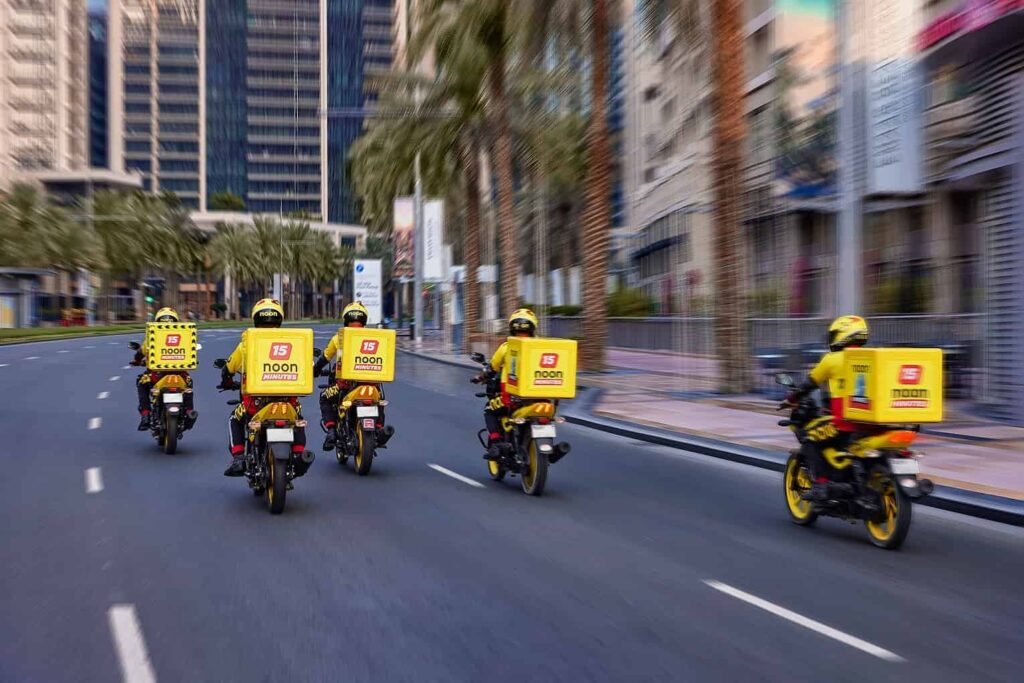
Noon Prepares to Launch 15 Minute Drone Deliveries Across the UAE

Gulf based e commerce giant Noon is preparing to take delivery speeds in the United Arab Emirates to a new level. The company plans to introduce fully autonomous drone deliveries through its mobile application. The service is expected to significantly shorten delivery times and improve accessibility for customers living in remote areas.

Noon’s drone delivery technology was showcased at DriftX, an international event focused on smart and autonomous systems held during Abu Dhabi Autonomous Week. At the exhibition, Noon Minutes set up an interactive booth where visitors could order food, personal care products and small household items through a touchscreen. Orders were delivered in under 15 minutes by fully autonomous drones. More than 50 successful deliveries were completed over the course of two days.

The demonstration marked the first public showcase of unmanned aerial delivery technology of this scale in the UAE. The system is powered by technology developed by the Technology Innovation Institute, coordinated through SteerAI’s fleet management software, and supported by hardware supplied by LODD.

“We Aim to Build a Faster and More Sustainable Delivery Model”

Noon highlights that autonomous drone delivery has the potential to redefine nationwide accessibility. Drones can reach islands, farms and new residential communities far faster than human couriers, creating an opportunity to reduce delays that often occur in distant or developing areas.

Ali Kafil Hussain, Chief Commercial Officer of Noon, stated that the company aims to build a faster and more sustainable delivery model. He added that the partnership with TII, SteerAI and LODD aligns with the company’s long term logistics vision and reflects Noon’s ambition to set a new benchmark in rapid delivery.

Drone Delivery Option Coming Soon to the Noon App

Engineering teams are currently working to integrate drone delivery into the Noon mobile app. Users will be able to select the drone option at checkout and track their orders in real time. Once launched, Noon plans to maintain a 15 minute delivery promise for eligible products and service areas.

The UAE continues to expand its initiatives supporting autonomous mobility technologies. Government programmes promote innovation in aerial delivery, robotics and smart transportation. Noon’s new service positions the company among the regional pioneers of autonomous last mile logistics and signals a future in which ultra fast drone deliveries may become a standard part of everyday life.

Autonomous Delivery Project Launched in Abu Dhabi in Collaboration with Noon and AutoGo

AliExpress Introduces Brand+ Channel to Strengthen Price Competition in the United Kingdom

AliExpress has announced Brand+, a new shopping channel designed to offer UK consumers a wider selection of branded products along with a price-matching guarantee.

Brand+ includes more than 1,500 brands, ranging from well known international labels to emerging names across beauty, electronics, lifestyle and several other categories. Every product within the channel features a Best Price Guarantee, ensuring shoppers receive a competitive deal. Customers who find the same item at a lower price on an approved comparison platform within seven days of purchase are eligible for a refund of the price difference.

Price Matching Becomes More Common Among Global E-Commerce Platforms

Industry analysts note that price matching is becoming an increasingly widespread strategy among global e-commerce platforms, especially as inflationary pressures push consumers toward more comparative shopping behaviour. While major retailers such as Amazon and Walmart also offer similar programmes, AliExpress positions Brand+ as a value-driven environment specifically designed for branded products.

With the launch of Brand+, AliExpress is strengthening its market presence in the United Kingdom while reinforcing a retail strategy built around price transparency on a global scale. Brand+ also provides exclusive limited-edition collections and prize draws through a partnership with POP MART. The company states that these additional benefits offer more flexible saving opportunities for budget-conscious shoppers.

“Brand+ Will Offer Consumers a Wider Selection of Brands at Competitive Prices”

Bonnie Zhao, General Manager of AliExpress UK, said the company continues to enhance customer experience by improving product variety and strengthening price advantages. She added that Brand+ will give consumers access to a significantly broader selection of brands at competitive prices, along with extended seasonal discount opportunities during the winter period.

AliExpress Extends Promotion Period Until December 3

To support peak seasonal shopping, AliExpress has extended its promotion period until December 3. This window includes both the 11.11 Singles Day festival and Black Friday. The platform is offering discounts of up to 80 percent across a wide range of products, and up to 50 percent off selected branded items. Shoppers paying with PayPal can also access an additional 20 percent discount.

“Consumers Are More Likely to Purchase When a Best Price Guarantee Is Offered”

Recent research in the UK shows strong consumer interest in affordable and transparently priced platforms. In a survey of AliExpress users, the majority described the platform as budget friendly, and most said they would recommend it to others. In a broader study of 2,000 adults, nearly half reported that they are more likely to purchase when a best-price guarantee is available, while more than half said they saved over 25 percent on their online purchases in the past year.

HubBox Secures £6 Million Investment to Accelerate Out of Home Delivery Growth

London based delivery technology company HubBox has completed a £6 million funding round as demand for flexible pickup points continues to rise across global ecommerce markets. Led by Puma Growth Partners, the investment will support the company’s international expansion and ongoing software development initiatives.

Founded in 2015, HubBox was created to address the challenges caused by failed home deliveries in ecommerce operations. The company provides software that enables retailers to offer local pickup points during the checkout process. This model has gained strong momentum as consumers seek more predictable delivery experiences and as urban logistics face increasing congestion.

HubBox Works with Thousands of Retailers

Today, HubBox collaborates with thousands of retailers across the United Kingdom, Europe and the United States. Its client portfolio includes major brands such as GAP, Selfridges and Gymshark. Industry analyses indicate that out of home delivery methods, including click and collect and parcel shop pickup, continue to grow at double digit rates each year.

“We Will Focus on Expanding Engineering Teams and Enhancing the Platform”

HubBox CEO Sam Jarvis stated that the company has experienced steady growth in recent years, while retailers increasingly seek more reliable and cost efficient delivery alternatives. Jarvis noted that the company will expand its engineering teams and focus on platform enhancements to meet rapidly rising demand.

Puma Growth Partners emphasised that HubBox’s strong technical capabilities and strategic partnerships with major courier networks played a key role in their investment decision. The firm highlighted that integrating alternative delivery options at checkout remains a significant challenge for retailers and that HubBox has established itself as a leading player in this space.

Competition Intensifies in Last Mile Delivery

The investment comes at a time when global logistics is undergoing rapid transformation. Courier companies are expanding parcel locker networks, while ecommerce platforms are promoting pickup options more heavily to reduce operational pressure during peak seasons. Industry reports indicate that out of home delivery models can reduce failed delivery rates by up to 90 percent and help lower emissions in high traffic urban areas.

With its new investment, HubBox aims to strengthen its role in shaping the future of ecommerce logistics and expand its presence across additional global markets.

Future Cities Symposium Held in Dubai

The Future Cities Symposium 2025 was organized under the leadership of the Prosit Philosophiae Foundation on 14 to 15 November 2025 in Hong Kong and on 17 November in Dubai.

The symposium, held under the theme “Innovate to Elevate Through Digital Transformation,” is based on the collaboration between the Joint Lab on Future Cities of the University of Hong Kong (HKU), the Future Cities Lab of the Royal College of Art, Dubai Chambers and its strategic partners.

The symposium showcases applied outcomes of research on sustainable transportation and mobility, data driven sustainability and resilient infrastructure, healthy cities and urban well-being, and speculative urban futures under computational intelligence and data science. The symposium aims to facilitate and explore the development of future cities from Hong Kong, the GBA and China to the GCC countries, as well as the United Kingdom and the European Union, as part of the Belt and Road Initiative.

Digital Transformation Discussed at the Dubai Session

At the symposium, approximately 300 international guests from government, academia and the business community discussed innovative solutions and strategies for creating sustainable and resilient urban environments. The symposium featured more than 40 renowned international speakers and 30 engaging exhibition participants.

At the Dubai session of the symposium, more than 15 expert speakers focused on the theme “Innovate to Elevate Through Digital Transformation.” Through targeted exhibitions, presentations and networking forums, the symposium brought these innovators together with a global audience of policymakers, industry leaders and investors. It also showcased the tangible value and commercial potential of interdisciplinary academic collaboration.

WORLDEF VP Orxan Isayev Also Attended

WORLDEF Vice President Orxan Isayev also attended the Future Cities Symposium 2025. Orxan Isayev held discussions with Hong Kong investors and academics regarding the establishment of a Hong Kong pavilion at the WORLDEF DUBAI 2026 event. The mission of Dubai CommerCity, WORLDEF’s partnership, was also addressed during the symposium.

Emirates SkyCargo and LODD Autonomous Collaborated for Drone Cargo

Emirates SkyCargo and Abu Dhabi based LODD Autonomous have signed a strategic collaboration to accelerate the development of autonomous drone cargo systems. The agreement signed at the Dubai Airshow represents an important step in the UAE’s logistics transformation and reflects the country’s goal of positioning itself as one of the world’s leading logistics hubs.

Next Generation Cargo Drone: Carries 250 kg, Has a Range of 700 km

The focus of the collaboration will be to validate the use of vertical take-off and landing aircraft across Emirates SkyCargo’s global network. Through feasibility studies, coordination with regulatory authorities and live demonstrations lasting until 2027, the potential for autonomous drones to support regional and international cargo operations will be evaluated. Emirates SkyCargo will also examine the possibility of integrating LODD’s newly tested Hili drone into ground operations at its dual airport hub in Dubai.

Hili, designed and manufactured in Abu Dhabi, is an unmanned hybrid heavy lift drone capable of carrying up to 250 kilograms and reaching a range of 700 kilometers. Its successful test flight has accelerated interest in commercial applications and paved the way for broader adoption of autonomous cargo vehicles.

The Collaboration Strengthens the UAE’s Logistics Vision

Emirates SkyCargo and LODD Autonomous see this collaboration as an opportunity aligned with the UAE’s goal of building a stronger logistics infrastructure. The initiative brings together Emirates SkyCargo’s operational scale with LODD Autonomous’s advanced technologies to increase efficiency, reduce delivery times and expand the reach of cargo services. This process also supports the UAE’s national focus on creating safe, scalable and sustainable supply chain systems.

Emirates SkyCargo is rapidly expanding its innovation agenda with new products and services such as Emirates Courier Express, a door to door delivery service launched to strengthen e-commerce. With its global network covering more than 150 destinations and a fleet of over 260 wide body aircraft, the company aims to be a leader in digital and operational transformation.

The Adoption of Drone Assisted Logistics Applications Will Accelerate

Executives from both companies highlighted the long-term impact of the collaboration. Badr Abbas from Emirates SkyCargo stated that the collaboration reflects their commitment to developing innovative solutions to solve complex transportation challenges and emphasized that autonomous aircraft will play an important role in the new era of logistics.

Rashid Al Manai, CEO of LODD Autonomous, stated that the initiative is fully aligned with the UAE’s vision of integrating advanced technologies into everyday life. He said that this collaboration will accelerate the adoption of drone assisted logistics applications and strengthen the UAE’s global logistics position while maintaining the highest safety and regulatory standards.

This initiative stands out as part of the UAE’s strategy to strengthen its national technology ecosystem from research to development and large-scale deployment. As the testing process progresses, the partnership between Emirates SkyCargo and LODD Autonomous is expected to play an important role in shaping the future of autonomous cargo transportation in the region and beyond.

First Drone Delivery Trial Conducted in Abu Dhabi

One Out Of Every Five Commercial Transactions İn Türkiye Comes From E-Commerce

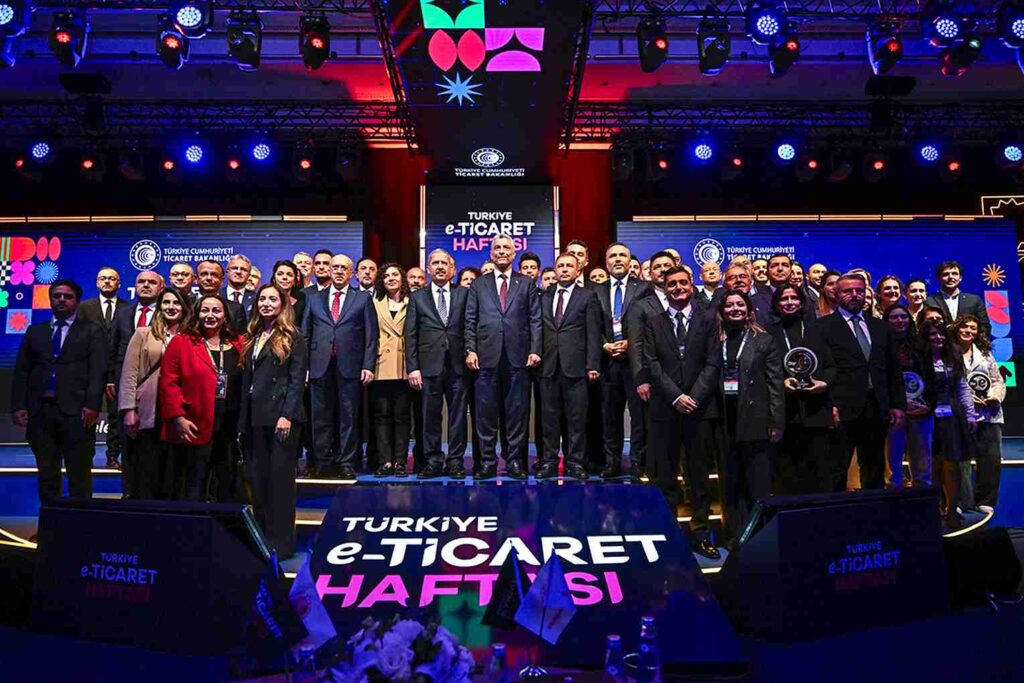
An event titled “Türkiye E-Commerce Week” was organized by the Ministry of Trade of Türkiye with the aim of strengthening collaborations in the e-commerce sector, highlighting innovative solutions, and increasing the social and economic impact of digital trade. Speaking at the event held at Istanbul Lütfi Kırdar Convention Center under the theme “Future Commerce,” Minister of Trade Ömer Bolat emphasized that Türkiye is experiencing very rapid growth and transformation in e-commerce, saying, “One out of every five commercial transactions is now in the form of e-commerce.”

“Retail E-Commerce Volume is 1.5 Trillion Liras”

Bolat noted that the annual e-commerce volume worldwide rose to 6 trillion dollars last year and added: “The e-commerce volume in Türkiye has reached 90 billion dollars. Between 2019 and 2024, the e-commerce volume increased 21 times in Turkish lira terms. The retail e-commerce volume stands at 1 trillion 620 billion liras. This corresponds to 55 to 60 percent of the total e-commerce volume.

The growth rate of retail e-commerce in Türkiye is 18 percent, while the European average is 7 percent. With these figures, it is clear that e-commerce and retail e-commerce have been advancing rapidly in Türkiye since 2019. Investors value this sector and continue to make investments. Türkiye has become a highly attractive hub for international investors in the e-commerce industry.”

Bolat stated that the number of businesses engaged in e-commerce reached 600 thousand in 2024 and added that the total number of e-commerce transactions in Türkiye approached 6 billion in 2024, while retail e-commerce transactions reached 1 billion 850 million. He said, “In 2024, the share of e-commerce in our gross domestic product was 6.5 percent. When compared with Europe, we can observe a similar alignment.”

Başar: Artificial Intelligence Shows Its Strongest Impact in E-Commerce

General Director of Domestic Trade at the Ministry of Trade Adem Başar said, “Concepts such as artificial intelligence, machine learning, cloud technologies, and blockchain are securing a permanent place in almost every sector, and they show their greatest impact in e-commerce. Today, e-commerce operates across a wide range of fields, from algorithms that predict consumer behavior to artificial intelligence systems that optimize delivery processes, from fraud detection mechanisms to smart infrastructures that generate personalized offers. These developments not only change the nature of trade but also redefine the competitive power of nations.”

Türkiye Announces ₺500 Million “E-Export Support Package” Loan Program

DigiFist Recognized as Shopify’s First Premier Partner in Türkiye

DigiFist has been officially named the first Premier Partner of Shopify in Türkiye. By uniting its Europe-centered experience with regional innovation, the company reinforces its position as a provider of advanced technical and strategic e-commerce solutions. This collaboration marks a significant milestone in DigiFist’s journey of expertise, credibility and strategic expansion.

Operating across Belgium, the UAE and Türkiye, DigiFist has received the Premier Partner designation from Shopify, the Canada-based global leader in e-commerce infrastructure. With this recognition, the international agency strengthens both its technical excellence and long-term growth strategy.

DigiFist CEO: This Achievement Reflects the Region’s Ongoing Digital Transformation

DigiFist CEO Selo Aksapli stated, “The Premier Partner title from Shopify is not only a reflection of our technical achievements. It is the outcome of the long-term strategic partnerships we have built with brands. It represents an important milestone not only for DigiFist but for the entire regional e-commerce ecosystem. We remain committed to providing brands in Türkiye with the most advanced technological and operational foundations required to compete globally.”

The Premier Partner title is granted only to agencies that meet Shopify’s strict global technical and operational standards. By earning this designation, DigiFist represents Türkiye within Shopify’s global partner network through its work in Shopify Plus development, theme production, system integration and performance marketing.

Expertise Built on Global Vision and Deep Local Insight

By solidifying its leadership, technical excellence and international reliability, Digi Fist distinguishes itself as a Shopify Plus expert agency. Its advantage lies not only in its technical competence but also in its ability to operate with a global mindset while maintaining a deep understanding of local market dynamics.

Since 2016, Digi Fist has operated through three strategic hubs. Belgium serves as the center for European operations and global brand collaborations. Istanbul is positioned as the engineering hub, overseeing theme development and innovation for the Galantis Connect platform. The UAE hub manages e-commerce operations and defines regional growth strategies. The seamless coordination among these three hubs enables DigiFist to execute operations across multiple markets efficiently and simultaneously.

Empowering More Than 8,500 Brands with International Growth Strategies

Highlighting that DigiFist’s service portfolio covers the entire Shopify Plus ecosystem, CEO Selo Aksapli said, “We adopt a comprehensive approach that includes multi-store architecture, official Shopify theme development, complex migration projects, system integrations and performance marketing. We offer data-driven and integrated Shopify Plus solutions that support brands in achieving sustainable growth.”

DigiFist operates not only as a performance marketing agency but as a long-term strategic partner. Through Shopify Plus development, official theme production, system integration, performance marketing and international growth strategies, the company empowers more than 8,500 brands worldwide.

Shopify Forecasts Quarterly Revenue Above Estimates Amid Strong Demand

Q4 in the Age of AI: Why the Gap in E-Commerce Widens?

Every year, Q4 feels like e-commerce’s final exam. But this year, the test has a new examiner: AI – artificial intelligence.

We are entering a peak season where record online sales coexist with slowing growth, rising consumer debt, margin pressure, and an AI arms race that very few sellers are genuinely prepared for.

I want to write about this moment not to celebrate another “record Cyber Week” headline, but to ask whether the system underneath those numbers is healthy, fair, and future-proof for the broader e-commerce community.

The Numbers Look Strong, but the Story is Fragile

Let’s start with the data.

In the 2024 holiday season, U.S. consumers spent $241.4 billion online between 1 November and 31 December, an 8.7% year-on-year increase and a new record. More than half of those transactions (54.5%) happened on smartphones. Cyber Monday alone delivered $13.3 billion in online sales, up 7.3% from 2023, with shoppers spending nearly $15.8 million per minute at the peak. Black Friday reached $10.8 billion, up 10.2% year-on-year.

For 2025, Adobe now projects U.S. holiday online sales of about $253.4 billion, a more modest 5.3% increase – still growth, but clearly slower than last year’s 8.7%. Digital Commerce 360, aggregating forecasts from Adobe, Deloitte and Salesforce, suggests that 56.1% of online holiday sales this year will come from mobile and that Buy Now, Pay Later (BNPL) spending could reach $20.2 billion, up from roughly $18.2 billion last season.

In other words, the Q4 engine is still running, but on deeper discounting, more credit, and more mobile-driven impulse. For marketplaces, platforms, and payment providers, this is good news. For smaller merchants, brands, and the logistics ecosystem, the picture is much tougher. Higher operational costs, tighter margins, fierce price competition, and increasingly “trained” consumers who expect 25–30% discounts as a baseline, not a special offer.

November Deals: No Longer Events but an Operating System

November used to be defined by a handful of big days: Singles’ Day, Black Friday, Cyber Monday. That calendar is now effectively a continuous promotion window.

In China, this year’s Singles’ Day (Double 11) campaign again delivered record sales for Alibaba and JD.com, despite a sluggish macro environment, driven heavily by AI-driven promotions, targeted marketing, and chatbots. More than 34,000 brands doubled their sales year-on-year on Alibaba’s platforms, and thousands of brands recorded triple-digit growth thanks to algorithmic optimisation.

In the U.S., Adobe, Salesforce and others all highlight the same structural shift:

  • Discounts start earlier, often in October.
  • Shoppers increasingly wait for the “right” price, compressing margins.
  • BNPL usage hits records, adding volume but also risk. BNPL drove $18.2 billion in online spend in 2024 (+9.6% YoY), and is forecast to grow again this year.

At the same time, returns are exploding. Salesforce reports that global online sales reached $1.2 trillion in 2024, with $282 billion in the U.S.. Still, returns now stand at 28% of orders, up from 20% a year earlier, a significant drag on profitability for sellers and brands.

So when we celebrate “record November deals,” we should add an asterisk; those numbers hide mounting structural stress for everyone who actually has to hold inventory, ship orders, and absorb returns.

 The AI Q4: From Hype to Hard Power

Now to the real game-changer: AI.

Q4 Ecom AI

A year or two ago, “AI in e-commerce” was mainly a slide in a pitch deck. In Q4 2025, it has become infrastructure:

  • One in three U.S. consumers (33%) now say they plan to use generative AI in their holiday shopping journey, more than double the 2024 figure. They use it to find the best deals, summarise product reviews, and generate shopping lists.
  • Salesforce’s latest projections suggest that AI and AI agents could influence up to $263 billion in global online sales in 2025, including around $51 billion in the U.S.
  • McKinsey estimates that generative AI could unlock $240–390 billion in annual value for retailers, translating into a 1.2–1.9 percentage-point margin uplift if implemented at scale.

AI is no longer an abstract future. It’s already visible in:

AI search and merchandising: Where product ranking is not just about keywords but multilayered behaviour signals, vector search, and real-time intent scoring.

AI agents and chatbots: Which steer customers to higher-margin products, nudge basket size, and automate service at scale. Salesforce data from the 2024 season already showed that AI-influenced purchases represented $229 billion globally, with chatbot usage up more than 40% year-on-year.

Content at scale: Product descriptions, creative variations, personalised emails, and ad copy are now being generated or heavily assisted by AI, compressing production cycles from weeks to hours.

This is why I believe Q4 is becoming the real dividing line between AI-enabled and AI-exposed sellers.

If you are a marketplace, a significant platform, or a large retailer, you are already experimenting with AI for forecasting, personalisation, inventory allocation, and media buying. Suppose you are a small or mid-size brand. In that case, you are increasingly playing inside someone else’s algorithmic universe, where AI systems mediate visibility, pricing, and even customer relationships you do not control.

Who Wins and Who Gets Squeezed?

Let’s be direct: AI is currently structured to concentrate power, not distribute it.

 Winners:

  • Big platforms and marketplaces that own first-party data at scale and can afford their own models or deep integrations with cloud AI providers.
  • Brands with strong data discipline (clean product feeds, clear attribution, robust experimentation) that can actually benefit from algorithmic optimisation rather than be randomly boosted or buried.
  • Logistics and fulfilment operators that use AI to optimise routes, staffing, and inventory, reducing last-mile costs and shipment delays during peak windows.

 Those at risk:

  • Small sellers who treat AI as just another “tool” rather than a strategic shift. They might use a bit of generative copywriting or image editing, but their product catalogue, pricing, and customer data remain fragmented and under-leveraged.
  • Merchants are overly dependent on BNPL-fuelled demand, where any regulatory shift or macro shock could rapidly reduce conversion while leaving them with the cost of fraud and returns. Evidence is already emerging that BNPL can push vulnerable consumers into debt; one recent analysis found that roughly 24% of BNPL users missed at least one payment in 2024, amid mounting fees and financial stress.
  • Communities whose participation is reduced to “content and clicks” but who do not have ownership of the data or the margins. Influencers and social-commerce sellers generate demand, but capture only a thin slice of the value chain while shouldering reputational risk and volatility.

We sit at the intersection of sellers, enablers, and policymakers. Our community spans marketplaces, logistics providers, fintechs, agencies, and thousands of merchants trying to grow across borders.

We are all watching the same Q4 trends:

  • Record online sales but slower growth.
  • Heavier reliance on BNPL and promotions to keep volumes up.
  • Higher return rates are eating margins.
  • AI is moving from “nice-to-have” to core infrastructure for search, pricing, and customer engagement.

If we treat this purely as a growth story, we are missing the point.

I am writing this op-ed because I believe Q4 2025 is the season in which global e-commerce must choose a direction, and these questions need to be carefully answered.

  • Will AI be used mainly to extract more value from the same constrained consumers, via hyper-targeted promotions, frictionless debt, and infinite content, or to build healthier, more predictable, and more inclusive ecosystems for sellers and buyers?
  • Will marketplaces continue to absorb almost all of the AI productivity gains in their own margins, or will some of that efficiency be shared with merchants in the form of better tools, lower fees, and more transparent algorithms?
  • Will policymakers remain reactive, stepping in only after debt crises, unfair practices, or data breaches, or will they help set guardrails for BNPL, dark patterns, and abusive personalisation before we hit a breaking point?

 What the Ecosystem Needs to be Arguing?

For the e-commerce community including platforms, logistics companies, payments providers, regulators, and trade bodies, Q4 2025 should not be about celebrating records alone. It should be about debating:

  • Standards for transparent AI in e-commerce: Especially around search ranking, recommendation bias, and dynamic pricing.
  • Responsible BNPL frameworks: Protect vulnerable consumers without killing innovation in payments.
  • Cross-border data and tax regimes: Allow SMEs from emerging markets to actually compete in AI-driven marketplaces instead of being permanently locked behind algorithmic and compliance walls.

These debates must not be postponed to after the season. They are already shaping who wins this Q4 and who will still be standing when the return season is over.

Q4 used to be about who shouted the loudest and discounted the deepest. In the age of AI, it is increasingly about who owns the data, the models, and the levers of personalisation.

If we want an e-commerce ecosystem that is not only bigger, but also fairer and more resilient, this is the moment to say so clearly, with numbers on the table, and without being blinded by record sales headlines.

And that is precisely why I am writing this now. Q4 – Q4 – Q4 – Q4 – Q4 – Q4 – Q4

BURAK YALIM 

Editor in Chief – WORLDEF E-Commerce Magazine
The New Issue of WORLDEF E-COMMERCE MAGAZINE is Now Available!

The 34th issue of WORLDEF E-COMMERCE MAGAZINE, covering the period from October–November–December 2025, has been published.

In the new issue of WORLDEF E-COMMERCE MAGAZINE, the evolution of digital trade, the latest technological developments, and the strategies of the biggest players in the industry are examined in depth. The magazine features comprehensive analyses and expert opinions on the future of e-commerce. It also thoroughly addresses the impact of artificial intelligence and automation technologies on the retail sector. In this period of rapid digital transformation, the magazine presents content that analyzes how companies are adapting and the paths they are following to achieve success.

The magazine also includes success stories from industry players and news about collaborations. It offers inspiring content related to e-commerce platforms, logistics companies, and digital payment solutions. Additionally, the magazine covers critical topics such as sustainability, AI-powered e-commerce, customer experience, and data security.

Top 30 Fintech and Top 30 Women Entrepreneurs Lists

WORLDEF E-COMMERCE MAGAZINE WORLDEF E-COMMERCE MAGAZINE


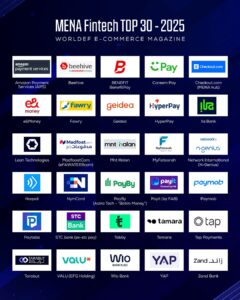
The new issue of WORLDEF E-COMMERCE MAGAZINE features two distinct lists. The “Top 30 Women Entrepreneurs” and “Top 30 MENA Fintech” lists are not rankings! They are curated, evidence-based selections presented from A to Z. These lists are designed to spotlight the founders, companies, and financial actors shaping tomorrow’s commerce and to celebrate the operators who keep the region’s digital trade resilient.

Eight Different “Power Lists” to Be Published Annually

WORLDEF E-COMMERCE MAGAZINE will capture the pulse of the digital economy by publishing eight different “Power Lists” annually starting from 2025. Each list will feature 30 entrepreneurs, leaders, or companies. These lists will highlight the most influential names in the global e-commerce ecosystem, starting with the MENA region. The aim of these lists is not only to rank achievements but also to reveal future trends, new leadership styles, and transformation stories. It will serve as a guide for investors, an inspiration for entrepreneurs, and a compass for policymakers to navigate the direction of digital trade.

What’s Inside WORLDEF E-COMMERCE MAGAZINE?

The content titles featured in this issue are:

  • E-Com Top Voices 2026: A Global Stage for E-Commerce Innovators
    • B2B E-Commerce Challenges in 2025
    • What Have The Past Two Years Of UAE-Turkey CEPA Trade Taught Us?
    The AI Revolution in E-commerce: How Technology is Rewriting Commerce Rules?
    • “MENA E-Commerce Community Promises Entrepreneurs a Lasting Ecosystem!”
    • Who Owns the Future of Talent? The Gulf vs. the Old Dream
    WGN: MENA’s Operating System for Measurable Growth
    • MENA Top 30 Women Entrepreneurs Company Capsules
    • The AI-Friendly Partner Of E-Commerce And Banking: Co-one
    • MENA Fintech Top 30 – Company Capsules
    • From Engineering To Digital: Didigital
    • The Fastest-Growing E-Commerce Platform In The Balkans: Ananas.rs
    • BARQ CCO Almarwani: Our Promise To E-Commerce Is Simple: To Make Logistics Invisible!

Click here to download the new issue of WORLDEF E-COMMERCE MAGAZINE for free!

The AI Revolution in E-commerce: How Technology is Rewriting Commerce Rules?

Amazon Becomes the Second Largest Online Retailer in Belgium

Amazon, after launching a dedicated online store for Belgium just three years ago, has rapidly grown to become the country’s second largest online retailer.

Amazon continues to make significant investments to strengthen its influence in the Belgian market. Some of these investments aim to expand Amazon’s distribution center in Hoboken, near Antwerp, to enable same-day delivery. Amazon plans to invest more than 1 billion euros in Belgium between 2025 and 2027.

Amazon’s Logistics Center in Belgium, the Only Online Distribution Center in the Country

Amazon Belgium Country Manager Eva Faict provided important information about Amazon’s investments in the Belgian market and its logistics center. Launched in the fall of 2022, Amazon.com.be now operates the country’s only online distribution center. Faict mentions that approximately 100 people work at this center. Half of the employees are directly employed, while the other half work through temporary agencies, mainly on night shifts. Amazon collaborates with 14 different partner companies to quickly deliver packages from warehouses in Germany and France to customers in Belgium.

Investing in Cargo Bicycles for Same-Day Delivery Services

While Ama zon aims to grow rapidly in Belgium’s e-commerce market, the company is also focusing on offering same-day delivery options. Faict points out that this service will be applied especially to urgently needed products. For example, everyday consumables such as baby diapers or toothpaste will be delivered quickly with same-day delivery. Amazon is investing in its own cargo bicycles to speed up the delivery process in busy cities like Antwerp, aiming to provide environmentally friendly and fast delivery.

Surpassing Coolblue to Take Second Place

While Amazon had a limited market share in Belgium in previous years, it now ranks second in all categories. E-commerce professor Roel Gevaers notes that Amazon has surpassed Coolblue to take second place. However, its Dutch competitor bol continues to lead the Belgian market, generating two and a half times more revenue than Amazon.

Amazon Invests €1B+ in Belgium