WORLDEF Istanbul 2026 - Upcoming Event

Register Now

When the Pope Meets Anthropic: AI’s New Ethical Line

Pope Meets Anthropic

The Pope Meets Anthropic

We spend a lot of time in the tech and digital commerce sectors analysing white papers from Silicon Valley, regulatory updates from Brussels, and corporate roadmaps from the likes of OpenAI and Google. But yesterday, the most consequential and hard-hitting AI policy document of 2026 didn’t come from a tech hub. It came from the Vatican.

On May 25, Pope Leo XIV released his first papal encyclical, a massive, 245-paragraph, 42,000-word document titled Magnifica Humanitas (“Magnificent Humanity”), which is dedicated entirely to artificial intelligence. Pope Meets Anthropic

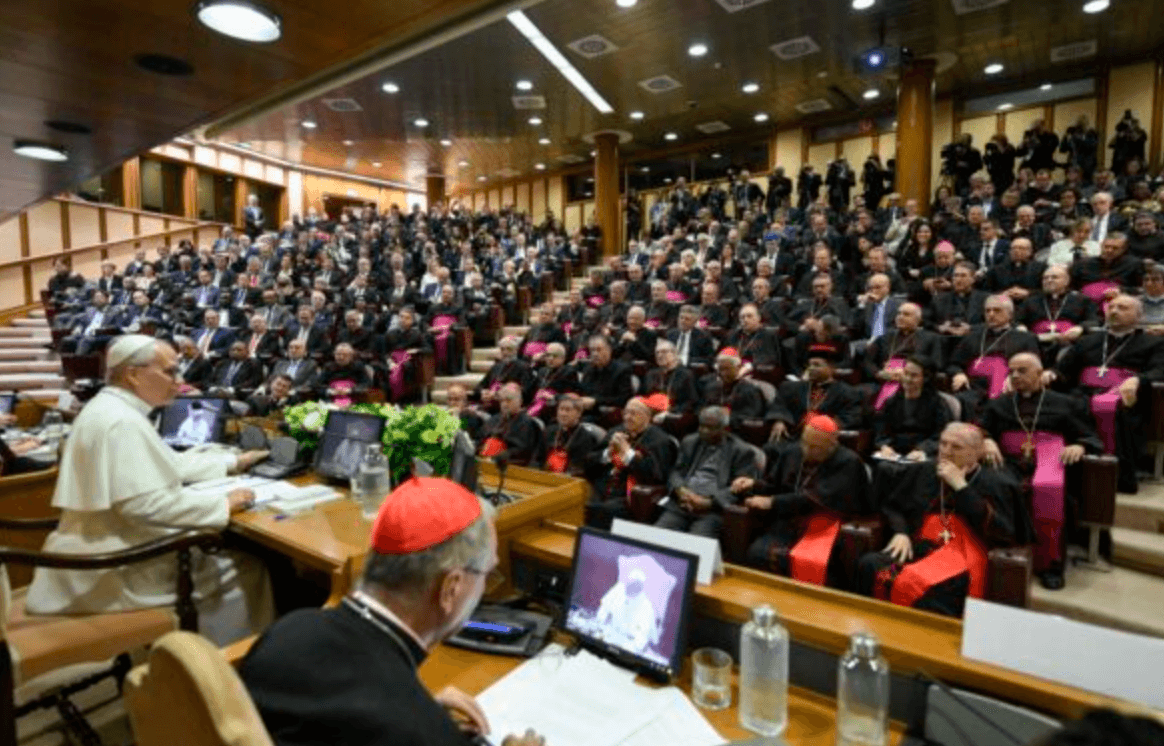
If anyone thought this would be a vague, surface-level commentary on technology, they were mistaken. Standing alongside the Pope at the Vatican’s Synod Hall was Christopher Olah, the co-founder of Anthropic. When one of the world’s leading minds in frontier AI safety aligns with one of the world’s oldest institutions, the global community needs to stop and listen.

The Four Pillars of the Vatican’s Manifesto

Look, I’ll be completely honest with you: at 42,000 words, I haven’t had the time to sit down and read this entire text cover-to-cover yet. My desk is currently piled high with upcoming magazine deadlines. But based on the official briefings and the earliest press sources from Rome, the Vatican is laying down some incredibly heavy, non-negotiable ethical boundaries.

From what we can gather, the document essentially hinges on four core pillars that directly challenge how the current AI ecosystem is being built:

  • Data belongs to everyone: The encyclical argues that the massive datasets used to train foundational models shouldn’t just be the private property or proprietary balance sheets of a few tech conglomerates. Instead, it should be classified as a common good.
  • We need to hit the brakes: Pope Leo XIV is calling for active government intervention to robustly regulate and deliberately slow down development, writing, “What is needed is a more active political involvement that is capable of slowing things down when everything is accelerating.”
  • Zero algorithms in warfare: The document draws a definitive moral boundary on automated defence systems, stating flatly that “no algorithm can make war morally acceptable.”
  • Protecting people’s livelihoods: The text pulls no punches on automation-driven layoffs, demanding strict protections for workers to prevent mass job displacement.

A Call for a Unified, Cross-Faith Response

This intervention highlights a broader geopolitical reality: the ethical boundaries of the digital age cannot be dictated by Silicon Valley or a single Western institution alone. The disruptions under discussion, mass labour displacement, the weaponisation of automated defence, and the centralisation of human data, are global challenges that transcend borders and individual belief systems.

As a Muslim, I see an immediate, vital opportunity here for Islamic authorities, scholars, and institutions like Al-Azhar, the Muslim World League, and regional digital ethics boards to weigh in with clarity.

In Islamic tradition, technological and economic advancements must always serve the preservation of human life, intellect, and societal well-being (Maqasid al-Shariah). When automation threatens mass human displacement for the sake of corporate margins, or when algorithms are given the autonomy to make life-and-death decisions in warfare, it violates the core tenets of stewardship and justice.

It is time for major Islamic institutions to publish their own AI frameworks. We need a unified, cross-faith alliance on technology ethics, one in which Riyadh, Cairo, Istanbul, and Jakarta speak with the same moral clarity as the Vatican to ensure that Silicon Valley respects human dignity.

Why This Matters for Global Commerce

At WORLDEF, we closely track how #AI is rewriting the rules of global infrastructure from automated supply chains and dynamic pricing to cross-border logistics and digital marketplace operations. But as Christopher Olah noted during the press conference, the questions AI raises are ultimately bigger than the technology itself. They belong to philosophy, society, and the humanities.

For those of us leading and operating within digital ecosystems, Magnifica Humanitas is a stark reminder that the “move fast and break things” era is facing an inevitable reckoning. When data ownership is challenged as a human rights issue and labour displacement is framed as a societal failure, it signals that the compliance and regulatory pressures heading our way will be much harsher than simple algorithmic transparency.

Whether you look at this through an economic, philosophical, or strictly business lens, one thing is clear: the human element must remain the true anchor of global commerce. If we build an ecosystem where efficiency completely hollows out human agency, we aren’t innovating; rather, we’re just automating our own decline.

It’s time for tech leaders to realize that the call for guardrails is no longer just a bureaucratic hurdle from government regulators. It is hardening into a global, cross-faith mandate. The world’s major spiritual and cultural traditions are drawing a line in the sand, demanding that human dignity be protected before the algorithms outpace our shared values.

Vatican and Anthropic Open New Debate on the Future of AI Ethics

Vatican and Anthropic Open New Debate on the Future of AI Ethics

Artificial intelligence is rapidly becoming one of the most influential technologies shaping the global economy, society, and policymaking. In a significant move that reflects the growing importance of ethical discussions around AI, the Vatican recently welcomed representatives from Anthropic for high-level conversations focused on the future impact of artificial intelligence.

Vatican Expands AI Ethics Discussion Beyond Silicon Valley

The meeting highlights how discussions surrounding AI are expanding far beyond the technology sector. Governments, universities, international organizations, and now religious institutions are increasingly participating in debates about how artificial intelligence should be developed, regulated, and integrated into society.

According to reports, Vatican officials and Anthropic representatives discussed the ethical responsibilities associated with advanced AI systems, including concerns around misinformation, human decision-making, labor transformation, and social inequality. The dialogue reportedly focused on ensuring that AI technologies remain aligned with human values as adoption accelerates worldwide.

Anthropic has emerged as one of the leading companies in the global generative AI race, competing alongside major technology firms developing large language models and advanced AI assistants. The company has gained attention for its emphasis on AI safety, transparency, and responsible innovation.

Global Institutions Increase Focus on Responsible AI

The Vatican’s involvement demonstrates how artificial intelligence is increasingly viewed not only as a technological development but also as a societal and philosophical issue. Institutions traditionally focused on ethics, culture, and human welfare are beginning to examine how AI could influence education, employment, communication, privacy, and everyday life.

Industry experts say the discussions reflect growing pressure on AI companies to engage with broader ethical and public-interest concerns. As governments worldwide move toward implementing new AI regulations and governance frameworks, conversations are shifting beyond technical performance toward accountability and long-term societal impact.

The meeting also comes amid accelerating global investment in AI technologies across industries including e-commerce, healthcare, finance, logistics, and digital media. Businesses are rapidly integrating AI-powered tools to improve operations and customer experiences, while regulators attempt to balance innovation with responsible oversight.

Analysts believe collaborations between technology companies and global institutions could play a key role in shaping future international AI standards. As artificial intelligence continues to evolve, ethical governance and public trust are expected to become central priorities for both policymakers and industry leaders.

The Vatican-Anthropic dialogue reflects a broader reality emerging across the global AI ecosystem: the future of artificial intelligence is no longer only a technology conversation, it is increasingly becoming a conversation about humanity, responsibility, and the future direction of society itself.

Source

Anthropic’s Massive $900B Valuation Push Signals Positive AI Market Momentum

Anthropic’s Massive $900B Valuation Push Signals Positive AI Market Momentum

Anthropic is reportedly considering a new funding round that could value the artificial intelligence company at more than $900 billion, marking another major signal of investor confidence in the AI sector.

According to Reuters, citing Bloomberg News, the Claude maker is entertaining early-stage offers that could place its valuation at more than double its current level. The company has not accepted any offers yet, and discussions remain preliminary.

The report comes only months after it raised $30 billion in February at a valuation of $380 billion. A new round at the reported level would represent one of the largest valuation jumps in the AI startup market.

TechCrunch also reported that Anthropic has received multiple preemptive offers to raise around $50 billion, with valuation proposals ranging between $850 billion and $900 billion. The company is expected to make a decision on the round and valuation during a board meeting in May.

If completed, the deal could place it ahead of OpenAI, which Reuters cited as being valued at $852 billion in March. This would potentially make the company the world’s most valuable AI startup.

Anthropic Eyes $900 Billion Valuation in New Funding Round

The funding discussions come as major technology companies continue to deepen their exposure to the AI market. Anthropic’s key backers include Google and Amazon, both of which have committed multi-billion-dollar performance-based investments to the company.

The potential fundraising also comes ahead of a possible IPO. Bloomberg reported that Anthropic could launch an initial public offering as soon as October, although no final decision has been made.

For the wider AI industry, the reported valuation shows how quickly capital is moving toward companies building foundation models, enterprise AI tools and next-generation AI infrastructure. Investor appetite remains strong despite rising costs linked to computing power, talent and model development.

Anthropic’s Claude has become one of the most closely watched AI platforms in the market, competing directly with OpenAI and other major AI players. A successful round above $900 billion would further strengthen the company’s position in the global AI race.

Source

Anthropic Commits $100 Billion to AWS After New $5 Billion Amazon Investment

Anthropic Commits $100 Billion to AWS After New $5 Billion Amazon Investment

Amazon and Anthropic have announced one of the most striking AI infrastructure deals of the year. Amazon will invest a fresh $5 billion in Anthropic, bringing its total backing of the AI company to $13 billion. In return, Anthropic has committed to spending more than $100 billion on Amazon Web Services over the next 10 years, securing up to 5 gigawatts of computing capacity to train and run its Claude models.

The scale of the agreement shows how quickly the AI race is shifting from software headlines to infrastructure power. Rather than focusing only on model releases and chatbot updates, major players are now locking in long-term access to chips, cloud capacity, and the computing resources needed to stay competitive. In that sense, this is not just a funding story. It is a strategic move that ties capital, cloud demand, and hardware development into a single long-term partnership.

For Amazon, the deal strengthens AWS at a time when cloud providers are fighting to become the default backbone of the AI economy. Anthropic’s commitment gives Amazon a massive customer relationship while also helping validate its in-house chip strategy. According to TechCrunch, the agreement includes Amazon’s Trainium2 through Trainium4 chips, even though Trainium4 is not yet available. Anthropic also secured the option to buy capacity on future Amazon chips as they become available.

How the Amazon Anthropic Alliance Redefines AI Competition

This matters because AI companies no longer compete only through research talent or app adoption. They compete through guaranteed access to computing infrastructure. Training frontier models requires enormous processing power, and companies that cannot secure that power risk falling behind. Anthropic’s decision to tie itself so deeply to AWS suggests that dependable infrastructure may now be as important as funding itself. That also gives Amazon a stronger position against rivals trying to dominate AI cloud demand.

The agreement also reflects a broader market pattern. TechCrunch notes that Amazon recently joined OpenAI’s massive funding round in a deal that also involved cloud infrastructure services, showing how investment and cloud commitments are increasingly being bundled together. In short, the biggest AI partnerships are becoming ecosystem deals rather than simple equity transactions.

There is another signal here for the market. TechCrunch reported that venture investors have reportedly been offering Anthropic fresh capital at a valuation of $800 billion or more. While that remains separate from this announcement, it shows how aggressively the market continues to price leading AI companies with access to scale, chips, and commercial demand.

For the global AI and cloud sectors, this deal sends a clear message: the next phase of competition will be built on infrastructure commitments measured not in millions, but in tens of billions.

Source