WORLDEF ISTANBUL 2026 - Early Bird Registration Ends Soon

Register Now

Babylonstoren Brings a New Luxury E-Commerce Model to South Africa in 2026

Babylonstoren Brings a New Luxury E-Commerce Model to South Africa in 2026

South Africa’s e-commerce landscape is evolving with the expansion of Babylonstoren into the digital retail space, introducing a curated marketplace model focused on premium products and brand-driven experiences.

Rather than following the traditional mass-market marketplace approach, Babylonstoren is building a platform centered on quality, exclusivity, and storytelling. The marketplace brings together carefully selected products across categories such as food, homeware, and lifestyle—creating a refined online shopping environment that reflects the brand’s premium positioning.

Moving Beyond Traditional Marketplaces

Most e-commerce platforms in South Africa compete on scale, pricing, and product variety. Babylonstoren, however, takes a different route by focusing on a curated commerce model, where product selection is limited and intentional.

This approach aligns with a broader global shift in e-commerce, where consumers are increasingly drawn to platforms that offer clarity, trust, and premium experiences rather than overwhelming choice.

A Marketplace Built on Brand Experience

One of the key innovations behind Babylonstoren’s marketplace is its emphasis on experience over transaction. The platform is designed not just to sell products, but to create a cohesive brand environment where presentation, content, and storytelling play a central role.

Instead of standard product listings, the marketplace highlights:

  • Carefully curated collections
  • Strong visual identity
  • Integrated brand storytelling
  • A seamless and premium user journey

This model mirrors the experience of high-end physical retail, translated into a digital format.

Controlled Ecosystem for Premium Brands

Unlike traditional marketplaces that standardize seller presence, Babylonstoren offers a more controlled ecosystem where products align with a consistent brand vision.

This creates a “closed marketplace” environment, ensuring that every product fits within the platform’s premium positioning. As a result, the marketplace avoids the fragmentation often seen in larger, open platforms.

Differentiation in a Competitive Market

South Africa’s e-commerce sector is becoming increasingly competitive, with major players focusing on scale and fast delivery. Babylonstoren differentiates itself by targeting a niche segment of consumers who value quality, authenticity, and curated experiences.

This strategy allows the platform to stand out without directly competing on price-focusing instead on brand value and customer experience.

A New Direction for E-Commerce in Africa

Babylonstoren’s move into e-commerce reflects a broader transformation in how digital retail is evolving across Africa. As consumer expectations grow, there is increasing demand for platforms that combine commerce, content, and brand identity.

By introducing a curated luxury marketplace model, Babylonstoren signals a shift toward more specialized and experience-driven e-commerce platforms in the region.

Source: MyBroadband

Africa Postal Transformation Gains Momentum: 5 Key Insights from the 44th PAPU Council

44th PAPU Council: 4 Strategic Moves Advancing Africa’s Postal Transformation

Africa’s postal sector is undergoing a major transformation as leaders gather in Kampala for the 44th Ordinary Session of the Administrative Council of the Pan-African Postal Union (PAPU). The high-level meeting brings together ministers, regulators, and industry stakeholders to redefine the future of postal services across the continent.

Once seen as a traditional mail delivery system, the postal industry is now evolving into a critical pillar of digital trade, logistics, and economic development. This shift is largely driven by the rapid growth of e-commerce and the increasing need for efficient last-mile delivery solutions.

From Mail to E-Commerce Infrastructure

Globally, the postal and courier sector is valued at over $400 billion, handling billions of items annually. Today, its role extends far beyond letters-serving as a backbone for e-commerce logistics, cross-border trade, and digital services.

In Africa, postal networks process more than one billion items each year, supporting small businesses and enabling access to wider markets. As online shopping grows, these networks are becoming essential in connecting digital transactions with physical delivery.

Driving Financial Inclusion and Accessibility

Postal systems are increasingly being used to expand financial inclusion, particularly in underserved and rural communities. By integrating digital payment solutions, postal infrastructure provides access points for individuals and small businesses to participate in the formal economy.

In countries like Uganda, post offices are being transformed into citizen service centers, offering government services and digital access to populations with limited internet connectivity.

Technology at the Core of Transformation

Emerging technologies are at the center of this transformation. Industry leaders emphasize the adoption of track-and-trace systems, digital addressing, and data-driven logistics to improve efficiency and transparency.

These innovations are helping postal operators meet modern consumer expectations, including real-time tracking, faster delivery, and reliable cross-border logistics.

Supporting Africa’s Trade and Integration

The modernization of postal networks is also aligned with broader continental initiatives such as the African Continental Free Trade Area (AfCFTA). By strengthening logistics and delivery infrastructure, postal services are playing a vital role in boosting regional trade and economic integration.

This positions the postal sector as a strategic enabler of Africa’s digital economy, supporting both local entrepreneurs and international commerce.

A Strategic Asset for the Digital Future

Experts at the PAPU session highlighted that postal networks are no longer just service providers but strategic national assets. They now sit at the intersection of logistics, digital connectivity, and public service delivery.

As discussions continue in Kampala, policymakers are expected to focus on practical strategies to modernize operations, enhance efficiency, and strengthen cross-border logistics systems.

The outcomes of this session are set to shape a more connected, inclusive, and resilient postal ecosystem-one that supports Africa’s rapidly growing digital economy.

Source: Ministry of ICT and National Guidance Uganda

24 Hours of Disruption Raise New Concerns for E-Commerce After AWS Issues in Bahrain

24 Hours of Disruption Raise New Concerns for E-Commerce After AWS Issues in Bahrain

Amazon has flagged a disruption in its Amazon Web Services (AWS) region in Bahrain following reported drone activity, highlighting growing risks to global digital infrastructure. The incident reflects how geopolitical tensions are increasingly affecting cloud services that power e-commerce, fintech, and digital platforms worldwide.

Disruption Hits Core Cloud Infrastructure

AWS confirmed that its Bahrain region experienced service disruption linked to drone activity in the area. While the company has not confirmed a direct strike on the facility, it acknowledged operational impact and is assisting customers in shifting workloads to alternative regions.

This marks the second disruption in the region within a month, signaling ongoing instability affecting cloud infrastructure.

Ripple Effects Across E-Commerce and Digital Services

AWS plays a critical role in supporting e-commerce platforms, payment systems, and enterprise applications. Disruptions can impact everything from online transactions to logistics and customer experience.

Earlier incidents in the region caused outages affecting banking systems, delivery platforms, and digital services reliant on AWS infrastructure.

This underscores how deeply integrated cloud infrastructure is within the digital economy.

Geopolitical Risks Enter the Digital Economy

The disruption is linked to broader Middle East tensions and drone activity tied to ongoing conflict.

This situation highlights a new reality: digital infrastructure is no longer isolated from geopolitical risks. Data centers, once considered secure back-end systems, are now potential targets in modern conflicts.

Businesses Shift Toward Multi-Region Strategies

In response, Amazon is urging customers to migrate workloads to other AWS regions to ensure continuity.

This accelerates a growing trend in e-commerce and tech: multi-region and multi-cloud strategies to reduce dependency on a single location.

Companies are increasingly investing in redundancy, disaster recovery systems, and decentralized infrastructure.

A Wake-Up Call for the Global Digital Ecosystem

The Bahrain disruption highlights vulnerabilities in the infrastructure powering global commerce. Structural damage, power disruptions, and service outages reported in earlier incidents show how physical risks can directly impact digital operations.

As e-commerce continues to scale globally, ensuring resilience in cloud infrastructure will become a top priority for businesses and governments alike.

Source: Gulf News

E-Commerce in South Africa Surges: 5 Powerful Forces Transforming Retail, Media and ICT

5 Ways E-Commerce Is Transforming Retail, Media and ICT in South Africa

E-commerce is rapidly reshaping South Africa’s digital economy, influencing not only retail but also media and ICT sectors. As online shopping continues to grow, it is driving structural changes in how businesses operate, communicate, and deliver value to consumers.

The Shift from Traditional Retail to Digital-First Models

Retail in South Africa is no longer limited to physical stores. E-commerce has introduced a more customer-centric model, where convenience, accessibility, and speed define purchasing behavior. Consumers now expect seamless online experiences, flexible payment options, and fast delivery services.

This shift is pushing retailers to adopt omnichannel strategies, blending physical and digital experiences. Businesses that fail to adapt risk losing relevance in an increasingly competitive environment.

Retail Media Is Becoming a Key Growth Driver

One of the most notable transformations is the rise of retail media. As consumers spend more time online, brands are reallocating budgets from traditional advertising to digital platforms. Retailers themselves are becoming media owners, using their platforms and customer data to deliver targeted advertising.

This evolution is driven by strong digital adoption and high internet penetration, which enable brands to reach audiences more efficiently and measure campaign performance in real time.

At the same time, consumers are no longer passive. They actively engage with brands, expecting authenticity and culturally relevant messaging rather than generic campaigns.

ICT Infrastructure as the Backbone of Growth

The growth of e-commerce would not be possible without advancements in ICT. Improved broadband access, mobile connectivity, and secure digital payment systems are enabling smoother online transactions and expanding market reach.

Fintech innovations such as mobile wallets, instant payments, and buy-now-pay-later solutions are lowering barriers to entry for consumers and businesses alike.

This strong ICT foundation is essential, as it supports everything from logistics and payment processing to customer experience and data analytics.

Changing Consumer Behavior and Expectations

E-commerce is fundamentally changing how consumers interact with brands. Shoppers now demand personalized experiences, transparency, and fast service. Social media plays a major role in influencing purchasing decisions, turning platforms into key sales channels.

This behavioral shift forces companies to rethink their strategies – focusing more on data-driven marketing, personalization, and real-time engagement.

Challenges Slowing Full Potential

Despite strong growth, several challenges remain. High data costs, cybersecurity risks, and logistics inefficiencies continue to limit the full scalability of e-commerce.

Additionally, rural connectivity gaps and lack of digital skills among small businesses create barriers to inclusive growth. Addressing these issues requires collaboration between governments, private sector players, and technology providers.

The Bigger Picture

E-commerce in South Africa is not just a retail trend – it is a catalyst for broader economic transformation. It is redefining media strategies, accelerating ICT development, and reshaping consumer expectations.

As the ecosystem evolves, businesses that invest in digital infrastructure, data capabilities, and customer experience will be best positioned to lead the next phase of growth.

Source: ZAWYA

Pakistan Retail Growth: 53 Years of Naheed Driving an AI-Powered E-Commerce Shift

Pakistan Retail Growth: 53 Years of Naheed Driving an AI-Powered E-Commerce Shift

Pakistan’s retail sector is undergoing a major transformation, driven by digital adoption, e-commerce expansion, and increasing foreign investment. At the center of this shift is Naheed, a long-established retailer that is redefining how traditional retail and digital commerce can coexist.

Founded in the 1970s as a small grocery store in Karachi, Naheed has evolved into one of Pakistan’s leading omnichannel retailers. Today, the company operates a 52,000-square-foot retail hub and has built a strong e-commerce presence offering more than 80,000 products to customers across the country.

From Traditional Retail to Omnichannel Leadership

Naheed’s growth reflects a broader trend in Pakistan, where legacy retailers are transitioning toward digital-first models. By combining its physical store experience with a robust online platform, the company has created a seamless omnichannel ecosystem.

This approach has helped Naheed build strong customer trust, leveraging decades of brand recognition while adapting to modern consumer expectations. As a result, it has become one of the largest standalone e-commerce players in Pakistan.

AI and Technology Shape the Future

Innovation is playing a central role in Pakistan’s retail evolution. Naheed is now focusing on integrating advanced technologies, including plans to develop an AI-driven data center to enhance operations, customer insights, and scalability.

This move highlights how Pakistani retailers are increasingly investing in data and automation to stay competitive in a rapidly changing digital landscape.

UAE Partnerships Boost Pakistan Retail Growth

International collaboration is becoming a key driver of Pakistan’s retail transformation. Naheed is actively exploring partnerships with UAE investors, aiming to leverage their technological expertise and infrastructure capabilities.

According to company leadership, such collaborations could significantly accelerate innovation and unlock new growth opportunities for Pakistan’s retail ecosystem.

Expanding Product Ecosystems

To diversify its offering, Naheed has expanded beyond traditional grocery retail by launching new verticals such as Naheed Pharmacy, focusing on health, beauty, and wellness products.

This reflects a growing trend in Pakistan where retailers are evolving into multi-category platforms, similar to global marketplace models.

A Market with Strong Growth Potential

Pakistan presents a compelling opportunity for investors, supported by a young population, with around 65% aged between 18 and 35, and a rapidly growing middle class.

As digital infrastructure improves and consumer behavior shifts online, the country is emerging as a high-potential market for e-commerce and retail innovation.

Pakistan’s retail sector is entering a new phase where technology, partnerships, and omnichannel strategies are redefining the industry. Companies like Naheed are not only adapting to change but actively shaping the future of commerce in the region.

Source: Gulf News

Amazon to Invest €5 Billion in Poland as E-Commerce Market Continues to Expand

amazon to invest euro5 billion in poland as e-commerce market continues to expand

Amazon is planning to invest more than €5 billion in Poland between 2026 and 2028, reinforcing its long-term commitment to one of Europe’s fastest-growing e-commerce markets. The investment comes on top of the over €10 billion the company has already invested in the country since 2012, covering infrastructure, logistics, and support for local businesses.

The move highlights Poland’s growing importance in Amazon’s European strategy. As one of the region’s largest and fastest-developing economies, the country continues to attract major investments from global tech and e-commerce players.

Poland Emerges as a Key E-Commerce Hub

E-commerce in Poland has been expanding steadily, with online sales reaching approximately €21.5 billion in 2025, reflecting a 6.8% annual increase. Growth is expected to continue, with projections pointing to further expansion in 2026.

Consumer behavior is also shifting rapidly. Around 75% of Polish consumers shop online at least once a month, while 71% report feeling safer using online marketplaces, indicating growing trust in digital commerce platforms.

These trends are positioning Poland as a strategic market not only for domestic growth but also for cross-border e-commerce across Europe.

Logistics Expansion at the Core of Investment

A significant portion of Amazon’s new investment will focus on expanding its logistics network. The company plans to open a new 200,000-square-meter fulfillment center in Dobromierz, equipped with advanced automation and more than 5,000 robots.

With this addition, Amazon will further strengthen its operational footprint in Poland, where it already operates multiple fulfillment centers. The expansion aims to improve delivery speed, efficiency, and overall customer experience.

In addition to infrastructure, Amazon is also investing in localized solutions, including payment methods and services tailored to Polish consumers, signaling a deeper integration into the local market.

Competition and Market Position

While Amazon continues to scale in Poland, it still faces strong competition from local marketplace leader Allegro. Despite entering the market in 2021, Amazon has rapidly established itself as a key player, supported by continuous investments and infrastructure development.

The company’s strategy focuses not only on growth but also on strengthening Poland’s role in the broader European e-commerce ecosystem.

Amazon’s €5 billion investment signals more than just expansion – it reflects a long-term bet on Poland’s digital economy. As e-commerce adoption continues to rise and logistics capabilities improve, the country is increasingly becoming a central hub for online retail in Europe.

Source: Ecommerce News Europe

Alibaba Revenue Rises 1.7% but Misses Estimates as Profit Drops 66%

alibaba revenue rises 17percent but misses estimates as profit drops 66percent

Alibaba reported a modest 1.7% increase in quarterly revenue, reaching approximately 284.84 billion yuan ($41.28 billion), but the figure came in below analyst expectations. The results highlight continued pressure on China’s e-commerce sector, where consumer demand remains weak despite ongoing promotional efforts.

Heavy spending on discounts and faster delivery options has not been enough to significantly boost consumption. Ongoing concerns around income stability and the broader economic environment continue to weigh on consumer confidence, limiting the impact of major shopping campaigns.

Profit Declines Sharply Amid Rising Costs

While revenue showed slight growth, profitability declined sharply. Alibaba’s net income fell by 66.3%, reflecting rising operational costs and continued investments in logistics, pricing strategies, and user acquisition. The company, like many of its competitors, appears to be prioritizing market share over short-term profitability in an increasingly competitive landscape.

Cloud and AI Business Shows Strong Momentum

At the same time, Alibaba’s cloud business delivered strong results, with revenue growing 36% year-on-year. The growth is largely driven by increasing demand for artificial intelligence solutions and cloud infrastructure. As AI adoption accelerates, this segment is becoming a key pillar of the company’s long-term strategy.

Alibaba is also restructuring parts of its business to focus more heavily on AI-driven services. New initiatives are aimed at expanding its capabilities in digital assistants and enterprise solutions, signaling a broader shift beyond traditional e-commerce. However, while AI usage is growing, monetization and long-term user engagement are still developing.

Market Reaction and Outlook

Following the earnings release, Alibaba’s U.S.-listed shares fell more than 6%, reflecting investor concerns over weaker-than-expected performance and declining profitability. The reaction underscores the challenges the company faces as it navigates slower growth in its core business while investing in future technologies.

Alibaba’s latest results point to a transition phase. As its e-commerce engine faces pressure, the company is increasingly positioning itself around AI and cloud to support future growth.

Source: Reuters

EU Inc.: 5 Major Changes Set to Boost Startup Scaling in Europe

EU Inc. startup scaling in Europe visual showing digital growth and connected ecosystem

The European Union is preparing a major transformation in its startup ecosystem with the introduction of EU Inc., a new framework designed to make it significantly easier for companies to scale across the region.

For years, European founders have faced a structural disadvantage compared to their counterparts in the United States. While the U.S. operates under a single legal and regulatory system, startups in Europe must navigate 27 different national frameworks, each with its own rules on incorporation, taxation, and compliance.

EU Inc. aims to solve this fragmentation by introducing a unified, optional system that allows startups to operate more seamlessly across the EU single market.

Tackling Europe’s Fragmentation Problem

One of the biggest barriers to startup growth in Europe has been regulatory complexity. Expanding beyond a home country often means rebuilding legal structures, adapting to new compliance systems, and managing multiple jurisdictions at once.

The EU Inc. initiative introduces what policymakers describe as a “28th regime” — an additional, standardized corporate framework that companies can choose instead of relying solely on national systems.

This model is designed to reduce administrative friction and create a more consistent environment for scaling businesses across borders.

Faster and Simpler Company Formation

A key feature of EU Inc. is its digital-first approach to company creation and management. Startups would be able to register and begin operating through a fully online process, significantly reducing both time and costs.

According to recent proposals, businesses could be established in as little as 48 hours, a move aimed at bringing Europe closer to the efficiency of markets like the United States.

The system would also introduce more standardized procedures for areas such as employee stock options and insolvency rules, helping startups attract investment and scale more efficiently.

Closing the Global Competitiveness Gap

Despite strong innovation and early-stage startup activity, Europe continues to lag behind global leaders when it comes to scaling companies.

Data shows that while startup creation rates in Europe are comparable to the U.S., the region produces significantly fewer high-value companies. By early 2025, the EU had around 110 unicorns, compared to hundreds in the United States and China.

This gap is largely driven by structural challenges, including fragmented markets, limited access to late-stage funding, and regulatory complexity. As a result, many European startups choose to relocate or expand abroad to access better growth opportunities.

EU Inc. is designed to reverse this trend by making it easier for companies to remain and scale within Europe.

Supporting Investment and Talent Growth

The EU Inc. initiative is part of a broader strategy to strengthen Europe’s startup ecosystem. Alongside regulatory simplification, policymakers are working to improve access to capital, attract global talent, and enhance infrastructure for innovation.

The EU Startup and Scaleup Strategy focuses on creating a more supportive environment for high-growth companies by improving financing options, enabling faster market expansion, and building stronger innovation networks.

Together, these efforts aim to position Europe as a more competitive destination for startups and scale-ups.

Limitations and Ongoing Challenges

While EU Inc. represents a major step forward, it is not a complete solution. Companies operating under the new framework will still need to comply with national rules related to taxation, labor laws, and other local regulations.

Experts also note that simplifying legal structures alone may not fully address deeper challenges such as operational complexity, leadership, and cross-border team management.

Nevertheless, EU Inc. is widely seen as a critical foundation for improving Europe’s ability to scale innovative businesses.

A Turning Point for Europe’s Startup Ecosystem

The introduction of EU Inc. signals a clear shift in Europe’s approach to entrepreneurship and innovation. By reducing fragmentation and streamlining business operations, the EU is taking a significant step toward building a more integrated and globally competitive startup ecosystem.

If successfully implemented, the initiative could help Europe retain more high-growth companies, attract international investment, and close the gap with global innovation leaders.

Source: European Business Magazine, European Commission, Reuters

WTO Faces 2026 Deadline as U.S. Pushes for Permanent E-Commerce Tariff Ban

WTO headquarters in Geneva during discussions on global e-commerce tariff rules

The United States is intensifying efforts to make the World Trade Organization’s (WTO) long-standing e-commerce tariff moratorium permanent, a move that could significantly reshape global digital trade rules in 2026.

The moratorium, first introduced in 1998, prevents countries from imposing customs duties on electronic transmissions such as software, digital media and other online-delivered goods. While it has been renewed regularly, the current agreement is set to expire by March 31, 2026, unless WTO members reach a new consensus.

U.S. Push for Permanent Global E-Commerce Rules

Washington is now pushing for a permanent extension of the moratorium ahead of the WTO’s upcoming ministerial conference. The proposal aims to provide long-term certainty for businesses operating in the digital economy, particularly those involved in cross-border e-commerce.

Supporters argue that maintaining a tariff-free digital environment is essential for sustaining global e-commerce growth. Without the moratorium, companies could face new costs and regulatory fragmentation, potentially slowing down international digital trade.

The U.S. position is backed by several developed economies and global technology firms, which see the moratorium as a key pillar supporting innovation, entrepreneurship and seamless digital transactions.

Rising Opposition from Developing Economies

Despite strong support from advanced economies, the proposal remains controversial. Several developing countries have expressed concerns that making the moratorium permanent could limit their ability to generate revenue from digital imports.

As more goods and services shift from physical to digital formats, governments risk losing traditional tariff income. For some developing economies, customs duties represent a significant share of public revenue, making the issue both economic and political.

Critics also argue that the current system disproportionately benefits countries with strong digital export capabilities, widening the global digital divide.

High Stakes for Global Digital Trade

The outcome of the negotiations will have far-reaching implications for the future of global e-commerce. If the moratorium is extended permanently, it could reinforce a stable and open digital trade environment.

However, if negotiations fail and the moratorium expires, countries may begin introducing tariffs on digital goods, leading to increased costs for businesses and consumers. Such a shift could fragment global digital markets and create new barriers to cross-border e-commerce.

Outlook: Uncertainty Ahead of WTO Decision

With the deadline approaching, WTO members face mounting pressure to find common ground. The debate reflects broader tensions within the global trading system, where balancing innovation, fairness and economic sovereignty remains a challenge.

As digital trade continues to expand, the decision on the e-commerce tariff moratorium will play a critical role in shaping the next phase of global commerce.

Source: LA Times, WTO, industry analysis

E-commerce in the Shadow of the 2026 Gulf Crisis

e-commerce

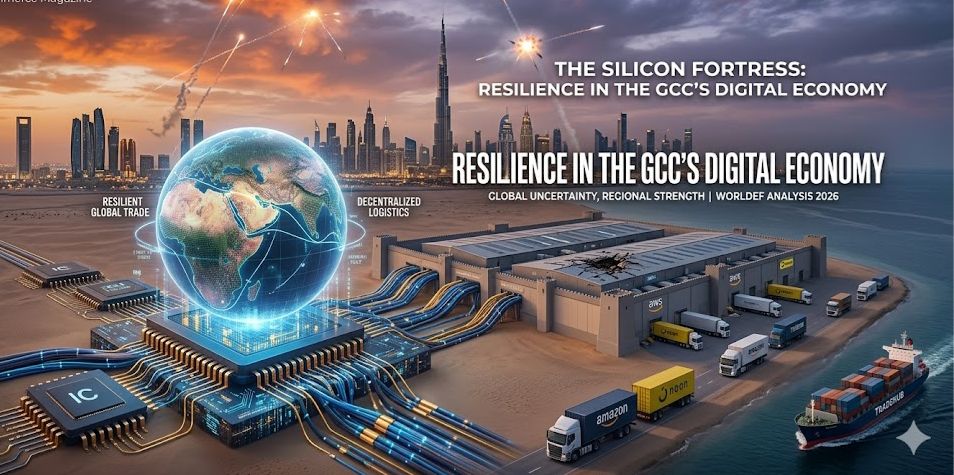
E-commerce in the GCC is facing its most significant resilience test to date. The sirens that echoed across Abu Dhabi and Dubai in early March 2026 told two very different stories. To the global news cycle, the sight of air defence streaks over the Burj Khalifa signalled a region at a breaking point. But on the ground, the reality was a testament to the UAE’s sophisticated national readiness. Despite almost 2000 drone and missile threats intercepted by the Ministry of Defence this month, there has been no chaos and no panic. Malls remain open, schools have seamlessly pivoted to remote learning, and the government’s 4-to-6-month strategic reserve of essential goods has kept shelves full and prices stable. Yet, while the streets are quiet, the digital economy, the “invisible engine” of the Gulf, is experiencing a profound and unprecedented stress test.

I. The Physicality of E-commerce: A Logistics Architecture Under Siege

The fundamental paradox of the Middle Eastern digital economy is its reliance on physical bottlenecks. While a consumer in Riyadh interacts with a sleek interface, the fulfilment of that transaction depends on a hyper-efficient network of shipping lanes and air corridors. The current escalation has exposed the jugular vein of this system: the Strait of Hormuz.

With the waterway effectively closed to commercial traffic, the maritime lifeblood of GCC e-commerce has slowed to a trickle. War-risk insurance premiums for containers have jumped to 1% of hull value, a staggering increase from the 0.02% seen in January. For the high-volume, low-margin world of digital trade, these costs are transformative. Furthermore, the GCC’s status as an aviation hub has been tested by the imposition of rolling airspace closures. With air-cargo capacity slashed, the “Next-Day Delivery” promise has, for many, been replaced by a “Wait-and-See” reality.

II. E-commerce Platforms as Geopolitical Infrastructure

In this crisis, e-commerce platforms have ceased to be mere marketplaces; they are now critical national infrastructure. The “real damage” became clear on March 1st, when Amazon Web Services (AWS) confirmed drone strikes damaged two data centres in the UAE and one in Bahrain. This was the first publicly confirmed military strike on a hyperscale cloud provider, and the ripple effects were immediate.

Amazon’s Defensive Pivot: Amazon temporarily shuttered its Abu Dhabi fulfilment centre and suspended deliveries across the emirate. While nearly 300,000 third-party sellers face delays, the company’s decision was rooted in a “safety-first” protocol rather than a failure of the system itself.

The Noon Resilience: Conversely, Noon has leveraged its hyper-local “dark store” network to maintain service. While global giants have paused, local players are proving that a decentralised, regional-first logistics model is better suited for a kinetic environment.

The Fintech Pulse: The strikes on cloud infrastructure led to “higher error rates” for digital payment gateways such as Tabby, Tamara, and PayTabs. However, the UAE’s rapid shift to software-based recovery paths has prevented a total financial freeze, allowing the domestic economy to continue functioning even as its global links are strained.

III. Supply Chain Fragility in a Digital Marketplace

The current crisis has effectively broken the traditional drop-shipping and cross-border models. The UAE, long the region’s re-export hub, is navigating a pincer movement of geopolitical risk.

  1. Inventory Paralysis: As container routes are rerouted around the Cape of Good Hope, restocking lead times have doubled. For B2B platforms like Tradeling, this means empty shelves and stalled projects.
  2. The Logistics Heavyweights: While Aramex and DHL continue to move goods, they are doing so under a “war-risk” framework. The rerouting of shipments to alternative ports and the rise in surcharges have made “free shipping” a relic of the pre-war era.
  3. The Ambition Test: The GCC’s goal of becoming a $135 billion e-commerce market by 2025 is currently facing the reality of $90+ oil and 300% insurance spikes. This is a moment of forced evolution for every player from Namshi to Talabat.

IV. Solutions and the Path Forward

The damage is real, estimated to be a 1.8-percentage-point drag on 2026 GDP forecasts, but the solutions being forged in the heat of this crisis will define the next decade.

The Saudi Land Bridge: To bypass the Strait of Hormuz, the region is accelerating rail and road corridors connecting the UAE directly to Saudi Arabia’s Red Sea ports.

Sovereign Digital Rails: There is an urgent push for domestic payment systems and “Hardened Edge Computing”, smaller, decentralised data centres that can survive localised strikes without bringing down the entire regional network.

Decentralised Warehousing: The era of the “Mega-Fulfilment Centre” is giving way to a “Micro-Hub” strategy, distributing inventory across more locations to minimise the impact of a single facility’s closure.

Conclusion: A Negative Shock, a Positive Evolution

The outlook for the Gulf’s digital economy is a complex binary. In the short term, the outlook is negative: the loss of momentum during the crucial Ramadan season and the physical damage to infrastructure are significant setbacks. However, the long-term outlook is overwhelmingly positive.

By stripping away the illusion of “frictionless” trade, this crisis is forcing the GCC to build the world’s most resilient, sovereign digital ecosystem. The UAE and its neighbours are not just surviving a war; they are redesigning the architecture of the 21st-century economy. The “Silicon Mirage” has vanished, replaced by a “Silicon Fortress”, a digital economy that is as rugged as it is ambitious. The Gulf is no longer just a place where the world’s goods pass through; it is becoming the place where the future of resilient trade is written. The Gulf is moving from being a “transit hub” for global goods to a “fortress of inventory,” a shift that will ultimately make it the world’s most resilient digital market by 2027.

Burak Yalım

Editor in Chief