WORLDEF ISTANBUL 2026 - Early Bird Registration Ends Soon

Register Now

Shein Expands with 600+ Sales Partners in Germany as Marketplace Growth Accelerates

Germany Sees Shein Expand with 600+ Sales Partners as Marketplace Growth Accelerates

Shein is accelerating its European expansion by building a strong local seller ecosystem, surpassing 600 sales partners in Germany as part of its growing marketplace strategy. The move signals a major shift in Shein’s business model, as the company evolves from a fast-fashion retailer into a broader e-commerce platform.

Germany has become one of Shein’s most important markets, with the platform reaching approximately 22.2 million monthly users. This growing user base is encouraging the company to deepen its presence by onboarding local small and medium-sized businesses (SMEs) and integrating them into its marketplace.

Marketplace Strategy Gains Momentum

Shein began opening its marketplace to European sellers in late 2023 and has since expanded operations across multiple countries. By enabling third-party sellers to join its platform, the company aims to diversify its product offering while strengthening its local supply chain.

To attract more partners, Shein is focusing on improving seller experience through simplified onboarding processes, better technology integration, and operational support. Tools and partnerships that streamline listing, inventory management, and order fulfillment are playing a key role in scaling this ecosystem.

Several German retailers have already joined the platform, reflecting growing interest among local businesses to leverage Shein’s large customer base and digital reach.

Logistics Investment Strengthens European Operations

A critical part of Shein’s strategy is its investment in logistics infrastructure. The company has established a major logistics hub in Poland, designed to improve delivery times and support sellers with efficient fulfillment services across Europe.

This development allows Shein to move closer to a hybrid marketplace model, combining global sourcing capabilities with localized distribution networks. Faster shipping and improved logistics are expected to enhance customer satisfaction while making the platform more attractive for sellers.

Rising Competition in the German Market

Despite its rapid growth, Shein faces intense competition in Germany’s e-commerce sector. Amazon continues to dominate the market, while other international platforms such as Temu and AliExpress are also expanding aggressively.

However, Shein’s strategy of combining affordability, trend-driven products, and an expanding marketplace model positions it as a strong challenger in the region.

A Shift Toward Platform Ecosystems

Shein’s expansion in Germany highlights a broader industry trend where digital retailers are transforming into full-scale marketplaces. By integrating local sellers and investing in logistics, Shein is building a scalable ecosystem that could reshape its role in global e-commerce.

As competition intensifies across Europe, Germany is emerging as a key battleground where global platforms compete for both consumers and sellers. Shein’s growing network of partners indicates that its marketplace strategy is gaining traction and could play a crucial role in its long-term growth.

Source: Ecommerce News Europe

Amazon to Invest €5 Billion in Poland as E-Commerce Market Continues to Expand

amazon to invest euro5 billion in poland as e-commerce market continues to expand

Amazon is planning to invest more than €5 billion in Poland between 2026 and 2028, reinforcing its long-term commitment to one of Europe’s fastest-growing e-commerce markets. The investment comes on top of the over €10 billion the company has already invested in the country since 2012, covering infrastructure, logistics, and support for local businesses.

The move highlights Poland’s growing importance in Amazon’s European strategy. As one of the region’s largest and fastest-developing economies, the country continues to attract major investments from global tech and e-commerce players.

Poland Emerges as a Key E-Commerce Hub

E-commerce in Poland has been expanding steadily, with online sales reaching approximately €21.5 billion in 2025, reflecting a 6.8% annual increase. Growth is expected to continue, with projections pointing to further expansion in 2026.

Consumer behavior is also shifting rapidly. Around 75% of Polish consumers shop online at least once a month, while 71% report feeling safer using online marketplaces, indicating growing trust in digital commerce platforms.

These trends are positioning Poland as a strategic market not only for domestic growth but also for cross-border e-commerce across Europe.

Logistics Expansion at the Core of Investment

A significant portion of Amazon’s new investment will focus on expanding its logistics network. The company plans to open a new 200,000-square-meter fulfillment center in Dobromierz, equipped with advanced automation and more than 5,000 robots.

With this addition, Amazon will further strengthen its operational footprint in Poland, where it already operates multiple fulfillment centers. The expansion aims to improve delivery speed, efficiency, and overall customer experience.

In addition to infrastructure, Amazon is also investing in localized solutions, including payment methods and services tailored to Polish consumers, signaling a deeper integration into the local market.

Competition and Market Position

While Amazon continues to scale in Poland, it still faces strong competition from local marketplace leader Allegro. Despite entering the market in 2021, Amazon has rapidly established itself as a key player, supported by continuous investments and infrastructure development.

The company’s strategy focuses not only on growth but also on strengthening Poland’s role in the broader European e-commerce ecosystem.

Amazon’s €5 billion investment signals more than just expansion – it reflects a long-term bet on Poland’s digital economy. As e-commerce adoption continues to rise and logistics capabilities improve, the country is increasingly becoming a central hub for online retail in Europe.

Source: Ecommerce News Europe

WTO Faces 2026 Deadline as U.S. Pushes for Permanent E-Commerce Tariff Ban

WTO headquarters in Geneva during discussions on global e-commerce tariff rules

The United States is intensifying efforts to make the World Trade Organization’s (WTO) long-standing e-commerce tariff moratorium permanent, a move that could significantly reshape global digital trade rules in 2026.

The moratorium, first introduced in 1998, prevents countries from imposing customs duties on electronic transmissions such as software, digital media and other online-delivered goods. While it has been renewed regularly, the current agreement is set to expire by March 31, 2026, unless WTO members reach a new consensus.

U.S. Push for Permanent Global E-Commerce Rules

Washington is now pushing for a permanent extension of the moratorium ahead of the WTO’s upcoming ministerial conference. The proposal aims to provide long-term certainty for businesses operating in the digital economy, particularly those involved in cross-border e-commerce.

Supporters argue that maintaining a tariff-free digital environment is essential for sustaining global e-commerce growth. Without the moratorium, companies could face new costs and regulatory fragmentation, potentially slowing down international digital trade.

The U.S. position is backed by several developed economies and global technology firms, which see the moratorium as a key pillar supporting innovation, entrepreneurship and seamless digital transactions.

Rising Opposition from Developing Economies

Despite strong support from advanced economies, the proposal remains controversial. Several developing countries have expressed concerns that making the moratorium permanent could limit their ability to generate revenue from digital imports.

As more goods and services shift from physical to digital formats, governments risk losing traditional tariff income. For some developing economies, customs duties represent a significant share of public revenue, making the issue both economic and political.

Critics also argue that the current system disproportionately benefits countries with strong digital export capabilities, widening the global digital divide.

High Stakes for Global Digital Trade

The outcome of the negotiations will have far-reaching implications for the future of global e-commerce. If the moratorium is extended permanently, it could reinforce a stable and open digital trade environment.

However, if negotiations fail and the moratorium expires, countries may begin introducing tariffs on digital goods, leading to increased costs for businesses and consumers. Such a shift could fragment global digital markets and create new barriers to cross-border e-commerce.

Outlook: Uncertainty Ahead of WTO Decision

With the deadline approaching, WTO members face mounting pressure to find common ground. The debate reflects broader tensions within the global trading system, where balancing innovation, fairness and economic sovereignty remains a challenge.

As digital trade continues to expand, the decision on the e-commerce tariff moratorium will play a critical role in shaping the next phase of global commerce.

Source: LA Times, WTO, industry analysis

Growth in E-Commerce Slows in 2026 as Infrastructure Becomes a Critical Barrier

Growth in E-Commerce Slows in 2026 as Infrastructure Becomes a Critical Barrier

As global e-commerce continues to expand, a new limitation is becoming increasingly clear: growth is no longer driven solely by demand, but constrained by operational infrastructure.

Industry experts highlight that many e-commerce businesses are reaching a point where their internal systems-ranging from logistics and fulfillment to customer service and data management – are struggling to keep pace with rising order volumes. This shift signals a turning point for the sector, where scaling operations has become just as critical as driving sales.

Infrastructure Becomes the Real Growth Bottleneck

For years, e-commerce growth strategies focused on customer acquisition, digital marketing, and conversion optimization. However, as transaction volumes grow, operational capacity is emerging as the primary constraint.

From inventory management to last-mile delivery, inefficiencies across the supply chain can slow expansion and negatively impact the customer experience. Companies that fail to invest in scalable systems risk delays, higher operational costs, and reduced customer satisfaction.

Logistics, Data and Systems Under Pressure

Modern e-commerce relies on complex, interconnected systems that integrate logistics, payments, inventory, and customer experience. When these systems are outdated or fragmented, they create bottlenecks that limit scalability.

Experts emphasize that operational infrastructure should no longer be viewed as a background function. Instead, it is becoming a strategic driver of performance, profitability, and long-term competitiveness.

Shift Toward Sustainable Scaling

The industry is also moving away from “growth at all costs” toward more sustainable expansion models. Businesses are increasingly prioritizing operational efficiency, cost control, and resilience.

This shift reflects a broader understanding that scaling without strong infrastructure can lead to operational breakdowns. As a result, companies are investing more in automation, integrated platforms, and data-driven decision-making to support long-term growth.

A New Priority for E-Commerce Leaders

As the e-commerce landscape evolves, operational infrastructure is becoming a central focus for executives and investors alike. Businesses that build strong, scalable systems will be better positioned to handle future growth and adapt to changing market dynamics.

Those that fail to modernize their infrastructure may struggle to remain competitive in an environment where speed, efficiency, and reliability are essential.

Source: Forbes
Image credit: rawpixel.com / Freepik

For more insights on global e-commerce trends and industry developments, visit WORLDEF.

Cross-Border E-Commerce Under Increasing Pressure in 2026 as Returns Surge

Cross-border e-commerce logistics network showing global shipment routes as international returns rise in 2026

Cross-border e-commerce is entering a new phase of complexity as international returns continue to rise, creating operational and financial challenges for online retailers worldwide.

According to recent industry insights, global logistics providers are expanding their return management capabilities in response to a sharp increase in cross-border product returns. Companies such as ePost Global and ShipWise are strengthening their international return solutions to help merchants better manage reverse logistics.

Rising Costs and Operational Challenges

As international sales grow, so does the volume of returned goods. Unlike domestic returns, cross-border returns involve higher shipping costs, longer transit times, and more complex customs procedures. These factors are significantly increasing operational pressure on e-commerce businesses.

Industry experts note that inefficient return processes can quickly erode profit margins, particularly for small and mid-sized merchants. Managing international returns requires coordination across multiple logistics partners, customs authorities, and regional regulations—making it one of the most challenging aspects of global e-commerce expansion.

Logistics Providers Expand Return Solutions

To address these challenges, logistics companies are investing in new infrastructure and services designed to streamline international returns. Enhanced tracking systems, localized return hubs, and consolidated shipping solutions are becoming increasingly important.

These improvements aim to reduce costs and improve the customer experience, as consumers expect seamless return processes regardless of where a product is shipped from. Faster and more transparent return handling is now seen as a competitive advantage in cross-border e-commerce.

Customer Expectations Continue to Rise

Consumer expectations around returns are also evolving. Shoppers increasingly demand flexible return policies, faster refunds, and simplified processes—even for international purchases.

This shift is pushing retailers to rethink their return strategies. Offering easy returns is no longer optional; it has become a critical factor in customer satisfaction and brand loyalty. However, balancing customer expectations with rising logistics costs remains a key challenge.

A Turning Point for Cross-Border E-Commerce

The surge in international returns highlights a broader transformation in global e-commerce. As cross-border trade continues to grow, reverse logistics is becoming a central focus for both retailers and logistics providers.

Industry players emphasize that businesses that invest in efficient return management systems will be better positioned to compete in the evolving global market. Those that fail to adapt may struggle to maintain profitability as return volumes continue to increase.

Source: Yahoo Finance

Network Growth After Yassir’s Uno Retail Chain Acquisition in 2026

Yassir expanding retail network after acquiring Uno retail chain in Algeria

Network expansion is accelerating in North Africa as Algerian super app Yassir acquires the Uno retail chain to strengthen its hybrid retail and e-commerce strategy. The deal marks an important step in the company’s effort to integrate physical stores, online commerce, payments and logistics into a single consumer ecosystem.

Expanding Yassir’s Physical Retail Network

Retail strategy is becoming increasingly central to the growth plans of Algerian super app Yassir after the company acquired the Uno retail chain from Cevital Group. The move signals a shift toward a hybrid commerce model designed to expand the company’s growing retail footprint while connecting physical stores with digital services such as e-commerce, payments and logistics.

Following the acquisition, the Uno stores are expected to be rebranded as Yassir Market, with the first flagship location planned for the Bab Ezzouar Shopping Center in Algeria. The transformation aims to integrate offline retail operations with the company’s existing online marketplace and delivery platform while strengthening its nationwide store presence.

Industry analysts say this approach reflects a broader global trend in which digital platforms invest in physical retail infrastructure to build stronger commerce infrastructure and improve last-mile logistics.

Hybrid Retail and Digital Commerce Network

Yassir’s strategy focuses on building a connected commerce network where customers can shop both online and in-store while using the same digital infrastructure.

The stores will offer a wide selection of products, including groceries, consumer goods, cosmetics, premium products and quick-service food options. At the same time, the locations are expected to function as fulfillment points supporting the company’s online orders and delivery network.

By combining retail locations with digital commerce services, Yassir aims to create a seamless shopping experience that links in-store purchases with online ordering, payments and delivery across its expanding platform.

Integrated Payments and Loyalty Programs

The expansion will also rely heavily on Yassir’s financial technology infrastructure. Transactions across the retail network are expected to run through Yassir Cash, the company’s payment system supported by thousands of agents across the country.

Customers will also be able to access rewards through the Yassir+ loyalty program, which allows shoppers to collect and redeem points across multiple services within the platform.

This integrated payment and loyalty ecosystem is designed to keep consumers within Yassir’s digital environment while strengthening long-term engagement across the company’s growing service network.

Building a Wider Commerce Infrastructure

Beyond consumer retail, the company is also developing a B2B logistics network that could support wholesale and institutional clients such as businesses, embassies and corporate organizations.

The strategy highlights Yassir’s ambition to evolve from a ride-hailing and delivery platform into a broader commerce infrastructure provider.

The acquisition also comes as the North African retail sector undergoes shifts following the exit of several international players from parts of the regional grocery market. This environment may create new opportunities for local digital platforms to expand their presence and strengthen their regional commerce networks.

If successful, Yassir’s hybrid retail model could reshape how consumers in Algeria interact with both physical stores and digital commerce platforms while reinforcing the country’s evolving retail ecosystem.

Source: Global Cosmetics News

APAC E-Commerce: 5 Growth Opportunities as Regulators Tighten Product Claim Rules

APAC e-commerce growth trends across Asia-Pacific markets

APAC e-commerce markets are expanding rapidly, but stricter regulations on misleading product claims are reshaping how food and nutraceutical brands sell products online across the region. As digital commerce expands across Asia-Pacific, regulators are paying closer attention to how products are marketed on online marketplaces and social commerce platforms.

Industry experts say misleading claims – particularly in sectors such as food supplements, functional foods and nutraceutical products – have become a growing concern for regulators. The shift reflects an effort to protect consumers and ensure that product marketing aligns with scientific evidence and regulatory standards.

APAC Regulators Increase Scrutiny of Product Claims

Regulatory bodies across several markets in the Asia-Pacific region are increasing oversight of online marketing claims. Authorities are particularly focused on exaggerated health benefits and unsupported product statements that appear on digital marketplaces and social media platforms.

Experts warn that companies relying on aggressive or misleading messaging could face reputational damage and regulatory penalties. As enforcement strengthens, brands are being encouraged to adopt clearer labeling practices and provide credible scientific support for product claims.

Stronger Oversight of Online Health and Food Marketing

Authorities are paying closer attention to how food and nutraceutical products are promoted through digital channels. Claims related to immunity, weight management and disease prevention have become key areas of regulatory focus.

This growing oversight is expected to reshape marketing strategies across the region’s rapidly evolving e-commerce ecosystem.

Opportunities Emerging for Transparent Brands

While tighter rules may create challenges for some companies, industry observers say the changes could benefit brands that prioritize transparency and compliance.

Companies that provide accurate product information and credible scientific backing may gain stronger consumer trust. As misleading claims become harder to sustain in the market, compliant brands may find new opportunities to differentiate themselves.

Social Commerce Continues to Drive Online Sales

Despite regulatory pressure, digital platforms remain central to the region’s retail ecosystem. Social commerce platforms and online marketplaces continue to drive cross-border sales, particularly in markets with highly connected consumers.

Experts note that platforms such as TikTok and other social commerce channels are increasingly used to promote wellness and food products, though brands must ensure that promotional messages comply with local rules.

Fragmented Rules Create Challenges for APAC Cross-Border Sellers

One of the biggest challenges for companies operating in the region is the fragmented regulatory environment. Each country maintains different rules regarding labeling, product claims and ingredient approvals.

China, for example, enforces strict safety standards for food and nutraceutical products, while India is emerging as a fast-growing digital market with increasingly active regulatory oversight.

As a result, companies expanding across APAC often need to adjust compliance strategies and product messaging for each individual market.

Overall, the region continues to present strong long-term potential for global brands. However, success in APAC e-commerce increasingly depends on regulatory compliance, transparent communication and a strong understanding of local market requirements.

Source: FoodNavigator-Asia

Air Cargo Shifts: 5 Ways E-Commerce Growth Is Reshaping Global Logistics

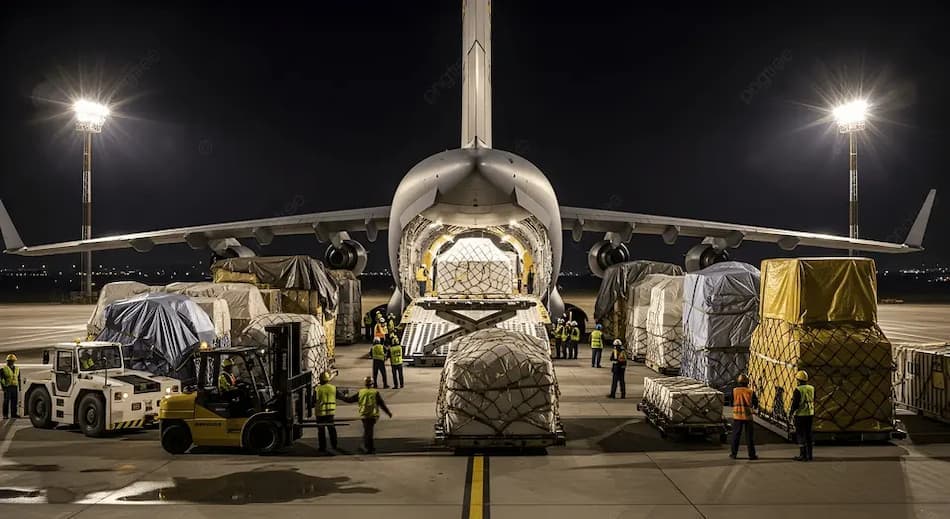
Air cargo aircraft loading freight at an international airport logistics hub

Global air cargo networks are undergoing significant changes as geopolitical tensions and the rapid growth of e-commerce reshape the movement of goods across international markets.

Airlines, logistics companies and cargo operators are increasingly adjusting their routes and supply chain strategies to respond to shifting trade patterns, regulatory pressures and disruptions in key aviation corridors. At the same time, the continued expansion of cross-border online shopping is driving strong demand for faster and more reliable air freight services.

Industry analysts say the intersection of geopolitical developments and digital commerce is accelerating structural changes across the global air freight sector.

E-Commerce Demand Continues to Drive Air Freight Growth

The rapid expansion of e-commerce has become one of the most important forces shaping global air cargo demand. Online marketplaces and international retailers rely heavily on air freight to transport high-value and time-sensitive goods quickly between production centers and consumer markets.

As consumers increasingly expect faster delivery times, logistics providers are expanding their air freight capacity and improving operational efficiency to support global e-commerce supply chains.

Air freight offers a major advantage for online retail shipments because of its speed and reliability compared with other transportation methods. This makes it a critical component of cross-border e-commerce logistics, particularly for electronics, fashion products and other high-demand consumer goods.

Industry data suggests that e-commerce shipments now represent a growing share of global air cargo volumes, reflecting the increasing role of digital commerce in international trade.

Geopolitical Developments Affect Global Cargo Routes

Recent geopolitical tensions have also created new challenges for the air freight industry. Disruptions affecting certain regions, particularly in parts of the Middle East, have forced airlines to adjust flight paths and rethink their logistics strategies.

Air cargo carriers that previously relied on established aviation corridors must now consider alternative routes, which can increase operating costs and extend transit times.

These developments highlight how geopolitical uncertainty can quickly influence global logistics networks. However, air cargo operators have demonstrated flexibility by adapting their routes and maintaining supply chain continuity despite changing conditions.

Trade Policies and Regulations Add Complexity

In addition to geopolitical risks, shifting trade policies and regulatory changes are also influencing global cargo flows.

Tariffs, export controls and evolving trade regulations can alter the economics of cross-border shipping, forcing logistics companies and online retailers to reconsider traditional supply chain routes.

As a result, many global companies are diversifying their logistics strategies and investing in more resilient supply chain infrastructure to reduce exposure to policy changes.

This approach allows businesses to maintain stable international delivery operations even as the regulatory environment continues to evolve.

Air Cargo Industry Adapts to a Changing Market

Despite these challenges, the long-term outlook for the air cargo industry remains closely tied to the continued growth of e-commerce.

Airlines and logistics providers are investing in digital technologies, automation and improved tracking systems to increase efficiency and support the rising volume of online retail shipments.

New cargo hubs and logistics infrastructure are also being developed in several regions as companies seek to strengthen supply chain resilience and improve global connectivity.

As geopolitical dynamics and global trade patterns continue to shift, air freight will remain a critical backbone of international e-commerce logistics, ensuring that goods move quickly and efficiently across borders.

The evolving relationship between geopolitics and digital commerce is likely to continue reshaping global air cargo networks in the years ahead.

Source: Aviation Week

JD.com Launches Joybuy Across 6 European Countries in Bold Expansion

JD.com launches Joybuy e-commerce platform in Europe to compete with Amazon

Chinese e-commerce giant JD.com has launched its new online retail platform Joybuy across six European countries, marking one of the company’s most significant international expansion moves to date. The rollout signals JD.com’s ambition to challenge established players such as Amazon in one of the world’s most competitive digital retail markets.

The platform debuted in the United Kingdom, Germany, France, the Netherlands, Belgium and Luxembourg, offering a broad assortment of products ranging from consumer electronics and home appliances to beauty items and groceries. At launch, the marketplace includes more than 100,000 products from global brands including Apple and Samsung.

JD.com Accelerates Global Expansion

The European launch comes as JD.com looks beyond its domestic market for growth. Competition in China’s e-commerce sector has intensified in recent years, pushing major platforms to explore new international opportunities.

By introducing Joybuy in Europe, JD.com is positioning itself as a direct competitor to Amazon while also expanding the global reach of both Chinese and international brands through its marketplace infrastructure.

Founded by billionaire entrepreneur Liu Qiangdong, JD.com has grown into one of the world’s largest online retailers. The company generated more than $150 billion in annual revenue and has built a reputation for its integrated logistics network and fast delivery capabilities.

Fast Delivery at the Core of the Strategy

A key feature of Joybuy’s European rollout is its focus on rapid delivery. JD.com plans to leverage its logistics infrastructure to provide same-day and next-day delivery services in major cities. Orders placed earlier in the day may arrive within hours, giving the platform a competitive advantage in markets where delivery speed is increasingly critical to consumer choice.

The company has invested heavily in logistics infrastructure across Europe, including dozens of warehouses and distribution centers that support its proprietary delivery network. This integrated supply chain approach has long been a defining feature of JD.com’s operations in China and is expected to play a central role in its European strategy.

Competing in Europe’s Crowded E-Commerce Market

Europe represents one of the most developed and competitive e-commerce markets globally. Amazon currently dominates much of the region’s online retail sector, while Chinese platforms such as Temu and Shein have also been expanding aggressively across Western markets.

JD.com hopes its combination of competitive pricing, global brands and fast delivery will help the company attract European consumers looking for alternatives to existing platforms.

Industry analysts note that the move could intensify competition in the region, particularly as global e-commerce companies continue to expand logistics networks and cross-border marketplaces.

A Long-Term Bet on Overseas Growth

The Joybuy launch represents JD.com’s largest overseas expansion initiative so far and highlights the company’s long-term strategy to reduce reliance on China’s domestic market.

If successful, the platform could become a major new channel for international brands while also giving Chinese merchants broader access to European consumers.

Source: Business Standard

EU E-Commerce: 35% of Consumers Face Problems When Shopping Online

Digital e-commerce shopping interface

E-commerce across the European Union continues to expand, but a growing number of consumers are encountering problems while shopping online. According to new data released by Eurostat, more than a third of online shoppers in the European Union reported encountering problems when buying products or services through websites or mobile apps.

The findings highlight ongoing challenges in the digital retail experience even as e-commerce adoption across the region continues to rise.

Online Shopping Issues Affect Over One-Third of EU Consumers

Eurostat’s latest survey on the use of information and communication technologies shows that 35.4% of online shoppers in the EU experienced at least one problem when purchasing online in 2025.

The study analyzed consumer experiences across member states and revealed considerable variation between countries. The highest shares of shoppers reporting issues were recorded in Malta, where 64% of consumers encountered problems while shopping online. The Netherlands followed with 57.9%, while Luxembourg reported 51.4%.

In contrast, several EU countries showed far lower rates of customer difficulties. Portugal recorded the lowest share, with only 4.5% of online buyers reporting problems. Greece and Latvia also saw relatively low levels of consumer complaints at 10.6% and 13.3%, respectively.

The wide differences suggest that infrastructure, logistics performance, platform quality and consumer protection mechanisms may vary significantly across national e-commerce ecosystems.

Delivery Delays Remain the Most Common Complaint

Among the various problems identified in the survey, late delivery was the most frequently reported issue. Nearly one in five EU online shoppers (19.9%) said their orders arrived later than expected.

Logistics delays can occur for several reasons, including cross-border shipping complexities, warehouse processing times and disruptions in supply chains. As e-commerce volumes increase, delivery performance has become one of the most critical factors influencing customer satisfaction.

The second most common issue was related to website usability. Around 11.5% of shoppers reported that websites or apps were difficult to use or did not function properly during the purchasing process.

Meanwhile, 10.4% of consumers reported receiving incorrect or damaged goods or services after completing their orders.

These findings highlight the importance of not only reliable logistics networks but also well-designed digital shopping interfaces.

E-Commerce Continues to Grow Across Europe

Despite these challenges, online shopping remains a dominant retail channel in Europe. Eurostat data shows that 78% of EU internet users purchased goods or services online in 2025, reflecting the continued expansion of digital commerce across the region.

The highest participation rates are typically seen among younger age groups, particularly consumers aged 25–34 and 35–44, who represent the largest share of online buyers in the EU.

Industry analysts note that while consumer adoption is strong, improving the overall reliability of delivery services and platform performance will be key to sustaining growth in Europe’s e-commerce market.

For retailers and marketplaces operating in the region, addressing logistics efficiency, improving user experience and strengthening product quality controls could play a crucial role in reducing customer complaints and building long-term consumer trust.

Source: Eurostat