WORLDEF ISTANBUL 2026 - Early Bird Registration Ends Soon

Register Now

Top 3 Nordic Retailers Lead Europe’s Cross-Border Seller Ranking

Top 3 Nordic Retailers Lead Europe’s Cross-Border Seller Ranking

Europe’s cross-border ecommerce market is being led by major Nordic multichannel retailers, with Ikea, Jysk and H&M ranking as the best-performing cross-border sellers in Europe. The ranking comes from the eighth edition of the TOP 500 B2C Cross-Border Retail Europe report by Cross-Border Commerce Europe.

The report evaluates companies based on several factors, including sales performance, SEO indicators, international market presence, cross-border visitors, brand authority and local customer options. Ikea kept its leading position, while Jysk moved up from fifth place to second. H&M remained in third place.

Retail Leaders Dominate Cross-Border Sellers in Europe

The top three companies all come from the Nordics and have strong physical retail backgrounds, showing that store-based brands continue to play a major role in online international commerce. Germany’s Zalando is the first pure online player on the list.

Cross-Border Commerce Europe estimates that cross-border ecommerce spending in Europe reached 108 billion euros in 2025, excluding travel. The TOP 500 companies generated 86 billion euros in cross-border online sales, marking 25 percent growth compared to the previous year.

Despite this growth, the market is entering a slower and more stable phase, shaped by macroeconomic pressure and a stronger focus on profitability and operational efficiency.

Source

Read more e-commerce news on WORLDEF.

Cost Pressure Europe’s 2026 E-Commerce Rules Drive Higher Shipment Costs

Cost Pressure Europe’s 2026 E-Commerce Rules Drive Higher Shipment Costs

Europe is preparing for a major shift in cross-border online trade as new customs rules begin to reshape the cost of low-value e-commerce shipments. The European Union is ending the €150 duty de minimis threshold from July 1, 2026, meaning imported goods that previously entered the bloc without customs duties may soon face additional charges.

The change comes at a time when low-value parcel volumes remain exceptionally high across the region. In 2025, more than 5.8 billion low-value e-commerce parcels were shipped into the EU. Until now, many of these shipments were exempt from customs duties if they remained below the €150 threshold, allowing international sellers to maintain competitive pricing.

End of Duty-Free Imports Adds New Cost Layers

From mid-2026, that cost equation will begin to change. Under the new approach, imports could become subject to customs duties regardless of order value. The EU is also introducing a temporary €3 customs duty per item category, tied to HS6 product classifications.

This means mixed-product orders may trigger multiple fees. For example, a parcel containing a shirt and jeans could be charged separately for each category, increasing total costs per shipment.

Additional Country-Level Fees Begin to Appear

Some EU countries are already implementing additional fees ahead of the broader reform. Italy plans a €2 per parcel charge, while Romania has introduced fees of around €5 per parcel. In France, a €2 per product category fee has also been applied.

The EU has additionally approved a €2 handling fee per parcel, expected to roll out across member states later in 2026. These costs will be applied alongside VAT and customs duties.

Impact on Pricing, Logistics and Strategy

For e-commerce businesses, the shift introduces both financial and operational challenges. Lower-value orders may become less viable under current pricing models, while customs classification and compliance requirements become more critical.

The broader shift signals a move toward stricter control of cross-border e-commerce imports in Europe. As the new framework takes effect, brands will need to adjust their pricing strategies, logistics structures, and customer experience to adapt to a more regulated environment.

Source

Vinted’s 47% GMV Surge Signals Positive Boom in Europe’s Resale Economy

Vinted’s 47% GMV Surge Signals Positive Boom in Europe’s Resale Economy

Europe’s second-hand fashion market is gaining serious momentum, and Vinted is at the center of this transformation. The Lithuania-based platform reported a 47% year-on-year increase in gross merchandise value (GMV), reaching €10.8 billion, marking a major milestone in the evolution of recommerce across the region.

The strong performance reflects a broader shift in consumer behavior. As inflation and rising living costs continue to pressure households, more consumers are turning to second-hand platforms to save money and generate extra income. This trend has positioned Vinted not just as an alternative shopping channel, but as a mainstream marketplace within Europe’s e-commerce ecosystem.

In parallel with GMV growth, Vinted’s revenue rose by 38% to €1.1 billion, underlining its ability to scale both transaction volume and monetization. The company has now firmly established itself as one of Europe’s leading digital marketplaces, with operations spanning more than 20 countries and a growing user base driven by affordability and sustainability.

Vinted Drives Resale Economy Growth Across Europe

A key driver behind Vinted’s growth is its continued expansion beyond traditional fashion categories. While women’s and children’s clothing remain core segments, the platform has increasingly diversified into areas such as sports equipment, collectibles, and electronics. This broader product offering is attracting new user segments and increasing transaction frequency.

At the same time, Vinted is investing heavily in infrastructure. Initiatives like Vinted Go (logistics) and Vinted Pay (payments) are designed to strengthen its ecosystem and reduce operational costs over time. The platform now provides access to hundreds of thousands of pick-up and drop-off points across Europe, improving convenience and delivery efficiency.

However, this aggressive growth strategy has come with trade-offs. Despite record GMV and revenue, profitability declined, with net profit falling to €62 million due to increased investments in expansion, logistics, and market development particularly in competitive regions like Germany.

Still, the long-term outlook remains strong. Vinted’s leadership emphasizes cost efficiency and ecosystem development as core pillars for making second-hand commerce the “first choice” for consumers. As resale continues to gain traction, the platform is well-positioned to capitalize on both economic and sustainability-driven demand.

Ultimately, the latest results highlight a fundamental shift in retail dynamics. Second-hand commerce is no longer niche – it is becoming a defining force in Europe’s digital economy, challenging traditional retail models and reshaping how consumers buy and sell goods online.

Source

50% of European Consumers Use BNPL as Usage Rapidly Expands

50% of European Consumers Use BNPL as Usage Rapidly Expands

Half of European consumers adopt BNPL

Buy Now, Pay Later (BNPL) services are now used by 50% of consumers across Europe, according to data published by Ecommerce News Europe.

The report shows that BNPL has moved into the mainstream, with many consumers using these services multiple times per year as part of their regular online shopping behavior.

Adoption differs by market

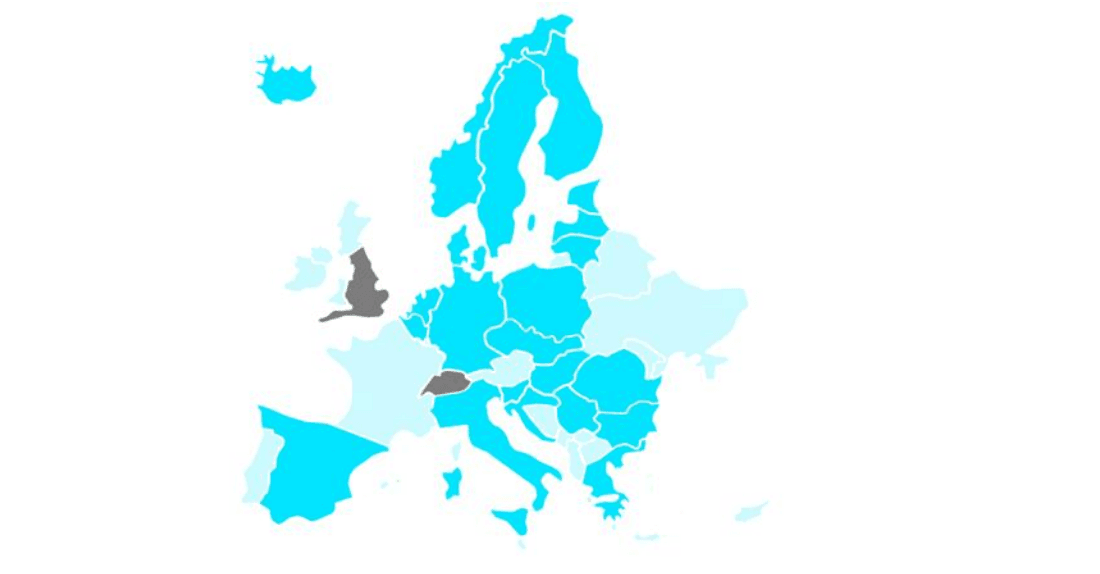
Despite strong overall uptake, usage varies significantly between countries.

In markets such as Switzerland, BNPL penetration remains lower, with roughly one in four consumers using these services. The gap highlights the influence of local financial habits, credit culture, and regulatory frameworks across Europe.

Flexible payments reshape checkout

The growth of BNPL reflects a broader shift in payment preferences.

Installment-based options often interest-free are increasingly integrated into the checkout experience, offering consumers greater flexibility compared to traditional credit products. As a result, payment methods are playing a more central role in purchase decisions.

Regulatory scrutiny increases

The expansion of BNPL has drawn attention from regulators across the region.

Authorities are assessing the need for stricter consumer protection measures, including improved transparency, clearer terms, and stronger affordability checks. Proposed updates to consumer credit rules are expected to address gaps related to BNPL services.

Merchants respond to demand

For online retailers, BNPL is becoming a standard feature rather than an optional add-on.

Merchants are integrating these solutions to support conversion and align with evolving consumer expectations, while also navigating compliance requirements as regulatory oversight increases.

Source
Read more on WORLDEF.

6 Critical Challenges Reshaping Europe’s E-Commerce Gateways

6 Critical Challenges Reshaping Europe’s E-Commerce GatewaysSlug Generator

Europe’s e-commerce logistics model is undergoing a structural transformation. What once relied heavily on a few dominant gateways across Europe is now evolving into a more distributed system shaped by speed, fragmentation, and flexibility.

The rise of cross-border e-commerce has fundamentally changed cargo dynamics across Europe. Instead of large, predictable shipments, logistics networks are now handling high-frequency, low-volume flows moving across multiple routes. This shift is forcing operators to rethink systems originally designed for scale, not agility.

At the same time, traditional hubs such as Frankfurt, Amsterdam, and Paris remain important – but they are no longer sufficient on their own. Logistics players across Europe are increasingly adopting multi-hub strategies, integrating secondary airports and regional fulfilment centres to reduce congestion and improve delivery performance.

Speed, Technology and New Trade Routes Take the Lead

Speed has become non-negotiable. Next-day delivery is rapidly turning into a baseline expectation across Europe, rather than a competitive advantage. To meet this demand, companies are relying more on air cargo and hybrid logistics models, especially for high-value and time-sensitive goods.

Technology is playing a defining role in this transformation. AI-driven forecasting, real-time tracking, and automated cargo handling systems are enabling logistics providers to operate with greater precision. Performance is no longer just about capacity – it is about visibility, coordination, and responsiveness.

Meanwhile, geopolitical developments and shifting trade corridors are adding new complexity. Airspace restrictions and evolving economic routes are forcing companies to rethink traditional pathways, accelerating the emergence of alternative gateways connecting Europe with Asia and the Middle East.

Infrastructure Pressure and the New Competitive Reality

This transformation is placing increasing pressure on infrastructure. Airports and logistics hubs across Europe must scale rapidly through automation, expanded cargo capacity, and specialised facilities. Without these investments, bottlenecks will become unavoidable.

Ultimately, Europe’s e-commerce gateways are no longer defined by location alone. They are defined by how efficiently they operate within a broader network. Competitive advantage is shifting from size to flexibility – and from physical infrastructure to intelligent, connected systems.

Source: Air Cargo Week

Amazon to Invest €5 Billion in Poland as E-Commerce Market Continues to Expand

amazon to invest euro5 billion in poland as e-commerce market continues to expand

Amazon is planning to invest more than €5 billion in Poland between 2026 and 2028, reinforcing its long-term commitment to one of Europe’s fastest-growing e-commerce markets. The investment comes on top of the over €10 billion the company has already invested in the country since 2012, covering infrastructure, logistics, and support for local businesses.

The move highlights Poland’s growing importance in Amazon’s European strategy. As one of the region’s largest and fastest-developing economies, the country continues to attract major investments from global tech and e-commerce players.

Poland Emerges as a Key E-Commerce Hub

E-commerce in Poland has been expanding steadily, with online sales reaching approximately €21.5 billion in 2025, reflecting a 6.8% annual increase. Growth is expected to continue, with projections pointing to further expansion in 2026.

Consumer behavior is also shifting rapidly. Around 75% of Polish consumers shop online at least once a month, while 71% report feeling safer using online marketplaces, indicating growing trust in digital commerce platforms.

These trends are positioning Poland as a strategic market not only for domestic growth but also for cross-border e-commerce across Europe.

Logistics Expansion at the Core of Investment

A significant portion of Amazon’s new investment will focus on expanding its logistics network. The company plans to open a new 200,000-square-meter fulfillment center in Dobromierz, equipped with advanced automation and more than 5,000 robots.

With this addition, Amazon will further strengthen its operational footprint in Poland, where it already operates multiple fulfillment centers. The expansion aims to improve delivery speed, efficiency, and overall customer experience.

In addition to infrastructure, Amazon is also investing in localized solutions, including payment methods and services tailored to Polish consumers, signaling a deeper integration into the local market.

Competition and Market Position

While Amazon continues to scale in Poland, it still faces strong competition from local marketplace leader Allegro. Despite entering the market in 2021, Amazon has rapidly established itself as a key player, supported by continuous investments and infrastructure development.

The company’s strategy focuses not only on growth but also on strengthening Poland’s role in the broader European e-commerce ecosystem.

Amazon’s €5 billion investment signals more than just expansion – it reflects a long-term bet on Poland’s digital economy. As e-commerce adoption continues to rise and logistics capabilities improve, the country is increasingly becoming a central hub for online retail in Europe.

Source: Ecommerce News Europe

JD.com Launches Joybuy Across 6 European Countries in Bold Expansion

JD.com launches Joybuy e-commerce platform in Europe to compete with Amazon

Chinese e-commerce giant JD.com has launched its new online retail platform Joybuy across six European countries, marking one of the company’s most significant international expansion moves to date. The rollout signals JD.com’s ambition to challenge established players such as Amazon in one of the world’s most competitive digital retail markets.

The platform debuted in the United Kingdom, Germany, France, the Netherlands, Belgium and Luxembourg, offering a broad assortment of products ranging from consumer electronics and home appliances to beauty items and groceries. At launch, the marketplace includes more than 100,000 products from global brands including Apple and Samsung.

JD.com Accelerates Global Expansion

The European launch comes as JD.com looks beyond its domestic market for growth. Competition in China’s e-commerce sector has intensified in recent years, pushing major platforms to explore new international opportunities.

By introducing Joybuy in Europe, JD.com is positioning itself as a direct competitor to Amazon while also expanding the global reach of both Chinese and international brands through its marketplace infrastructure.

Founded by billionaire entrepreneur Liu Qiangdong, JD.com has grown into one of the world’s largest online retailers. The company generated more than $150 billion in annual revenue and has built a reputation for its integrated logistics network and fast delivery capabilities.

Fast Delivery at the Core of the Strategy

A key feature of Joybuy’s European rollout is its focus on rapid delivery. JD.com plans to leverage its logistics infrastructure to provide same-day and next-day delivery services in major cities. Orders placed earlier in the day may arrive within hours, giving the platform a competitive advantage in markets where delivery speed is increasingly critical to consumer choice.

The company has invested heavily in logistics infrastructure across Europe, including dozens of warehouses and distribution centers that support its proprietary delivery network. This integrated supply chain approach has long been a defining feature of JD.com’s operations in China and is expected to play a central role in its European strategy.

Competing in Europe’s Crowded E-Commerce Market

Europe represents one of the most developed and competitive e-commerce markets globally. Amazon currently dominates much of the region’s online retail sector, while Chinese platforms such as Temu and Shein have also been expanding aggressively across Western markets.

JD.com hopes its combination of competitive pricing, global brands and fast delivery will help the company attract European consumers looking for alternatives to existing platforms.

Industry analysts note that the move could intensify competition in the region, particularly as global e-commerce companies continue to expand logistics networks and cross-border marketplaces.

A Long-Term Bet on Overseas Growth

The Joybuy launch represents JD.com’s largest overseas expansion initiative so far and highlights the company’s long-term strategy to reduce reliance on China’s domestic market.

If successful, the platform could become a major new channel for international brands while also giving Chinese merchants broader access to European consumers.

Source: Business Standard