WORLDEF ISTANBUL 2026 - Early Bird Registration Ends Soon

Register Now

Amazon Accelerates Against Walmart; Launches 1- and 3-Hour Fast Delivery in the U.S.

Fast Delivery

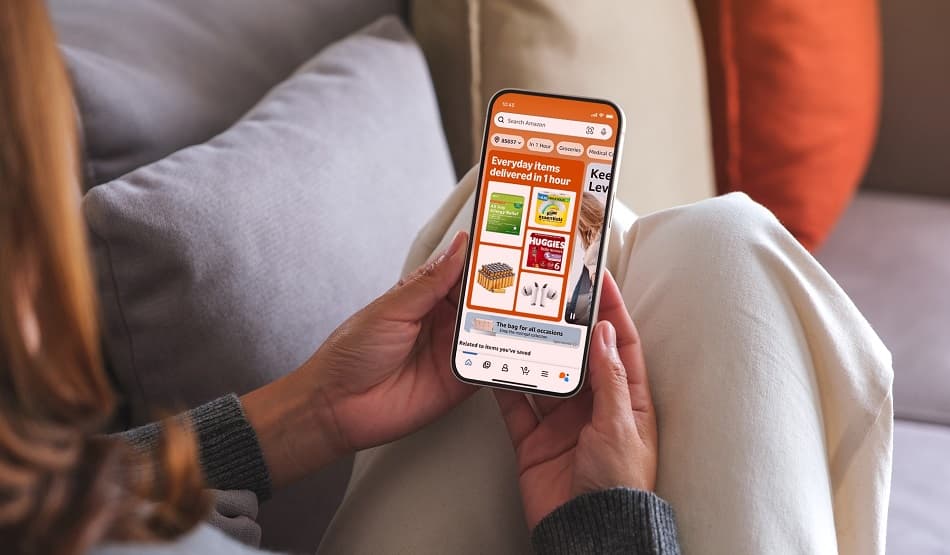
Amazon has taken a new step that redefines delivery speed in the United States. By introducing 1-hour and 3-hour delivery options across many markets, including major metropolitan areas such as Los Angeles and Chicago, the company has taken its competition with Walmart in fast delivery to a new stage.

According to information shared by Amazon, the new model was built on top of its same-day delivery infrastructure. Under the new service, customers can order more than 90,000 products, ranging from daily essentials to electronics, in a much shorter time. Amazon states that 1-hour delivery is available in hundreds of cities and towns, while the 3-hour delivery option is accessible in more than 2,000 locations.

Fast Delivery Is Now a New Growth Tool

For Amazon, this move is not only about logistics, but also a commercial strategy aimed at increasing basket size and shopping frequency. The company had previously launched a model called “Amazon Now” in certain parts of Seattle and Philadelphia, offering grocery and everyday essentials delivery in 30 minutes or less.

A New Operational Order Has Been Established

In order to manage these short delivery windows, the company created dedicated workstations within its existing same-day delivery centers. Yellow labels began to be used for the rapid sorting of packages, and on-site signage was also updated to guide delivery partners. Amazon also launched a new “get it fast” page to help users find eligible products more easily.

Prime Has an Advantage, but It Is Not Free

The new fast delivery model is offered for an additional fee. Prime members pay $9.99 for 1-hour fast delivery and $4.99 for 3-hour delivery. For customers without a Prime membership, the fees stand at $19.99 and $14.99, respectively. This shows that while Amazon is strongly playing the speed card, it is also trying to preserve profitability.

Walmart Pressure Was the Decisive Factor

Amazon’s timing is not a coincidence. According to the AP, Walmart says it can provide same-day fast delivery in under 3 hours to approximately 95 percent of the U.S. population. The company is also expanding its drone delivery network. This picture shows that in U.S. retail, competition measured in minutes for delivery has now been added to price competition.

A New Era in Retail: The Cost of Speed

The latest development reveals that customer expectations in e-commerce have now reached the point of delivery not only “the next day,” but “the same day or even within a few hours.” However, the expansion of this model will also bring new debates, including logistics costs, the burden of urban operations, and pressure on small retailers. Amazon’s latest move clearly shows that in U.S. retail, speed is no longer a privilege, but has become an area of strategic competition.
JD.com Launches Joybuy Across 6 European Countries in Bold Expansion

JD.com launches Joybuy e-commerce platform in Europe to compete with Amazon

Chinese e-commerce giant JD.com has launched its new online retail platform Joybuy across six European countries, marking one of the company’s most significant international expansion moves to date. The rollout signals JD.com’s ambition to challenge established players such as Amazon in one of the world’s most competitive digital retail markets.

The platform debuted in the United Kingdom, Germany, France, the Netherlands, Belgium and Luxembourg, offering a broad assortment of products ranging from consumer electronics and home appliances to beauty items and groceries. At launch, the marketplace includes more than 100,000 products from global brands including Apple and Samsung.

JD.com Accelerates Global Expansion

The European launch comes as JD.com looks beyond its domestic market for growth. Competition in China’s e-commerce sector has intensified in recent years, pushing major platforms to explore new international opportunities.

By introducing Joybuy in Europe, JD.com is positioning itself as a direct competitor to Amazon while also expanding the global reach of both Chinese and international brands through its marketplace infrastructure.

Founded by billionaire entrepreneur Liu Qiangdong, JD.com has grown into one of the world’s largest online retailers. The company generated more than $150 billion in annual revenue and has built a reputation for its integrated logistics network and fast delivery capabilities.

Fast Delivery at the Core of the Strategy

A key feature of Joybuy’s European rollout is its focus on rapid delivery. JD.com plans to leverage its logistics infrastructure to provide same-day and next-day delivery services in major cities. Orders placed earlier in the day may arrive within hours, giving the platform a competitive advantage in markets where delivery speed is increasingly critical to consumer choice.

The company has invested heavily in logistics infrastructure across Europe, including dozens of warehouses and distribution centers that support its proprietary delivery network. This integrated supply chain approach has long been a defining feature of JD.com’s operations in China and is expected to play a central role in its European strategy.

Competing in Europe’s Crowded E-Commerce Market

Europe represents one of the most developed and competitive e-commerce markets globally. Amazon currently dominates much of the region’s online retail sector, while Chinese platforms such as Temu and Shein have also been expanding aggressively across Western markets.

JD.com hopes its combination of competitive pricing, global brands and fast delivery will help the company attract European consumers looking for alternatives to existing platforms.

Industry analysts note that the move could intensify competition in the region, particularly as global e-commerce companies continue to expand logistics networks and cross-border marketplaces.

A Long-Term Bet on Overseas Growth

The Joybuy launch represents JD.com’s largest overseas expansion initiative so far and highlights the company’s long-term strategy to reduce reliance on China’s domestic market.

If successful, the platform could become a major new channel for international brands while also giving Chinese merchants broader access to European consumers.

Source: Business Standard