WORLDEF ISTANBUL 2026 - Upcoming Event

Register Now

Amazon Invests €15 Billion in France to Expand Logistics and AI Operations

Amazon Invests €15 Billion in France to Expand Logistics and AI Operations

Amazon has announced plans to invest more than €15 billion in France between 2026 and 2028, marking the company’s largest-ever investment in the country. The move is expected to strengthen Amazon’s logistics network, expand its cloud and artificial intelligence infrastructure, and create over 7,000 permanent jobs across France.

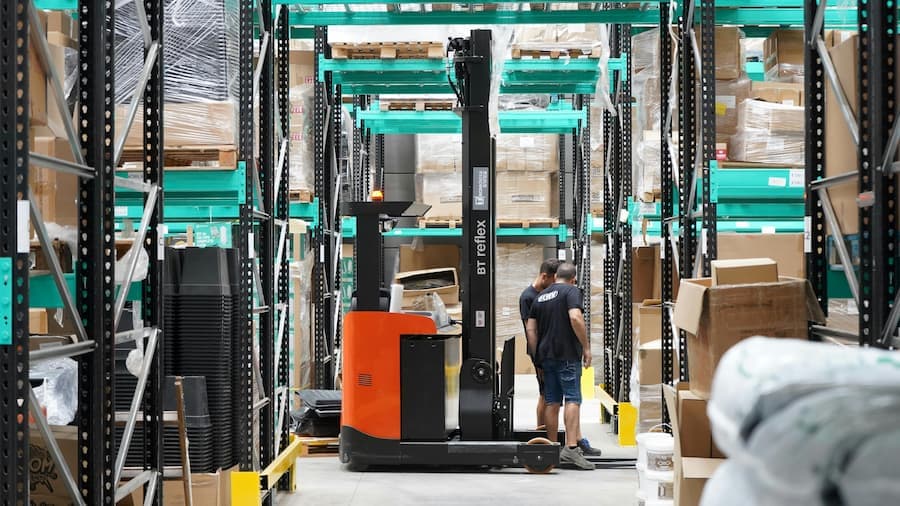
The investment will cover both infrastructure development and operational spending. Amazon confirmed that the funds will support the construction of new logistics centers, upgrades to its existing fulfillment network, and the expansion of AWS cloud and AI capabilities in France. The company says the initiative aims to deliver faster shipping, broader product selection, and improved operational efficiency while also reducing environmental impact through a more localized logistics model.

New Logistics Centers to Drive Job Creation

Amazon revealed that several new distribution facilities will begin operations starting in 2026. Planned sites include Illiers-Combray, Beauvais, Colombier-Saugnieu, and Ensisheim. Together, these facilities are expected to generate more than 7,000 permanent jobs over the next few years. �
Amazon News +2
The expansion reflects Amazon’s growing focus on strengthening European logistics capabilities amid rising e-commerce demand and increasing competition from Asian retail platforms. France continues to be one of Amazon’s key strategic markets in Europe, supported by a growing digital economy and strong consumer demand for fast delivery services.

France Strengthens Its Position as an AI and Cloud Hub

A significant portion of the investment will also be directed toward Amazon Web Services and artificial intelligence infrastructure. France has recently emerged as a major European hub for AI development, attracting investments from global technology companies including Amazon and Microsoft.


Amazon stated that expanding its cloud infrastructure in France will help businesses, startups, and enterprises accelerate AI adoption and digital transformation initiatives. The company previously invested over €1.2 billion in France in 2024 to strengthen logistics and AWS infrastructure, making this latest commitment a substantial escalation of its long-term strategy in the country.

France Continues to Attract Global Tech Investments

The announcement also reinforces France’s ambition to position itself as a leading European destination for international technology investments. The country has increasingly attracted large-scale commitments tied to AI, cloud computing, logistics, and advanced digital infrastructure.

As competition intensifies across Europe’s e-commerce and AI sectors, Amazon’s latest investment signals growing confidence in France’s long-term role within the global digital economy.

Source

Lille in 2026 Selected to Host New EU Customs Authority as Trade Pressures Rise

Lille in 2026 Selected to Host New EU Customs Authority as Trade Pressures Rise

The European Union has selected the French city of Lille as the headquarters of its new Customs Authority, marking a major step in the bloc’s efforts to modernise its trade and customs systems.

The decision follows a competitive bidding process involving several European cities, including Rome, Warsaw, The Hague and Bucharest. In the final round, Lille secured the position, reinforcing France’s central role in shaping the future of EU customs operations.

The new authority is expected to be established in 2026 and could become fully operational by 2028, although timelines remain subject to final negotiations.

A Central Hub for EU Customs Reform

The creation of the EU Customs Authority is part of a broader overhaul of the EU customs framework. The reform aims to address growing challenges linked to rising trade volumes, fragmented national systems and the rapid expansion of e-commerce.

In particular, the surge in low-value shipments and cross-border online trade has placed increasing pressure on existing customs infrastructure. The new authority is expected to play a key role in improving coordination, strengthening enforcement and supporting a more unified approach across member states.

Beyond enforcement, the authority will also contribute to the development of a more digital and data-driven customs system, aligning with the EU’s wider strategy to modernise trade operations.

Why Lille Was Selected

Lille’s selection reflects both strategic and operational advantages. Located at a key crossroads of European trade routes, the city offers strong logistics connectivity and proximity to major markets, including the UK and Northern Europe.

France also highlighted its experience in managing large trade flows and its established customs infrastructure as part of its bid. The country remains one of the EU’s primary entry points for goods, handling a significant share of incoming parcels.

In addition, Lille presented a ready-to-use infrastructure plan and committed to supporting operational costs, strengthening its position in the final decision process.

What This Means for E-Commerce and Trade

The establishment of the EU Customs Authority comes at a time when global trade is becoming increasingly complex. Geopolitical tensions, shifting tariffs and the continued rise of e-commerce are forcing governments to rethink how goods are monitored and regulated.

For e-commerce businesses, the move signals a shift toward more structured and centralised customs processes. Combined with upcoming regulatory changes such as the removal of de minimis thresholds, the EU is moving toward tighter control over cross-border flows.

As previously highlighted in WORLDEF’s coverage of customs and e-commerce trends, the future of cross-border trade will be defined less by speed alone and more by compliance, data accuracy and operational resilience.

The decision to base the authority in Lille underlines the EU’s intention to build a more integrated and technologically advanced customs system. For businesses operating across borders, this marks another step toward a more regulated, but also more predictable, trade environment.

Source: Euronews

Paris Court of Appeal Rules on Shein; Government’s Shutdown Request Rejected

Shein

The Paris Court of Appeal rejected the French state’s request to suspend Shein’s marketplace. The case was filed after child-like sex dolls and prohibited products were identified on the platform in November 2025. The French state initially sought a harsher intervention targeting the entire site, then revised its request to the suspension of the marketplace; however, the court also upheld on appeal the rejection decision issued in December 2025.

Although the court ruling represents a significant legal victory for Shein, it does not bring the pressure on the company to an end. The court emphasized that the platform cannot operate without adequate age-verification measures against the resale of similar products. In its statement following the ruling, Shein said that it had strengthened product and seller controls for third-party sellers, banned sex dolls across all markets, and had gradually started implementing age-verification measures.

The French Government Will Closely Monitor Shein

Immediately after the ruling, the French government did not step back either. Authorities stated that they would monitor “extremely carefully” whether Shein fully complies with the conditions set by the court. France’s Minister for Small and Medium-Sized Enterprises, Serge Papin, had previously said that 2026 would be a “year of resistance” against Shein and similar platforms, arguing that these companies create unfair competition against French retailers. According to the same report, France introduced a 2-euro tax on small parcels as of March 1; the European Union is also planning a similar 3-euro tax for the summer months.

France Is Shein’s Largest Market in Europe

Despite all regulatory pressure, Shein’s user base in Europe continues to grow. According to the company’s EU transparency report, its average monthly active users in the European Union reached 155.7 million in the period from August 1, 2025 to January 31, 2026; this means an increase of more than 10 million compared with the previous period and growth of 6.9%. France stands as Shein’s largest user market in Europe with 28.2 million average monthly users, while Germany follows with 22.2 million users. Shein also operates its marketplace model in 11 countries across Europe and says it works with more than 600 sales partners in Germany alone.

Shein Is Battling Regulations in Europe

The case in France is part of the broader regulatory challenges Shein is facing in Europe. Last month, the European Commission launched a formal investigation into Shein under the Digital Services Act over allegations related to illegal products and platform design. Therefore, although the rejection ruling by the Paris Court of Appeal has protected Shein’s operations in France, it does not mean that the company has emerged from regulatory pressure in Europe.