WORLDEF ISTANBUL 2026 - Early Bird Registration Ends Soon

Register Now

$200B AI Investment Signals Strong Future for AWS Under Andy Jassy

$200B AI Investment Signals Strong Future for AWS Under Andy Jassy

Amazon CEO Andy Jassy has reinforced the company’s long-term commitment to artificial intelligence, positioning AWS at the center of what he describes as a “once-in-a-generation” technological shift.

The company plans to invest approximately $200 billion in 2026, with the majority of this investment directed toward AI infrastructure, including data centers, custom chips, and cloud capacity. This large-scale investment strategy reflects Amazon’s belief that AI will redefine not only cloud computing but also the broader digital economy.

AWS AI business reaches new scale

AWS is already seeing strong traction from its AI services. According to recent disclosures, Amazon’s AI-related services within AWS have reached an annualized revenue run rate exceeding $15 billion, accounting for a growing share of its cloud business.

At the same time, Amazon’s custom chip segment powered by products such as Trainium and Graviton has surpassed $20 billion in annual revenue run rate, signaling rapid adoption of in-house AI infrastructure solutions. These results indicate that Amazon’s investment in AI technologies is already delivering measurable outcomes.

Strategic partnerships accelerate growth

Amazon is also strengthening its AI ecosystem through major partnerships. The company recently announced a multi-year strategic collaboration with OpenAI, aimed at accelerating innovation and expanding AI capabilities.

Such partnerships complement Amazon’s broader investment approach, enabling the company to scale faster and respond to rising enterprise demand for AI-powered solutions.

AI to reshape cloud and global commerce

Jassy has emphasized that demand for AI workloads is growing faster than AWS can currently supply. The company is rapidly expanding data center capacity and continuing its investment in infrastructure to meet this demand.

Looking ahead, Amazon believes AI could significantly expand AWS’s long-term potential, positioning the cloud unit for substantial growth in the coming years.

A defining moment for AI leadership

Amazon’s massive AI investment signals a decisive shift toward long-term innovation over short-term profitability. While concerns around spending remain, the company is confident that continued investment in AI will drive future returns and strengthen its competitive position.

As competition intensifies among global tech giants, AWS’s aggressive strategy could play a defining role in shaping the next era of cloud computing and e-commerce.

Source

Stay updated with global AI and e-commerce developments on WORLDEF.

Digital SEZ Integration Drives 5 Powerful Shifts in Global E-Commerce

Digital SEZ Integration Drives 5 Powerful Shifts in Global E-Commerce

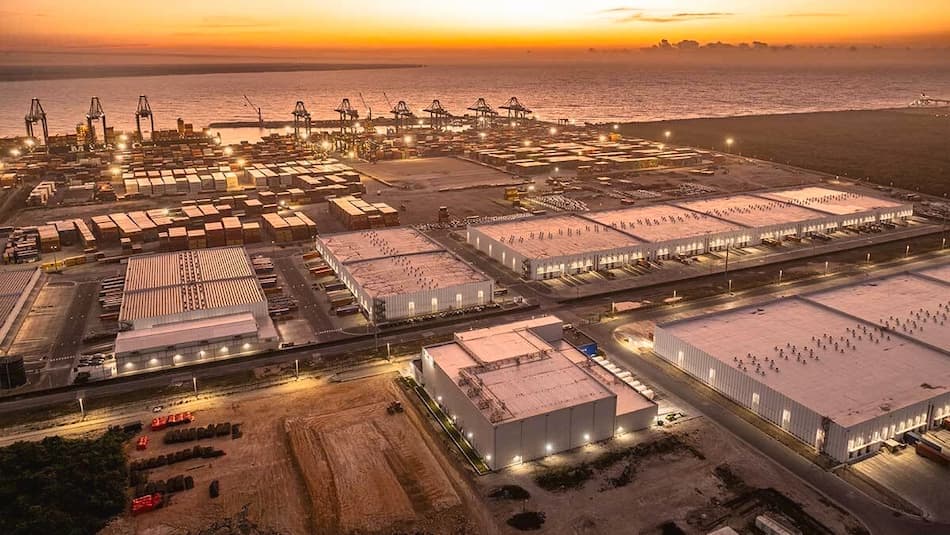
The global trade landscape is undergoing a structural transformation as digital capabilities are integrated into traditional Special Economic Zones (SEZs). Once designed primarily to attract manufacturing investment and boost exports, SEZs are now evolving into hybrid ecosystems where physical infrastructure meets digital commerce.

According to a recent analysis by The Dialogue, this convergence is not only strengthening regional competitiveness but also unlocking new growth pathways for e-commerce businesses operating across borders.

From industrial zones to digital commerce hubs

The role of SEZs is expanding beyond production. By embedding technologies such as data infrastructure, e-commerce platforms, and smart logistics systems, these zones are becoming end-to-end trade environments.

This transformation allows businesses to manage the entire value chain-from manufacturing to global distribution-within a single, integrated ecosystem. For e-commerce players, this means faster operations, reduced friction, and greater scalability.

Accelerating cross-border e-commerce

One of the most immediate impacts of digitally integrated SEZs is the reduction of cross-border trade barriers. Simplified customs procedures, tax incentives, and streamlined regulations create a more efficient environment for international transactions.

As a result, brands can expand into new markets more easily, while consumers benefit from faster delivery times and broader product availability. This shift is reinforcing the rise of borderless e-commerce models, where geography becomes less of a constraint.

Logistics becomes a competitive advantage

Location has always been a key advantage of SEZs, with most zones positioned near ports, airports, and major transport corridors. However, when combined with digital systems, this advantage becomes significantly more powerful.

Real-time inventory tracking, automated warehousing, and data-driven supply chain optimization are enabling e-commerce companies to shorten delivery cycles and improve fulfillment accuracy. In a market where speed is critical, this creates a clear competitive edge.

A catalyst for digital investment

Digitally enhanced SEZs are increasingly attracting investment from global technology players, including e-commerce platforms, fintech providers, and logistics innovators. This influx of capital is strengthening the broader ecosystem, enabling faster innovation and improved infrastructure.

For businesses operating within these zones, the benefits are twofold: access to advanced technologies and proximity to a growing network of digital service providers.

Empowering SMEs in global commerce

Perhaps one of the most significant outcomes is the opportunity created for small and medium-sized enterprises (SMEs). Traditionally limited by logistics costs and market access barriers, SMEs can now leverage SEZ infrastructure to reach international customers through e-commerce channels.

By lowering entry barriers and providing integrated support systems, digital SEZs are helping create a more inclusive global trade environment.

Balancing opportunity with risk

Despite their potential, experts caution that SEZs must be carefully designed to ensure long-term impact. Without the right policies, there is a risk of limited local economic integration or uneven regional development.

To fully realize their value, digital SEZ strategies need to focus on sustainability, inclusivity, and balanced growth.

The future of e-commerce infrastructure

As global trade becomes increasingly digital, SEZs are no longer just production zones. They are emerging as critical infrastructure for the next generation of e-commerce, combining logistics, technology, and policy into a single operational framework.

For e-commerce companies looking to scale internationally, digitally integrated SEZs may soon become not just an advantage-but a necessity.

Source: The Dialogue