WORLDEF ISTANBUL 2026 - Early Bird Registration Ends Soon

Register Now

DHL Expands Global Logistics with 3 Key Capabilities from Vital Solutions Acquisition

DHL Expands Global Logistics with 3 Key Capabilities from Vital Solutions Acquisition

Global logistics giant DHL is expanding its footprint in South Africa through the acquisition of Vital Distribution Solutions, Staffing Logistics, and Vital Fleet, in a move aimed at strengthening its end-to-end supply chain capabilities.

The transaction, approved unconditionally by South Africa’s Competition Commission, is expected to enhance DHL’s position in transport, warehousing, and contract logistics across the region.

Strengthening Logistics Capabilities Across Key Sectors

The acquisition covers a wide range of logistics services, including road freight, third-party logistics, storage, distribution, and e-commerce-related operations.

Vital Distribution Solutions brings established capabilities in servicing industries such as FMCG, manufacturing, industrial, and retail, while Vital Fleet adds fleet management and rental services. Staffing Logistics complements the deal by providing flexible workforce solutions across transport and service sectors.

By integrating these operations, DHL aims to deepen customer relationships and deliver more scalable, end-to-end logistics solutions in a rapidly evolving market.

E-Commerce Growth Driving Demand for Third-Party Logistics

The deal comes amid rising demand for outsourced logistics services in South Africa, driven by the continued growth of e-commerce and regional trade activity.

Industry players are increasingly investing in specialised logistics solutions to meet evolving supply chain requirements, particularly in sectors such as healthcare, retail, and transport. DHL has already signalled its long-term commitment to the region, with plans to invest approximately €300 million in Sub-Saharan Africa over the next five years.

As supply chains become more complex and digital commerce continues to scale, acquisitions like this highlight a broader shift toward integrated logistics ecosystems designed to improve efficiency, resilience, and service quality.

Source: Daily Dispatch

Growth in E-Commerce Slows in 2026 as Infrastructure Becomes a Critical Barrier

Growth in E-Commerce Slows in 2026 as Infrastructure Becomes a Critical Barrier

As global e-commerce continues to expand, a new limitation is becoming increasingly clear: growth is no longer driven solely by demand, but constrained by operational infrastructure.

Industry experts highlight that many e-commerce businesses are reaching a point where their internal systems-ranging from logistics and fulfillment to customer service and data management – are struggling to keep pace with rising order volumes. This shift signals a turning point for the sector, where scaling operations has become just as critical as driving sales.

Infrastructure Becomes the Real Growth Bottleneck

For years, e-commerce growth strategies focused on customer acquisition, digital marketing, and conversion optimization. However, as transaction volumes grow, operational capacity is emerging as the primary constraint.

From inventory management to last-mile delivery, inefficiencies across the supply chain can slow expansion and negatively impact the customer experience. Companies that fail to invest in scalable systems risk delays, higher operational costs, and reduced customer satisfaction.

Logistics, Data and Systems Under Pressure

Modern e-commerce relies on complex, interconnected systems that integrate logistics, payments, inventory, and customer experience. When these systems are outdated or fragmented, they create bottlenecks that limit scalability.

Experts emphasize that operational infrastructure should no longer be viewed as a background function. Instead, it is becoming a strategic driver of performance, profitability, and long-term competitiveness.

Shift Toward Sustainable Scaling

The industry is also moving away from “growth at all costs” toward more sustainable expansion models. Businesses are increasingly prioritizing operational efficiency, cost control, and resilience.

This shift reflects a broader understanding that scaling without strong infrastructure can lead to operational breakdowns. As a result, companies are investing more in automation, integrated platforms, and data-driven decision-making to support long-term growth.

A New Priority for E-Commerce Leaders

As the e-commerce landscape evolves, operational infrastructure is becoming a central focus for executives and investors alike. Businesses that build strong, scalable systems will be better positioned to handle future growth and adapt to changing market dynamics.

Those that fail to modernize their infrastructure may struggle to remain competitive in an environment where speed, efficiency, and reliability are essential.

Source: Forbes
Image credit: rawpixel.com / Freepik

For more insights on global e-commerce trends and industry developments, visit WORLDEF.

Air Cargo Shifts: 5 Ways E-Commerce Growth Is Reshaping Global Logistics

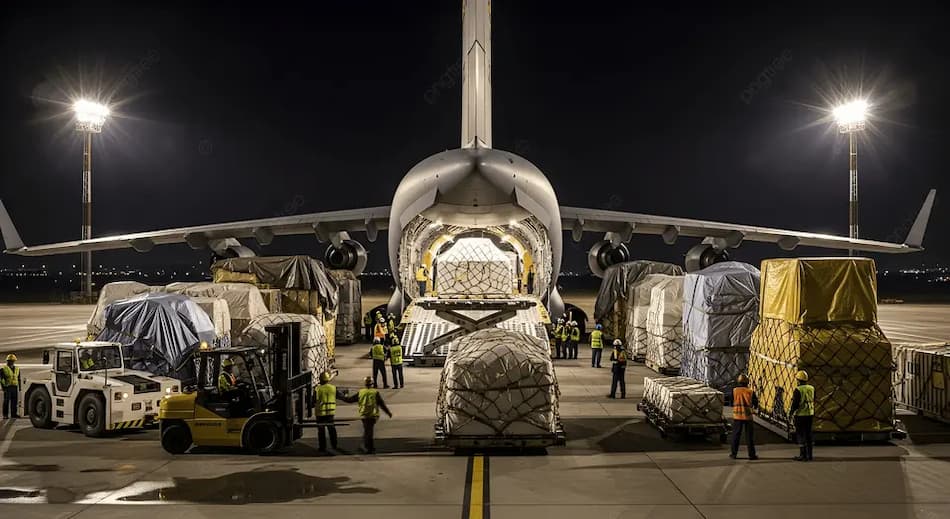
Air cargo aircraft loading freight at an international airport logistics hub

Global air cargo networks are undergoing significant changes as geopolitical tensions and the rapid growth of e-commerce reshape the movement of goods across international markets.

Airlines, logistics companies and cargo operators are increasingly adjusting their routes and supply chain strategies to respond to shifting trade patterns, regulatory pressures and disruptions in key aviation corridors. At the same time, the continued expansion of cross-border online shopping is driving strong demand for faster and more reliable air freight services.

Industry analysts say the intersection of geopolitical developments and digital commerce is accelerating structural changes across the global air freight sector.

E-Commerce Demand Continues to Drive Air Freight Growth

The rapid expansion of e-commerce has become one of the most important forces shaping global air cargo demand. Online marketplaces and international retailers rely heavily on air freight to transport high-value and time-sensitive goods quickly between production centers and consumer markets.

As consumers increasingly expect faster delivery times, logistics providers are expanding their air freight capacity and improving operational efficiency to support global e-commerce supply chains.

Air freight offers a major advantage for online retail shipments because of its speed and reliability compared with other transportation methods. This makes it a critical component of cross-border e-commerce logistics, particularly for electronics, fashion products and other high-demand consumer goods.

Industry data suggests that e-commerce shipments now represent a growing share of global air cargo volumes, reflecting the increasing role of digital commerce in international trade.

Geopolitical Developments Affect Global Cargo Routes

Recent geopolitical tensions have also created new challenges for the air freight industry. Disruptions affecting certain regions, particularly in parts of the Middle East, have forced airlines to adjust flight paths and rethink their logistics strategies.

Air cargo carriers that previously relied on established aviation corridors must now consider alternative routes, which can increase operating costs and extend transit times.

These developments highlight how geopolitical uncertainty can quickly influence global logistics networks. However, air cargo operators have demonstrated flexibility by adapting their routes and maintaining supply chain continuity despite changing conditions.

Trade Policies and Regulations Add Complexity

In addition to geopolitical risks, shifting trade policies and regulatory changes are also influencing global cargo flows.

Tariffs, export controls and evolving trade regulations can alter the economics of cross-border shipping, forcing logistics companies and online retailers to reconsider traditional supply chain routes.

As a result, many global companies are diversifying their logistics strategies and investing in more resilient supply chain infrastructure to reduce exposure to policy changes.

This approach allows businesses to maintain stable international delivery operations even as the regulatory environment continues to evolve.

Air Cargo Industry Adapts to a Changing Market

Despite these challenges, the long-term outlook for the air cargo industry remains closely tied to the continued growth of e-commerce.

Airlines and logistics providers are investing in digital technologies, automation and improved tracking systems to increase efficiency and support the rising volume of online retail shipments.

New cargo hubs and logistics infrastructure are also being developed in several regions as companies seek to strengthen supply chain resilience and improve global connectivity.

As geopolitical dynamics and global trade patterns continue to shift, air freight will remain a critical backbone of international e-commerce logistics, ensuring that goods move quickly and efficiently across borders.

The evolving relationship between geopolitics and digital commerce is likely to continue reshaping global air cargo networks in the years ahead.

Source: Aviation Week