WORLDEF ISTANBUL 2026 - Upcoming Event

Register Now

Nvidia Hits Record $5.3 Trillion Value as AI Rally Strengthens

Nvidia Hits Record $5.3 Trillion Value as AI Rally Strengthens

Nvidia has reached a new milestone in global markets, with its valuation climbing close to $5.3 trillion after another strong rally in its shares.

The company’s stock rose around 4%, closing at a new all-time high of $216.61 per share, according to reports. The move pushed it to the highest market capitalization ever recorded by a publicly traded firm, strengthening its position at the center of the artificial intelligence boom.

AI Demand Pushes Nvidia to Historic Market Cap

The latest gain reflects investor confidence in the continued demand for AI infrastructure, especially high-performance chips used by cloud providers, data centers and technology companies. Nvidia has become one of the biggest beneficiaries of the rapid expansion of generative AI, as businesses continue to invest heavily in computing capacity.

The rally also supported broader technology sentiment. The surge came during a period of strong momentum for semiconductor stocks, with investors closely watching AI-related companies ahead of major technology earnings.

Its growth highlights how artificial intelligence has reshaped global equity markets. Once best known for graphics processing units used in gaming, Nvidia is now viewed as a critical supplier for AI development. Its chips are widely used to train and run large AI models, making it a key player in the next phase of digital transformation.

However, the record valuation also brings greater scrutiny. Investors are watching whether AI spending can continue at the same pace and whether major technology companies can translate large infrastructure investments into sustainable revenue growth. Any slowdown in AI demand could put pressure on high-growth semiconductor stocks.

Still, the latest market record shows that investor appetite for AI leaders remains strong. As companies accelerate AI adoption across cloud computing, enterprise software, automation and data infrastructure, Nvidia continues to benefit from its dominant role in the semiconductor ecosystem.

For more insights, read more on WORLDEF News.

Source

3 Signals Show China’s Trade Momentum Strengthening as Global Markets Shift

3 Signals Show China’s Trade Momentum Strengthening as Global Markets Shift

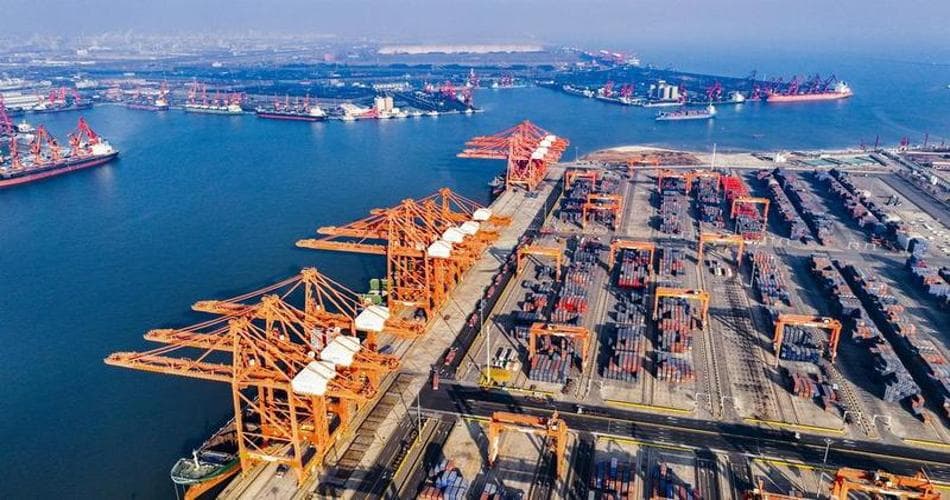
China is reinforcing its position in global trade as officials highlight steady progress in foreign trade performance and continued efforts to strengthen economic resilience.

At a recent briefing by the State Council Information Office (SCIO), authorities emphasized that China’s trade activity remains stable, supported by strong industrial capacity and ongoing policy measures aimed at improving trade quality and structure.

The update reflects a broader strategy focused not only on maintaining trade volumes but also on enhancing value creation and long-term sustainability.

Trade Structure Shifts Toward Higher Value

China is increasingly prioritizing the quality of its trade over sheer volume. Officials highlighted improvements in the composition of exports, with a growing share of high-value and technology-driven products.

This transition signals a move toward more advanced manufacturing and innovation-led trade. At the same time, efforts are underway to promote more balanced import and export dynamics while strengthening global supply chain stability.

Cross-Border E-Commerce Remains a Key Driver

Cross-border e-commerce continues to play a central role in China’s trade strategy. Digital platforms and streamlined logistics systems are enabling businesses to access global markets more efficiently.

Authorities have emphasized ongoing improvements in trade facilitation, including customs processes and digital infrastructure, to support faster and more reliable international transactions.

As global demand for online commerce grows, China is further integrating digital trade into its broader economic framework.

What This Means for Global Markets

China’s latest signals point to a more structured and resilient global trade environment. While geopolitical and economic pressures remain, the country’s focus on innovation, diversification and digitalization is shaping the next phase of international commerce.

As previously highlighted in WORLDEF’s coverage of global trade trends, the future of cross-border trade is increasingly defined by efficiency, data-driven systems and strategic expansion.

China’s direction reflects this shift. Trade is no longer driven by scale alone, but by the ability to adapt to a more complex and competitive global landscape.

Source: SCIO