WORLDEF Prime Antalya 2026 — Super Early Bird Discounts

Register Now

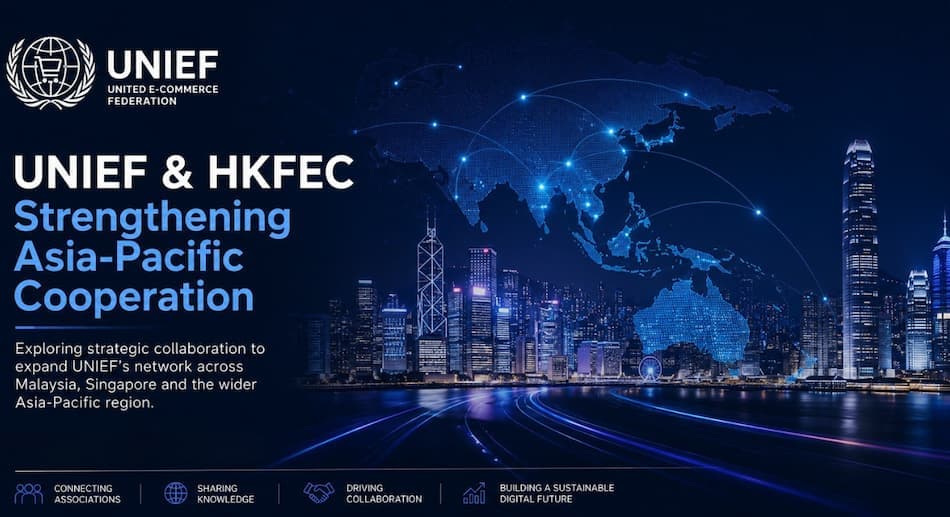
UNIEF and HKFEC Explore Strategic Cooperation Across Asia-Pacific

UNIEF General Secretary Burak Yalım Meets with HKFEC to Strengthen Asia-Pacific Collaboration

Burak Yalım, General Secretary of the United E-Commerce Federation (UNIEF), held a productive meeting with Joseph Yuen, Chairman of the Hong Kong Federation of E-commerce (HKFEC), to discuss opportunities for expanding international cooperation and strengthening the global e-commerce ecosystem.

The meeting focused on UNIEF’s vision of bringing together national e-commerce associations under a single global federation that promotes knowledge sharing, cross-border collaboration, and sustainable growth across the digital economy.

A key topic of discussion was the strategic importance of the Asia-Pacific region, one of the world’s fastest-growing and most dynamic digital commerce markets. Both sides exchanged views on the opportunities and challenges facing e-commerce organizations across the region and emphasized the importance of stronger international cooperation among industry stakeholders.

During the meeting, Joseph Yuen expressed HKFEC’s strong support for UNIEF’s mission and shared his willingness to contribute to the federation’s expansion across the Asia-Pacific region. Drawing on HKFEC’s extensive network, he offered to facilitate introductions with leading e-commerce associations, beginning with organizations in Malaysia and Singapore, while also supporting UNIEF’s broader engagement with associations across the wider Asia-Pacific region.

The discussion also highlighted the importance of creating an inclusive international platform that enables participation from industry leaders regardless of language or geography. Both sides agreed that multilingual collaboration, knowledge exchange, and stronger institutional partnerships will play a vital role in advancing cross-border digital commerce.

Building UNIEF’s Regional Network

Burak Yalım shared UNIEF’s long-term vision of establishing a truly global federation that connects national e-commerce organizations through regional committees, collaborative initiatives, and international representation. He also outlined UNIEF’s commitment to strengthening cooperation among associations and fostering a more connected and sustainable global digital economy.

The meeting concluded with both organizations reaffirming their commitment to continued dialogue and future collaboration. As a next step, UNIEF and HKFEC will work together to initiate discussions with e-commerce associations in Malaysia, Singapore, and other Asia-Pacific markets, supporting the federation’s mission of building a stronger and more connected international e-commerce ecosystem.

29 Nations Launch Global AI Cooperation Organization as Shanghai Emerges as New Hub for AI Governance

29 Nations Launch Global AI Cooperation Organization as Shanghai Emerges as New Hub for AI Governance

New international body aims to shape global AI governance with a focus on safety, fairness, and multilateral cooperation

A coalition of 29 countries has formally signed an agreement establishing the World Artificial Intelligence Cooperation Organization (WAICO), marking one of the most significant multilateral initiatives in artificial intelligence governance to date. The agreement, signed in Shanghai, positions the Chinese financial and technology hub as the headquarters of the newly created intergovernmental organization, reflecting Beijing’s growing ambitions to play a leading role in shaping the global AI policy landscape. 

The move comes as governments worldwide race to establish regulatory frameworks for artificial intelligence while balancing innovation, economic competitiveness, and national security concerns. WAICO is designed to provide a platform for international collaboration on AI governance, encouraging member states to coordinate policies and promote responsible technological development.

Global Coalition Forms Around AI Governance

The founding agreement was signed by representatives from 29 countries, including Kazakhstan, Pakistan, Indonesia, Laos, and Russia, with Chinese Foreign Minister Wang Yi signing on behalf of China. The signing ceremony was also attended by United Nations Secretary-General António Guterres alongside representatives from international organizations, underscoring the global significance of the initiative. 

According to the agreement, WAICO will operate as an independent intergovernmental organization committed to the principles of the United Nations Charter. Its mission centers on strengthening international cooperation in artificial intelligence while encouraging inclusive participation and shared technological benefits among member nations.

A New Framework for Responsible AI

The organization’s mandate extends beyond policy coordination. WAICO aims to promote the development of AI systems that are safe, trustworthy, fair, and people-centered while supporting international standards for responsible innovation.

As AI adoption accelerates across industries ranging from healthcare and manufacturing to finance and public services, governments have increasingly emphasized the need for common governance frameworks capable of addressing ethical risks, data security, transparency, and cross-border collaboration. WAICO seeks to become a platform where these issues can be discussed through multilateral cooperation rather than fragmented national approaches. 

China Expands Its Global AI Influence

The establishment of WAICO also highlights China’s broader strategy to strengthen its role in global technology governance. With Shanghai serving as the organization’s permanent headquarters, China positions itself at the center of international AI dialogue during a period when competition over artificial intelligence leadership continues to intensify among major economies.

While many Western countries have focused on domestic AI regulations and regional initiatives, WAICO introduces another institutional framework aimed at expanding international cooperation, particularly among emerging and developing economies seeking greater participation in shaping global AI standards.

Whether the organization evolves into a major global governance institution will largely depend on future membership expansion, policy implementation, and its ability to foster practical collaboration across increasingly complex AI ecosystems. Nevertheless, the creation of WAICO marks an important milestone in the evolving architecture of international artificial intelligence governance and signals that multilateral AI diplomacy is entering a new phase. 

Source

UAE Joins Global AI Initiative with 35 Countries, Reinforcing Commitment to Responsible Innovation

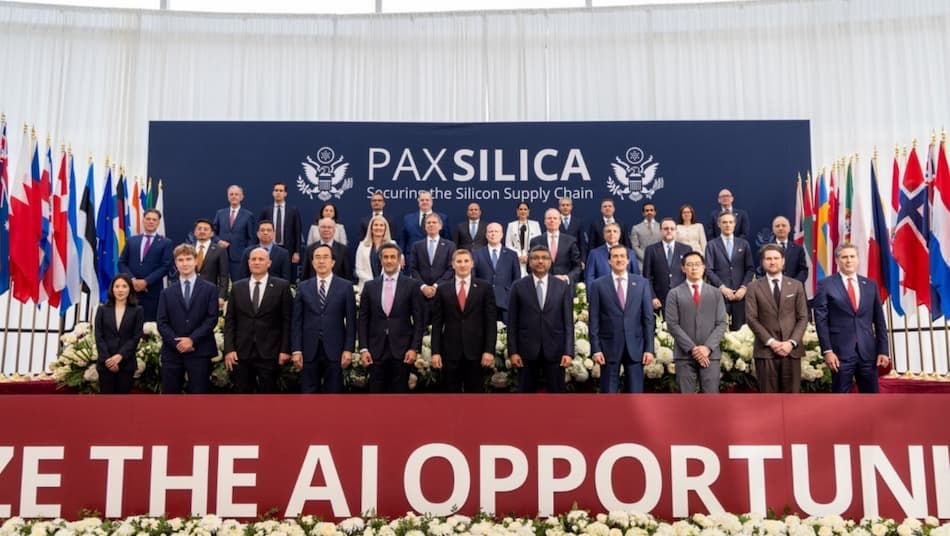
Global delegates attend the Pax Silica Summit in Washington, focusing on secure AI supply chains and international cooperation.

Washington, D.C. – The United Arab Emirates has joined 35 other nations in signing the Joint Statement on AI Opportunities during the second Pax Silica Summit in Washington, D.C., further strengthening its position as a global advocate for responsible and secure artificial intelligence development.

UAE Strengthens Its Global AI Leadership Through International Collaboration

The summit brought together government leaders and major technology companies to discuss trusted AI supply chains, secure digital infrastructure, and international cooperation in advancing artificial intelligence. The UAE delegation was led by Saeed Al Hajeri, Minister of State, and included senior officials and representatives from some of the country’s leading technology organizations, including G42, Core42, MGX, and the Telecommunications and Digital Government Regulatory Authority (TDRA).

By participating in the joint declaration, the UAE reaffirmed its commitment to developing AI ecosystems that are secure, inclusive, and innovation-driven. The country’s involvement also highlights its growing role as a trusted global partner in shaping international AI governance and accelerating technological progress.

Building Trusted AI Infrastructure and Supply Chains

The Pax Silica Summit focused on strengthening collaboration among allied nations to build resilient AI supply chains covering critical areas such as semiconductors, computing infrastructure, energy, and advanced manufacturing. The initiative is increasingly seen as an important platform for fostering trusted partnerships and reducing vulnerabilities in the rapidly evolving AI landscape.

The UAE’s participation aligns with its broader national strategy to become a global hub for artificial intelligence and advanced technologies. In recent years, the country has significantly increased investments in digital infrastructure, AI research, and international technology partnerships, positioning itself at the center of global conversations around the future of AI.

As artificial intelligence continues to reshape economies and industries worldwide, the UAE’s engagement in initiatives such as Pax Silica demonstrates its intention not only to adopt emerging technologies but also to actively contribute to the development of responsible frameworks that guide their global implementation.

Source

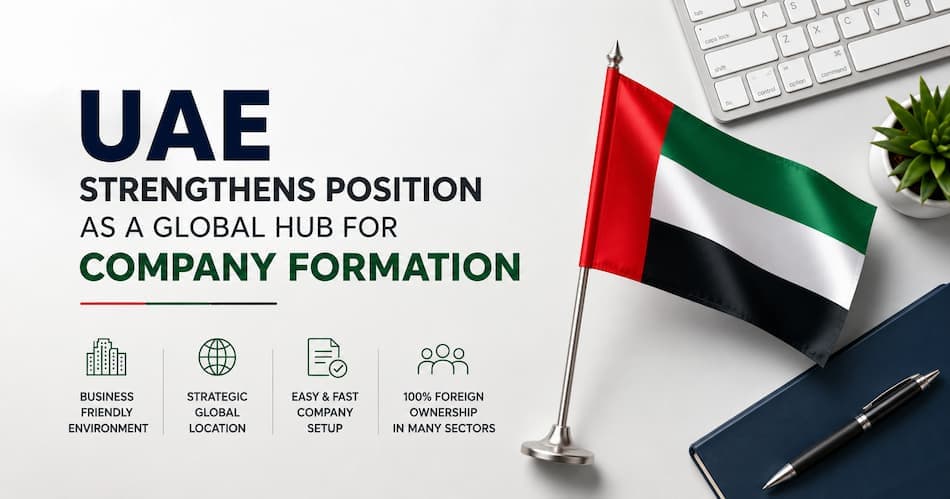
UAE Strengthens Global Position as a Leading Hub for Company Formation

UAE Strengthens Global Position as a Leading Hub for Company Formation

The United Arab Emirates is further strengthening its position as one of the world’s leading destinations for company formation, entrepreneurship, and international investment. Driven by pro-business reforms, digital transformation, and innovation-focused economic strategies, the UAE continues to attract startups, investors, and multinational corporations seeking regional and global expansion opportunities.

According to insights shared through the Emirates News Agency (WAM), the UAE’s business-friendly environment and modern regulatory framework are playing a key role in accelerating corporate growth across multiple sectors. Industry experts noted that the country has successfully created an ecosystem that combines ease of doing business, strategic connectivity, and advanced infrastructure.

UAE Strengthens Global Appeal for Entrepreneurs and Investors

The UAE’s geographic position between Europe, Asia, and Africa remains one of its strongest competitive advantages. Combined with world-class airports, logistics networks, and free economic zones, the country offers companies direct access to rapidly growing international markets.

Government initiatives have also contributed significantly to the country’s attractiveness for entrepreneurs. Policies allowing 100% foreign ownership in several sectors, long-term residency options for investors, and streamlined licensing procedures have encouraged global businesses to establish regional headquarters in the UAE.

Dubai and Abu Dhabi continue to lead the country’s innovation and startup ecosystem growth. Financial and technology hubs such as Dubai International Financial Centre (DIFC), Abu Dhabi Global Market (ADGM), and Hub71 are supporting both early-stage startups and established enterprises through funding opportunities, accelerator programs, and international partnerships.

The UAE’s digital economy ambitions are also accelerating investment in sectors including artificial intelligence, fintech, e-commerce, logistics, and smart mobility. Experts believe these industries will play a major role in shaping the country’s next phase of economic growth while strengthening its competitiveness on the global stage.

The country’s strong entrepreneurial performance has been recognized internationally as well. The UAE ranked among the world’s leading countries in entrepreneurship and startup ecosystem development, reflecting its growing influence in the global business landscape.

As global competition for innovation and investment intensifies, the UAE is positioning itself as a long-term hub for entrepreneurs and high-growth companies. Analysts believe the country’s ability to combine regulatory flexibility, advanced infrastructure, and international connectivity will continue driving strong business formation activity in the coming years.

With ongoing investments in technology, digital transformation, and business-friendly reforms, the UAE is expected to further expand its role as a global center for entrepreneurship, company formation, and cross-border trade.

Source

AI Boom Accelerates as E-Commerce Tech Drives 100% Surge in Foundational Funding

AI Boom Accelerates as E-Commerce Tech Drives 100% Surge in Foundational Funding

The global investment landscape is undergoing a major shift as foundational AI startups attract unprecedented levels of capital, signaling a new phase for digital commerce infrastructure.

According to Crunchbase data, funding to foundational AI companies – including firms developing large-scale generative models – reached $178 billion in Q1 2026 alone, doubling the $88.9 billion raised across all of 2025.

This sharp increase highlights how artificial intelligence is rapidly becoming the backbone of e-commerce, powering everything from personalization and search to logistics optimization and customer service automation.

E-Commerce Transformation Accelerates with AI Investment Boom

The surge in funding is heavily concentrated among a small group of dominant players. Companies such as OpenAI, Anthropic, and xAI are capturing a disproportionate share of global capital, reflecting a growing “winner-takes-most” dynamic in the AI ecosystem.

OpenAI alone has raised over $120 billion, marking one of the largest private funding rounds in history. Meanwhile, Anthropic secured $30 billion, and xAI raised $20 billion, reinforcing their positions as leading forces shaping the future of digital infrastructure.

Beyond the scale, the structure of funding is also shifting. While fewer deals are being made – just 24 major transactions in Q1 2026 – the average deal size has grown significantly, indicating that investors are placing larger, more concentrated bets on a limited number of AI leaders.

This trend comes after years of broader but less focused venture investment. In contrast, today’s capital allocation strategy prioritizes companies building foundational models that can be applied across industries, including e-commerce platforms, marketplaces, and payment systems.

The impact on e-commerce is already visible. AI-driven tools are enabling faster product discovery, smarter recommendation engines, automated customer support, and more efficient supply chain operations. As these technologies mature, they are expected to redefine how online businesses operate and scale globally.

At the same time, the dominance of a few major players raises concerns about market concentration. With a significant portion of venture funding flowing into just a handful of companies, smaller startups may face increasing challenges in accessing capital and competing at scale.

Still, investor confidence remains strong. AI-related startups accounted for nearly 50% of global venture funding in 2025, underscoring the sector’s central role in the future of digital economies.

As the AI race intensifies, the connection between foundational models and e-commerce will only deepen. What was once considered a supporting technology is now becoming the core infrastructure powering the next generation of online commerce.

Source: Crunchbase