WORLDEF Istanbul 2026 - Upcoming Event

Register Now

AI Startups Lead 2026 Unicorn Boom as 25 of 98 New Billion-Dollar Companies Emerge

AI Startups Lead 2026 Unicorn Boom as 25 of 98 New Billion-Dollar Companies Emerge

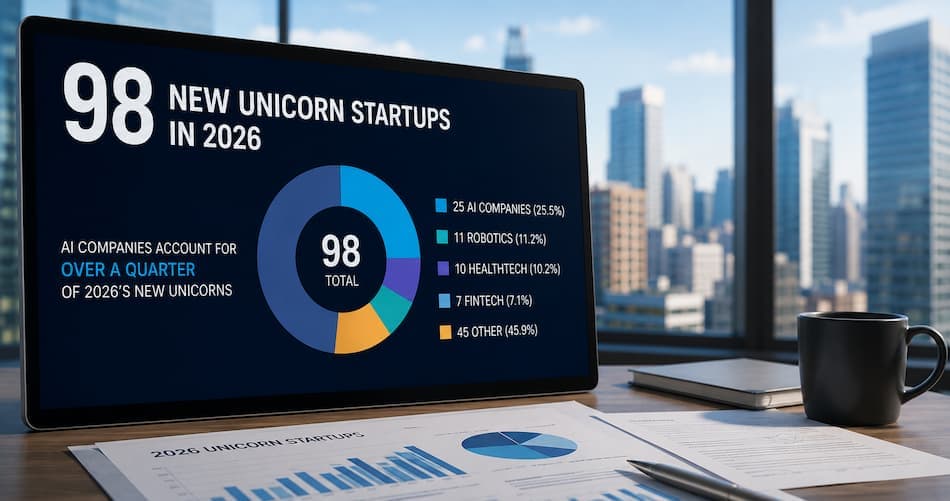
Artificial intelligence startups continue to dominate the global investment landscape in 2026, accounting for more than a quarter of all newly created unicorn companies this year. According to new market data, 25 AI-focused startups have already reached valuations exceeding $1 billion, highlighting how investor appetite for AI infrastructure, robotics, and automation technologies continues to accelerate worldwide.

AI and Robotics Drive Global Venture Capital Growth

A recent analysis by BestBrokers, based on data from the Crunchbase Unicorn Board and PitchBook, found that 98 startups achieved unicorn status during the first months of 2026. Artificial intelligence companies represented the largest share with 25 new unicorns, followed by robotics startups with 11 companies, HealthTech with 10, and Fintech with 7.

The report reflects a broader shift in venture capital trends. Investors are increasingly focusing not only on generative AI applications but also on the infrastructure powering the next generation of intelligent systems. Funding is rapidly flowing into semiconductors, cloud computing, robotics, aerospace, and defense technologies designed to support large-scale AI deployment.

Among the most valuable new unicorns of 2026 is UK-based AI startup Ineffable Intelligence, valued at $5.1 billion after raising more than $1.1 billion in funding. U.S.-based AI companies humans& and Ricursive Intelligence followed with valuations of $4.5 billion and $4 billion respectively.

Robotics and Physical AI Gain Momentum

The unicorn surge also demonstrates growing investor confidence in robotics and “physical AI” technologies. Several robotics companies reached billion-dollar valuations this year as automation expands across manufacturing, logistics, and industrial operations. Analysts suggest that the market is moving beyond software-focused AI toward real-world deployment of autonomous systems and intelligent machines.

Defense technology and aerospace startups are also attracting strong investor interest. U.S.-based aerospace company True Anomaly reportedly raised $650 million and achieved a valuation of $2.2 billion, while robotics company Mind Robotics secured $500 million in venture funding.

The United States remains the leading hub for unicorn creation, producing 60 of the 98 newly valued billion-dollar startups this year. China ranked second with 11 new unicorns, many operating in AI, robotics, and semiconductor industries. The United Kingdom followed with seven newly created unicorn companies.

AI Sector Continues Expanding Globally

The rapid rise of AI unicorns highlights how artificial intelligence has become the dominant force shaping global technology investment. Companies developing large-scale AI infrastructure, autonomous systems, and advanced machine learning models continue attracting significant funding as businesses worldwide accelerate digital transformation initiatives.

Industry analysts expect the momentum to continue throughout 2026 as competition intensifies between global technology ecosystems, particularly in the United States, China, and Europe. Emerging sectors such as robotics, embodied AI, cybersecurity, and AI-powered automation are expected to remain major drivers of startup investment activity in the coming years.

Source

MENA Startups Raise $150 Million in April as Investor Activity Recovers Despite Ongoing Caution

MENA Startups Raise $150 Million in April as Investor Activity Recovers Despite Ongoing Caution

Startup investment activity across the Middle East and North Africa (MENA) rebounded strongly in April 2026, with regional startups raising $150 million across 27 deals, signaling renewed investor confidence after a difficult March. However, despite the recovery, venture capital activity across the region remains cautious as investors continue prioritizing structured financing and lower-risk business models.

According to Wamda’s latest investment report, April’s funding volume marked a 211% increase compared to March, when geopolitical tensions and economic uncertainty significantly slowed dealmaking. Yet, overall funding levels still remained 42% lower than April 2025, reflecting the broader pressure facing the global startup ecosystem.

A major trend shaping April’s investment landscape was the growing dominance of debt financing. Nearly half of the total capital raised during the month came through debt-based transactions, accounting for approximately $80 million across only two deals. The report noted that investors are increasingly favoring capital-efficient structures and downside protection strategies instead of traditional equity-heavy investments.

Fintech Continues to Lead MENA Startup Investments

Financial technology remained the strongest-performing sector for the fourth consecutive month, attracting $89.4 million across seven deals. Investors continued backing fintech companies focused on financial infrastructure, enterprise services, and scalable digital payment solutions, sectors considered more resilient during volatile market conditions.

Business-to-business startups also maintained strong momentum, securing $95.8 million across 11 transactions. Investors increasingly prioritized companies with predictable revenue models, enterprise clients, and long-term monetization strategies, reflecting a broader shift toward sustainable and defensible business operations.

Meanwhile, e-commerce startups regained momentum after slowing in March, raising $19.3 million across four deals. Online services startups collected $15 million, while food technology companies secured $13 million through two transactions.

UAE Maintains Leadership as Saudi Arabia and Egypt Follow Closely

The UAE once again led regional startup funding activity, attracting $78 million across eight deals and accounting for more than half of the total capital raised during April. Saudi Arabia ranked second with $26.2 million raised across seven startups, while Egypt maintained its position as one of the region’s most active startup ecosystems with a similar funding total spread across five deals.

Smaller Gulf markets including Oman, Bahrain, and Qatar also experienced increased startup activity, collectively securing $14.5 million through five transactions, indicating broader regional participation in venture funding.

Siin Expands Live Commerce Presence Across the Gulf

Among the notable deals announced during April was Bahrain-born e-commerce startup Siin, which secured fresh investment, bringing its total funding to $3 million. The round was led by VentureSouq and Shift Group, with participation from Plus VC, Oqal, and several regional investors.

Founded in 2024 by Ahmed Al-Lawi, Hesham Al-Saati, and Khaled Al-Balooshi, Siin operates an interactive live-commerce platform that allows users to buy and sell products through livestream shopping experiences. The company currently operates across Saudi Arabia, the UAE, Kuwait, Bahrain, Qatar, and Oman.

The startup plans to use the new funding to expand across the region, strengthen its seller ecosystem, and further scale its platform infrastructure. The rise of live-commerce platforms reflects growing demand for video-driven shopping experiences as retailers and creators increasingly seek more interactive ways to engage digital consumers.

Female-Led Startups Return to the Funding Landscape

April also marked the return of female-led startups to the regional investment ecosystem after two months without recorded funding activity. Female-founded startups raised $1.5 million across five deals, while startups led by male founders secured $138.8 million across 19 transactions. Mixed-gender founding teams raised an additional $10 million through three deals.

Despite the funding rebound, Wamda’s report concluded that investors remain highly selective, favoring startups aligned with institutional demand, financial infrastructure, and AI-driven technologies. While market activity has resumed, capital deployment continues to prioritize risk management, sustainable growth, and operational resilience over aggressive expansion strategies.

Source

Türkiye Unveils Landmark Investment Reform Package to Reinforce Global Competitiveness

Türkiye Unveils Landmark Investment Reform Package to Reinforce Global Competitiveness

Türkiye has announced a comprehensive investment reform package aimed at strengthening its position in the global economy, signaling a decisive shift toward long-term structural transformation and investor-centric policy making.

The initiative, introduced by Finance Minister Mehmet Simsek, reflects a coordinated effort to enhance macroeconomic stability, improve the investment climate, and attract sustained foreign direct investment (FDI).

Structural Reforms Anchored in Predictability and Confidence

At the center of the reform agenda is a commitment to predictability, transparency, and institutional reliability, key pillars for international investors assessing emerging markets. The package introduces measures to streamline administrative procedures, reinforce legal frameworks, and reduce operational friction for both domestic and foreign investors.

Rather than a short-term stimulus, the reforms are positioned as part of a broader economic rebalancing strategy designed to support sustainable growth and integration into global value chains.

Targeted Incentives to Drive High-Value Investment

A defining feature of the package is its targeted approach to sectoral development. The government is prioritizing high-value industries, including advanced manufacturing, digital technologies, and export-oriented services, through a series of competitive tax incentives and regulatory advantages.

These measures are expected to significantly enhance Türkiye’s attractiveness for multinational corporations seeking regional production and service hubs, particularly amid ongoing global supply chain realignments.

Strategic Positioning of Istanbul as a Financial Center

The reform framework places strong emphasis on advancing Istanbul Financial Center as a regional and international financial hub. By aligning regulatory standards with global benchmarks and offering tailored incentives, Türkiye aims to attract leading financial institutions and deepen capital market activity.

This positioning leverages Istanbul’s geographic advantage as a bridge between Europe, Asia, and the Middle East, an increasingly valuable proposition in a fragmented global economic environment.

A Long-Term Vision for Economic Transformation

Beyond immediate investment flows, the reform package underscores Türkiye’s ambition to transition toward a more resilient, technology-driven, and export-led economic model. The focus on fiscal discipline, productivity, and institutional strengthening reflects a strategic recalibration following recent macroeconomic challenges.

Implications for Global Investors

For international stakeholders, the scale and scope of the reform signal a renewed commitment to economic orthodoxy and openness. If effectively implemented, the package could reposition Türkiye as a key destination for capital allocation across multiple sectors.

At a time when investors are actively reassessing global exposure, Türkiye’s reform agenda presents a timely and potentially transformative opportunity.

Source

Access the latest global business intelligence on WORLDEF News

$200B AI Investment Signals Strong Future for AWS Under Andy Jassy

$200B AI Investment Signals Strong Future for AWS Under Andy Jassy

Amazon CEO Andy Jassy has reinforced the company’s long-term commitment to artificial intelligence, positioning AWS at the center of what he describes as a “once-in-a-generation” technological shift.

The company plans to invest approximately $200 billion in 2026, with the majority of this investment directed toward AI infrastructure, including data centers, custom chips, and cloud capacity. This large-scale investment strategy reflects Amazon’s belief that AI will redefine not only cloud computing but also the broader digital economy.

AWS AI business reaches new scale

AWS is already seeing strong traction from its AI services. According to recent disclosures, Amazon’s AI-related services within AWS have reached an annualized revenue run rate exceeding $15 billion, accounting for a growing share of its cloud business.

At the same time, Amazon’s custom chip segment powered by products such as Trainium and Graviton has surpassed $20 billion in annual revenue run rate, signaling rapid adoption of in-house AI infrastructure solutions. These results indicate that Amazon’s investment in AI technologies is already delivering measurable outcomes.

Strategic partnerships accelerate growth

Amazon is also strengthening its AI ecosystem through major partnerships. The company recently announced a multi-year strategic collaboration with OpenAI, aimed at accelerating innovation and expanding AI capabilities.

Such partnerships complement Amazon’s broader investment approach, enabling the company to scale faster and respond to rising enterprise demand for AI-powered solutions.

AI to reshape cloud and global commerce

Jassy has emphasized that demand for AI workloads is growing faster than AWS can currently supply. The company is rapidly expanding data center capacity and continuing its investment in infrastructure to meet this demand.

Looking ahead, Amazon believes AI could significantly expand AWS’s long-term potential, positioning the cloud unit for substantial growth in the coming years.

A defining moment for AI leadership

Amazon’s massive AI investment signals a decisive shift toward long-term innovation over short-term profitability. While concerns around spending remain, the company is confident that continued investment in AI will drive future returns and strengthen its competitive position.

As competition intensifies among global tech giants, AWS’s aggressive strategy could play a defining role in shaping the next era of cloud computing and e-commerce.

Source

Stay updated with global AI and e-commerce developments on WORLDEF.

Global Premium Food E-Commerce Expands as CarniStore Secures $12.2 Million Investment

Global Premium Food E-Commerce Expands as CarniStore Secures $12.2 Million Investment

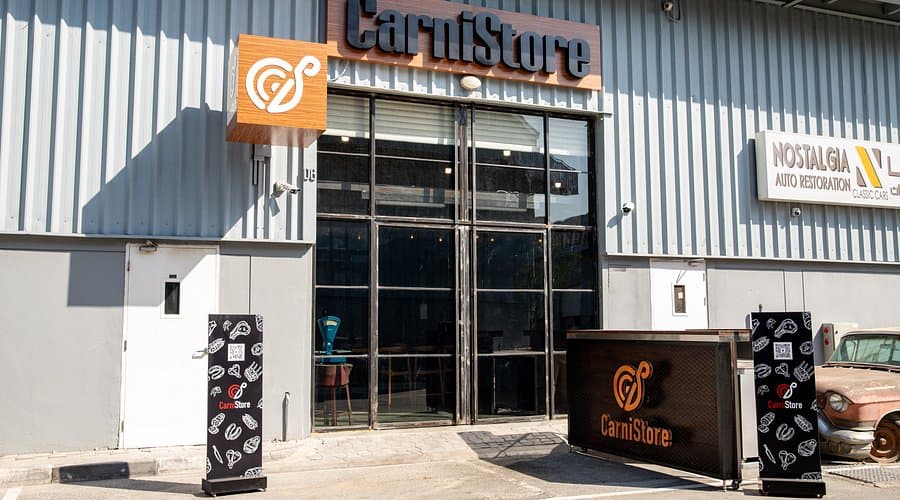
The premium food e-commerce sector is gaining momentum as UAE-based platform CarniStore secured a $12.2 million strategic investment from Emirates Growth Fund (EGF), signalling strong investor confidence in digital-first food retail models.

Founded in 2018, CarniStore operates a vertically integrated, digital-first premium protein platform, combining sourcing, in-house production, and online retail across meat, seafood, poultry, and smoked products.

Scaling Premium Food Through Digital-First Operations

The new funding will support CarniStore’s industrial-scale expansion, allowing the company to introduce new product verticals, enhance operational capacity, and strengthen its position in the UAE’s premium food segment.

Unlike traditional food retailers, CarniStore’s model blends heritage butchery expertise with a consumer-centric e-commerce experience, positioning it at the intersection of food innovation and digital commerce.

The investment also highlights a broader shift toward vertically integrated food e-commerce platforms, where companies control sourcing, processing, and distribution to ensure quality and efficiency at scale.

Strategic Push Toward Regional Expansion

Beyond operational growth, the partnership with Emirates Growth Fund is expected to strengthen CarniStore’s governance, go-to-market strategy, and institutional readiness-key steps as the company prepares for regional expansion.

The deal marks EGF’s first investment in the food sector, underlining the increasing importance of food security, local production, and premium supply chains within the UAE’s economic strategy.

For the wider e-commerce ecosystem, the move reflects a growing investor focus on specialized vertical marketplaces-particularly in sectors where quality control, logistics, and sourcing play a critical role.

Source: Wamda

Amazon to Invest €5 Billion in Poland as E-Commerce Market Continues to Expand

amazon to invest euro5 billion in poland as e-commerce market continues to expand

Amazon is planning to invest more than €5 billion in Poland between 2026 and 2028, reinforcing its long-term commitment to one of Europe’s fastest-growing e-commerce markets. The investment comes on top of the over €10 billion the company has already invested in the country since 2012, covering infrastructure, logistics, and support for local businesses.

The move highlights Poland’s growing importance in Amazon’s European strategy. As one of the region’s largest and fastest-developing economies, the country continues to attract major investments from global tech and e-commerce players.

Poland Emerges as a Key E-Commerce Hub

E-commerce in Poland has been expanding steadily, with online sales reaching approximately €21.5 billion in 2025, reflecting a 6.8% annual increase. Growth is expected to continue, with projections pointing to further expansion in 2026.

Consumer behavior is also shifting rapidly. Around 75% of Polish consumers shop online at least once a month, while 71% report feeling safer using online marketplaces, indicating growing trust in digital commerce platforms.

These trends are positioning Poland as a strategic market not only for domestic growth but also for cross-border e-commerce across Europe.

Logistics Expansion at the Core of Investment

A significant portion of Amazon’s new investment will focus on expanding its logistics network. The company plans to open a new 200,000-square-meter fulfillment center in Dobromierz, equipped with advanced automation and more than 5,000 robots.

With this addition, Amazon will further strengthen its operational footprint in Poland, where it already operates multiple fulfillment centers. The expansion aims to improve delivery speed, efficiency, and overall customer experience.

In addition to infrastructure, Amazon is also investing in localized solutions, including payment methods and services tailored to Polish consumers, signaling a deeper integration into the local market.

Competition and Market Position

While Amazon continues to scale in Poland, it still faces strong competition from local marketplace leader Allegro. Despite entering the market in 2021, Amazon has rapidly established itself as a key player, supported by continuous investments and infrastructure development.

The company’s strategy focuses not only on growth but also on strengthening Poland’s role in the broader European e-commerce ecosystem.

Amazon’s €5 billion investment signals more than just expansion – it reflects a long-term bet on Poland’s digital economy. As e-commerce adoption continues to rise and logistics capabilities improve, the country is increasingly becoming a central hub for online retail in Europe.

Source: Ecommerce News Europe