WORLDEF ISTANBUL 2026 - Early Bird Registration Ends Soon

Register Now

Latin America E-Commerce Boom: 3 Key Growth Signals as Mercado Libre Expands Globally

Latin America E-Commerce Boom: 3 Key Growth Signals as Mercado Libre Expands Globally

The Latin American e-commerce market is entering a new phase of rapid expansion, driven by increasing digital adoption, cross-border trade, and platform investments led by Mercado Libre.

According to recent insights, the region remains one of the most underpenetrated yet high-potential e-commerce markets globally. With internet access rising and mobile commerce accelerating, Latin America is positioned for sustained double-digit growth over the coming years. Mercado Libre, the region’s dominant marketplace, continues to play a central role in shaping this growth trajectory.

Mercado Libre Targets Global Seller Expansion

A key development in 2026 is the platform’s strategic push to onboard international sellers, particularly from China. This move aims to significantly expand product variety, pricing competitiveness, and cross-border trade volumes across Latin America.

By strengthening its global seller network, Mercado Libre is not only enhancing consumer choice but also positioning itself as a bridge between Asian manufacturers and Latin American consumers. This mirrors a broader global trend where marketplaces increasingly integrate international supply chains to stay competitive.

Untapped Market Opportunity Across the Region

Despite strong growth, Latin America still has substantial room for expansion compared to more mature markets like the U.S. and Europe. Large portions of the population are only beginning to adopt online shopping, especially in rural and underserved areas.

Industry data indicates that billions of dollars in additional e-commerce sales are expected in the near term, with both large platforms and small-to-medium sellers benefiting from the surge.

This “white space” opportunity is attracting both regional leaders and global competitors, intensifying the competitive landscape.

Logistics and Fintech Driving Growth

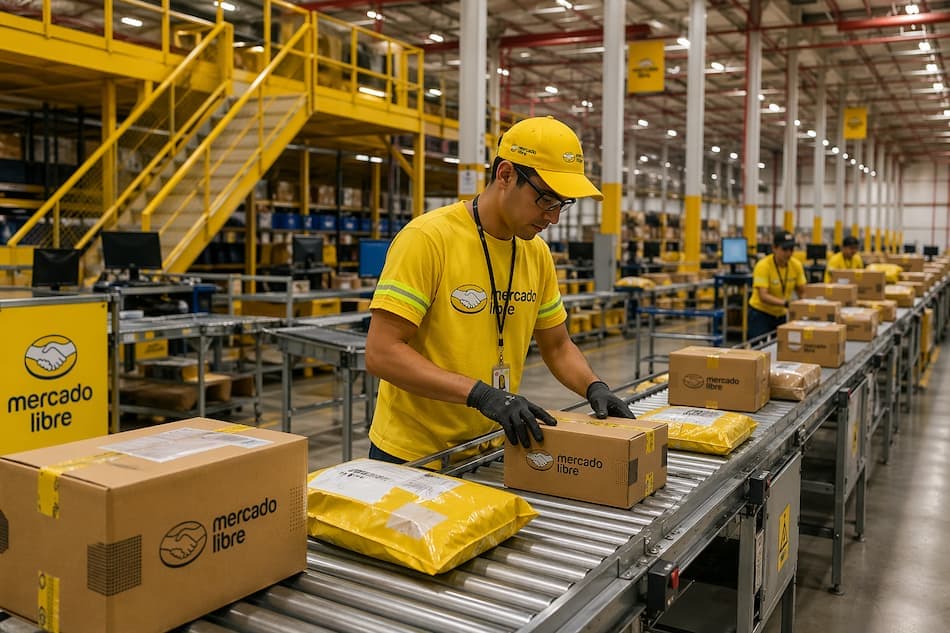
Another major driver behind the region’s e-commerce momentum is infrastructure investment. Mercado Libre continues to expand its logistics network and fintech services, including payments and credit solutions, to support merchants and improve delivery speeds.

Recent investments in fulfillment centers and financial services highlight a broader strategy: building a full ecosystem rather than just a marketplace. This integrated approach is helping reduce friction in online transactions and enabling more consumers to participate in digital commerce.

Outlook

As digital adoption continues and cross-border trade increases, Latin America is expected to remain one of the fastest-growing e-commerce regions globally. Mercado Libre’s expansion strategy, combined with rising consumer demand, signals that the region is moving from an emerging market to a key global e-commerce hub.

Source

Latin America’s $191B E-Commerce Boom: 4 Strategic Trends Sellers Must Master

Latin America’s $191B E-Commerce Boom: 4 Strategic Trends Sellers Must Master

Latin America is rapidly emerging as one of the most attractive frontiers in global e-commerce. With projected online sales reaching $191 billion, the region is outpacing many mature markets and offering significant opportunities for brands willing to adapt to its unique dynamics.

However, success in Latin America is not simply about entering a new geography, it requires a fundamental shift in strategy, particularly across mobile, payments, logistics, and customer experience.

Mobile-First Is Not Optional – It’s Everything

In Latin America, mobile commerce dominates the landscape. Between 70% and 85% of transactions happen via smartphones, making mobile optimization a critical requirement rather than a competitive advantage.

Consumers are not just browsing on mobile, they are shopping, communicating, and completing purchases through platforms like WhatsApp and regional super apps. Businesses that fail to integrate into these ecosystems risk missing the majority of their potential audience.

Payment Localization Unlocks Growth

One of the defining characteristics of the region is its large unbanked population, estimated at around 40% of consumers.

To address this, alternative payment methods have become essential. Systems like Brazil’s Pix and Mexico’s OXXO, alongside Buy Now Pay Later (BNPL) options, are driving inclusion and significantly increasing conversion rates. Global brands entering the market must prioritize localized payment solutions to compete effectively.

Logistics Speed Defines Competitive Advantage

Logistics has historically been a major barrier in Latin America, but this is rapidly changing. The rise of micro-fulfillment centers in urban areas is transforming delivery expectations, enabling same-day shipping in major cities.

Rather than relying solely on centralized warehouses, companies are adopting decentralized models that prioritize proximity to customers. This shift not only reduces delivery times but also improves reliability, an essential factor in a region where customer loyalty can be fragile.

AI-Powered Personalization Becomes Standard

Artificial intelligence is playing an increasingly central role in shaping the customer journey. From conversational commerce via chatbots to personalized product recommendations, AI is becoming the backbone of customer engagement.

In Latin America, where messaging platforms dominate communication, AI-driven interactions are not just enhancing support, they are actively driving sales.

A Market That Rewards Localization

Latin America’s e-commerce growth is driven not by scale alone, but by adaptability. Brazil and Mexico account for over 70% of regional volume, making them the ideal entry points for international sellers.

The brands that succeed will be those that rethink their entire operating model, building for mobile-first users, integrating local payment systems, optimizing last-mile delivery, and leveraging AI to personalize experiences at scale.

For global e-commerce players, Latin America is no longer a secondary market, it is a strategic growth engine for the next decade.

Source

AI and Smart Labels Are Transforming $200B Retail and E-Commerce in Latin America

AI and Smart Labels Are Transforming $200B Retail and E-Commerce in Latin America

Retail in Latin America is entering a new phase one defined not just by growth, but by intelligence.

Artificial intelligence and smart labeling technologies are reshaping how products are priced, tracked, and sold, turning traditional retail environments into real-time, data-driven ecosystems.

At the center of this transformation are smart labels digital price tags and connected systems that go far beyond static product information.

From Static Retail to Real-Time Commerce

Retail has traditionally operated on fixed pricing, manual updates, and delayed decision-making.

That model is now being replaced.

With AI-powered systems and electronic labels, retailers can update prices instantly, respond to demand fluctuations, and optimize promotions in real time. This shift enables what industry leaders describe as dynamic commerce a model where operations are continuously adjusted based on data.

The result is a more agile retail environment where pricing, inventory, and customer experience are no longer disconnected.

Smart Labels as a Strategic Tool

Smart labels often powered by technologies like RFID, NFC, or digital shelf displays are becoming a key interface between products and data.

They allow retailers to:

  • Automate price changes across thousands of SKUs
  • Improve inventory visibility and tracking
  • Enable real-time promotions and personalized offers
  • Reduce operational errors and manual workload

More importantly, these labels create a bridge between physical stores and digital commerce systems, aligning offline retail with e-commerce logic.

This convergence is critical in a region where omnichannel strategies are rapidly evolving.

AI Is Redefining Decision-Making

Artificial intelligence is not just supporting operations it is redefining them.

Retailers are increasingly using AI to analyze consumer behavior, predict demand, and automate decisions that were once handled manually. From pricing strategies to shelf optimization, AI enables a level of responsiveness that traditional systems cannot match.

In Latin America, adoption is accelerating as companies aim to keep pace with global innovation and rising consumer expectations.

Why Latin America Is a Key Growth Region

The region’s e-commerce market is projected to surpass $200 billion, making it one of the fastest-growing globally.

This growth creates the perfect environment for innovation.

However, challenges remain fragmented infrastructure, logistics complexity, and varying digital maturity. AI and smart technologies offer a way to overcome these limitations by improving efficiency and reducing operational friction.

The Bigger Shift: Retail Becomes a Data Platform

The real impact of AI and smart labels goes beyond efficiency.

Retail is evolving into a data platform, where every product, shelf, and transaction generates actionable insights. The store is no longer just a sales channel it becomes part of a connected, intelligent system.

In this model, success is not defined by scale alone, but by how effectively businesses can turn data into decisions.

Source