WORLDEF ISTANBUL 2026 - Early Bird Registration Ends Soon

Register Now

DHL Expands Global Logistics with 3 Key Capabilities from Vital Solutions Acquisition

DHL Expands Global Logistics with 3 Key Capabilities from Vital Solutions Acquisition

Global logistics giant DHL is expanding its footprint in South Africa through the acquisition of Vital Distribution Solutions, Staffing Logistics, and Vital Fleet, in a move aimed at strengthening its end-to-end supply chain capabilities.

The transaction, approved unconditionally by South Africa’s Competition Commission, is expected to enhance DHL’s position in transport, warehousing, and contract logistics across the region.

Strengthening Logistics Capabilities Across Key Sectors

The acquisition covers a wide range of logistics services, including road freight, third-party logistics, storage, distribution, and e-commerce-related operations.

Vital Distribution Solutions brings established capabilities in servicing industries such as FMCG, manufacturing, industrial, and retail, while Vital Fleet adds fleet management and rental services. Staffing Logistics complements the deal by providing flexible workforce solutions across transport and service sectors.

By integrating these operations, DHL aims to deepen customer relationships and deliver more scalable, end-to-end logistics solutions in a rapidly evolving market.

E-Commerce Growth Driving Demand for Third-Party Logistics

The deal comes amid rising demand for outsourced logistics services in South Africa, driven by the continued growth of e-commerce and regional trade activity.

Industry players are increasingly investing in specialised logistics solutions to meet evolving supply chain requirements, particularly in sectors such as healthcare, retail, and transport. DHL has already signalled its long-term commitment to the region, with plans to invest approximately €300 million in Sub-Saharan Africa over the next five years.

As supply chains become more complex and digital commerce continues to scale, acquisitions like this highlight a broader shift toward integrated logistics ecosystems designed to improve efficiency, resilience, and service quality.

Source: Daily Dispatch

6 Critical Challenges Reshaping Europe’s E-Commerce Gateways

6 Critical Challenges Reshaping Europe’s E-Commerce GatewaysSlug Generator

Europe’s e-commerce logistics model is undergoing a structural transformation. What once relied heavily on a few dominant gateways across Europe is now evolving into a more distributed system shaped by speed, fragmentation, and flexibility.

The rise of cross-border e-commerce has fundamentally changed cargo dynamics across Europe. Instead of large, predictable shipments, logistics networks are now handling high-frequency, low-volume flows moving across multiple routes. This shift is forcing operators to rethink systems originally designed for scale, not agility.

At the same time, traditional hubs such as Frankfurt, Amsterdam, and Paris remain important – but they are no longer sufficient on their own. Logistics players across Europe are increasingly adopting multi-hub strategies, integrating secondary airports and regional fulfilment centres to reduce congestion and improve delivery performance.

Speed, Technology and New Trade Routes Take the Lead

Speed has become non-negotiable. Next-day delivery is rapidly turning into a baseline expectation across Europe, rather than a competitive advantage. To meet this demand, companies are relying more on air cargo and hybrid logistics models, especially for high-value and time-sensitive goods.

Technology is playing a defining role in this transformation. AI-driven forecasting, real-time tracking, and automated cargo handling systems are enabling logistics providers to operate with greater precision. Performance is no longer just about capacity – it is about visibility, coordination, and responsiveness.

Meanwhile, geopolitical developments and shifting trade corridors are adding new complexity. Airspace restrictions and evolving economic routes are forcing companies to rethink traditional pathways, accelerating the emergence of alternative gateways connecting Europe with Asia and the Middle East.

Infrastructure Pressure and the New Competitive Reality

This transformation is placing increasing pressure on infrastructure. Airports and logistics hubs across Europe must scale rapidly through automation, expanded cargo capacity, and specialised facilities. Without these investments, bottlenecks will become unavoidable.

Ultimately, Europe’s e-commerce gateways are no longer defined by location alone. They are defined by how efficiently they operate within a broader network. Competitive advantage is shifting from size to flexibility – and from physical infrastructure to intelligent, connected systems.

Source: Air Cargo Week

The Future of Logistics with Zajel: Speed, Technology, and Customer-Centricity

Zajel

Zajel stands out as a partner that helps brands overcome challenges by integrating not only logistics but also technology. The company offers integrated solutions that support growth, particularly focusing on speed, scalability, and visibility in the e-commerce sector. Nabeel Alkharabsheh, General Manager of Zajel, shared with WORLDEF E-COMMERCE how Zajel’s technology-driven approach, its logistics solutions, and future growth strategies are reshaping operational processes and increasing competitiveness in various sectors.

“In E-Commerce, Speed, Scalability, and Visibility Are Our Focus”

Nabeel Alkharabsheh, General Manager of Zajel, explained: “At Zajel, we position ourselves as a technology-driven logistics partner, not a one-size-fits-all service provider. Each sector has unique operational demands, and our role is to align logistics and technology to support business performance. In e-commerce, our focus is on speed, scalability, and visibility. We enable growth through integrated fulfillment, last-mile delivery, returns management, and real-time tracking that supports high volumes and peak-season demand.”

Alkharabsheh continued: “In the automotive sector, precision and compliance are crucial. We deliver secure vehicle and spare parts logistics, bonded movements, and international freight solutions with full milestone visibility across complex supply chains. In banking and financial services, trust and control are critical. We provide secure, compliant logistics for sensitive materials, supported by full audit trails, chain-of-custody tracking, and system integration.

In retail, we help brands balance cost efficiency with omnichannel execution through smart warehousing, distribution, and data-driven route optimization. Across all sectors, our positioning is clear: Zajel combines operational strength with technology to deliver customized, scalable logistics solutions that help brands move faster and operate smarter.”

“Our Technology Transforms Logistics from a Reactive Process to a Proactive, Data-Driven Operation”

When asked about how IT solutions create tangible differences in customer operations, Alkharabsheh responded: “Zajel’s IT solutions make logistics faster, simpler, and more predictable for our customers. With our Same-Day Pickup and Delivery platform, customers can book, track, and manage urgent shipments in real-time, reducing delays and improving reliability. This is especially valuable for e-commerce and time-sensitive industries.

Our WhatsApp workflows allow customers to track shipments, edit addresses, pay COD, and receive updates directly on WhatsApp, eliminating the need for calls or emails and making operations smoother for both brands and end consumers.”

Alkharabsheh also shared: “Through the Zajel mobile app and customer dashboards, clients get end-to-end visibility of pickups, deliveries, exceptions, and returns in one place. This helps operations teams make quicker decisions and reduce manual follow-ups. Zajel Pay payout system simplifies collections and reconciliations, giving businesses faster settlements, clearer financial reporting, and better cash flow control. Behind the scenes, automation handles scheduling, routing, notifications, and exception management, which reduces human errors and lowers operational costs. Overall, our technology turns logistics from a reactive process into a proactive, data-driven operation, helping brands deliver better experiences while running more efficient operations.”

“Fast Delivery Plays a Critical Role in Strengthening the Competitiveness of E-Commerce Brands”

Regarding how fast delivery services impact the competitiveness of e-commerce brands, Alkharabsheh said: “Fast delivery services play a critical role in strengthening the competitiveness of e-commerce brands by directly influencing customer behavior and brand perception. In today’s market, same-day and next-day delivery have become a basic expectation, especially in urban environments where immediacy drives purchasing decisions.

True differentiation now comes from ultra-fast delivery models such as 2-hour and 4-hour services, which transform logistics into a real-time customer experience. These services increase conversion rates, reduce purchase hesitation, support higher sales volumes, and allow brands to command premium positioning.”

Alkharabsheh added: “At Zajel, on-demand and time-critical delivery solutions, powered by smart routing, localized fulfillment, and real-time visibility, enable e-commerce brands to compete on speed, convenience, and reliability. Ultimately, fast delivery has become a strategic advantage that builds trust, strengthens customer loyalty, and drives long-term market share.”

Zajel’s Return Services and Road Freight Solutions

Alkharabsheh was asked how Zajel’s return services and road freight solutions improve customer experience and cost management for brands. He responded: “Zajel’s road freight solutions combine cost efficiency with service reliability, enabling brands to effectively manage delivery timelines and transportation expenses. Through optimized route planning, a massive fleet network, and proactive communication, customers benefit from consistent, dependable, and timely deliveries.

Zajel continues to support bulk trucking requirements and specialized movements like heavy-weight and over-dimensional cargo, highlighting its capability in handling complex transport needs. With tailored solutions across full truckload, less-than-truckload, and specialized cargo, Zajel helps brands align logistics performance with effective cost control.”

Alkharabsheh continued: “Zajel’s international air freight services provide companies with speed, reliability, and regulatory expertise, which are critical in cross-border trade. These services enable businesses to meet urgent delivery requirements, minimize lead times, and maintain continuity in global supply chains. Zajel has demonstrated strong capability in handling specialized air shipments, including vehicles, temperature-controlled shipments like chocolates and eye lenses, and highly time-sensitive oilfield materials, where rapid execution is critical to operational success.

With seamless coordination across airlines, customs authorities, and global destination partners, Zajel delivers efficient customs clearance and reliable delivery schedules. These strengths enable clients to move high-value and mission-critical cargo with confidence, enhancing market responsiveness while significantly reducing operational risk.”

Zajel’s Growth Strategy

Finally, Alkharabsheh spoke about Zajel’s growth strategy: “Zajel’s growth strategy focuses on strengthening core logistics services, advancing digital capabilities, and expanding in high-growth sectors. The company continues to invest in technology to enhance visibility, efficiency, and customer experience, while targeting sectors such as e-commerce, healthcare, and cross-border trade with tailored solutions and focused market positioning.”

Lille in 2026 Selected to Host New EU Customs Authority as Trade Pressures Rise

Lille in 2026 Selected to Host New EU Customs Authority as Trade Pressures Rise

The European Union has selected the French city of Lille as the headquarters of its new Customs Authority, marking a major step in the bloc’s efforts to modernise its trade and customs systems.

The decision follows a competitive bidding process involving several European cities, including Rome, Warsaw, The Hague and Bucharest. In the final round, Lille secured the position, reinforcing France’s central role in shaping the future of EU customs operations.

The new authority is expected to be established in 2026 and could become fully operational by 2028, although timelines remain subject to final negotiations.

A Central Hub for EU Customs Reform

The creation of the EU Customs Authority is part of a broader overhaul of the EU customs framework. The reform aims to address growing challenges linked to rising trade volumes, fragmented national systems and the rapid expansion of e-commerce.

In particular, the surge in low-value shipments and cross-border online trade has placed increasing pressure on existing customs infrastructure. The new authority is expected to play a key role in improving coordination, strengthening enforcement and supporting a more unified approach across member states.

Beyond enforcement, the authority will also contribute to the development of a more digital and data-driven customs system, aligning with the EU’s wider strategy to modernise trade operations.

Why Lille Was Selected

Lille’s selection reflects both strategic and operational advantages. Located at a key crossroads of European trade routes, the city offers strong logistics connectivity and proximity to major markets, including the UK and Northern Europe.

France also highlighted its experience in managing large trade flows and its established customs infrastructure as part of its bid. The country remains one of the EU’s primary entry points for goods, handling a significant share of incoming parcels.

In addition, Lille presented a ready-to-use infrastructure plan and committed to supporting operational costs, strengthening its position in the final decision process.

What This Means for E-Commerce and Trade

The establishment of the EU Customs Authority comes at a time when global trade is becoming increasingly complex. Geopolitical tensions, shifting tariffs and the continued rise of e-commerce are forcing governments to rethink how goods are monitored and regulated.

For e-commerce businesses, the move signals a shift toward more structured and centralised customs processes. Combined with upcoming regulatory changes such as the removal of de minimis thresholds, the EU is moving toward tighter control over cross-border flows.

As previously highlighted in WORLDEF’s coverage of customs and e-commerce trends, the future of cross-border trade will be defined less by speed alone and more by compliance, data accuracy and operational resilience.

The decision to base the authority in Lille underlines the EU’s intention to build a more integrated and technologically advanced customs system. For businesses operating across borders, this marks another step toward a more regulated, but also more predictable, trade environment.

Source: Euronews

Global E-Commerce Access Expands for Women Entrepreneurs in 2026 Through Postal Networks

Global e-commerce access for women entrepreneurs supported by postal networks and small business logistics

Global postal networks are playing an increasingly important role in expanding e-commerce opportunities for women entrepreneurs, helping to reduce long-standing barriers in global trade participation.

New insights from the Universal Postal Union (UPU) show that postal systems are evolving beyond traditional delivery services to become key enablers of inclusive digital commerce. The findings were highlighted במסגרת the UN Trade and Development (UNCTAD) “eTrade for Women” initiative, which focuses on empowering women-led businesses in the global digital economy.

Postal Networks Support Women Entrepreneurs in E-Commerce

With one of the most extensive physical infrastructures worldwide, postal networks offer critical support for small businesses, especially in underserved and rural areas. Their broad reach allows women entrepreneurs to access international markets, even where logistics and digital tools are limited.

Postal services help simplify cross-border trade by enabling shipping, facilitating customs processes and connecting businesses to global customers. For many women-led enterprises, this infrastructure provides a practical entry point into e-commerce.

Women Entrepreneurs Benefit from Digital and Financial Services

Beyond logistics, postal operators are increasingly offering digital and financial services that support business growth. These include digital payment solutions, e-commerce platforms and financial tools that help entrepreneurs manage and scale their operations.

Access to such services is particularly important for women entrepreneurs, who often face challenges in accessing traditional banking systems and digital resources. By integrating logistics with financial inclusion, postal networks are helping create more accessible pathways into global e-commerce.

E-Commerce Growth Creates Opportunities for Women Entrepreneurs

As global e-commerce continues to expand, demand for efficient and reliable delivery systems is rising. Postal networks are well-positioned to handle the growing volume of small parcels, making them essential partners for micro, small and medium-sized enterprises.

Initiatives led by UPU aim to simplify export procedures, improve coordination with customs authorities and reduce trade barriers. These efforts are helping women entrepreneurs participate more actively in cross-border e-commerce and reach new customer bases.

Toward a More Inclusive Digital Trade Ecosystem

The transformation of postal networks reflects a broader shift toward more inclusive digital economies. By combining logistics, digital services and financial tools, postal systems are evolving into key infrastructure supporting global trade participation.

Looking ahead, continued collaboration between governments, international organizations and postal operators will be essential to scale these solutions. Expanding access for women entrepreneurs will remain a critical factor in building a more balanced and inclusive global e-commerce ecosystem.

Source: Universal Postal Union (UPU)

Growth in E-Commerce Slows in 2026 as Infrastructure Becomes a Critical Barrier

Growth in E-Commerce Slows in 2026 as Infrastructure Becomes a Critical Barrier

As global e-commerce continues to expand, a new limitation is becoming increasingly clear: growth is no longer driven solely by demand, but constrained by operational infrastructure.

Industry experts highlight that many e-commerce businesses are reaching a point where their internal systems-ranging from logistics and fulfillment to customer service and data management – are struggling to keep pace with rising order volumes. This shift signals a turning point for the sector, where scaling operations has become just as critical as driving sales.

Infrastructure Becomes the Real Growth Bottleneck

For years, e-commerce growth strategies focused on customer acquisition, digital marketing, and conversion optimization. However, as transaction volumes grow, operational capacity is emerging as the primary constraint.

From inventory management to last-mile delivery, inefficiencies across the supply chain can slow expansion and negatively impact the customer experience. Companies that fail to invest in scalable systems risk delays, higher operational costs, and reduced customer satisfaction.

Logistics, Data and Systems Under Pressure

Modern e-commerce relies on complex, interconnected systems that integrate logistics, payments, inventory, and customer experience. When these systems are outdated or fragmented, they create bottlenecks that limit scalability.

Experts emphasize that operational infrastructure should no longer be viewed as a background function. Instead, it is becoming a strategic driver of performance, profitability, and long-term competitiveness.

Shift Toward Sustainable Scaling

The industry is also moving away from “growth at all costs” toward more sustainable expansion models. Businesses are increasingly prioritizing operational efficiency, cost control, and resilience.

This shift reflects a broader understanding that scaling without strong infrastructure can lead to operational breakdowns. As a result, companies are investing more in automation, integrated platforms, and data-driven decision-making to support long-term growth.

A New Priority for E-Commerce Leaders

As the e-commerce landscape evolves, operational infrastructure is becoming a central focus for executives and investors alike. Businesses that build strong, scalable systems will be better positioned to handle future growth and adapt to changing market dynamics.

Those that fail to modernize their infrastructure may struggle to remain competitive in an environment where speed, efficiency, and reliability are essential.

Source: Forbes
Image credit: rawpixel.com / Freepik

For more insights on global e-commerce trends and industry developments, visit WORLDEF.

Cross-Border E-Commerce Under Increasing Pressure in 2026 as Returns Surge

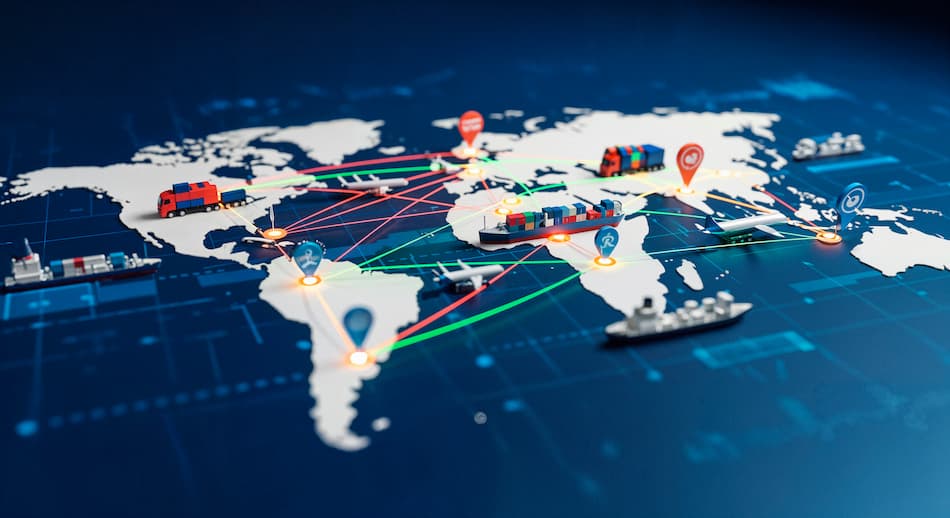
Cross-border e-commerce logistics network showing global shipment routes as international returns rise in 2026

Cross-border e-commerce is entering a new phase of complexity as international returns continue to rise, creating operational and financial challenges for online retailers worldwide.

According to recent industry insights, global logistics providers are expanding their return management capabilities in response to a sharp increase in cross-border product returns. Companies such as ePost Global and ShipWise are strengthening their international return solutions to help merchants better manage reverse logistics.

Rising Costs and Operational Challenges

As international sales grow, so does the volume of returned goods. Unlike domestic returns, cross-border returns involve higher shipping costs, longer transit times, and more complex customs procedures. These factors are significantly increasing operational pressure on e-commerce businesses.

Industry experts note that inefficient return processes can quickly erode profit margins, particularly for small and mid-sized merchants. Managing international returns requires coordination across multiple logistics partners, customs authorities, and regional regulations—making it one of the most challenging aspects of global e-commerce expansion.

Logistics Providers Expand Return Solutions

To address these challenges, logistics companies are investing in new infrastructure and services designed to streamline international returns. Enhanced tracking systems, localized return hubs, and consolidated shipping solutions are becoming increasingly important.

These improvements aim to reduce costs and improve the customer experience, as consumers expect seamless return processes regardless of where a product is shipped from. Faster and more transparent return handling is now seen as a competitive advantage in cross-border e-commerce.

Customer Expectations Continue to Rise

Consumer expectations around returns are also evolving. Shoppers increasingly demand flexible return policies, faster refunds, and simplified processes—even for international purchases.

This shift is pushing retailers to rethink their return strategies. Offering easy returns is no longer optional; it has become a critical factor in customer satisfaction and brand loyalty. However, balancing customer expectations with rising logistics costs remains a key challenge.

A Turning Point for Cross-Border E-Commerce

The surge in international returns highlights a broader transformation in global e-commerce. As cross-border trade continues to grow, reverse logistics is becoming a central focus for both retailers and logistics providers.

Industry players emphasize that businesses that invest in efficient return management systems will be better positioned to compete in the evolving global market. Those that fail to adapt may struggle to maintain profitability as return volumes continue to increase.

Source: Yahoo Finance