WORLDEF ISTANBUL 2026 - Early Bird Registration Ends Soon

Register Now

Grab Expands Beyond Southeast Asia with $600 Million Foodpanda Deal in Taiwan

Grab Expands Beyond Southeast Asia with $600 Million Foodpanda Deal in Taiwan

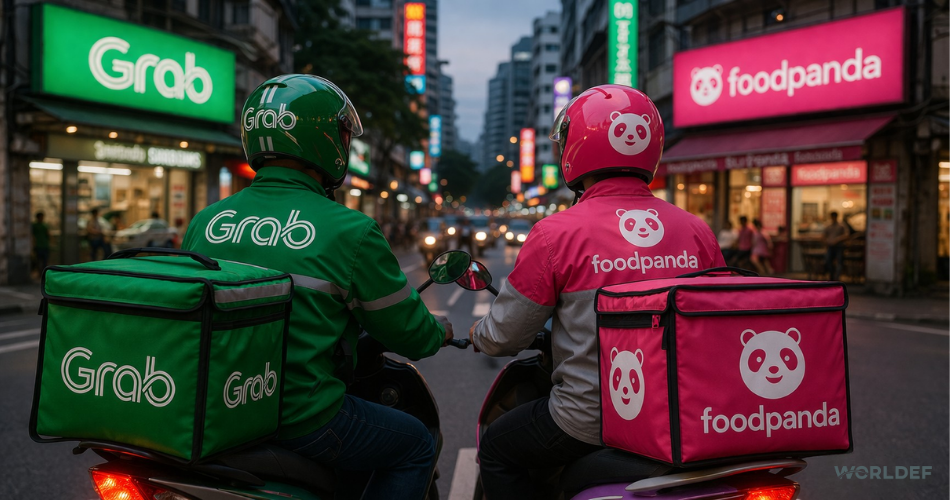
Grab is making its most significant international move yet with the acquisition of Foodpanda’s Taiwan business from Delivery Hero for $600 million. The deal marks Grab’s first expansion outside Southeast Asia, signaling a new phase in its regional growth strategy.

Taiwan represents a highly attractive market, with strong demand for mobile-first services and a well-established food delivery ecosystem. Foodpanda’s operations already span 21 cities and generated around $1.8 billion in gross merchandise value in 2025, making it a valuable entry point for Grab.

Why This Deal Matters for Grab’s Growth Strategy

This acquisition is more than geographic expansion – it reflects Grab’s broader strategy of scaling through targeted, value-driven deals. Following profitability, the company has accelerated its M&A activity, committing over $1 billion across multiple deals in recent months.

By entering Taiwan, Grab adds a high-income, densely populated market that closely resembles the urban environments it already operates in. The company plans to leverage its AI-powered logistics, mapping systems, and data tools to improve delivery efficiency and merchant performance.

The deal also positions Grab to compete more directly with global players while diversifying its revenue streams beyond its core Southeast Asian markets.

A Turning Point for Asia’s Delivery Landscape

The transaction highlights a broader shift in Asia’s delivery and platform economy. As competition intensifies, companies are increasingly focusing on consolidation, profitability, and strategic market selection.

For Delivery Hero, the sale is part of a wider restructuring effort aimed at optimising capital allocation and reducing debt.

For Grab, however, it represents a long-term bet on expanding its ecosystem – from food delivery to fintech and mobility – across new markets.

What This Mean

Grab’s entry into Taiwan signals that the next phase of platform growth in Asia will be driven by selective expansion, AI-driven efficiency, and ecosystem integration.

As regional leaders move beyond their home markets, competition is shifting from local dominance to cross-border scale.

Source: Asia Tech Review

Shein Expands with 600+ Sales Partners in Germany as Marketplace Growth Accelerates

Germany Sees Shein Expand with 600+ Sales Partners as Marketplace Growth Accelerates

Shein is accelerating its European expansion by building a strong local seller ecosystem, surpassing 600 sales partners in Germany as part of its growing marketplace strategy. The move signals a major shift in Shein’s business model, as the company evolves from a fast-fashion retailer into a broader e-commerce platform.

Germany has become one of Shein’s most important markets, with the platform reaching approximately 22.2 million monthly users. This growing user base is encouraging the company to deepen its presence by onboarding local small and medium-sized businesses (SMEs) and integrating them into its marketplace.

Marketplace Strategy Gains Momentum

Shein began opening its marketplace to European sellers in late 2023 and has since expanded operations across multiple countries. By enabling third-party sellers to join its platform, the company aims to diversify its product offering while strengthening its local supply chain.

To attract more partners, Shein is focusing on improving seller experience through simplified onboarding processes, better technology integration, and operational support. Tools and partnerships that streamline listing, inventory management, and order fulfillment are playing a key role in scaling this ecosystem.

Several German retailers have already joined the platform, reflecting growing interest among local businesses to leverage Shein’s large customer base and digital reach.

Logistics Investment Strengthens European Operations

A critical part of Shein’s strategy is its investment in logistics infrastructure. The company has established a major logistics hub in Poland, designed to improve delivery times and support sellers with efficient fulfillment services across Europe.

This development allows Shein to move closer to a hybrid marketplace model, combining global sourcing capabilities with localized distribution networks. Faster shipping and improved logistics are expected to enhance customer satisfaction while making the platform more attractive for sellers.

Rising Competition in the German Market

Despite its rapid growth, Shein faces intense competition in Germany’s e-commerce sector. Amazon continues to dominate the market, while other international platforms such as Temu and AliExpress are also expanding aggressively.

However, Shein’s strategy of combining affordability, trend-driven products, and an expanding marketplace model positions it as a strong challenger in the region.

A Shift Toward Platform Ecosystems

Shein’s expansion in Germany highlights a broader industry trend where digital retailers are transforming into full-scale marketplaces. By integrating local sellers and investing in logistics, Shein is building a scalable ecosystem that could reshape its role in global e-commerce.

As competition intensifies across Europe, Germany is emerging as a key battleground where global platforms compete for both consumers and sellers. Shein’s growing network of partners indicates that its marketplace strategy is gaining traction and could play a crucial role in its long-term growth.

Source: Ecommerce News Europe

Amazon Tests New Shopping Feature Showing Products From Brand Websites

User browsing products on the Amazon Shopping mobile app

Amazon is experimenting with a new feature that allows shoppers to discover products from external brand websites directly within the Amazon Shopping app.

In a blog post published on February 11, 2025, the company announced it is testing a beta program that displays selected products from other brands’ websites in search results for a limited group of U.S. customers.

Amazon Expands Shopping Experience Beyond Its Marketplace

Under the new feature, users searching in the Amazon app may see products that are not sold directly through Amazon’s marketplace. When a customer taps on one of these items, they receive a notification informing them that they are leaving Amazon and will be redirected to the brand’s official website to review pricing, shipping options and complete the purchase.

Amazon said the experiment is designed to improve product discovery and give customers access to a broader selection beyond the products currently available on its platform.

Amazon Marketplace Already Offers Hundreds of Millions of Products

The company already offers hundreds of millions of items on its marketplace, including more than 300 million products eligible for fast and free Prime delivery across over 35 product categories.

This large product catalog has helped Amazon remain one of the most dominant global ecommerce marketplaces.

Buy with Prime Still Offers Benefits for Members

In cases where brands support Buy with Prime, Amazon Prime members may still benefit from familiar services such as fast delivery, simple returns and 24/7 customer support when purchasing directly from the brand’s website.

This allows customers to enjoy many of the same advantages they receive when buying products directly from Amazon.

Amazon Plans to Expand the Beta Program

Rajiv Mehta, Amazon’s Vice President of Search and Conversational Shopping, said the company continues to explore new ways to improve convenience and expand product selection for shoppers.

The beta test is currently available to a subset of U.S. users on both iOS and Android, and Amazon said it plans to expand the feature to more customers and brands based on feedback from the trial.

The move reflects Amazon’s broader strategy to make its app a more comprehensive shopping discovery platform, even when purchases ultimately take place on external brand websites.

Source:
Amazon

For more insights on global ecommerce trends and digital commerce innovation, explore more stories on the WORLDEF.