WORLDEF ISTANBUL 2026 - Upcoming Event

Register Now

Southeast Asia E-Commerce Market Expected to Hit $289.8 Billion by 2029

Southeast Asia E-Commerce Market Expected to Hit $289.8 Billion by 2029

Southeast Asia’s digital commerce industry is projected to reach $289.8 billion by 2029, highlighting the region’s accelerating transformation into one of the world’s fastest-growing e-commerce markets. The new study points to rising internet penetration, mobile-first consumers, digital payments adoption, and expanding logistics infrastructure as the key drivers behind this rapid growth.

Southeast Asia E-Commerce Growth

Countries such as Indonesia, Vietnam, Thailand, the Philippines, Malaysia, and Singapore continue to strengthen their digital economies as online shopping becomes increasingly integrated into everyday consumer behavior. The region’s young population and strong social commerce culture are also playing a major role in boosting online retail activity.

The report suggests that marketplaces, cross-border commerce, live shopping, and AI-powered personalization are expected to shape the next phase of Southeast Asia’s e-commerce evolution. At the same time, fintech innovation and improved delivery networks are making digital transactions more accessible across urban and rural markets alike.

Industry analysts believe Southeast Asia is becoming a strategic growth region for global e-commerce companies, brands, and investors looking to expand beyond mature markets. The region’s rapidly developing digital ecosystem is attracting increasing attention from technology firms, logistics providers, and payment platforms seeking long-term opportunities.

As competition intensifies, companies operating in Southeast Asia are expected to focus more heavily on customer experience, faster fulfillment, localized strategies, and data-driven commerce solutions to maintain growth momentum in the coming years.

Source: TechNode Global

Shopee Reports Positive 46.6% Revenue Growth as Southeast Asia E-Commerce Battle Intensifies

Shopee Reports Positive 46.6% Revenue Growth as Southeast Asia E-Commerce Battle Intensifies

Shopee is continuing to outperform expectations in Southeast Asia’s highly competitive e-commerce market, with parent company Sea reporting strong financial growth in the first quarter of 2026.

According to Sea’s latest earnings results, the company generated $7.1 billion in revenue during Q1 2026, marking a 46.6% year-on-year increase. Net income reached $438.2 million, while adjusted EBITDA climbed above $1 billion. The results pushed Sea’s share price sharply higher following the announcement.

Shopee remained the company’s largest business segment, contributing more than 60% of total revenue. The platform recorded 45% annual growth, reaching $5.1 billion in revenue as the company continued expanding logistics operations, seller incentives and digital payment integration across Southeast Asia and Latin America.

Sea’s strong quarter highlights how Shopee continues to defend its leadership position despite rising pressure from competitors including TikTok Shop and Alibaba-backed Lazada. Analysts note that competition in Southeast Asia’s digital commerce market has become increasingly aggressive, especially around logistics infrastructure, free shipping campaigns and creator-led shopping experiences.

Gaming and Fintech Continue Funding Shopee’s Growth

One of Sea’s biggest competitive advantages remains its multi-business ecosystem. While Shopee drives the company’s e-commerce growth, gaming division Garena and fintech business Monee continue generating strong cash flow to support expansion.

Garena recorded its strongest quarter since 2021, benefiting from the continued popularity of titles such as Free Fire and Arena of Valor. Meanwhile, Monee’s fintech operations expanded rapidly, particularly in Brazil, where digital lending and payment services continued gaining traction.

Industry analysts say this business structure allows Sea to continue investing aggressively into Shopee’s logistics and user acquisition strategies while maintaining overall profitability, something many e-commerce competitors struggle to achieve.

Sea also emphasized that Brazil remains one of Shopee’s fastest-growing international markets. The company’s expansion strategy increasingly focuses on balancing mature Southeast Asian operations with high-growth opportunities in Latin America.

Despite rising operational costs and lower margins linked to heavy investment, Shopee continues strengthening its regional market position. The platform remains Southeast Asia’s largest e-commerce company by traffic and transaction volume, operating across markets including Indonesia, Vietnam, Thailand, Malaysia, the Philippines and Singapore.

As Southeast Asia’s digital commerce sector evolves, Shopee’s latest performance demonstrates that the region’s e-commerce race is far from slowing down. Instead, competition is entering a new phase driven by logistics, fintech integration, AI-powered recommendations and creator-led commerce experiences.

Source

Vietnam’s E-Commerce Records Positive 47% Surge, Reaching $5.6B in Q1 2026

Vietnam’s E-Commerce Records Positive 47% Surge, Reaching $5.6B in Q1 2026

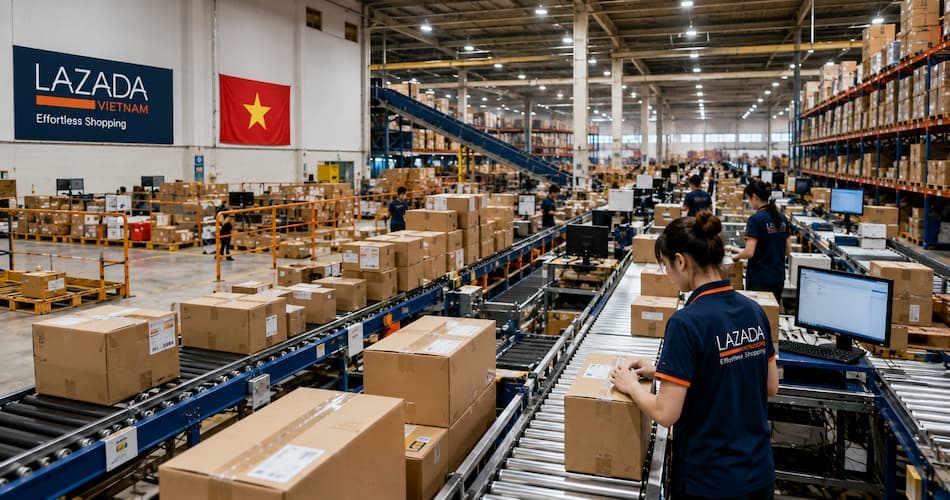
Vietnam’s e-commerce sector continued its rapid expansion in the first quarter of 2026, reinforcing the country’s position as one of Southeast Asia’s fastest-growing digital markets.

According to recent market data, total gross merchandise value (GMV) across Vietnam’s leading e-commerce platforms reached nearly VND148.6 trillion ($5.64 billion) during Q1 2026, representing a strong 47% year-on-year increase. The growth reflects rising consumer confidence, expanding platform competition and the increasing influence of social commerce in the country’s retail ecosystem.

Major platforms including Shopee, TikTok Shop, Lazada and Tiki continued to dominate the market, while livestream commerce and short-form video shopping became key drivers of online consumer engagement.

The number of online transactions also grew significantly during the quarter, surpassing 1.14 billion products sold. Vietnamese consumers spent an average of nearly $63 million per day on e-commerce platforms, highlighting the growing importance of digital retail channels in daily purchasing habits.

Beauty and personal care products emerged as the strongest-performing category, generating more than VND24.4 trillion in revenue. Women’s fashion and home-related products also remained among the top-selling segments. At the same time, men’s fashion recorded one of the fastest growth rates in the market, signaling changing consumer behavior and stronger demand for lifestyle-focused online shopping.

Social Commerce and Livestream Shopping Reshape Vietnam’s Market

Vietnam’s e-commerce growth is increasingly being fueled by social commerce strategies. Platforms are investing heavily in livestream shopping, creator-driven sales and short-video content to increase customer engagement and conversion rates.

TikTok Shop continues to rapidly expand its market share through “shoppertainment” strategies, while Shopee strengthens its position through integrated creator partnerships and platform-wide promotional campaigns. Analysts note that video-led commerce is becoming one of the defining trends of Vietnam’s digital economy.

Industry experts also highlight that Vietnam’s young digital-first population, improving logistics infrastructure and growing mobile internet penetration are creating strong long-term opportunities for online retail growth.

As Southeast Asia’s e-commerce competition intensifies, Vietnam is increasingly positioning itself as one of the region’s most dynamic and high-potential digital commerce markets for both local and international brands.

Source

26.2% Growth Signals Strong Momentum for J&T Express in Q1 2026

26.2% Growth Signals Strong Momentum for J&T Express in Q1 2026

Strong start to 2026 for J&T Express

Global logistics provider J&T Express has reported a 26.2% year-on-year growth in parcel volume for the first quarter of 2026, reflecting strong demand across key markets and continued expansion of its global logistics network.

During the reporting period, the company handled a total of 8.326 billion parcels, with average daily volumes reaching approximately 92.5 million shipments.

This performance highlights a solid start to the year, supported by increasing e-commerce activity and improved operational efficiency across regions.

Southeast Asia leads rapid expansion

One of the strongest contributors to this growth was Southeast Asia, where J&T Express continues to dominate the market. Parcel volume in the region surged by nearly 80% year-on-year, reaching 2.768 billion parcels in Q1.

The growth was driven by:

  • Strong demand from e-commerce platforms
  • Seasonal shopping peaks such as Ramadan
  • Continued investment in logistics infrastructure

The company also expanded its operational capacity, increasing line-haul vehicles and automated sorting systems to support rising demand.

Global markets accelerate beyond China

While China remains a core market, J&T Express is seeing rapid expansion in other regions. Non-China parcel volumes now account for over 35% of total shipments, indicating a shift toward a more globally diversified business model.

In emerging markets, including Latin America and the Middle East, parcel volumes more than doubled year-on-year. The company has been actively partnering with major e-commerce platforms such as TikTok, Temu, SHEIN, and AliExpress to capture cross-border growth opportunities.

Additionally, J&T expanded its network by adding new service outlets and sorting centers, further strengthening its international logistics capabilities.

E-commerce continues to drive logistics growth

The company’s performance reflects the broader momentum of global e-commerce, which continues to fuel demand for fast and efficient delivery solutions. As online retail expands, logistics providers like J&T Express are investing heavily in automation, infrastructure, and cross-border capabilities.

Industry trends suggest that Southeast Asia and emerging markets will remain key growth drivers in the coming years, supported by increasing internet penetration and digital adoption.

Outlook remains positive

J&T Express’ strong first-quarter results indicate continued growth potential for 2026. With a focus on operational efficiency, infrastructure expansion, and strategic partnerships, the company is well-positioned to capitalize on the next wave of e-commerce growth.

Source

Stay updated with global logistics and e-commerce insights on WORLDEF.

Grab Expands Beyond Southeast Asia with $600 Million Foodpanda Deal in Taiwan

Grab Expands Beyond Southeast Asia with $600 Million Foodpanda Deal in Taiwan

Grab is making its most significant international move yet with the acquisition of Foodpanda’s Taiwan business from Delivery Hero for $600 million. The deal marks Grab’s first expansion outside Southeast Asia, signaling a new phase in its regional growth strategy.

Taiwan represents a highly attractive market, with strong demand for mobile-first services and a well-established food delivery ecosystem. Foodpanda’s operations already span 21 cities and generated around $1.8 billion in gross merchandise value in 2025, making it a valuable entry point for Grab.

Why This Deal Matters for Grab’s Growth Strategy

This acquisition is more than geographic expansion – it reflects Grab’s broader strategy of scaling through targeted, value-driven deals. Following profitability, the company has accelerated its M&A activity, committing over $1 billion across multiple deals in recent months.

By entering Taiwan, Grab adds a high-income, densely populated market that closely resembles the urban environments it already operates in. The company plans to leverage its AI-powered logistics, mapping systems, and data tools to improve delivery efficiency and merchant performance.

The deal also positions Grab to compete more directly with global players while diversifying its revenue streams beyond its core Southeast Asian markets.

A Turning Point for Asia’s Delivery Landscape

The transaction highlights a broader shift in Asia’s delivery and platform economy. As competition intensifies, companies are increasingly focusing on consolidation, profitability, and strategic market selection.

For Delivery Hero, the sale is part of a wider restructuring effort aimed at optimising capital allocation and reducing debt.

For Grab, however, it represents a long-term bet on expanding its ecosystem – from food delivery to fintech and mobility – across new markets.

What This Mean

Grab’s entry into Taiwan signals that the next phase of platform growth in Asia will be driven by selective expansion, AI-driven efficiency, and ecosystem integration.

As regional leaders move beyond their home markets, competition is shifting from local dominance to cross-border scale.

Source: Asia Tech Review

ASEAN Digital Economy Set for Breakthrough: 1 Regional Pact Could Unlock $2 Trillion Growth

ASEAN Digital Economy Set for Breakthrough: 1 Regional Pact Could Unlock $2 Trillion Growth

Southeast Asia is moving closer to a landmark agreement that could redefine the future of e-commerce and digital trade across the region.

As the Philippines leads ASEAN in 2026, negotiations are accelerating around the ASEAN Digital Economy Framework Agreement (DEFA) – a comprehensive regional pact designed to harmonize digital trade rules, reduce barriers, and strengthen cross-border e-commerce.

A Unified Digital Market in the Making

The proposed agreement aims to create a more integrated digital economy by aligning regulations across ASEAN member states. Currently, differences in data governance, cybersecurity, and consumer protection frameworks create challenges for businesses operating across borders.

DEFA seeks to address these gaps by introducing:

  • interoperable digital systems
  • smoother cross-border data flows
  • stronger cybersecurity standards
  • more efficient digital payments and paperless trade

By simplifying these processes, the agreement is expected to make it significantly easier for businesses – especially SMEs – to expand regionally.

Boosting E-Commerce and SME Growth

One of the key goals of the pact is to unlock new opportunities for micro, small, and medium-sized enterprises (MSMEs), which form the backbone of ASEAN economies.

By reducing operational friction, the agreement could:

  • lower costs through digitalization
  • enable faster and safer transactions
  • expand market access across Southeast Asia

Over time, this is expected to drive job creation, improve digital skills, and support more inclusive economic participation.

A Rapidly Expanding Digital Economy

The urgency behind the agreement is clear. ASEAN’s digital economy is projected to grow rapidly, with estimates suggesting it could reach $2 trillion by 2030.

In the Philippines alone, the digital economy is expected to nearly double in value – highlighting the region’s strong growth trajectory and the increasing importance of digital trade frameworks.

Strategic Priorities: Integration, Trust, and Skills

Beyond trade facilitation, the agreement also focuses on building a future-ready digital ecosystem.

Key priorities include:

  • establishing trusted and interoperable digital infrastructure
  • ensuring secure and transparent data exchanges
  • strengthening workforce skills for digital transformation

These elements are seen as essential to supporting sustainable growth and enabling businesses to scale in an increasingly digital-first economy.

What Comes Next?

ASEAN aims to finalize negotiations and sign the agreement later this year, potentially during the ASEAN Summit in November.

If implemented, DEFA would become the world’s first region-wide digital economy agreement, positioning ASEAN as a global leader in digital trade governance.

Source: Philippine News Agency, Inquirer Opinion

Digital Investment Reaches $87.4B in Malaysia as AI Drives Growth in 2025

Digital investment growth driven by AI and data center infrastructure in Malaysia

Malaysia’s digital economy is accelerating at a notable pace, with the Malaysia Digital Economy Corporation (MDEC) securing approximately $87.4 billion in digital investments in 2025. The latest figures underline the country’s growing appeal as a regional technology hub, with artificial intelligence (AI) emerging as one of the primary forces behind this expansion.

The investment surge reflects a broader global trend where businesses are increasingly prioritizing digital transformation. In Malaysia’s case, a combination of government-backed initiatives, infrastructure development and private sector engagement has created a favorable environment for large-scale digital investments.

Artificial Intelligence Takes Center Stage

AI has become a key driver shaping investment decisions across multiple industries. Companies are no longer approaching AI as an experimental tool but as a core component of their operational strategy. From predictive analytics and automation to personalized customer experiences, AI technologies are being integrated into both enterprise systems and consumer-facing platforms.

Industry experts highlight that this shift is also influencing where capital flows. Investors are actively seeking markets where AI adoption is supported by regulatory clarity, digital infrastructure and skilled talent — areas where Malaysia has made significant progress in recent years.

Diverse Growth Across Digital Ecosystems

The $87.4 billion investment is not concentrated in a single segment but spread across a wide range of digital sectors. Key areas attracting capital include cloud computing, data centers, digital services and e-commerce infrastructure.

This diversification signals a maturing digital economy. Rather than relying on isolated growth areas, Malaysia is building a comprehensive ecosystem that supports innovation across multiple layers of the digital value chain. E-commerce platforms, in particular, continue to benefit from improvements in logistics, payment systems and cross-border trade capabilities.

Policy Support Strengthens Investor Confidence

Government initiatives have played a crucial role in sustaining this growth momentum. Through programs led by MDEC, Malaysia has positioned itself as an attractive destination for both regional and global technology companies.

Clear regulatory frameworks, incentives for digital investments and ongoing infrastructure development have helped reduce entry barriers for investors. As a result, multinational firms are increasingly considering Malaysia as a strategic base for expanding their operations in Southeast Asia.

Regional Competition and Strategic Positioning

As Southeast Asia becomes more competitive in attracting digital investments, Malaysia’s performance stands out. The country is competing with major regional markets, yet continues to secure substantial inflows due to its balanced approach combining policy support, infrastructure readiness and talent development.

Analysts note that maintaining this position will require continued investment in digital skills and innovation capabilities, particularly as technologies like AI, cloud computing and data analytics evolve rapidly.

Future Outlook: Sustained AI-Led Growth

Looking ahead, AI is expected to remain a dominant factor shaping Malaysia’s digital investment landscape. As businesses deepen their use of advanced technologies, demand for scalable infrastructure and intelligent systems will continue to rise.

The strong performance in 2025 suggests that Malaysia is not only keeping pace with global digital trends but also positioning itself as a long-term player in the regional digital economy.

Source: TechNode Global (2026)