WORLDEF ISTANBUL 2026 - Early Bird Registration Ends Soon

Register Now

EU Delegation Visited Beijing Over the E-Commerce Product Safety Crisis

EU

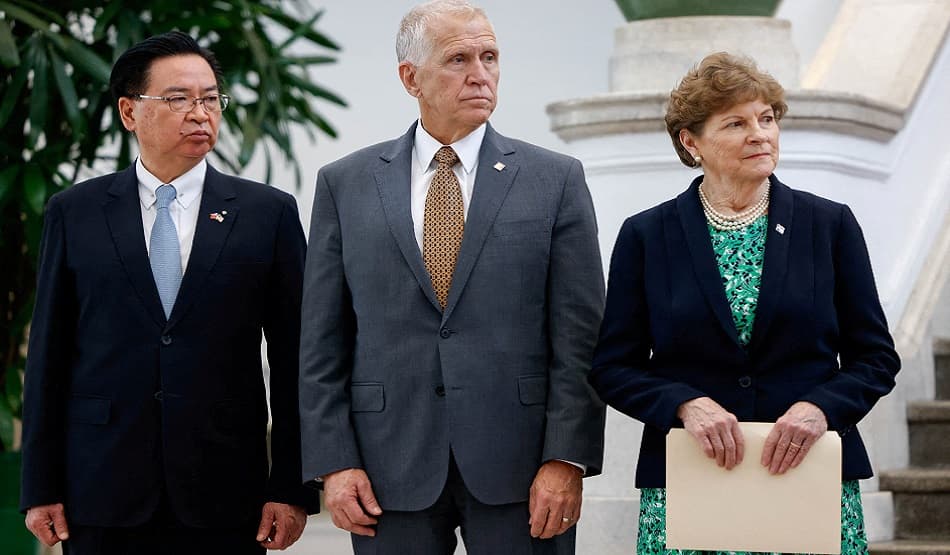
Trade tensions between the European Union (EU) and China have once again come to the forefront, this time over product safety issues stemming from e-commerce. A delegation from the European Parliament traveled to Beijing as part of a rare visit and held direct talks with Chinese officials. The focus of the meetings was on “unsafe and non-standard products” entering the European market.

E-Commerce Products Are on the EU’s Radar

European Union officials emphasize that a large portion of products entering Europe, especially through low-cost e-commerce platforms, do not meet safety and quality standards. In recent inspections, it has been stated that the rate of non-compliant products in some categories has reached as high as 80%. This situation creates serious risks not only for consumer safety but also for fair competition.

The European Union side is demanding that Chinese manufacturers and platforms comply more strictly with European Union regulations. The increase in non-standard products is drawing particular attention in high-volume categories such as toys, electronics, and textiles.

Debates Around Temu and Shein Are Deepening

Platforms such as Temu and Shein, which have frequently come to the agenda in the European Union recently, are at the center of this debate. The European Commission had previously announced that it would tighten inspections targeting these platforms. In the new period, platforms are planned to be held responsible as “importers” and made directly liable for product safety.

The Beijing Visit Is Rare but Critical

The Beijing visit by the European Parliament delegation is also being considered an important development in terms of diplomatic contacts that have declined in recent years. The meetings addressed not only product safety, but also supply chain transparency and sustainability issues. It is stated that the Chinese side is open to greater cooperation, especially to avoid disruptions to exports, but is taking a cautious approach on the grounds that regulations could slow trade.

Stricter Inspections and Higher Costs in the New Period

Analysts state that these steps by the European Union could make it more difficult in the short term for Chinese-origin products to enter the European market. This means higher costs, especially for e-commerce models based on low-cost advantage. On the other hand, the European Union’s goal is not only to increase product safety; it is also to protect local producers and restore the balance of competition. Recent developments reveal that global e-commerce is now being shaped not only by competition in price and speed, but also by regulation and safety criteria. Tensions between Europe and China in this area are expected to increase even further in the coming period.

Finland E-Commerce Market 2025: AI, Social Commerce and Global Competition Reshape the Industry

Finland E-Commerce Market 2025: AI, Social Commerce and Global Competition Reshape the Industry

Finland E-Commerce Market Reaches €5.6 Billion in 2025

Finland e-commerce market continues to expand, with total online retail spending reaching approximately €5.6 billion in 2025. The market grew by 4.8% year-on-year, confirming that digital commerce remains a core part of consumer behavior.

However, the nature of this growth is evolving. Rather than uniform expansion, the market is now driven by category-specific trends, shifting consumer habits and increasing global competition.

Finland E-Commerce Trends Show Strong Growth in Grocery, Health and Electronics

Growth within the Finland e-commerce ecosystem is not evenly distributed. Consumer electronics, cosmetics and health products, and grocery categories are leading the market.

Grocery e-commerce has reached a new level of maturity, with around 30% of consumers purchasing food or beverages online. This signals a structural shift where e-commerce is no longer limited to discretionary spending but is becoming embedded in everyday consumption.

In contrast, the fashion segment is facing pressure due to price competition from international platforms and the rise of second-hand commerce.

Top-Selling Categories in Finland E-Commerce Market

According to the report, the Finland e-commerce market is led by a small number of dominant product categories.

Consumer electronics is the largest category, accounting for approximately 23% of total online spending. It is followed by fashion (21%) and cosmetics and health products (17%), making these three segments the core of Finland’s e-commerce market

Other key categories include:

Food and beverages (13%)
Spare parts and DIY products (9%)
Home and interior products (8%)
Hobbies, leisure and pet products (7%)

This distribution shows that while traditional strong categories such as electronics and fashion continue to dominate, everyday consumption categories are gaining share.

In particular, the growth of groceries and health-related products indicates that Finland e-commerce is moving beyond occasional purchases toward more frequent, necessity-driven consumption.

Finland E-Commerce Platforms Face Rising Global Competition

Domestic platforms continue to dominate Finland e-commerce traffic. Local players such as K-Ruoka, Verkkokauppa.com and Tokmanni remain among the most visited platforms.

At the same time, international marketplaces including Temu, Amazon and AliExpress are increasing their presence. These platforms compete aggressively on pricing, assortment and mobile experience, making the competitive landscape more complex.

Cross-border e-commerce is also growing, with Finnish consumers increasingly purchasing from outside the European Union. This trend is intensifying pressure on local players to differentiate beyond price.

Social Media Becomes a Key Driver in Finland E-Commerce

One of the most important Finland e-commerce trends is the growing role of social media in the purchasing journey.

More than half of consumers now receive purchase inspiration from social platforms. This influence is expanding across all age groups, not just younger users.

A growing share of consumers are also making purchases directly through social platforms or through embedded links. This indicates that social commerce is becoming a core part of the e-commerce ecosystem.

AI Is Transforming Product Discovery in Finland E-Commerce

Artificial intelligence is emerging as a new layer in Finland e-commerce. Product discovery is increasingly shifting from traditional search engines to AI-driven systems.

This change requires businesses to rethink their visibility strategies. Structured product data, authentic customer reviews and machine-readable content are becoming critical for visibility.

E-commerce is moving toward AI-driven discovery models where recommendation systems play a central role.

Mobile Apps Are Reshaping Finland E-Commerce Behavior

Mobile apps are becoming increasingly important in Finland e-commerce. Adoption is particularly strong among younger consumers, who use apps for browsing, price comparison and purchasing.

Both local and international platforms are competing in this space, creating a hybrid ecosystem. Apps such as Vinted, Temu and AliExpress are gaining strong traction alongside domestic solutions.

Finland E-Commerce Outlook: Growth Continues but Market Becomes More Complex

The Finland e-commerce market is expected to continue growing in the coming years, but at a more moderate pace.

External factors such as logistics costs, global competition and geopolitical uncertainty are becoming more relevant for market performance.

More importantly, the structure of e-commerce is changing. The market is no longer defined only by digital adoption, but by platform competition, social influence and technological transformation.

Businesses operating in Finland e-commerce will need to adapt to this new reality. Success will depend on flexibility, strong positioning within digital ecosystems and the ability to integrate emerging technologies into the customer journey.