WORLDEF ISTANBUL 2026 - Early Bird Registration Ends Soon

Register Now

New Targets in Türkiye’s E-Export Strategy: Eastern Europe and the Turkic Republics

E-Export

As the global effects of the war in the Middle East continue to be seen, the Gulf countries, which held an important place in Türkiye’s cross-border e-commerce strategy, have been taken off the route. The new target of companies engaged in e-export in Türkiye has become Eastern Europe and the Turkic Republics. Twelve percent of e-export sales in Türkiye had been made to Gulf countries.

Due to the attacks by the United States and Israel against Iran and Iran’s subsequent targeting of Gulf countries, the war that broke out in the Middle East brought trade traffic almost to a halt. According to a report in Hürriyet, the war led to changes in Middle East cross-border e-commerce strategies in many countries. E-exporters in Türkiye also turned their route toward Eastern Europe and the Turkic Republics.

Türkiye’s Exports to Gulf Countries Fell 37 Percent Month-on-Month

According to the Turkish Ministry of Trade’s March 2026 data, Türkiye’s exports to Gulf countries fell by 37 percent month-on-month to $1.3 billion. In just one month, there was a loss of $815 million in exports to the countries of the region. The biggest loss was in Qatar, with a decline of 83 percent. In 2025, total exports to Gulf countries had amounted to approximately $31.1 billion, accounting for 11.4 percent of total exports.

Due to its logistics advantage, the Gulf region is also an important market for e-exports in Türkiye. The Gulf region had become a critical growth center in Türkiye’s e-export strategy. E-exports came under risk in the shadow of rising geopolitical tensions. According to sector representatives, Gulf countries, especially Dubai, the UAE, and Saudi Arabia, had been a “premium growth market” in recent years due to high basket averages, demand for luxury and fast-moving consumer goods, and the strong perception of Turkish brands.

Saudi Arabia Ranks First in E-Exports

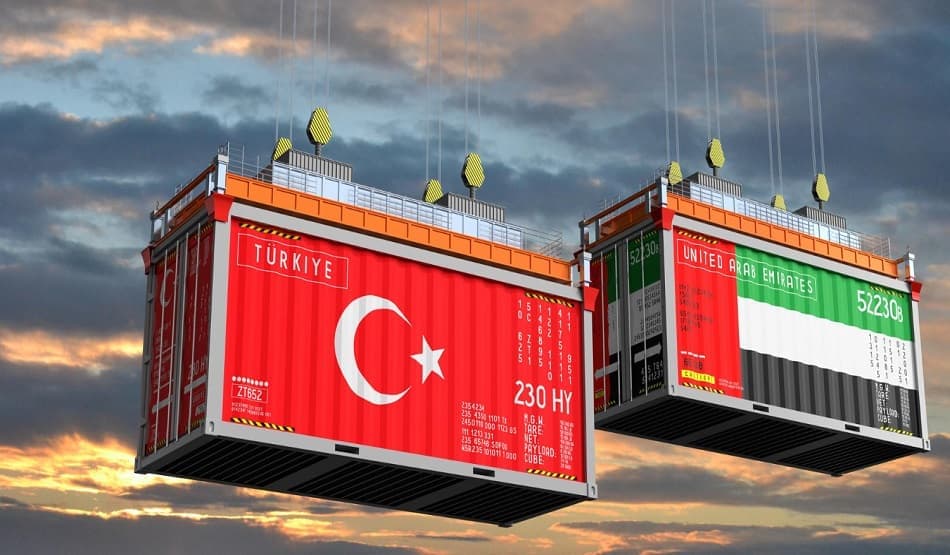
According to the data of the Turkish Ministry of Trade, Saudi Arabia ranks first in e-exports in the Gulf region with a share of 39 percent. Iraq is in second place with 23.6 percent. Saudi Arabia, Iraq, and the UAE account for approximately 85 percent of Türkiye’s total e-exports to the Gulf region.

What Do Sector Representatives Say?

Representatives of the e-commerce and e-export sectors in Türkiye evaluated the effects of the Middle East war:

  • Mustafa Namoğlu: The war changed all plans and expectations

Mustafa Namoğlu, Co-Founder and CEO of ikas: “At the beginning of the year, there was a picture supporting sales to Gulf countries. However, the war changed all plans and expectations. High-value products see less demand during periods such as war, when general needs come to the forefront. Because the tension has affected energy markets, supply chains around the world have come under stress. This also leaves open the question of whether we can turn to other markets. Because the global economy has started to come under threat.”

  • Cenk Çiğdemli: European countries are leading this search

Cenk Çiğdemli, Member of the E-Commerce Council of the Union of Chambers and Commodity Exchanges of Türkiye (TOBB): “E-commerce companies focus all their campaigns on the Gulf. However, this changed with the war. Our companies are cautious about Gulf countries, and the search for alternative markets has accelerated. In this search, European countries are leading the way. North Africa, the Turkic Republics, and especially Eastern Europe are on our agenda. Investments and marketing budgets are shifting to these regions.”

  • Mustafa Gültepe: The war affected jewelry, cereals, and automotive the most

Mustafa Gültepe, Chairman of the Turkish Exporters Assembly (TİM): “Last month, our exports to all countries in the region except Oman declined. There is a loss of 30 percent in Iraq, 48 percent in the UAE, 41 percent in Iran, 29 percent in Saudi Arabia, 83 percent in Qatar, 70 percent in Kuwait, and nearly 81 percent in Bahrain. The war affected jewelry, cereals, and automotive the most.”

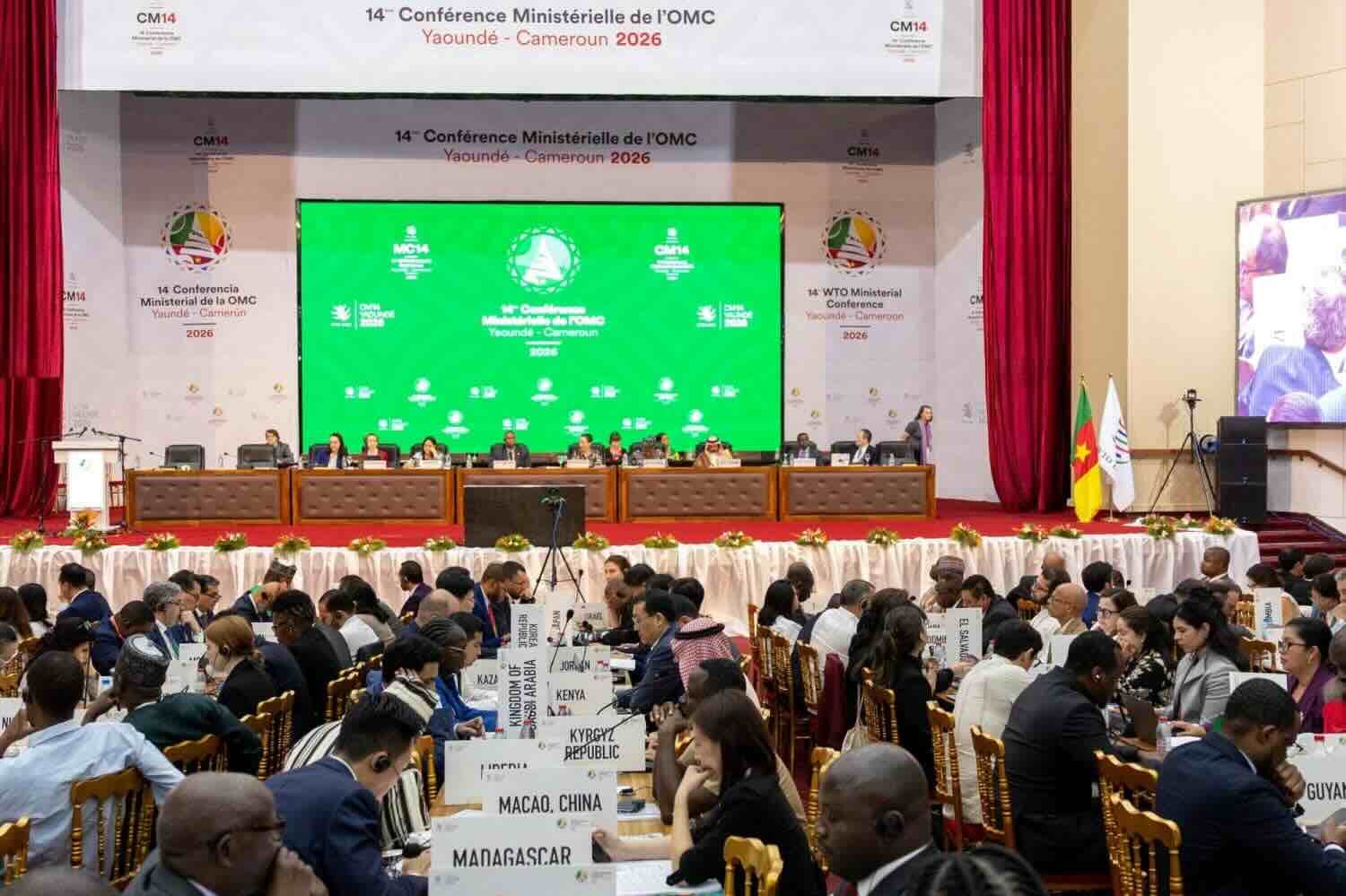
WTO E-Commerce Moratorium Deadlock: Who Will Control Digital Trade Rules?

The recent deadlock at the World Trade Organization (WTO) over e-commerce duties may sound technical. It is not. What we are witnessing is a fundamental disagreement about the rules of the digital economy and, more importantly, about who gets to capture its value.

At the center of the debate is the WTO’s long-standing e-commerce moratorium, a rule that prevents countries from imposing customs duties on electronic transmissions such as software, streaming, and cloud services. After nearly 30 years in place, this rule is now under serious scrutiny.

What Is the WTO E-Commerce Moratorium?

The WTO e-commerce moratorium, first introduced in 1998, ensures that digital products and services can cross borders without tariffs.

This includes:

  • Software downloads
  • SaaS platforms (e.g. Microsoft 365)
  • Streaming services (e.g. Netflix)
  • Digital media and cloud-based tools

However, the rule does not apply to physical goods.

If you buy a piece of furniture from abroad, it is subject to tax. If you download software from abroad, it is not. This is the core issue. A container of chairs crossing a border is taxed, while a million-dollar SaaS subscription crossing digitally is not taxed

From a policy standpoint, this asymmetry is becoming harder to justify, especially for emerging economies.

Why Brazil, Türkiye, India and Others Said “No” to the WTO E-Commerce Deal

The WTO talks collapsed after Brazil, supported by countries such as Türkiye and aligned with India’s broader stance, refused to agree to a long-term extension of the moratorium.

Their argument is actually quite rational:

  • The digital economy is still evolving
  • Governments should not give up taxation rights too early
  • Digital imports are growing rapidly, but remain untaxed

In simple terms: “Why should we permanently give up the right to tax the fastest-growing part of the global economy?”

This is not protectionism. It is strategic hesitation.

Why the U.S. and EU Support Extending the Moratorium

The United States and European Union strongly advocate for extending the WTO e-commerce moratorium, preferably on a long-term or permanent basis.

Their motivations are clear:

  • They dominate global digital service exports
  • Their companies rely on frictionless cross-border data flows
  • Tariffs on digital services would increase costs and reduce scalability

For these economies, maintaining a duty-free digital environment is essential for sustaining global competitiveness. For them, this rule is not just convenient, but also structural. Without it, global scaling slows down, SaaS becomes more expensive, and platforms face fragmented regulations.

The Real Conflict: Digital Trade vs Traditional Trade

The WTO deadlock reflects a deeper structural issue in global trade:

Traditional TradeDigital Trade
Physical goodsIntangible services
Subject to tariffsCurrently duty-free
Border-based taxationBorderless delivery

Emerging economies argue that this imbalance creates an unequal playing field. If physical goods are taxed, why should digital goods remain exempt?

This is often framed as a “developed vs developing” conflict. That is only partially true. The deeper divide is this:

  • Digital exporters want open, duty-free flows
  • Digital importers want the right to regulate and tax

This is a clash between two economic realities, one built on platforms and data, and the other still balancing industry, revenue, and transition.

Why This Matters for E-Commerce

For the global e-commerce ecosystem, the implications are significant.

If the moratorium is not extended:

  • Countries may introduce digital import duties
  • Cross-border SaaS and platform costs could increase
  • E-commerce operations could become fragmented by regulation

This would directly impact:

  • Online marketplaces
  • Subscription-based business models
  • Cross-border digital service providers

For regions like the UAE, which position themselves as global e-commerce hubs, maintaining predictable digital trade rules is critical; this could introduce friction into what has so far been a relatively seamless system.

What Happens Next in WTO Negotiations?

Following the deadlock, WTO members will continue discussions in Geneva. The most likely outcome is a short-term extension (2 years), rather than a long-term agreement. However, this does not resolve the underlying issue. The central question remains: Should digital trade be treated the same as physical trade?

From where I stand, working at the intersection of e-commerce, platforms, and global trade, this debate is inevitable. And frankly, overdue. For years, the digital economy has operated in a kind of regulatory grey zone: Borderless, Frictionless, largely untaxed at the transmission level. That model helped accelerate growth. But it also created an imbalance.

The question now is not whether rules will change. They will. The real question is, will those rules enable growth—or fragment it?

The WTO deadlock is often described as a failure. I see it differently. The WTO e-commerce moratorium deadlock is not a temporary disruption. It is a reflection of a broader transformation in the global economy.

We are moving from trade in goods to trade in data and from physical borders to digital jurisdictions

The outcome of this debate will shape:

  • The cost of digital services
  • The scalability of e-commerce platforms
  • The structure of global trade itself

The real question is no longer whether digital trade rules will change. It is, how and in whose favour they will be rewritten.

Bibliography

The Japan Times – “WTO talks end in deadlock after Brazil blocks deal over e-commerce duties” (2026) https://www.japantimes.co.jp/business/2026/03/30/tech/wto-talks-brazil-e-commerce-duties/

World Trade Organization – Work Programme on Electronic Commerce and Moratorium on Customs Duties
https://www.wto.org/english/tratop_e/ecom_e/ecom_work_programme_e.htm

U.S. Trade Representative – Position on WTO E-commerce Moratorium
https://ustr.gov/about/policy-offices/press-office/press-releases/2026/march/ustr-issues-report-wto-reform-eve-ministerial-conference

European Commission – EU Digital Trade and WTO Reform Position Papers
https://www.eeas.europa.eu/delegations/world-trade-organization-wto/eu-submission-wto-reform_en?s=69

WTO – Growing Trade in Electronic Transmissions and Development Implications
https://www.wto.org/english/tratop_e/ecom_e/wkmoratorium29419_e/rashmi_banga.pdf