
Ticimax’s 21-Year Journey: From a Software Venture to a Global E-Commerce Technology Platform
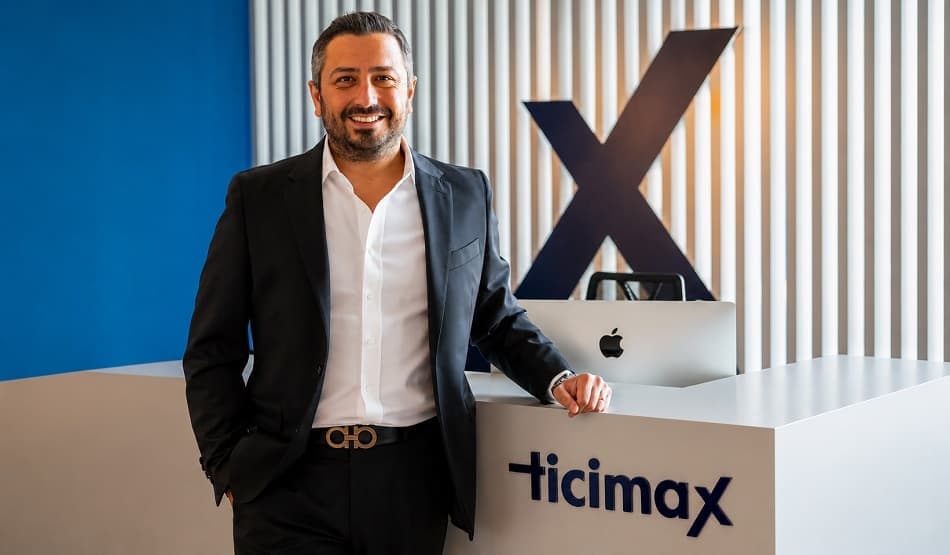
E-commerce is no longer merely a sales channel where products are listed digitally; it is transforming into a multi-layered technology field at the center of brands’ growth, export, customer experience, and competitive strategies. While the access power offered by marketplaces maintains its importance, it is becoming more critical than ever for brands to strengthen their own digital assets, establish direct customer relationships, and develop data-driven decision-making mechanisms. In this new era, e-commerce infrastructures are also moving beyond “site-building software” in the classical sense and transforming into strategic platforms that form the digital commerce backbone of businesses.
Ticimax, one of the pioneering players of this transformation in Türkiye, has evolved over its 21-year journey from a software-focused venture into a comprehensive technology platform that provides cloud-based e-commerce and e-export infrastructure to more than 30,000 brands. Today, the company accompanies brands in their end-to-end digitalization processes with digital sales, operation, marketing, integration, mobile application, artificial intelligence-supported content production, and e-export solutions.
Artificial intelligence, multichannel commerce, and globalization are among the leading topics that determine the future of e-commerce. Ticimax also addresses this transformation not merely as a product feature, but as a strategic transformation area at the center of its business model. The company’s investments in artificial intelligence technologies aim to increase brands’ digital competitiveness across a wide range of areas, from content production to data analytics, from visibility solutions to automation. In particular, solutions such as the TiciAI Growth Assistant contribute to brands being better understood by large language models and artificial intelligence-supported search systems within the new visibility dynamics that go beyond SEO.
We spoke with Ticimax Founder and CEO Cenk Çiğdemli about the company’s transformation from its founding story to the present, the impact of artificial intelligence on e-commerce infrastructures, why the D2C strategy has now become a necessity for brands, the opportunities offered by e-export, and the strategic advantages that technology platforms provide to businesses.
Could you tell us about the evolution Ticimax has undergone from the day it was founded to today?
The story of Ticimax is based on a curiosity for software that began at a very early age. My interest in technology goes back to my childhood years; I also stepped into working life at the age of 16, while I was still in high school. I founded Ticimax while I was studying in high school. I wrote my first software for our neighborhood water seller to help him track his customers more easily. In the second year of high school, I developed a tool that allowed everyone to build their own website in simple steps; over time, this project turned into an e-commerce infrastructure.
At the point we have reached today, Ticimax is no longer merely a software company that “builds e-commerce sites”; it is a technology platform through which businesses can manage their digital sales, operation, marketing, integration, mobile application, and e-export processes end to end. In our 21st year, we provide cloud-based e-commerce and e-export infrastructure, native mobile applications, and custom solutions to more than 30,000 brands.
Our mission is to facilitate brands in Türkiye’s access to digital commerce. Our vision is to grow regionally and globally as a strong e-commerce technology brand that emerged from Türkiye. In the future of e-commerce, there is no longer only “building a site”; there are scalable platforms that work with data, are powered by artificial intelligence, can sell across multiple channels, and are ready for e-export. We position Ticimax precisely as one of the infrastructure brands of this new era.
The impact of artificial intelligence on e-commerce infrastructures is increasing. How do you integrate this technology as Ticimax?
Artificial intelligence is not a “feature” for us; it is a transformation area that we have placed at the center of our products and way of doing business. Because in e-commerce, it is no longer enough to simply list products, run campaigns, or receive payments. Brands need to understand their customers better, show the right product to the right person at the right time, produce content, and be visible both in search engines and in artificial intelligence-supported search systems. Above all, they need to accelerate their operations and make a real contribution to their profitability. For this reason, we announced that we will invest 450 million TL in artificial intelligence technologies by the end of 2026. At the center of the investment are our own artificial intelligence technologies, e-export intelligence, visual and content production, data analytics, and automation-focused R&D efforts. (Ticimax)
What do you think about the future of e-commerce infrastructures?
Three topics will stand out in the future of e-commerce infrastructures: artificial intelligence, multichannel commerce, and globalization. The most critical issue is this: it is no longer enough for a brand to sell only through a single platform. Having its own e-commerce site is essential. Because marketplace platforms can be shut down in one day due to regulatory issues; geopolitical risks in the period we are going through can also create serious pressure on platforms.
In times of crisis, e-commerce companies that operate dependent on platforms become much more fragile. Because in a crisis, platforms manage their own risks, not yours: algorithms change, your visibility drops, and logistics and payment infrastructures may be disrupted. While you think you are making sales, you actually become dependent on an intermediary layer that controls your access to the customer. Therefore, companies building their own websites and managing direct customer relationships (D2C) is no longer a preference, but a strategic necessity!
In the coming period, infrastructures will become more modular, smarter, and more integrated. Brands will want to manage their stocks, orders, customer data, campaigns, marketplace sales, overseas operations, and content from a single panel. For this reason, what we call e-commerce infrastructure is moving beyond being a “site software” in the classical sense and turning into the digital commerce backbone of the business. (Ticimax)
What are Ticimax’s regional goals?
The partnership we established with Europe’s technology giant team.blue means a two-way acceleration for us. On the one hand, we planned new investments to multiply our growth in Türkiye; on the other hand, we entered an intensive process to expand Ticimax in target markets, especially European countries. I can summarize our growth strategy as follows: producing solutions suitable for the needs of each country and expanding with the combination of strong product and strong technology.
What strategic advice would you give to e-commerce companies?
The first thing I would say for success in e-commerce is this: e-commerce cannot be done just by opening a store. E-commerce is a business model in which product, brand, technology, operation, data, marketing, and customer experience are managed together. Therefore, small and medium-sized enterprises first need to build a solid foundation. (Ticimax)
The first critical point is choosing the right infrastructure. The business may be small today; but tomorrow, it may receive serious traffic during campaign periods, enter new marketplaces, or want to sell abroad. The selected infrastructure must be able to carry this growth.
The second issue is product and category strategy. Instead of trying to sell every product to everyone, it is necessary to define the target audience well, establish a simple category structure, prepare strong product descriptions, and invest in visual quality. Since the customer cannot touch the product, visuals, descriptions, reviews, and elements of trust directly determine the purchasing decision in e-commerce.
The third issue is acting with data. Which product is viewed more? Why is it added to the cart but not purchased? Which campaign is profitable? Which customer shops again? The biggest advantage of e-commerce is that it is measurable. When SMEs regularly track this data, they grow much more healthily.
The fourth issue is customer experience. A fast-opening site, easy payment, a clear return policy, trustworthy communication, fast shipping, and after-sales support are no longer luxuries, but standard expectations. Once a customer has a bad experience, it is extremely easy for them to switch to an alternative.
The fifth issue is focus. Especially in e-export, focusing on a few target markets instead of entering many countries at once is a much more accurate approach. For brands that will start e-export for the first time, choosing a maximum of 3 to 4 target countries at the beginning enables them to manage their advertising budget, regulatory knowledge, and localization efforts much more efficiently.
Artificial intelligence can be an important tool in improving customer experience. What kind of features does Ticimax offer its customers in this area?
The contribution of artificial intelligence to customer experience is significant. Because in e-commerce, customer experience is no longer just about showing the same showcase to everyone. Each customer’s need, search intent, budget, category of interest, and purchasing behavior are different. Artificial intelligence allows us to understand these differences and personalize the experience accordingly.
On the Ticimax side, artificial intelligence-supported content and visibility solutions come to the fore. Users now do not only click on links in search engines; they receive answers directly from artificial intelligence-supported search results. Therefore, the product descriptions, category content, blog posts, and guide content of e-commerce sites must be enriched in a way that artificial intelligence systems can understand. We are also developing artificial intelligence-supported content systems to prepare brands for this transformation.
Before Google’s AI solution came to Türkiye, as Ticimax, we developed an artificial intelligence assistant so that e-commerce sites could attract the attention of large language models (LLM): TiciAI Growth Assistant. This tool analyzes brands’ websites, produces site-specific content topics and blog posts, and publishes them. It produces content by determining LLM-focused titles. In this way, after Google’s AI solution came to Türkiye, the organic traffic of the e-commerce companies to which we provide infrastructure services increased up to 50 times. SEO alone is no longer enough; brands that have something to say, an intelligence to put forward, and a philosophy will survive. That is exactly why TiciAI exists.
How can e-commerce companies use the advantages offered by technology platforms for success?
For e-commerce companies to truly benefit from technology platforms, they first need to stop seeing technology merely as a “site-building tool.” The right technology platform directly affects the company’s sales strategy, customer experience, operational efficiency, and growth capacity. When a business uses an infrastructure such as Ticimax, it should not think of it only as a showcase where it uploads products. It should actively use its integrations, campaign modules, marketplace connections, reporting tools, SEO and GEO features, mobile application opportunities, e-export modules, and automations.
The advantage of technology emerges only when the business truly integrates it into its processes. My recommendation to companies that want to be successful is this: choose your infrastructure correctly, read your data regularly, know your customer well, invest in content and experience, think mobile-first, put e-export on your agenda, and do not be late in integrating artificial intelligence into your processes. E-commerce is no longer just a sales channel; it is an area at the center of brands’ growth, export, and competitive strategy. As Ticimax, we will continue to stand by businesses in this transformation.
Read more on
Related
Sandoog’s Fulfillment and Last-Mile Success in Iraq’s E-Commerce Transformation

Aras Global Connects 4,000 SMEs to More Than 120 Countries Through Its Digital Logistics Ecosystem

From Türkiye to the World: Paving the Way for Operations

E-Commerce’s New DNA: The Human-Centric Artificial Intelligence Revolution with Supsis AI

The week in commerce, before your competitors.
1,466 stories since January 2025, distilled into three newsletters. Pick the ones you want.