WORLDEF ISTANBUL 2026 - Upcoming Event

Register Now

Indonesia Signals 3 New Controls as E-Commerce Imports Surge Raises Concerns

Indonesia Signals 3 New Controls as E-Commerce Imports Surge Raises Concerns

Indonesia is moving toward tighter control of its e-commerce market as concerns grow over the dominance of low-cost imported goods, particularly from China. Policymakers are increasingly signaling that stronger regulatory measures may be introduced to protect local businesses and ensure fair competition.

Why Business Concerns Are Rising in Indonesia’s E-Commerce Market

Authorities have raised alarms about the rapid growth of cross-border e-commerce, where foreign sellers – often offering significantly lower prices—are gaining substantial market share. This trend is putting pressure on domestic merchants, especially small and medium-sized enterprises that struggle to compete on pricing and scale.

Government signals suggest that Indonesia may introduce stricter rules targeting imported goods sold through online platforms. These measures could include tighter product compliance checks, taxation adjustments and enhanced oversight of digital marketplaces operating within the country.

The rise of major regional platforms such as TikTok Shop and Shopee has accelerated the inflow of cross-border products, reshaping consumer behavior and intensifying competition. While this has expanded product availability and affordability for consumers, it has also raised concerns about the long-term sustainability of local retail ecosystems.

Across Southeast Asia, similar regulatory trends are emerging. Countries in the region are increasingly exploring ways to balance the benefits of digital trade with the need to protect domestic industries. This includes introducing new tax frameworks, strengthening compliance requirements and monitoring foreign seller activity more closely.

For the global business community, Indonesia’s direction signals a broader shift in how governments approach e-commerce growth. As markets mature, there is a growing emphasis on regulation, fair competition and economic balance.

The outcome of these developments could reshape how international sellers operate in Southeast Asia, influencing pricing strategies, logistics models and market entry approaches. For businesses looking to expand in the region, adapting to evolving regulatory environments will become a critical factor for long-term success.

Source: TechNode Global

236 Business Groups Back WTO Reform and E-Commerce Moratorium Renewal

236 Business Groups Back WTO Reform and E-Commerce Moratorium Renewal

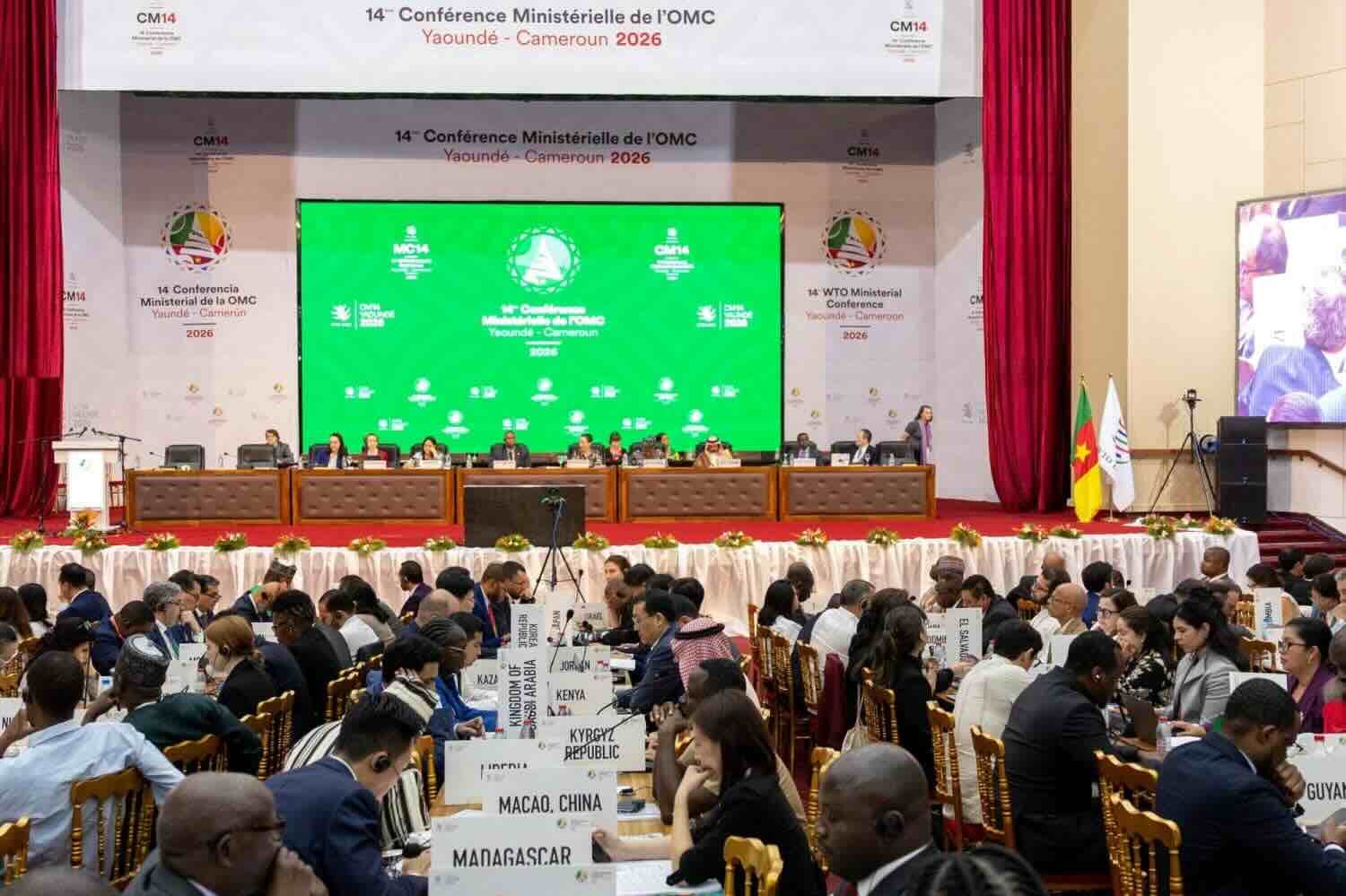
Global business pressure is intensifying as leading organisations call on governments to modernize the World Trade Organization and protect the future of digital trade. At the WTO’s 14th Ministerial Conference, the International Chamber of Commerce presented a Global Statement signed by 236 organisations, urging a time-bound WTO reform process and the renewal of the e-commerce moratorium.

The statement was delivered by ICC Secretary General John W.H. Denton AO to WTO Director-General Ngozi Okonjo-Iweala, highlighting growing concern across the global business community about the effectiveness of the current multilateral trading system.

Why Business Is Urging WTO Reform Now

Stakeholders emphasize that the WTO must evolve to remain relevant in a rapidly changing global economy. They are calling for structured and time-bound negotiations to restore the organisation’s ability to negotiate rules, resolve disputes and support modern trade flows, particularly in the digital economy.

A central issue is the future of the Moratorium on Customs Duties on Electronic Transmissions, which prevents countries from imposing tariffs on digital products and services. Maintaining this framework is critical to ensuring cost efficiency, cross-border scalability and predictable trade conditions for global business.

According to ICC, allowing the moratorium to expire could lead to increased trade fragmentation, higher operational costs and new barriers—especially for micro, small and medium-sized enterprises (MSMEs) that rely heavily on open digital markets.

The message from global business leaders is clear: a strong, rules-based trading system is essential for innovation, investment and sustainable growth. As digital commerce continues to expand, business groups are urging governments to act decisively to reduce uncertainty and support a more inclusive global trade environment.

For the e-commerce ecosystem, these discussions are highly consequential. The outcome will influence how companies operate internationally, how easily they enter new markets and how confidently they invest in digital expansion. In this context, WTO reform and moratorium renewal are becoming strategic priorities for global business.

Source: ICC

1 Shift Is Strengthening Bol’s Checkout Strategy

Bol Expands Checkout in 2026 as Customers Shop Beyond Its Platform

Dutch e-commerce platform Bol is extending its reach beyond its own marketplace by allowing customers to complete purchases on external online stores using their Bol accounts.

Following a pilot phase, the new service, bol.checkout, is already active across more than 300 online stores. The move signals a strategic shift as the company begins positioning its technology not just as a marketplace tool, but as a broader e-commerce infrastructure solution.

From Marketplace to E-Commerce Infrastructure

The expansion reflects Bol’s ambition to go beyond its own ecosystem. By enabling checkout on third-party websites, the platform is effectively embedding itself deeper into the online shopping journey.

According to the company, allowing customers to pay through a familiar environment reduces friction and improves conversion rates. Consumers can use trusted payment methods such as iDEAL or “pay later” options, creating a smoother and more consistent checkout experience.

Initially rolled out to existing sales partners, the service is expected to expand further to online stores that are not currently part of the Bol marketplace.

A Shift Toward Platform-Led Commerce

The move aligns with a broader trend in global e-commerce, where leading platforms are transforming into infrastructure providers rather than remaining closed ecosystems.

By opening its checkout technology, Bol is following a model similar to major global players that monetize not only transactions, but also the tools and systems behind them. Integrations with platforms such as WooCommerce and Magento are already available, making adoption easier for merchants.

This approach allows Bol to scale beyond its traditional marketplace limits while strengthening its role in the wider digital commerce landscape.

What This Means for E-Commerce

For merchants, the introduction of bol.checkout offers access to a trusted payment and checkout system already familiar to millions of users. This can improve trust, reduce cart abandonment, and simplify integration processes.

For consumers, it creates a more unified shopping experience across different online stores, removing friction at one of the most critical points in the purchase journey.

As previously highlighted in WORLDEF’s coverage of evolving marketplace models, the future of e-commerce is increasingly shaped by platforms that extend their capabilities beyond their own environments.

Bol’s latest move reinforces this direction. Checkout is no longer just a final step in the transaction. It is becoming a strategic layer where platforms compete for control of the customer experience.

Source: RetailDetail

3 Key Changes in EU De Minimis Rules and What It Means for UK E-Commerce Growth

EU Ends De Minimis in 2026 and UK E-Commerce Must Adapt Fast

The European Union (EU) is preparing to remove its de minimis threshold, a decision that will reshape how cross-border e-commerce operates across the region. For UK-based brands, the change goes beyond regulation. It directly affects pricing, logistics, and the overall customer journey.

For years, shipments valued under €150 could enter the EU without customs duties. This allowed brands to keep costs low and move goods quickly across borders, supporting the rapid growth of direct-to-consumer models. That advantage is now coming to an end.

From July 2026, all goods entering the EU will be subject to customs duties, regardless of value. A simplified flat-rate duty, expected to be around €3 for low-value shipments, will replace the previous exemption. The result is clear. Small parcels will no longer benefit from duty-free treatment.

Rising Costs and Changing Customer Expectations

The shift is part of a broader effort by EU regulators to bring more control and balance to the market. As cross-border volumes have surged, authorities have moved to close gaps in the system, improve tax collection, and create fairer conditions for domestic retailers.

For UK e-commerce brands, the impact will be immediate. Products that once moved across borders with minimal cost will now carry additional charges, putting pressure on already tight margins. This is particularly relevant for low-value, high-volume categories where even small cost increases can affect profitability.

There is also a direct link to customer experience. Higher landed costs, especially when passed on at checkout or delivery, can reduce conversion rates and increase cart abandonment. What used to be a seamless cross-border purchase may become more complex and less predictable for consumers.

Operational Pressure Is Increasing

At the same time, operational expectations are rising. Every shipment will require accurate and complete customs data, including product classification, origin, and declared value. As all goods fall under full customs procedures, enforcement is expected to become stricter.

For many brands, this means moving away from simplified processes and investing in more structured compliance systems. As previously highlighted in WORLDEF’s coverage of global e-commerce regulation shifts, cross-border trade is becoming increasingly defined by compliance, transparency, and operational precision rather than speed alone.

How Brands Are Preparing for 2026

With the 2026 deadline approaching, brands are starting to rethink their strategies. Pricing models need to be recalculated to reflect new duty structures. Shipping approaches, particularly the balance between delivering duties paid upfront or passing costs to the customer, are becoming more critical.

Product strategies are also under review. Some low-value items may no longer be commercially viable under the new conditions, pushing brands to reassess their assortments. At the same time, interest in EU-based fulfillment is growing, as local distribution offers a way to reduce friction and maintain delivery performance.

The removal of de minimis is part of a wider global shift. As international e-commerce continues to scale, governments are moving toward more controlled and transparent systems. Duty-free thresholds are gradually disappearing, replaced by frameworks designed to manage volume, ensure compliance, and protect local markets.

The change is coming fast. For UK brands, adapting early will not just reduce risk, it will define their ability to compete in a more structured and cost-sensitive e-commerce environment.

Source: GFS Deliver

ASEAN Digital Economy Set for Breakthrough: 1 Regional Pact Could Unlock $2 Trillion Growth

ASEAN Digital Economy Set for Breakthrough: 1 Regional Pact Could Unlock $2 Trillion Growth

Southeast Asia is moving closer to a landmark agreement that could redefine the future of e-commerce and digital trade across the region.

As the Philippines leads ASEAN in 2026, negotiations are accelerating around the ASEAN Digital Economy Framework Agreement (DEFA) – a comprehensive regional pact designed to harmonize digital trade rules, reduce barriers, and strengthen cross-border e-commerce.

A Unified Digital Market in the Making

The proposed agreement aims to create a more integrated digital economy by aligning regulations across ASEAN member states. Currently, differences in data governance, cybersecurity, and consumer protection frameworks create challenges for businesses operating across borders.

DEFA seeks to address these gaps by introducing:

  • interoperable digital systems
  • smoother cross-border data flows
  • stronger cybersecurity standards
  • more efficient digital payments and paperless trade

By simplifying these processes, the agreement is expected to make it significantly easier for businesses – especially SMEs – to expand regionally.

Boosting E-Commerce and SME Growth

One of the key goals of the pact is to unlock new opportunities for micro, small, and medium-sized enterprises (MSMEs), which form the backbone of ASEAN economies.

By reducing operational friction, the agreement could:

  • lower costs through digitalization
  • enable faster and safer transactions
  • expand market access across Southeast Asia

Over time, this is expected to drive job creation, improve digital skills, and support more inclusive economic participation.

A Rapidly Expanding Digital Economy

The urgency behind the agreement is clear. ASEAN’s digital economy is projected to grow rapidly, with estimates suggesting it could reach $2 trillion by 2030.

In the Philippines alone, the digital economy is expected to nearly double in value – highlighting the region’s strong growth trajectory and the increasing importance of digital trade frameworks.

Strategic Priorities: Integration, Trust, and Skills

Beyond trade facilitation, the agreement also focuses on building a future-ready digital ecosystem.

Key priorities include:

  • establishing trusted and interoperable digital infrastructure
  • ensuring secure and transparent data exchanges
  • strengthening workforce skills for digital transformation

These elements are seen as essential to supporting sustainable growth and enabling businesses to scale in an increasingly digital-first economy.

What Comes Next?

ASEAN aims to finalize negotiations and sign the agreement later this year, potentially during the ASEAN Summit in November.

If implemented, DEFA would become the world’s first region-wide digital economy agreement, positioning ASEAN as a global leader in digital trade governance.

Source: Philippine News Agency, Inquirer Opinion

The Wife of Tech Billionaire Koos Bekker Turned Babylonstoren into an Ultra-Luxury E-Commerce Brand

Babylonstoren

In South Africa, the historic farm brand Babylonstoren has transformed into a strong e-commerce player in the ultra-luxury segment under the leadership of Karen Roos, the wife of tech billionaire Koos Bekker.

Karen Roos, the wife of tech billionaire Koos Bekker, became the name that grew Babylonstoren digitally rather than limiting it only to physical stores. In 2007, Roos and Bekker purchased the historic Babylonstoren farm in the Franschhoek Valley. Afterwards, the 17th-century site was restored, and the brand became one of South Africa’s most respected premium brands with its gourmet food, personal care, and lifestyle products.

Babylonstoren Transformed from a Farm into a Luxury Digital Store

Today, Babylonstoren stands out not only as an agriculture and tourism brand, but also as a strong online sales platform. The company sells handmade baked goods, nuts, chocolates, granola, meat products, essential oils, soaps, candles, linen products, and ceramic serving products.

One of the most striking aspects of the brand is that it largely controls its own supply chain. The products are grown or produced on the farm and then delivered directly to customers through its own platform. The company also offers free delivery across South Africa and next-day delivery options in cities such as Cape Town, Johannesburg, and Pretoria.

Targeting Recurring Revenue with a Subscription Model

Babylonstoren’s online store was designed to look more like a digital lifestyle magazine than a classic e-commerce website. Its strong visual language supports the brand’s image of luxury and exclusivity.

The subscription system also plays an important role in the platform’s growth. Membership models such as the Wine Club, Bath & Body Box, and seasonal special product boxes provide the brand with the opportunity to generate recurring revenue. Although official financial data has not been disclosed, business intelligence platforms rank Babylonstoren among South Africa’s leading online stores.

Koos Bekker’s Wealth Stands at Around $3.4 Billion

Koos Bekker is known as one of South Africa’s best-known businessmen. Bekker, who is one of the strategic figures behind the M-Net, DStv, and MultiChoice brands, also stands out as the leader who transformed Naspers into a global technology giant. According to Forbes’ real-time billionaires list, his net worth stands at around $3.4 billion.

E-Commerce Under Pressure: Why 1 Retailer Is Shutting Down Its Online Store

E-Commerce Reality Check: Why 1 Retailer Is Shutting Down Its Online Store

The decision by UK retailer The Works to exit e-commerce is drawing attention across the retail industry, highlighting a growing shift toward profitability over digital expansion.

After more than a decade of online operations, the company has chosen to close its e-commerce channel and refocus entirely on its physical store network – a move that challenges the assumption that online retail is always essential for growth.

Why The Works Is Leaving E-Commerce

The Works first launched its e-commerce platform in 2012, but online sales never became a core revenue driver. More than 90% of total sales continued to come from physical stores, reflecting strong in-store customer demand.

At the same time, maintaining an online operation introduced ongoing challenges, including:

  • high operational costs
  • dependency on third-party logistics
  • complexity in managing fulfillment

Over time, these factors made it difficult for the company to achieve sustainable profitability online.

Refocusing on What Works

By exiting e-commerce, the retailer aims to simplify its business model and improve financial performance. The move is expected to reduce costs and allow the company to concentrate on its strongest channel – its extensive store network.

Rather than serving as a transactional platform, the company’s website will now act as a product browsing tool, encouraging customers to visit physical stores to complete purchases.

A Strategic, Not Emotional Decision

Industry insight suggests that this move has been under consideration for some time. For retailers operating on tight margins, e-commerce can introduce more pressure than value if not executed at scale.

In such cases, focusing on a store-led strategy can offer:

  • greater control over costs
  • improved margins
  • stronger customer engagement in physical locations

A Wider Signal for Retail?

While global e-commerce continues to expand, The Works’ decision reflects a more nuanced reality:

👉 Digital is not always profitable
👉 Omnichannel is not always necessary

Retailers are increasingly reassessing whether their digital channels truly support long-term growth – or simply add complexity.

What This Means for E-Commerce

The closure of The Works’ online store does not signal a decline in e-commerce itself, but rather a shift toward more disciplined, profit-driven strategies.

As the retail landscape evolves, businesses are moving away from “being everywhere” toward focusing on channels that deliver real value.

For some, that may still be digital-first.
For others, like The Works, the answer is clear – back to stores.

Source: InternetRetailing

E-Commerce at Risk? 1 Critical WTO Decision Could Reshape the Digital Economy

E-Commerce at Risk? 1 Critical WTO Decision Could Reshape the Digital Economy

The global digital economy is approaching a decisive moment as the upcoming WTO Ministerial Conference (MC14) puts the future of digital trade rules under intense scrutiny.

At the center of discussions is the long-standing e-commerce moratorium, a policy that has prevented countries from imposing customs duties on electronic transmissions such as software, digital content, and cloud-based services.

For over two decades, this rule has supported the rapid expansion of global e-commerce by ensuring that digital trade flows remain largely frictionless. Now, however, WTO members are divided on whether to extend or terminate it – a decision that could significantly impact the future of cross-border digital commerce.

A Turning Point for Global E-Commerce

The continuation of the moratorium would maintain a stable and predictable environment for businesses operating across borders. It would allow companies – from large enterprises to emerging startups – to continue accessing international markets without additional cost barriers.

On the other hand, removing the moratorium would give governments the ability to introduce tariffs on digital products and services. This could increase operational costs for companies relying on:

  • cloud infrastructure
  • SaaS platforms
  • digital marketplaces
  • streaming and content distribution

Such changes may not only affect large corporations but also disrupt smaller players that depend heavily on affordable digital tools.

The Revenue Debate

Supporters of ending the moratorium argue that governments are losing potential tax revenue by not applying tariffs to digital goods.

However, studies suggest that the fiscal impact is relatively limited. In many cases, countries already collect revenue through mechanisms such as VAT or GST on digital services. As a result, the additional income generated from tariffs may not be as significant as anticipated.

Who Faces the Biggest Impact?

The potential introduction of digital tariffs could disproportionately affect:

  • small and medium-sized enterprises (SMEs)
  • developing economies
  • women-led digital businesses

These groups often rely on accessible and low-cost digital infrastructure to participate in global trade. Any increase in costs could reduce their competitiveness and limit their ability to scale internationally.

Beyond Tariffs: A Governance Challenge

The debate extends beyond taxation. It also raises broader concerns about the future of global trade governance.

The e-commerce moratorium has been one of the few unified frameworks within the WTO addressing digital trade. If it is removed, there is a risk of fragmented national regulations replacing a coordinated global approach.

This could complicate cross-border operations and create uncertainty for businesses navigating multiple regulatory environments.

What Comes Next?

As WTO members prepare for MC14, the outcome of this decision will play a defining role in shaping the next phase of the digital economy.

Whether the moratorium is extended or not, one thing is clear:
the rules governing global e-commerce are entering a new era – one that will determine how digital trade evolves in the years ahead.

Source: Diplomacy.edu

CCIA Calls on WTO Members: Customs Duty Exemption on Electronic Transmissions Should Be Made Permanent

CCIA

Ahead of the World Trade Organization’s 14th Ministerial Conference, the digital trade agenda has once again moved to the center of global negotiations. The Computer & Communications Industry Association (CCIA) called for the e-commerce moratorium to be made permanent.

Ahead of MC14, which will be held in Yaoundé, Cameroon, on March 26–29, 2026, CCIA called for the moratorium that provides for no customs duties on electronic transmissions to be made permanent and binding. The practice in question was first adopted in 1998 and was subsequently renewed at certain intervals.

CCIA Criticizes Uncertainty in Digital Trade

According to CCIA, the current structure, maintained through temporary extensions, does not provide long-term predictability for businesses and consumers. The association argues that the fact that short-term extensions are shaped through bargaining linked to other issues weakens the stability needed for digital trade. According to CCIA, a permanent decision would provide a stronger foundation for both investments and the cross-border flow of digital services.

Jonathan McHale: It Is Time to End This Worn-Out Cycle and Make the E-Commerce Moratorium Permanent

Jonathan McHale, Vice President of Digital Trade at CCIA, made the following statement on the matter: “After more than 25 years, it is time to end this worn-out cycle of brinksmanship, horse-trading, and temporary extensions and make the e-commerce moratorium permanent. WTO members know this is the right policy; failure to take this step only perpetuates dysfunction and the WTO’s diminishing relevance.

A permanent and binding commitment would clearly demonstrate that WTO members are serious about supporting a modern trading system fit for the digital age and would finally put an end to the recurring short-term renewal debates that continue to distract from the urgently needed, substantive reform of the WTO. The message should be clear: Make it permanent; Move on.”

One of the Critical Topics at MC14

On the WTO’s official agenda, the e-commerce moratorium stands out as one of the most sensitive files of MC14. While members of the organization revisited this issue during meetings at the beginning of March, it appears that some countries support the continuation of the moratorium, while others continue to voice reservations on the grounds of revenue loss and policy space. With the decision taken at MC13 in Abu Dhabi, the moratorium had only been extended until March 2026 or until MC14; for this reason, the Yaoundé meeting is of decisive importance.

It Could Be a Turning Point for the Global Digital Economy

The OECD and industry representatives emphasize that the tax exemption on electronic transmissions is critical for software, digital content, cloud services, and data-based cross-border trade. In contrast, some developing countries are calling for a more flexible framework in terms of tax revenue and digital industrialization.

If a permanent consensus is reached at MC14, WTO members will have sent an important message for the transition to a more modern and predictable system in digital trade. Otherwise, new barriers in digital trade and new debates regarding the WTO’s effectiveness may come to the fore.

About CCIA

CCIA is an international, not-for-profit trade association representing a broad cross section of communications and technology firms. For more than 50 years, CCIA has promoted open markets, open systems, and open networks. CCIA members employ more than 1.6 million workers, invest more than $100 billion in research and development, and contribute trillions of dollars in productivity to the global economy.

Yango Tech Deploys Industrial AI Agents in the UAE

Yango Tech

The AI-driven transformation within Dubai’s technology ecosystem is gaining momentum. Yango Tech, the B2B technology provider within Yango Group, has announced a new business division focused on industrial AI agents.

Yango Tech’s new structure covers the development and deployment of autonomous AI agents capable of operating in operational areas such as customer service, data analytics, compliance processes, and decision-support mechanisms. It is stated that the solution addresses various sectors such as fintech, medtech, e-commerce, logistics, smart cities, and the public sector.

Yango Tech Highlights the Digital Employee Model

The structure offered by Yango Tech is not merely a system operating with chatbot logic. The company emphasizes that these agents can act like “digital employees” by connecting to corporate systems such as CRM, human resources, and finance applications.

Supported by memory, task execution capability, and security layers, this structure particularly aims to reduce the repetitive operational burden on institutions, accelerate processes, and provide measurable efficiency. In addition to ready-to-deploy solutions, Yango Tech also offers a customizable platform through which AI agents tailored specifically for institutions can be developed.

It Offers a Broad Range of Use Cases Extending from Smart Cities to Healthcare

The usage scenarios announced by the company reveal the scope of the solution. While digital twins, emergency routing, mobility optimization, and real-time urban analytics stand out in public and smart city projects; appointment transcription, smart search within electronic medical records, imaging analysis, and clinical decision-support systems draw attention on the healthcare side.

In the financial sector, credit scoring, fraud analytics, workflow automation, and front-middle-back office transformation are among the prominent areas. Yango Tech states that in some applications, the first-contact resolution rate has reached 95 percent and monthly operational savings can reach up to 100 thousand dollars.

The Launch Aligns with the UAE’s AI Vision

This launch also directly aligns with the United Arab Emirates’ growth strategy focused on artificial intelligence, digital government, and smart infrastructure. It is projected that artificial intelligence will generate 320 billion dollars in economic value across the region by 2030; and that the UAE will be one of the countries to deliver the highest proportional contribution from this transformation.

Yango Tech’s emphasis on sovereign deployment, local data control, and enterprise-grade security presents a remarkable positioning, especially for public institutions and sectors subject to regulation. The company’s latest move stands out as one of the strong examples showing that artificial intelligence in the Middle East has moved from the idea stage to the implementation stage.

About Yango Tech

Yango Tech, a part of the global tech company Yango Group, is a unified ecosystem delivering advanced B2B technology solutions tailored to meet the diverse needs of modern businesses. The company offers an integrated suite of tools, spanning warehousing, mobility, retail, and beyond, designed to help businesses streamline operations, enhance customer experiences, and drive sustainable growth.

The ecosystem includes AI technology solutions for retailers Yango Tech Retail, last mile delivery Yango Tech Autonomy, AI-powered automation solution for warehouses Yango Tech Robotics, advertising solutions Retail Media,  last-mile delivery management solution RouteQ, cloud platform Yango Tech Cloud, corporate browser for organizations YangoTech Browser, and database YangoDB. By leveraging cutting-edge AI-powered innovations, YangoTech empowers companies to stay competitive and thrive in an increasingly digital world.