WORLDEF Istanbul 2026 - Upcoming Event

Register Now

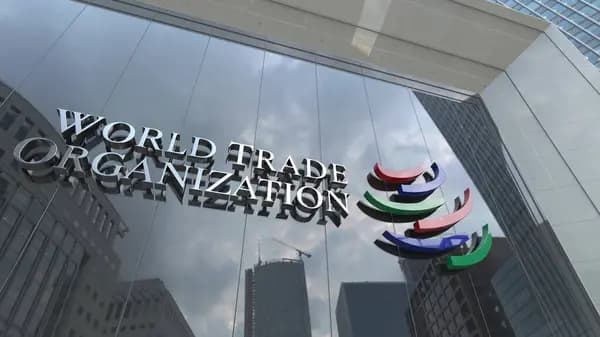
Global Digital Trade at Risk as WTO E-Commerce Moratorium Collapses After 28 Years

Global Digital Trade at Risk as WTO E-Commerce Moratorium Collapses After 28 Years

The future of global digital trade has become more uncertain after World Trade Organization members failed to extend the long-standing moratorium on customs duties for electronic transmissions. The breakdown came after four days of talks in Yaounde, Cameroon, ended without consensus, marking the first time in 28 years that the measure has expired.

Why the WTO E-Commerce Moratorium Matters for Global Trade

The WTO e-commerce moratorium has long prevented governments from imposing customs duties on digital products and transmissions such as software downloads, streaming services and other cross-border digital content. Its expiry now raises new questions for businesses operating in international e-commerce, especially as governments rethink how digital trade should be taxed and regulated.

According to the report, Brazil and Turkey blocked the proposal to extend the moratorium, despite efforts to bridge differences through both temporary and permanent renewal options. Several developing countries have argued that keeping the moratorium in place limits their ability to generate tax revenue from the growing digital economy.

Shift Toward Fragmented Digital Trade Rules

The United States responded by signalling that it may increasingly pursue digital trade arrangements outside the WTO framework. US Trade Representative Jamieson Greer said Washington would work with like-minded partners if the moratorium is not restored, adding that the US already has agreements with dozens of countries not to impose tariffs on American digital transmissions.

The failed talks also add to wider concerns about the WTO’s role in shaping modern trade policy. Analysts said the outcome reflects growing strain on the multilateral system, while industry voices warned that digital trade negotiations are becoming more politicised. At the same time, 66 WTO members agreed to move ahead with a baseline framework for digital trade rules, signalling that smaller plurilateral deals may become more common.

That shift could create new complications for global commerce. Experts warned that overlapping side agreements may lead to a fragmented trade environment, making compliance harder for businesses operating across multiple markets. For e-commerce players, the absence of a unified global approach could increase uncertainty around tariffs, digital market access and future cross-border trade rules.

WTO Director-General Ngozi Okonjo-Iweala said discussions would continue in Geneva, leaving the door open for a possible reinstatement of the moratorium. Still, the latest breakdown highlights a deeper divide between developed and developing economies over how digital trade should evolve and who should benefit from its growth.

For the global e-commerce sector, the message is clear: digital trade policy is entering a more fragmented and politically sensitive phase, and the WTO e-commerce moratorium may no longer be treated as a guaranteed pillar of the system.

Source: Reuters via Business Standard.

6 Critical Challenges Reshaping Europe’s E-Commerce Gateways

6 Critical Challenges Reshaping Europe’s E-Commerce GatewaysSlug Generator

Europe’s e-commerce logistics model is undergoing a structural transformation. What once relied heavily on a few dominant gateways across Europe is now evolving into a more distributed system shaped by speed, fragmentation, and flexibility.

The rise of cross-border e-commerce has fundamentally changed cargo dynamics across Europe. Instead of large, predictable shipments, logistics networks are now handling high-frequency, low-volume flows moving across multiple routes. This shift is forcing operators to rethink systems originally designed for scale, not agility.

At the same time, traditional hubs such as Frankfurt, Amsterdam, and Paris remain important – but they are no longer sufficient on their own. Logistics players across Europe are increasingly adopting multi-hub strategies, integrating secondary airports and regional fulfilment centres to reduce congestion and improve delivery performance.

Speed, Technology and New Trade Routes Take the Lead

Speed has become non-negotiable. Next-day delivery is rapidly turning into a baseline expectation across Europe, rather than a competitive advantage. To meet this demand, companies are relying more on air cargo and hybrid logistics models, especially for high-value and time-sensitive goods.

Technology is playing a defining role in this transformation. AI-driven forecasting, real-time tracking, and automated cargo handling systems are enabling logistics providers to operate with greater precision. Performance is no longer just about capacity – it is about visibility, coordination, and responsiveness.

Meanwhile, geopolitical developments and shifting trade corridors are adding new complexity. Airspace restrictions and evolving economic routes are forcing companies to rethink traditional pathways, accelerating the emergence of alternative gateways connecting Europe with Asia and the Middle East.

Infrastructure Pressure and the New Competitive Reality

This transformation is placing increasing pressure on infrastructure. Airports and logistics hubs across Europe must scale rapidly through automation, expanded cargo capacity, and specialised facilities. Without these investments, bottlenecks will become unavoidable.

Ultimately, Europe’s e-commerce gateways are no longer defined by location alone. They are defined by how efficiently they operate within a broader network. Competitive advantage is shifting from size to flexibility – and from physical infrastructure to intelligent, connected systems.

Source: Air Cargo Week

WTO E-Commerce Moratorium Deadlock: Who Will Control Digital Trade Rules?

The recent deadlock at the World Trade Organization (WTO) over e-commerce duties may sound technical. It is not. What we are witnessing is a fundamental disagreement about the rules of the digital economy and, more importantly, about who gets to capture its value.

At the center of the debate is the WTO’s long-standing e-commerce moratorium, a rule that prevents countries from imposing customs duties on electronic transmissions such as software, streaming, and cloud services. After nearly 30 years in place, this rule is now under serious scrutiny.

What Is the WTO E-Commerce Moratorium?

The WTO e-commerce moratorium, first introduced in 1998, ensures that digital products and services can cross borders without tariffs.

This includes:

  • Software downloads
  • SaaS platforms (e.g. Microsoft 365)
  • Streaming services (e.g. Netflix)
  • Digital media and cloud-based tools

However, the rule does not apply to physical goods.

If you buy a piece of furniture from abroad, it is subject to tax. If you download software from abroad, it is not. This is the core issue. A container of chairs crossing a border is taxed, while a million-dollar SaaS subscription crossing digitally is not taxed

From a policy standpoint, this asymmetry is becoming harder to justify, especially for emerging economies.

Why Brazil, Türkiye, India and Others Said “No” to the WTO E-Commerce Deal

The WTO talks collapsed after Brazil, supported by countries such as Türkiye and aligned with India’s broader stance, refused to agree to a long-term extension of the moratorium.

Their argument is actually quite rational:

  • The digital economy is still evolving
  • Governments should not give up taxation rights too early
  • Digital imports are growing rapidly, but remain untaxed

In simple terms: “Why should we permanently give up the right to tax the fastest-growing part of the global economy?”

This is not protectionism. It is strategic hesitation.

Why the U.S. and EU Support Extending the Moratorium

The United States and European Union strongly advocate for extending the WTO e-commerce moratorium, preferably on a long-term or permanent basis.

Their motivations are clear:

  • They dominate global digital service exports
  • Their companies rely on frictionless cross-border data flows
  • Tariffs on digital services would increase costs and reduce scalability

For these economies, maintaining a duty-free digital environment is essential for sustaining global competitiveness. For them, this rule is not just convenient, but also structural. Without it, global scaling slows down, SaaS becomes more expensive, and platforms face fragmented regulations.

The Real Conflict: Digital Trade vs Traditional Trade

The WTO deadlock reflects a deeper structural issue in global trade:

Traditional TradeDigital Trade
Physical goodsIntangible services
Subject to tariffsCurrently duty-free
Border-based taxationBorderless delivery

Emerging economies argue that this imbalance creates an unequal playing field. If physical goods are taxed, why should digital goods remain exempt?

This is often framed as a “developed vs developing” conflict. That is only partially true. The deeper divide is this:

  • Digital exporters want open, duty-free flows
  • Digital importers want the right to regulate and tax

This is a clash between two economic realities, one built on platforms and data, and the other still balancing industry, revenue, and transition.

Why This Matters for E-Commerce

For the global e-commerce ecosystem, the implications are significant.

If the moratorium is not extended:

  • Countries may introduce digital import duties
  • Cross-border SaaS and platform costs could increase
  • E-commerce operations could become fragmented by regulation

This would directly impact:

  • Online marketplaces
  • Subscription-based business models
  • Cross-border digital service providers

For regions like the UAE, which position themselves as global e-commerce hubs, maintaining predictable digital trade rules is critical; this could introduce friction into what has so far been a relatively seamless system.

What Happens Next in WTO Negotiations?

Following the deadlock, WTO members will continue discussions in Geneva. The most likely outcome is a short-term extension (2 years), rather than a long-term agreement. However, this does not resolve the underlying issue. The central question remains: Should digital trade be treated the same as physical trade?

From where I stand, working at the intersection of e-commerce, platforms, and global trade, this debate is inevitable. And frankly, overdue. For years, the digital economy has operated in a kind of regulatory grey zone: Borderless, Frictionless, largely untaxed at the transmission level. That model helped accelerate growth. But it also created an imbalance.

The question now is not whether rules will change. They will. The real question is, will those rules enable growth—or fragment it?

The WTO deadlock is often described as a failure. I see it differently. The WTO e-commerce moratorium deadlock is not a temporary disruption. It is a reflection of a broader transformation in the global economy.

We are moving from trade in goods to trade in data and from physical borders to digital jurisdictions

The outcome of this debate will shape:

  • The cost of digital services
  • The scalability of e-commerce platforms
  • The structure of global trade itself

The real question is no longer whether digital trade rules will change. It is, how and in whose favour they will be rewritten.

Bibliography

The Japan Times – “WTO talks end in deadlock after Brazil blocks deal over e-commerce duties” (2026) https://www.japantimes.co.jp/business/2026/03/30/tech/wto-talks-brazil-e-commerce-duties/

World Trade Organization – Work Programme on Electronic Commerce and Moratorium on Customs Duties
https://www.wto.org/english/tratop_e/ecom_e/ecom_work_programme_e.htm

U.S. Trade Representative – Position on WTO E-commerce Moratorium
https://ustr.gov/about/policy-offices/press-office/press-releases/2026/march/ustr-issues-report-wto-reform-eve-ministerial-conference

European Commission – EU Digital Trade and WTO Reform Position Papers
https://www.eeas.europa.eu/delegations/world-trade-organization-wto/eu-submission-wto-reform_en?s=69

WTO – Growing Trade in Electronic Transmissions and Development Implications
https://www.wto.org/english/tratop_e/ecom_e/wkmoratorium29419_e/rashmi_banga.pdf

Tough E-Commerce Regulation in the EU; Platforms to Be Held Responsible as “Importers”

EU

The European Union (EU) has signed off on one of the most comprehensive customs reforms of the last 50 years in response to the rapid growth of e-commerce. With the new regulation, significant responsibilities are being introduced especially for platforms engaged in cross-border online sales.

The European Union (EU) approved a comprehensive reform of its customs systems. Representatives of the European Parliament and the governments of EU member states reached a critical agreement late on Thursday, March 26, after lengthy negotiations, and the final details of the new reform were clarified.

As part of the reform, the way has been opened for imposing fines on Chinese e-commerce platforms if they sell illegal or unsafe products. The EU aims to coordinate the collection of customs duties and safety checks more effectively in response to the very high volume of low-value e-commerce parcels entering the bloc.

E-Commerce Platforms Will Be Directly Responsible for the Customs Duties and Safety of the Products They Sell

One of the most striking elements of the reform is that e-commerce platforms will now be treated as “importers.” In this context, platforms such as Amazon, Temu, Shein, and similar companies will be directly responsible for the customs duties and product safety of the goods they sell. In addition, serious fines and operational restrictions are also on the agenda for companies that systematically fail to comply with the rules. Companies that continuously violate the bloc’s rules could face fines ranging from 1% to 6% of their total EU sales over the previous 12 months.

The New Structure Will Become Operational in 2028

At the center of the new system is the European Customs Authority, which will be established in Lille, France. A team of 250 staff members working there will track parcels and manage the new EU data hub, which will provide a centralized, digital overview of incoming goods. The data hub is planned to become operational for e-commerce consignments in 2028 and to cover all imported goods as of March 1, 2033. At the same time, thanks to the digital data platform to be created, companies will be able to share customs information through a single system. This system is expected both to accelerate procedures and to save billions of euros annually.

The Reform Package Focuses on the Import of Low-Value Goods

The reform package focuses particularly on the import of low-value goods. It is stated that more than 90% of the 5.9 billion low-value items that entered the EU in 2025 came from China. For this reason, as of July 1, 2026, a fixed fee of 3 euros will be applied to goods valued below 150 euros. In addition, an extra “handling fee” is planned to be introduced for each shipment by November 1, 2026. With the new regulation, it will become mandatory for all transaction data to be transmitted to the customs system at the time of sale. In this way, authorities will be able to conduct risk analysis before the products cross the border.

EU officials emphasize that the main purpose of the reform is to prevent tax losses, reduce smuggling, and manage the growing volume of e-commerce more effectively. Countries such as Türkiye, which have strong trade ties with the EU, are also expected to be directly affected by this new system.

Nearly 6 Billion E-Commerce Parcels Entered the EU in 2025

The EU does not apply customs duties to parcels valued at less than 150 euros ($173.85). This has supported the rapid growth of online shopping platforms such as Shein, Temu, and AliExpress, which send packages directly from China to customers. According to research, the total number of parcels entering EU countries reached 5.8 billion in 2025. Among these parcels, 60% to 65% of imported cosmetic products, including make-up, food supplements, and personal protective equipment such as bicycle helmets, do not comply with the EU’s safety rules.

EU Delegation Will Go to China

As part of the reform, the EU will send a nine-member delegation to Beijing and Shanghai to address problems in the digital and e-commerce sector. According to a statement from the EU Delegation to China, the purpose of this visit is to promote fair competition between China and the bloc. During the three-day meetings, European lawmakers will meet not only with Chinese legislators and market regulators but also with representatives of Shein, Alibaba, and Temu.

Blackstone Commits $250 Million in Positive Bet on Abu Dhabi Payments Platform

Blackstone Commits $250 Million in Positive Bet on Abu Dhabi Payments Platform

Global investment giant Blackstone is expanding its presence in the Middle East with a $250 million investment in an Abu Dhabi-based payments and data intelligence platform, reinforcing confidence in the region’s digital economy.

The move marks Blackstone’s first private equity-backed inbound investment in the UAE since recent geopolitical tensions disrupted parts of the region, highlighting continued long-term investor interest despite short-term volatility.

Strategic Expansion Into Payments and Data

The investment focuses on building a platform centered on payments infrastructure and data-driven financial services, two areas experiencing rapid growth across the Gulf.

As digital transactions accelerate and e-commerce ecosystems expand, demand for secure, scalable, and intelligent payment solutions is increasing. Blackstone’s backing positions the platform to benefit from this shift while supporting broader financial innovation in the UAE.

Investment Signals Confidence in the Region

Despite disruptions affecting logistics, aviation, and energy markets, major investors continue to deploy capital in the Gulf.

Blackstone’s decision underscores a broader trend: regional fundamentals remain strong, supported by government-led diversification strategies and sustained digital transformation efforts.

The UAE, in particular, continues to attract global capital due to its regulatory stability, investor-friendly policies, and growing role as a financial hub.

Abu Dhabi Accelerates Fintech Ambitions

Abu Dhabi is strengthening its position as a regional fintech and digital infrastructure hub, with increasing investment in platforms that combine payments, data, and advanced technologies.

Initiatives aimed at enabling cashless economies and innovation in financial services are creating new opportunities for both global investors and local players.

Part of a Broader Blackstone Strategy

The investment aligns with Blackstone’s wider regional strategy, which focuses on high-growth sectors such as digital infrastructure, logistics, and technology-enabled services.

By targeting scalable platforms in emerging markets, the firm aims to build long-term value while tapping into the Middle East’s expanding digital economy.

Source: The National News

Indonesia Signals 3 New Controls as E-Commerce Imports Surge Raises Concerns

Indonesia Signals 3 New Controls as E-Commerce Imports Surge Raises Concerns

Indonesia is moving toward tighter control of its e-commerce market as concerns grow over the dominance of low-cost imported goods, particularly from China. Policymakers are increasingly signaling that stronger regulatory measures may be introduced to protect local businesses and ensure fair competition.

Why Business Concerns Are Rising in Indonesia’s E-Commerce Market

Authorities have raised alarms about the rapid growth of cross-border e-commerce, where foreign sellers – often offering significantly lower prices—are gaining substantial market share. This trend is putting pressure on domestic merchants, especially small and medium-sized enterprises that struggle to compete on pricing and scale.

Government signals suggest that Indonesia may introduce stricter rules targeting imported goods sold through online platforms. These measures could include tighter product compliance checks, taxation adjustments and enhanced oversight of digital marketplaces operating within the country.

The rise of major regional platforms such as TikTok Shop and Shopee has accelerated the inflow of cross-border products, reshaping consumer behavior and intensifying competition. While this has expanded product availability and affordability for consumers, it has also raised concerns about the long-term sustainability of local retail ecosystems.

Across Southeast Asia, similar regulatory trends are emerging. Countries in the region are increasingly exploring ways to balance the benefits of digital trade with the need to protect domestic industries. This includes introducing new tax frameworks, strengthening compliance requirements and monitoring foreign seller activity more closely.

For the global business community, Indonesia’s direction signals a broader shift in how governments approach e-commerce growth. As markets mature, there is a growing emphasis on regulation, fair competition and economic balance.

The outcome of these developments could reshape how international sellers operate in Southeast Asia, influencing pricing strategies, logistics models and market entry approaches. For businesses looking to expand in the region, adapting to evolving regulatory environments will become a critical factor for long-term success.

Source: TechNode Global

236 Business Groups Back WTO Reform and E-Commerce Moratorium Renewal

236 Business Groups Back WTO Reform and E-Commerce Moratorium Renewal

Global business pressure is intensifying as leading organisations call on governments to modernize the World Trade Organization and protect the future of digital trade. At the WTO’s 14th Ministerial Conference, the International Chamber of Commerce presented a Global Statement signed by 236 organisations, urging a time-bound WTO reform process and the renewal of the e-commerce moratorium.

The statement was delivered by ICC Secretary General John W.H. Denton AO to WTO Director-General Ngozi Okonjo-Iweala, highlighting growing concern across the global business community about the effectiveness of the current multilateral trading system.

Why Business Is Urging WTO Reform Now

Stakeholders emphasize that the WTO must evolve to remain relevant in a rapidly changing global economy. They are calling for structured and time-bound negotiations to restore the organisation’s ability to negotiate rules, resolve disputes and support modern trade flows, particularly in the digital economy.

A central issue is the future of the Moratorium on Customs Duties on Electronic Transmissions, which prevents countries from imposing tariffs on digital products and services. Maintaining this framework is critical to ensuring cost efficiency, cross-border scalability and predictable trade conditions for global business.

According to ICC, allowing the moratorium to expire could lead to increased trade fragmentation, higher operational costs and new barriers—especially for micro, small and medium-sized enterprises (MSMEs) that rely heavily on open digital markets.

The message from global business leaders is clear: a strong, rules-based trading system is essential for innovation, investment and sustainable growth. As digital commerce continues to expand, business groups are urging governments to act decisively to reduce uncertainty and support a more inclusive global trade environment.

For the e-commerce ecosystem, these discussions are highly consequential. The outcome will influence how companies operate internationally, how easily they enter new markets and how confidently they invest in digital expansion. In this context, WTO reform and moratorium renewal are becoming strategic priorities for global business.

Source: ICC

1 Shift Is Strengthening Bol’s Checkout Strategy

Bol Expands Checkout in 2026 as Customers Shop Beyond Its Platform

Dutch e-commerce platform Bol is extending its reach beyond its own marketplace by allowing customers to complete purchases on external online stores using their Bol accounts.

Following a pilot phase, the new service, bol.checkout, is already active across more than 300 online stores. The move signals a strategic shift as the company begins positioning its technology not just as a marketplace tool, but as a broader e-commerce infrastructure solution.

From Marketplace to E-Commerce Infrastructure

The expansion reflects Bol’s ambition to go beyond its own ecosystem. By enabling checkout on third-party websites, the platform is effectively embedding itself deeper into the online shopping journey.

According to the company, allowing customers to pay through a familiar environment reduces friction and improves conversion rates. Consumers can use trusted payment methods such as iDEAL or “pay later” options, creating a smoother and more consistent checkout experience.

Initially rolled out to existing sales partners, the service is expected to expand further to online stores that are not currently part of the Bol marketplace.

A Shift Toward Platform-Led Commerce

The move aligns with a broader trend in global e-commerce, where leading platforms are transforming into infrastructure providers rather than remaining closed ecosystems.

By opening its checkout technology, Bol is following a model similar to major global players that monetize not only transactions, but also the tools and systems behind them. Integrations with platforms such as WooCommerce and Magento are already available, making adoption easier for merchants.

This approach allows Bol to scale beyond its traditional marketplace limits while strengthening its role in the wider digital commerce landscape.

What This Means for E-Commerce

For merchants, the introduction of bol.checkout offers access to a trusted payment and checkout system already familiar to millions of users. This can improve trust, reduce cart abandonment, and simplify integration processes.

For consumers, it creates a more unified shopping experience across different online stores, removing friction at one of the most critical points in the purchase journey.

As previously highlighted in WORLDEF’s coverage of evolving marketplace models, the future of e-commerce is increasingly shaped by platforms that extend their capabilities beyond their own environments.

Bol’s latest move reinforces this direction. Checkout is no longer just a final step in the transaction. It is becoming a strategic layer where platforms compete for control of the customer experience.

Source: RetailDetail

3 Key Changes in EU De Minimis Rules and What It Means for UK E-Commerce Growth

EU Ends De Minimis in 2026 and UK E-Commerce Must Adapt Fast

The European Union (EU) is preparing to remove its de minimis threshold, a decision that will reshape how cross-border e-commerce operates across the region. For UK-based brands, the change goes beyond regulation. It directly affects pricing, logistics, and the overall customer journey.

For years, shipments valued under €150 could enter the EU without customs duties. This allowed brands to keep costs low and move goods quickly across borders, supporting the rapid growth of direct-to-consumer models. That advantage is now coming to an end.

From July 2026, all goods entering the EU will be subject to customs duties, regardless of value. A simplified flat-rate duty, expected to be around €3 for low-value shipments, will replace the previous exemption. The result is clear. Small parcels will no longer benefit from duty-free treatment.

Rising Costs and Changing Customer Expectations

The shift is part of a broader effort by EU regulators to bring more control and balance to the market. As cross-border volumes have surged, authorities have moved to close gaps in the system, improve tax collection, and create fairer conditions for domestic retailers.

For UK e-commerce brands, the impact will be immediate. Products that once moved across borders with minimal cost will now carry additional charges, putting pressure on already tight margins. This is particularly relevant for low-value, high-volume categories where even small cost increases can affect profitability.

There is also a direct link to customer experience. Higher landed costs, especially when passed on at checkout or delivery, can reduce conversion rates and increase cart abandonment. What used to be a seamless cross-border purchase may become more complex and less predictable for consumers.

Operational Pressure Is Increasing

At the same time, operational expectations are rising. Every shipment will require accurate and complete customs data, including product classification, origin, and declared value. As all goods fall under full customs procedures, enforcement is expected to become stricter.

For many brands, this means moving away from simplified processes and investing in more structured compliance systems. As previously highlighted in WORLDEF’s coverage of global e-commerce regulation shifts, cross-border trade is becoming increasingly defined by compliance, transparency, and operational precision rather than speed alone.

How Brands Are Preparing for 2026

With the 2026 deadline approaching, brands are starting to rethink their strategies. Pricing models need to be recalculated to reflect new duty structures. Shipping approaches, particularly the balance between delivering duties paid upfront or passing costs to the customer, are becoming more critical.

Product strategies are also under review. Some low-value items may no longer be commercially viable under the new conditions, pushing brands to reassess their assortments. At the same time, interest in EU-based fulfillment is growing, as local distribution offers a way to reduce friction and maintain delivery performance.

The removal of de minimis is part of a wider global shift. As international e-commerce continues to scale, governments are moving toward more controlled and transparent systems. Duty-free thresholds are gradually disappearing, replaced by frameworks designed to manage volume, ensure compliance, and protect local markets.

The change is coming fast. For UK brands, adapting early will not just reduce risk, it will define their ability to compete in a more structured and cost-sensitive e-commerce environment.

Source: GFS Deliver

ASEAN Digital Economy Set for Breakthrough: 1 Regional Pact Could Unlock $2 Trillion Growth

ASEAN Digital Economy Set for Breakthrough: 1 Regional Pact Could Unlock $2 Trillion Growth

Southeast Asia is moving closer to a landmark agreement that could redefine the future of e-commerce and digital trade across the region.

As the Philippines leads ASEAN in 2026, negotiations are accelerating around the ASEAN Digital Economy Framework Agreement (DEFA) – a comprehensive regional pact designed to harmonize digital trade rules, reduce barriers, and strengthen cross-border e-commerce.

A Unified Digital Market in the Making

The proposed agreement aims to create a more integrated digital economy by aligning regulations across ASEAN member states. Currently, differences in data governance, cybersecurity, and consumer protection frameworks create challenges for businesses operating across borders.

DEFA seeks to address these gaps by introducing:

  • interoperable digital systems
  • smoother cross-border data flows
  • stronger cybersecurity standards
  • more efficient digital payments and paperless trade

By simplifying these processes, the agreement is expected to make it significantly easier for businesses – especially SMEs – to expand regionally.

Boosting E-Commerce and SME Growth

One of the key goals of the pact is to unlock new opportunities for micro, small, and medium-sized enterprises (MSMEs), which form the backbone of ASEAN economies.

By reducing operational friction, the agreement could:

  • lower costs through digitalization
  • enable faster and safer transactions
  • expand market access across Southeast Asia

Over time, this is expected to drive job creation, improve digital skills, and support more inclusive economic participation.

A Rapidly Expanding Digital Economy

The urgency behind the agreement is clear. ASEAN’s digital economy is projected to grow rapidly, with estimates suggesting it could reach $2 trillion by 2030.

In the Philippines alone, the digital economy is expected to nearly double in value – highlighting the region’s strong growth trajectory and the increasing importance of digital trade frameworks.

Strategic Priorities: Integration, Trust, and Skills

Beyond trade facilitation, the agreement also focuses on building a future-ready digital ecosystem.

Key priorities include:

  • establishing trusted and interoperable digital infrastructure
  • ensuring secure and transparent data exchanges
  • strengthening workforce skills for digital transformation

These elements are seen as essential to supporting sustainable growth and enabling businesses to scale in an increasingly digital-first economy.

What Comes Next?

ASEAN aims to finalize negotiations and sign the agreement later this year, potentially during the ASEAN Summit in November.

If implemented, DEFA would become the world’s first region-wide digital economy agreement, positioning ASEAN as a global leader in digital trade governance.

Source: Philippine News Agency, Inquirer Opinion