WORLDEF ISTANBUL 2026 - Upcoming Event

Register Now

Landmark Group Recognised Among the Best Workplaces in the UAE and Saudi Arabia

Landmark Group

Landmark Group, one of the Middle East’s leading retail and hospitality groups, achieved significant regional success with its investments in employee experience and corporate culture. Landmark Retail and Landmark Arabia, both part of the group, were recognised among the best workplaces in the 2026 lists published by Great Place to Work Middle East.

Landmark Retail, which operates in the United Arab Emirates, ranked 8th in the “Best Workplaces in the UAE 2026” list in the Large Organisations category. The company also became the highest-ranked retail brand on the list. Landmark Arabia, which continues its operations in Saudi Arabia, rose to 6th place in the large organisations category in the “Best Workplaces in Saudi Arabia 2026” list.

Employee Experience and Corporate Culture Came to the Fore at Landmark

It was stated that the achievements were the result of the company’s long-standing investments in employee engagement, leadership development, inclusion and career development.

Landmark Group Director Nisha Jagtiani made the following remarks on the issue: “This recognition is a proud moment for Landmark Group, and above all, for our people. This achievement reflects the commitment of our leaders and our teams keeping our culture alive every day.” Jagtiani also emphasized that the company would continue to create a working environment where employees feel valued and empowered.

“The Culture of Our Teams Is Behind the Success”

Landmark Retail CEO Kabir Lumba stated that the company’s achievement was directly linked to its employee culture. Lumba said in his statement, “Landmark Retail’s ranking among the UAE’s top 10 workplaces is an important milestone for us. This achievement shows the strong culture that our teams have built together across our stores, offices, digital platforms and all our operations.”

Emphasis on the Saudi Arabian Market

Landmark Arabia Country Head Vedapuri Thachampattu also drew attention to the strategic importance of Saudi Arabia for the group. Thachampattu said, “Saudi Arabia remains one of Landmark Group’s most important markets. This achievement reflects the commitment and passion of our teams across the kingdom.”

Strong Performance in the Field of Women Employees

Landmark Group also drew attention with its performance in employee diversity and an inclusive work environment. The group ranked 7th in the GCC region within the scope of its practices for women employees.

It was stated that employees’ contribution to customer experience, team solidarity and operational success was decisive in this result. It was also stated that the company particularly invests in the development of Saudi talent and focuses on creating long-term career opportunities for employees.

It was reported that Landmark Group, which has more than 53,000 employees, has regularly received Great Place to Work certification since 2017 and continues its employee satisfaction-focused strategies.

Amazon Invests €15 Billion in France to Expand Logistics and AI Operations

Amazon Invests €15 Billion in France to Expand Logistics and AI Operations

Amazon has announced plans to invest more than €15 billion in France between 2026 and 2028, marking the company’s largest-ever investment in the country. The move is expected to strengthen Amazon’s logistics network, expand its cloud and artificial intelligence infrastructure, and create over 7,000 permanent jobs across France.

The investment will cover both infrastructure development and operational spending. Amazon confirmed that the funds will support the construction of new logistics centers, upgrades to its existing fulfillment network, and the expansion of AWS cloud and AI capabilities in France. The company says the initiative aims to deliver faster shipping, broader product selection, and improved operational efficiency while also reducing environmental impact through a more localized logistics model.

New Logistics Centers to Drive Job Creation

Amazon revealed that several new distribution facilities will begin operations starting in 2026. Planned sites include Illiers-Combray, Beauvais, Colombier-Saugnieu, and Ensisheim. Together, these facilities are expected to generate more than 7,000 permanent jobs over the next few years. �
Amazon News +2
The expansion reflects Amazon’s growing focus on strengthening European logistics capabilities amid rising e-commerce demand and increasing competition from Asian retail platforms. France continues to be one of Amazon’s key strategic markets in Europe, supported by a growing digital economy and strong consumer demand for fast delivery services.

France Strengthens Its Position as an AI and Cloud Hub

A significant portion of the investment will also be directed toward Amazon Web Services and artificial intelligence infrastructure. France has recently emerged as a major European hub for AI development, attracting investments from global technology companies including Amazon and Microsoft.


Amazon stated that expanding its cloud infrastructure in France will help businesses, startups, and enterprises accelerate AI adoption and digital transformation initiatives. The company previously invested over €1.2 billion in France in 2024 to strengthen logistics and AWS infrastructure, making this latest commitment a substantial escalation of its long-term strategy in the country.

France Continues to Attract Global Tech Investments

The announcement also reinforces France’s ambition to position itself as a leading European destination for international technology investments. The country has increasingly attracted large-scale commitments tied to AI, cloud computing, logistics, and advanced digital infrastructure.

As competition intensifies across Europe’s e-commerce and AI sectors, Amazon’s latest investment signals growing confidence in France’s long-term role within the global digital economy.

Source

Talabat Egypt Opens MENA’s Largest Distribution Center

Talabat

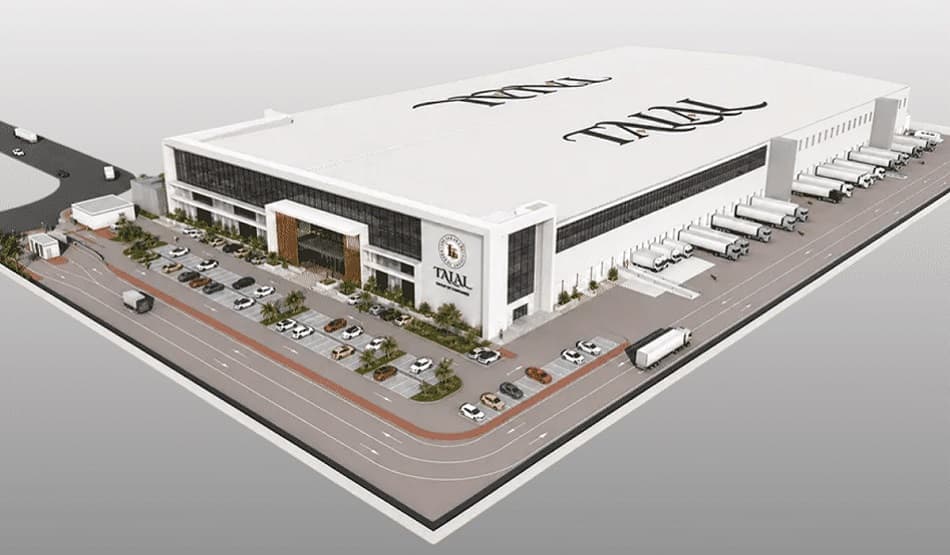
Talabat, the leading online food and grocery ordering platform in the Middle East and North Africa (MENA) region, opened MENA’s largest distribution center in Cairo, Egypt.

The giant distribution center was opened in the presence of Minister of Communications and Information Technology Raafat Hendy, on behalf of the Prime Minister, alongside Minister of Finance Ahmed Kouchouk, Minister of Investment and Foreign Trade Mohamed Farid, Minister of Trade and Industry Khaled Hashem, and CEO of the Information Technology Industry Development Agency (ITIDA) Ahmed Elzaher.

Talabat’s Giant Facility Covers 27 Thousand Square Meters

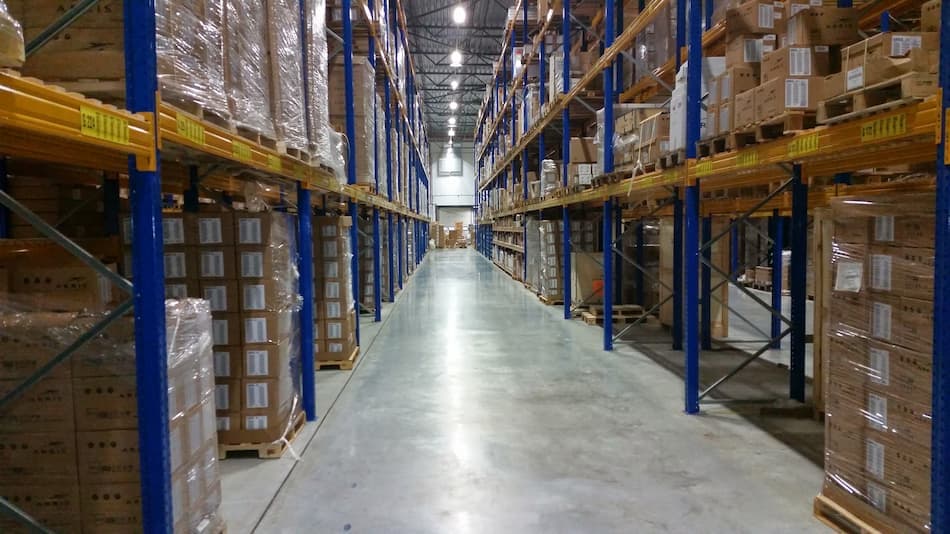
Situated along the Cairo–Suez road within a logistics hub, the facility covers 27,000 square meters. The facility has the capacity to process approximately 1 million items per day. It currently serves 12 cities and plans to expand its reach to 17 cities.

Mohamed Farid said the project reflects the strong growth of Egypt’s logistics and e-commerce sectors and the rising role of technology in optimizing supply chains and operations. The ICT Minister stated that Talabat’s expansion, highlighted by the launch of an AI-driven logistics hub, demonstrates increasing confidence in Egypt’s market and the country’s strong e-commerce potential.

Hendy stated that improvements in digital infrastructure, together with the rapid growth of e-commerce across mobile and online platforms, have been key factors in attracting investment and encouraging international companies to grow their presence in Egypt’s digital economy. He also noted that the company’s reliance on a technology and shared services hub in Egypt underscores its trust in local talent to deliver high-value services, including application development and customer support for various markets.

Egypt-Based Cross-Border Services Team Accounts for 74% of the Company’s Shared Services

The hub is powered by integrated real-time systems that connect inventory, retail outlets, and supply chain functions, ensuring seamless and efficient operations. It also uses the company’s proprietary AI models to predict demand, optimize inventory allocation, and automate processes; this improves accuracy, speed, and responsiveness while reducing waste across the network.

Talabat Egypt functions as a central hub for the company’s operations across the MENA region. It has approximately 3,100 employees, including more than 1,600 specialists in its technology and shared services center supporting eight regional markets. The Egypt-based cross-border services team accounts for 74% of the company’s shared services.

Quiqup Expands Into Platform-Led Commerce With “Shop Local” Initiative

Quiqup Expands Into Platform-Led Commerce With “Shop Local” Initiative

UAE-based logistics company Quiqup has taken a strategic step beyond its traditional delivery operations with the launch of a new platform designed to support local business growth. The initiative, introduced under the name “Shop Local,” reflects a broader shift in the e-commerce landscape where logistics providers are moving closer to the consumer-facing layer of digital commerce.

The platform is built to bring together UAE-based brands in a single environment, enabling customers to discover and purchase from local businesses while benefiting from integrated fulfillment and delivery services. By combining visibility with logistics infrastructure, Quiqup is positioning itself not only as a service provider but as an active enabler of e-commerce expansion.

This move comes at a time when competition in the UAE’s online retail market is intensifying. While large marketplaces continue to dominate traffic and transactions, smaller businesses often face challenges in gaining visibility and managing operational complexity. Quiqup’s approach addresses both of these constraints by creating a more streamlined path from product discovery to final delivery.

The Convergence of Logistics and Marketplace Models

At its core, the “Shop Local” platform reflects a deeper transformation in how digital commerce ecosystems are evolving. Logistics is no longer operating purely in the background. Instead, it is becoming embedded within the customer journey, reducing friction between sellers and buyers. For local businesses, this integration can significantly lower the barriers to entry, particularly in areas such as last-mile delivery, order management, and customer experience.

Supporting Local Business in a Competitive Market

The emphasis on supporting local brands also aligns with wider economic priorities in the UAE, where strengthening domestic business ecosystems and encouraging entrepreneurship remain key focus areas. By highlighting locally based sellers, the platform contributes to increasing their exposure in a market that is otherwise highly competitive and often dominated by global players.

From a strategic perspective, Quiqup’s expansion into a platform model signals a growing convergence between logistics and marketplace functions. Companies that were once confined to backend operations are now building direct connections with both merchants and consumers. This convergence is expected to reshape competitive dynamics, as businesses look for integrated solutions rather than managing multiple service providers.

At the same time, the success of such platforms will depend on their ability to balance visibility, reliability, and user experience. For SMEs, consistent delivery performance and ease of use remain critical factors in determining whether a platform can genuinely support long-term growth.

The launch of “Shop Local” therefore represents more than a new product offering. It highlights an ongoing shift toward more connected and infrastructure-driven commerce models, where logistics providers play a central role in enabling business expansion.

Source

Saudi Arabia’s Delivery Sector Recorded 118 Million Orders in the First Quarter

delivery

Saudi Arabia’s delivery sector reached more than 118 million orders in the first quarter of 2026. This figure represents a 49 percent annual increase.

According to the Saudi Transport General Authority, the delivery sector in Saudi Arabia reached more than 124 million orders in the fourth quarter of 2025. The sector also delivered a remarkable performance in the first quarter of 2026. Accordingly, more than 118 million orders were recorded in Q1 2026, marking a 49 percent increase.

According to the Authority’s statistics, the highest share of total delivery orders in Q1 2026 was recorded in the Riyadh region with 44 percent. It was followed by Makkah (22.21 percent) and the Eastern Province (16.23 percent). Madinah accounted for 4.97 percent of total orders. The other regions were as follows: Asir (3.34 percent), Qassim (2.77 percent), Tabuk (1.74 percent), Hail (1.66 percent), Jazan (1.14 percent), Najran (0.64 percent), Al-Jouf (0.65 percent), Northern Borders (0.51 percent), and Al-Baha (0.18 percent).

A Major Player in E-Commerce and Food Delivery

These figures indicate strong demand, in addition to seasonal fluctuations in e-commerce, food, and retail delivery activities. The growth in delivery volumes also reflected changing consumer behavior. Increased reliance on app-based platforms, real-time tracking technologies, and integrated supply chain solutions reshaped retail and service distribution across urban and regional markets.

In Saudi Arabia, the deli very sector has become one of the cornerstones of the digital economy thanks to e-commerce, food delivery platforms, and last-mile logistics services. The Transport General Authority stated that the growth in the sector “reflects the expansion in service scope, improved operational efficiency, and faster fulfillment of beneficiary requests.”

The National Transport and Logistics Strategy aims to position Saudi Arabia as a “global logistics hub.” In this context, regulatory reforms and investments aimed at increasing logistics efficiency and improving service quality contributed to the deli very sector.

Amazon Launches Its First Smart Warehouse in Shenzhen

Smart Warehouse

Amazon has launched its first smart warehouse in Shenzhen, China. The warehouse is designed to reduce storage costs for sellers by up to 45%.

With its smart warehouse model in China, Amazon aims to retain sellers amidst the increasing competition from Chinese rivals such as Shein and PDD Holdings’ Temu. According to the company’s statement, the smart warehouse will be Amazon’s first Global Warehousing and Distribution (GWD) center. The warehouse will serve as an all-in-one logistics hub for Chinese sellers targeting US customers, located at the heart of Shenzhen’s manufacturing base. The next-generation warehouse is designed to reduce storage costs for Chinese sellers by up to 45%.

Smart Warehouse Focuses on Sellers’ Entire Needs

Amazon’s GWD center in Shenzhen is designed to handle logistics management from the moment products leave factories in China until they reach Amazon’s warehouses in the US. This will allow Chinese sellers to automatically manage local storage, customs clearance, cross-border shipping, and inventory transfers—steps that sellers previously had to organize themselves.

Chinese Competitors Continue Their Investments to Compete with Amazon

With this move, Amazon aims to retain Chinese sellers. Competing with global e-commerce giants like Temu, Shein, and TikTok Shop in the region, Amazon is also responding to the rising competition among sellers, suppliers, and customers. Temu’s market share surged from under 1% to 24% last year, bringing it on par with Amazon. Additionally, Shein holds a market share of approximately 10%.

Chinese platforms are deepening their investments in supply chains. Shein’s founder Xu Yangtian committed to investing $1.4 billion in February to build a “smart supply chain system” in Guangdong Province.

Expanding the Smart Warehouse Model to Europe and Japan

Amazon announced plans to expand the smart warehouse model to the Yangtze River Delta, another major manufacturing hub, and extend its distribution to Europe and Japan. Shenzhen continues to remain at the center of this ecosystem. The city hosts more than half of China’s cross-border e-commerce sellers and has ranked first nationwide in cross-border trade for four consecutive years. Amazon’s expansion is placing pressure on Chinese platforms as regulations on low-value imports tighten in the US and Europe.

E-Commerce Accounts for 35% of New Warehouse Demand in Central Asia

warehouse

Online marketplaces and the broader e-commerce sector accounted for 35% of new warehouse space demand in Central Asia.

According to data announced by IBC Global as part of the Central Asia Warehouse Summit Uzbekistan, the e-commerce sector accounted for 35% of new warehouse space demand in Central Asia at the beginning of 2026. Third-party logistics (3PL) providers and distribution companies ranked second with a 28% share of ware house demand. The delivery needs of traditional brick-and-mortar stores accounted for an additional 18% share.

Logistics Infrastructure Took a 12% Share in Warehouse Demand

The ongoing development of regional logistics infrastructure contributed approximately 12% to total ware house demand. The light industrial sector and multi-temperature storage facilities made up the remaining 7%.

At the summit, analysts also presented a comprehensive breakdown of the typical costs associated with constructing a new ware house. Internal engineering networks emerged as the largest expense item, consuming 27.3% of a project’s total budget. This was followed by load-bearing structures at 14.7% and site landscaping at 12.1%.

Other cost items required to complete a commercial facility included on-site utility networks at 8%, flooring at 6.1%, enclosing structures at 5.5%, external utility connections at 4.5%, and roofing at 4.2%.

26.2% Growth Signals Strong Momentum for J&T Express in Q1 2026

26.2% Growth Signals Strong Momentum for J&T Express in Q1 2026

Strong start to 2026 for J&T Express

Global logistics provider J&T Express has reported a 26.2% year-on-year growth in parcel volume for the first quarter of 2026, reflecting strong demand across key markets and continued expansion of its global logistics network.

During the reporting period, the company handled a total of 8.326 billion parcels, with average daily volumes reaching approximately 92.5 million shipments.

This performance highlights a solid start to the year, supported by increasing e-commerce activity and improved operational efficiency across regions.

Southeast Asia leads rapid expansion

One of the strongest contributors to this growth was Southeast Asia, where J&T Express continues to dominate the market. Parcel volume in the region surged by nearly 80% year-on-year, reaching 2.768 billion parcels in Q1.

The growth was driven by:

  • Strong demand from e-commerce platforms
  • Seasonal shopping peaks such as Ramadan
  • Continued investment in logistics infrastructure

The company also expanded its operational capacity, increasing line-haul vehicles and automated sorting systems to support rising demand.

Global markets accelerate beyond China

While China remains a core market, J&T Express is seeing rapid expansion in other regions. Non-China parcel volumes now account for over 35% of total shipments, indicating a shift toward a more globally diversified business model.

In emerging markets, including Latin America and the Middle East, parcel volumes more than doubled year-on-year. The company has been actively partnering with major e-commerce platforms such as TikTok, Temu, SHEIN, and AliExpress to capture cross-border growth opportunities.

Additionally, J&T expanded its network by adding new service outlets and sorting centers, further strengthening its international logistics capabilities.

E-commerce continues to drive logistics growth

The company’s performance reflects the broader momentum of global e-commerce, which continues to fuel demand for fast and efficient delivery solutions. As online retail expands, logistics providers like J&T Express are investing heavily in automation, infrastructure, and cross-border capabilities.

Industry trends suggest that Southeast Asia and emerging markets will remain key growth drivers in the coming years, supported by increasing internet penetration and digital adoption.

Outlook remains positive

J&T Express’ strong first-quarter results indicate continued growth potential for 2026. With a focus on operational efficiency, infrastructure expansion, and strategic partnerships, the company is well-positioned to capitalize on the next wave of e-commerce growth.

Source

Stay updated with global logistics and e-commerce insights on WORLDEF.

Xyvoraq Launches Live Dropshipping Platform

dropshipping

Xyvoraq, which develops e-commerce infrastructure solutions, has opened the door to a major transformation in the industry by launching its AI-powered live dropshipping platform. The system developed by the company aims to automate many operational burdens, from product management to order processes, allowing brands to focus on strategic decisions.

In the new dropshipping platform, artificial intelligence manages product presentation, conversion optimization, and repetitive tasks. The dropshipping infrastructure maintains inventory, sourcing, and logistics processes. Thanks to this structure, businesses can focus on growth, channel management, and marketing strategies instead of dealing with operational details.

A New Paradigm in E-Commerce: Intelligent Systems

The approach of San Francisco-based Xyvoraq shows that e-commerce is shifting from a model that merely provides infrastructure to intelligent systems that support decisions and manage processes. Platforms no longer only offer logistics or sales infrastructure; they also develop technologies that enable businesses to take real-time action.

Xyvoraq officials emphasize that this step was taken not for short-term performance gains, but for long-term sustainable growth. The company has adopted an approach that prioritizes system stability, cash flow security, and scalability.

A Xyvoraq spokesperson said, “We are not focused on short-term performance. Our priority has always been system stability, cash flow security, and scalability. Our AI-powered live commerce is a natural progression of our infrastructure; it is not a trend we are chasing, but a capability we are building with a long-term vision.”

A New Balance Is Being Established in Dropshipping

For many years, the dropshipping model has stood out as a low-cost entry point for entrepreneurs. However, operational complexity and lack of control have been important factors limiting the sustainability of this model. The AI-powered system developed by Xyvoraq aims to minimize these issues and transform dropshipping into a more professional, scalable, and data-driven model.

The Future of E-Commerce Lies in Automation and Control

In the new era of e-commerce, competition will be shaped not only by product and price, but also by speed, operational efficiency, and technology integration. AI-supported systems will offer brands both cost advantages and strategic flexibility. Companies that take part in the early stages of this transformation will gain a significant advantage in the e-commerce ecosystem of the future.

E-Commerce and Logistics Demand Is Driving the Packaging Tape Market

Packaging Tape

The global packaging tape market is gaining momentum alongside the growth of e-commerce and industrial logistics. According to recent reports, demand for sealing and strapping packaging tapes is expected to increase significantly by 2035. The rising volume of online orders and the expansion of global supply chains are emerging as the key drivers behind this growth.

Double-digit growth rates in the e-commerce sector are directly increasing the need for packaging materials. In recent years, the global e-commerce volume reaching the trillion-dollar level has dramatically expanded the scale of packaging processes. According to experts, each online order involves the use of more than one packaging material on average. This translates into continuously increasing demand for tapes, boxes, and protective packaging products.

The Packaging Tape Market İs Expected To Experience Sustained Growth Until 2035

According to IndexBox’s latest report on the global Sealing and Strapping Packaging Tape market, the market is entering 2026 with a broader demand base, more disciplined supply behavior, and a more regionally diversified supply architecture. The report forecasts long-term and steady growth in the packaging tape market. Demand is increasing more rapidly in regions with intensive logistics operations, while industrial production and warehousing activities are also among the factors supporting the market.

North America, Europe, and the Asia-Pacific regions hold the largest share of the market, while increasing e-commerce penetration in developing countries is creating new growth opportunities.

Efficiency and Durability Take Priority in Logistics

The transformation in the packaging tape market is not limited to volume growth. Companies are shifting toward more durable, environmentally friendly, and cost-efficient products. In particular, recyclable and sustainable materials are among the most important trends of the new era. In addition, packaging solutions compatible with automation systems are emerging as critical elements that enhance operational efficiency in warehouses and fulfillment centers.

A Small but Critical Component in the Supply Chain

Although packaging tape may seem like a small product, it plays a critical role in the uninterrupted functioning of global trade. As a fundamental component ensuring that every shipment is delivered securely, this product category is gaining strategic importance as e-commerce continues to grow. As the expansion of e-commerce and logistics sectors continues, the importance of essential products such as packaging tape will further increase. Despite its low visibility, this market will continue to play a critical role in the sustainability of global trade.