WORLDEF ISTANBUL 2026 - Upcoming Event

Register Now

ENOC & 7X Partner to Unlock 5 New Digital Logistics Opportunities in UAE

ENOC & 7X Partner to Unlock 5 New Digital Logistics Opportunities in UAE

The UAE is taking another major step toward building a future-ready e-commerce logistics ecosystem. In a newly announced partnership, ENOC Group and 7X have signed a strategic agreement to accelerate digital transformation and last-mile innovation across the country.

The collaboration brings together ENOC’s extensive retail network with 7X’s logistics and transport capabilities creating new opportunities for faster, smarter, and more accessible delivery solutions.

A Strategic Move Toward Smarter Last-Mile Delivery

At the core of the partnership is a shared vision: improving last-mile efficiency, one of the most critical challenges in modern e-commerce.

As part of the agreement, both companies will explore integrating 7X’s logistics infrastructure such as pick-up and drop-off (PUDO) points and smart lockers into ENOC’s nationwide retail network.

This move is expected to significantly enhance customer convenience while reducing delivery times and operational complexity for businesses.

Expanding Digital & Retail Capabilities

The collaboration goes beyond logistics. It also includes joint initiatives across:

  • E-commerce and quick commerce (q-commerce)
  • Retail innovation and digital services
  • Transport-ready and logistics-enabled solutions

These areas highlight a broader shift in the region: blending physical infrastructure with digital ecosystems to create seamless customer experiences.

For ENOC, this aligns with its growing role as more than just an energy provider evolving into a retail and mobility platform. For 7X, it strengthens its position as a key enabler of logistics innovation in the UAE.

Why This Matters for E-Commerce

This partnership reflects a larger trend reshaping global commerce: the rise of hyper-local fulfillment and integrated logistics networks.

By turning everyday locations like fuel stations into logistics touchpoints, companies can:

  • Reduce last-mile delivery costs
  • Improve delivery speed
  • Increase accessibility for customers
  • Support omnichannel retail strategies

In markets like the UAE where consumer expectations for speed and convenience are rapidly increasing these innovations are becoming essential rather than optional.

A Glimpse Into the Future of Logistics

The ENOC–7X partnership signals a future where logistics is no longer a backend function, but a customer experience driver.

As digital infrastructure, retail networks, and logistics systems continue to converge, we can expect:

  • More decentralized delivery models
  • Increased use of smart lockers and PUDO systems
  • Stronger integration between online and offline commerce

Ultimately, the companies that succeed will be those that can combine technology, infrastructure, and customer-centric design into one seamless ecosystem.

Source

Amazon Will Increase Logistics Fees by 3.5% Due to Rising Costs

Logistics

Amazon announced that it will apply an additional 3.5% fuel and logistics charge to fulfillment (storage and shipping) fees for sellers in order to balance rising operational costs. The new regulation will cover sellers in the United States and Canada as of April 17.

In the notice sent by the company to its sellers, it was stated that the additional charge will be valid particularly for transactions made through Fulfillment by Amazon (FBA) services. In addition, remote fulfillment operations from the United States to Canada, Mexico, and Brazil will also be included in this practice.

The Increase in Energy Prices Escalated Logistics Costs

The most important reason behind the decision was the sharp increase in global energy markets. Following the conflict that began in Iran on February 28, significant rises were seen in oil and fuel prices. In the United States, average gasoline prices increased by approximately 36% within four weeks, rising from $2.98 per gallon to $4.1. Diesel prices, on the other hand, reached $5.5, with a 46% increase, also due to disruptions in maritime shipping routes. These developments directly affected transportation and distribution costs, which are of critical importance especially in e-commerce logistics.

Pressure on the E-Commerce Ecosystem Is Increasing

Amazon’s decision is considered a development that may affect not only platform sellers but also, indirectly, consumer prices. According to experts, the increase in logistics costs creates additional pressure for sellers whose margins are already narrow. Similarly, it is known that global e-commerce giants have recently been reviewing their pricing and fee strategies in order to balance rising energy and operational costs.

The Increase in Logistics Fees May Spread to E-Commerce Companies

According to experts, as long as the volatility in energy prices continues, it seems likely that similar additional fee practices may also be implemented by other e-commerce and logistics companies. This situation may cause sellers to reshape their pricing strategies and turn to alternative logistics solutions.

In addition, in the long term, solutions such as AI-supported route optimization, warehouse automation, and localized fulfillment models are expected to come further to the forefront. For the sustainable growth of global e-commerce, cost efficiency and operational flexibility will be among the most critical competitive factors in the coming period.

E-Commerce Hit by Hormuz Crisis as 20% of Global Oil Trade Is Affected

strait-of-hormuz-disruption-slows-iraqi-e-commerce-as-costs-rise-and-deliveries-delay

The ongoing disruption in the Strait of Hormuz is beginning to ripple through Iraq’s digital economy, with e-commerce businesses facing rising costs, delayed deliveries, and increasing order cancellations.

Online retailers across Iraq report mounting logistical challenges as shipments-many routed through key global trade corridors are slowed or rerouted. The impact is particularly visible in delivery timelines, once considered a competitive advantage for e-commerce platforms.

Delivery Delays and Rising Cancellations

Small and medium-sized online sellers are among the hardest hit. Many rely on imported goods from international suppliers, particularly in Asia, making them highly dependent on stable shipping routes.

Retailers say delayed shipments have triggered a surge in cancellations, as customers opt out of purchases when delivery times become uncertain. Sellers are also absorbing additional operational pressure, balancing customer expectations with limited control over supply chain disruptions.

Transport costs have increased significantly, squeezing already thin margins. Some businesses are choosing to maintain prices to remain competitive, even as profitability declines.

Supply Chain Pressure Hits Core E-Commerce Model

The Strait of Hormuz is one of the world’s most critical maritime trade routes, handling a substantial share of global energy and cargo flows. Any disruption quickly translates into higher fuel prices and shipping costs globally, directly impacting online retail.

Economists warn that e-commerce built on speed, affordability, and product availability is especially vulnerable to such shocks.

Higher oil prices are already driving up logistics expenses across both air and sea freight. This, in turn, is increasing product prices, reducing consumer purchasing power, and weakening demand in price-sensitive markets like Iraq.

Reduced Variety and Slower Market Activity

Beyond delays, the disruption is also affecting product availability. Import-dependent markets are seeing reduced variety as supply chains slow, particularly for goods sourced from China and India.

This shift is forcing e-commerce platforms and sellers to rethink inventory strategies, promotional campaigns, and pricing models. Some larger players may pass costs directly to consumers, while smaller sellers risk losing market share.

Experts note that emerging markets tend to feel the impact more sharply due to their reliance on imports and limited logistical alternatives.

A Structural Challenge for Digital Commerce

The situation highlights a broader vulnerability in global e-commerce: dependence on key geopolitical chokepoints.

As disruptions in the Strait continue, Iraqi e-commerce is likely to remain under pressure, with longer delivery cycles, higher prices, and reduced competitiveness shaping the market in the near term.

For the sector, the crisis serves as a reminder that digital commerce is only as resilient as the physical infrastructure behind it.

Source

DHL Expands Global Logistics with 3 Key Capabilities from Vital Solutions Acquisition

DHL Expands Global Logistics with 3 Key Capabilities from Vital Solutions Acquisition

Global logistics giant DHL is expanding its footprint in South Africa through the acquisition of Vital Distribution Solutions, Staffing Logistics, and Vital Fleet, in a move aimed at strengthening its end-to-end supply chain capabilities.

The transaction, approved unconditionally by South Africa’s Competition Commission, is expected to enhance DHL’s position in transport, warehousing, and contract logistics across the region.

Strengthening Logistics Capabilities Across Key Sectors

The acquisition covers a wide range of logistics services, including road freight, third-party logistics, storage, distribution, and e-commerce-related operations.

Vital Distribution Solutions brings established capabilities in servicing industries such as FMCG, manufacturing, industrial, and retail, while Vital Fleet adds fleet management and rental services. Staffing Logistics complements the deal by providing flexible workforce solutions across transport and service sectors.

By integrating these operations, DHL aims to deepen customer relationships and deliver more scalable, end-to-end logistics solutions in a rapidly evolving market.

E-Commerce Growth Driving Demand for Third-Party Logistics

The deal comes amid rising demand for outsourced logistics services in South Africa, driven by the continued growth of e-commerce and regional trade activity.

Industry players are increasingly investing in specialised logistics solutions to meet evolving supply chain requirements, particularly in sectors such as healthcare, retail, and transport. DHL has already signalled its long-term commitment to the region, with plans to invest approximately €300 million in Sub-Saharan Africa over the next five years.

As supply chains become more complex and digital commerce continues to scale, acquisitions like this highlight a broader shift toward integrated logistics ecosystems designed to improve efficiency, resilience, and service quality.

Source: Daily Dispatch

The Future of Logistics with Zajel: Speed, Technology, and Customer-Centricity

Zajel

Zajel stands out as a partner that helps brands overcome challenges by integrating not only logistics but also technology. The company offers integrated solutions that support growth, particularly focusing on speed, scalability, and visibility in the e-commerce sector. Nabeel Alkharabsheh, General Manager of Zajel, shared with WORLDEF E-COMMERCE how Zajel’s technology-driven approach, its logistics solutions, and future growth strategies are reshaping operational processes and increasing competitiveness in various sectors.

“In E-Commerce, Speed, Scalability, and Visibility Are Our Focus”

Nabeel Alkharabsheh, General Manager of Zajel, explained: “At Zajel, we position ourselves as a technology-driven logistics partner, not a one-size-fits-all service provider. Each sector has unique operational demands, and our role is to align logistics and technology to support business performance. In e-commerce, our focus is on speed, scalability, and visibility. We enable growth through integrated fulfillment, last-mile delivery, returns management, and real-time tracking that supports high volumes and peak-season demand.”

Alkharabsheh continued: “In the automotive sector, precision and compliance are crucial. We deliver secure vehicle and spare parts logistics, bonded movements, and international freight solutions with full milestone visibility across complex supply chains. In banking and financial services, trust and control are critical. We provide secure, compliant logistics for sensitive materials, supported by full audit trails, chain-of-custody tracking, and system integration.

In retail, we help brands balance cost efficiency with omnichannel execution through smart warehousing, distribution, and data-driven route optimization. Across all sectors, our positioning is clear: Zajel combines operational strength with technology to deliver customized, scalable logistics solutions that help brands move faster and operate smarter.”

“Our Technology Transforms Logistics from a Reactive Process to a Proactive, Data-Driven Operation”

When asked about how IT solutions create tangible differences in customer operations, Alkharabsheh responded: “Zajel’s IT solutions make logistics faster, simpler, and more predictable for our customers. With our Same-Day Pickup and Delivery platform, customers can book, track, and manage urgent shipments in real-time, reducing delays and improving reliability. This is especially valuable for e-commerce and time-sensitive industries.

Our WhatsApp workflows allow customers to track shipments, edit addresses, pay COD, and receive updates directly on WhatsApp, eliminating the need for calls or emails and making operations smoother for both brands and end consumers.”

Alkharabsheh also shared: “Through the Zajel mobile app and customer dashboards, clients get end-to-end visibility of pickups, deliveries, exceptions, and returns in one place. This helps operations teams make quicker decisions and reduce manual follow-ups. Zajel Pay payout system simplifies collections and reconciliations, giving businesses faster settlements, clearer financial reporting, and better cash flow control. Behind the scenes, automation handles scheduling, routing, notifications, and exception management, which reduces human errors and lowers operational costs. Overall, our technology turns logistics from a reactive process into a proactive, data-driven operation, helping brands deliver better experiences while running more efficient operations.”

“Fast Delivery Plays a Critical Role in Strengthening the Competitiveness of E-Commerce Brands”

Regarding how fast delivery services impact the competitiveness of e-commerce brands, Alkharabsheh said: “Fast delivery services play a critical role in strengthening the competitiveness of e-commerce brands by directly influencing customer behavior and brand perception. In today’s market, same-day and next-day delivery have become a basic expectation, especially in urban environments where immediacy drives purchasing decisions.

True differentiation now comes from ultra-fast delivery models such as 2-hour and 4-hour services, which transform logistics into a real-time customer experience. These services increase conversion rates, reduce purchase hesitation, support higher sales volumes, and allow brands to command premium positioning.”

Alkharabsheh added: “At Zajel, on-demand and time-critical delivery solutions, powered by smart routing, localized fulfillment, and real-time visibility, enable e-commerce brands to compete on speed, convenience, and reliability. Ultimately, fast delivery has become a strategic advantage that builds trust, strengthens customer loyalty, and drives long-term market share.”

Zajel’s Return Services and Road Freight Solutions

Alkharabsheh was asked how Zajel’s return services and road freight solutions improve customer experience and cost management for brands. He responded: “Zajel’s road freight solutions combine cost efficiency with service reliability, enabling brands to effectively manage delivery timelines and transportation expenses. Through optimized route planning, a massive fleet network, and proactive communication, customers benefit from consistent, dependable, and timely deliveries.

Zajel continues to support bulk trucking requirements and specialized movements like heavy-weight and over-dimensional cargo, highlighting its capability in handling complex transport needs. With tailored solutions across full truckload, less-than-truckload, and specialized cargo, Zajel helps brands align logistics performance with effective cost control.”

Alkharabsheh continued: “Zajel’s international air freight services provide companies with speed, reliability, and regulatory expertise, which are critical in cross-border trade. These services enable businesses to meet urgent delivery requirements, minimize lead times, and maintain continuity in global supply chains. Zajel has demonstrated strong capability in handling specialized air shipments, including vehicles, temperature-controlled shipments like chocolates and eye lenses, and highly time-sensitive oilfield materials, where rapid execution is critical to operational success.

With seamless coordination across airlines, customs authorities, and global destination partners, Zajel delivers efficient customs clearance and reliable delivery schedules. These strengths enable clients to move high-value and mission-critical cargo with confidence, enhancing market responsiveness while significantly reducing operational risk.”

Zajel’s Growth Strategy

Finally, Alkharabsheh spoke about Zajel’s growth strategy: “Zajel’s growth strategy focuses on strengthening core logistics services, advancing digital capabilities, and expanding in high-growth sectors. The company continues to invest in technology to enhance visibility, efficiency, and customer experience, while targeting sectors such as e-commerce, healthcare, and cross-border trade with tailored solutions and focused market positioning.”

Amazon Becomes the Largest Carrier in the U.S., Delivering 6.7 Billion Packages in 2025

Amazon

Amazon became the largest carrier in the United States by parcel delivery volume in 2025. According to ShipMatrix data, the company narrowly surpassed the U.S. Postal Service (USPS), delivering 6.7 billion packages in 2025, compared with USPS’s 6.6 billion. During the same period, UPS handled 4.4 billion packages, while FedEx delivered 3.6 billion. This picture shows that Amazon is no longer only an e-commerce giant, but also one of the country’s most powerful last-mile logistics players.

Dependence on USPS Has Declined

Three main factors stand out behind Amazon’s rise: growth in online sales volume, the expansion of its rural delivery network, and reduced dependence on UPS. As Reuters previously reported, Amazon plans to invest more than $4 billion by the end of 2026 to expand its rural coverage. This is helping the company scale its own network while relying less on external carriers.

The U.S. Domestic Parcel Market Reached 23.9 Billion Shipments

Across the market as a whole, growth remained limited. According to ShipMatrix, the U.S. domestic parcel market reached a total of 23.9 billion shipments in 2025, with annual volume growth of only 0.4%. Revenues, however, rose by 4.1%. A major reason for this was that large carriers supported their revenues through price increases. The projected compound annual growth rate for the next three years stands at 3.9%.

The Balance of Power in the U.S. Logistics Market Has Shifted Permanently

Another notable development is that traditional carriers are moving away from low-margin e-commerce deliveries. UPS and FedEx are shifting toward healthcare, data centers, and higher-yield enterprise segments instead of low-value B2C shipments to homes. This is opening space not only for Amazon, but also for Walmart, Target, and smaller parcel carriers. According to ShipMatrix data, the volume of carriers outside the top four increased by 13% year over year in 2025.

Amazon’s overtaking of USPS signals that the balance of power in the U.S. logistics market has changed permanently. Pitney Bowes had previously projected that Amazon would not take the lead until 2028. The company has crossed that threshold earlier than expected.

Amazon to Reduce USPS Package Volume

Meanwhile, Amazon is reportedly planning to reduce the number of packages it ships through the U.S. Postal Service by at least two-thirds by this fall. This shift is expected to accelerate as the current contract expires in the September–October 2026 period. Amazon is not expected to sever ties with USPS completely; however, the company is said to be preparing for a smaller-scale partnership while shifting delivery volume to its own network and alternative carriers.

The most critical impact of this decision may be felt on the USPS side. USPS currently handles about 1.7 billion Amazon packages annually, and the agency has already warned Congress that it could face a cash squeeze in the fall of 2026. It is reported that the Postal Service’s accumulated net losses since 2007 have exceeded $118 billion, while new Postmaster General David Steiner has said the system is not sustainable in its current form.

Amazon to Invest More Than $4 Billion to Expand Rural Delivery Capacity

The picture looks different from Amazon’s side. The company has aggressively expanded its own logistics network in recent years. Amazon plans to invest more than $4 billion by the end of 2026 to increase its rural delivery capacity. In doing so, it aims to reduce its dependence on USPS, especially in rural areas.

For USPS, the issue is not only the loss of Amazon volume; if that volume declines, part of the delivery infrastructure expanded in recent years could also be left underutilized. For that reason, the agency has reportedly launched a competitive bidding process for its last-mile delivery network and has received offers from more than 20 companies. However, Amazon’s decision to reduce volume shows that the center of gravity in U.S. e-commerce logistics is now shifting more clearly toward in-house networks.

Amazon Accelerates Against Walmart; Launches 1- and 3-Hour Fast Delivery in the U.S.

Fast Delivery

Amazon has taken a new step that redefines delivery speed in the United States. By introducing 1-hour and 3-hour delivery options across many markets, including major metropolitan areas such as Los Angeles and Chicago, the company has taken its competition with Walmart in fast delivery to a new stage.

According to information shared by Amazon, the new model was built on top of its same-day delivery infrastructure. Under the new service, customers can order more than 90,000 products, ranging from daily essentials to electronics, in a much shorter time. Amazon states that 1-hour delivery is available in hundreds of cities and towns, while the 3-hour delivery option is accessible in more than 2,000 locations.

Fast Delivery Is Now a New Growth Tool

For Amazon, this move is not only about logistics, but also a commercial strategy aimed at increasing basket size and shopping frequency. The company had previously launched a model called “Amazon Now” in certain parts of Seattle and Philadelphia, offering grocery and everyday essentials delivery in 30 minutes or less.

A New Operational Order Has Been Established

In order to manage these short delivery windows, the company created dedicated workstations within its existing same-day delivery centers. Yellow labels began to be used for the rapid sorting of packages, and on-site signage was also updated to guide delivery partners. Amazon also launched a new “get it fast” page to help users find eligible products more easily.

Prime Has an Advantage, but It Is Not Free

The new fast delivery model is offered for an additional fee. Prime members pay $9.99 for 1-hour fast delivery and $4.99 for 3-hour delivery. For customers without a Prime membership, the fees stand at $19.99 and $14.99, respectively. This shows that while Amazon is strongly playing the speed card, it is also trying to preserve profitability.

Walmart Pressure Was the Decisive Factor

Amazon’s timing is not a coincidence. According to the AP, Walmart says it can provide same-day fast delivery in under 3 hours to approximately 95 percent of the U.S. population. The company is also expanding its drone delivery network. This picture shows that in U.S. retail, competition measured in minutes for delivery has now been added to price competition.

A New Era in Retail: The Cost of Speed

The latest development reveals that customer expectations in e-commerce have now reached the point of delivery not only “the next day,” but “the same day or even within a few hours.” However, the expansion of this model will also bring new debates, including logistics costs, the burden of urban operations, and pressure on small retailers. Amazon’s latest move clearly shows that in U.S. retail, speed is no longer a privilege, but has become an area of strategic competition.

Air Cargo Shifts: 5 Ways E-Commerce Growth Is Reshaping Global Logistics

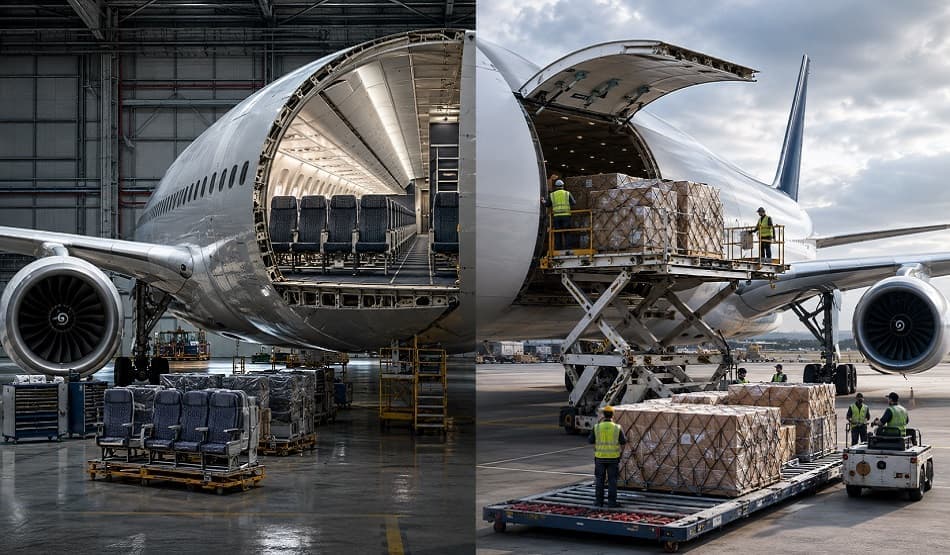
Air cargo aircraft loading freight at an international airport logistics hub

Global air cargo networks are undergoing significant changes as geopolitical tensions and the rapid growth of e-commerce reshape the movement of goods across international markets.

Airlines, logistics companies and cargo operators are increasingly adjusting their routes and supply chain strategies to respond to shifting trade patterns, regulatory pressures and disruptions in key aviation corridors. At the same time, the continued expansion of cross-border online shopping is driving strong demand for faster and more reliable air freight services.

Industry analysts say the intersection of geopolitical developments and digital commerce is accelerating structural changes across the global air freight sector.

E-Commerce Demand Continues to Drive Air Freight Growth

The rapid expansion of e-commerce has become one of the most important forces shaping global air cargo demand. Online marketplaces and international retailers rely heavily on air freight to transport high-value and time-sensitive goods quickly between production centers and consumer markets.

As consumers increasingly expect faster delivery times, logistics providers are expanding their air freight capacity and improving operational efficiency to support global e-commerce supply chains.

Air freight offers a major advantage for online retail shipments because of its speed and reliability compared with other transportation methods. This makes it a critical component of cross-border e-commerce logistics, particularly for electronics, fashion products and other high-demand consumer goods.

Industry data suggests that e-commerce shipments now represent a growing share of global air cargo volumes, reflecting the increasing role of digital commerce in international trade.

Geopolitical Developments Affect Global Cargo Routes

Recent geopolitical tensions have also created new challenges for the air freight industry. Disruptions affecting certain regions, particularly in parts of the Middle East, have forced airlines to adjust flight paths and rethink their logistics strategies.

Air cargo carriers that previously relied on established aviation corridors must now consider alternative routes, which can increase operating costs and extend transit times.

These developments highlight how geopolitical uncertainty can quickly influence global logistics networks. However, air cargo operators have demonstrated flexibility by adapting their routes and maintaining supply chain continuity despite changing conditions.

Trade Policies and Regulations Add Complexity

In addition to geopolitical risks, shifting trade policies and regulatory changes are also influencing global cargo flows.

Tariffs, export controls and evolving trade regulations can alter the economics of cross-border shipping, forcing logistics companies and online retailers to reconsider traditional supply chain routes.

As a result, many global companies are diversifying their logistics strategies and investing in more resilient supply chain infrastructure to reduce exposure to policy changes.

This approach allows businesses to maintain stable international delivery operations even as the regulatory environment continues to evolve.

Air Cargo Industry Adapts to a Changing Market

Despite these challenges, the long-term outlook for the air cargo industry remains closely tied to the continued growth of e-commerce.

Airlines and logistics providers are investing in digital technologies, automation and improved tracking systems to increase efficiency and support the rising volume of online retail shipments.

New cargo hubs and logistics infrastructure are also being developed in several regions as companies seek to strengthen supply chain resilience and improve global connectivity.

As geopolitical dynamics and global trade patterns continue to shift, air freight will remain a critical backbone of international e-commerce logistics, ensuring that goods move quickly and efficiently across borders.

The evolving relationship between geopolitics and digital commerce is likely to continue reshaping global air cargo networks in the years ahead.

Source: Aviation Week

Saudi Arabia, UAE and Oman Activate New Cargo Routes to Counter Strait of Hormuz Risks

Hormuz

Amid rising geopolitical tensions in the Gulf region, countries in the area have begun activating alternative logistics corridors to prevent potential disruptions in the Strait of Hormuz, one of the world’s most critical maritime trade chokepoints.

Saudi Arabia, the United Arab Emirates and Oman are reorganizing cargo flows through new land, rail and port connections to ensure that regional trade continues without interruption. These measures effectively create alternative cargo routes to mitigate risks related to the Strait of Hormuz.

In Saudi Arabia, a new logistics corridor program launched by the Saudi Ports Authority (Mawani) is linking Red Sea ports with Gulf markets. Jeddah Islamic Port, King Abdullah Port, the Yanbu ports, NEOM Port and Jazan ports have been positioned as key hubs within the new system. Containers arriving at these ports are transported by road to markets such as Kuwait, Bahrain, Qatar, the UAE and Oman, reducing trade dependence on the Strait of Hormuz.

UAE Identifies Alternative Routes to Hormuz

The United Arab Emirates is implementing a similar strategy. Part of the cargo traffic is being redirected to east-coast ports on the Gulf of Oman, including Fujairah and Khor Fakkan. Cargo arriving at these ports is then transported by road by DP World to Jebel Ali Port and other logistics centers.

At the same time, the national rail network operated by Etihad Rail has become an important part of the supply chain. Over the past nine days, more than 100 train trips have transported approximately 459,000 tonnes of cargo and nearly 8,000 containers.

Oman, meanwhile, is positioning the ports of Sohar, Duqm and Salalah as regional alternative gateways. The government has introduced new measures to accelerate customs and logistics processes, while facilitating transit operations through the Bayan electronic customs system.

Gulf Countries Handle a Significant Share of Cross-Border E-Commerce Shipments

These developments are not only critical for energy and industrial supply chains but also for global e-commerce logistics. As a major trade hub between Europe and Asia, Gulf countries handle a significant share of cross-border e-commerce shipments.

With the development of logistics corridors that bypass the Strait of Hormuz, e-commerce companies can maintain more secure and uninterrupted supply chains, particularly for electronics, fashion and consumer goods that require fast delivery.

According to experts, the new logistics infrastructure being established in the Gulf will not only serve as a safeguard during periods of crisis but will also strengthen the region’s strategic role in global trade and e-commerce logistics in the long term.

Bol Is Establishing an External Fulfillment Network for Marketplace Sellers

Dutch online marketplace Bol.com has begun preparations to introduce third-party fulfillment services and, for the first time, opened its logistics ecosystem to external providers. This step marked a strategic shift that would allow sellers to outsource warehousing and order processing not only to Bol but also to approved third-party logistics companies.

The plans emerged through a job posting published instead of an official announcement. This situation showed that Bol was actively building infrastructure for a broader fulfillment network. The initiative aimed to expand delivery options for sellers, speed up shipping times, and reduce Bol’s dependence on its own warehouse capacity.

Bol Is Opening Its Ecosystem to Third-Party Logistics Providers

Bol has been providing fulfillment services to its partner sellers for more than a decade under the “Logistics via Bol” program. In this model, sellers send their products to warehouses operated by Bol, and orders are shipped from there. With the new model, Bol planned to connect external fulfillment companies directly to its platform and effectively create a marketplace for logistics services.

Clues to the strategy appeared in the job posting opened for the position of Ecosystem Partnerships Logistics Manager. According to the job description, the primary responsibility of this role would be “launching 3PL partnerships as an additional shipping option for sales partners” and building strategic relationships with third-party fulfillment providers. The position would focus on identifying logistics partners that could increase delivery speed and operational efficiency for both sellers and customers.

The job posting also stated that the partnerships to be established would serve sellers in the Netherlands, Belgium, and international markets. Bol currently offers third-party logistics services to approximately 1,000 international sellers in cooperation with QLS. With the new ecosystem, it is anticipated that this opportunity will be made available to all approximately 45,000 sellers on the platform.

Faster Delivery and Advantages for Sellers

Delivery speed stands out as one of the main motivations behind the expansion. Bol emphasizes that faster shipping directly affects customer satisfaction and seller performance. Sellers using the external fulfillment network are expected to obtain benefits similar to those offered to sellers using Bol’s own logistics services.

Among these advantages is eligibility for the Select program, which offers customers free delivery and the option to choose a delivery time slot at no additional cost. Such delivery options increase product visibility and conversion rates on the platform, providing a competitive advantage for sellers.

Including multiple fulfillment providers in the ecosystem aims to offer sellers greater flexibility in choosing the logistics partner best suited to their cost structures, inventory locations, and target markets.

Fulfillment, Storage Strategy and Last-Mile Logistics

The shift toward an external fulfillment network coincides with a period in which Bol is reassessing its physical infrastructure plans. The company is expected to gradually begin construction of a new warehouse on the land it purchased in Lelystad, the Netherlands, in 2022. However, Bol’s growth has been slower than initially projected, making a flexible logistics model more attractive.

Developing a network of external fulfillment partners could reduce the urgent need for large-scale warehouse investments while meeting rising order volumes and delivery expectations.

Meanwhile, Bol is also continuing its investments in last-mile logistics. The company’s subsidiary Ampère collects parcels from sellers using the “Shipping via Bol” service and operates a steadily expanding network of drop-off points where smaller sellers can deliver their shipments. The collected parcels are transported to the hubs of courier companies such as PostNL or to Ampère’s own logistics centers.

Ampère also aims to gain greater control over the final stage of delivery by making direct deliveries to customers in certain cities in the Netherlands. When the expansion of the external fulfillment network and investments in last-mile services are evaluated together, it is evident that Bol is moving toward a more comprehensive logistics strategy aimed at supporting sellers and meeting rising customer expectations.

Bol.com Remains the Netherlands’ Leading Online Retailer