WORLDEF Prime Antalya 2026 - Upcoming Event

Register Now

TikTok Shop is Expanding in Europe!

TikTok Shop, owned by Chinese company ByteDance, continues to grow in Europe. The Chinese TikTok Shop offers opportunities for businesses of all sizes and is adding new markets to its portfolio. TikTok Shop, part of the video-sharing platform TikTok, was officially made available to sellers in Germany, France, and Italy on March 31, 2025. Applications for sellers to join the platform started at the end of February.

Launched in Europe’s Largest E-Commerce Markets

TikTok’s shopping arm, TikTok Shop, has been active in the United Kingdom since 2021. From December 2023, it was also launched in Spain and Ireland. With these new markets, the platform has expanded to six countries in Europe. These countries represent the five largest e-commerce markets in Europe. The platform is expected to expand to more European countries. It reaches over 72 million users in these countries.

In the countries where TikTok Shop is active, sellers are supported with inventory management and order processing. The “Fulfilled by TikTok” (FBT) service has been available in the United Kingdom for some time. This service is expected to be launched in Germany, Spain, Italy, and France.

Partnerships with Zalando in Germany, Cabaia in France

TikTok is collaborating with About You, acquired by Zalando Group in Germany, and Nivea, owned by Beiersdorf, in Germany. In France, the company is working with bag manufacturer Cabaia and eyewear manufacturer Izipizi, while in Italy, it is partnering with the sustainable beauty brand Goovi. The platform, which also targets small businesses, allows SMEs and local businesses to benefit from a fully integrated e-commerce solution, thus gaining unprecedented business opportunities.

TikTok’s Future in the U.S. Is at Risk

TikTok Shop is available in many countries outside Europe, including the United Kingdom, Thailand, the United States, and Saudi Arabia. TikTok’s shopping feature launched in the U.S. in September 2023. The platform saw significant sales during the 2024 holiday season. However, the platform’s future in the U.S. is uncertain! ByteDance needs to find an American buyer. Otherwise, it may be discontinued.

On the other hand, e-commerce federations in some European countries are requesting measures to protect e-commerce companies from platforms like Temu, Shein, and TikTok Shop. Concerns about “unfair competition” have grown, especially in light of the trade tariffs imposed by the United States.

What is TikTok Shop?

TikTok Shop is a platform where users can sell via live broadcasts and earn commissions from sales. TikTok Shop, TikTok’s shopping feature, allows users to discover products and purchase them at any time without leaving the app. In TikTok’s “Store” tab, customers can search for specific products, discover current promotions, manage orders, and receive personalized recommendations. Users under the age of 18 cannot access content linking to products on TikTok’s shopping feature. The platform has announced that it will conduct “active moderation” on this matter.

The video-focused social media platform establishes a “unique connection” that increases sales between sellers, influencers, and users. This model is called the “Discovery E-Commerce” model. Product discovery occurs naturally through interest-driven content. This model offers a new shopping approach in social media e-commerce. TikTok’s shopping features are directly integrated into personal video feeds and live content. This way, brands obtain virtual storefronts where products and reviews are grouped together. The platform aims to expand its product range and pricing diversity.

Temu Announces Partnership with Correos in Spain

Meta Launches Omnichannel Ads for E-Commerce Businesses

Meta has launched omnichannel ads that allow advertisers to display ads highlighting product locations near consumers. These ads are designed to support the growth of e-commerce and retail businesses. They are also part of a set of new tools developed to enhance performance.

Meta is expanding access to omnichannel ads. These ads include features like directing consumers to the nearest store with available stock and promoting discounts to encourage visits to physical stores.

Meta Introduces New Gen AI Features for E-Commerce

Among the new AI-powered tools Meta offers for e-commerce and retail businesses are Partnership Ads and Advantage+ catalog ads. Partnership Ads enable brands to run advertising campaigns with content creators and influencers, allowing them to reach a wider audience.

Additionally, Meta is adding a new optimization feature to Advantage+ catalog ads. This feature allows a fashion brand to highlight jackets from its spring collection while enabling the system to also suggest another product that may interest the consumer.

Meta is also introducing new Generative AI (Gen AI) features for e-commerce brands. Currently, advertisers can use a background creation feature in catalog ads. Meta is experimenting with new ways to make ad copy more personalized.

Tests Show 15% Decrease in CPA and 12% Increase in ROAS!

According to the initial tests of the new omnichannel ads, advertisers using these ads experienced a 15% reduction in Cost Per Acquisition (CPA). Return on Ad Spend (ROAS) increased by 12%. Meta’s advertising experts reported that in pilot campaigns using Meta’s omnichannel ads, they saw 3.5 times higher purchase conversion compared to campaigns optimized solely for purchases. They also noted a 4.3 times higher ROAS.

Raids on Amazon and Flipkart Warehouses Continue in India

Amazon, based in the US, and Flipkart, acquired by Walmart last year, are dominant players in the Indian e-commerce market. The Bureau of Indian Standards (BIS) has increased its inspections of Amazon and Flipkart. Last week, raids were carried out at warehouses in Tamil Nadu, where products that did not meet standards were found to be sold and displayed.

Pressure Mounts on Amazon and Flipkart!

In Amazon’s Delhi warehouses, products such as water heaters and kitchen mixers worth $81,500 were seized. The confiscated products either lacked the standard quality control mark or had counterfeit labels, the agency stated in its announcement.

From Flipkart’s units, approximately $7,000 worth of sneakers, lacking the required product certification marks but ready for shipment, were confiscated. Around 600 pairs of sneakers were seized in this raid.

BIS Conducting Regular Raids on Warehouses

In the past month, BIS has carried out similar raids in various regions of the country, including Delhi, Gurgaon, Faridabad, Lucknow, and Sriperumbudur in Tamil Nadu, seizing numerous substandard products.

Both Amazon and Flipkart announced that they comply with local regulations. Flipkart did not make any statement regarding the Delhi raids. Amazon’s spokesperson in India stated that the company is working closely with various stakeholders and regulators.

Currently, 769 products in India are required to have mandatory certification. The production, import, distribution, sale, leasing, storage, or display (for sale) of these products is prohibited without a valid license or Compliance Certificate (CoC) from BIS.

Tough Measures Taken Against E-Commerce Giants in India

India Becomes the World’s Second-Largest E-commerce Market

India’s e-commerce market has reached a significant milestone. By 2024, it overtook the United States, becoming the second-largest online shopping market in the world. With 280 million online shopping users, India is still behind China, which has 920 million digital buyers. However, despite this impressive growth, several factors are limiting the sector’s rapid expansion.

According to a report by Flipkart and Bain & Company, India’s e-commerce market grew to $60 billion in 2024. However, the annual growth rate has slowed to 10-12%, marking a decline from the previous years’ annual growth of over 20%. The report attributes this slowdown to broader economic challenges, including rising inflation, stagnant wages, and particularly weakened consumer spending in urban markets.

Why Is E-commerce Growth Slowing in India?

India’s overall consumption growth has taken a hit in recent years. Between 2017 and 2019, before the pandemic, the country’s spending grew at an annual rate of 11%. However, after the pandemic, this rate dropped to 8% between 2022 and 2024. This slowdown has affected all industries, from rapidly growing sectors like food delivery to daily FMCG products. Many consumer brands have struggled to adapt to changing spending habits, reporting lower income growth.

Despite these challenges, India’s e-commerce market is projected to reach $170-190 billion by 2030, with an annual growth rate expected to exceed 18%.

Amazon and Flipkart Dominate India’s E-commerce Market

E-commerce giants Amazon and Flipkart remain dominant players in India’s e-commerce market. However, newer players are also shaking up the market. Meesho, which caters to budget-conscious consumers in smaller towns, recently surpassed Amazon in terms of monthly active users (MTU), signaling a shift in shopping preferences. Meanwhile, quick-commerce services like Blinkit, Zepto, and Swiggy Instamart have gained significant market share in urban areas by offering ultra-fast deliveries.

Key Highlights from the Report

  • By 2030, grocery, fashion, and general commerce are expected to account for two-thirds of India’s e-retail market. These categories, which currently make up 55% of e-commerce sales, will drive the next wave of growth.
  • India’s e-commerce shopping boom is not limited to metropolitan areas. Since 2020, 60% of new online shoppers have come from tier 2 and smaller cities. Over 60% of new sellers recorded since 2021 have also emerged from these regions.
  • Gen Z shoppers represent 40% of India’s e-commerce consumers.
  • These highly experimental consumers shop from five or more platforms each year and spend three times more on new fashion brands than older shoppers.
  • Hyper-value commerce, offering ultra-low-priced products, has grown from 5% of the e-retail market in 2021 to over 12% in 2024, becoming a major force.


China’s E-Commerce Market Leads Globally for 12 Consecutive Years

Yango Tech Introduces AI-Powered Inventory Management System for MENA Retailers: AInventory

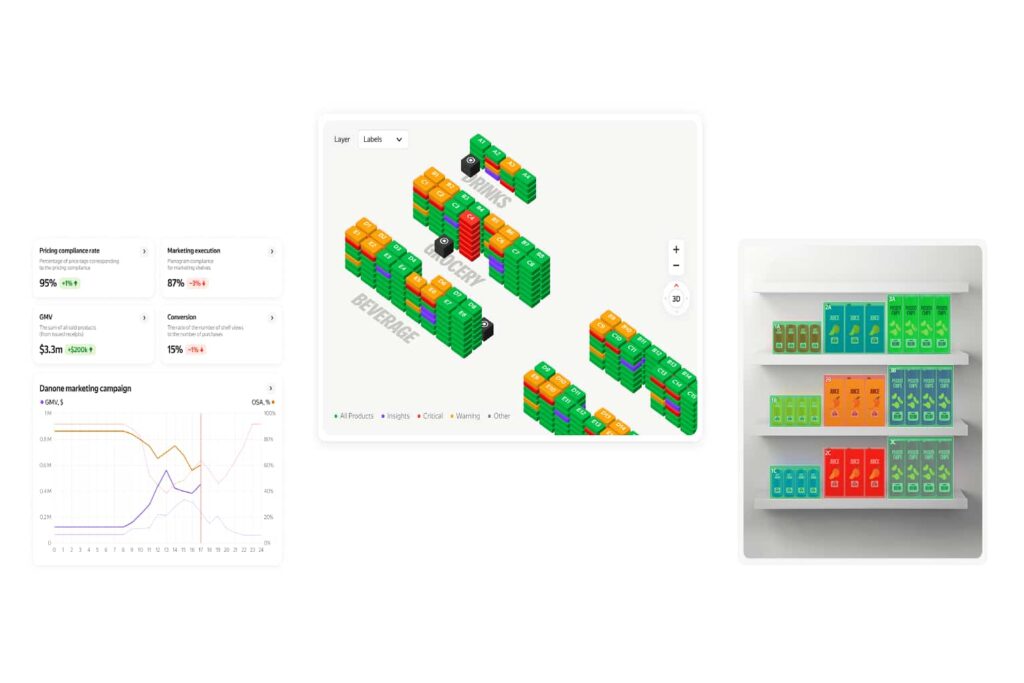
Yango Tech Retail, part of Yango Tech’s B2B solutions ecosystem and a leading provider of e-commerce technologies, has introduced the AI-powered shelf tracking system called “AInventory” to address the challenges in the Middle East and North Africa (MENA) retail market. This system redefines inventory management by creating a digital twin of supermarkets. The new system aims to enhance accuracy with real-time data, optimize demand forecasting, and make operations more efficient.

AInventory Scans Shelves Every 15 Minutes

AInventory combines digital twin technology, shelf tracking, and advanced analytics to improve store management efficiency. By automating routine tasks, the system increases inventory accuracy while reducing manual workloads. It provides real-time data on stock levels, sales, and employee activities. Using advanced AI and computer vision technologies, AInventory scans shelves every 15 minutes. This helps identify stockouts, misplaced products, and pricing errors, ensuring shelf organization and increasing planogram compliance by up to 10%.

The AInventory system continuously tracks product movements during each scanning cycle, providing in-depth insights into customer interactions and purchasing behavior. This helps retailers improve their product placement strategies and enhance store performance. It also increases operational efficiency by 30%, optimizes workflows, detects inconsistencies between physical and recorded stock, and boosts profitability through better inventory management.

“The UAE Retail Market is Expected to Reach $74.87 Billion by 2028”

Andrii Morozov, President of AInventory, said, “The retail sector in the Middle East is growing rapidly. Saudi Arabia’s retail market is expected to reach $159 billion this year, and the UAE’s retail market is projected to reach $74.87 billion by 2028. With this rapid growth, retailers face new challenges in maintaining seamless operations and keeping their shelves stocked. This is where AInventory steps in.”

Morozov shared additional insights about the new system: “From single stores to large retail chains, our AI-powered system makes inventory management more accurate, operations more efficient, and processes smarter. AInventory is not just about numbers; it helps retailers sell smarter, reduce waste, and provide a better shopping experience. For customers, this means fewer empty shelves, more organized stores, and a seamless shopping experience. Our goal is to help MENA retailers set new standards and stand out in the competition.”

Retailers Using AInventory Report Increased Sales

Retailers using AInventory have reported up to a 5% increase in sales due to reduced stockouts and improved shelf organization. The system’s cameras, equipped with energy-saving modes, switch to sleep mode between scans to preserve battery life. Designed for retailers ranging from small markets to large supermarket chains, these AI-powered cameras make advanced technology more accessible, showing that “AI is not just for high-tech companies, but also provides significant advantages for everyday market management.”

About Yango Tech

Yango Tech is a subsidiary of the global technology company Yango Group. It is an ecosystem that provides advanced B2B technology solutions to meet the diverse needs of modern businesses. The company helps businesses streamline operations, enhance customer experiences, and achieve sustainable growth by providing integrated tools in areas such as warehousing, mobility, retail, and more.

Solutions within the ecosystem include:

  • Yango Tech Retail: AI technologies for retail
  • Yango Tech Autonomy: Last-mile delivery solutions
  • Yango Tech Robotics: AI-powered automation solutions for warehouses
  • Retail Media: Advertising solutions
  • RouteQ: Last-mile delivery management
  • Yango Tech Cloud: Cloud platform
  • Yango Tech Browser: Corporate browser
  • YangoDB: Database solutions

Yango Tech aims to help businesses stay competitive and grow in the digital world by leveraging AI-powered innovations.


Amazon’s New AI Feature: Interests

Amazon’s New AI Feature: Interests

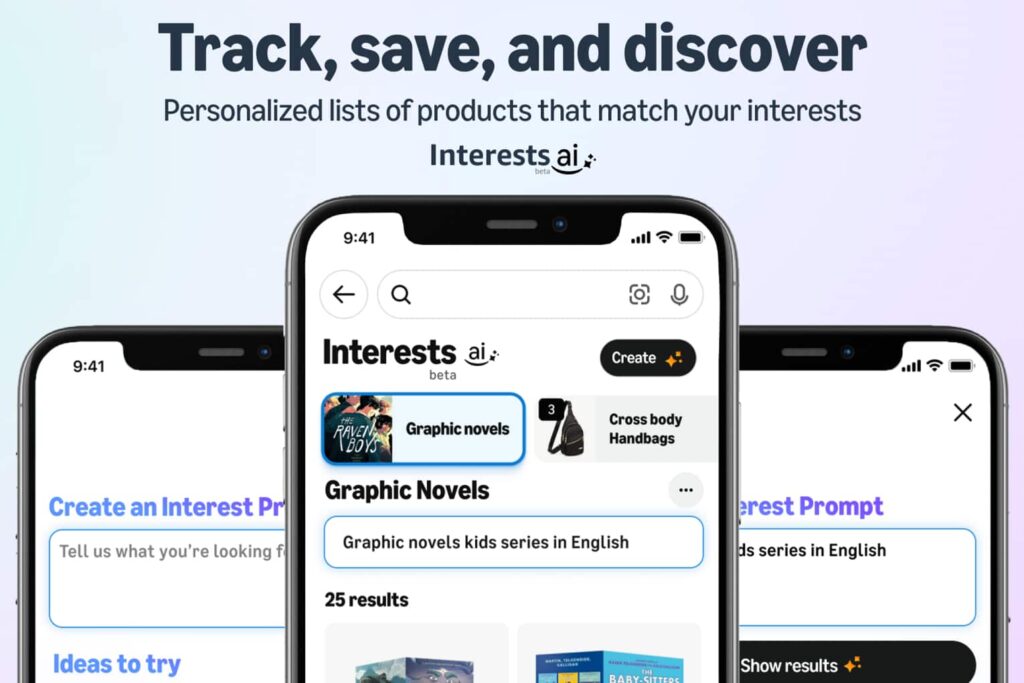
Daniel Lloyd, Vice President of Personalization at Amazon, explained the new AI feature in a blog post. This feature is the latest of the consumer-focused AI features that the company has introduced since the beginning of the year. Amazon’s newest AI-powered feature, Interests, is now live. This feature is changing how online consumers discover and purchase products that match their interests. The feature continuously scans Amazon’s vast inventory, ensuring that shoppers can quickly and easily find new products that may interest them.

Personalized Shopping Experience with Interests

Interests offers a personalized shopping experience. Whether it’s a general or niche category, users can receive recommendations based on their interests, price ranges, and preferences using natural language. For example:

  • “Model kits and accessories for hobbyist engineers and designers”
  • “Brewing tools and devices for coffee lovers”
  • “The latest pickleball equipment and accessories”


When users wish to make a more specific search, longer descriptions can also be used. For instance: “I am looking for wall art to decorate my home. Not canvas, but something made of black metal, abstract or modern design. Maybe a geometric design, a minimalist piece. I want an industrial style, eye-catching but not traditional or painted décor.”

Once the interest is specified, the feature continuously scans Amazon’s store and proactively informs users about new products, stock updates, and opportunities that match their interests.

How Interests Works

To use the “Interests” feature, shoppers on Amazon must enter a description of the product they wish to purchase, described in natural language. A description can define a specific product type or a broad product category, such as “computer accessories.” Users can also enter relevant information, such as price preferences. Afterward, the Interests feature sends a notification when products that meet the specified criteria are available on Amazon.

This feature not only detects new product launches but also identifies when a previously out-of-stock product returns to the platform. According to Amazon, Interests can also help customers find opportunities. The feature uses large language models (LLMs) in the background to enhance product queries. For example, if a shopper wants to track new smartphone launches with Interests, the LLMs can add a list of the best phone manufacturers. This additional information helps Amazon’s search algorithms find more relevant results.

Lloyd mentioned in the blog post, “Interests is currently available to a select group of customers in the U.S., on our iOS and Android apps, as well as our mobile website. We look forward to making it available to all U.S. users in the coming months.”

Amazon has also launched Interests alongside another new AI feature called “Health AI.” Health AI can answer questions related to health and wellness and recommend relevant products. Some answers are presented with a badge stating that the information has been “reviewed by U.S.-licensed clinical experts.”

After Rufus, Health AI and Interests Arrived

“Health AI” and “Interests” were launched less than two months after Amazon introduced another machine learning tool called “Rufus.” Rufus is a shopping assistant designed to help users explore products in the company’s e-commerce marketplace. Rufus can answer product questions in natural language format and can be used for various tasks, such as explaining the differences between similar products. Amazon states that Rufus’ answers are based on information gathered from product listings, shopper reviews, and a wide range of web sources.

Launched in the U.S.

Previously, the company had launched a feature that generates a paragraph summary from reviews under a product listing. This feature also displays keywords highlighting a product’s most important features. For sellers, Amazon offers an AI tool that can automatically generate titles and descriptions for new product listings.

Interests is currently available to a select group of customers in the U.S., on iOS and Android apps, and on the mobile website. It is expected to be available to all U.S. customers in the coming months. If you see the “Interests” tab in the “Me” section of the Amazon Shopping app, it means you have access to this feature!


Amazon Brand Protection Report: Over 15 Million Counterfeit Products Detected

Amazon Brand Protection Report: Over 15 Million Counterfeit Products Detected

Dharmesh Mehta, Vice President of Amazon Global Selling Partner Services, wrote an article on the fifth Amazon Brand Protection Report. Mehta stated that since 2021, Amazon’s annual Brand Protection Report has showcased its efforts to protect customers, brands, and partners from counterfeit products. He also added: “In its fifth year, the report continues to demonstrate how the combination of industry-leading technology and strategic partnerships successfully stops bad actors and creates impact beyond the Amazon store.”

Amazon’s Counterfeit Crimes Unit (CCU) is a global team dedicated to disrupting counterfeiters and their networks by partnering with law enforcement, brands, and other stakeholders. Mehta noted that in 2024, Amazon invested over $1 billion in brand protection; employed thousands of people dedicated to combating fraud, counterfeiting, and other abuses, including machine learning scientists, software developers, and expert researchers.

Amazon’s Brand Protection Strategy

Amazon’s brand protection strategy focuses on four main areas: • Strong and highly effective proactive efforts to protect the store, • Industry-leading tools to help rights holders better protect their brands, • Progress in holding bad actors accountable, • Customer protection and education.

Mehta said, “This has been a years-long journey, and we continue to make great strides in stopping counterfeiting.”

Highlights from the Brand Protection Report

  • 99% of Suspicious Listings Blocked

Through its investment in artificial intelligence, Amazon has automated and scaled intellectual property protection and counterfeiting detection systems, improving its proactive controls. Amazon’s proactive controls blocked over 99% of suspicious infringement listings before a brand had to find and report them. Since 2020, while the number of products offered has increased, the total number of valid infringement notifications sent by brands has decreased by approximately 35%.

  • Over 2.5 Billion Product Units Verified

Amazon launched an application programming interface (API) for Transparency, which automates the process for brands to register and manage their products. Through Amazon’s Transparency program, over 2.5 billion product units have been verified as authentic. Worldwide, 88,000 brands have registered, including Fortune 500 companies, global brands, startups, and small businesses.

  • Over 15 Million Counterfeit Products Detected

By partnering with brands and law enforcement, Amazon has been able to hold more bad actors accountable. Since the launch of its Counterfeit Crimes Unit in 2020, Amazon has tracked over 24,000 bad actors through cases and criminal referrals to law enforcement. In 2024, Amazon detected, seized, and properly disposed of over 15 million counterfeit products globally, preventing them from harming customers or being resold in the retail supply chain.

“We Won’t Rest Until Counterfeiting Is Reduced to Zero”

Dharmesh Mehta concluded his statement, saying, “We are proud of the progress we have made in preventing counterfeiting in the Amazon store. This required significant innovation and determination, and it would not have been possible without the partnerships we’ve established with brands, associations, policymakers, law enforcement, and others. We are committed to continued progress and will not rest until we reduce counterfeiting to zero.”

Dubai’s Grand Online Sale Festival is Set to Begin!

The Grand Online Sale, Dubai’s premier online shopping festival, is opening its doors for the third time. The event returns from March 27-30, offering online consumers discounts of up to 95% and an entirely new immersive virtual shopping experience.

Virtual Shopping Mall Offers Consumers a Digital Showcase

Organized by the Dubai Festivals and Retail Establishment (DFRE), the Grand Online Discount will provide four days of access to both local and international brands across categories such as fashion, electronics, home décor, and beauty.

The newly introduced virtual shopping mall will allow consumers to explore digital storefronts, unlock exclusive discounts, and participate in prize-winning raffles. Major prizes include a cash reward of 100,000 Dhs and additional prizes worth 50,000 Dhs.

“The Grand Online Sale Will Elevate the Industry to New Heights”

DFRE CEO Ahmed Al Khaja highlighted the festival’s contribution to Dubai’s retail sector, stating, “The Grand Online Sale returns to drive strong growth during one of the busiest shopping periods in Dubai—Eid al-Fitr. We are thrilled to introduce a brand-new immersive shopping experience. This will elevate the retail industry to new heights by positioning the city at the forefront of a digitally-driven retail world.”

Consumers who register on the Grand Online Discount website will gain access to exclusive discount codes and prize opportunities. Participating brands include globally renowned names such as Amazon, Noon, Namshi, Home Centre, Damas, Puma, and Steve Madden.

Rakuten Develops Autonomous Robot Deliveries

According to Statista, Japan‘s food delivery market reached a value of $5.41 billion in 2024. Demand increased during the pandemic and remains at a high level. Based on this data, Rakuten Group is advancing autonomous delivery services in Japan with Avride’s advanced U.S.-based robots to improve last-mile logistics.

Features of Rakuten’s New Robots

The latest delivery robots are equipped with LiDAR (Light Detection and Ranging) sensors, similar to those used in autonomous vehicles, along with Avride’s specialized autonomous driving algorithm. The new robots feature a 54-liter compartment, more than double the previous capacity, allowing them to carry larger orders while making fewer trips on sidewalks. Additionally, although the robots can carry multiple orders simultaneously, they deliver only one order per trip.

Rakuten’s new autonomous robots can make nighttime deliveries thanks to LiDAR and ultrasonic sensors. They are also capable of operating in rainy conditions with up to 20 millimeters of precipitation per hour. However, operations are halted for safety reasons in cases of heavy rain, snow, or strong winds. Each robot can run for up to 12 hours on a single charge, with a charging time of approximately 3.5 hours.

“We Aim to Position Robots as Part of the Infrastructure”

Fukutaro Yamashita, senior manager of Rakuten’s Unmanned Solutions Department, stated, “Robots can operate independently without assistance, but according to Japanese regulations, remote operators are required. However, the operator does not need to be physically present next to the robot. Additionally, Japan limits the speed of robots to 6 kilometers per hour, making them compatible with other autonomous delivery models.”

Yamashita added, “Integrating different robot models was a significant challenge because each has unique unlocking mechanisms for deliveries. We have streamlined the process for customers and provided clear, property-specific unlocking instructions.” He further stated, “Our primary goal is to expand the service in Japan. Afterward, we plan to develop a growth strategy for further expansion.”

Yamashita also emphasized, “Rakuten envisions delivery robots being used not only in the food and retail sectors but also for business-to-business shipments and pharmaceutical deliveries. We aim to position robots as part of the infrastructure.”

Five Robots Serve 90 Delivery Points

Rakuten’s autonomous delivery service currently operates with five robots. These robots make deliveries in the Harumi, Tsukishima, and Kachidoki areas, located east of Tokyo, serving more than 90 delivery points. The service was initially launched with deliveries from Starbucks Coffee Harumi Triton Square, Supermarket Bunkado Tsukishima, and Yoshinoya Harumi Triton Square. It was later expanded to include Patisserie Hat and FamilyMart Harumi Center Building.

Rakuten’s autonomous delivery service was introduced in November 2024. Since its launch, usage has increased, though it still accounts for a small portion of total deliveries. Rakuten is focusing on expanding in Harumi, Tsukishima, and Kachidoki, targeting 24,000 households in the area. The company also plans to expand its Avride robot fleet to ten and upgrade the delivery management system to optimize robot allocation. The system has been successfully tested with a ten-robot setup.

The Online DIY Market in Europe Reaches €66 Billion

Cross-Border Commerce Europe published a report on the DIY, Home, and Garden retail market in Europe. According to the report, the total market value, including both online and offline DIY sales, reached €388 billion in 2024.

2025 Forecasts Materialized in 2024 for the Online DIY Market

Within the total market, the share of online DIY sales was 17% in 2024. The market’s revenue for 2024 stood at €66 billion. It had been predicted that online sales in the market would reach €66 billion in 2025; however, this expectation was already met in 2024.

€78 Billion Expectation for 2026

In 2023, the online share of the market was 15.2%, which corresponded to €56 billion out of the total €368 billion market value. The online Do It Yourself market in Europe is expected to reach €78 billion in 2026.

Temu and AliExpress Compete with Amazon

Among the most dominant online stores in the European Do It Yourself sector, Amazon ranks first. The company holds a 15% share of the total online market, which stands at €66 billion. Accordingly, Amazon’s DIY revenues for 2024 amounted to €9.15 billion. Following Amazon, Temu and AliExpress rank among the top competitors.

Cross-Border Online Sales Approaching €22 Billion

According to the report, the growth of the online Do It Yourself market is driven solely by the increasing market share of online-only competitors. This situation is pushing traditional DIY retailers to strengthen their cross-border e-commerce activities, leading to an increase in cross-border sales within the DIY market.

In 2023, the value of cross-border sales was €17.8 billion, representing 31.8% of the online market. In 2024, this figure rose to €21.6 billion, accounting for 32.8% of the total online market. By 2026, the share of online sales within cross-border Do It Yourself sales is expected to reach 34%. This corresponds to €26.5 billion out of the projected €78 billion online market.