WORLDEF Prime Antalya 2026 - Upcoming Event

Register Now

Unicommerce Acquires Shipway!

The e-commerce SaaS platform Unicommerce has acquired full ownership of the logistics solutions provider Shipway, following a previous equity purchase. The company, part of Ace Vector, had acquired a 42.7% stake in Shipway in November last year.

Unicommerce will issue 6,033,189 shares to acquire the remaining 7,610 shares of Shipway through a SEBI-approved stock swap. This transaction will make Shipway a wholly owned subsidiary of Unicommerce.

Unicommerce Strengthens Its Presence in the Middle East and Southeast Asia

Founded in 2015 by Gaurav Gupta and Vikas Garg, Shipway specializes in post-purchase automation solutions for D2C brands. In 2021, the company secured a strategic investment by acquiring a 26% stake from IndiaMART InterMESH.

With this acquisition, Unicommerce aims to expand its e-commerce solutions portfolio, offering seamless order management and logistics automation. As it moves beyond India, Unicommerce continues to strengthen its presence in the Middle East and Southeast Asia, further solidifying its position as a leading SaaS provider in the e-commerce sector.

Four Subsidiaries of Getir Transferred to Mubadala

Four Subsidiaries of Getir Transferred to Mubadala

The Turkish rapid delivery company Getir is transferring a significant portion of its subsidiaries to Mubadala, with which it previously faced some issues. The Turkish Competition Authority has approved the acquisition of Getir’s subsidiaries “Getir Araç,” “Getirİş,” “Getgo Teknoloji,” and “Getir Teknolojik Hizmetler” by the UAE state fund Mubadala.

Regarding the decision taken by the Competition Board within the Turkish Competition Authority, the following statement was made: “The transaction for the indirect acquisition of sole control of Getir Araç Dijital Ulaşım Çözümleri Ticaret AŞ, Getir Teknolojik Hizmetler AŞ, Getiriş Danışmanlık ve Ticaret AŞ, and Getgo Teknoloji AŞ by Mubadala Investment Company PJSC has been approved.”

Getir and Mubadala Had Clashed!

Getir Founder Nazım Salur claimed in a statement last January that “Mubadala unlawfully disregarded the signed agreement concerning Getir’s ownership.” In response, Mubadala issued a statement asserting that “Getir executives failed to complete the agreement to split the company into two; and the independent members of Getir’s board of directors started supporting an alternative transaction plan prepared by Mubadala.”

UAE Warehouse Rents Expected to Rise by Up to 10%

EU Lawmakers Demand Urgent Action on E-commerce

Members of the European Parliament’s Internal Market and Consumer Protection Committee (IMCO) from across the political spectrum have urged the Commission to take urgent action to address the increase in low-cost imports into the EU.

Salvatore De Meo (EPP) drafted a report on product safety and e-commerce earlier this month in the IMCO committee, addressing the surge of low-value goods from third countries that “threaten consumer safety and fair competition, undermining EU standards.”

“These Platforms Target Vulnerable Consumers”

Maria Guzenina (S&D) argued that while the De Meo report was a good starting point, “the urgency to act must be emphasized.” She added, “Parliament should demand more resources for various national authorities, such as market surveillance and customs.”

Guzenina stated, “The De Meo report did not take into account the environmental impact of low-value packages and deliveries. Non-EU platforms have avoided paying any environmental fees and have undermined efforts toward a circular economy.”

She further added, “These platforms target ‘vulnerable consumers’. Ambitious rules on digital fairness are urgently needed to address addictive marketing, gamification, and the use of dark platforms.”

“Amazon, Temu, and Shein Should Be Banned from the EU”

Green MEP Saskia Bricmont likened the flow of unsafe products into the EU to a “tsunami,” asserting that further action is needed to protect consumers and prevent counterfeit goods. She also emphasized the importance of the EU proposing “alternative and affordable consumption models based on local and second-hand products and a circular economy.”

Left-wing MEP Leila Chaibi also called on the Commission to strengthen digital fairness rules, stating, “Amazon, Temu, and Shein should be banned from the EU as long as they fail to comply with EU conformity standards as well as social and environmental norms.”

Commission Unveils E-commerce Strategy in February

The Commission unveiled its e-commerce strategy in February, focusing on better cooperation between the EU and national authorities. On the same day, it announced new actions against Shein under consumer protection rules and emphasized that e-commerce companies such as Amazon, Temu, and Shein are subject to ongoing investigations under the EU’s Digital Services Act (DSA). However, the Commission stated that it would wait one year before evaluating its e-commerce strategy.

European Parliament Approves VAT Reform

Nike Worker Strikes Begin After Suspension of E-Commerce Sales in Türkiye

In Türkiye, where Nike has the most stores in Europe, labor strikes have started at its retail locations. Approximately 250 unionized retail workers across nine Nike stores in Türkiye have gone on strike due to the failure to reach an agreement on the collective labor contract. The workers are demanding job security and compensation rights in the event of potential store closures.

Nike operates a total of 60 stores across Türkiye. The nine stores affected by the strike are directly managed by Nike, while other franchise stores in the country are not part of the collective labor contract. Unionized workers at Nike are concerned about job security. Following the suspension of e-commerce sales, employees are worried about the company’s future in Türkiye. They are also demanding better compensation in case of layoffs or further store closures. The company recently closed two of its stores in the country.

No Agreement Reached on Collective Bargaining!

In ongoing collective bargaining negotiations between Nike and the union, disagreements have arisen over issues such as bonuses, seniority premiums, meal allowances, and disciplinary committees. The union has stated that it will continue to fight for a contract that guarantees workers’ rights. Currently, the strike affects only the nine company-operated stores, with other franchise locations remaining outside of the process.

Nike confirmed in a statement that discussions with the union are ongoing, but no collective labor agreement has been reached yet. The company stated, “We will continue to work openly and determinedly to reach an agreement with the union representatives.”

Nike Operates 60 Stores in Türkiye

Nike positions Türkiye as a key operational hub within the Europe, Middle East, and Africa (EMEA) region. However, the company is facing declining sales in the region in recent quarters. Nike operates 60 stores in Türkiye, a number higher than its stores in France and the United Kingdom.

Nike Suspended Online Sales in Türkiye

On August 10, 2024, after the Turkish government reduced the customs duty limit for international online shopping from 150 euros to 30 euros, Nike suspended its e-commerce operations in Türkiye. Nike’s website in Türkiye still displays a message stating that online orders are “currently suspended” seven months after the policy change. The company states that it cannot guarantee that orders will be “delivered smoothly and on time.” The message on Nike’s website reads: “Unfortunately, due to the recent customs regulations in Türkiye, it is currently not possible to shop on Nike.com or the Nike App.”

Since Nike does not have a warehouse in Türkiye, individual orders were previously fulfilled from distribution centers in Europe. According to the company’s production guide, Türkiye is listed as a manufacturing hub for clothing and equipment, but not for footwear production. Although Nike has suspended its direct online sales in Türkiye, some Turkish retailers can still sell Nike products online under license.

Temu Enhances Customer Experience in 14 Markets

Known for its affordable products, the global e-commerce platform Temu is enhancing the shopping experience for millions of customers in 14 emerging markets across Africa, Asia, and Latin America by offering seamless and secure payment options tailored to local preferences.

Emerging markets face significant barriers to accessing global e-commerce, such as limited payment options and a high unbanked population. According to the World Bank, 1.4 billion adults worldwide remain unbanked, with the majority concentrated in rapidly growing regions. Additionally, inadequate payment solutions lead to shopping cart abandonment rates exceeding 70% in markets lacking localized options. Through this partnership, dLocal supports Temu in delivering a seamless payment experience across 14 key emerging markets, including Mexico, Colombia, and Uruguay.

“We Are Proud to Partner with Temu”

Justin Goh, Head of APAC at dLocal, stated: “We are proud to enable Temu to provide seamless payment experiences for customers in emerging markets. By offering localized payment methods and smooth cross-border solutions, we are making shopping easier and more accessible. This, in turn, allows underserved consumers to access valuable products.”

“Our Mission Is to Ensure Everyone Can Access Quality Products at Affordable Prices”

A Temu spokesperson added: “At Temu, our mission is to ensure everyone can access quality products at affordable prices. By partnering with dLocal, we are excited to extend these benefits to millions of customers in emerging markets, enabling more people to enjoy accessible and convenient shopping experiences.”

dLocal Limited is a Uruguay-based financial technology company providing cross-border payment solutions that connect global sellers with emerging markets. Founded as a startup in 2016, the company quickly became Uruguay’s first unicorn.


Temu Announces Partnership with Correos in Spain

Amazon Autos to Offer Used Car Sales Opportunity to Dealers

Fan Jin, Director and General Manager of Amazon Autos, stated in an interview with the Automotive News Daily Drive podcast that adding used car inventory for dealers is their next major goal.

“Auto dealers will have an online e-commerce channel”

When asked how Amazon Autos plans to compete with existing platforms where dealers can list their used cars, Jin responded: “We see the Amazon Autos service as a way for dealers to have a fully online e-commerce channel. This goes beyond just being a lead generation site.”

Jin continued: “We find this valuable because demographic customer data shows that more consumers are quite comfortable with a fully online vehicle transaction. Customers want a multi-channel experience. It can take some time for people to make a decision. So, they may start online, then choose to visit a dealership to see and test-drive the vehicle. Later, they might return home, think about it, and then complete the purchase online. We see this happening very often.”

Jin also emphasized that Amazon Autos aims to make the online used car sales process as seamless as possible.

Car Sales on Amazon Autos Began with Hyundai!

The company started introducing the Amazon Autos service in December. It announced its goal of integrating the Amazon experience into the vehicle purchasing process by collaborating with automotive dealers and brands.

Amazon launched this digital shopping experience in partnership with Hyundai. It enabled shoppers in 48 U.S. cities to purchase new Hyundai vehicles from participating local dealers through Amazon. At the time, the company stated that Amazon Autos planned to add more Hyundai dealerships as well as other manufacturers, brands, and cities.

Amazon Autos allows car buyers to browse vehicles, place orders, arrange financing, and schedule a pickup date from participating local dealerships. Additionally, they can receive instant valuation for their existing vehicles and trade them in. For dealers, this service provides a new sales channel while also streamlining the steps of the process.

“We are working day and night to improve the car buying experience”

A statement on the AmazonAutos website read: “We are working day and night to create a better car buying experience for customers. Amazon Autos is currently available in select metro areas, but we are continuously adding new locations, new dealers, new brands, and new features. In the meantime, visit the Hyundai Showroom on Amazon to explore Hyundai models and features.”

E-commerce Spending in Australia Nears $70 Billion

The Australia Post 2025 Annual E-Commerce Report, which provides a detailed analysis of Australia’s e-commerce ecosystem, has been released. The report highlights the growth of e-commerce in the country. According to the findings, Australians spent a record $69 billion on online shopping in 2024. This figure represents a 12% increase compared to the previous year.

E-Commerce Report in Australia: 9.8 Million Households Shopped Online

According to the e-commerce report, 9.8 million households in Australia made online purchases in 2024. The top spending categories were as follows:

  • Online marketplaces ($16 billion)
  • Food and beverages ($13.6 billion)
  • Fashion and apparel ($9.6 billion)

Although online shopping in Australia has reached record levels, the average basket size declined by 2.1% to $95 compared to the previous year due to cost-of-living pressures. This marks the lowest basket value in the past decade. Australian households are carefully managing their expenses and strategically shopping for affordable products.

How Much Did Each Generation Spend Online?

Other key insights from the report include:

  • Millennials (Gen Y) – $25 billion
  • Gen X – $19 billion
  • Gen Z – $12 billion
  • Baby Boomers – $10 billion
  • Builders – $2.7 billion

According to the Australian e-commerce report, with the rise of social commerce, nearly half of Gen Z and Millennials make a purchase via social media every week.

Northern Territory Leads E-Commerce Growth in Australia

The regions with the highest growth in online shopping were:

  • Northern Territory (11.3% growth)
  • Tasmania (11.1% growth)
  • Queensland (7.3% growth)

“Retailers Cannot Ignore the Shift Towards Social Shopping”

Jordan Berke, founder of global retail consultancy Tomorrow Retail Consulting, stated:

“The integration of content and commerce is rapidly evolving the e-commerce channel, providing retailers with an opportunity to connect with consumers through storytelling. Today, 5 billion people use social media, and retailers cannot ignore the shift towards social shopping. The sooner a business learns how to stand out on social media, the better positioned it will be in the future.”

Gen Alpha Drives Global Spending

As consumer habits continue to shift in favor of online shopping, Gen Alpha is now influencing $8.5 trillion in global spending. Social Researcher Mark McCrindle commented:

“Gen Alpha is not just the next generation of consumers. They are digital natives redefining retail and shaping the future of e-commerce. For retailers looking to connect with consumers, understanding Gen Alpha’s values and preferences is crucial.”

Customer Loyalty is Declining

Today’s online shoppers distribute their spending across an average of 16 different retailers. While this makes price comparison easier, it also reduces customer loyalty.

Gary Starr, Executive General Manager of Parcels, Post, and E-Commerce Services at Australia Post, stated:

“Cost-of-living pressures and high inflation are driving Australians towards major discount events and loyalty programs. Three out of four businesses are concerned that frequent sales promotions are conditioning consumers to buy only discounted items. However, we must acknowledge that Australians love discounts—strategic shopping has now become the norm. During the record-breaking Cyber Sales period, Australians spent $2.2 billion, indicating that consumers are timing their purchases around major sales events.”

Starr added: “As online shopping continues to outpace physical stores, retailers that do not frequently discount throughout the year should consider developing an attractive loyalty strategy. Subscription models, rewards, or point systems can enhance customer retention and drive repeat purchases.”
Amazon Launches Ireland-Specific Store: Amazon.ie

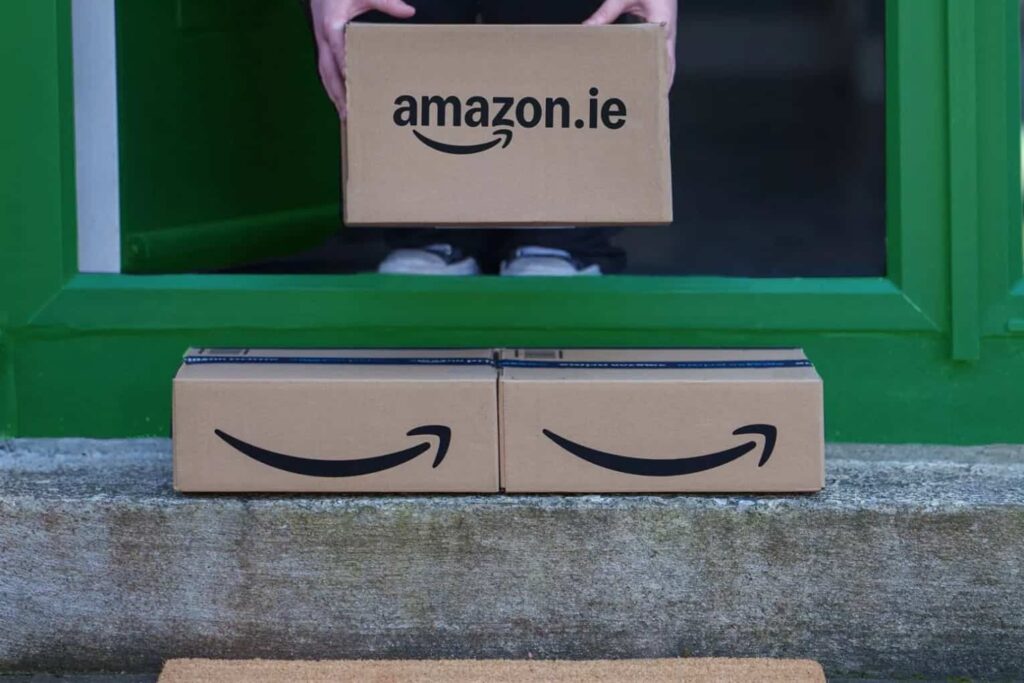
Amazon has launched an e-commerce site called Amazon.ie, specifically for online consumers in Ireland. Following its announcement in May 2024, the e-commerce giant officially opened the Amazon.ie website. The site offers more than 200 million products priced in euros for Irish customers.

“We Are Proud of the Amazon.ie Launch”

Alison Dunn, Country Manager of Amazon Ireland, stated, “Our teams across the country are incredibly proud and excited to bring Amazon.ie to life. This store offers Irish customers a wide range of products with fast delivery, great deals, and savings, as well as local Prime membership opportunities. It also provides Irish businesses with numerous chances to reach more customers. We have been working towards this moment since the opening of our distribution center in Dublin in 2022, and we are eagerly looking forward to writing the next chapter of our story in Ireland.”

Amazon Has Invested Over $24 Billion in Operations in Ireland

Amazon has also launched an “Ireland Brands” page in collaboration with the Irish government’s business development agency, Enterprise Ireland, featuring products from local companies. Among the Irish brands featured at the launch are Barry’s Tea, Bewley’s, and independent fitness brand Swifter.

Currently, Amazon employs approximately 6,500 people across various fields such as data engineering, operations management, and finance in Cork, Dublin, and Drogheda. Since 2004, Amazon has invested more than $24 billion directly in its operations in Ireland and has opened six facilities nationwide.

In 2023, Irish small businesses selling on Amazon achieved over $185 million in export sales, with more than half of these sales going to countries outside the EU. According to Amazon, these businesses created more than 2,500 new jobs in Ireland to support Amazon operations.

Amazon Prime Benefits

Customers in Ireland can enjoy one-day delivery on millions of products. Additionally, they can shop with local pricing and without additional customs fees. Amazon.ie customers can also join the Prime membership program for approximately $7.60 (monthly) or $76 (annually). This membership offers fast, free delivery as well as exclusive benefits such as Prime Day deals and shopping events.

Irish Amazon customers with UK Prime memberships can switch to the new system, with UK Prime memberships automatically canceled and fees refunded. All Irish customers transitioning to or signing up for Amazon.ie Prime can take advantage of a 30-day free trial.

Amazon Türkiye Promises Growth for SMEs!

Mirakl Increases Revenue by 30% in 2024

French-based marketplace solution provider Mirakl offers a SaaS solution that enables B2C and B2B companies to build and scale online marketplaces. In addition to the marketplace solution, the company also provides services to facilitate vendor payments and retail media solutions.

52 Global Businesses Joined Mirakl in 2024

Mirakl has released its 2024 data. The company, which reached profitability by the end of 2023, maintained profitability throughout 2024. Thanks to customer acquisition and cost management, the company added 52 global businesses to its customer portfolio in 2024. Its Gross Merchandise Value (GMV) grew by 30% year-over-year, reaching $11.2 billion. The company’s Annual Recurring Revenue (ARR) reached $177 million.

AI Investments Increased by Over 100%

Focusing on artificial intelligence last year, the company launched AI-driven products alongside the AI-powered features it previously offered. One of these AI products was the “Mirakl Catalog Transformer,” an automation that fully automates catalog management processes. The company increased its AI investments by more than 100% year-over-year in 2024. The company plans even larger investments in 2025, with these investments expected to surpass the total amount invested in the past three years.

AI-Powered E-commerce Revolution

When the company was launched in 2012, it pioneered a technology that allowed companies to build and scale their own marketplaces, creating a new category in the e-commerce sector. Today, the company AI-powered solution package helps businesses capture significant e-commerce opportunities:

  • Mirakl Platform: Makes marketplace and dropship operations efficient, scalable, and unified.
  • Mirakl Payout: Accelerates time-to-market by simplifying vendor payments and KYC processes.
  • Mirakl Catalog Platform: Automates supplier catalog integration and enables data enrichment.
  • Mir akl Ads: Converts online traffic into revenue, supports campaign creation and management, and enhances customer experience through personalization.
  • Mirakl Connect: Offers catalog integration and enrichment, supported by Adspert for advertising investments.

“We Entered 2025 with Momentum”

Mir akl Co-Founder and Co-CEO Adrien Nussenbaum stated that the company had a strong year in 2024 and entered 2025 with momentum, saying, “We are diversifying our e-commerce services and rolling out AI-powered solutions. We haven’t just helped businesses launch marketplaces; we’ve radically redefined how commerce scales in the digital age. Only Mirakl has the expertise and technology to do this at scale. We will continue to stay committed to our mission of creating a fairer and more competitive online economy by taking on digital monopolies.”

2024 Data:

  • Doubled its AI investments, achieving 30% growth in GMV and $177 million in annual recurring revenue.
  • Marketplace and dropship gross merchandise value (GMV) increased by 30%, reaching $11.2 billion.
  • AI investments grew by over 100%.
  • Adspert acquisition was completed in December 2024.
  • With the launch of Mirakl Connect and the rise of Mirakl Ads, the business model has evolved into an AI-powered multi-solution ecosystem.
  • AI investments in 2025 are expected to equal the total amount invested over the past three years.
  • Over 80% of employees used generative AI daily in 2024.
  • With more than 450 customers, Mirakl Platform generated positive EBITDA for the first time throughout the entire year.
  • 52 new global businesses began using Mir akl solutions.
  • More than 30 customers exceeded the $100 million GMV threshold.39 companies launched Mirakl-powered marketplace or dropship operations.
  • Mir akl Ads, powered by AI-driven retail media solutions, gained 22 new customers in 2024, experiencing more than 100% growth year-over-year.
  • A pilot project with Rakuten generated 53% higher revenue compared to competing solutions.

About Mirakl

Mirakl is a leading provider of e-commerce software solutions. A pioneer in the marketplace economy since 2012, the company is preferred by over 450 leading companies worldwide. The company provides businesses with the most secure and scalable technology in the following areas:

  • Expanding product ranges with marketplaces and dropship
  • Improving efficiency in supplier catalog management and payments
  • Creating personalized shopping experiences
  • Increasing profitability with retail media

AliExpress Expands Local Payment Options in Africa

The Chinese marketplace AliExpress has announced a significant expansion of payment options for online consumers in Africa. Last year, the company introduced some local mobile payment methods. This move has pleased consumers seeking better access to cross-border e-commerce.

Starting in March, AliExpress has expanded the ability to pay in local currency in several African countries, including Egypt, South Africa, Algeria, Ethiopia, Morocco, and Tanzania. This initiative, which provides local consumers with a smoother and more secure payment experience, was launched during AliExpress’s biggest promotion of the year, running from March 17 to 26. During this period, consumers will be able to take advantage of numerous coupon offers and the convenience of paying in their local currency.

AliExpress Has Taken Significant Steps in Africa Over the Past Year

Over the past year, AliExpress has made significant efforts to enhance the customer experience in Africa. Last year, the company successfully integrated card payments with “M-Pesa” in Kenya and with “Opay” and “Verve” in Nigeria. Currently, users in South Africa, Kenya, Morocco, Nigeria, and Tanzania can receive their cross-border orders within just 10 days. Additionally, the company established its first African showroom in Ethiopia, creating a space where wholesale buyers can physically inspect selected products and place orders directly.

“We Are Excited to Connect African Consumers with Our Products”

AliExpress Business Development Director Bonny Zhao stated, “AliExpress offers a vast range of products from hundreds of thousands of sellers, and we are excited to connect African consumers with our products through initiatives such as local currency payment integration.” He also added, “Cross-border e-commerce can sometimes be challenging for consumers due to shopping, payment, and logistics complexities. Our commitment is to simplify these processes, making global e-commerce more accessible and enjoyable for this dynamic market.”