WORLDEF Prime Antalya 2026 - Upcoming Event

Register Now

African Classifieds Marketplace Jiji Expands into Bangladesh

Jiji, one of Africa’s leading classifieds and e-commerce platforms, is launching operations in Bangladesh. Planning to establish a strong team in the country, Jiji does not offer inventory or logistics services but enables sellers to reach price-sensitive buyers through listings. The platform aims to expand further in Asia in the coming days. Jiji currently has offices in Lagos, Nairobi, Accra, Warsaw, Dubai, and Kyiv.

As one of Africa’s top classifieds and e-commerce marketplaces based on gross revenue, Jiji is preparing to launch its successful classifieds-based online marketplace in Bangladesh. The company plans to expand further across Asia in the near future.

Jiji Has 12 Million Monthly Active Users in Africa

In a statement, Jiji announced, “Thanks to its successful premium listing packages for sellers, Jiji has become a market leader in various regions with a total population of 400 million. Currently, it has 12 million monthly active users and 200,000 business sellers in African markets.”

Jiji had previously acquired “OLX” and “Cars45” businesses. Strengthening its dominance on the continent with these acquisitions, the platform also integrated Ghana’s Tonaton business into its ecosystem. Headquartered in Warsaw, Jiji employs over a thousand people and operates offices in Lagos, Nairobi, Accra, Warsaw, Dubai, and Kyiv. The company is now planning to build a strong local team in Bangladesh.

The company aims to replicate its success in Africa within Bangladesh. Leveraging its financial strength, resources, and expertise in building profitable e-commerce businesses, Jiji plans to expand in Bangladesh, a market with similar dynamics. Some of the most popular classified platforms in Bangladesh include Bikroy, Bproperty, and Ekhanei. Jiji will compete with these platforms in the new market.

“Bangladesh Offers a Significant Long-Term Growth Opportunity”

Jiji Co-Founder and CEO Anton Volianskyi stated, “With its dynamic economy, rapidly growing digital adoption, expanding middle class, and still largely untapped e-commerce market, Bangladesh presents a significant long-term growth opportunity.” Highlighting the company’s rapid international expansion strategy, Volianskyi added, “We have extensively analyzed the Bangladesh market and see a great opportunity. Although there are existing players, we do not see a competitor that has fully implemented the classifieds marketplace model to its full potential.” He also expressed confidence that Jiji could become the market leader in Bangladesh within a short period.

“70% of Bangladesh’s E-commerce Market Remains Untapped”

Without maintaining its own inventory or logistics, Jiji facilitates sellers in reaching a broad base of price-sensitive buyers through listings. The company has registered its local subsidiary in Bangladesh and plans to invest millions of dollars to secure a significant share in the e-commerce market and establish itself as the leading classifieds platform. Additionally, Jiji is planning to expand into two or three more Asian markets within the next one to two years.

Jiji currently hosts 7 million active listings in Africa, where it holds a leading position in vehicle and real estate categories. The company noted that 70% of Bangladesh’s e-commerce market remains untapped and projected that the country’s e-commerce sector will surpass $12 billion by 2029. It also emphasized that the young, tech-savvy population and accelerating digital transformation will contribute to market growth. The statement further highlighted, “Classified platforms work well in emerging economies where price-sensitive consumers prefer direct transactions.”


Tough Measures Taken Against E-Commerce Giants in India

India is increasing its oversight of unsafe and uncertified products sold on e-commerce platforms. During raids carried out by the Bureau of Indian Standards (BIS), thousands of uncertified items were confiscated from warehouses linked to Amazon, Flipkart, and other e-commerce marketplaces. The Ministry of Consumer Affairs is involved in this effort.

India and the United States (US) have recently been in disagreement over regulatory flexibility for online platforms. India is requesting stricter compliance measures to protect local consumers. The Bureau of Indian Standards (BIS), under the Ministry of Consumer Affairs, is conducting inspections of consumer products to ensure compliance with mandatory safety and quality standards, conducting raids on e-commerce warehouses.

Uncertified Products Continue to Be Sold on E-Commerce Platforms

In a statement from the Ministry of Consumer Affairs, it was reported that the inspected products included pressure cookers, hand mixers, food blenders, electric irons, room heaters, PVC cables, stoves, toys, two-wheeled helmets, switches, sockets, and aluminum foils. Given the safety risks posed by substandard products, the government has made the BIS certification mandatory for these items.

Despite the regulations, many uncertified products continue to be sold on platforms like Amazon, Flipkart, Meesho, Myntra, and BigBasket. These products often lack the legally required ISI mark and contain fake certification information. According to the Ministry’s statement, these products are frequently sold with counterfeit certifications. To prevent this, search and seizure operations were carried out at e-commerce warehouses in cities like Lucknow, Gurugram, and Delhi.

Raids on E-Commerce Giants’ Warehouses

During the raids, 215 uncertified toys and 24 hand mixers were seized from an Amazon warehouse. Another raid in Gurugram resulted in the confiscation of 58 aluminum foils, 34 metal water bottles, 25 toys, 20 hand mixers, 7 PVC cables, 2 food blenders, and 1 speaker. In Flipkart’s Gurugram warehouse, 534 uncertified stainless steel vacuum drinking bottles, 134 toys, and 41 speakers were seized.

Further investigations revealed that many uncertified products were linked to Techvision International Pvt. Ltd. BIS raided the company’s two facilities in Delhi, seizing 7,000 uncertified electric water heaters, 4,000 electric food blenders, 95 electric room heaters, and 40 stoves.

Amazon’s Statement Regarding the Issue

An Amazon spokesperson commented on the issue, stating, “We require all product sellers to comply with applicable laws, regulations, and Amazon policies. We also ensure that our selections meet industry-accepted standards and are developing innovative tools to prevent unsafe products from being listed. To ensure a safe choice for our customers, we take steps such as removing non-compliant products and, when necessary, communicating with sellers, manufacturers, and government authorities.”

Dispute Between India and the US on E-Commerce Regulations

A disagreement has arisen between India and the United States regarding e-commerce regulations and the oversight of online trade. India seeks to enforce stricter safety and quality standards for products sold on online platforms to protect local consumers. In this context, it is argued that stricter measures should be taken to prevent the sale of uncertified, unsafe, or low-quality products on platforms operating in India.

The US, on the other hand, advocates for more flexible regulations and a freer approach to online trade. The US believes that India’s stricter rules on e-commerce platform regulations create barriers to trade and that platforms should be more flexible to ensure the smooth functioning of global trade.

This dispute is particularly focused on the increased inspections of large e-commerce platforms like Amazon and Flipkart, as well as the tightening of certification requirements in India. It has been noted that the US advocates for India to adopt a more relaxed approach to e-commerce and online trade regulations.

Digital Payments Expected to Reach $33 Trillion

Spending through digital payment methods is projected to reach $33.5 trillion by 2030. Consumers are expected to use bank and credit cards less frequently in the coming years, shifting more towards mobile wallets.

According to the 10th Global Payments Report by digital payment provider Worldpay, online and in-person digital payment spending grew from $1.7 trillion in 2014 to $18.7 trillion in 2024. The report forecasts that spending through digital payment methods such as digital wallets, “buy now, pay later” services, and account-to-account payments will reach $33.5 trillion by 2030.

81% of E-commerce Payments in Asia-Pacific Are Made via Mobile Wallets

In contrast, U.S. consumers use mobile wallets for only 39% of online shopping and 16% of in-person transactions. Meanwhile, in Asia-Pacific countries, 81% of e-commerce payments and 59% of point-of-sale transactions are made via mobile wallets.

Cash Spending in the U.S. Drops to 15%

Nearly two-thirds (67%) of all consumer spending in the U.S., both online and at points of sale, is conducted via credit cards, debit cards, and prepaid cards. In 2014, cash accounted for 44% of in-store spending in the U.S.; by 2024, this figure had dropped to 15%.

Digital Payments to Account for 52% of E-commerce Transactions

Worldpay’s report predicts that digital wallets will play an even larger role in both e-commerce and point-of-sale payments in the near future, primarily funded by credit and debit cards. In the U.S. and Australia, 70% of digital wallets are funded by cards, while the share stands at 67% in the UK, 56% in India, 53% in Brazil, and 46% in China.

By 2030, digital payment methods are expected to account for 52% of e-commerce transactions and 30% of point-of-sale transactions. In contrast, the share of credit cards in e-commerce transactions is projected to decline from 40% in 2014 to 22% in 2030, while their share in point-of-sale payments is expected to drop from 48% to 32%.

Digital Payment Usage in Large Enterprises Rises to 64%

Key digital payment insights from Worldpay’s report include:

  • In the U.S., one in five transactions were cash-based in 2014, but this figure fell to 11% last year.
  • By 2030, only 9% of U.S. consumer transactions are expected to be conducted in cash.
  • Approximately one-third (32%) of U.S. consumers use credit cards for payments, while 30% use debit cards, and 16% pay with cash.
  • Digital wallet usage in large enterprises increased from 48% in 2022 to nearly two-thirds (64%) in 2023.
  • In the service sector, digital wallet usage rose from 43% in 2022 to 61% in 2023.


WorldFirst grows e-commerce businesses with payment solutions

Amazon Haul is Failing to Attract Interest!

Amazon’s Amazon Haul, launched three months ago as a competitor to Temu, is failing to capture the attention of U.S. online consumers!

Amazon has long been the go-to platform for discount hunters. However, the low-cost Amazon Haul platform is not receiving the same response. According to a survey by Omnisend, Amazon’s discount store has not garnered significant interest from U.S. shoppers. Despite this, Amazon is reportedly planning to expand Haul to Europe later this year.

Omnisend conducted a survey with 1,000 consumers in February. 76% of the survey participants stated that they had not shopped on Amazon Haul in the past year. The survey focused on the last two months of the previous year since Amazon Haul was launched in November 2024.

“Amazon is trying to catch up with Temu”

Omnisend Senior E-Commerce Specialist Greg Zakowicz stated that Amazon is trying to catch up with its competitor Temu, which started operations in the U.S. in September 2022. Zakowicz said, “Temu has solidified itself as a low-cost retailer with long delivery times, sourcing products directly from China. Even though Amazon has brand recognition, shoppers have already defined these roles. They look at Temu and say, ‘This is what they do. I get these types of products here.’ And I think Amazon, as strange as it may seem, is trying to catch up with Temu.”

Shoppers make purchases from Amazon Haul once a month

According to Omnisend’s survey:

  • 16% of participants said they shop from Amazon Haul at least once a month.
  • This rate was 28% for Temu and 23% for Shein.
  • Only 1% of participants reported making daily purchases.

“We are pleased with the positive feedback”

Amazon’s PR manager Maxine Tagay stated that Amazon Haul is still in its early stages. Without sharing any data on the platform’s popularity, Tagay said, “We are pleased with the positive feedback we’ve received from customers so far.”

Haul was launched in the U.S. as a move against China-linked e-commerce platforms such as Shein and Temu. However, the future of these three online shopping platforms remains uncertain due to Trump-era tariffs. As price hikes loom, nearly one-third (29.45%) of survey participants said they would reduce or stop shopping from Chinese marketplaces like Temu immediately if prices rise. Meanwhile, 20.75% of participants stated that they would continue shopping only if the price increase is below 20%.

Amazon Haul Expands Into New Markets

Allegro’s 2024 Sales Reached 2.6 Billion Euros

The Poland-based online marketplace Allegro announced that it achieved 2.6 billion euros in sales in 2024. This sales figure represents a 7% increase compared to 2023. The company’s gross merchandise volume (GMV) also grew by 10%, reaching 15.3 billion euros.

The e-commerce marketplace Allegro was founded in Poland in 1999. It expanded to the Czech Republic in 2023 and entered the Slovakian market in 2024. The company aims to become a key player in Europe’s e-commerce sector.

Allegro’s Adjusted EBITDA Reached 718.8 Million Euros

In 2023, Allegro generated approximately 1.8 billion euros in revenue solely in Poland. The company has now released its financial results for 2024. Allegro’s adjusted EBITDA increased by 18% in 2024. Last year, the marketplace’s adjusted EBITDA reached 718.8 million euros (3 billion Polish złoty).

Allegro and Zalando Achieved Double-Digit GMV

Allegro’s gross merchandise volume (GMV) increased by 10% in 2024, reaching 15.3 billion euros. This figure stood at 10 billion euros in 2022. The Polish marketplace announced that it achieved 2.6 billion euros in sales in 2024, reflecting a 7% increase compared to the previous year. Excluding Amazon and Russian marketplaces, Allegro and Zalando were the only European online retailers to reach a double-digit billion GMV.

The company expects its GMV to reach 16.7 billion euros and its revenue to total 2.85 billion euros in 2025. It aims to accelerate international expansion in the second half of this year while also increasing advertising revenue.

“Our target market encompasses 63 million potential customers”

Roy Perticucci, Allegro CEO said: “Allegro’s GMV crossed the PLN 60bn mark, just in time for our 25th birthday. Customers’ purchases with us grew more than three times faster than Poland’s retail sales as a whole. We did well over the full financial year. This was our first Christmas peak operating our marketplaces in four countries. We did well. Our Q4 results comfortably met or exceeded all elements of our guidance, although it was close on the Polish GMV goal. Allegro launched marketplaces in Czechia, Slovakia, and Hungary within eighteen months.

Our addressable market has grown by 26 million and now encompasses 63 million potential customers. We served 21 million active buyers last year, six million of whom are based outside Poland. We have proven that we can launch our marketplace in new countries rapidly and cheaply, but we will pause our launch programme for a short while. We have learned a lot, and we have used our lessons to determine where we can enhance our marketplace to accelerate shopping frequency growth, both internationally and in Poland. We will resume expansion, once we have successfully implemented those changes and are satisfied with the results.”

Guangdong Announces New Policies for Cross-Border E-Commerce

Guangdong, China’s largest provincial economy, has introduced a series of new policies aimed at promoting cross-border e-commerce. These policies are designed to facilitate cross-border transactions, enhance customs clearance efficiency, and reduce operational and logistics costs for businesses.

At a cross-border e-commerce conference organized by the local government in Guangdong, the new policies were publicly announced. According to these policies, cross-border e-commerce companies will no longer be required to register their overseas warehouses. Export certification procedures for companies will be simplified. A “pre-inspection, post-shipment” supervision model will be implemented for consolidated export shipments. Additionally, inter-customs return processes will also be streamlined.

Fan Ming, General Manager of Public Relations at the 1688 platform, and Simon Huang, President of Moscow-based Ozon China, stated in their speeches at the conference that nearly one-third of the products sold on Alibaba’s 1688 platform and Ozon originate from Guangdong province.

“The U.S. and European countries have tightened their policies”

Liu Feina, Executive Director and Secretary-General of the Guangdong E-Commerce Association, stated, “In recent years, cross-border e-commerce has been growing rapidly. Since the Chinese New Year holiday in February, the U.S. and European countries have tightened their policies. This is a process that Chinese companies facing global competition must go through. Industry associations are actively guiding sellers and logistics firms to strengthen their compliance awareness.”

Wang Haicheng, General Manager of Shenzhen PostPony Supply Chain Management, emphasized, “Companies need to focus on localized branding and marketing strategies, including product management, operations, and after-sales services. Furthermore, understanding local laws, regulations, and cultural norms is crucial when expanding overseas.”

Simon Huang, President of Ozon China, highlighted that in the past two years, the number of Chinese sellers on Ozon has grown nearly tenfold, with sales exceeding 10 billion yuan ($1.3 billion). He also noted that in 2024, the repurchase rate of Chinese goods in the Commonwealth of Independent States (CIS) market has increased more than threefold.

Global Giants Establish Regional Cross-Border E-Commerce Hubs in Guangdong

In 2024, Guangdong’s cross-border e-commerce transactions reached 745.4 billion yuan ($103 billion), accounting for more than one-third of the national total. Global giants such as Amazon, Shein, and Alibaba International have established regional cross-border e-commerce hubs in Guangdong. Additionally, 15 cross-border e-commerce companies, including Sailvan Times and Edayun, are publicly listed in the province.

China’s E-Commerce Market Leads Globally for 12 Consecutive Years

Swiss E-Commerce Sales Reach $17 Billion in 2024

The Swiss e-commerce ecosystem is growing every year. With the impact of cross-border shopping, Switzerland’s e-commerce volume continues to expand. In 2024, e-commerce sales reached 15 billion Swiss francs (CHF), equivalent to $17 billion.

Some data on the Swiss e-commerce ecosystem has been released by Swiss Post, the commerce.swiss Association, and the market research institute GfK. According to the report, Swiss online consumers purchased goods and products worth approximately 15 billion CHF ($17 billion) online in 2024. This figure represents a 3.5% annual increase.

The 18% increase in cross-border shopping, driven especially by small parcels from Asia, played a significant role in Switzerland’s e-commerce growth. In 2023, this segment had recorded a 10% increase.

Bernhard Egger, Director of the commerce.swiss Association, stated, “For Temu alone, we estimate 15 million packages and 900 million CHF in sales in 2024. Due to low pricing, the revenue loss in Swiss retail e-commerce is estimated at approximately 2.25 billion CHF ($2.55 billion).”

Three-quarters of Swiss youth shop online from Asia

According to research findings, Swiss Gen Z is turning to online stores in Asia. A survey on this topic reveals that three-quarters of Swiss Gen Z consumers shop from China-based platforms such as Temu or AliExpress.

Despite this, Swiss websites with the “.ch” domain, including giants like Zalando, continue to make up the majority of sales. The total sales of these platforms reached 12.3 billion CHF ($14 billion), but the growth rate remained at just 1%. Meanwhile, Digitec Galaxus maintained its position with an 18% annual revenue increase.

Popular Categories in the Swiss E-commerce Ecosystem

  • The consumer electronics sector continues to hold the largest share of Swiss e-commerce with a 24% market share.
  • This segment is followed by fashion at 16%.
  • Home goods rank third with a 14% share.
  • These three non-food sectors account for more than 50% of the Swiss e-commerce market.
  • The food sector stands out with a 1% share, with wine and beverage sales particularly contributing to growth.
  • The fashion sector experienced a 7% decline in sales in 2024, similar to the trend seen in 2023.
  • The consumer electronics sector, following its strong years during the pandemic, remained in positive territory with just a 1% increase.
  • E-commerce sales of food products continued to grow by 6%. However, the sector still constitutes a relatively small portion (3.1%) of the total market.

The authors of the Swiss e-commerce report expect that consolidation in the retail sector will largely be completed by 2025. The improvement in consumer sentiment is projected to drive online retail sales growth between 4% and 7%.

Temu Announces Partnership with Correos in Spain

Chinese Ministry of Commerce Meets with Walmart

Officials from the Chinese Ministry of Commerce held an important meeting with U.S.-based retail giant Walmart regarding supplier pricing. The meeting reportedly addressed issues such as supply chain policies, pricing strategies, and the protection of the rights of Chinese manufacturers.

Chinese Ministry of Commerce officials met with U.S. Walmart representatives. Following reports that Walmart had asked Chinese suppliers to lower product prices in order to offset the impact of tariffs imposed by the Trump administration, Ministry officials convened with company representatives this week.

Walmart Signals Cooperation

The Chinese Ministry of Commerce emphasized its desire to ensure fair market conditions in order to prevent large retailers from exerting pressure on suppliers. Walmart, on the other hand, stated that it would continue to strengthen its cooperation with Chinese suppliers.

This meeting followed recent fluctuations and cost increases in the global supply chain. Officials expressed their intention to maintain dialogue with the parties to ensure that pricing policies are sustainable and fair.

Posts on the Weibo account of Yuyuantantian, affiliated with China’s state television CCTV, revealed that the meeting between the Chinese Ministry of Commerce and Walmart representatives took place on March 11.

One in Three People Experience Issues with E-Commerce Shopping

Eurostat’s study, which covers European Union (EU) countries, reveals complaints from men and women engaging in e-commerce. The findings show that one in three Europeans faced difficulties while shopping online. In 2023, 33% of e-commerce users were affected by these problems. The most frequently reported issues include deliveries exceeding the promised timeframe, difficult-to-navigate websites, and the receipt of damaged or incorrect products.

Luxembourg Leads in Complaints

The 33% rate represents the European average. However, some EU member states report significantly higher percentages of customers experiencing e-commerce-related issues. Luxembourg (55.5%), the Netherlands (55.2%), and Spain (49.7%) rank highest in complaints. In contrast, Italy records the fewest bad surprises in e-commerce, placing last in terms of negative experiences.

E-Commerce Remains Resistant to Fraud

Despite these challenges, they do not necessarily indicate fraud. As confirmed by the European Statistical Institute, the most frequent problems encountered in online shopping involve extended delivery times or receiving products that differ from what was ordered. These issues are primarily linked to logistics rather than fraudulent activities. Based on consumer feedback, e-commerce remains resilient against fraud.

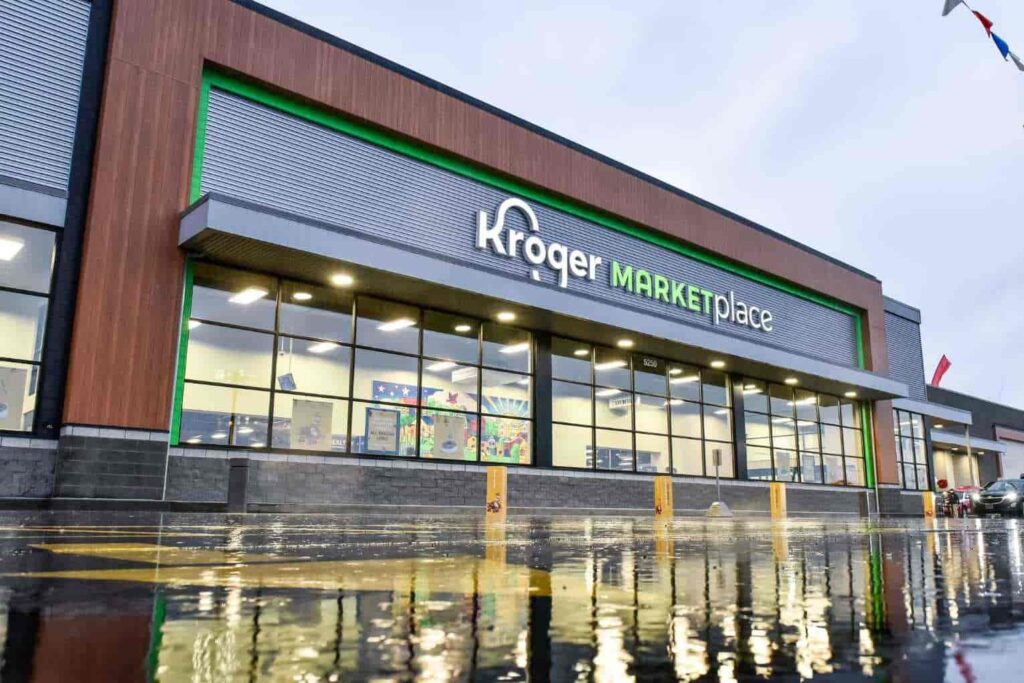
Kroger Establishes a New E-Commerce Unit

Kroger, one of the leading retail chains in the United States, is making significant strides in digitalization and e-commerce. The company has decided to expand its e-commerce operations to compete with industry giants such as Amazon and Walmart. As part of this initiative, it plans to establish a new online marketplace that will also include third-party sellers.

To strengthen its e-commerce strategy, Kroger has accelerated its investments in technology. In line with this, the company is partnering with Ocado Group to open a new Customer Fulfillment Center (CFC) in North Carolina. This center will be equipped with robotics and artificial intelligence technologies, aiming to provide customers with faster and more efficient service.

Kroger Launches the “Kroger Delivery Now” Express Delivery Service

Additionally, Kroger has partnered with Instacart to launch a 30-minute delivery service called “Kroger Delivery Now.” This service aims to quickly deliver fresh food and household essentials to customers.

These initiatives are seen as part of Kroger’s broader efforts to enhance its competitive strength in digitalization and e-commerce. Through these strategies, the company aims to improve customer satisfaction and expand its market share.