Compliance is no longer just a regulatory requirement in e-commerce it is rapidly becoming a key competitive advantage. As fulfillment ecosystems grow more complex, especially across major platforms, operational precision and compliance are now directly tied to profitability and scalability.
From Back-Office Function to Growth Driver
In today’s e-commerce environment, compliance has moved beyond documentation and legal checks. It now plays a critical role in fulfillment performance, inventory flow, and overall business efficiency.
Errors in product preparation, labeling, or documentation can lead to penalties, delays, or even blocked inventory directly impacting revenue. In high-volume ecosystems, even small compliance gaps can scale into major operational risks.
The Hidden Cost of Non-Compliance
Non-compliance is no longer just a risk, it is a cost center. Businesses that fail to meet fulfillment requirements often face:
Additional fees
Inventory disruptions
Reduced platform visibility
Lower customer satisfaction
These challenges highlight a key shift: compliance is not separate from operations, it is part of the core business model.
Fulfillment Complexity Is Increasing
As e-commerce platforms evolve, fulfillment requirements are becoming more detailed and strict. From packaging standards to inbound logistics rules, businesses must align with increasingly complex systems to operate efficiently.
This complexity is especially visible in marketplace-driven ecosystems, where standardized processes leave little room for error. Companies that adapt quickly can maintain smoother operations and stronger margins.
4 Ways Compliance Creates Competitive Advantage
Forward-thinking brands are now treating compliance as a strategic capability rather than a burden. By investing in systems, automation, and standardized processes, they are able to:
Reduce operational friction
Improve delivery speed
Avoid costly penalties
Scale more efficiently
In this context, compliance becomes a differentiator not just a requirement.
The Shift Toward Operational Excellence
The broader trend in e-commerce is clear: growth is no longer driven solely by demand or marketing, but by operational excellence. Compliance is a key pillar of that shift.
Companies that integrate compliance into their fulfillment strategy will be better positioned to compete in increasingly regulated and performance-driven marketplaces.
OpenAI is transforming how consumers discover products online, positioning ChatGPT as a powerful new entry point for e-commerce. With millions of users already turning to AI for recommendations, the company is now introducing a more advanced and visually immersive shopping experience inside ChatGPT.
From Search to Conversation
Traditional online shopping often requires users to jump between tabs, compare multiple sources, and manually evaluate options. OpenAI is changing that model by turning product discovery into a conversation.
Users can now describe what they are looking for in natural language, refine their preferences interactively, and receive tailored product suggestions in real time. This significantly reduces the time and friction involved in decision-making.
Visual and Smarter Shopping Experience
The latest update introduces richer and more visual product browsing within ChatGPT. Instead of static lists, users can now explore products visually, compare options side-by-side, and access up-to-date information all within a single interface.
What previously required hours of research across different platforms can now be completed in seconds through AI-assisted discovery.
Powered by Agentic Commerce
At the core of this shift is OpenAI’s Agentic Commerce Protocol (ACP), which enables ChatGPT to deliver more relevant, accurate, and real-time product information directly to users.
This approach moves beyond traditional search engines, positioning AI as an active participant in the shopping journey rather than just a passive tool.
A New Discovery Channel for E-Commerce
ChatGPT is rapidly emerging as a significant product discovery channel. Reports suggest the platform processes around 50 million shopping-related queries daily, highlighting its growing influence in consumer decision-making.
This shift signals a major change for brands and retailers, who must now optimize not only for search engines but also for AI-driven discovery environments.
What It Means for Brands
As AI becomes a central interface for shopping, brands will need to rethink their digital strategies. Visibility within AI-driven platforms, structured product data, and accurate information will become critical for reaching consumers.
The evolution of ChatGPT into a product discovery engine reflects a broader trend: the convergence of AI, search, and commerce into a single, seamless experience.
Retailers across Asia are facing a growing challenge: despite heavy investments in digital transformation and customer experience (CX), many are still struggling to deliver measurable business results.
While companies continue to pour resources into new platforms, AI tools, and omnichannel experiences, the expected return on investment remains unclear for a significant portion of the industry.
The Gap Between Investment and Impact
A large share of retail leaders report difficulty in demonstrating tangible returns from their digital initiatives. Investments in CX are often treated as innovation projects rather than core business drivers, making it harder to connect them directly to revenue growth or profitability.
This has created what experts describe as a “CX illusion” ,where brands appear digitally advanced on the surface, but fail to translate that into real customer value or financial performance.
Why Digital Investments Fall Short
One of the main issues is fragmentation. Many retailers operate across multiple platforms and channels, but lack integrated data systems. This disconnect makes it difficult to fully understand customer behavior and optimize the end-to-end experience.
At the same time, organizations often focus too heavily on technology rather than execution. According to industry insights, retail is now shifting away from “innovation hype” toward what actually works at scale consistent operations, efficiency, and measurable outcomes.
CX Is Still Treated as a Cost, Not a Strategy
Another critical challenge lies in internal perception. In many organizations, customer experience is still viewed as a design or marketing function instead of a business growth driver. This limits its ability to influence strategic decisions and long-term investment priorities.
As a result, CX initiatives often fail to deliver impact because they are not aligned with core business metrics such as revenue, retention, or operational efficiency.
The Shift Toward Measurable Value
Retailers are now being forced to rethink their approach. Instead of focusing on launching new digital features, the emphasis is shifting toward:
Data integration across channels
Personalisation based on real customer insights
Operational efficiency and cost control
Clear measurement of ROI
This shift reflects a broader industry trend where execution and performance matter more than innovation alone.
From Illusion to Execution
The next phase of retail transformation will not be defined by how much companies invest in technology, but by how effectively they use it. Businesses that can connect digital initiatives directly to measurable outcomes will gain a competitive advantage.
In a market where margins are under pressure and customer expectations continue to rise, the real challenge is no longer digital adoption but delivering real value from it.
The UAE continues to strengthen its position as a global e-commerce hub, demonstrating resilience and efficiency even amid regional uncertainties. While global trade routes face disruptions, the country’s advanced logistics, digital infrastructure, and regulatory systems are ensuring that cross-border e-commerce remains uninterrupted.
A System Built for Speed and Stability
At the core of the UAE’s success is a highly integrated ecosystem combining logistics, digital platforms, and government frameworks. Today, nearly 98% of customs transactions are processed electronically, significantly reducing delays and enabling faster trade operations.
In many cases, shipments are cleared within minutes rather than hours, with up to 72% of cargo processed before arrival in Abu Dhabi. This level of efficiency allows businesses to maintain reliable delivery timelines and lower operational costs.
Strong Infrastructure Supporting Growth
Behind the seamless flow of goods lies a powerful logistics backbone. Dubai International Airport handled around 2.2 million tonnes of cargo, while DP World processed 88.3 million TEU globally, reinforcing the UAE’s role as a major trade gateway.
This infrastructure ensures that supply chains remain stable, even during periods of geopolitical tension, strengthening confidence among global businesses and investors.
Strategic Location Driving Global Access
The UAE’s geographic advantage allows companies to reach major markets across the Middle East, Africa, and South Asia within an eight-hour flight radius. This connectivity positions the country not just as a transit hub, but as a central control point for international trade flows.
Digital Transformation Accelerating Trade
Platforms like Dubai Trade and advanced customs systems have transformed trade processes. Tasks that once took up to 48 hours can now be completed in less than 10 minutes, significantly improving efficiency and reducing friction in cross-border e-commerce.
This digital-first approach enables businesses to operate with greater predictability, which is critical in today’s volatile global environment.
Rapid E-Commerce Market Expansion
The UAE’s digital commerce sector is also experiencing strong growth. The market reached approximately Dh32.3 billion in 2024 and is projected to exceed Dh50.6 billion by 2029, reflecting steady long-term expansion.
Across the wider MENA region, e-commerce is expected to grow from $34.5 billion to nearly $57.8 billion within the same period, with the UAE playing a central role in enabling this growth.
An Integrated Ecosystem for the Future
What sets the UAE apart is the alignment between infrastructure, regulation, financial systems, and technology. Free zones, advanced banking systems, and business-friendly policies all contribute to a seamless trade environment.
Looking ahead, the adoption of artificial intelligence and automation is expected to further enhance logistics efficiency and compliance processes, strengthening the country’s position as a global leader in digital trade.
Women in Amazon Business (WIAB) was founded after its co-founders, Asha Bhalsod and Hannah Hughes, experienced first-hand the lack of visibility, representation, and support for women working across the Amazon ecosystem. Despite Amazon’s rapid growth and increasing complexity, there was no dedicated community where women operating in Vendor, Seller, advertising, and e-commerce roles could come together to connect, share knowledge, and support one another.
At different stages of their careers, Asha and Hannah often had to navigate challenges alone, frequently being the only woman in the room; their access to peer networks was limited, and there was insufficient space for open and honest conversations about career progression within the Amazon industry. WIAB was founded to change this. Built from the ground up to fill a gap that did not previously exist, the community was designed to bring women together in a meaningful, supportive, and commercially relevant way.
WIAB’s vision is to create an inclusive, global community that empowers women to grow professionally within the Amazon ecosystem. Through education, mentorship, and connection, WIAB helps women build confidence, deepen their expertise, and advance in their careers, while contributing to a more balanced, diverse, and representative future across the Amazon industry.
WIAB operates on a global scale by bringing together women from key Amazon marketplaces, including the United Kingdom, Europe, North America, the Middle East, and beyond. As a community, WIAB reflects the international nature of Amazon itself and supports members working across multiple regions, roles, and business models.
WIAB Co-Founder and Etopia Consultancy Founder Asha Bhalsod appeared as a guest on WORLDEF E-COMMERCE. Bhalsod stated that WIAB operates as a membership-based community across two distinct tiers: “Management level” and “C-suite level.” Noting that each tier is designed to support women at different stages of their leadership journey within the Amazon ecosystem, Bhalsod said, “WIAB provides access to strategy-focused educational content, curated events, peer networks, and knowledge sharing across Amazon Vendor and Seller models, advertising, operations, and strategy.”
Asha Bhalsod added: “In addition to individual memberships, WIAB also offers corporate sponsorship opportunities for businesses that want to support diversity, inclusion, and female leadership within the Amazon industry. Through panels, workshops, closed sessions, and industry collaborations, WIAB creates meaningful connections and practical learning opportunities that help women deepen their Amazon expertise and grow professionally.”
“We Started as a Small LinkedIn Community”
Emphasizing that WIAB began as a small LinkedIn community created to bring together women working across the Amazon ecosystem, Bhalsod continued: “However, over the past two years, it has evolved into a real movement. What started as informal conversations has grown into a highly engaged network that brings women together both online and in person. To date, WIAB has hosted four sold-out events—one in Seattle and three in the United Kingdom—demonstrating the global demand for this type of community. In addition to events, WIAB has delivered a wide range of content, including coaching sessions, professional development workshops, webinars, and structured networking opportunities. Each initiative was designed to support real career progression, knowledge sharing, and meaningful connections, reinforcing WIAB’s mission to create lasting impact for women in the Amazon business world.”
“We Invite Women to WORLDEF DUBAI for Case Study Sessions”
WIAB Co-Founder Asha Bhalsod also answered the question, “What’s next for WIAB?” as follows: “The next phase for WIAB is focused on scale and impact. We are rolling out the WIAB membership program globally, ensuring that women across all major Amazon regions can access education, connection, and peer support at both management and C-suite levels. At the same time, WIAB is expanding its presence on major global industry stages. We will first collaborate with WORLDEF in Dubai, followed by WORLDEF ISTANBUL in June. At these events, we are actively inviting women to participate in case study sessions to increase visibility and representation where it has historically been lacking. Additionally, WIAB will launch a series of masterclasses and Lunch & Learn sessions throughout the year and will close the year with an awards ceremony honoring women who are shaping the future of the Amazon business world.”
“Etopia Was Founded in 2019 to Fix a Broken Model”
Asha Bhalsod is also the founder of Etopia Consultancy. According to Bhalsod, Etopia was founded in 2019 to fix a broken model. Bhalsod said: “After years of working at the heart of retail and e-commerce, particularly on Amazon Vendor and Seller accounts, it became clear that many agencies were quietly eroding Amazon margins while chasing ROAS. Brands were scaling without strategy, burning budgets without real profitability, and making reactive decisions in an increasingly complex ecosystem. Etopia was built to reverse that mindset: a strategy-first, margin-focused approach centered on execution that genuinely makes a difference. The goal has always been to turn Amazon from a cost center into a sustainable growth engine.”
“No Fluff, Just Results!”
Founded by a female entrepreneur determined to challenge the status quo, Etopia delivers profitable growth across both Vendor and Seller models by combining Amazon strategy, retail fundamentals, and performance marketing,” Bhalsod continued: “We focus on aligning all levers—assortment, pricing, availability, and advertising—around commercial outcomes rather than vanity metrics. Since our founding, Etopia has supported more than 50 brands, managed over £10 million in annual ad spend, and contributed to generating more than £150 million in GMV on Amazon. No fluff. Just results.”
Regional Challenges in Selling on Amazon
In response to the question, “What challenges exist when selling on Amazon in the regions you serve, and what solutions do you offer to address these challenges?”, Asha Bhalsod said: “Selling on Amazon globally brings a consistent set of challenges, including margin erosion, rising advertising costs, operational complexity, and fragmented ownership across marketplaces. As brands expand internationally, these issues are amplified by inconsistent data, local market nuances, and misaligned Vendor or Seller structures. Etopia addresses these challenges by creating clear, market-specific strategies that align pricing, assortment, advertising, and supply chain decisions. We prioritize profitability from day one and build frameworks that enable brands to scale internationally with control, clarity, and confidence.”
“The Future of E-Commerce Will Be Defined by Profitability, Not Just Growth”
Answering the question, “Based on your area of expertise, how do you see the future of e-commerce?”, Bhalsod responded: “The future of e-commerce will be defined by profitability, not just growth. As platforms like Amazon mature, brands will need to move away from volume-driven strategies and focus on operational excellence, margin control, and smarter use of data and technology. International expansion will continue to be an important growth lever, but only for brands that approach it strategically. We believe the most successful brands will be those that combine strong fundamentals with intelligent automation, clear ownership, and long-term thinking—turning complexity into a competitive advantage rather than a barrier.”
Markets Etopia Focuses On
Etopia operates globally by supporting brands across all major Amazon marketplaces. We specialize in helping brands expand into new international markets across regions including the United Kingdom, Europe, North America, and beyond, providing the strategic and operational support needed to scale with confidence across borders. Etopia helps brands build a strong and sustainable presence in MENA as the region continues to develop.
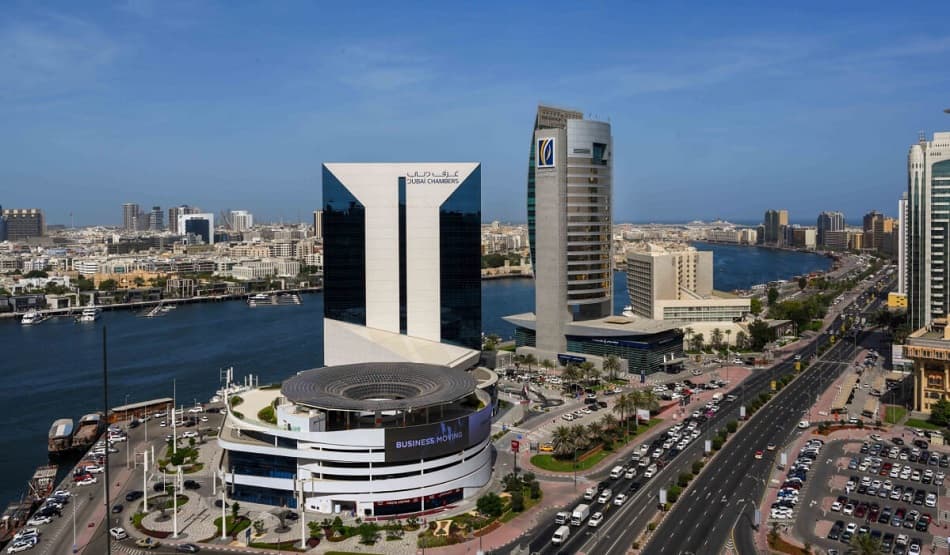
Despite regional and global challenges, Dubai continues to serve as a base of operations for a large number of companies. Dubai Chamber of Commerce, one of the three chambers operating under the umbrella of Dubai Chambers, announced that 2,709 new companies joined the chamber in March 2026.
According to data from Dubai Chamber of Commerce, the real estate, renting, and business services sector accounted for 41.2 percent of new member companies, followed by the trading and services sector with 29.5 percent. The construction sector ranked third with 15 percent of the total. The social and personal services sectors ranked fourth with 9.3 percent. The increase in membership reflects Dubai’s appeal to investors under all market conditions.
H.E. Mohammad Ali Rashed Lootah, President and CEO of Dubai Chambers, said: “Dubai’s economic model is built on a strong foundation that combines resilience, proactive planning, effective public-private collaboration, and deep ties with global markets. This strengthens the emirate’s ability to adapt to global shifts and continue creating new, high-quality opportunities across a wide range of sectors.”
Lootah continued: “The increase in the number of companies joining the chamber in March is a clear indication that Dubai’s investment momentum remains strong and that the emirate continues to inspire confidence among the global business community. This underlines the strength of its dynamic business environment, which is supported by advanced infrastructure, a sophisticated regulatory framework, and agile economic policies that respond to market developments to support growth at every stage.”
The President and CEO of Dubai Chambers also noted: “We remain committed to supporting the establishment and growth of new businesses in Dubai, while also enabling companies across the emirate to adapt quickly to change, sustain growth, and enhance their competitiveness in local and international markets. This contributes to reinforcing Dubai’s position as a global capital for trade and investment.”
Dubai Chambers uses DC Connect, an advanced digital platform that consolidates all chamber services into a single, user-friendly portal. The platform represents a significant step in enhancing the member experience and facilitating easier access to services through an integrated interface supported by smart, data-enabled solutions. DC Connect provides access to a comprehensive suite of digital services, including Dubai Chamber of Commerce membership services, information services, ATA carnets, mediation, document attestation, certificates of origin, and services related to Business Groups and Business Councils.
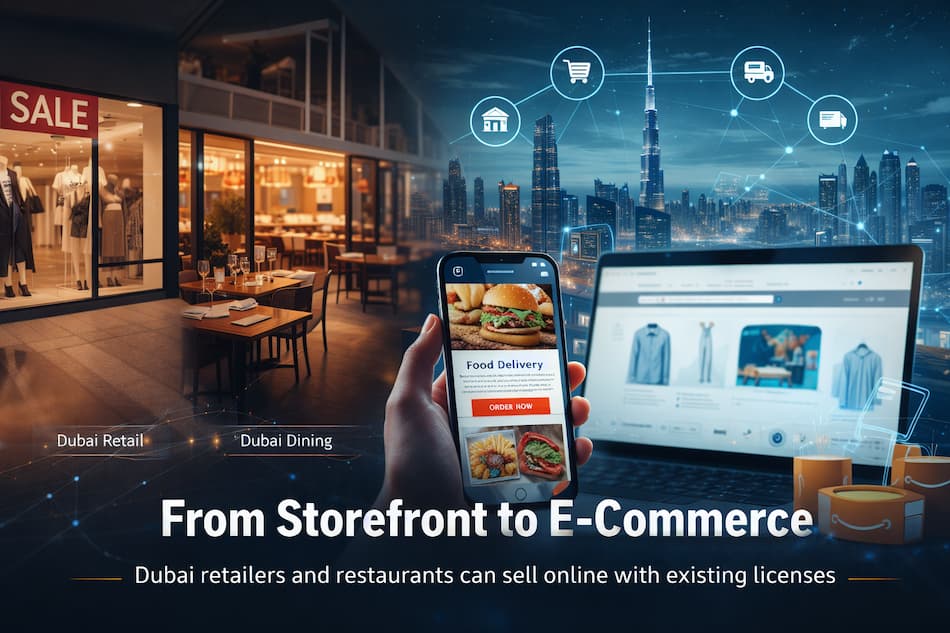
Dubai has introduced a significant regulatory shift, allowing retailers, trading companies, and restaurants to expand into e-commerce without applying for additional licences.
Under the current framework, businesses can launch online stores, sell through digital marketplaces, and offer delivery services using their existing licences provided their activities remain within their approved scope.
This move is designed to simplify digital expansion and accelerate e-commerce adoption across the emirate.
Faster Digital Expansion for Businesses
The new approach removes one of the biggest barriers for businesses entering online commerce: licensing complexity.
Retailers can now quickly:
Launch their own e-commerce websites
Sell عبر marketplaces
Accept digital payments
Reach new customer segments
At the same time, restaurants and F&B brands can expand into delivery services through approved platforms, enabling them to grow beyond physical locations.
Officials emphasized that the initiative supports businesses of all sizes from startups and SMEs to multinational companies by making it easier to scale digitally.
Part of Dubai’s D33 Digital Economy Vision
The policy aligns with Dubai’s broader Economic Agenda D33, which aims to position the emirate as a global hub for digital commerce and innovation.
As part of this strategy, initiatives like the Dubai Traders programme are already helping businesses transition online through:
Reduced costs
Faster onboarding
Integration with major marketplaces
These efforts aim to strengthen Dubai’s e-commerce ecosystem while enabling companies to diversify revenue streams and increase resilience in a rapidly evolving digital economy.
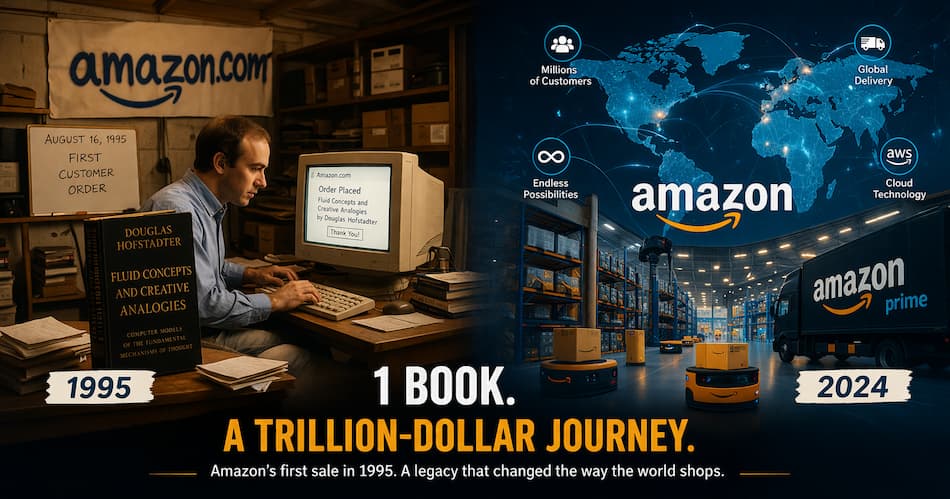
Long before Amazon became the world’s leading “everything store,” its journey began with a single, almost symbolic purchase.
In 1995, Amazon’s very first customer order was a book titled “Fluid Concepts and Creative Analogies” by Douglas Hofstadter, a work focused on artificial intelligence. At the time, the internet was still in its early stages, and Amazon operated as a small online bookstore from a garage.
This seemingly ordinary transaction has recently resurfaced online, going viral across social media platforms and reigniting discussions about the origins of modern e-commerce.
AI Before the AI Boom
What makes this story particularly striking today is its connection to artificial intelligence. Decades before AI became a global technology race, Amazon’s first-ever sale was already linked to the concept.
The viral post caught the attention of Jeff Bezos, who reacted with a simple acknowledgment, while Elon Musk described it as “the start of something great.”
The moment has sparked both nostalgia and irony, highlighting how a company that began with selling books is now deeply embedded in AI, cloud computing, and global digital infrastructure.
The Beginning of the “Everything Store”
Amazon officially launched in 1994 as an online bookstore, chosen for its scalability and wide product availability. Within months of opening in 1995, it expanded rapidly, reaching customers across the United States and dozens of countries.
What started with one book quickly evolved into a platform that reshaped retail, logistics, and digital commerce worldwide.
Today, that first purchase is more than just a historical detail, it represents the foundation of the modern e-commerce ecosystem.
Global e-commerce is entering a critical phase as WTO negotiations continue to stall, exposing deep divisions over the future of digital trade. While discussions remain unresolved, 66 member countries have taken a proactive step by advancing an interim framework to move forward without full consensus.
This shift signals a growing reality: global e-commerce can no longer wait for unanimous agreements. Instead, leading economies are beginning to shape the rules independently, accelerating the transition toward a fragmented but evolving digital trade system.
A Shift from Consensus to Coalition
The WTO has traditionally operated on consensus, but the current deadlock highlights the limitations of this model in a fast-moving digital economy. By pushing an interim framework, participating countries are effectively redefining how global e-commerce governance may evolve through coalitions rather than universal agreements.
With at least 45 members required for the framework to take effect, the initiative reflects both urgency and strategic alignment among key players in digital trade.
Why This Matters for E-Commerce
For global businesses, the implications are significant. A coalition-driven approach could lead to:
Faster implementation of digital trade rules
Increased regional alignment
Potential fragmentation in global standards
This creates both opportunities and risks. While companies may benefit from clearer rules in participating markets, differing frameworks across regions could complicate cross-border operations.
The Bigger Picture
The WTO’s stalled negotiations are not just a policy issue they reflect a broader transformation in how global e-commerce is governed. As digital trade grows faster than traditional regulatory systems, countries are being forced to adapt in real time.
The interim framework may not solve all challenges, but it marks a decisive step toward a new era of e-commerce governance one that is more flexible, faster-moving, and potentially more fragmented.
Azerbaijan is experiencing a rapid shift toward digital payments, with e-commerce emerging as the dominant force in the country’s cashless economy.
According to the Central Bank of Azerbaijan, non-cash transactions reached 8.2 billion manats in February 2026, marking a 15% year-on-year increase. Notably, e-commerce accounted for 7.17 billion manats, representing 87.5% of all cashless payments.
POS terminals contributed 1.026 billion manats, while self-service terminals remained minimal at just 3 million manats.
Digital Payments Accelerate Across Azerbaijan
The growth reflects a broader transformation in consumer behavior, with digital channels increasingly replacing traditional payment methods. Since the beginning of 2026, domestic non-cash transactions using payment cards have made up nearly 70% of total card activity, highlighting strong adoption of digital finance solutions.
At the same time, payment infrastructure continues to expand rapidly. The number of POS terminals surged by 49.1%, while ATMs increased by 7%, improving accessibility nationwide.
Card Usage Trends Signal Market Shift
As of March 1, the total number of payment cards in circulation reached 22.3 million, reflecting steady growth both monthly and annually. Debit cards continue to dominate the market, rising by 12.8% year-on-year, while credit card usage declined by 8.5%.
This trend indicates a preference for direct spending and tighter financial control among consumers, aligning with broader global patterns in digital payments.
What It Means for E-Commerce
The overwhelming share of e-commerce in non-cash transactions underscores its central role in Azerbaijan’s digital economy. As infrastructure expands and consumer confidence grows, the sector is expected to continue driving financial innovation and shaping the future of commerce in the region.