WORLDEF Istanbul 2026 - Upcoming Event

Register Now

The Digital Kickoff: How the 2026 World Cup Will Affect E-Commerce

The Digital Kickoff

As we head toward 2026, the FIFA World Cup isn’t just arriving in North America; it’s arriving at the precise moment our region’s e-commerce ecosystem is primed for a major leap forward. I can tell you this: events of this scale don’t just move merchandise, they move markets.

We’re talking about a month-long tournament that will touch 16 cities, draw more than 6.5 million fans in person, and reach billions more online. According to FIFA and the World Trade Organisation, the 2026 World Cup could generate up to 40.9 billion dollars in total global economic activity, with roughly 17 billion of that expected to be spent within the United States. That’s not just stadium sales or hospitality spending, it’s a full-system boost rippling across logistics, fintech, media, and retail.

But here’s where it gets interesting for those of us who live in the e-commerce ecosystem: This World Cup will be the first true digital-first tournament. The 2018 and 2022 editions hinted at it, record mobile engagement, influencer activation, and real-time campaigns, but 2026 will be where those trends mature into the main event. Live commerce, ultra-fast fulfillment, connected event tech, and data-driven fan engagement will converge into a new retail model that blends emotion, experience, and immediacy.

Every World Cup drives spending, but 2026 arrives at the perfect technological moment. E‑commerce penetration in the U.S. is approaching 20 percent, and mobile commerce alone is expected to exceed 900 billion USD by then. Mexico’s Mercado Libre has reported over 30 percent year‑on‑year growth, while Canada forecasts nearly 4 billion CAD in GDP contribution tied directly to tournament‑related activity.

FIFA’s own digital engagement from Qatar 2022 exceeded 5 billion interactions. In 2026, those same behaviors will merge with smarter advertising, retail media networks, and live shopping ecosystems. InternetRetailing projects a 10.5 billion USD surge in global ad spend during the event, with retailers capturing the lion’s share through programmatic, AI‑driven placement. 

The World Cup will therefore act as a real‑time pressure test on supply chains, customer experience, and cross‑border commerce, the foundational pieces of our industry.

A New Chapter: The First AI World Cup

What makes 2026 distinct from any previous tournament is intelligence. This will be the first truly AI‑powered World Cup, where almost every part of the experience is guided by machine learning.

FIFA and its partners, including IBM, AWS, and Cisco, are deploying predictive systems for ticketing, transport, and venue logistics. These tools analyse live mobility and weather data to forecast demand and automate decisions on staffing, security, and fan flow. What fans will feel is smoothness: faster entry lines, accurate routing, stable connectivity, and instant mobile services.

Behind the scenes, broadcasting will be equally transformed. Generative AI will automatically create highlight reels, translate commentary into multiple languages, and tailor content to individual viewers. A Canadian fan streaming on a phone might receive local sponsor offers and French commentary, while a viewer in Mexico sees Spanish narration and Mercado Libre product links during the same live moment.

For e‑commerce professionals, this is where the real revolution begins. 2026 will mark the rise of agentic commerce transactions, initiated and optimised by AI agents acting on behalf of both consumers and retailers.

Imagine landing in Los Angeles for a match and finding that your phone’s digital assistant has already assembled your essentials: official team merchandise, local SIM card, transit pass, and travel insurance, all checked out with one approval. These are intelligent systems predicting your needs before you articulate them.

Major platforms are already preparing. Amazon’s conversational assistant can now generate entire product ensembles via voice. Mercado Libre experiments with AI chat agents that compare prices in real time, while Walmart tests predictive replenishment based on event calendars and social sentiment. During the World Cup, these systems will merge with fan data streams, creating live, contextual commerce that feels spontaneous yet highly orchestrated.

On the operations side, machine learning will manage availability and logistics. Demand forecasting will integrate ticket scans, match schedules, weather forecasts, and online chatter. Inventory will shift dynamically to warehouses nearest to trending teams. The result is a supply chain that thinks.

AI‑Supported Commerce in Action

  • Predictive pricing models will adjust merchandise costs minute‑to‑minute based on score lines, player performance, or local crowd demand.
  • Image‑recognition tools will link on‑screen gear, a star’s boots or kit, directly to instant purchase options.
  • Chatbots integrated with social platforms will act as personal sports concierges, arranging transport, accommodation, and event tickets through one conversational interface.
  • Payment systems will use biometric verification and blockchain‑based settlement for faster, fraud‑resistant cross‑border transactions.

According to PYMNTS, these fintech upgrades could expand North American cross‑border payments volume by 40 percent during the tournament.

The Infrastructure Behind the Magic

All this intelligence requires muscle. Logistics providers in Mexico City and Los Angeles are already constructing micro-fulfillment hubs within thirty minutes of stadium zones. In Canada, predictive route optimisation is being built to manage weather‑related delays. Drone delivery trials are quietly expanding in Guadalajara and Dallas.

Hospitality is equally data‑driven. Hotels are adopting AI yield‑management systems that balance real‑time demand with sustainability goals. Expect to see personalised offers delivered to guests’ phones during matches, everything from last‑minute suite upgrades to curated local experiences.

Why World Cup 2026 Matters?

Major events have always pushed commerce forward. The 2008 Beijing Olympics accelerated mobile payments in China; the 2014 Brazil World Cup reshaped global social advertising. The 2026 edition will fuse those lessons into a single ecosystem: AI‑driven, real‑time, and borderless.

For North America, it’s also a test of integration. The tri‑nation hosting model means harmonizing currencies, taxes, freight corridors, and data standards across three regulatory environments. If this collaboration succeeds, it could become the blueprint for next‑generation regional trade.

Beyond the Pitch: The Legacy of 2026

Living in Dubai for the past five years, I’ve watched as data and AI have turned the city into a living retail laboratory. What’s happening here, predictive logistics, cryptocurrency payments, and autonomous store models, offers a glimpse of what North America will experience in 2026. The same intelligence driving Expo 2020 or GITEX showcases will now power one of the world’s most emotional events.

This is no longer about “e‑commerce” versus “traditional retail.” It’s about commerce itself becoming aware, understanding intention, reacting instantly, and connecting supply to emotion faster than any manual system ever could.

By the time the final whistle blows in 2026, the winners will not only be on the pitch. They will be the retailers, platforms, and innovators who prepared early, built intelligent systems, and turned fan passion into sustainable digital growth.

The World Cup has always celebrated human performance. This one will celebrate human creativity amplified by the intelligence of machines.


Global E-Commerce Gets a Boost as China Announces 5 Cross-Border Trade Measures

Global E-Commerce Gets a Boost as China Announces 5 Cross-Border Trade Measures

China has unveiled a new policy framework aimed at strengthening its e-commerce sector, with a particular focus on cross-border trade and global market expansion. The move reflects Beijing’s effort to balance domestic growth with increasing international pressures and competition.

The guidance, jointly issued by multiple government bodies including commerce, industry, and cyberspace regulators, outlines a coordinated approach to improving both regulation and promotion within the digital economy.

A Strategic Push for Global E-Commerce Integration

At the core of the policy is the ambition to better align China’s domestic e-commerce ecosystem with global markets. Authorities emphasized the need to integrate the digital and real economies while maintaining a balance between efficiency, fairness, and regulatory oversight.

This comes shortly after increased scrutiny from international partners, particularly the European Union, over issues such as product safety, market access, and competitive fairness.

5 Key Measures Driving China’s E-Commerce Strategy

The new guidance introduces several major initiatives shaping the future of China’s e-commerce landscape:

  • Pilot zones for cross-border e-commerce to test new policies and accelerate innovation
  • Development of international rules and standards to align with global trade practices
  • Expansion of Chinese platforms into overseas markets to strengthen global reach
  • Encouragement for companies to establish procurement bases abroad
  • Streamlined import channels for high-quality global products entering China

These measures aim to position China as a more integrated and competitive player in global digital trade.

Addressing Global Trade Tensions

The policy also reflects broader geopolitical dynamics. Recent discussions with EU lawmakers highlighted concerns about unsafe products and limited access for foreign businesses in China.

While the new framework does not directly address these disputes, it signals China’s willingness to improve coordination and potentially ease tensions through regulatory refinement and market openness.

What It Means for the Global E-Commerce Ecosystem

China remains the world’s largest e-commerce market, and its regulatory direction has a significant impact on global supply chains and digital trade flows.

By promoting cross-border e-commerce, improving standards, and encouraging international expansion, the country is reinforcing its role as a central hub in global online commerce.

However, experts suggest that while the policy is a positive step, it may not fully resolve deeper trade imbalances and regulatory concerns between China and its international partners.

Source: Reuters

Financial Architecture for E-Commerce Brands Targeting the U.S. Market: TAM Accounting

TAM Accounting

The United States (U.S.) is a giant economy that many companies dream of entering. Many companies begin selling successfully, but remain financially mispositioned. Often, they do not realize this until the costs become visible. It is not difficult to establish a company or start an e-commerce operation in the U.S. What really makes a difference is building the right foundation. The right company structure, the right tax strategy, and a scalable accounting system that supports growth are essential. TAM Accounting, which serves cross-border e-commerce brands, companies selling through global marketplaces, and international entrepreneurs scaling in America, was born out of the gaps faced by global businesses entering the U.S. market. TAM Accounting, based in the U.S., was a guest at WORLDEF E-COMMERCE!

TAM Accounting Founder and CEO Yeşim Deretam shaped the firm’s DNA through a finance and tax journey that began in Türkiye and deepened in the U.S. “We are positioned as a long-term financial architect, not as a year-end filing firm,” said Deretam, adding that they build sustainable systems that allow brands to grow with clarity and confidence. Deretam, who holds credentials such as IRS Enrolled Agent, IRS Acceptance Agent, and Tax Coach, and has deep experience in multi-state compliance, international tax, and e-commerce accounting, stated that TAM Accounting has become a strategic guide for global operators, not just a service provider.

“For Cross-Border E-Commerce Brands, Trust Means Preventing Costly Decisions Before They Happen”

“Our story is the story of becoming a trusted partner for companies that want to scale internationally with the right financial positioning from day one,” said Yeşim Deretam, explaining the company’s “Trusted Accounting Mentor” motto: “For us, trust is not only about accurate numbers or timely filings. Trust means providing foresight. Identifying risks early, asking the right questions at the right time, and standing beside the client as a strategic guide.

This motto reflects our view of accounting; not as a backward-looking reporting function, but as a management tool that shapes the future. The word ‘guide’ is intentional. We don’t only focus on today’s compliance we factor in 3–5 year growth goals, international expansion plans, capital structure, and long-term operational realities. Especially for cross-border e-commerce brands scaling in the U.S., trust means preventing costly decisions before they happen.”

Yeşim Deretam talked about what differentiates TAM Accounting from other firms: “Our greatest differentiator is that we treat tax and accounting as strategic infrastructure—not a commodity service. We work across a broad range of industries and business models from manufacturing and retail to entrepreneurs, franchise networks, and global e-commerce operators. We don’t just look at financial statements, we analyze the business ‘code.’ This approach allows us to identify weaknesses many companies don’t see internally and build solutions around them.”

Most In-Demand Services from TAM Accounting:

According to Yeşim Deretam, the most requested service areas from TAM Accounting are those that directly impact a company’s ability to enter and scale in the U.S. safely and efficiently. These are listed as:

  • U.S. company formation & strategic structuring: Choosing the right state, the right entity type (LLC, C-Corp, partnership), and building the tax-optimized foundation.
  • E-commerce-focused accounting and tax management: Platform-based bookkeeping design, fee/refund separation, profitability analysis, and multi-state compliance.
  • Sales tax & Nexus analysis: Identifying when and where obligations arise, managing registrations, filings, and sustainable systems as sales grow.
  • International tax planning & year-round tax strategy: Moving from reactive “tax season” behavior to proactive planning.
  • Financial reporting & cash flow visibility: Clean, readable reporting that supports leadership decisions—especially during rapid growth.

“We Treat E-Commerce as a Multi-Layered Ecosystem”

Talking about the specific services provided to e-commerce companies, Deretam said: “We treat e-commerce as a multi-layered ecosystem financially, operationally, and tax-wise. Our solutions are built to support scalability and profitability, not just bookkeeping. Marketplace and platform-based accounting systems are designed to separate revenue, fees, refunds, logistics, and marketing spend. E-commerce international tax planning helps reduce unnecessary tax burden in cross-border structures and prevent double-taxation pitfalls. E-commerce accounting is not ‘recording sales.’ It is building a structure that is scalable, tax-secure, and profit-driven.”

“Financial Architecture is Necessary for Growth in the U.S.”

When asked about the solutions offered for businesses selling through global marketplaces in the U.S., Deretam shared the following information: “In a market like the U.S., accounting and tax are not simply operational requirements they are strategic leverage. We deliver end-to-end structuring. From formation to IRS processes, EIN/ITIN support, and scalable financial setup. We provide proactive tax strategy across multi-state compliance, sales tax, international tax positioning, and IRS communications when needed. We offer platform-based accounting systems that clearly distinguish fees, refunds, logistics costs, ad spend, and currency issues. Additionally, we support clearer positioning through financial structuring and business readiness. We believe growth in the U.S. requires more than ‘compliance.’ It requires financial architecture.”

The Biggest Common Challenges E-Commerce Companies Face in the U.S.

TAM Accounting International Business Development Director Yonca Sal spoke about the biggest tax and accounting challenges e-commerce companies face in the U.S., saying: “The biggest challenge is the mismatch between the speed of digital commerce and the complexity of tax and accounting rules.” Sal listed the most common issues as:

  • Multi-state rules and sales tax complexity: Nexus can be triggered without realizing it through sales volume, fulfillment centers, warehousing, or 3PL operations leading to unexpected registration and filing obligations.
  • Poor platform accounting design: Without proper separation of fees, refunds, shipping, advertising, and currency impacts, companies can’t see real profitability and make unhealthy growth decisions.
  • Cross-border tax risks: When production, management, and sales span different countries, income positioning and double-taxation risk require specialized planning.
  • Cash flow pressure despite growth: High revenue does not guarantee liquidity especially with inventory financing and marketing spend.
  • Reactive behavior: Many companies address problems after they appear, but the U.S. system rewards proactive planning and penalizes late compliance.

For e-commerce brands, the real challenge is not selling it is managing the financial responsibilities that come with scaling.

The Impact of AI: “The Final Decision Depends on Experience and Professional Judgment”

When asked, “How is AI transforming your industry?” Yonca Sal answered: “AI is not only accelerating accounting—it is redefining the role of accountants. Routine tasks are increasingly automated, which elevates the value of human expertise in strategy, interpretation, and decision-making. AI supports faster data processing, lower error rates, and more consistent reporting. More importantly, it enables forecasting trend detection, scenario modeling, cash flow projections, and regulatory monitoring. However, in complex areas like international tax, multi-state exposure, and cross-border structuring, the final judgment still depends on experience and professional reasoning. At TAM Accounting, we view AI as a lever that improves advisory quality not as a replacement for expert guidance.”

“We Want to Build Long-Term Relationships Based on Trust”

Talking about TAM Accounting’s long-term goals, Yonca Sal said: “Our long-term goal is to be the trusted financial architect for companies scaling globally through the U.S. We aim to expand our depth and geographic impact in international tax and e-commerce financial systems. We also aim to become the first-choice partner for cross-border e-commerce brands, multi-state operators, and investment-ready C-Corps. We are investing in technology and AI to deliver faster insights. Above all, we want relationships built on long-term trust, not one-time transactions.”

“Dubai is the Most Natural Bridge to the U.S.”

“MENA and Dubai are a strategic priority in our long-term vision,” said Sal, adding: “We see Dubai not only as a growing market, but as a global hub where entrepreneurs, family businesses, e-commerce brands, and investors connect to international expansion opportunities. For many MENA-based companies, Dubai is the most natural bridge to the U.S. Our goal is to be that bridge—becoming a trusted, long-term financial partner for MENA-based brands expanding into the U.S.”

Africa’s Leading Online Fashion Retailer Industrie Africa Is Shutting Down

Industrie Africa

Industrie Africa, Africa’s leading online multi-brand fashion retailer, is shutting down just five years after its launch. The e-commerce platform, founded in 2018 by Tanzanian fashion entrepreneur Nisha Kanabar, will transition into Industrie Africa Plus (IA+) on April 30.

Industrie Africa Plus will be an advisory firm that will collaborate with luxury hotels, cultural institutions, and premium retail hubs to showcase fashion from the continent in new physical locations such as concept stores, retail activations, and pop-ups. For the advisory’s first project, it opened a concept boutique on Bawe Island in Zanzibar, Tanzania, in partnership with the island’s luxury hotel.

US Tariffs Negatively Affected Many Businesses

US tariffs in particular created a significant setback when they came into effect last year. Many African countries, including South Africa, Algeria, and Madagascar, were heavily affected by tariffs ranging between 15% and 50%. These tariffs were later revised and now range between 15% and 30%. The tariffs threatened the longevity of many businesses, including those on the African continent that had built a loyal fan base in the United States. The US stood out as a key market for Industrie Africa. Approximately 80% of the platform’s sales came from the US.

Nisha Kanabar: We Saw an Overnight Shift Because of the Tariffs

Industrie Africa Founder Nisha Kanabar said that several roadblocks, including cross-border logistics, inconsistent tariff policies, and market volatility, led to the platform shutting its doors. Kanabar said, “The tariffs heavily impacted our business. We saw an overnight shift in how the customer was shopping. Until that point, we were under the impression that we were on a really positive trajectory.”

Operating on a dropshipping model and holding no inventory, Kanabar says, “Fashion from the continent is produced in small batches. It is made-to-order. It is craft-led. It is slower by nature.” She says that this production style does not fit neatly into global e-commerce expectations and adds that fragmented supply chains and the lack of standardized manufacturing processes forced Industrie Africa “to absorb the variability of each designer’s operational maturity.”

Kanabar stated, “When you look at the global e-commerce infrastructure, it is all about instant replenishment, free delivery, and predictable logistics… This was a challenge from the very beginning, because African fashion may be fundamentally incompatible with these traditional global e-commerce and infrastructure levers.”

Industrie Africa Shipped to Approximately 60 Countries Worldwide

Industrie Africa was quickly a go-to destination for global consumers eager to discover high-end African fashion brands. For many young and emerging African designers, being stocked on Industrie Africa was considered a stamp of approval. It carried leading brands including Nigeria’s Lisa Folawiyo, Ghana’s Christie Brown, and Senegal’s Tongoro, and shipped to approximately 60 countries worldwide. The goal was to create a platform that rivaled the industry leaders of the time, such as Net-a-Porter and Farfetch, while offering a curated selection of African designers and helping them gain a global footing.

The Traditional Wholesale and Business-to-Business Model Has Broken Down!

From Canada to Tanzania, the recent decline of multi-brand retailers indicates that the traditional wholesale and business-to-business model has broken down. In 2024, British e-tailer Matches shut down. In 2025, Canadian e-tailer Ssense filed for bankruptcy. And in the same year, Mytheresa acquired Yoox Net-a-Porter, marking a consolidation between two luxury e-commerce giants. These platforms, which served as important intermediaries for young and emerging designers, were seen as lifelines for brands seeking to build awareness, increase sales, and boost visibility. However, the recent closures are threatening the future of young designers in Africa, especially those looking to build scale abroad.

Amazon Will Increase Logistics Fees by 3.5% Due to Rising Costs

Logistics

Amazon announced that it will apply an additional 3.5% fuel and logistics charge to fulfillment (storage and shipping) fees for sellers in order to balance rising operational costs. The new regulation will cover sellers in the United States and Canada as of April 17.

In the notice sent by the company to its sellers, it was stated that the additional charge will be valid particularly for transactions made through Fulfillment by Amazon (FBA) services. In addition, remote fulfillment operations from the United States to Canada, Mexico, and Brazil will also be included in this practice.

The Increase in Energy Prices Escalated Logistics Costs

The most important reason behind the decision was the sharp increase in global energy markets. Following the conflict that began in Iran on February 28, significant rises were seen in oil and fuel prices. In the United States, average gasoline prices increased by approximately 36% within four weeks, rising from $2.98 per gallon to $4.1. Diesel prices, on the other hand, reached $5.5, with a 46% increase, also due to disruptions in maritime shipping routes. These developments directly affected transportation and distribution costs, which are of critical importance especially in e-commerce logistics.

Pressure on the E-Commerce Ecosystem Is Increasing

Amazon’s decision is considered a development that may affect not only platform sellers but also, indirectly, consumer prices. According to experts, the increase in logistics costs creates additional pressure for sellers whose margins are already narrow. Similarly, it is known that global e-commerce giants have recently been reviewing their pricing and fee strategies in order to balance rising energy and operational costs.

The Increase in Logistics Fees May Spread to E-Commerce Companies

According to experts, as long as the volatility in energy prices continues, it seems likely that similar additional fee practices may also be implemented by other e-commerce and logistics companies. This situation may cause sellers to reshape their pricing strategies and turn to alternative logistics solutions.

In addition, in the long term, solutions such as AI-supported route optimization, warehouse automation, and localized fulfillment models are expected to come further to the forefront. For the sustainable growth of global e-commerce, cost efficiency and operational flexibility will be among the most critical competitive factors in the coming period.

New Targets in Türkiye’s E-Export Strategy: Eastern Europe and the Turkic Republics

E-Export

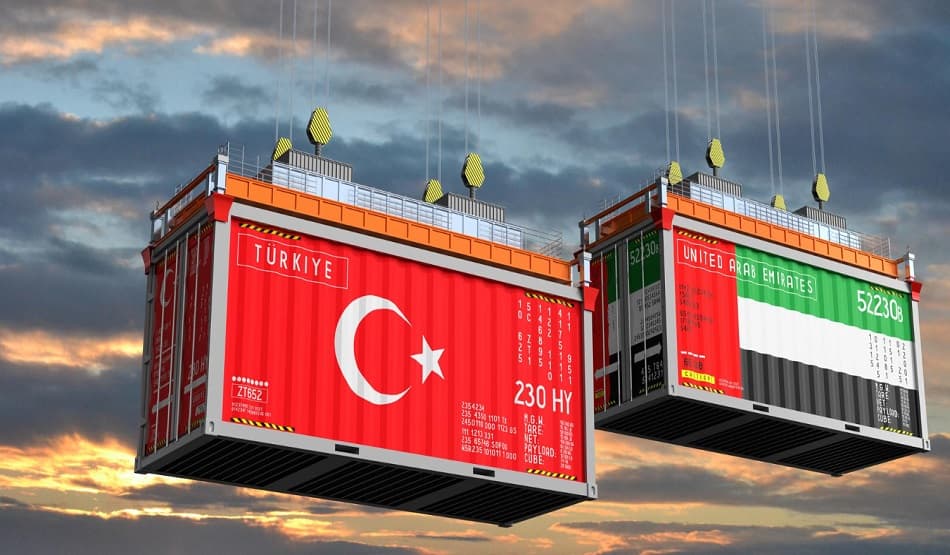
As the global effects of the war in the Middle East continue to be seen, the Gulf countries, which held an important place in Türkiye’s cross-border e-commerce strategy, have been taken off the route. The new target of companies engaged in e-export in Türkiye has become Eastern Europe and the Turkic Republics. Twelve percent of e-export sales in Türkiye had been made to Gulf countries.

Due to the attacks by the United States and Israel against Iran and Iran’s subsequent targeting of Gulf countries, the war that broke out in the Middle East brought trade traffic almost to a halt. According to a report in Hürriyet, the war led to changes in Middle East cross-border e-commerce strategies in many countries. E-exporters in Türkiye also turned their route toward Eastern Europe and the Turkic Republics.

Türkiye’s Exports to Gulf Countries Fell 37 Percent Month-on-Month

According to the Turkish Ministry of Trade’s March 2026 data, Türkiye’s exports to Gulf countries fell by 37 percent month-on-month to $1.3 billion. In just one month, there was a loss of $815 million in exports to the countries of the region. The biggest loss was in Qatar, with a decline of 83 percent. In 2025, total exports to Gulf countries had amounted to approximately $31.1 billion, accounting for 11.4 percent of total exports.

Due to its logistics advantage, the Gulf region is also an important market for e-exports in Türkiye. The Gulf region had become a critical growth center in Türkiye’s e-export strategy. E-exports came under risk in the shadow of rising geopolitical tensions. According to sector representatives, Gulf countries, especially Dubai, the UAE, and Saudi Arabia, had been a “premium growth market” in recent years due to high basket averages, demand for luxury and fast-moving consumer goods, and the strong perception of Turkish brands.

Saudi Arabia Ranks First in E-Exports

According to the data of the Turkish Ministry of Trade, Saudi Arabia ranks first in e-exports in the Gulf region with a share of 39 percent. Iraq is in second place with 23.6 percent. Saudi Arabia, Iraq, and the UAE account for approximately 85 percent of Türkiye’s total e-exports to the Gulf region.

What Do Sector Representatives Say?

Representatives of the e-commerce and e-export sectors in Türkiye evaluated the effects of the Middle East war:

  • Mustafa Namoğlu: The war changed all plans and expectations

Mustafa Namoğlu, Co-Founder and CEO of ikas: “At the beginning of the year, there was a picture supporting sales to Gulf countries. However, the war changed all plans and expectations. High-value products see less demand during periods such as war, when general needs come to the forefront. Because the tension has affected energy markets, supply chains around the world have come under stress. This also leaves open the question of whether we can turn to other markets. Because the global economy has started to come under threat.”

  • Cenk Çiğdemli: European countries are leading this search

Cenk Çiğdemli, Member of the E-Commerce Council of the Union of Chambers and Commodity Exchanges of Türkiye (TOBB): “E-commerce companies focus all their campaigns on the Gulf. However, this changed with the war. Our companies are cautious about Gulf countries, and the search for alternative markets has accelerated. In this search, European countries are leading the way. North Africa, the Turkic Republics, and especially Eastern Europe are on our agenda. Investments and marketing budgets are shifting to these regions.”

  • Mustafa Gültepe: The war affected jewelry, cereals, and automotive the most

Mustafa Gültepe, Chairman of the Turkish Exporters Assembly (TİM): “Last month, our exports to all countries in the region except Oman declined. There is a loss of 30 percent in Iraq, 48 percent in the UAE, 41 percent in Iran, 29 percent in Saudi Arabia, 83 percent in Qatar, 70 percent in Kuwait, and nearly 81 percent in Bahrain. The war affected jewelry, cereals, and automotive the most.”

Digital Integration Is Accelerating Among the Turkic States

Turkic States

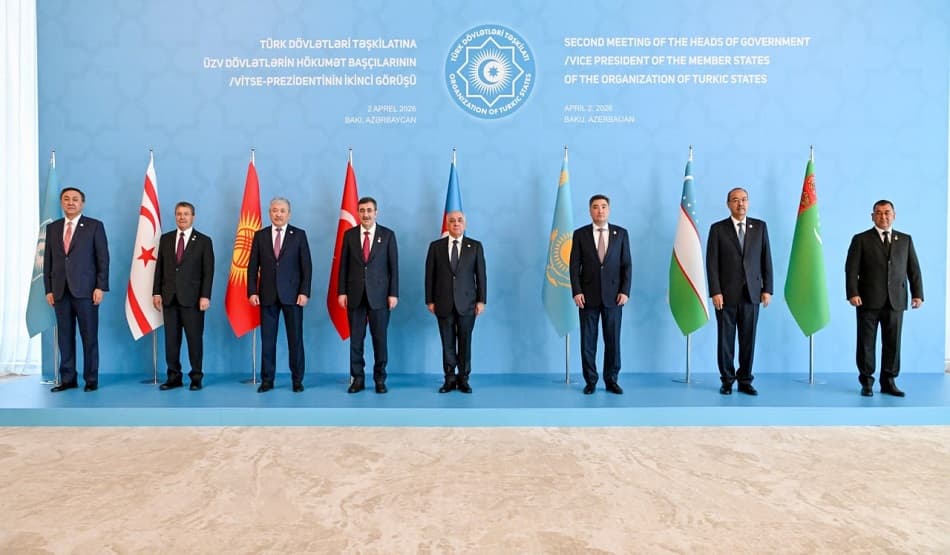
The contacts held by Kazakh Prime Minister Olzhas Bektenov in Baku revealed that economic and digital integration is accelerating within the Organization of Turkic States (OTS). In the meetings held with Azerbaijani President Ilham Aliyev and senior representatives of the member states, the expansion of regional trade and technology cooperation was among the priority agenda items.

Kazakh Prime Minister Olzhas Bektenov attended meetings in Baku with Azerbaijani President Ilham Aliyev and the heads of government of the Organization of Turkic States (OTS). Among the main issues discussed at the meetings were the completion of the Digital Economy Partnership Agreement (DEPA), the launch of the regional metrology organization TurkMET, and the development of the Turan Special Economic Zone in Turkistan for joint ventures and technology clusters.

Trade Among Turkic States Reaches $12.9 Billion and Sets New Targets

While it was stated that the trade volume between Kazakhstan and OTS countries had reached $12.9 billion as of 2025, the parties emphasized that this potential has not yet been fully utilized. It is aimed to pave the way for new investment opportunities in many sectors, especially industry, agriculture, energy, and logistics. In particular, the Digital Economy Partnership Agreement (DEPA) and joint technology projects aim to integrate the region more strongly into global digital trade networks.

A Strategic Move in the Middle Corridor and Logistics

One of the most striking topics in the talks was the strengthening of the Middle Corridor, which is a critical trade route between Europe and Asia. With the opening of the Zangezur Corridor, transit transportation in the region is expected to accelerate, while the Digital Monitoring Center project proposed by Kazakhstan is planned to make logistics processes more transparent and efficient. These developments may increase the strategic importance of the region by accelerating the search for alternative routes in China-Europe trade.

Artificial Intelligence and Digital Transformation in Focus

The projects presented by Kazakhstan within the scope of its “Year of Digitalization and Artificial Intelligence” also attracted attention. The Digital Solutions Center, planned to be established in cooperation with the United Nations Economic and Social Commission for Asia and the Pacific (UNESCAP), aims to increase the technological capacity in the region. In addition, energy efficiency, water management, and cross-border digital infrastructure projects were addressed in alignment with sustainable development goals.

From a Regional Ecosystem to a Global Player

In the joint statement published at the end of the meeting, support for Azerbaijan’s chairmanship was emphasized, while it was stated that cooperation advancing through concrete projects would be increased. This new model of cooperation developing among the Turkic States may significantly increase not only regional trade, but also global competitiveness in the fields of e-commerce, the data economy, and digital infrastructure.

Primis CEO: “We Solve the Black Box of International Logistics”

Primis

The increasing complexity in cross-border e-commerce is forcing brands to seek strong solutions not only before the sale but also after the purchase. At this point, Primis stands out with its integrated structure extending from returns management to compliance, from logistics to digital invoicing. Operating in global markets, primarily the GCC, Primis offers e-commerce brands a next-generation cross-border operating model that aims to deliver not only operational efficiency but also sustainable growth and customer loyalty. We spoke with Primis Founder and CEO Rebecca Griffiths about the company’s vision!

“We Built a Unified Platform That Centralizes Sales, Inventory, and Returns”

Rebecca Griffiths said, “The story of Primis is based on solving the fragmented structure of cross-border trade through technology,” and continued as follows: “Although many brands have a returns portal, they lack the core infrastructure to make it work at a global scale. We solve the part of international logistics that remains a ‘black box.’ We built a unified platform that centralizes all sales, inventory, and returns. However, unlike a standard SaaS tool, our technology is vertically integrated with physical hubs. This structure solves core problems such as compliance and visibility: it ensures that products are legally able to enter a market before they are shipped and that returns are processed locally and efficiently.”

In response to the question, “How do you evaluate the impact of post-purchase processes (shipping, tracking, returns) on customer loyalty for e-commerce brands?”, Griffiths replied: “Post-purchase is the point where loyalty is either gained or lost. In markets like the GCC, the complexity of customs and returns processes often undermines trust. Our technology bridges this gap. By offering Branded Tracking and a localized Returns Portal in Arabic, we keep the customer within the brand’s ecosystem rather than the carrier’s. When you digitize the experience—like with our new Primis Paperless solution—you not only ensure compliance (such as Saudi Arabia’s ZATCA regulations) but also create new touchpoints for loyalty through dynamic advertising slots on digital receipts.”

Primis’s Core Engines

Rebecca Griffiths also explained the modules developed by Primis for brands:

“Currently, our clients derive the greatest value from our core engines: Primis Tracking & Returns and Primis Connect (GCC).

  • Primis Connect (GCC): This is the solution that ‘unlocks’ international brands. It provides an end-to-end infrastructure that connects digital storefronts directly to our local warehousing and 3PL network, enabling retailers to enter the GCC market with the speed and reliability of a local player.
  • Primis Tracking & Returns: This module significantly reduces support requests by keeping customers on a branded tracking page and automating the returns flow, which is critical for maintaining customer satisfaction in this high-demand market.”

“We Eliminate the Costs of Stuck Shipments and Return-to-Sender”

Primis Founder Griffiths also touched on the differentiation the company creates in reducing shipping costs and increasing operational efficiency: “Competitors often leave customs compliance to the merchant or the carrier. Our system integrates Compliancy Guidance directly into the workflow. By ensuring that a product catalog is compliant before shipment, we eliminate the costs of stuck shipments and return-to-sender. In addition, our ‘Easy Export’ feature simplifies the data flow from your Shopify store by providing reporting in multiple formats, while allowing you to retain full data ownership.”

“In 2025, We Evolved from a ‘Returns’ Player into a ‘Compliance and Operations’ Platform”

Griffiths evaluated the company’s 2025 performance as follows: “2025 was a year of technological consolidation. We moved beyond being just a ‘returns’ player and became a ‘compliance and operations’ platform. We successfully launched our HS Code application, proving that we can automate the most complex part of cross-border trade. We also rolled out Primis Paperless, positioning us ahead of the regulatory curve in the GCC.”

Commenting on the challenges e-commerce brands faced in post-purchase processes in 2025, Griffiths stated, “The biggest challenges were global compliance and data ownership.” She added: “Brands using competitor solutions experienced fragmented data silos or customs delays because their returns software did not communicate with the logistics reality. Brands struggled with ‘fragmented logistics’ and ‘complex returns.’ They needed a solution that allowed product data to remain in the store (for example, on Shopify) while still being optimized for international borders—this is exactly what our new compliance tools address.”

“The Dominant Trend Will Be ‘Compliance as a Service’ and ‘Paperless Operations’”

She explained the trends expected to stand out in e-commerce on the post-purchase experience side in 2026 as follows: “The dominant trend will be ‘compliance as a service’ and ‘paperless operations.’ As regions like Saudi Arabia introduce strict digital invoicing mandates (ZATCA), brands effectively cannot operate without technologies like Primis Paperless. The trend is shifting from a focus on returns alone to total lifecycle management—from HS code classification at checkout to digital receipts and fraud-proof returns at the counter.”

Features That Differentiate Primis from Competing Solutions

Primis Founder and CEO Rebecca Griffiths said: “The most fundamental difference is compliance and control. Solutions like Rebound, Loop, or Returnbear are extremely good at generating a QR code for a return. But they often stop there. Primis goes deeper. We own the compliance layer (HS codes, ZATCA compliance) and the physical layer (warehousing, local hubs). Competitors focus on the software interface. Primis focuses on the entire cross-border reality. We ensure the product is legal to ship, manage digital invoicing, and physically process the return in-market. We are not just a returns app; we are a cross-border operating system.”

AI Boom Accelerates as E-Commerce Tech Drives 100% Surge in Foundational Funding

AI Boom Accelerates as E-Commerce Tech Drives 100% Surge in Foundational Funding

The global investment landscape is undergoing a major shift as foundational AI startups attract unprecedented levels of capital, signaling a new phase for digital commerce infrastructure.

According to Crunchbase data, funding to foundational AI companies – including firms developing large-scale generative models – reached $178 billion in Q1 2026 alone, doubling the $88.9 billion raised across all of 2025.

This sharp increase highlights how artificial intelligence is rapidly becoming the backbone of e-commerce, powering everything from personalization and search to logistics optimization and customer service automation.

E-Commerce Transformation Accelerates with AI Investment Boom

The surge in funding is heavily concentrated among a small group of dominant players. Companies such as OpenAI, Anthropic, and xAI are capturing a disproportionate share of global capital, reflecting a growing “winner-takes-most” dynamic in the AI ecosystem.

OpenAI alone has raised over $120 billion, marking one of the largest private funding rounds in history. Meanwhile, Anthropic secured $30 billion, and xAI raised $20 billion, reinforcing their positions as leading forces shaping the future of digital infrastructure.

Beyond the scale, the structure of funding is also shifting. While fewer deals are being made – just 24 major transactions in Q1 2026 – the average deal size has grown significantly, indicating that investors are placing larger, more concentrated bets on a limited number of AI leaders.

This trend comes after years of broader but less focused venture investment. In contrast, today’s capital allocation strategy prioritizes companies building foundational models that can be applied across industries, including e-commerce platforms, marketplaces, and payment systems.

The impact on e-commerce is already visible. AI-driven tools are enabling faster product discovery, smarter recommendation engines, automated customer support, and more efficient supply chain operations. As these technologies mature, they are expected to redefine how online businesses operate and scale globally.

At the same time, the dominance of a few major players raises concerns about market concentration. With a significant portion of venture funding flowing into just a handful of companies, smaller startups may face increasing challenges in accessing capital and competing at scale.

Still, investor confidence remains strong. AI-related startups accounted for nearly 50% of global venture funding in 2025, underscoring the sector’s central role in the future of digital economies.

As the AI race intensifies, the connection between foundational models and e-commerce will only deepen. What was once considered a supporting technology is now becoming the core infrastructure powering the next generation of online commerce.

Source: Crunchbase

E-Commerce Faces Checkout Challenge as 3 Payment Options Drive 30% More Conversions

E-Commerce Faces Checkout Challenge as 3 Payment Options Drive 30% More Conversions

Checkout has become the most critical battleground in e-commerce, where even small friction points can determine whether a sale is completed or abandoned. New data shows that payment flexibility is now one of the strongest drivers of conversion.

According to research from ACI Worldwide, nearly 70% of online shoppers abandon their carts, contributing to an estimated $4 trillion in lost sales globally. The key issue is no longer pricing or shipping it is the lack of preferred payment options.

Retailers that rethink their payment strategy can significantly improve performance. Offering the right mix of payment methods rather than just one or two can increase conversion rates by up to 30%, highlighting how crucial payment choice has become in modern e-commerce.

E-Commerce Growth Is Now Driven by Flexible Payment Options

The shift is being driven by three key payment categories: digital wallets, account-to-account (A2A) payments, and alternative options such as Buy Now, Pay Later (BNPL). These methods reduce friction and align better with how consumers prefer to shop, especially on mobile devices.

Mobile commerce remains the weakest link in conversion performance despite generating 68% of total traffic. High friction at checkout particularly manual entry of payment details pushes abandonment rates as high as 85% on mobile.

Solutions such as one-click checkout, biometric authentication, and stored payment credentials are helping address this issue. Digital wallets, in particular, allow users to complete purchases instantly without entering card details, significantly improving user experience.

Consumer expectations are also evolving rapidly. In 2024, 61% of shoppers abandoned purchases because their preferred payment method was not available. Despite this, more than one in five e-commerce websites still offer only a single payment option a gap that directly impacts revenue.

Each additional relevant payment method can increase conversions by an average of 7%, meaning that a well-optimized combination of three options can deliver substantial cumulative gains.

Beyond convenience, trust is becoming a decisive factor. Bank-backed solutions like Paze are gaining traction by offering secure, tokenized transactions without requiring app downloads. This addresses growing concerns around security, with 82% of consumers trusting bank-based payment systems more than third-party providers.

For retailers, the message is clear: more payment options do not necessarily mean better outcomes but the right, localized mix does. Successful merchants are increasingly using data-driven strategies to tailor payment methods based on customer behavior, geography, and device usage.

As e-commerce continues to scale, payment infrastructure is also evolving. Cloud-based systems, intelligent routing, and AI-driven authentication are enabling businesses to deliver faster, more seamless checkout experiences while maintaining security and performance.

In this new landscape, payment is no longer just a backend function. It has become a strategic growth lever one that can directly influence conversion rates, customer trust, and long-term revenue.

Source: E-Commerce Times