WORLDEF Istanbul 2026 - Upcoming Event

Register Now

TikTok Shop Sees Strong 32% Higher Online Spending in Germany After 1 Year

TikTok Shop Sees Strong 32% Higher Online Spending in Germany After 1 Year

TikTok Shop is strengthening its position in Germany’s e-commerce market just one year after launch, with new NielsenIQ data showing that the platform is attracting more users, generating more frequent purchases, and expanding beyond its early niche. It now ranks 15th among online retailers tracked by NIQ in the country.

Adoption has risen steadily over the past year. Around six months after launch, 10.5% of online shoppers in the NielsenIQ panel had made at least one purchase on TikTok Shop. That figure has now climbed to just over 15%, suggesting that more consumers are not only trying the platform but continuing to shop through it.

TikTok Shop Expands Beyond Gen Z to Become Mainstream Channel

The category mix is also becoming broader. While beauty and personal care remain important, fashion now generates the largest share of TikTok Shop revenue in Germany at 17%. Electronics follow at 16%, while home and household-related products account for 14%. Other categories, including culture, games, appliances, food, and pet supplies, are also gaining momentum.

One of the most notable shifts is in audience behavior. Although Generation Z remains a major user group, it is no longer the only driver of platform growth. Generation Z and Generation X each make up 33% of buyers, while shoppers aged 47 to 66 generate the highest share of revenue at 37%. This points to TikTok Shop evolving from a youth-led social commerce channel into a broader mainstream retail platform.

Customer engagement is rising as well. Purchase frequency increased from 2.3 orders in October 2025 to 3.3 orders in recent months, indicating that TikTok Shop is becoming part of regular shopping routines rather than being used only occasionally.

The spending gap is another strong signal for e-commerce players. Consumers who shop via TikTok spend an average of €2,564 annually online, compared with €1,939 among non-users, a difference of around 32%. They also shop roughly every eight days, although their average basket value of €56.50 remains slightly below the wider e-commerce average.

For the wider e-commerce industry, the German market offers a clear message: TikTok Shop is no longer just an experimental channel. Its growth is being supported by repeat purchases, rising user adoption, and expanding product demand across multiple generations. As social commerce continues to mature, TikTok Shop is becoming a more established force in Europe’s digital retail landscape.

Source

E-Commerce Growth Accelerates as DP World Expands End-to-End Logistics Across 100+ Countries

E-Commerce Growth Accelerates as DP World Expands End-to-End Logistics Across 100+ Countries

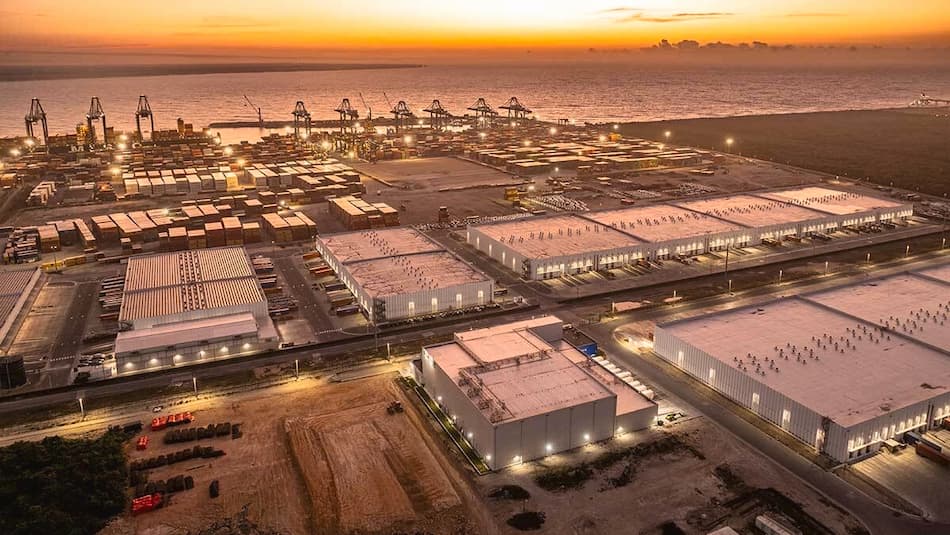
DP World is strengthening its logistics footprint in Mexico by rolling out an integrated end-to-end supply chain model, as the company leverages its presence across more than 100 countries to streamline global trade flows.

The move comes as e-commerce and nearshoring trends reshape supply chains, pushing companies to seek faster, more reliable logistics solutions across North and Central America.

A Fully Integrated Supply Chain Model

DP World’s end-to-end logistics model connects every stage of the supply chain from origin to final delivery within a single ecosystem. This includes freight forwarding, warehousing, customs clearance, and last-mile delivery.

By minimizing intermediaries, the company aims to improve efficiency, reduce delays, and offer greater cost predictability for businesses operating in Mexico and beyond.

The expansion builds on DP World’s growing presence in the country, including new freight forwarding operations in Mexico City designed to enhance regional connectivity.

Mexico’s Role in a Shifting Global Supply Chain

Mexico is rapidly emerging as a strategic logistics hub, fueled by nearshoring and its proximity to the US market.

As manufacturers relocate production closer to North America, demand for integrated logistics services continues to rise. DP World’s infrastructure investments, including warehousing and distribution facilities, are positioned to support this transformation.

Its global network spanning 100+ countries allows the company to connect Mexican supply chains with international markets more efficiently.

What It Means for E-Commerce

For e-commerce businesses, the shift toward integrated logistics is critical.

DP World’s model enables:

  • Faster order fulfillment
  • Improved inventory visibility
  • More efficient returns
  • Seamless omnichannel operations

By combining first- and last-mile capabilities, the company helps reduce delivery times while improving customer experience – key factors in competitive e-commerce markets.

A Strategic Shift in Logistics

As global trade becomes more complex, logistics providers are evolving into full-service supply chain partners.

DP World’s expansion in Mexico reflects a broader transformation: logistics is no longer just infrastructure-it is a core driver of e-commerce growth.

Source

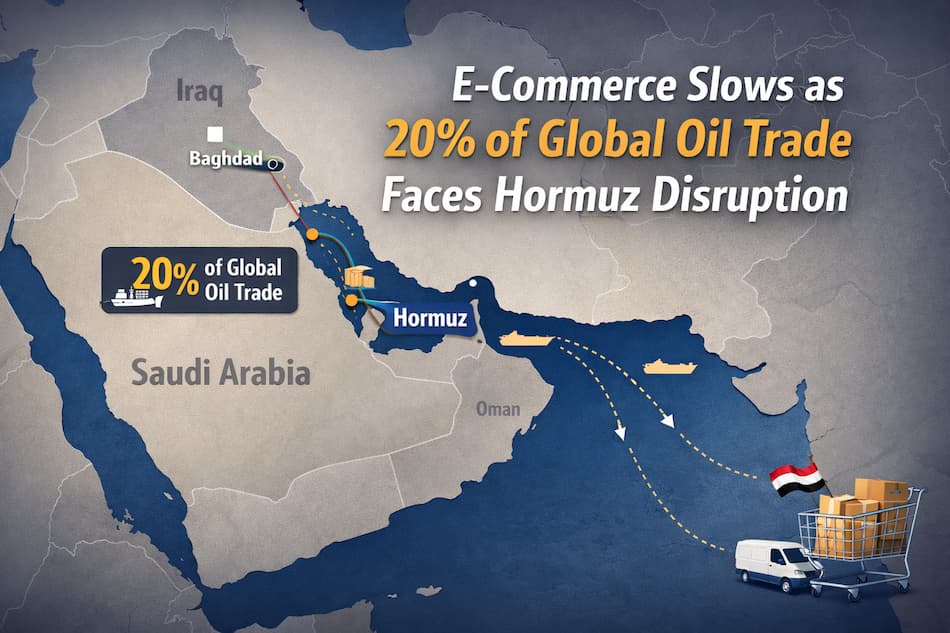
E-Commerce Hit by Hormuz Crisis as 20% of Global Oil Trade Is Affected

strait-of-hormuz-disruption-slows-iraqi-e-commerce-as-costs-rise-and-deliveries-delay

The ongoing disruption in the Strait of Hormuz is beginning to ripple through Iraq’s digital economy, with e-commerce businesses facing rising costs, delayed deliveries, and increasing order cancellations.

Online retailers across Iraq report mounting logistical challenges as shipments-many routed through key global trade corridors are slowed or rerouted. The impact is particularly visible in delivery timelines, once considered a competitive advantage for e-commerce platforms.

Delivery Delays and Rising Cancellations

Small and medium-sized online sellers are among the hardest hit. Many rely on imported goods from international suppliers, particularly in Asia, making them highly dependent on stable shipping routes.

Retailers say delayed shipments have triggered a surge in cancellations, as customers opt out of purchases when delivery times become uncertain. Sellers are also absorbing additional operational pressure, balancing customer expectations with limited control over supply chain disruptions.

Transport costs have increased significantly, squeezing already thin margins. Some businesses are choosing to maintain prices to remain competitive, even as profitability declines.

Supply Chain Pressure Hits Core E-Commerce Model

The Strait of Hormuz is one of the world’s most critical maritime trade routes, handling a substantial share of global energy and cargo flows. Any disruption quickly translates into higher fuel prices and shipping costs globally, directly impacting online retail.

Economists warn that e-commerce built on speed, affordability, and product availability is especially vulnerable to such shocks.

Higher oil prices are already driving up logistics expenses across both air and sea freight. This, in turn, is increasing product prices, reducing consumer purchasing power, and weakening demand in price-sensitive markets like Iraq.

Reduced Variety and Slower Market Activity

Beyond delays, the disruption is also affecting product availability. Import-dependent markets are seeing reduced variety as supply chains slow, particularly for goods sourced from China and India.

This shift is forcing e-commerce platforms and sellers to rethink inventory strategies, promotional campaigns, and pricing models. Some larger players may pass costs directly to consumers, while smaller sellers risk losing market share.

Experts note that emerging markets tend to feel the impact more sharply due to their reliance on imports and limited logistical alternatives.

A Structural Challenge for Digital Commerce

The situation highlights a broader vulnerability in global e-commerce: dependence on key geopolitical chokepoints.

As disruptions in the Strait continue, Iraqi e-commerce is likely to remain under pressure, with longer delivery cycles, higher prices, and reduced competitiveness shaping the market in the near term.

For the sector, the crisis serves as a reminder that digital commerce is only as resilient as the physical infrastructure behind it.

Source

Surprise in the E-Commerce Moratorium: 23 Countries Reached an Agreement Among Themselves!

E-Commerce Moratorium

After World Trade Organization (WTO) members failed to reach an agreement on extending the long-standing e-commerce moratorium, a group of countries agreed among themselves not to impose e-commerce customs duties.

Days of talks were held among trade ministers of WTO member countries in Yaounde, the capital of Cameroon. The meeting broke up on Monday after Brazil and Türkiye blocked the attempt to extend the WTO e-commerce moratorium, which had been in place for 28 years.

23 Countries Signed the Agreement

According to a document seen on Thursday, a group of WTO member countries agreed among themselves not to impose e-commerce customs duties. The 23 countries that signed the e-commerce moratorium agreement included countries such as the United States, the United Kingdom, Japan, and Mexico. The WTO has 166 members, and consensus is required to conclude global negotiations.

The issue is expected to be raised again by the broader membership at a meeting to be held in Geneva in early May. It is still not clear whether any country has already introduced new duties that could apply to digital downloads and streaming services.

What Is the WTO E-Commerce Moratorium, and Why Does It Matter?

The e-commerce moratorium is a global agreement among World Trade Organization (WTO) members that prohibits customs duties on electronic transmissions such as digital downloads and streaming. This policy was established during the WTO’s Second Ministerial Conference held in Geneva in 1998 in order to promote digital trade.

It covers cross-border transmissions such as software downloads, e-books, music and movie streaming, and video games. The e-commerce moratorium, which was initially temporary, was renewed approximately every two years. It was most recently extended for two years at the 13th conference held in 2024. The e-commerce moratorium expired on March 31, 2026, when the 14th WTO Ministerial Conference held this month in Yaounde, Cameroon, came to an end.

Supporters of the extension, including major digital economies such as the United States, the European Union, Canada, and Japan, argue that it provides stability for global digital trade and protects businesses from new duties that could increase costs. More than 200 global business organizations called for the extension of the moratorium. They warned that its end would increase costs and hinder cross-border e-commerce.

Brazil and Türkiye Opposed the Moratorium

Some developing countries, including Türkiye, India, and Brazil, opposed the extension. These countries argue that the e-commerce moratorium prevents them from obtaining customs revenue necessary for infrastructure and from addressing the digital divide. Research points to significant potential revenue losses for these countries; however, some studies show that these losses could be offset by other forms of taxation.

At the last conference, four proposals regarding the moratorium were presented: the African, Caribbean and Pacific Group requested a temporary extension, while the United States sought a permanent extension. Other groups proposed both permanent extensions and the establishment of committees on digital trade.

Differences over the period for which the moratorium could be extended caused the 14th Ministerial Conference in Yaounde to remain inconclusive. The driver of the idea of longer extensions beyond two years was the United States, which sought a permanent extension. Later in the negotiations, it reduced this demand to four years. Other members were willing to move along with the United States, but Brazil and Türkiye held their ground for only a two-year extension, which has been the norm since the moratorium was first imposed in 1998.

Deadlock Over the E-Commerce Moratorium in WTO Talks

The WTO’s 14th Ministerial Conference, which began on March 26 in Yaounde, the capital of Cameroon, ended on Monday, March 30, with an “e-commerce deadlock.” At the conference, talks were held among trade representatives and high-level officials from approximately 166 countries. Tense negotiations were conducted for four days.

Brazil objected to the e-commerce decision in protest over issues stemming from a separate debate related to agriculture. The e-commerce agreement was blocked at the last minute by Brazil. The United States had sought a permanent extension of the moratorium on taxes in such transactions, while Brazil requested an agreement for it to continue for only four more years.

WTO Director-General Ngozi Okonjo-Iweala also said that the United States and Brazil in particular “need more time” to resolve their disagreements over imposing duties on cross-border online orders.

A U.S. official, commenting on the talks, said, “This is not the United States versus Brazil. This is Brazil and Türkiye versus 164 members.” Brazil, meanwhile, accused Washington of “wanting the sky.”

E-Commerce Tariffs Will Be Discussed in Geneva

WTO representatives said that the talks will continue at the headquarters in Geneva until at least May. International Chamber of Commerce Secretary General John Denton said that failure to reach an agreement on e-commerce tariffs at the meeting “risks further increasing policy uncertainty at exactly the wrong time for the real economy.”

Denton said, “Now, a determined effort must be made to restart the talks in Geneva without delay. Reinstating the WTO’s e-commerce moratorium should be an urgent priority. Exposing digital services, one of the few drivers of global growth, to the threat of customs duty barriers makes no sense at all in an already fragile economic environment.”

India Backtracks: ‘We Are Open to a Longer Moratorium in E-Commerce’

Meanwhile, in a significant strategic reversal, India announced at the WTO that it is open to extending the moratorium on e-commerce taxation beyond the standard two-year period.

As part of this change in stance, India said at the World Trade Organization (WTO) that it is ready to consider extending the moratorium on taxation of cross-border electronic transmissions beyond the traditional two years, citing the need to provide predictability to businesses.

Commerce and Industry Minister Piyush Goyal said, “India’s stand was that we should look at a little longer period so that businesses can plan their business activities for a longer period. This is still under discussion among various countries, and will be finalized in the next one or two months in Geneva.”

India had been expressing the view that the moratorium in place since 1998 should not be extended. This position was also reiterated at the WTO General Council meeting held in December 2025. The e-commerce moratorium expired on March 31, 2026.

The Global Data Center Market: A 900% Capacity Surge Reshaping E-Commerce Infrastructure

The Global Data Center Market

The physical “operating system” of the global digital economy is undergoing a massive transformation. As e-commerce platforms and AI-driven logistics become more computationally intensive, the infrastructure supporting them is experiencing unprecedented growth.

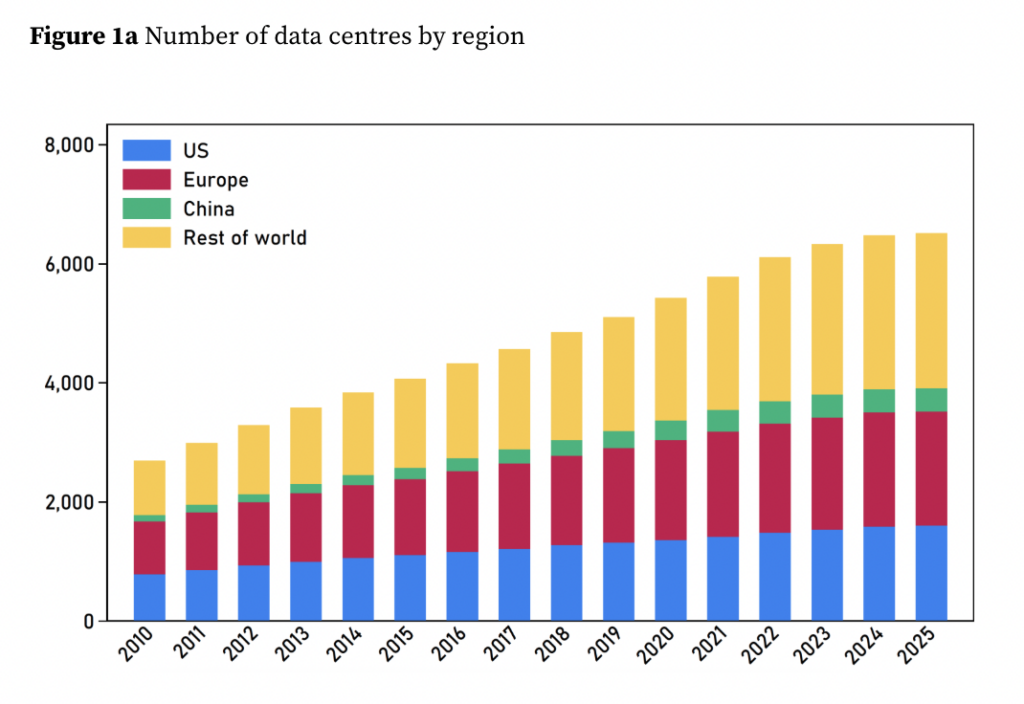
In a newly released analysis for VoxEU, economists Fabrizio Ferriani and Andrea Gazzani of the Bank of Italy highlight a staggering shift: while the number of facilities has grown steadily, the global data center market capacity has surged by 900% since 2010.

For the e-commerce community, this isn’t just a technical stat; it is the new frontline of digital sovereignty and market resilience.

US Dominance and the Rise of the “Hyperscalers”

In the race to power the next generation of AI and cross-border trade, the geographical concentration of power is stark. The United States currently controls 50% of global IT capacity, followed by Europe at 18% and China at 10%.

However, the real story lies in who owns the hardware. A small group of US-based “hyperscalers”, AWS, Google, Meta, and Microsoft, now account for approximately 70% of global self-built IT capacity. For global e-commerce, this means the vast majority of cloud-based retail operations and AI model training are tethered to a handful of providers.

Energy Constraints: The New Friction in the Digital Economy

Data centers are no longer invisible warehouses; they are major industrial energy consumers. This “power hunger” is creating new friction points in the global data center market:

  • Localized Price Pressure: In data-intensive regions like Virginia, these facilities now account for 26% of total electricity supply, driving up retail prices for local businesses.
  • The AI Multiplier: A single 10 MW data center now consumes as much electricity as 20,000 European households.
  • Infrastructure Shifting: Governments are moving toward a “pay-to-play” model. The authors note that the US Ratepayer Protection Pledge now requires tech firms to secure their own generation capacity rather than relying solely on the public grid.

Why This Matters for MENA and Strategic Autonomy?

As we look at the UAE’s role as a “global operating system,” the resilience of our digital infrastructure is paramount. Ferriani and Gazzani suggest a looming challenge of strategic autonomy. As AI becomes central to economic productivity and e-commerce logistics, relying on foreign-controlled infrastructure presents risks to data governance and long-term cost stability.

For regions like MENA, which are rapidly building out logistics hubs like Jebel Ali, the “energy-for-data” trade-off is becoming a central policy pillar. The transition from colocation (renting space) to self-built hyperscale facilities is raising the barriers to entry for sovereign digital infrastructure.

The Future of E-Commerce: Global Data Centers in 2026 and Beyond

The expansion of the global data center market is the “engine room” of the next phase of e-commerce. As we track market trends this year, the narrative is shifting. The question is no longer just about who has the best algorithm, but who has the most reliable access to the grid and the physical hardware to run it.

To sustain growth in an era when “friction is inevitable,” businesses must closely examine their infrastructure providers. The rules of the game have quietly changed, and power is the new currency of the digital trade.

Ultimately, the data from Ferriani and Gazzani serves as a wake-up call for the e-commerce ecosystem. We are moving away from a world of “cloud-first” toward “infrastructure-certainty.” For brands and platforms, 2026 will be the year when supply chain resilience is measured not just by the speed of a delivery truck but also by the stability of the server rack. As the digital and energy transitions collide, the winners will be those who treat data center capacity as a strategic asset rather than a utility bill.

Europe’s Ecommerce Faces Sharp Divide as Netherlands Slips 1% While Sweden Surges 10% in 2025

Europe’s Ecommerce Faces Sharp Divide as Netherlands Slips 1% While Sweden Surges 10% in 2025

Europe’s e-commerce story in 2025 is not one of uniform growth, but of divergence.

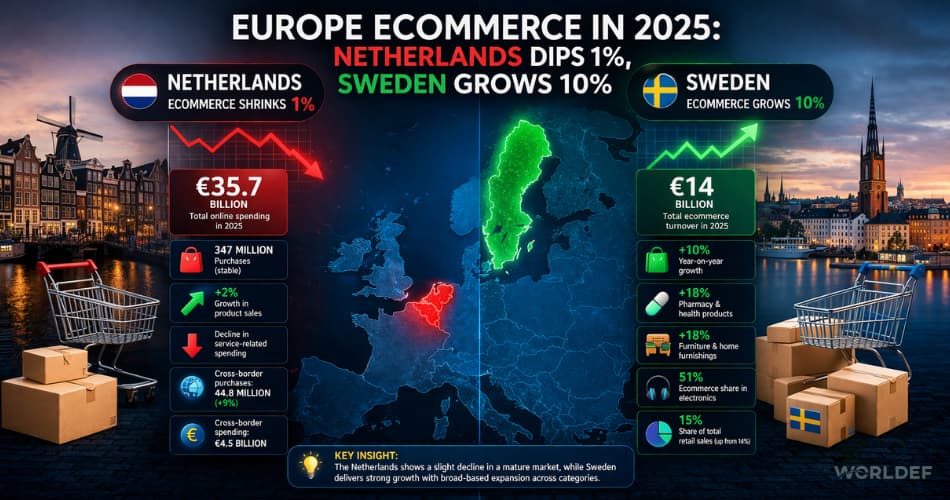
Two of the continent’s most advanced digital markets, the Netherlands and Sweden, moved in opposite directions, revealing a deeper shift in how e-commerce is evolving across mature economies. While Dutch e-commerce recorded a 1% decline, Sweden surged ahead with 10% growth, underscoring a widening gap between stabilization and expansion phases in Europe’s digital commerce landscape.

A Subtle Slowdown in the Netherlands

At first glance, a 1% drop in e-commerce spending in the Netherlands, totaling around €35.7 billion ,may appear like a warning sign. In reality, it tells a more nuanced story.

This is a market that has already reached high penetration levels. Growth is no longer driven by volume, but by structural shifts within consumer behavior.

Transaction volumes remained stable, and even more tellingly, online product sales continued to grow. Categories such as home & living, electronics, and toys maintained upward momentum. What dragged overall performance down was not demand, but a decline in service-related spending, a segment that had previously inflated e-commerce figures.

At the same time, Dutch consumers are increasingly looking outward. Cross-border e-commerce expanded rapidly, with spending reaching €4.5 billion. This signals a clear transition: domestic platforms are facing stronger competition as consumers turn to global marketplaces for price, variety, and convenience.

In essence, the Netherlands is not shrinking, it is rebalancing.

Sweden’s Return to Strong Growth

While the Netherlands adjusts to maturity, Sweden is moving with renewed energy.

E-commerce in Sweden grew by 10% in 2025, reaching approximately €14 billion, marking one of its strongest performances in recent years. Unlike the Dutch case, this growth is not selective, it is broad and consistent across sectors.

Health and pharmacy products saw particularly strong demand, alongside home furnishings ,both categories benefiting from long-term lifestyle shifts. Electronics, already a dominant segment, continued to deepen its online penetration, with more than half of purchases now happening digitally.

E-commerce’s share of total retail also edged higher, reaching 15%, reinforcing its role as a central pillar of Sweden’s retail economy rather than a complementary channel.

Sweden’s performance reflects more than recovery – it signals continued expansion in a still-developing digital retail environment.

Two Markets, Two Realities

Placed side by side, these markets highlight a critical truth: Europe’s e-commerce ecosystem is no longer moving in sync.

  • The Netherlands represents a post-growth market, where optimization, competition, and cross-border pressure define the next phase
  • Sweden reflects a growth-driven market, where penetration is still increasing and demand continues to expand

This divergence is not a contradiction – it is a natural evolution of e-commerce maturity.

The Strategic Shift Ahead

For e-commerce players operating in Europe, this split has clear implications.

Growth strategies that worked across the region five years ago are no longer universally effective.

  • In mature markets like the Netherlands, success will depend on differentiation, pricing strategy, and cross-border positioning
  • In growth markets like Sweden, the focus remains on scaling, category expansion, and customer acquisition

The era of “one Europe, one strategy” is over.

A Fragmented but Promising Future

Europe’s e-commerce future is not slowing down – it is becoming more complex.

Some markets are stabilizing, refining their structures and redefining growth drivers. Others are still accelerating, offering strong opportunities for expansion.

Understanding this two-speed dynamic will be essential for brands, marketplaces, and investors navigating the next phase of global e-commerce.

Because in 2025, the real story is not whether e-commerce is growing, but where, how, and why.

Source:

Ecommerce News Europe

Digital SEZ Integration Drives 5 Powerful Shifts in Global E-Commerce

Digital SEZ Integration Drives 5 Powerful Shifts in Global E-Commerce

The global trade landscape is undergoing a structural transformation as digital capabilities are integrated into traditional Special Economic Zones (SEZs). Once designed primarily to attract manufacturing investment and boost exports, SEZs are now evolving into hybrid ecosystems where physical infrastructure meets digital commerce.

According to a recent analysis by The Dialogue, this convergence is not only strengthening regional competitiveness but also unlocking new growth pathways for e-commerce businesses operating across borders.

From industrial zones to digital commerce hubs

The role of SEZs is expanding beyond production. By embedding technologies such as data infrastructure, e-commerce platforms, and smart logistics systems, these zones are becoming end-to-end trade environments.

This transformation allows businesses to manage the entire value chain-from manufacturing to global distribution-within a single, integrated ecosystem. For e-commerce players, this means faster operations, reduced friction, and greater scalability.

Accelerating cross-border e-commerce

One of the most immediate impacts of digitally integrated SEZs is the reduction of cross-border trade barriers. Simplified customs procedures, tax incentives, and streamlined regulations create a more efficient environment for international transactions.

As a result, brands can expand into new markets more easily, while consumers benefit from faster delivery times and broader product availability. This shift is reinforcing the rise of borderless e-commerce models, where geography becomes less of a constraint.

Logistics becomes a competitive advantage

Location has always been a key advantage of SEZs, with most zones positioned near ports, airports, and major transport corridors. However, when combined with digital systems, this advantage becomes significantly more powerful.

Real-time inventory tracking, automated warehousing, and data-driven supply chain optimization are enabling e-commerce companies to shorten delivery cycles and improve fulfillment accuracy. In a market where speed is critical, this creates a clear competitive edge.

A catalyst for digital investment

Digitally enhanced SEZs are increasingly attracting investment from global technology players, including e-commerce platforms, fintech providers, and logistics innovators. This influx of capital is strengthening the broader ecosystem, enabling faster innovation and improved infrastructure.

For businesses operating within these zones, the benefits are twofold: access to advanced technologies and proximity to a growing network of digital service providers.

Empowering SMEs in global commerce

Perhaps one of the most significant outcomes is the opportunity created for small and medium-sized enterprises (SMEs). Traditionally limited by logistics costs and market access barriers, SMEs can now leverage SEZ infrastructure to reach international customers through e-commerce channels.

By lowering entry barriers and providing integrated support systems, digital SEZs are helping create a more inclusive global trade environment.

Balancing opportunity with risk

Despite their potential, experts caution that SEZs must be carefully designed to ensure long-term impact. Without the right policies, there is a risk of limited local economic integration or uneven regional development.

To fully realize their value, digital SEZ strategies need to focus on sustainability, inclusivity, and balanced growth.

The future of e-commerce infrastructure

As global trade becomes increasingly digital, SEZs are no longer just production zones. They are emerging as critical infrastructure for the next generation of e-commerce, combining logistics, technology, and policy into a single operational framework.

For e-commerce companies looking to scale internationally, digitally integrated SEZs may soon become not just an advantage-but a necessity.

Source: The Dialogue

World Data Organization Officially Established; A New Era Begins for Global Digital Trade and the Data Economy

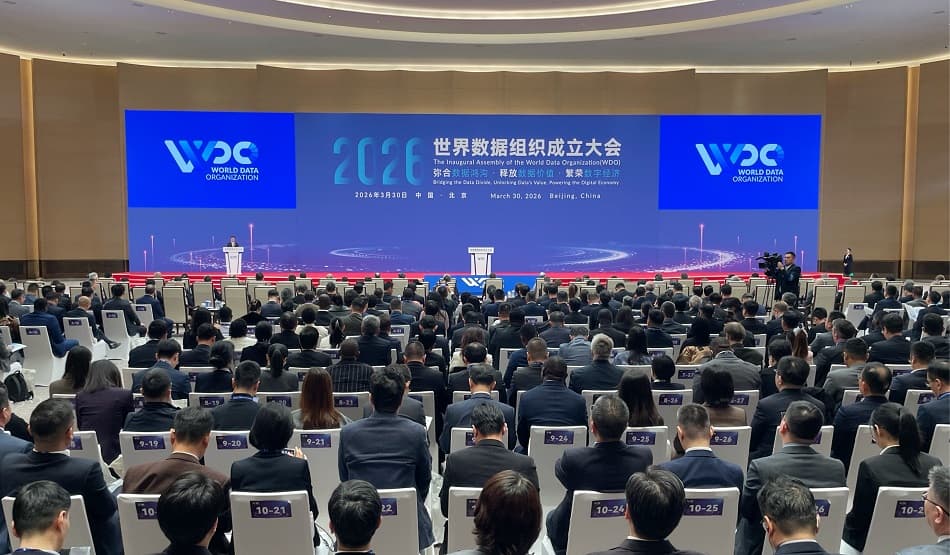
The World Data Organization (WDO) was officially established with its first general assembly meeting held in Beijing.

An important step has been taken for data governance, one of the most critical elements of the global digital economy. The World Data Organization (WDO) was officially established with its first general assembly meeting held in Beijing. The organization, which includes more than 200 members and covers more than 40 countries, aims to strengthen data-focused global cooperation by bringing together companies, universities, think tanks, and financial institutions.

The World Data Organization has become the world’s first professional international body dedicated to advancing data development and governance practices worldwide. Yang Jie, former Chairman of China Mobile, has been appointed Secretary-General of the World Data Organization.

“The Current Wave of Artificial Intelligence Is Driven by Data”

Tan Tieniu, Chairman of the World Data Organization, said that the digital economy is growing rapidly at a time when the global economic recovery continues to remain sluggish and the returns of traditional growth drivers are declining.

Tieniu said the following: “The current wave of artificial intelligence is driven by data. How we can fully unlock the potential of data and accelerate digital economic growth is a common challenge facing humanity and requires a globally recognized platform.”

It Has More Than 200 Members from More Than 40 Countries

The WDO has already brought together more than 200 members from more than 40 countries. Its diverse membership structure includes companies, universities, think tanks, international organizations, and financial institutions covering 14 sectors such as manufacturing, finance, healthcare, e-commerce, transportation, energy, and agriculture.

One of the main goals of the World Data Organization is to reduce incompatibilities arising from differing data policies among countries and to create global standards. In this context, the organization plans to develop common frameworks in data sharing, cross-border flows, and regulatory processes.

The World Data Organization Also Focuses on E-Commerce

Especially in terms of e-commerce and digital services, data now stands at the center of trade. While digital services account for more than 60% of total service exports in advanced economies, this rate remains at the level of 15% in developing countries. This difference shows that global competition is being shaped through data.

The World Data Organization will not be limited to producing policy only; it will also develop concrete projects by implementing data applications in areas such as healthcare, education, energy, and e-commerce. At the same time, it aims to reduce the digital divide by supporting talent development, especially in developing countries.

The fact that data has become a strategic resource in the age of artificial intelligence increases the importance of such initiatives. According to experts, making data flows more secure and standardized may accelerate the scaling of cross-border e-commerce.

What Will the WDO Do?

The World Data Organization will focus on two main areas:

Breaking barriers: Addressing inconsistent data policies among countries, promoting industry consensus, standard recommendations, and best practices in order to support governments and research institutions; while also helping multinational companies reduce their compliance costs.

Building ecosystems: Implementing data applications in real sectors such as healthcare, education, e-commerce, and energy in order to promote project implementation and industrial innovation; while also strengthening talent development, especially in developing countries, in order to close the digital divide.

The New Rules of Digital Trade Are Being Written

The establishment of the WDO is considered a strong indication that global trade is evolving from physical products toward data and digital services. The organization, which is expected to become an influential platform in global data governance by 2030, is opening the doors to a new field of competition for both companies and countries. This development clearly reveals that a period has begun in which the rules in the digital economy are being rewritten.

Manay CPA: End-to-End Financial Infrastructure for Establishing and Scaling a Business in the U.S.

Manay CPA

Manay CPA operates as a licensed Certified Public Accounting (CPA) firm in the United States, working with entrepreneurs and companies from all over the world that aim to enter the U.S. market. It provides services to individuals and companies conducting commercial activities across all 50 states of the U.S. Its scope of services includes company formation and structuring in the U.S., accounting and financial reporting, tax filings and tax planning, human resources/payroll processes, and financial audit services. Burcu Bree Manay, Co-Founder and CEO of Manay CPA, was a guest on WORLDEF E-COMMERCE.

Burcu Bree Manay stated, “Anyone who aims to establish a business, scale it, and grow sustainably in the United States is a natural part of our ecosystem. We offer end-to-end, tailor-made solutions shaped according to needs within this ecosystem,” and added,

“The most important factor that differentiates us is that we are not a structure that merely completes the incorporation process. During the incorporation stage, we do not focus only on documentation and registration processes. We also take into account our clients’ goals such as raising investment, growth plans, and establishing operations in different states, as well as the tax and compliance requirements they may face in the future. We provide guidance at critical strategic decision points such as selecting the company type, determining the right state, and structuring the partnership model.”

Information Pollution, Misguidance, and Failure to Structure the Right Company Setup!

Addressing the challenges experienced in accounting services in the United States, Manay CPA CEO Manay stated the following: “One of the biggest challenges is information pollution and misguidance. When individuals and companies newly entering the U.S. market do not work with the right experts, the process can become much more difficult and risky than it needs to be. Another critical issue is the failure to structure the correct company setup from the very beginning. When the company type, state selection, and partnership structure are not planned correctly, tax liabilities that should never have arisen can emerge.

In the U.S. tax system, the role of the IRS and the accuracy of filings are extremely decisive; even a seemingly small mistake can grow over time and affect commercial operations, cash flow, and the company’s administrative processes. As Manay CPA, our approach is clear; while our clients focus on their own businesses, we make doing business in the United States more predictable, sustainable, and easier for them by managing the processes in the background.”

Offering some advice to companies, Manay CPA CEO Burcu Manay said, “Doing business in the U.S. should not be viewed as limited to incorporation. What determines success is establishing the right structure and a sustainable compliance infrastructure from day one. Secondly, accounting and tax processes should not be postponed with a ‘we’ll fix it later’ approach. In the U.S., submitting filings on time and accurately directly affects a company’s good standing, financial visibility, and growth capacity in terms of IRS and state regulations. Finally, working with the right business partner makes a significant difference.”

“We Position MENA as an Important Bridge for Entering the U.S.”

Manay CPA CEO Burcu Bree Manay shared the following information regarding their goals in the MENA region: “The MENA region is a high-potential market with strategic priority for Manay CPA. The rapid growth of the region’s entrepreneurial ecosystem, the increase in cross-border trade, and the intensification of global investment mobility make the need to do business with the United States more visible every day. For this reason, we position MENA not only as a market, but as an important bridge for businesses that want to expand into the U.S. Today, we have a broad client portfolio in MENA, ranging from startups to e-commerce brands and expats in need of individual advisory services.”

Speaking about trend strategies in the sector, Manay CPA CEO stated, “The most prominent trend is the transformation of accounting and tax from ‘backward-looking reporting’ into a decision-making infrastructure that drives growth. Companies no longer expect this only once a year during the filing period; they now seek real-time visibility, predictability, and proactive tax planning throughout the year. The second trend is that, together with globalizing business models, the focus on ‘correct structuring + compliance’ has become an integral part of growth.

Especially in e-commerce and startups, when issues such as company type, state selection, partnership structure, sales tax, and payroll are not structured correctly from the outset, they can create serious costs and risks at the scaling stage. As Manay CPA, we support this transformation through a cloud-based, paperless working model, standardized process management, and an end-to-end service approach with expert teams.”

The Future of Manay CPA: A Leaner, Smarter, and More Human-Centered Structure

“As Manay CPA, we are building the future of our services on a leaner, smarter, and more human-centered structure. Our 2026 focus is very clear: while reducing operational complexity, to standardize quality by using technology more effectively and to deliver a consistent experience to the client at every touchpoint,” said Manay CPA CEO, pointing to three main pillars in this direction:

  • Simplified and measurable processes: We eliminate unnecessary steps and strengthen standards. Our goal is to establish an operational structure that does not leave quality to chance, has high cross-team applicability, and delivers measurable performance.
  • Digital-first & automation: We reduce manual workload by managing repetitive tasks through intelligent automation. In this way, our team can focus more on strategic work that creates real value for clients.
  • Consistent customer experience and trust: For us, the issue is not only service delivery, but building trust. Therefore, we further strengthen proactive communication, transparency, and a culture of ownership. Anticipating issues before they grow, sharing the process openly, and taking responsibility for the outcome form the basis of our approach.

“Artificial Intelligence Is Not a Showcase Technology, but an Operational Lever”

Stating that they position artificial intelligence not as a showcase technology but as an operational lever that enhances service quality and speed, Manay said, “Our strategy is clear: automate repetitive tasks, detect risks early, and allocate our experts’ time to high-value advisory work. We advance this approach across three layers: efficiency and automation, quality and compliance, and customer experience. Our top priority is security and privacy; data security, access authorizations, and process control are our fundamental standards.”

What Awaits E-Commerce Companies That Want to Enter the U.S.?

Finally, Burcu Bree Manay, Co-Founder and CEO of Manay CPA, offered some advice to e-commerce companies: “For e-commerce companies, the most critical step is to start with the right foundation. Making decisions based on the real needs of the business rather than gravitating toward popular states yields much healthier results. The second key issue is compliance processes. Because e-commerce businesses grow rapidly, accounting order, sales tax obligations, employee/payroll processes, and tax filing calendars can easily be overlooked; especially in newly established companies, delaying or failing to submit filings with the thought of ‘we are still small’ is a common mistake, yet in the U.S. system such deficiencies directly lead to penalties and interest.

In addition, they can critically affect the company’s commercial status, good standing, and banking/payment infrastructures. Another trend that has recently become more prominent in this area is physical office/business address requirements; stricter address verifications and expectations of real presence may come into play. E-commerce companies need to structure address/presence requirements, registration order, and compliance processes correctly from start to finish. The right structure, the right state, and disciplined compliance form the strongest trio for sustainable growth in the United States.”

AI Earthquake at Oracle: Thousands of Employees Are Being Laid Off

Oracle

US-based technology giant Oracle is preparing to part ways with thousands of employees while accelerating its artificial intelligence investments. The company’s new wave of layoffs launched on a global scale stands out as one of the most striking examples of the growing “AI-focused restructuring” trend in the technology sector.

According to sources close to the matter, although Oracle has not yet made an official announcement, it has started a downsizing process affecting thousands of employees worldwide. It is stated that the company, which had approximately 162,000 employees as of 2025, took this step in order to optimize costs and redirect resources.

Oracle’s Layoffs Could Reach 30,000 People

According to some analyses, if the layoffs reach between 20,000 and 30,000 people, the company could achieve an increase of between $8 billion and $10 billion in free cash flow. This shows that Oracle aims to strengthen its financial structure.

This decision by Oracle is directly linked to its major investments in artificial intelligence infrastructure. The company is expanding capacity to support artificial intelligence workloads, especially by increasing GPU- and CPU-based data center investments.

Oracle’s recent announcement of a $50 billion debt and equity financing plan reveals the scale of the investment. In addition, following the company’s agreement with OpenAI worth more than $300 billion, its total remaining performance obligations reached $455 billion.

Stock Pressure and Competition Were Influential

The company’s stock performance was also an important trigger in this process. While Oracle shares lost approximately 25% of their value during 2026, investors are voicing concerns about the company’s rising debt load and declining cash flow. At the same time, Oracle, which competes with giants such as Amazon, Microsoft, and Google in the field of generative artificial intelligence, is pursuing an aggressive investment strategy in order not to fall behind in this race.

Industry Players Focused on Restructuring for AI

Oracle is not alone. Recently, technology giants such as Meta, Amazon, and Atlassian have also made similar layoffs and redirected their resources toward artificial intelligence investments. According to experts, this shows that companies have entered a transformation process toward “AI-first organizations.”

Analysts emphasize that these layoffs do not mean that artificial intelligence is directly replacing employees, but rather that companies are restructuring costs in order to invest in future growth areas.

The Long-Term Goal Is to Increase AI Revenues

Oracle management, however, believes that the investments made will pay off in the long term. The company states that demand for artificial intelligence infrastructure exceeds supply and that there is strong growth potential in this area. All these developments reveal that the balance in the technology sector is changing rapidly and that companies are now reshaping their growth strategies around artificial intelligence.