WORLDEF Istanbul 2026 - Upcoming Event

Register Now

India Removed Courier Limits; Return Processes Accelerated

courier

As of April 1, 2026, India has put into effect a comprehensive reform package to accelerate e-commerce exports. With the new regulations, the 10 lakh rupee value limit applied to commercial exports made via courier has been completely removed. Thus, SMEs, artisans, start-ups, and cross-border e-commerce sellers in particular will now be able to export high-value shipments more flexibly through the courier channel without having to route them to sea or air cargo.

The 10 Lakh Rupee Value Limit for Courier Shipments Has Been Removed

At the center of the regulations implemented by the CBIC under India’s Ministry of Finance is the removal of the value ceiling in courier exports. The government expects this step to increase e-commerce-focused exports, reduce transaction costs, and lower logistics inefficiencies. It is stated that the reforms are part of the export- and SME-focused goals announced in the 2026–27 Union Budget.

A New Model for Returns and Rejected Shipments

The second important pillar of the package is formed by returned and rejected products. With the new system, the “Return to Origin” mechanism has been given a legal basis. In addition, the way has been opened for courier imports that remain in customs for more than 15 days to be sent back through a simpler process. In order to facilitate the process in cross-border e-commerce operations where high return rates are seen, CBIC has also created a risk-based re-import framework and a special return module.

The Goal Is Faster, Lower-Cost E-Exports

According to official statements, the aim of the reforms is not only to increase exports, but also to reduce waiting times, transaction complexity, and logistics costs. Especially for small businesses, the courier model offers a lower barrier to entering international markets. For this reason, the new package may contribute to India positioning itself more strongly in global e-commerce supply chains.

SMEs and Cross-Border Sellers Will Come to the Fore

The Indian government is clearly positioning the reforms as an “ease of doing business” move for SMEs, artisans, and start-ups. Budget documents had also emphasized the goal of supporting small businesses exporting through e-commerce in accessing global markets. With this latest step, India aims not only to increase volume in e-commerce exports, but also to establish a more systematic and return-friendly infrastructure.

EU Delegation Visited Beijing Over the E-Commerce Product Safety Crisis

EU

Trade tensions between the European Union (EU) and China have once again come to the forefront, this time over product safety issues stemming from e-commerce. A delegation from the European Parliament traveled to Beijing as part of a rare visit and held direct talks with Chinese officials. The focus of the meetings was on “unsafe and non-standard products” entering the European market.

E-Commerce Products Are on the EU’s Radar

European Union officials emphasize that a large portion of products entering Europe, especially through low-cost e-commerce platforms, do not meet safety and quality standards. In recent inspections, it has been stated that the rate of non-compliant products in some categories has reached as high as 80%. This situation creates serious risks not only for consumer safety but also for fair competition.

The European Union side is demanding that Chinese manufacturers and platforms comply more strictly with European Union regulations. The increase in non-standard products is drawing particular attention in high-volume categories such as toys, electronics, and textiles.

Debates Around Temu and Shein Are Deepening

Platforms such as Temu and Shein, which have frequently come to the agenda in the European Union recently, are at the center of this debate. The European Commission had previously announced that it would tighten inspections targeting these platforms. In the new period, platforms are planned to be held responsible as “importers” and made directly liable for product safety.

The Beijing Visit Is Rare but Critical

The Beijing visit by the European Parliament delegation is also being considered an important development in terms of diplomatic contacts that have declined in recent years. The meetings addressed not only product safety, but also supply chain transparency and sustainability issues. It is stated that the Chinese side is open to greater cooperation, especially to avoid disruptions to exports, but is taking a cautious approach on the grounds that regulations could slow trade.

Stricter Inspections and Higher Costs in the New Period

Analysts state that these steps by the European Union could make it more difficult in the short term for Chinese-origin products to enter the European market. This means higher costs, especially for e-commerce models based on low-cost advantage. On the other hand, the European Union’s goal is not only to increase product safety; it is also to protect local producers and restore the balance of competition. Recent developments reveal that global e-commerce is now being shaped not only by competition in price and speed, but also by regulation and safety criteria. Tensions between Europe and China in this area are expected to increase even further in the coming period.

Fortuna Expands AI Customer Service with 40+ Language Support for E-Commerce

Fortuna Expands AI Customer Service with 40+ Language Support for E-Commerce

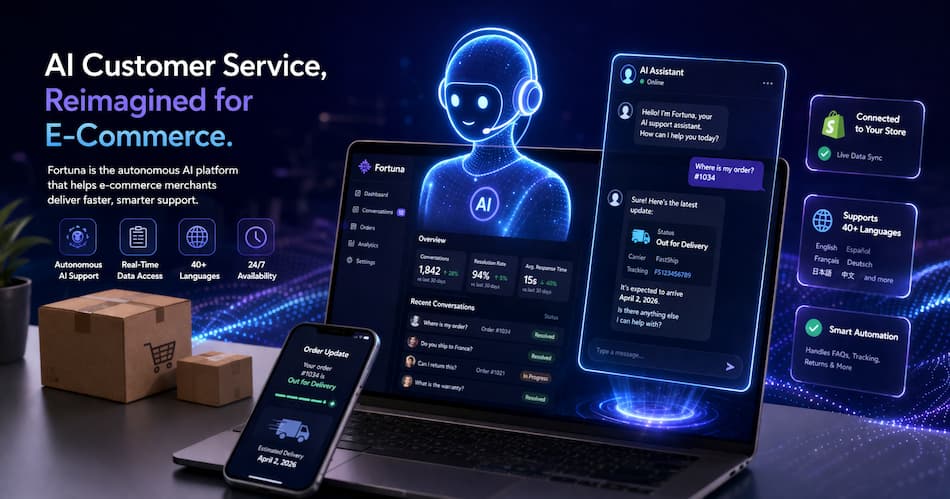
Fortune Global Limited has launched Fortuna, a new AI customer service platform designed for e-commerce merchants looking to automate support operations and improve response times. According to the company, the platform connects directly to online store databases, allowing it to access live order details, shipping updates, product information, and store policy documents when responding to customer inquiries.

The launch reflects a wider shift in online retail, where merchants are increasingly turning to automation to manage growing volumes of customer questions without expanding support teams at the same pace. Fortuna is positioned as a solution that can handle customer support emails using real-time store data, rather than relying only on pre-set scripts or static FAQs.

How Fortuna works for merchants

Once connected to a merchant’s store, Fortuna can pull information from order records, carrier tracking systems, product catalogues, and policy documents to generate answers for customer support requests. For example, the platform can provide delivery status updates for tracking-related questions and respond to product-related inquiries using catalogue data.

For more sensitive actions such as refunds, the company says the platform operates under a merchant-controlled approval system. In those cases, Fortuna provides its analysis and a suggested action, but the final decision remains with the merchant. No financial transaction is completed without explicit approval.

The company also says the platform supports customer communication in more than 40 languages with automatic language detection. Setup is offered through a plugin or app installed on a merchant’s e-commerce platform, with no developer resources or complex API configuration required for deployment. Fortuna is also designed to run continuously, helping merchants manage customer service requests around the clock.

Fortuna’s pricing starts at $47 per month for up to 250 conversations, while higher-tier plans range from $199 to $1,599 per month, depending on conversation volume. Additional Scale and Apex tiers are also available for larger operations.

Fortune Global Limited, which is registered in the Isle of Man, describes Fortuna as part of its broader push to develop AI-powered software products for e-commerce businesses serving global markets.

Source: FinancialContent

AI Visibility Debate Deepens as 84% of Australian Marketers Disagree on Ownership

AI Visibility Debate Deepens as 84% of Australian Marketers Disagree on Ownership

Australian marketers are increasingly divided over who owns AI visibility, as businesses struggle to adapt to the rise of AI-driven search and discovery.

A recent study by Sefiani found that 84% of marketing and communications leaders disagree on ownership of AI visibility, highlighting a lack of clear responsibility across organisations.

At the same time, 91% of respondents said they are already changing strategies to better influence how brands appear in AI-generated answers. However, only 16% reported having an integrated approach, with responsibilities split across data, brand, communications and performance teams.

Fragmentation Risks Undermining AI Visibility Strategies

The lack of alignment is creating operational challenges. Around 77% of leaders said internal silos caused major issues over the past year, including inconsistent messaging and slower response times.

More critically, one in four organisations reported incorrect or outdated brand information appearing in AI-generated responses, raising concerns about reputational risk in AI-led environments.

This shift reflects a broader transformation in how discovery works. AI tools are moving beyond traditional search, forcing companies to rethink how their information is structured and distributed.

Budget allocation is also evolving. Nearly half of respondents said they have assigned 5% to 10% of marketing budgets to AI visibility, while another 30% are investing up to 20%. Most of this spend is being redirected from traditional digital and brand channels.

Industry experts warn that AI visibility is no longer tied to a single channel. Instead, it depends on consistency across content, media coverage, social signals and search authority. Without alignment, fragmented strategies can weaken how brands appear in AI-generated outputs.

As AI continues to reshape digital discovery, the debate is shifting from search rankings to a more complex question: who controls how a brand is represented inside AI systems.

Source

WTO Moratorium Debate Moves to Geneva After 14th Ministerial Conference Deadlock

WTO E-Commerce Moratorium Heads to Geneva as India Pushes for Inclusive Digital Trade Rules

The future of the WTO’s moratorium on customs duties for electronic transmissions will now be decided in Geneva, after the issue remained unresolved at the organisation’s 14th Ministerial Conference last week. The moratorium expired on Tuesday, shifting the decision to the WTO General Council.

According to India’s commerce ministry, the General Council will also take up the WTO Work Programme on e-commerce, which covers trade-related issues emerging from the growth of global digital commerce. India said it supports stronger WTO engagement on key issues such as the digital divide, digital infrastructure, skills development and regulatory frameworks, particularly to help developing countries and least developed countries build their own digital economies.

Growing Divide as WTO Moratorium Debate Intensifies

The issue comes amid wider tensions over how the WTO should handle new trade rules in the digital era. India reiterated its opposition to incorporating the Investment Facilitation for Development Agreement into the WTO framework, despite support from 128 members. New Delhi argues that plurilateral agreements, which apply only to signatories rather than all WTO members, risk weakening the organisation’s core principles and institutional balance.

India also signalled concern over attempts to expand plurilateral approaches without stronger legal safeguards. This is especially relevant as some members, including the United States, have backed fresh efforts to secure a longer extension of the e-commerce moratorium through narrower agreements after broader consensus proved difficult.

On the broader WTO reform agenda, India stressed that consensus-based decision-making remains central to the legitimacy of the organisation. Commerce Minister Piyush Goyal said members must retain the sovereign right not to accept rules they do not support, while also warning against using transparency requirements as a tool for retaliation or for challenging legitimate domestic policy choices.

India further called for a transparent, inclusive and member-driven effort to revive WTO reform discussions. At the same time, it supported extending the moratorium on non-violation and situation complaints under the TRIPS Agreement, which also expired and is now expected to be discussed in Geneva. Developing countries have long viewed that safeguard as important for preserving policy space in areas such as public health.

Source: Financial Express

The Intersection of Technology, Culture, and Operations: The Holly Palm Model

Holly Palm

Although Holly Palm may appear to be an agency from the outside, it is in fact a multi-layered technology company built on software, strategy, operations, and culture. Through the technologies it develops, its software infrastructure, and its human-centered approach, the company has gone beyond being a structure that merely sets up systems; today, it also contributes to shaping business models.

The company’s mission is not only to build e-commerce sites for brands, but to transform them through technology. The relationships it establishes with its clients go far beyond that of a traditional service provider; they evolve into long-term partnerships that grow together. We spoke with Holly Palm Managing Partner Deniz Acarlıoğlu about the company’s story.

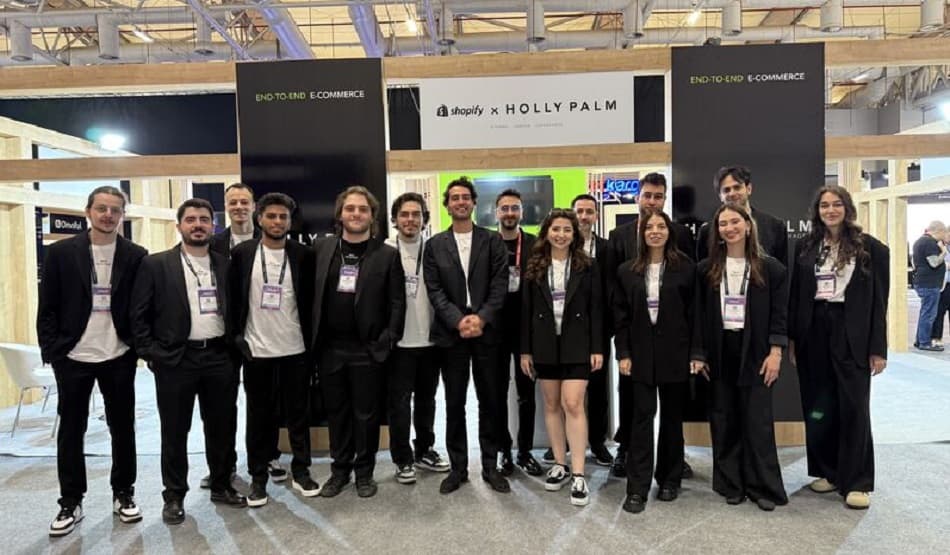
Holly Palm is a next-generation technology company positioned at the intersection of software development, strategic consulting, system integrations, and digital operations excellence. It was founded on the belief that brands need not only service providers, but long-term technology partners capable of transforming the foundations of their businesses. It was brought to life in 2019 as part of Deniz Acarlıoğlu’s entrepreneurial vision.

At that time, many major brands in Türkiye needed digitalization but struggled to find the right technology partner. With his strong background in software development and deep understanding of e-commerce dynamics, Acarlıoğlu set out to provide a holistic solution to this need. The company’s vision is to prove that a technology brand can export software and digital solutions to the world. As Türkiye’s first Shopify Plus Partner, Holly Palm, supported by its strong relationship with Shopify, focuses on expanding in Europe, becoming more active in the Gulf region, and helping Turkish brands go global.

“For Us, Every Brand Is a Different Story”

So, what services and solutions does Holly Palm offer to e-commerce brands? Deniz Acarlıoğlu answered this question as follows: “When brands work with us, they gain not just a platform setup, but a strategic business partner. We approach every project with a holistic perspective. By analyzing each brand’s unique structure, we create tailored roadmaps based on their specific needs. Our services are designed to provide end-to-end solutions that ensure brands are strongly positioned in the digital world.”

Holly Palm’s Main Services

  • Shopify-based e-commerce infrastructures
  • Seamless omni-channel systems created by unifying online and offline data and processes
  • Mobile applications and CMS panels
  • Fully integrated solutions with ERP, SAP, CRM, and similar systems through Holly Connect
  • Management of migration processes with minimal disruption and no data loss
  • UX/UI design and development services
  • Growth strategy consulting tailored to the brand’s goals
  • Performance optimization through technical SEO and analytics tools in collaboration with leading advertising agencies

Acarlıoğlu stated the following: “Throughout all these processes, we develop customized solutions tailored to each brand’s unique structure. For us, every brand is a different story. What sets us apart most is that we attach equal importance not only to the technical side, but also to cultural and operational dimensions. Our strength comes from this holistic approach. We know that long-term success is only possible through seamless harmony between technology, culture, and operations. Every collaboration we establish turns into a strategic partnership that we build, scale, and grow together.”

“For Holly Palm, MENA Is Both a Market and an Innovation Hub”

Emphasizing that the MENA region is one of the most dynamic digital commerce markets in the world due to its rapid technology adoption, ambitious retail investments, and global growth ambitions, Acarlıoğlu noted that for Holly Palm, this region is not only a market but also an innovation hub.

Touching on their goals in MENA, Acarlıoğlu said: “We aim to establish a strong and permanent presence in the region. By localizing Holly Connect for the MENA ecosystem, we want to build long-term collaborations with retail groups and technology providers. In addition, offering scalable and regulation-compliant infrastructures that support cross-border commerce and developing enterprise-level Shopify Plus solutions tailored to regional needs are among our goals. With our ongoing pilot projects in Dubai, Riyadh, and Doha, we are working in close cooperation with key stakeholders to build next-generation commerce infrastructures in the region.”

Deniz Acarlıoğlu stated: “As digital commerce evolves, so do we. Holly Palm is transforming from a solution provider into a global technology brand that develops its own product portfolio and intelligent systems. Our goal is clear: to demonstrate that a technology brand originating from MENA or Türkiye can create global standards and export innovation to the world.”

Strategic Trends Shaping Digital Commerce

Stating that global e-commerce has entered a maturity phase defined by intelligence, automation, and user-centric architectures, Deniz Acarlıoğlu listed the main strategic trends shaping the future as follows:

  • Modular commerce: Brands need flexible structures that allow them to scale without operational bottlenecks.
  • AI-driven personalization: Personalized shopping experiences will determine conversion rates, customer engagement, and loyalty.
  • Unified commerce operations: Online stores, marketplaces, warehouses, and physical retail environments must function as a single integrated ecosystem.
  • Automated fulfillment and logistics: Operational automation will become the cornerstone of scalable global commerce.
  • Data intelligence and predictive analytics: Brands that understand and anticipate customer behavior will gain a competitive advantage.

These global trends directly shape how Holly Palm designs digital commerce infrastructures for different regions.

“AI Is No Longer an Add-On, It Is the New Operating System of Commerce”

Explaining Holly Palm’s artificial intelligence strategy, Acarlıoğlu stated, “Artificial intelligence is no longer an add-on; it is the new operating system of commerce,” and noted that the company’s AI roadmap is structured around four main pillars: “AI-powered visual creation, intelligent stock optimization, automated content production, and dynamic customer experiences. Our next phase is to move from analytical AI to autonomous decision-making systems, enabling real-time action without human intervention. With Holly Palm’s Holly Connect infrastructure and AI strategy, these capabilities are fully integrated into e-commerce platforms, mobile applications, and marketing workflows.”

“Brands That Combine Technology, Strategy, and Culture Under One Vision Succeed”

Deniz Acarlıoğlu also shared strategic advice for e-commerce brands aiming for global success: “Global growth is not a marketing effort, but an operational transformation. Brands that want to compete internationally should focus on the following: A solid and scalable technical infrastructure must be established; weak infrastructures cannot support global growth. Prioritizing operational intelligence is essential; fulfillment, returns, and multi-currency payment systems must function flawlessly.

Cultural and behavioral dynamics must be understood; design, communication, and positioning should align with regional expectations. Technology should be viewed not as a cost, but as a growth engine; brands that invest early in the right systems scale the fastest. Brands that succeed globally are those that combine technology, strategy, and culture into a single vision.”

Unique Advantages for the MENA Region

As a Shopify Plus Partner, Holly Palm offers unique advantages to the MENA region:

  • Direct collaboration with Shopify’s global product and engineering teams
  • Region-specific Shopify Plus solutions powered by Holly Connect
  • Expertise in transitioning enterprise brands to Shopify with zero disruption
  • Customizable integrations for payment, logistics, marketplace, and ERP systems
  • Future-proof architectures ready for cross-border scaling
  • A true partnership approach focused on long-term growth

Deniz Acarlıoğlu stated: “Our commitment is clear and strong: to elevate MENA-based brands to the global level through world-class technology, seamless integrations, and an unmatched partnership approach.”

Otto’s GMV Reached 7.5 Billion Euros

Otto

Germany-based e-commerce giant Otto grew its gross merchandise value (GMV) by 6% in the 2025/26 fiscal year, reaching approximately 7.5 billion euros. With this performance, the company delivered growth above the online retail market in Germany. According to industry data, e-commerce spending in Germany increased by only 3.2% during the same period.

The marketplace model played the most critical role in Otto’s growth. While the total number of business partners on the platform reached 6,100, marketplace GMV recorded a 9% increase. In contrast, growth in Otto’s own retail operations remained at 3%. The number of products offered on the platform rose to 19 million, demonstrating the impact of its broad product variety strategy.

Otto’s Strongest Growth Came in the Fashion and Sports Segment

On a category basis, the strongest performance was seen in the fashion and sports segment with 9% growth, while the home and living category also drew attention with a 7% increase. This indicates that consumer demand is shifting toward lifestyle and personal-use products.

Growth also continued on the customer side. Ot to’s number of active customers increased by 4% to reach 12.6 million. The company attributes this increase to improvements in user experience and optimizations made in logistics processes. Given the competitive structure of e-commerce across Europe, this growth on the customer side carries strategic importance.

Advertising Revenue Increased by 49%

Another notable area was retail media revenues. Revenue generated through Otto’s own advertising platform, Otto Advertising, increased by 49%, making it one of the company’s fastest-growing business lines. This trend shows that the “retail media” model, also adopted by players such as Amazon and Zalando, is rapidly becoming widespread in Europe.

The company’s CEO, Dr. Boris Ewenstein, stated that the results achieved not only preserved Otto’s leading position in Germany, but also strengthened its potential to increase market share.

A Target of 10 Billion Euros in Revenue by 2028

Artificial intelligence and international expansion hold an important place in Otto’s growth strategy. The company is targeting 10 billion euros in revenue by the 2028 fiscal year. In line with this goal, hyper-personalization, AI-supported shopping assistants, and data-driven recommendation systems will be implemented.

In addition, the marketplace model is being opened to international sellers. Following the inclusion of sellers from the Netherlands on the platform, sellers from Poland, Austria, France, and Spain are also planned to join the system. As of 2027, Danish retailers are also expected to take part on the platform.

As competition in the European e-commerce market continues to intensify, Otto’s growth strategy focused on data, marketplace development, and artificial intelligence may position the company more strongly in the coming period.

Meta Introduced New Tools for Social Commerce: One-Click Sales From Reels on Instagram and Facebook

Meta

Meta introduced new social commerce tools at Shoptalk 2026. Accordingly, the company aims to rapidly eliminate the boundaries between content and purchase. With new features developed especially on Facebook and Instagram, the company is making it easier for brands to turn social engagement directly into sales.

Meta introduced social commerce tools for retailers at Shoptalk 2026. From shoppable Reels to the in-app checkout stage, Meta is expanding the way retailers turn social engagement into sales. Keeping up with digital tools is of critical importance for retailers seeking to capture consumer attention. This pressure is also increasing as creator content plays a greater role in consumers’ purchase decisions.

Meta: Users’ Engagement With Content Does Not Always Turn Into Sales

At Shoptalk 2026, a retail and e-commerce technology event, Meta introduced its new retail-focused tools designed to increase sales within the Facebook and Instagram social media platforms. These updates focus on three main areas: content-driven e-commerce, smoother in-app transactions, and improved advertising performance.

According to data shared by Meta, ad impressions across its platforms, which reach 3.5 billion daily users worldwide, increased by 18% year over year in the fourth quarter of 2025. However, users’ engagement with content does not always turn into sales. The company’s new tools aim to close this “discovery-to-purchase” gap.

Product Links Will Be Integrated Into Instagram Reels Content

One of the most notable innovations was product links integrated into Instagram Reels content. With this feature, creators will be able to offer a “shoppable content” experience by adding products directly to their videos. The feature is initially planned to be rolled out in 22 countries. According to Meta, this step creates a new revenue channel for creators while also establishing a new sales-focused channel for brands.

The In-App Shopping Experience Is Being Simplified

Another significant development is the simplification of the in-app shopping experience. Users who click on a product from an advertisement will now be able to complete the purchase using a “buy now” button without being redirected outside the platform. Users who are not ready to make a purchase, meanwhile, will be able to access content such as reviews, product details, and recommendations through the same screen. It is stated that this system will initially operate in integration with PayPal and Stripe, and that players such as Shopify and Adyen will also be included in the process going forward.

Brands Will Be Able to Run More Efficient Campaigns Across Specific Product Groups

Meta’s third area of focus was “product set optimization” aimed at improving advertising performance. Thanks to this tool, brands will be able to run more efficient campaigns by focusing on specific product groups instead of promoting their entire product catalogs. According to initial test results, this approach can deliver an improvement of up to 40% in return on ad spend (ROAS).

According to experts, social media is no longer merely a discovery channel, but is turning into a commerce platform where direct sales take place. The fact that the impact of influencer content on purchase decisions has risen above 50% is also accelerating this transformation. Meta’s new steps aim to increase the share of social commerce within global e-commerce while creating more measurable and higher-converting sales channels for brands.

AI and Omnichannel Transformation in Retail: A CIO Perspective from Grandiose

AI

Headquartered in the United Arab Emirates (UAE), Grandiose Supermarket offers an unforgettable multisensory experience within a unique grocery shopping environment. A premium-quality food and grocery retailer, Grandiose was founded in December 2016. Since then, it has redefined the supermarket experience in the UAE. Positioning itself as “the most loved neighborhood supermarket,” Grandiose continues to expand its reach through online ordering and exclusive promotions. We spoke with Grandiose Digital & Technology Director, Marcin Piekarczyk about the company’s mission and vision. Piekarczyk shared important insights on a wide range of topics, from artificial intelligence to omnichannel strategies.

A commercially minded omnichannel and marketing leader, Marcin Piekarczyk specializes in the development of retail, omnichannel, and e-commerce strategies for globally recognized brands, as well as executive management of retail brands and businesses. He has experience in digital transformation coaching aimed at transforming traditional retailers into fully hybrid business models. He is deeply passionate about customer experience. He has more than 16 years of proven experience working in dynamic environments and multinational cultures. He has experience managing omnichannel business models across eight different international markets.

How Does Technology Create Value?

Piekarczyk currently oversees digital and technology transformation across multiple food and retail brands with very different operational realities. When asked, “What are the core principles that guide your transformation strategy across such a complex ecosystem?”, Piekarczyk replied: “Rather than adopting technology for its own sake, we maintain a strong focus on outcomes and customer impact. Too often, organizations pursue the latest tools or platforms simply to appear technologically advanced, without clearly defining the problems they are trying to solve or fully understanding what customers, both internal and external, truly want and need.”

Stating that “For us, a successful transformation always starts with data and a deep understanding of the customer,” Piekarczyk continued: “Before introducing any new technology, we invest time in mapping customer journeys, identifying pain points, and understanding where friction exists across operations and experiences. Only once this foundation is clear do we evaluate technologies and select digital transformation initiatives that are purpose-built to address real needs.

Equally important is ensuring that the organization itself is ready for transformation. This begins with people and culture. In many cases, our role as a technology function goes beyond delivery; we also act as advisors and advocates for change, helping business units build a culture that embraces transformation. Technology only creates value when it is adopted, trusted, and effectively used by people across the organization.”

“We Are in the Early Stages of AI Applications”

Regarding the areas in which artificial intelligence delivers the fastest and most measurable value, Marcin Piekarczyk stated: “We are in the early stages of applying artificial intelligence across logistics and the supply chain. We are taking a selective and pragmatic approach. Today, we are testing specific use cases such as replenishment, assortment optimization, and demand forecasting. At this stage, it would be premature to overstate short-term impact or claim transformational results.

Our strategic priority is not rapid deployment, but building the foundations that will allow artificial intelligence to become a true competitive advantage over time. This includes significant investment in high-quality, well-governed data across products, vendors, and sales. Reliable and scalable data is a prerequisite for AI-driven decision-making at enterprise scale.”

He also added: “By focusing on data quality and governance today, we are enabling the business to move quickly and confidently as AI use cases mature. This approach ensures that future AI investments translate into sustainable performance improvements rather than isolated experiments with limited long-term value.”

“Data Is One of Our Highest Priorities”

Piekarczyk also responded to the question, “Many organizations struggle not with data availability but with data usability. How do you ensure that real-time data actually translates into better operational and commercial decisions?” as follows:

“Data is one of our highest priorities. Over the past few months, we have been intensely focused on data cleansing and establishing strong data governance practices across the organization. We have onboarded a dedicated data team, launched multiple data quality initiatives, and successfully implemented a Customer Data Platform for Grandiose. I consistently emphasize that data is the single most critical enabler of any digital transformation or artificial intelligence initiative.

Without trusted, well-governed, and accessible data, even the most advanced technologies cannot deliver meaningful or sustainable value. Our focus is not just on collecting data, but on ensuring that data is usable, reliable, and embedded into day-to-day decision-making across the business.”

“The Biggest Omnichannel Challenge Is Inventory Management”

From a CIO’s perspective, Piekarczyk also explained the most challenging back-end issues in making omnichannel truly work, particularly in high-frequency food and retail environments: “We operate in an extremely fast-paced and high-volume environment. We process thousands of orders every day across multiple touchpoints, including our app, website, aggregators, and more than 45 physical stores. In grocery retail, this complexity is further amplified by the wide range of vendors we work with, varying commercial terms, and the diversity of product categories, from fresh and ultra-fresh to prepared foods.

From both a back-end and customer-facing perspective, the single biggest omnichannel challenge is inventory management. Ensuring accurate and real-time inventory visibility across all sales channels is critical. Customers expect consistency; if a product is visible online, it must be available. Preventing customers from encountering out-of-stock items on digital platforms is essential to delivering a reliable omnichannel experience and maintaining long-term customer trust.”

“We Apply Artificial Intelligence Only When It Makes Sense”

Marcin Piekarczyk answered the question, “How do you balance process maturity with AI-driven automation to avoid increasing digital complexity rather than reducing it?” as follows: “The answer to this question is quite simple: we apply artificial intelligence only when it makes sense. There is a growing tendency in the market to introduce artificial intelligence for the sake of artificial intelligence, rather than to solve real problems.

At Ghassan Aboud Holding and Grandiose, we always start by clearly defining the problem, then building a business case. Only after that do we decide whether artificial intelligence, or any other technology, is the right solution. I call this approach ‘AI with purpose.’ Strong process discipline must always come first; otherwise, technology increases complexity instead of reducing it.”

“Our Focus Is on Targeted Experiments in Areas Such as Demand Forecasting and Replenishment”

In response to a question about the role of technology and artificial intelligence in building resilience, risk anticipation, and continuity across logistics and inventory networks, given the vulnerabilities in global supply chains, Piekarczyk stated that technology and artificial intelligence play an important role in reducing risk across supply chains and said:

“They enable better anticipation of demand volatility and potential supply shortfalls, help identify risks earlier, and support the evaluation of alternative scenarios and workarounds before disruptions impact operations or customers. That said, we are still in the early stages of adopting advanced artificial intelligence capabilities in supply chain management. Today, our focus is on targeted experimentation in areas such as demand forecasting and replenishment, where value can be tested and measured pragmatically. More advanced applications, such as predictive risk modeling and dynamic network optimization, remain firmly on our radar as future opportunities, to be pursued as our data maturity and operational readiness continue to evolve.”

“Without In-House Technical Expertise, Even the Most Sophisticated External Resources Cannot Deliver Meaningful Value”

Piekarczyk also answered the question, “When implementing artificial intelligence and digital solutions, how do you decide between in-house development, third-party platforms, or strategic partnerships?” as follows: “There is no single right or wrong approach; it largely depends on overall strategy and how you manage your profit and loss structure. Regardless of the model, it is critical to have in-house technical expertise capable of understanding business requirements, defining needs, and evaluating architecture. Without this capability, even the most sophisticated external resources cannot deliver meaningful value.”

He continued: “In practice, we often adopt a hybrid model. Certain strategic artificial intelligence initiatives, such as the GrandChef project with Microsoft, are managed through close partnerships. At the same time, other operational and development work is handled in-house or outsourced depending on complexity and scale. This hybrid approach allows us to balance control, cost, speed, and innovation, while ensuring that core knowledge remains within the organization.”

  • Beyond cost savings, which KPIs or metrics best indicate that a digital or artificial intelligence initiative in logistics or operations is truly successful?

Marcin Piekarczyk: I typically focus on two key metrics. The first measures overall business impact, such as incremental revenue generation or cost savings achieved. The second evaluates the success of the initiative within the broader context of digital transformation, specifically adoption and usage. If a solution is not actively embraced and used by business units and stakeholders, then it has not truly succeeded, regardless of how advanced the technology may be.

  • Digital transformation ultimately depends on people. What skills and leadership capabilities do you believe are most critical for CIOs and technology leaders operating in logistics-heavy retail environments?

Marcin Piekarczyk: I would describe it as a combination of technical expertise and business acumen. A successful leader must understand the technical aspects of digital initiatives while also appreciating their impact on the business, the profit and loss structure, and overall profitability. Technical knowledge alone is not sufficient. In addition, strong influencing and change management skills are essential. Innovation is inherently about change, and people naturally resist change. Being able to guide, inspire, and align teams through transformation is just as important as delivering the technology itself.

  • Looking toward the next 3–5 years, which technological or artificial intelligence–driven shifts do you believe will have the greatest impact on logistics and supply chains in the Middle East?

Marcin Piekarczyk: We will see further automation across logistics and supply chains, starting with predictive demand planning and extending to increased automation in fulfillment centers. Companies that successfully combine artificial intelligence, real-time visibility, and advanced analytics with strong data foundations and operational discipline will gain a decisive advantage in efficiency, resilience, and customer experience.


Global Retail Faces Harsh AI Reality as Only 5% See Real Returns Despite 95% Adoption

Global Retail Faces Harsh AI Reality as Only 5% See Real Returns Despite 95% Adoption

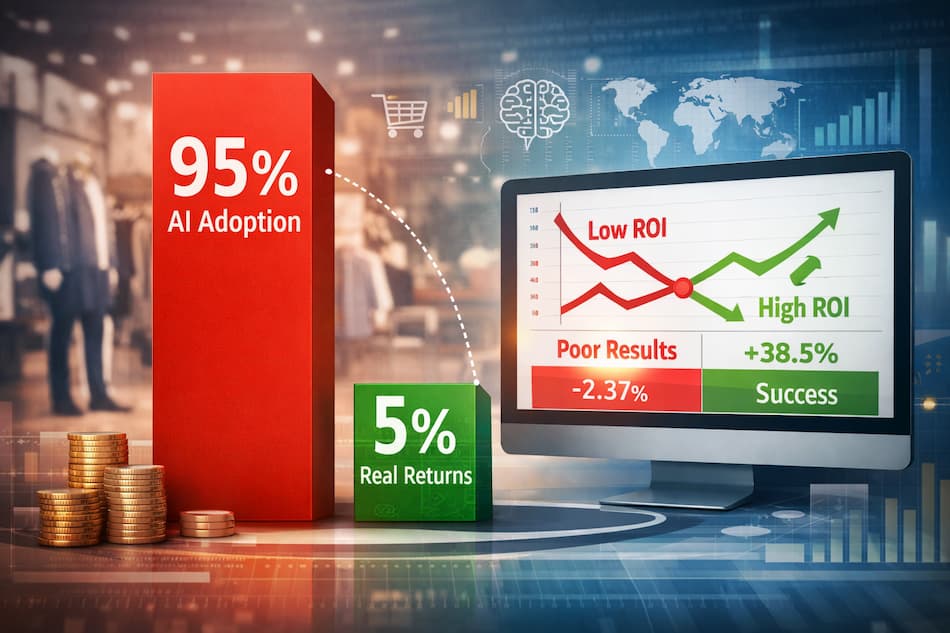
The global retail sector is entering a more pragmatic phase of AI adoption, as new research reveals a significant gap between experimentation and real business impact. A joint report by Voyado and Retail Economics shows that while 95% of companies have already tested AI in marketing or e-commerce, only 5% report clear and scalable returns.

The findings highlight a critical shift in the AI narrative-from rapid adoption to measurable performance-raising new questions about how retail businesses can turn AI investments into tangible results.

Data and Organizational Gaps Hold Back AI Performance

According to the report, the challenge is not access to AI tools, but the lack of strong data foundations and organizational readiness. Retail companies that achieve meaningful results typically rely on significantly more data sources and have more mature internal systems.

A major barrier remains internal capability. Around 58% of respondents identified skills shortages as the primary obstacle, while most of the top challenges were linked to organizational structure rather than technology itself.

This suggests that many retailers are still operating AI in isolated pilots rather than embedding it into core workflows.

AI Investment Set to Reshape the Retail Sector by 2030

Despite current limitations, the long-term impact of AI across the retail industry remains substantial. The report estimates that 39% of marketing and e-commerce budgets will be exposed to AI by 2030, representing approximately €14.9 billion annually.

Businesses are increasingly expecting AI to become a standard part of operations. Around 71% believe AI will be fully integrated into marketing workflows within two years, while 45% expect it to deliver measurable returns within the same timeframe.

The shift indicates that while adoption is already widespread, the next phase will be defined by execution-where only companies with strong data infrastructure and operational alignment are likely to capture real value.

Source: My Newsdesk