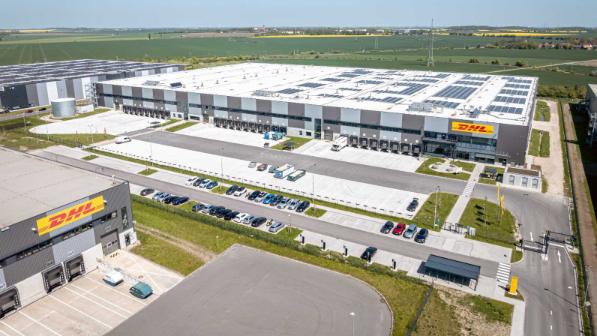
Global logistics giant DHL is expanding its footprint in South Africa through the acquisition of Vital Distribution Solutions, Staffing Logistics, and Vital Fleet, in a move aimed at strengthening its end-to-end supply chain capabilities.
The transaction, approved unconditionally by South Africa’s Competition Commission, is expected to enhance DHL’s position in transport, warehousing, and contract logistics across the region.
Strengthening Logistics Capabilities Across Key Sectors
The acquisition covers a wide range of logistics services, including road freight, third-party logistics, storage, distribution, and e-commerce-related operations.
Vital Distribution Solutions brings established capabilities in servicing industries such as FMCG, manufacturing, industrial, and retail, while Vital Fleet adds fleet management and rental services. Staffing Logistics complements the deal by providing flexible workforce solutions across transport and service sectors.
By integrating these operations, DHL aims to deepen customer relationships and deliver more scalable, end-to-end logistics solutions in a rapidly evolving market.
E-Commerce Growth Driving Demand for Third-Party Logistics
The deal comes amid rising demand for outsourced logistics services in South Africa, driven by the continued growth of e-commerce and regional trade activity.
Industry players are increasingly investing in specialised logistics solutions to meet evolving supply chain requirements, particularly in sectors such as healthcare, retail, and transport. DHL has already signalled its long-term commitment to the region, with plans to invest approximately €300 million in Sub-Saharan Africa over the next five years.
As supply chains become more complex and digital commerce continues to scale, acquisitions like this highlight a broader shift toward integrated logistics ecosystems designed to improve efficiency, resilience, and service quality.
The premium food e-commerce sector is gaining momentum as UAE-based platform CarniStore secured a $12.2 million strategic investment from Emirates Growth Fund (EGF), signalling strong investor confidence in digital-first food retail models.
Founded in 2018, CarniStore operates a vertically integrated, digital-first premium protein platform, combining sourcing, in-house production, and online retail across meat, seafood, poultry, and smoked products.
Scaling Premium Food Through Digital-First Operations
The new funding will support CarniStore’s industrial-scale expansion, allowing the company to introduce new product verticals, enhance operational capacity, and strengthen its position in the UAE’s premium food segment.
Unlike traditional food retailers, CarniStore’s model blends heritage butchery expertise with a consumer-centric e-commerce experience, positioning it at the intersection of food innovation and digital commerce.
The investment also highlights a broader shift toward vertically integrated food e-commerce platforms, where companies control sourcing, processing, and distribution to ensure quality and efficiency at scale.
Strategic Push Toward Regional Expansion
Beyond operational growth, the partnership with Emirates Growth Fund is expected to strengthen CarniStore’s governance, go-to-market strategy, and institutional readiness-key steps as the company prepares for regional expansion.
The deal marks EGF’s first investment in the food sector, underlining the increasing importance of food security, local production, and premium supply chains within the UAE’s economic strategy.
For the wider e-commerce ecosystem, the move reflects a growing investor focus on specialized vertical marketplaces-particularly in sectors where quality control, logistics, and sourcing play a critical role.
The future of global digital trade has become more uncertain after World Trade Organization members failed to extend the long-standing moratorium on customs duties for electronic transmissions. The breakdown came after four days of talks in Yaounde, Cameroon, ended without consensus, marking the first time in 28 years that the measure has expired.
Why the WTO E-Commerce Moratorium Matters for Global Trade
The WTO e-commerce moratorium has long prevented governments from imposing customs duties on digital products and transmissions such as software downloads, streaming services and other cross-border digital content. Its expiry now raises new questions for businesses operating in international e-commerce, especially as governments rethink how digital trade should be taxed and regulated.
According to the report, Brazil and Turkey blocked the proposal to extend the moratorium, despite efforts to bridge differences through both temporary and permanent renewal options. Several developing countries have argued that keeping the moratorium in place limits their ability to generate tax revenue from the growing digital economy.
Shift Toward Fragmented Digital Trade Rules
The United States responded by signalling that it may increasingly pursue digital trade arrangements outside the WTO framework. US Trade Representative Jamieson Greer said Washington would work with like-minded partners if the moratorium is not restored, adding that the US already has agreements with dozens of countries not to impose tariffs on American digital transmissions.
The failed talks also add to wider concerns about the WTO’s role in shaping modern trade policy. Analysts said the outcome reflects growing strain on the multilateral system, while industry voices warned that digital trade negotiations are becoming more politicised. At the same time, 66 WTO members agreed to move ahead with a baseline framework for digital trade rules, signalling that smaller plurilateral deals may become more common.
That shift could create new complications for global commerce. Experts warned that overlapping side agreements may lead to a fragmented trade environment, making compliance harder for businesses operating across multiple markets. For e-commerce players, the absence of a unified global approach could increase uncertainty around tariffs, digital market access and future cross-border trade rules.
WTO Director-General Ngozi Okonjo-Iweala said discussions would continue in Geneva, leaving the door open for a possible reinstatement of the moratorium. Still, the latest breakdown highlights a deeper divide between developed and developing economies over how digital trade should evolve and who should benefit from its growth.
For the global e-commerce sector, the message is clear: digital trade policy is entering a more fragmented and politically sensitive phase, and the WTO e-commerce moratorium may no longer be treated as a guaranteed pillar of the system.
VTEX, one of the platforms shaping the future of commerce in the digital world, is gaining attention for its solutions that help brands overcome challenges. Prakash Gurumoorthy, General Manager of VTEX EMEA-APAC, was interviewed by WORLDEF E-COMMERCE, where he discussed the operational fragmentation that MENA brands face and how it can be minimized.
VTEX offers a strong foundation for growth and operational efficiency by unifying all of a brand’s commerce operations on a single enterprise-grade platform. In this interview, Gurumoorthy shares VTEX’s vision for the future, covering everything from the flexibility that composable commerce provides to the role of artificial intelligence in commerce operations.
“VTEX Unifies All Commerce Operations for Brands on a Single Enterprise-Grade Platform”
Prakash Gurumoorthy explained how VTEX helps brands overcome the challenges they face: “Across MENA, many consumer and retail brands are scaling rapidly, but often on top of fragmented systems with separate platforms for e-commerce, marketplaces, physical stores, and fulfillment. This fragmentation creates operational risk, limits visibility, and slows decision-making at the exact moment when speed and reliability matter most. It also increases a retail brand’s total cost of ownership.
VTEX solves this problem by unifying all commerce operations on a single, enterprise-grade platform. We work with retailers and manufacturers that require real-time inventory visibility, consistent execution across channels, and confidence that their operations will hold up as volume and complexity increase. VTEX achieves all of this with the lowest total cost of ownership for enterprise brands. In practice, this reduces operational friction and allows teams to focus on growth instead of system maintenance, giving brands confidence that their commerce foundation can support both current demand and future expansion.”
“Composable Commerce Offers Brands the Ability to Make Choices Without Creating Chaos”
Discussing the composable platform structure, Gurumoorthy said, “Composable commerce is about giving brands the ability to make choices without creating chaos. Instead of locking everything into one rigid system, VTEX provides a core commerce platform that integrates seamlessly with other best-in-class technologies. For brands in MENA, this is particularly valuable because many already have significant investments in ERP, payments, logistics, or customer data platforms. VTEX allows them to build on these investments rather than replace them. Brands can adapt their front-end experiences, launch new channels, or enter new markets without disrupting core operations. This flexibility fosters innovation while keeping the platform stable and secure at scale.”
Turning Technological Investments Into Strategic Assets
When asked about how the VTEX platform turns “technological investments into strategic assets,” Gurumoorthy shared the following: “Technology becomes a strategic asset when it helps the business move faster and make better decisions, not when it simply ‘runs the shop.’ With VTEX, brands gain centralized data, real-time operational visibility, and consistent workflows across channels.
This enables leadership teams to understand what’s happening in the business and act quickly, whether that’s optimizing assortment, adjusting fulfillment strategies, or launching new customer experiences. In practice, we see brands move from reactive operations to proactive, insight-driven commerce. This is where technology starts contributing directly to long-term competitiveness.”
“Customers Expect Consistency, Speed, Transparency, and Reliability”
“Whether shopping online, in-store, or through marketplaces, customers expect consistency. They also expect speed, transparency, and reliability,” said Prakash Gurumoorthy. “VTEX helps brands meet these expectations by providing a unified commerce foundation. Instead of managing each channel separately, brands can orchestrate the entire customer journey from a single platform. This makes it easier to introduce services like click-and-collect, ship-from-store, or localized assortments without operational complexity.”
Gurumoorthy continued, “Standing out today is more about execution than flashy features. Winning brands are those that deliver consistent experiences and adapt faster than competitors. VTEX makes this possible by reducing operational friction. When teams spend less time managing systems, they can focus more on customer experience, merchandising, and growth initiatives. We clearly see this with enterprise brands that operate across multiple markets and channels. This operational excellence becomes a real differentiator over time.”
“Brands with Flexible Yet Stable Commerce Infrastructures Are Ready for Growth”
Addressing the future of commerce in the region, Gurumoorthy said, “Future-proofing is less about chasing the next trend and more about building a commerce infrastructure that can absorb change without disruption. Many brands in the MENA region are scaling across markets, channels, and customer segments, and they need platforms that remain reliable as complexity increases. What we see in practice is that brands with a flexible yet stable commerce backbone are better positioned to grow over the next three to five years because their technology supports long-term decision-making rather than short-term fixes.”
“AI Must Be Reliable, Measurable, and Aligned with Operational Realities”
So, what is VTEX’s strategy with artificial intelligence? Gurumoorthy said, “VTEX approaches AI as a practical capability embedded directly into commerce operations, not as a standalone or experimental layer.” He shared, “Our focus is on AI-managed services that support tangible business outcomes, such as search, recommendations, merchandising, content creation, and advertising. These capabilities are designed to operate at enterprise scale and integrate into daily workflows, helping brands simplify complexity and improve efficiency. From a customer perspective, the value of AI lies in reliability and governance. AI must be trusted, measurable, and aligned with operational realities, rather than adding unpredictability to already complex commerce environments.”
VTEX’s Global Objectives
Finally, Prakash Gurumoorthy discussed the company’s global objectives: “VTEX’s global goals are defined around becoming the backbone for connected commerce, supporting both physical and digital orders through a unified, enterprise-grade platform. Our core ambitions are to establish our global commerce authority trusted by CIOs and CEOs, continue delivering world-class reliability, security, and operational efficiency, and enable brands to operate with less friction while scaling across markets and channels. For customers, this translates into confidence that the platform they choose today will continue to support their business as it evolves.”
AI is taking on a more active role in e-commerce as South Korean startup Waddle expands into the U.S. AI is taking on a more active role in e-commerce as South Korean startup Waddle expands into the U.S. market with its commerce agent “Gentoo.”
Unlike traditional chatbots, Gentoo operates as a digital salesperson, engaging users in real time, identifying hesitation points, and guiding them toward purchase decisions.
This shift is redefining how products are displayed to users, turning static storefronts into more interactive and conversion-driven experiences.
From Static Pages to Intelligent Shopping Experiences
One of the biggest changes introduced by AI commerce is how online stores manage product display.
Instead of relying on fixed layouts and manual merchandising, Gentoo adapts how products are displayed based on user behavior and intent. It can initiate conversations, highlight relevant items, and guide users through complex product choices.
At the same time, the system functions as an AI store manager, helping retailers optimise both customer experience and overall display performance.
Closing the Conversion Gap
A long-standing challenge in e-commerce is the gap between browsing and purchasing. Many users explore products but leave before completing transactions.
Waddle addresses this through real-time conversational engagement, improving how products are displayed and discovered based on user needs.
This approach mirrors the experience of an in-store salesperson, bringing personalised guidance into digital environments while improving conversion rates.
Early Signals from the U.S. Market
Waddle’s expansion into the U.S. has already shown early traction. Within two months, the company secured 11 clients and engaged with more than 260 prospective customers.
The company also benefits from its collaboration with OpenAI, including winning a global hackathon and maintaining close ties with its developer ecosystem.
These milestones reinforce the growing demand for AI-driven commerce solutions.
Data and the Future of Product Display
According to the company, data is the key differentiator. Modern e-commerce environments combine text, images, video, and behavioral signals – requiring more than simple conversational responses.
By leveraging contextual data, Gentoo improves how products are displayed in real time, delivering more accurate recommendations and more relevant shopping experiences.
Looking ahead, trends such as “vibe shopping” suggest that product display will increasingly be shaped by emotion, mood, and overall experience – not just price or specifications.
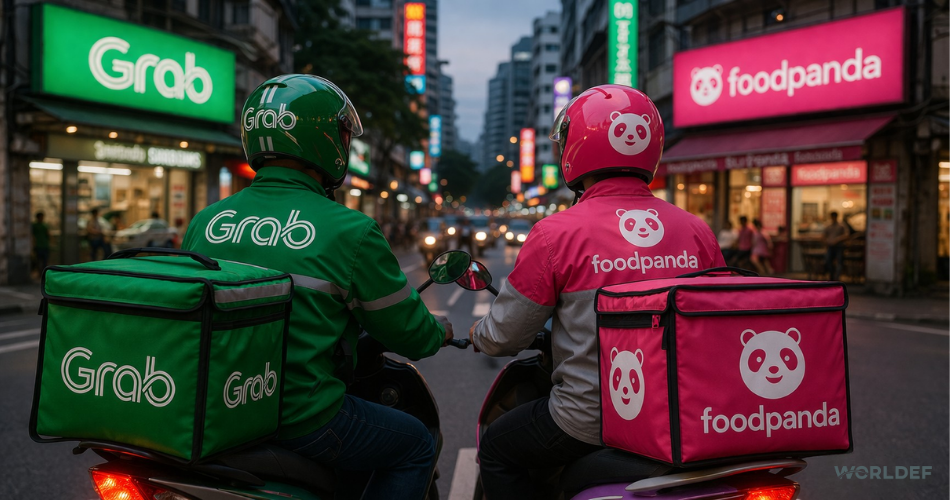
Grab is making its most significant international move yet with the acquisition of Foodpanda’s Taiwan business from Delivery Hero for $600 million. The deal marks Grab’s first expansion outside Southeast Asia, signaling a new phase in its regional growth strategy.
Taiwan represents a highly attractive market, with strong demand for mobile-first services and a well-established food delivery ecosystem. Foodpanda’s operations already span 21 cities and generated around $1.8 billion in gross merchandise value in 2025, making it a valuable entry point for Grab.
Why This Deal Matters for Grab’s Growth Strategy
This acquisition is more than geographic expansion – it reflects Grab’s broader strategy of scaling through targeted, value-driven deals. Following profitability, the company has accelerated its M&A activity, committing over $1 billion across multiple deals in recent months.
By entering Taiwan, Grab adds a high-income, densely populated market that closely resembles the urban environments it already operates in. The company plans to leverage its AI-powered logistics, mapping systems, and data tools to improve delivery efficiency and merchant performance.
The deal also positions Grab to compete more directly with global players while diversifying its revenue streams beyond its core Southeast Asian markets.
A Turning Point for Asia’s Delivery Landscape
The transaction highlights a broader shift in Asia’s delivery and platform economy. As competition intensifies, companies are increasingly focusing on consolidation, profitability, and strategic market selection.
For Delivery Hero, the sale is part of a wider restructuring effort aimed at optimising capital allocation and reducing debt.
For Grab, however, it represents a long-term bet on expanding its ecosystem – from food delivery to fintech and mobility – across new markets.
What This Mean
Grab’s entry into Taiwan signals that the next phase of platform growth in Asia will be driven by selective expansion, AI-driven efficiency, and ecosystem integration.
As regional leaders move beyond their home markets, competition is shifting from local dominance to cross-border scale.
Kuwait’s financial sector is taking another step toward digital transformation with the launch of a new e-trading platform by Kuwait Financial Centre (Markaz). The initiative reflects a broader shift across the Gulf, where investor expectations are rapidly evolving toward seamless, digital-first experiences.
The newly introduced iMarkaz Invest platform is designed to enhance access to both regional and global markets, including Kuwait, Saudi Arabia, the UAE, and the United States.
This move signals Kuwait’s growing ambition to position itself as a competitive fintech hub within the region.
A New Standard for Digital Trading Experience in Kuwait
The platform combines real-time data, an intuitive interface, and simplified onboarding – key features increasingly demanded by modern investors.
Users can monitor portfolios in real time, access multiple markets, and complete account setup through a streamlined digital process.
Unlike traditional trading systems, iMarkaz Invest also integrates with wealth management services, offering a hybrid model that blends self-directed investing with advisory support.
This reflects a broader industry trend where platforms are no longer just transactional tools but full-service investment ecosystems.
Expanding Access Beyond Borders
One of the platform’s most strategic elements is its cross-border reach. By enabling access to international markets, it supports portfolio diversification while maintaining a local entry point for investors.
This aligns with rising demand across the GCC for global investment exposure, particularly as regional investors increasingly look beyond domestic markets.
At the same time, the platform’s development highlights how fintech solutions are becoming essential in connecting regional capital with global opportunities.
What This Means for the Region
The launch of iMarkaz Invest is more than a product update – it reflects a structural shift in how financial services are delivered in Kuwait and across the wider Middle East.
As digital adoption accelerates, financial institutions are being pushed to:
enhance user experience
offer real-time capabilities
expand cross-border access
Platforms like this are setting a new benchmark, where speed, accessibility, and integration define competitiveness.
Europe’s e-commerce logistics model is undergoing a structural transformation. What once relied heavily on a few dominant gateways across Europe is now evolving into a more distributed system shaped by speed, fragmentation, and flexibility.
The rise of cross-border e-commerce has fundamentally changed cargo dynamics across Europe. Instead of large, predictable shipments, logistics networks are now handling high-frequency, low-volume flows moving across multiple routes. This shift is forcing operators to rethink systems originally designed for scale, not agility.
At the same time, traditional hubs such as Frankfurt, Amsterdam, and Paris remain important – but they are no longer sufficient on their own. Logistics players across Europe are increasingly adopting multi-hub strategies, integrating secondary airports and regional fulfilment centres to reduce congestion and improve delivery performance.
Speed, Technology and New Trade Routes Take the Lead
Speed has become non-negotiable. Next-day delivery is rapidly turning into a baseline expectation across Europe, rather than a competitive advantage. To meet this demand, companies are relying more on air cargo and hybrid logistics models, especially for high-value and time-sensitive goods.
Technology is playing a defining role in this transformation. AI-driven forecasting, real-time tracking, and automated cargo handling systems are enabling logistics providers to operate with greater precision. Performance is no longer just about capacity – it is about visibility, coordination, and responsiveness.
Meanwhile, geopolitical developments and shifting trade corridors are adding new complexity. Airspace restrictions and evolving economic routes are forcing companies to rethink traditional pathways, accelerating the emergence of alternative gateways connecting Europe with Asia and the Middle East.
Infrastructure Pressure and the New Competitive Reality
This transformation is placing increasing pressure on infrastructure. Airports and logistics hubs across Europe must scale rapidly through automation, expanded cargo capacity, and specialised facilities. Without these investments, bottlenecks will become unavoidable.
Ultimately, Europe’s e-commerce gateways are no longer defined by location alone. They are defined by how efficiently they operate within a broader network. Competitive advantage is shifting from size to flexibility – and from physical infrastructure to intelligent, connected systems.
The recent deadlock at the World Trade Organization (WTO) over e-commerce duties may sound technical. It is not. What we are witnessing is a fundamental disagreement about the rules of the digital economy and, more importantly, about who gets to capture its value.
At the center of the debate is the WTO’s long-standing e-commerce moratorium, a rule that prevents countries from imposing customs duties on electronic transmissions such as software, streaming, and cloud services. After nearly 30 years in place, this rule is now under serious scrutiny.
What Is the WTO E-Commerce Moratorium?
The WTO e-commerce moratorium, first introduced in 1998, ensures that digital products and services can cross borders without tariffs.
However, the rule does not apply to physical goods.
If you buy a piece of furniture from abroad, it is subject to tax. If you download software from abroad, it is not. This is the core issue. A container of chairs crossing a border is taxed, while a million-dollar SaaS subscription crossing digitally is not taxed
From a policy standpoint, this asymmetry is becoming harder to justify, especially for emerging economies.
Why Brazil, Türkiye, India and Others Said “No” to the WTO E-Commerce Deal
The WTO talks collapsed after Brazil, supported by countries such as Türkiye and aligned with India’s broader stance, refused to agree to a long-term extension of the moratorium.
Their argument is actually quite rational:
The digital economy is still evolving
Governments should not give up taxation rights too early
Digital imports are growing rapidly, but remain untaxed
In simple terms: “Why should we permanently give up the right to tax the fastest-growing part of the global economy?”
This is not protectionism. It is strategic hesitation.
Why the U.S. and EU Support Extending the Moratorium
The United States and European Union strongly advocate for extending the WTO e-commerce moratorium, preferably on a long-term or permanent basis.
Their motivations are clear:
They dominate global digital service exports
Their companies rely on frictionless cross-border data flows
Tariffs on digital services would increase costs and reduce scalability
For these economies, maintaining a duty-free digital environment is essential for sustaining global competitiveness. For them, this rule is not just convenient, but also structural. Without it, global scaling slows down, SaaS becomes more expensive, and platforms face fragmented regulations.
The Real Conflict: Digital Trade vs Traditional Trade
The WTO deadlock reflects a deeper structural issue in global trade:
Traditional Trade
Digital Trade
Physical goods
Intangible services
Subject to tariffs
Currently duty-free
Border-based taxation
Borderless delivery
Emerging economies argue that this imbalance creates an unequal playing field. If physical goods are taxed, why should digital goods remain exempt?
This is often framed as a “developed vs developing” conflict. That is only partially true. The deeper divide is this:
Digital exporters want open, duty-free flows
Digital importers want the right to regulate and tax
This is a clash between two economic realities, one built on platforms and data, and the other still balancing industry, revenue, and transition.
Why This Matters for E-Commerce
For the global e-commerce ecosystem, the implications are significant.
If the moratorium is not extended:
Countries may introduce digital import duties
Cross-border SaaS and platform costs could increase
E-commerce operations could become fragmented by regulation
This would directly impact:
Online marketplaces
Subscription-based business models
Cross-border digital service providers
For regions like the UAE, which position themselves as global e-commerce hubs, maintaining predictable digital trade rules is critical; this could introduce friction into what has so far been a relatively seamless system.
What Happens Next in WTO Negotiations?
Following the deadlock, WTO members will continue discussions in Geneva. The most likely outcome is a short-term extension (2 years), rather than a long-term agreement. However, this does not resolve the underlying issue. The central question remains: Should digital trade be treated the same as physical trade?
From where I stand, working at the intersection of e-commerce, platforms, and global trade, this debate is inevitable. And frankly, overdue. For years, the digital economy has operated in a kind of regulatory grey zone: Borderless, Frictionless, largely untaxed at the transmission level. That model helped accelerate growth. But it also created an imbalance.
The question now is not whether rules will change. They will. The real question is, will those rules enable growth—or fragment it?
The WTO deadlock is often described as a failure. I see it differently. The WTO e-commerce moratorium deadlock is not a temporary disruption. It is a reflection of a broader transformation in the global economy.
We are moving from trade in goods to trade in data and from physical borders to digital jurisdictions
The outcome of this debate will shape:
The cost of digital services
The scalability of e-commerce platforms
The structure of global trade itself
The real question is no longer whether digital trade rules will change. It is, how and in whose favour they will be rewritten.
Digital transformation and artificial intelligence (AI) are reshaping workforce dynamics in the MENA region. Arda Atalay, LinkedIn’s Regional Director, evaluated the rise of new job roles, recruitment trends, and the impact of technology on recruitment processes in MENA’s digital economy for WORLDEF E-COMMERCE. Particularly, the sustained recruitment momentum and the use of artificial intelligence in the United Arab Emirates are creating a significant transformation in the region’s workforce strategies. Atalay also discussed how this transformation will adapt the workforce and shape new skill requirements. Arda Atalay’s vision provides an inspiring perspective on MENA’s digital future.
“Recruitment Momentum Continues Steadily in the UAE”
Arda Atalay, LinkedIn’s Regional Director
Arda Atalay referred to the structural changes brought about by the digital economy in the MENA region, stating, “The most visible structural shift is the increasing importance given to digital-centered roles, especially in markets like the UAE where recruitment momentum continues steadily. In November, recruitment in the UAE increased by 2.3% year-on-year, reinforcing the country’s position as one of the more resilient labor markets in EMEA–LATAM. This growth is driven by sectors at the heart of the digital economy and platform-based expansion.
The strongest demand is seen in Education (+15.7%), followed by Technology, Information and Media (+12.7%), Real Estate and Equipment Rental Services (+11.7%), and Retail (+10.7%). This table shows an increased demand for talent in both knowledge-based sectors and consumer-focused, e-commerce-driven ecosystems. As of November 2025, hybrid roles account for 17.9% of job listings in the UAE, but only 8.0% of applications,” he said.
“89% of C-Level Participants Trust Artificial Intelligence in the Workplace”
“As artificial intelligence, automation, and data analytics are integrated into daily operations, expectations for both leadership and mid-level talent are rising; mastery of AI is becoming a core competency for performance, decision-making, and competitiveness,” said Atalay, continuing, “In the UAE and Saudi Arabia, trust at the C-level leadership is notably high: 89% of C-level participants report feeling secure about using AI in the workplace. This shows that senior leaders are expected not only to understand AI but also to actively promote its adoption, using it to accelerate decision-making, improve strategic foresight, and enhance organizational efficiency.”
Atalay also shared, “At the mid-level, expectations are shifting from ‘awareness’ to practical competency. 86% of mid-level managers and professionals report feeling secure about using AI in the workplace; however, this confidence is more concentrated at the mid-level: 34% feel very secure, and 52% feel somewhat secure. This indicates that the workforce is generally interacting with AI, but deeper competencies are still being developed.”
“38% in the UAE are Learning In-Demand Skills like Artificial Intelligence”
Atalay noted a clear shift towards skill-focused mobility and cross-sector repositioning among job seekers in the UAE and Saudi Arabia, saying, “This reflects that talent flows in MENA are being shaped by digital transformation. In the UAE, 38% are learning in-demand skills like AI, 36% are enhancing their resumes and LinkedIn profiles; in Saudi Arabia, 29% are developing skills, and 27% are updating their professional profiles. In both markets, career strategies are expanding beyond traditional paths: 34% of job seekers in the UAE and 30% in Saudi Arabia are seeking jobs outside their current sectors.
Moreover, 32% in the UAE and 30% in Saudi Arabia are utilizing AI tools during their job search. Despite this, core behaviors remain important, such as networking (28% in the UAE; 24% in Saudi Arabia) and interview preparation (22% in both countries). In the UAE, there are signs of a shift in preferences post-pandemic; 25% of participants are considering face-to-face roles for the first time since COVID.”
“Access to Opportunities through Digital Networks is Becoming More Democratic”
Atalay mentioned that historically, recruitment in MENA has been based on both official qualifications (academic credentials and work experience) and personal relationships, stating, “However, with the transformation driven by AI, the evolution of roles is increasing the need for both AI and social skills, which has led to a growing focus on skills in recruitment processes. Notably, in both the UAE and Saudi Arabia, 74% of participants believe online professional platforms offer fairer opportunities. This indicates that digital networks are democratizing access to opportunities while preserving the relationship-building culture valued by professionals.”
Talent Intelligence, Search, and Strategic Growth
Atalay remarked, “More than 70% of HR professionals in the UAE and 80% in Saudi Arabia feel they need to make decisions faster than ever to succeed in their jobs. In contrast, 50% and 38%, respectively, say that decisions are accumulating faster than they can act on them.”
He added, “The need for speed does not eliminate the importance of thoughtful decision-making: Nearly half of HR leaders in the UAE and Saudi Arabia report spending more time on assessment than on execution. This shows they are balancing urgency with accuracy. Rather than becoming overwhelmed, HR teams in the region are turning this challenge into an opportunity. In both countries, around 80% are seeking AI training to manage the increased workload.
This indicates a strong appetite for tools that speed up routine tasks while leaving room for human judgment. In line with LinkedIn’s forecasts, the future of work is not about competition between humans and AI but collaboration between them. The real opportunity lies in creating a balanced partnership, and this is particularly evident in our region, where there is a strong focus on human decision-making and relationship-building skills while rapidly adopting AI tools.”
“Leaders Are Benefiting from AI in Recruitment Processes Without Losing the Human Touch”
“Atalay explained that the leaders he spoke with are using AI to accelerate and streamline recruitment processes, but without losing the human touch that defines the way we work.” He continued, “This is exactly why we developed LinkedIn’s newest talent agent, Hiring Assistant. This tool is designed to take over repetitive and time-consuming tasks that slow down recruiters, allowing them to focus on connecting, advising managers, and creating strong candidate experiences.
When introducing this tool to HR teams, I show how simple it is: once a job description and notes are uploaded, Hiring Assistant instantly turns it into role competencies and a candidate pool. It also incorporates past applications via the Recruiter System Connect and continuously learns from recruiter feedback. Over time, it adapts to the preferences, practices, and cultural nuances of each recruiter, instead of imposing a one-size-fits-all approach.”
“Talent is the Most Critical Competitive Advantage in Business”
Atalay concluded with this assessment: “In the MENA digital economy beyond 2026, competitiveness will depend on how well employees and organizations adopt and adapt to AI, prioritize continuous digital skill development, embrace flexible working models, and develop human competencies supported by data-driven workforce strategies.
The paradox I observe in the strong and resilient Gulf economies is not a challenge to overcome but a strength to build upon. While other regions debate whether to trust AI or intuition, we have already found the balance point. We are using technology to accelerate processes while maintaining the cultural depth that defines our way of working. Tools like LinkedIn Hiring Assistant show how this can be practically achieved.
The human-AI balance is crucial because talent decisions shape not only individual companies but also the growth of entire economies. It has become clear in recent years that talent is the most critical competitive advantage for businesses to win in the rapidly evolving business world. As global competition for skills intensifies, our ability to leverage AI without overlooking the human element could provide MENA with an advantage that few other regions can replicate.”