WORLDEF Istanbul 2026 - Upcoming Event

Register Now

Phoenix Venture Partners Completed the Third Closing of Its First Fund

Phoenix Venture Partners (PVP)

UAE-based venture capital firm Phoenix Venture Partners (PVP) completed the third closing of its first fund, the Phoenix Venture Partners Innovation Fund. At this stage, the company added new investors from the United States, France, Saudi Arabia, Kuwait, and the United Arab Emirates to the fund structure.

The new investor group included institutional investors, single-family offices, and high-income individual investors. This development showed that international interest in innovation-focused ventures in the Gulf and MENA region continues.

Phoenix Venture Focuses on Early-Stage Ventures

Phoenix Venture Partners’ fund invests in early-stage ventures operating in areas such as fintech, healthtech, edtech, mobility, agrifood, energy, and consumer technologies. Although the fund’s main focus is the MENA region, the company is turning toward business models with growth potential on a global scale.

PVP continues to deploy capital especially into ventures developing scalable technology solutions and carrying high growth potential. With the goal of supporting the new generation of founders in the region, the company will keep the fund open to new commitments until its final closing in October 2026.

The Second Closing Came Last Year

The company had completed the second closing of its $50 million inaugural fund in March last year. With the third closing, Phoenix Venture Partners appears to have both expanded its investor base and increased its influence in the Gulf-based entrepreneurship ecosystem.

PVP Founder and CEO Steve Khayat emphasized that investor confidence has continued despite current regional sensitivities, noting that this demonstrates the resilience of the GCC venture capital ecosystem. Khayat also stated that the company will continue to support the regional entrepreneurship network, particularly Abu Dhabi Global Market (ADGM).

WORLDEF Introduces “E-Com Private Label 100” to Highlight Digital-First Brands

WORLDEF Introduces “E-Com Private Label 100” to Highlight Digital-First BrandsSlug Generator

WORLDEF CEO and Founder Ömer Nart has announced the launch of a new initiative under the WORLDEF Awards: the “E-Com Private Label 100.”

The project aims to spotlight the most impactful digital-native private label brands that are shaping the global e-commerce landscape.

Focusing on the “Hidden Giants” of E-Commerce

Unlike traditional rankings that prioritize large offline retailers, the E-Com Private Label 100 focuses on brands that are built and scaled digitally.

These companies represent a new generation of e-commerce players — growing rapidly through online channels, data-driven strategies, and cross-border operations.

Data-Driven Selection Model

The list will be created using WORLDEF’s proprietary “Power Index” methodology.

As part of the structure:

  • The top three brands will be selected across 33 categories
  • One Rising Star Seller will also be recognized

This model aims to provide a more transparent and performance-based evaluation of digital commerce brands.

Exclusive Gathering in May

The initiative will conclude with the “E-Com Private Label 100 Champions Gathering,” which will take place in early May at the Mandarin Oriental.

The event is expected to bring together leading brands, founders, and key players from the e-commerce ecosystem.

Redefining Recognition in E-Commerce

With this initiative, WORLDEF is shifting the focus of industry recognition toward digital performance, scalability, and innovation, highlighting the brands that are driving the future of commerce.

Pakistan Retail Growth: 53 Years of Naheed Driving an AI-Powered E-Commerce Shift

Pakistan Retail Growth: 53 Years of Naheed Driving an AI-Powered E-Commerce Shift

Pakistan’s retail sector is undergoing a major transformation, driven by digital adoption, e-commerce expansion, and increasing foreign investment. At the center of this shift is Naheed, a long-established retailer that is redefining how traditional retail and digital commerce can coexist.

Founded in the 1970s as a small grocery store in Karachi, Naheed has evolved into one of Pakistan’s leading omnichannel retailers. Today, the company operates a 52,000-square-foot retail hub and has built a strong e-commerce presence offering more than 80,000 products to customers across the country.

From Traditional Retail to Omnichannel Leadership

Naheed’s growth reflects a broader trend in Pakistan, where legacy retailers are transitioning toward digital-first models. By combining its physical store experience with a robust online platform, the company has created a seamless omnichannel ecosystem.

This approach has helped Naheed build strong customer trust, leveraging decades of brand recognition while adapting to modern consumer expectations. As a result, it has become one of the largest standalone e-commerce players in Pakistan.

AI and Technology Shape the Future

Innovation is playing a central role in Pakistan’s retail evolution. Naheed is now focusing on integrating advanced technologies, including plans to develop an AI-driven data center to enhance operations, customer insights, and scalability.

This move highlights how Pakistani retailers are increasingly investing in data and automation to stay competitive in a rapidly changing digital landscape.

UAE Partnerships Boost Pakistan Retail Growth

International collaboration is becoming a key driver of Pakistan’s retail transformation. Naheed is actively exploring partnerships with UAE investors, aiming to leverage their technological expertise and infrastructure capabilities.

According to company leadership, such collaborations could significantly accelerate innovation and unlock new growth opportunities for Pakistan’s retail ecosystem.

Expanding Product Ecosystems

To diversify its offering, Naheed has expanded beyond traditional grocery retail by launching new verticals such as Naheed Pharmacy, focusing on health, beauty, and wellness products.

This reflects a growing trend in Pakistan where retailers are evolving into multi-category platforms, similar to global marketplace models.

A Market with Strong Growth Potential

Pakistan presents a compelling opportunity for investors, supported by a young population, with around 65% aged between 18 and 35, and a rapidly growing middle class.

As digital infrastructure improves and consumer behavior shifts online, the country is emerging as a high-potential market for e-commerce and retail innovation.

Pakistan’s retail sector is entering a new phase where technology, partnerships, and omnichannel strategies are redefining the industry. Companies like Naheed are not only adapting to change but actively shaping the future of commerce in the region.

Source: Gulf News

Shein Expands with 600+ Sales Partners in Germany as Marketplace Growth Accelerates

Germany Sees Shein Expand with 600+ Sales Partners as Marketplace Growth Accelerates

Shein is accelerating its European expansion by building a strong local seller ecosystem, surpassing 600 sales partners in Germany as part of its growing marketplace strategy. The move signals a major shift in Shein’s business model, as the company evolves from a fast-fashion retailer into a broader e-commerce platform.

Germany has become one of Shein’s most important markets, with the platform reaching approximately 22.2 million monthly users. This growing user base is encouraging the company to deepen its presence by onboarding local small and medium-sized businesses (SMEs) and integrating them into its marketplace.

Marketplace Strategy Gains Momentum

Shein began opening its marketplace to European sellers in late 2023 and has since expanded operations across multiple countries. By enabling third-party sellers to join its platform, the company aims to diversify its product offering while strengthening its local supply chain.

To attract more partners, Shein is focusing on improving seller experience through simplified onboarding processes, better technology integration, and operational support. Tools and partnerships that streamline listing, inventory management, and order fulfillment are playing a key role in scaling this ecosystem.

Several German retailers have already joined the platform, reflecting growing interest among local businesses to leverage Shein’s large customer base and digital reach.

Logistics Investment Strengthens European Operations

A critical part of Shein’s strategy is its investment in logistics infrastructure. The company has established a major logistics hub in Poland, designed to improve delivery times and support sellers with efficient fulfillment services across Europe.

This development allows Shein to move closer to a hybrid marketplace model, combining global sourcing capabilities with localized distribution networks. Faster shipping and improved logistics are expected to enhance customer satisfaction while making the platform more attractive for sellers.

Rising Competition in the German Market

Despite its rapid growth, Shein faces intense competition in Germany’s e-commerce sector. Amazon continues to dominate the market, while other international platforms such as Temu and AliExpress are also expanding aggressively.

However, Shein’s strategy of combining affordability, trend-driven products, and an expanding marketplace model positions it as a strong challenger in the region.

A Shift Toward Platform Ecosystems

Shein’s expansion in Germany highlights a broader industry trend where digital retailers are transforming into full-scale marketplaces. By integrating local sellers and investing in logistics, Shein is building a scalable ecosystem that could reshape its role in global e-commerce.

As competition intensifies across Europe, Germany is emerging as a key battleground where global platforms compete for both consumers and sellers. Shein’s growing network of partners indicates that its marketplace strategy is gaining traction and could play a crucial role in its long-term growth.

Source: Ecommerce News Europe

Amazon to Invest €5 Billion in Poland as E-Commerce Market Continues to Expand

amazon to invest euro5 billion in poland as e-commerce market continues to expand

Amazon is planning to invest more than €5 billion in Poland between 2026 and 2028, reinforcing its long-term commitment to one of Europe’s fastest-growing e-commerce markets. The investment comes on top of the over €10 billion the company has already invested in the country since 2012, covering infrastructure, logistics, and support for local businesses.

The move highlights Poland’s growing importance in Amazon’s European strategy. As one of the region’s largest and fastest-developing economies, the country continues to attract major investments from global tech and e-commerce players.

Poland Emerges as a Key E-Commerce Hub

E-commerce in Poland has been expanding steadily, with online sales reaching approximately €21.5 billion in 2025, reflecting a 6.8% annual increase. Growth is expected to continue, with projections pointing to further expansion in 2026.

Consumer behavior is also shifting rapidly. Around 75% of Polish consumers shop online at least once a month, while 71% report feeling safer using online marketplaces, indicating growing trust in digital commerce platforms.

These trends are positioning Poland as a strategic market not only for domestic growth but also for cross-border e-commerce across Europe.

Logistics Expansion at the Core of Investment

A significant portion of Amazon’s new investment will focus on expanding its logistics network. The company plans to open a new 200,000-square-meter fulfillment center in Dobromierz, equipped with advanced automation and more than 5,000 robots.

With this addition, Amazon will further strengthen its operational footprint in Poland, where it already operates multiple fulfillment centers. The expansion aims to improve delivery speed, efficiency, and overall customer experience.

In addition to infrastructure, Amazon is also investing in localized solutions, including payment methods and services tailored to Polish consumers, signaling a deeper integration into the local market.

Competition and Market Position

While Amazon continues to scale in Poland, it still faces strong competition from local marketplace leader Allegro. Despite entering the market in 2021, Amazon has rapidly established itself as a key player, supported by continuous investments and infrastructure development.

The company’s strategy focuses not only on growth but also on strengthening Poland’s role in the broader European e-commerce ecosystem.

Amazon’s €5 billion investment signals more than just expansion – it reflects a long-term bet on Poland’s digital economy. As e-commerce adoption continues to rise and logistics capabilities improve, the country is increasingly becoming a central hub for online retail in Europe.

Source: Ecommerce News Europe

Alibaba Revenue Rises 1.7% but Misses Estimates as Profit Drops 66%

alibaba revenue rises 17percent but misses estimates as profit drops 66percent

Alibaba reported a modest 1.7% increase in quarterly revenue, reaching approximately 284.84 billion yuan ($41.28 billion), but the figure came in below analyst expectations. The results highlight continued pressure on China’s e-commerce sector, where consumer demand remains weak despite ongoing promotional efforts.

Heavy spending on discounts and faster delivery options has not been enough to significantly boost consumption. Ongoing concerns around income stability and the broader economic environment continue to weigh on consumer confidence, limiting the impact of major shopping campaigns.

Profit Declines Sharply Amid Rising Costs

While revenue showed slight growth, profitability declined sharply. Alibaba’s net income fell by 66.3%, reflecting rising operational costs and continued investments in logistics, pricing strategies, and user acquisition. The company, like many of its competitors, appears to be prioritizing market share over short-term profitability in an increasingly competitive landscape.

Cloud and AI Business Shows Strong Momentum

At the same time, Alibaba’s cloud business delivered strong results, with revenue growing 36% year-on-year. The growth is largely driven by increasing demand for artificial intelligence solutions and cloud infrastructure. As AI adoption accelerates, this segment is becoming a key pillar of the company’s long-term strategy.

Alibaba is also restructuring parts of its business to focus more heavily on AI-driven services. New initiatives are aimed at expanding its capabilities in digital assistants and enterprise solutions, signaling a broader shift beyond traditional e-commerce. However, while AI usage is growing, monetization and long-term user engagement are still developing.

Market Reaction and Outlook

Following the earnings release, Alibaba’s U.S.-listed shares fell more than 6%, reflecting investor concerns over weaker-than-expected performance and declining profitability. The reaction underscores the challenges the company faces as it navigates slower growth in its core business while investing in future technologies.

Alibaba’s latest results point to a transition phase. As its e-commerce engine faces pressure, the company is increasingly positioning itself around AI and cloud to support future growth.

Source: Reuters

Qatar E-Commerce Heads Toward $7.75B as Festive Shopping Boosts Growth by 9.3%

qatar-e-commerce-heads-toward-dollar775b-as-festive-shopping-boosts-growth-by-93percent

Eid shopping continues to shape consumer behavior in Qatar, with more people turning to online platforms for convenience, better deals, and faster delivery. Seasonal campaigns and festive promotions are playing a key role in driving digital activity, especially across mobile apps and large online marketplaces.

This shift is becoming more visible each year. What was once mostly limited to big campaign periods is now turning into a more consistent habit, with consumers relying on e-commerce not only during holidays but also for everyday purchases.

A Market Growing Steadily

Qatar’s e-commerce market is expected to grow from around $4.54 billion in 2025 to $4.96 billion in 2026, eventually reaching $7.75 billion by 2031. With an annual growth rate of 9.3%, the market is expanding at a steady and sustainable pace.

These figures highlight a maturing ecosystem where both local and international players are investing more in digital infrastructure, logistics, and customer experience. As competition increases, service quality and delivery speed are becoming key differentiators.

Online and Offline Retail Go Hand in Hand

Despite the rapid growth of online shopping, physical retail remains an essential part of the experience in Qatar. Shopping malls continue to attract strong foot traffic, particularly during festive periods where shopping is also seen as a social and cultural activity.

Instead of replacing traditional retail, e-commerce is complementing it. Consumers are increasingly combining both channels — using online platforms for speed and convenience, while still visiting physical stores for categories like fashion, luxury items, and gifting.

This balanced behavior is pushing retailers to rethink their strategies and create more seamless experiences across channels.

What’s Driving the Shift

Several factors are supporting the continued growth of e-commerce in Qatar. High smartphone penetration and mobile-first behavior are making online shopping more accessible than ever. At the same time, faster delivery options and improved logistics networks are raising consumer expectations.

Promotional campaigns, competitive pricing, and growing trust in digital payment systems are also encouraging more people to shop online. In response, brands are investing in omnichannel strategies such as click-and-collect services, app-based offers, and integrated customer journeys.

Qatar’s e-commerce market is not just growing — it is evolving into a more connected and experience-driven ecosystem. As digital and physical retail continue to merge, businesses that adapt quickly and deliver seamless shopping experiences will be best positioned to capture long-term growth.

Source: Zawya

Paris Court of Appeal Rules on Shein; Government’s Shutdown Request Rejected

Shein

The Paris Court of Appeal rejected the French state’s request to suspend Shein’s marketplace. The case was filed after child-like sex dolls and prohibited products were identified on the platform in November 2025. The French state initially sought a harsher intervention targeting the entire site, then revised its request to the suspension of the marketplace; however, the court also upheld on appeal the rejection decision issued in December 2025.

Although the court ruling represents a significant legal victory for Shein, it does not bring the pressure on the company to an end. The court emphasized that the platform cannot operate without adequate age-verification measures against the resale of similar products. In its statement following the ruling, Shein said that it had strengthened product and seller controls for third-party sellers, banned sex dolls across all markets, and had gradually started implementing age-verification measures.

The French Government Will Closely Monitor Shein

Immediately after the ruling, the French government did not step back either. Authorities stated that they would monitor “extremely carefully” whether Shein fully complies with the conditions set by the court. France’s Minister for Small and Medium-Sized Enterprises, Serge Papin, had previously said that 2026 would be a “year of resistance” against Shein and similar platforms, arguing that these companies create unfair competition against French retailers. According to the same report, France introduced a 2-euro tax on small parcels as of March 1; the European Union is also planning a similar 3-euro tax for the summer months.

France Is Shein’s Largest Market in Europe

Despite all regulatory pressure, Shein’s user base in Europe continues to grow. According to the company’s EU transparency report, its average monthly active users in the European Union reached 155.7 million in the period from August 1, 2025 to January 31, 2026; this means an increase of more than 10 million compared with the previous period and growth of 6.9%. France stands as Shein’s largest user market in Europe with 28.2 million average monthly users, while Germany follows with 22.2 million users. Shein also operates its marketplace model in 11 countries across Europe and says it works with more than 600 sales partners in Germany alone.

Shein Is Battling Regulations in Europe

The case in France is part of the broader regulatory challenges Shein is facing in Europe. Last month, the European Commission launched a formal investigation into Shein under the Digital Services Act over allegations related to illegal products and platform design. Therefore, although the rejection ruling by the Paris Court of Appeal has protected Shein’s operations in France, it does not mean that the company has emerged from regulatory pressure in Europe.

EU Inc.: 5 Major Changes Set to Boost Startup Scaling in Europe

EU Inc. startup scaling in Europe visual showing digital growth and connected ecosystem

The European Union is preparing a major transformation in its startup ecosystem with the introduction of EU Inc., a new framework designed to make it significantly easier for companies to scale across the region.

For years, European founders have faced a structural disadvantage compared to their counterparts in the United States. While the U.S. operates under a single legal and regulatory system, startups in Europe must navigate 27 different national frameworks, each with its own rules on incorporation, taxation, and compliance.

EU Inc. aims to solve this fragmentation by introducing a unified, optional system that allows startups to operate more seamlessly across the EU single market.

Tackling Europe’s Fragmentation Problem

One of the biggest barriers to startup growth in Europe has been regulatory complexity. Expanding beyond a home country often means rebuilding legal structures, adapting to new compliance systems, and managing multiple jurisdictions at once.

The EU Inc. initiative introduces what policymakers describe as a “28th regime” — an additional, standardized corporate framework that companies can choose instead of relying solely on national systems.

This model is designed to reduce administrative friction and create a more consistent environment for scaling businesses across borders.

Faster and Simpler Company Formation

A key feature of EU Inc. is its digital-first approach to company creation and management. Startups would be able to register and begin operating through a fully online process, significantly reducing both time and costs.

According to recent proposals, businesses could be established in as little as 48 hours, a move aimed at bringing Europe closer to the efficiency of markets like the United States.

The system would also introduce more standardized procedures for areas such as employee stock options and insolvency rules, helping startups attract investment and scale more efficiently.

Closing the Global Competitiveness Gap

Despite strong innovation and early-stage startup activity, Europe continues to lag behind global leaders when it comes to scaling companies.

Data shows that while startup creation rates in Europe are comparable to the U.S., the region produces significantly fewer high-value companies. By early 2025, the EU had around 110 unicorns, compared to hundreds in the United States and China.

This gap is largely driven by structural challenges, including fragmented markets, limited access to late-stage funding, and regulatory complexity. As a result, many European startups choose to relocate or expand abroad to access better growth opportunities.

EU Inc. is designed to reverse this trend by making it easier for companies to remain and scale within Europe.

Supporting Investment and Talent Growth

The EU Inc. initiative is part of a broader strategy to strengthen Europe’s startup ecosystem. Alongside regulatory simplification, policymakers are working to improve access to capital, attract global talent, and enhance infrastructure for innovation.

The EU Startup and Scaleup Strategy focuses on creating a more supportive environment for high-growth companies by improving financing options, enabling faster market expansion, and building stronger innovation networks.

Together, these efforts aim to position Europe as a more competitive destination for startups and scale-ups.

Limitations and Ongoing Challenges

While EU Inc. represents a major step forward, it is not a complete solution. Companies operating under the new framework will still need to comply with national rules related to taxation, labor laws, and other local regulations.

Experts also note that simplifying legal structures alone may not fully address deeper challenges such as operational complexity, leadership, and cross-border team management.

Nevertheless, EU Inc. is widely seen as a critical foundation for improving Europe’s ability to scale innovative businesses.

A Turning Point for Europe’s Startup Ecosystem

The introduction of EU Inc. signals a clear shift in Europe’s approach to entrepreneurship and innovation. By reducing fragmentation and streamlining business operations, the EU is taking a significant step toward building a more integrated and globally competitive startup ecosystem.

If successfully implemented, the initiative could help Europe retain more high-growth companies, attract international investment, and close the gap with global innovation leaders.

Source: European Business Magazine, European Commission, Reuters

Amazon Becomes the Largest Carrier in the U.S., Delivering 6.7 Billion Packages in 2025

Amazon

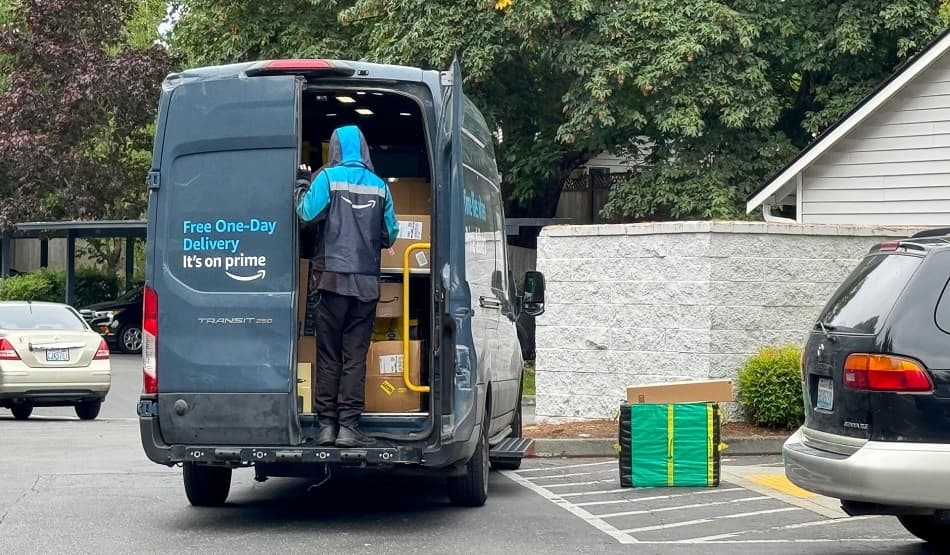
Amazon became the largest carrier in the United States by parcel delivery volume in 2025. According to ShipMatrix data, the company narrowly surpassed the U.S. Postal Service (USPS), delivering 6.7 billion packages in 2025, compared with USPS’s 6.6 billion. During the same period, UPS handled 4.4 billion packages, while FedEx delivered 3.6 billion. This picture shows that Amazon is no longer only an e-commerce giant, but also one of the country’s most powerful last-mile logistics players.

Dependence on USPS Has Declined

Three main factors stand out behind Amazon’s rise: growth in online sales volume, the expansion of its rural delivery network, and reduced dependence on UPS. As Reuters previously reported, Amazon plans to invest more than $4 billion by the end of 2026 to expand its rural coverage. This is helping the company scale its own network while relying less on external carriers.

The U.S. Domestic Parcel Market Reached 23.9 Billion Shipments

Across the market as a whole, growth remained limited. According to ShipMatrix, the U.S. domestic parcel market reached a total of 23.9 billion shipments in 2025, with annual volume growth of only 0.4%. Revenues, however, rose by 4.1%. A major reason for this was that large carriers supported their revenues through price increases. The projected compound annual growth rate for the next three years stands at 3.9%.

The Balance of Power in the U.S. Logistics Market Has Shifted Permanently

Another notable development is that traditional carriers are moving away from low-margin e-commerce deliveries. UPS and FedEx are shifting toward healthcare, data centers, and higher-yield enterprise segments instead of low-value B2C shipments to homes. This is opening space not only for Amazon, but also for Walmart, Target, and smaller parcel carriers. According to ShipMatrix data, the volume of carriers outside the top four increased by 13% year over year in 2025.

Amazon’s overtaking of USPS signals that the balance of power in the U.S. logistics market has changed permanently. Pitney Bowes had previously projected that Amazon would not take the lead until 2028. The company has crossed that threshold earlier than expected.

Amazon to Reduce USPS Package Volume

Meanwhile, Amazon is reportedly planning to reduce the number of packages it ships through the U.S. Postal Service by at least two-thirds by this fall. This shift is expected to accelerate as the current contract expires in the September–October 2026 period. Amazon is not expected to sever ties with USPS completely; however, the company is said to be preparing for a smaller-scale partnership while shifting delivery volume to its own network and alternative carriers.

The most critical impact of this decision may be felt on the USPS side. USPS currently handles about 1.7 billion Amazon packages annually, and the agency has already warned Congress that it could face a cash squeeze in the fall of 2026. It is reported that the Postal Service’s accumulated net losses since 2007 have exceeded $118 billion, while new Postmaster General David Steiner has said the system is not sustainable in its current form.

Amazon to Invest More Than $4 Billion to Expand Rural Delivery Capacity

The picture looks different from Amazon’s side. The company has aggressively expanded its own logistics network in recent years. Amazon plans to invest more than $4 billion by the end of 2026 to increase its rural delivery capacity. In doing so, it aims to reduce its dependence on USPS, especially in rural areas.

For USPS, the issue is not only the loss of Amazon volume; if that volume declines, part of the delivery infrastructure expanded in recent years could also be left underutilized. For that reason, the agency has reportedly launched a competitive bidding process for its last-mile delivery network and has received offers from more than 20 companies. However, Amazon’s decision to reduce volume shows that the center of gravity in U.S. e-commerce logistics is now shifting more clearly toward in-house networks.