WORLDEF Istanbul 2026 - Upcoming Event

Register Now

Code Error at Amazon Causes Disruption in E-Commerce Infrastructure

Amazon

During a meeting held by Amazon engineers, code written for testing purposes accidentally affected the live system and caused disruptions in some e-commerce services.

It was stated that some of the outages were linked to Amazon’s artificial intelligence coding assistant Q. Following the outage, a 90-day code security reset was initiated across critical engineering systems. The disruption was detected and resolved in a short time. However, the incident once again demonstrated that even a small code change on large-scale e-commerce platforms can affect millions of users.

Amazon is preparing to launch a comprehensive internal review regarding artificial intelligence–assisted software development processes and potential system outages that have recently come to the agenda. The company’s engineering teams and senior executives are planning a series of meetings, particularly to address the impact of AI-assisted code generation on system security and operational continuity.

Code Generation Tools Are Increasing at Amazon

In recent years, Amazon has rapidly increased the use of artificial intelligence–based code generation tools in its software development processes. While these tools help developers write code more quickly, some experts point out that automatically generated code could pose risks if it is integrated into live systems without sufficient testing.

At the center of the discussions are certain technical outages experienced within Amazon’s infrastructure and the question of whether these outages are related to AI-assisted development processes. During internal meetings, engineers are expected to examine the possible causes of system disruptions in detail and conduct evaluations particularly on testing processes, code verification mechanisms, and the security of automation tools.

Millions of Sellers and Hundreds of Millions of Customers in the E-Commerce Infrastructure

Amazon’s technology infrastructure supports a massive e-commerce ecosystem that serves millions of sellers and hundreds of millions of customers. For this reason, even a small software error can create impacts on a global scale. Therefore, the company aims to establish stronger control mechanisms and security layers in artificial intelligence–assisted software development processes.

According to experts, although code generation with artificial intelligence accelerates software development processes, human oversight, comprehensive testing procedures, and secure deployment policies remain critically important. It is stated that the evaluation process initiated by Amazon could serve as an important reference for how AI-assisted software development practices should be managed across the technology sector.

Amazon: It Was Not Caused by Code Written by AI

Amazon stated that some claims reported in the media do not fully reflect the reality and said that the comments suggesting the outages were caused by code written by artificial intelligence are not correct. The company emphasized that it continuously improves infrastructure security and system resilience and that its engineering teams regularly review system performance.

Ubuy Launches Installment Shopping in Cross-Border E-Commerce with Tabby Partnership

Ubuy

Ubuy, the cross-border e-commerce platform operating in the Gulf region, has started offering the “buy now, pay later” (BNPL) model to users in the United Arab Emirates and Saudi Arabia through a new integration with the payment technology company Tabby. The new payment option has been activated on both the Ubuy UAE and Ubuy Saudi Arabia platforms.

With this integration, users will be able to purchase millions of international products available on the platform with installment payment options. Under the model offered by Tabby, purchases can be split into up to four installments. While no interest or additional fees are applied in three-installment plans, a small transaction fee may apply for four-installment plans. The payment process also moves very quickly; after selecting the Tabby option on the payment page, users can receive instant approval and complete their purchases, while the remaining payments are automatically scheduled by the system.

BNPL Solutions Are Rapidly Expanding

In recent years, BNPL solutions have been rapidly expanding in the Gulf countries. The increasing preference of young and digitally focused consumers for flexible payment options is encouraging e-commerce platforms to invest more in alternative financing models. According to market research, the BNPL market in the Middle East and North Africa is expected to reach a value of billions of dollars in the coming years.

Ubuy Aims to Expand Its User Base in the Gulf Market

Dhari AlAbdulhadi, the founder and CTO of Ubuy, stated that customer experience is at the center of the company’s growth strategy, noting that the Tabby integration increases users’ financial flexibility and makes international shopping more accessible. The company aims to expand its user base in the Gulf market by combining global product access with regional payment solutions.

Operating across categories such as electronics, fashion, beauty, and home & living, Ubuy enables consumers to access products from different parts of the world quickly and easily through its cross-border e-commerce model with its wide product range.

OpenAI Defers Its Plan for Direct Shopping via ChatGPT

OpenAI

OpenAI is making a significant strategic shift at a time when AI-powered shopping experiences are increasingly being discussed. The company has temporarily suspended the system that would enable direct payments through ChatGPT. Instead, it is reported that the company is focusing on a model that redirects users to brands’ or retailers’ own platforms.

Despite the rapid emergence of the AI-mediated shopping model known as “agentic commerce” in the technology world, OpenAI is said to be reassessing its plans in this area.

ChatGPT Will Remain a Discovery Tool

Rather than launching the integrated payment system planned for ChatGPT, OpenAI prefers to position artificial intelligence as a product search and recommendation engine. In this model, users will be able to discover products through ChatGPT, but they will complete the purchase process through the brands’ or e-commerce platforms’ own applications.

The “Instant Checkout” feature that the company tested last year was developed particularly for Etsy and Shopify sellers. However, it is stated that the system did not attract the expected interest and was used by only a limited number of merchants in the United States.

User Habits Became a Barrier at the Purchase Stage

Studies analyzing user behavior by OpenAI show that the product research and comparison phase within ChatGPT is quite active. However, it has emerged that users are more cautious about completing the purchase process within the AI interface.

A study published by Adobe also presents a similar picture. According to the report, 70 percent of consumers are comfortable with artificial intelligence assisting in shopping processes. However, only 13 percent of respondents trust AI tools to complete purchases on their behalf.

Collaboration Between OpenAI and Stripe Continues

It is reported that OpenAI has not completely abandoned payment processes, but plans to carry out these transactions through different systems rather than within its own platform. Through the infrastructure called the Agentic Commerce Protocol, which the company developed together with Stripe, transactions are expected to be carried out more smoothly. This approach may also open the door for OpenAI to move toward different areas within its revenue model. In particular, advertising and sponsorship-based revenue models built around product discovery and recommendation processes are expected to come to the forefront.

Competition in AI-Powered Commerce Is Intensifying

Competition in the field of AI-based commerce is steadily increasing. While Google is working on a new infrastructure aimed at standardizing e-commerce data on a global scale, Meta is also testing AI-powered shopping features within its social media platforms.

According to experts, although AI-powered shopping technologies are developing rapidly, it will take time for consumer habits to adapt to this transformation. For this reason, the sector is expected to shift toward hybrid models in the short term that strengthen product discovery and decision-making processes, rather than enabling direct purchases through artificial intelligence.

Sea Limited Posts Record $1.6B Net Income as Shopee Drives Growth

Sea Limited net income

Sea Limited net income reached $1.6 billion for the full year, marking a significant milestone in the Singapore-based technology group’s transition toward sustainable profitability. The performance was largely driven by strong momentum in its e-commerce platform Shopee, which continues to expand its presence across Southeast Asia and several international markets.

The results highlight Sea’s evolving strategy of building a diversified digital ecosystem spanning e-commerce, financial technology and digital entertainment, while strengthening operational efficiency across its businesses.

Sea Limited net income growth driven by Shopee

Shopee remained the primary growth engine for Sea Limited during the year, maintaining its position as one of the dominant online marketplaces in Southeast Asia. The platform continues to attract both consumers and merchants across key regional markets, including Indonesia, Malaysia, Thailand, Singapore and the Philippines.

The company has increasingly focused on improving the efficiency of its logistics and marketplace infrastructure, while enhancing the seller ecosystem through advertising tools, fulfillment services and integrated payment solutions. These initiatives have helped drive higher transaction volumes and improved monetization across the platform.

At the same time, Shopee has been expanding its presence in cross-border commerce and emerging markets, allowing sellers to reach a broader international customer base.

Ecosystem approach supports profitability

Sea Limited’s broader business model revolves around three major pillars:

  • Shopee, its e-commerce marketplace
  • SeaMoney, the company’s digital financial services division
  • Garena, its digital entertainment and gaming arm

The integration of these services enables Sea to build a multi-layered digital ecosystem, where payments, logistics, and digital services reinforce user engagement across platforms. For example, SeaMoney’s digital wallets and credit products are increasingly embedded within Shopee’s checkout and merchant services.

This ecosystem strategy has become central to the company’s profitability model, enabling Sea to diversify revenue streams while improving operational margins.

Competitive landscape intensifies

Despite the strong financial performance, the Southeast Asian e-commerce sector remains highly competitive. Regional platforms are facing increasing pressure from social commerce models and cross-border marketplaces, which continue to reshape consumer behavior and pricing dynamics.

In response, Sea has continued to invest in logistics infrastructure, platform technology and user acquisition initiatives aimed at strengthening Shopee’s market position.

Industry analysts note that the company’s ability to balance growth investments with disciplined cost management will remain a key factor in sustaining profitability over the coming years.

Outlook

Looking ahead, Sea Limited is expected to focus on scaling its e-commerce ecosystem while maintaining financial discipline, particularly as digital commerce penetration continues to rise across Southeast Asia.

With Shopee expanding its seller network and SeaMoney gaining traction among digital-first consumers, the group is positioning itself to capture long-term growth in one of the world’s fastest-growing internet economies.

Industry analysts say Shopee’s continued expansion and improving operational efficiency have played an important role in strengthening Sea Limited net income in recent years. The company has been focusing on building an integrated digital ecosystem combining e-commerce, fintech and digital entertainment services across Southeast Asia and other emerging markets.

The continued growth of Shopee reflects broader digital commerce trends across Southeast Asia, where mobile-first consumers and improving logistics infrastructure are accelerating online retail adoption. As the region’s internet economy expands, Sea Limited is positioning its ecosystem to capture a larger share of digital payments, online marketplaces and platform-based services.

The Southeast Asian digital economy continues to expand rapidly as internet penetration, mobile commerce adoption and digital payments accelerate across the region. Analysts believe companies like Sea Limited are well positioned to benefit from these trends as online retail and platform-based services continue growing. This environment is expected to further support Sea Limited net income and strengthen the company’s long-term digital ecosystem strategy.

Source:
© Retail Asia

Stripe AI Commerce Strategy Targets Southeast Asia’s $100B Digital Economy

Stripe AI commerce

Stripe AI commerce initiatives are expanding across Southeast Asia as the global payments platform explores artificial intelligence-driven commerce and stablecoin payments.

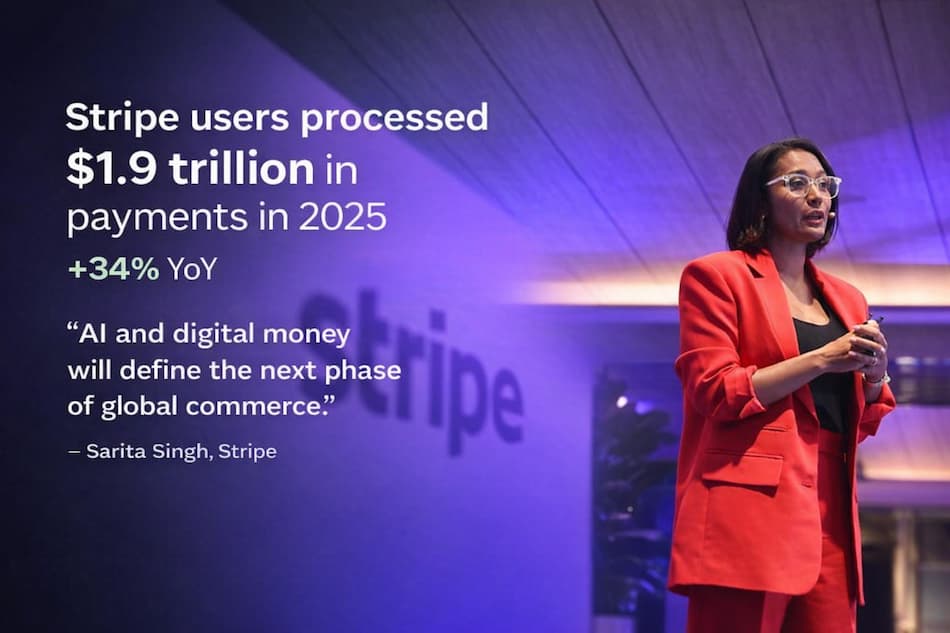
In an interview with TNGlobal, Sarita Singh, Regional Head and Managing Director for Southeast Asia and Greater China, reflected on Stripe’s performance in 2025 and outlined the company’s priorities for 2026.

The fintech infrastructure provider processed $1.9 trillion in total payment volume in 2025, representing a 34 percent year-on-year increase, according to Singh. The figure is equivalent to roughly 1.6 percent of global GDP, highlighting the scale of transactions flowing through the platform.

Stripe, headquartered in San Francisco and Dublin, provides programmable financial infrastructure used by millions of businesses worldwide to process payments, manage revenue streams, and scale digital operations.

Stripe AI Commerce Strategy in Southeast Asia

Stripe also reported record growth in new companies joining its platform during 2025.

More than 57% of newly onboarded businesses were based outside the United States, reflecting the increasing globalization of online entrepreneurship and the growing importance of emerging digital markets.

Across Asia, many startups are now launching with international expansion built into their strategy from day one.

Stripe supports a range of fast-growing “global-by-default” companies, including Aspire, Halara, Manus AI and Shoplazza. Meanwhile, cross-border payments processed through the platform grew by more than 30 % in key regional hubs such as Singapore, underscoring Southeast Asia’s role as a major center of digital trade.

AI-Powered “Agentic Commerce” Emerging as Next Digital Payments Frontier

A major development for Stripe in 2025 was the rise of agentic commerce, a model where artificial intelligence agents can autonomously complete transactions on behalf of users.

Stripe said it has been working with partners including OpenAI and Microsoft to build frameworks enabling AI systems to transact securely while merchants maintain control over pricing, brand identity, and risk management.

The company believes AI-native commerce models will reshape how businesses interact with customers online, enabling faster transactions and more automated purchasing experiences.

Stripe is currently developing infrastructure such as the Agentic Commerce Protocol, designed to support secure AI-driven transactions across ecommerce platforms and payment networks.

Stripe Aims to Simplify Southeast Asia’s Fragmented Payments Landscape

Looking ahead to 2026, Stripe says one of its main goals in Asia is helping businesses navigate the region’s complex and fragmented payments ecosystem.

Rather than replacing local payment systems, the company aims to unify them through a single programmable payments infrastructure layer, allowing merchants to operate across multiple markets without managing the complexities of different payment methods, compliance frameworks and regulations.

Singh noted that many businesses still operate with underperforming payment infrastructure, a situation Stripe founders describe as “low revenue mode.”

In such cases, weak payment conversion rates, lower authorization performance and inefficient fraud management can significantly reduce revenue potential.

Optimizing payment infrastructure, Singh said, remains one of the most effective ways businesses can unlock additional growth.

Stablecoins Expected to Transform Global Money Movement

Another major focus for Stripe is the increasing adoption of stablecoins in cross-border payments and digital commerce.

According to the company, global stablecoin payment volumes doubled to around $400 billion last year, with approximately 60 percent linked to business transactions.

Stripe’s research indicates that nearly half of Asian businesses plan to begin using stablecoins within the next four years, largely due to their ability to enable faster and cheaper cross-border money transfers.

The company says it is positioning its infrastructure to support the growing integration of stablecoins into global commerce.

Southeast Asia’s Tech Ecosystem Set for Next Decade of Growth

Singh remains optimistic about the long-term outlook for Southeast Asia’s technology sector.

The year 2026 marks ten years since Stripe launched operations in Singapore, a period that coincided with the rapid expansion of the region’s internet economy.

According to Singh, the past decade of digital growth across Asia was largely driven by improvements in payments infrastructure, logistics networks and digital marketplaces.

The next phase, she said, will be shaped by programmability – the ability for businesses to build and scale global digital commerce through unified financial infrastructure.

Analysts say Stripe AI commerce strategy could accelerate digital payments and AI-driven retail innovation across Southeast Asia.

Source

© TNGlobal

Coupang Hits Record $36.8B Revenue in 2025, but Q4 Profit Plunges 97% After Data Breach

Coupang Hits Record $36.8B Revenue in 2025

South Korean e-commerce giant Coupang reported record annual revenue for 2025, though its fourth-quarter profitability declined sharply following a personal data breach disclosed in December.

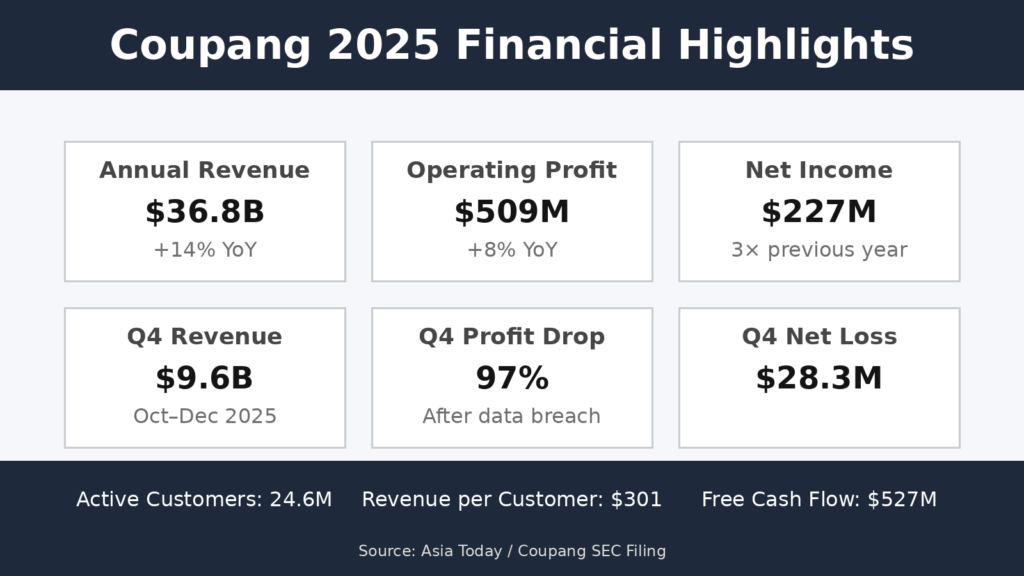
According to a filing submitted to the U.S. Securities and Exchange Commission, Coupang generated 49.1 trillion won ($36.8 billion) in revenue in 2025, marking a 14% increase from 41.3 trillion won ($30.9 billion) a year earlier. On a constant-currency basis, revenue rose 18% year-on-year.

The company also extended its profitability streak, reporting 679 billion won ($509 million) in annual operating profit, up 8% from 602.3 billion won ($451 million) in 2024. Net income for the year reached 303 billion won ($227 million) , more than triple the previous year, while earnings per share stood at $0.11.

The results mark Coupang’s third consecutive year of operating profitability, reflecting continued growth in its core e-commerce operations and expanding digital services.

Fourth-Quarter Profit Plunges After Data Breach

Despite the strong annual performance, Coupang’s profitability weakened significantly in the final quarter of the year.

Revenue for the October–December period reached 12.81 trillion won ($9.61 billion), up 11% compared with the same period in 2024, though down 5% sequentially from the previous quarter.

Operating profit fell sharply to 11.5 billion won ($8.6 million) from 435.3 billion won ($326 million) a year earlier, while the operating margin narrowed to just 0.09%.

The company also recorded a quarterly net loss of 37.7 billion won ($28.3 million).

Coupang said the December data breach involving customer information had a direct impact on revenue growth, active customer numbers, membership activity in its Wow loyalty program, and overall profitability.

However, the company noted that the situation has since stabilized and that recovery began in the first quarter of 2026.

Chairman Apologizes to Customers

During the company’s earnings call, Chairman Kim Beom-seok issued an apology to customers affected by the incident.

“I once again apologize for the concern and inconvenience caused to our customers due to the personal information incident,” he said.

“Our customers are the sole reason for our existence. There is nothing more serious than failing to meet customer expectations at Coupang.”

Core Commerce Continues to Drive Growth

Coupang’s product commerce segment – which includes services such as Rocket Delivery, Rocket Fresh, and the company’s online marketplace , generated 10.74 trillion won ($8.06 billion) in fourth-quarter revenue, representing 8% year-on-year growth.

Meanwhile, the company’s growth initiatives, including the luxury fashion platform Farfetch, its Taiwan operations, Coupang Eats, and Coupang Play, posted revenue of 2.07 trillion won ($1.55 billion) – a 32% increase from the previous year.

However, these newer businesses also recorded an adjusted EBITDA loss of 434.9 billion won ($326 million), more than double the loss reported a year earlier.

Customer Metrics and Cash Flow

Active customers in Coupang’s product commerce segment totaled 24.6 million in the fourth quarter, representing an 8% increase year-on-year, though slightly down by 100,000 customers compared with the previous quarter.

Revenue per active customer increased 3% on a constant-currency basis, reaching $301 (436,400 won).

Cash flow performance, however, softened during the year.

Operating cash flow declined to $1.8 billion, compared with $1.91 billion the previous year. Free cash flow dropped more sharply to $527 million, down from $1.02 billion, reflecting working-capital effects related to the data breach as well as increased capital expenditures.

The company also repurchased 5.9 million shares of Class A common stock during 2025 for a total of $162 million.

Source

© Asia Today. Unauthorized reproduction or redistribution prohibited.

Amazon, Temu and Shein Warn of Delivery Delays in the Middle East as Conflict Disrupts Global Shipping Routes

Amazon, Temu and Shein Warn of Delivery Delays in the Middle East as Conflict Disrupts Global Shipping Routes

Major global e-commerce platforms including Amazon, Temu and Shein are warning customers in the Middle East about longer delivery timelines as escalating geopolitical tensions disrupt key international trade routes.

According to a report by Bloomberg, the ongoing conflict involving Iran, the United States and Israel has begun to impact global logistics networks, slowing both air cargo operations and maritime shipping into the region.

The disruptions are already affecting cross-border e-commerce deliveries, raising concerns among merchants and logistics providers that delays, rising freight costs and inventory shortages could intensify in the coming months.

Delivery Windows Expand Across Major Platforms

Data from logistics tracking platform 17Track indicates that delivery estimates across several international e-commerce platforms have lengthened since the conflict escalated.

Temu currently lists delivery timelines of 6 to 20 days, compared with its previous 7 to 15 day estimate. Fashion retailer Shein has also extended its delivery window to 8 to 10 days, up from the earlier 5 to 8 days range.

On Amazon, some products now display estimated delivery times of 35 to 45 days, while shipments previously arrived in less than 35 days. In many cases, delivery windows have increased by approximately 10 days compared with pre-conflict estimates.

Merchants Pause Shipments Amid Rising Uncertainty

The growing instability has prompted some sellers to reconsider their logistics strategies in the region.

According to Bloomberg, several Chinese merchants selling through Amazon, Shein and Temu have temporarily paused plans to ship new inventory from China to the Middle East until transportation conditions stabilize.

Huang Lun, a Chinese apparel merchant who expanded his operations to the Middle East last year, said geopolitical developments have significantly increased the risks associated with cross-border trade.

“The Middle East market is a write-off this year,” Huang said, citing rising uncertainty driven by shifting tariffs, tightening regulations in Western markets and escalating conflict in the region.

Global Shipping Routes Under Pressure

The situation is also affecting some of the world’s most critical trade corridors. Maritime traffic through the strategic Strait of Hormuz-a key artery for global shipping—has slowed as security concerns mount.

Several major shipping companies have already adjusted their operations.
MSC Mediterranean Shipping Company has halted cargo bookings to and from the Middle East, while A.P. Moller-Maersk and Hapag-Lloyd have suspended crossings through the strait.

Freight forwarders warn that if disruptions persist, shipping costs and delivery times could potentially double, placing additional pressure on cross-border sellers and logistics providers.

Ramadan Shopping Season Faces Supply Pressure

The disruptions are unfolding during Ramadan, one of the busiest retail periods across the Middle East, when consumer spending and online shopping activity typically increase significantly.

The Gulf region has emerged as a key growth market for global e-commerce platforms such as Amazon, Temu and Shein, driven by a young, digitally connected population that relies heavily on imported goods.

However, ongoing disruptions to international shipping routes and logistics networks could result in longer delivery times, higher shipping costs and potential product shortages, placing additional pressure on retailers and consumers during one of the region’s peak shopping seasons.

Source: Bloomberg

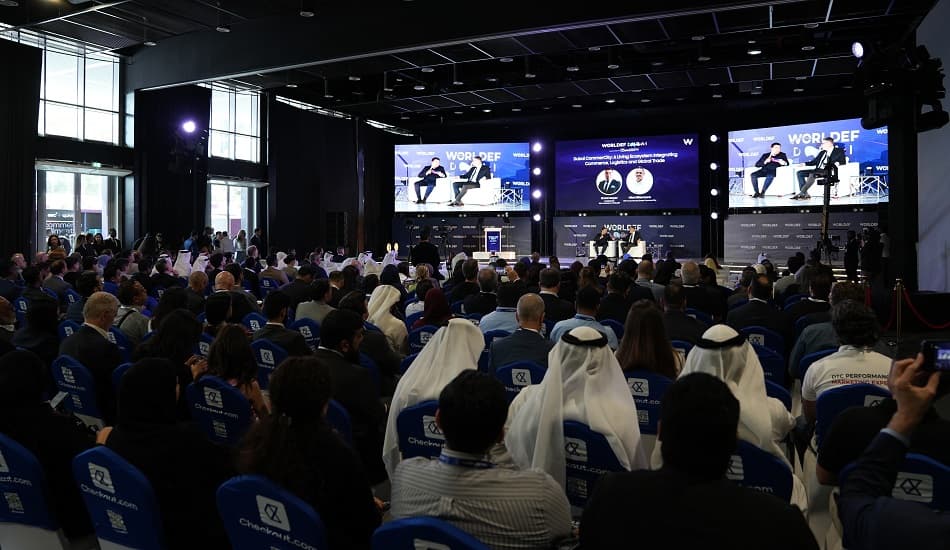
WORLDEF DUBAI 2026 opened its doors: 18 thousand participants from 80 countries met in Dubai for e-commerce!

WORLDEF DUBAI 2026

WORLDEF DUBAI 2026, led by the international e-commerce platform WORLDEF, started with a magnificent ceremony. Recognized as the largest e-commerce event in the MENA region, WORLDEF DUBAI brings together more than 18,000 visitors and participants from over 80 countries between February 12–14. His Highness Sheikh Mansoor bin Mohammed bin Rashid Al Maktoum, President of the United Arab Emirates (UAE) National Olympic Committee said, that digital trade has become a strategic pillar of the UAE’s economic development and a vital driver of Dubai’s global competitiveness.

Omar Nart, CEO of WORLDEF said, “The Dubai Economic Agenda D33 has a clear vision; to grow Dubai’s economy, to become a leader in global digital trade, and to connect markets, talent, and innovation. WORLDEF is part of this vision.”

WORLDEF DUBAI 2027

WORLDEF DUBAI 2026, the largest e-commerce gathering of the Middle East and North Africa (MENA) region, opened its doors. Organized in cooperation with Dubai CommerCity, the region’s first and leading digital trade-focused free zone, the event brought together many companies and initiatives ranging from e-commerce marketplaces to logistics companies, from artificial intelligence startups to sellers. Held for the second time this year, the event is being organized at the Dubai CommerCity campus under the patronage of His Highness Sheikh Ahmed bin Saeed Al Maktoum, Chairman of the Dubai Integrated Economic Zones Authority (DIEZ).

WORLDEF DUBAI 2026 was organized in cooperation between Dubai CommerCity, a joint venture of DIEZ and Wasl Properties, and WORLDEF, the international platform focused on supporting the global growth and expansion of cross-border e-commerce and digital trade companies. Bringing together more than 18,000 participants from over eighty countries, the event aims to create commercial opportunities, strengthen strategic partnerships, encourage knowledge sharing, and advance sustainable growth in the global digital economy.

An opening ceremony was held on the event’s main stage “Future Commerce” for WORLDEF DUBAI 2026. The opening ceremony was also attended by His Excellency Dr. Thani bin Ahmed Al Zeyoudi, UAE Minister of State for Foreign Trade; His Excellency Dr. Mohammed Al Zarooni, Executive Chairman of DIEZ; Her Excellency Amna Lootah, Director-General of Dubai CommerCity and Dubai Airport Freezone (DAFZ); Omar Nart, Chief Executive Officer of WORLDEF; and several Ambassadors, Consuls General and representatives from government entities and leading international digital commerce companies.

Sheikh Mansoor bin Mohammed: Strategic initiatives announced at WORLDEF DUBAI reflect Dubai’s firm commitment

His Highness Sheikh Mansoor bin Mohammed stated that the strategic initiatives announced within the scope of WORLDEF DUBAI 2026 reflect Dubai’s firm commitment to developing a future-ready, digitally enabled economic model through artificial intelligence, advanced technologies, strengthened international partnerships, and an integrated innovation ecosystem that enables businesses to grow confidently in regional and global markets.

Dr. Thani bin Ahmed Al Zeyoudi: The UAE has established a leading position in e-commerce

Speaking at the opening of the forum, His Excellency Dr. Thani bin Ahmed Al Zeyoudi, UAE Minister of State for Foreign Trad,e stated that Dubai has strengthened its position as a global trade, innovation, and digital commerce hub. HE Zeyoudi expressed that the city’s role will become even more important in today’s transforming global economy, and stated that the UAE is progressing towards developing a digital, data-driven, and globally integrated economy and has established a leading position in e-commerce in this direction.

Emphasizing that the UAE sees e-commerce as a fundamental pillar of the global trade system, HE Zeyoudi stated that efforts are ongoing to establish a network of digital trade corridors that seamlessly facilitate the flow of goods, services, and data between countries.

Dr. Mohammed Al Zarooni: WORLDEF DUBAI directly supports D33

His Excellency Dr. Mohammed Al Zarooni, Executive Chairman of DIEZ, stated that hosting WORLDEF DUBAI is an indication of Dubai’s forward-looking vision and its commitment to promoting cooperation and advancing digital trade. He stated that the Dubai Economic Agenda D33 provides a strategic framework to strengthen global connectivity, enhance international competitiveness, and position Dubai among the world’s leading city economies.

He emphasized that the forum directly supports this agenda by enabling companies to grow internationally through world-class digital capabilities and integrated trade infrastructure. HE Dr. Al Zarooni also stated that the discussions at the forum revealed the accelerating impact of artificial intelligence, fintech, advanced logistics, and next-generation payment solutions in reshaping global trade ecosystems and strengthening market connectivity.

Omar Nart: WORLDEF is part of the D33 vision

Omar Nart, CEO of WORLDEF said, “WORLDEF DUBAI is not only an event; it is a meeting point of ideas, people, and futures. Digital trade is changing the world. It is no longer the future, it is today itself. Trade is now digital, growth is now cross-border, and success requires cooperation. Dubai understands this reality. We are proud to organize this event in close cooperation with our main strategic partner Dubai CommerCity. This forum is aligned with the Dubai Economic Agenda D33. D33 has a clear vision; to grow Dubai’s economy, to become a leader in global digital trade, and to connect markets, talent, and innovation. WORLDEF is part of this vision.”

Emphasizing that the future of digital trade will be discussed at WORLDEF DUBAI, Nart stated: “At the forum, we will address policy, logistics, e-commerce, payments, artificial intelligence, and trust. We are bringing together leaders from government, business, and technology. People from more than 80 countries are here. This shows a simple truth: The digital economy has no borders. The participation of leading companies specialized in e-commerce and related logistics sectors has enabled strategic discussions to take place throughout the forum. It has contributed to shaping the future direction of these sectors and identifying emerging opportunities.”

Nart emphasized that a “Startup Zone” was opened for the first time at WORLDEF this year and that more than 50 startups were brought together in this area, stating, “These startups are global by design. They bring new ideas, new energy, and new solutions. We also have country and ecosystem pavilions. These bring together markets, institutions, and companies. At the same time, we are launching the WORLDEF Growth Network (WGN). This is not just a community, it is a long-term platform. A platform that connects people.”

Omar Nart stated, “I am pleased to announce that WORLDEF DUBAI 2027 is already being planned. Next year we will be bigger, stronger, and even more global.”

The announcement of the UAE’s first Applied Artificial Intelligence Innovation Center was made

Within the scope of the event, the establishment of the UAE’s first Applied Artificial Intelligence Innovation Center within Dubai CommerCity was also announced by the IIT Madras Global Research Foundation, which facilitates market access and investment opportunities for ventures across the Gulf Cooperation Council (GCC). The center aims to position Dubai as a regional and global launch hub for applied artificial intelligence innovation by establishing a structure where solutions are developed, implemented, and scaled through a long-term platform focused on sustainable innovation and value creation.

At the event, the launch of the economic research report published by Dubai CommerCity was also held, which addresses the transition from traditional trade models to integrated, technology-based digital trade ecosystems supported by e-commerce, digital payments, smart logistics, fintech innovation, and data-driven cross-border services. The report addresses the development of secure digital trade corridors that strengthen regional and global economic integration through the establishment of digital trade corridors, the integration of digital infrastructure, and the establishment of reliable frameworks that will facilitate seamless cross-border transactions.

In addition to these, the launch of the joint initiative between Dubai CommerCity and Dubai Customs was also held, which aims to strengthen cooperation in digital trade and support the development of an integrated business environment that facilitates trade flows and increases the efficiency of Dubai’s trade ecosystem.

WORLDEF DUBAI 2027

PayPal and NEO PAY Forge Strategic Partnership to Support E-Commerce in the UAE

paypal and neopay strategic partnership

PayPal has formed a strategic partnership with UAE-based digital payment provider NEO PAY. The collaboration aims to enable businesses in the UAE to accept PayPal payments, while also helping small businesses in the region accelerate cross-border e-commerce.

PayPal and NEO PAY have established this partnership to integrate PayPal’s payment gateway into NEO PAY’s acquiring infrastructure. This collaboration is designed to streamline merchant onboarding and open international markets for local businesses, particularly targeting small and medium-sized enterprises (SMEs).

“A Critical Step in PayPal’s Regional Growth Strategy”

Otto Williams, Senior Vice President and Regional General Manager for the Middle East and Africa at PayPal, described the partnership as a “critical step” in the company’s regional growth strategy. Emphasizing the UAE’s advanced digital economy and rapidly growing e-commerce sector, Williams noted that this collaboration would enable SMEs to better serve today’s digital-first consumers.

“The UAE is a digitally advanced economy with a rapidly growing e-commerce sector,” said Williams. “By integrating PayPal, merchants can trade more efficiently with international buyers and scale with confidence.”

Supporting Cross-Border Growth for Merchants

NEO PAY, a digital payment services provider, aims to help merchants navigate the complexities of modern e-commerce through this partnership. Vibhor Mundhada, CEO of NEO PAY, expressed his excitement about the collaboration, stating, “This partnership will enhance the payment checkout experience by offering merchants secure, trusted, and globally recognized payment options, while supporting their cross-border growth.”

This collaboration aims to solidify the UAE’s position as a regional digital commerce hub, while advancing the country’s financial inclusion and digital transformation goals. By simplifying payment processes and increasing access to global markets, PayPal and NEO PAY seek to play a significant role in the future of the UAE’s e-commerce ecosystem.

The UAE’s e-commerce sector is growing rapidly, and according to Mordor Intelligence, the sector is expected to reach a value of $21.18 billion by 2030. Currently, 94% of companies in the UAE are small businesses, contributing to more than half of the country’s GDP. By adopting Pay Pal’s trusted payment gateway, these businesses can potentially increase conversion rates and build trust with international customers.

AI-Powered E-Commerce: Meta’s Move into Agentic Commerce

AI-Powered E-Commerce: Meta’s Move into Agentic Commerce

Meta is preparing to revolutionize online shopping through AI-powered shopping agents, a concept it refers to as “agentic commerce.” With significant investments in AI tools, the company aims to enhance user experiences and increase advertising revenue.

Meta CEO Mark Zuckerberg stated that the company’s focus is shifting towards “agentic commerce.” Zuckerberg explained that this new approach would offer AI-powered shopping agents that help users find the right products based on their personal preferences and behaviors. These personalized AI agents will analyze Meta’s extensive user data, including past interactions, preferences, and social connections, to provide tailored product recommendations for each user.

Zuckerberg mentioned that Meta had rebuilt its AI infrastructure over the past year and would begin rolling out new models and products in the coming months. In his statement to investors, he said, “This year will be a big year for delivering personal superintelligence.” The company aims to go beyond traditional static product listings and search bars, with AI offering instant, personalized product recommendations for users.

Meta’s Strategy in the Competitive AI Shopping Space

Meta’s vision for AI-powered commerce is taking shape at a time when “agentic commerce” is gaining increasing attention in the tech world. OpenAI and Google have already introduced AI-powered shopping agents. OpenAI is enhancing shopping experiences with GPT-4, while Google has started integrating AI tools into its Search and Shopping platforms. Meta believes it has a unique advantage due to its access to vast user data, which enables the creation of even more personalized AI assistants.

In December 2025, Meta strengthened its position in this space by acquiring Manus, an AI agency developer. By integrating Manus technology, Meta plans to create shopping agents that interact with users across multiple platforms and ultimately transform product discovery into shopping.

Key Insights for Marketers About Meta’s AI Investment

Meta’s move toward “agentic commerce” raises important questions for marketers. As AI-powered shopping experiences gain momentum, brands may need to adjust their approach to advertising and product promotions on Meta platforms.

  • New shopping formats: Marketers should be prepared for new AI-powered shopping formats and adapt their product feeds and creative strategies to align with new conversational interfaces.
  • More granular ad targeting: With AI agents utilizing personal data, ads will become more contextual and tailored to real-time preferences. Brands may need to explore how to provide relevant data or signals to these agents.
  • AI-oowered product discovery: Just as SEO adapted to algorithmic curation, commerce brands may need to develop new strategies for AI-first product discovery.
  • Testing AI-driven tools: Meta plans to invest $135 billion in AI-related capital expenditures. Marketers should quickly test AI tools integrated with Meta’s Shops, Business Suite, and advertising platforms to understand how these tools work.

Meta’s focus on agentic commerce and AI-powered shopping tools promises to revolutionize e-commerce. This new personalized shopping experience will provide users with a more efficient shopping process while creating new opportunities and challenges for marketers in the digital world.

Agentic Commerce: The Future of AI Shopping