WORLDEF Prime Antalya 2026 - Upcoming Event

Register Now

Sharjah Islamic Bank Launches SIB Pay to Expand Digital Payments in UAE

Sharjah Islamic Bank (SIB) has introduced a new digital-payments platform, SIB Pay, designed to accelerate the United Arab Emirates’ shift toward electronic transactions. The platform, announced on 6 November 2025, is the first of its kind rolled out by a Sharjah-based bank. Gulf News

SIB Pay is positioned to serve government entities, corporates and SMEs, with features tailored for both merchants and consumers. According to the bank, the offering aligns with the UAE’s digital-economy agenda and supports enhanced convenience, flexibility and security in payments. Gulf News

Platform Features

The new SIB Pay platform incorporates a range of digital-payment tools, including:

  • QR-code payment capability compatible with major e-wallets and banking applications. Gulf News

  • Soft POS functionality, enabling Android smartphones and tablets to act as payment terminals. Gulf News

  • E-commerce payment gateway for secure transactions on websites and apps. Gulf News

  • “Pay by Link” feature, allowing instant payment requests via SMS or email. Gulf News

  • Card tokenisation to enable encrypted storage of card details for recurring or one-click payments. Gulf News

Strategic Context & Significance

The launch of SIB Pay comes at a time when the UAE is intensifying its efforts toward digital financial infrastructure and cashless payment adoption. As SIB’s Head of Retail Banking noted, this initiative “reflects our strategic commitment to empowering businesses and simplifying transactions in innovative and secure ways that enhance competitiveness and support the UAE’s Vision 2031”. Gulf News

By offering a unified payments platform covering merchants of all sizes—including government, enterprises and SMEs—SIB aims to strengthen its position as a leader in secure, inclusive financial innovation across the UAE. The bank emphasised that SIB Pay supports fast-moving commerce, digital retail and e-business models, underpinned by payments technology. Gulf News

Implications for Merchants & Consumers

For merchants, the new platform offers tools that reduce friction at checkout, modernise acceptance infrastructure and expand payment options—important features in an increasingly digital-led retail ecosystem. The soft POS feature enables even smaller businesses to accept payments without traditional terminals.

For consumers, benefits include greater flexibility in payment methods, smoother checkout experiences and enhanced security through tokenisation of cards. The wide range of supported payment tools opens more possibilities for digital commerce and online/offline purchasing behaviour in the UAE.

Challenges & Considerations

While promising, the initiative will face operational and market challenges:

  • Adoption rate among merchants and consumers will be key—particularly ensuring training, onboarding and support for smaller businesses in using new payment tools.

  • Security and fraud risk remain significant in digital payments, so continuous monitoring, compliance and consumer protection frameworks will be vital.

  • The payments-ecosystem competition in UAE is evolving rapidly; ensuring differentiation and service reliability will determine if SIB Pay can gain strong market share.

  • The platform’s success will also depend on how well it integrates with partner wallets, banking apps and broader digital-commerce ecosystems.

Looking Ahead

In the coming months, key indicators to monitor will include:

  • Merchant acquisition numbers for SIB Pay and the volume of transactions processed through the platform.

  • Uptake of soft POS and QR-code payment tools by small and micro businesses.

  • The impact on checkout abandonment rates and average transaction values for merchants using the platform.

  • Partnerships announced by SIB or integrations with digital-commerce providers, e-wallets and fintech platforms.

  • User feedback related to ease of setup, transaction speed, security and customer support.

If SIB Pay gains traction, it may help position Sharjah Islamic Bank as a payments-innovation leader in the UAE and contribute to the broader goal of creating a more seamless, digital-first payments infrastructure in the region.

Dubai Attracts 44 Multinationals in the First Nine Months of 2025

Dubai International Chamber (DIC) announced that it has successfully attracted 44 multinational companies to establish operations in Dubai during the first nine months of 2025, a 10 % increase from the same period in 2024. The chamber also reported that a total of 261 companies were attracted between January and September, up from 158 in the previous year — marking a 65 % year-on-year growth. Gulf Business+2Arabian Business+2

Alongside the multinational influx, small and medium-sized enterprises (SMEs) also saw strong growth: 217 SMEs were brought in during this period, representing an 84 % increase compared to 118 in the same timeframe last year. Gulf Business+1

wStrategic Context and Drivers

The increase in multinational entries reflects Dubai’s continuing push to position itself as a global business hub. According to Sultan Ahmed Bin Sulayem — Chairman of Dubai International Chamber — the effort aligns with the broader Dubai Economic Agenda D33 which aims to double the size of the emirate’s economy by 2033. The expansion of DIC’s global representative office network was also highlighted as a key driver. Gulf Business+1

Between Q1 and Q3 of 2025, DIC opened new representative offices in Dhaka (Bangladesh), Cape Town (South Africa), Bengaluru (India), Bangkok (Thailand) and Toronto (Canada) — increasing its global footprint and supporting two-way trade and investment flows. Gulf Business+1

Implications for Dubai’s Economy and Investors

For Dubai’s economy, attracting more multinational headquarters, regional offices and global firms can contribute to higher-value investment, job creation, innovation partnerships and deeper integration into global supply chains. The growth in SMEs also signals that the emirate’s ecosystem is becoming more attractive to smaller businesses seeking access to global networks, supportive regulation and a business-friendly environment.

For global multinationals considering regional hubs, the data suggests that Dubai is increasingly viewed as a viable launchpad — offering strategic access to MENA, Africa and South Asia markets. The growth in DIC-facilitated entries may shorten onboarding time, reduce regulatory friction and improve support for international firms.

Challenges and Considerations

While the figures are encouraging, sustaining momentum will require addressing several factors:

  • Ensuring that new entrants convert into long-term operations, investments and employment rather than short-term registrations.

  • Managing infrastructure, talent and regulatory capacity as more global firms and SMEs enter the market, to maintain service quality.

  • Differentiating Dubai’s offering amid increasing competition from other regional hubs in the Gulf and beyond.

  • Monitoring how many of the new companies are genuinely “multinationals” with regional influence, versus smaller or regional-only entities.

Outlook

As Dubai moves into the remainder of 2025 and into 2026, key indicators to monitor include:

  • How many of the newly-attracted multinationals will establish regional headquarters or substantial operational hubs in Dubai.

  • The sectors represented by the new entrants, especially in digital economy, logistics, green economy, fintech and advanced manufacturing.

  • How SME growth is sustained or expanded, and whether the ecosystem supports scale-up of those SMEs to global or regional players.

  • The performance of Dubai’s international offices and how effectively they convert representation into actual company entries and investment flows.

If trends continue, Dubai may further solidify its status as a major global business location — but outcomes will depend not just on registrations, but on substantive business activity and sustainable growth.

France Urges EU to Sanction Shein Platform

The French government has formally called on the SHEIN online-fashion platform to face sanctions by the European Commission following serious allegations of non-compliance with EU regulations. Two French ministers conveyed their appeal in a letter, citing the sale of illegal items including child-like sex dolls and prohibited weapons. France 24+2AP News+2

In their communication, the ministers argued that Shein qualifies as a “very large online platform” under the Digital Services Act (DSA) due to its European user-base of more than 45 million, which obliges it to rigorously monitor listings and ensure traceability of sellers. AP News+1

French officials announced that the government has initiated proceedings to suspend Shein’s operations in France if it fails to demonstrate full compliance with national law and EU regulations. The call to the European Commission emphasised the use of interim measures, including potential platform suspension. Financial Times

Key Details

  • France cited evidence of listings of child-like sex dolls and category A weapons (such as firearms, machetes and axes) on Shein’s marketplace, which French authorities view as a failure to meet legal obligations regarding illegal content and seller traceability. AP News+1

  • The platform was formally placed under the DSA regime for very large online platforms, which empowers the EU to impose fines of up to 6 % of global turnover, or suspend access in a member-state if systemic risks are confirmed. DIE WELT+1

  • The French ministers’ letter requested the European Commission to “fully exercise its prerogatives, including through the adoption of interim measures against the platform”. France 24+1

Implications for Shein and the E-Commerce Market

For Shein, the French government’s action presents a major regulatory risk. The possibility of suspension in France or imposition of heavy fines under the DSA looms. Compliance failures in one major EU market may trigger wider scrutiny from other member states.

From the broader e-commerce perspective, this development reflects increasing regulatory pressure on cross-border online platforms deemed to exploit regulatory gaps — especially concerning product-safety, consumer protection and marketplace transparency. The DSA regime, now actively enforced, signals that platforms must ensure full traceability of sellers, effective removal of illegal content and clear transparency.

What to Watch

  • Whether the European Commission opens a formal investigation into Shein based on the French request and what interim measures (platform suspension, fines) it puts in place.

  • How Shein responds: whether it accelerates compliance processes, enhances seller-screening, removals, due-diligence and transparency reporting.

  • Potential ripple effects across the EU: other member-states may follow France’s lead in challenging other platforms under similar frameworks.

  • The impact on Shein’s operations in France (and potentially Europe): whether suspension leads to sales declines, shifts in listings strategy or re-structuring of seller-onboarding processes.

Conclusion

France’s demand that the European Union sanction Shein underscores a turning point in regulatory oversight of large online platforms within Europe. For Shein, the path ahead involves demonstrating full compliance or risking significant enforcement action. For digital-commerce platforms generally, the case signals that scale, cross-border operations and compliance obligations under the Digital Services Act now carry tangible legal and operational consequences.

Amazon and Nubank Partner to Integrate NuPay into Brazilian E-commerce

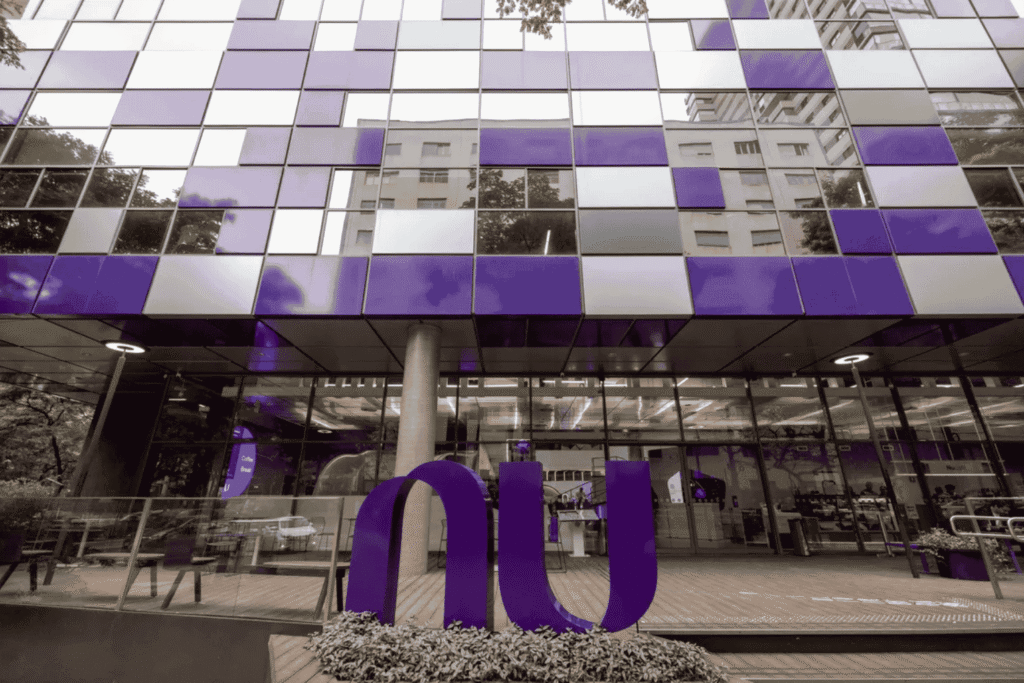
Amazon Brazil and Nubank have launched a strategic collaboration to integrate Nubank’s digital-payment solution NuPay directly into Amazon Brasil’s checkout process, aiming for a faster, card-free shopping experience for consumers across Brazil. Nu International+2RS Web Solutions+2

Under the agreement, many Nubank customers will be able to pay for purchases on Amazon.com.br without inserting card details, using NuPay instead. Eligible users will gain access to additional credit limits and have the option to pay in up to 24 installments features designed to boost flexibility for Brazil’s e-commerce shoppers during peak seasons such as Black Friday. Nu International+1

Key Details

  • The rollout begins in the coming weeks and is timed ahead of the 2025 Black Friday sales event in Brazil. RS Web Solutions+1

  • The integration aims to serve over 100 million Nubank users, enabling smoother checkout and enhanced credit availability. Nu International+1

  • The partnership emphasises security and friction-less experience: activation of NuPay at checkout happens via a single code, avoiding manual entry of payment details. RS Web Solutions

Strategic Importance

For Amazon Brazil, the collaboration strengthens its local market offering by adding payment-flexibility that aligns with Brazilian consumer behaviour — particularly the preference for installment payments (parcelamento) and digital credit products. For Nubank, the deal reinforces its digital-banking ecosystem by embedding its payment product within a major marketplace platform, potentially increasing transaction volume and customer engagement. Brazil Stock Guide+1

The partnership reflects broader trends in Latin America where e-commerce growth is tied closely to innovative payment and credit solutions. Integrating digital-bank payment methods directly into major platforms may improve checkout conversion rates, reduce abandoned carts and expand purchasing power for middle-income consumers.

Consumer and Market Impacts

From the consumer side, the initiative could reduce friction at checkout, enhance access to credit and provide more flexible payment terms — all of which may drive greater online purchasing. For the marketplace ecosystem, the deal may accelerate Amazon’s competitive positioning in Brazil, where local challengers and fintech-driven models are increasingly relevant. The financial-services side benefits from the exposure and volume that Nubank may receive through Amazon’s platform.

Challenges and Considerations

While the partnership is promising, execution will be critical. Challenges include ensuring seamless integration of NuPay within Amazon’s checkout flows, educating users on the new payment option, managing credit-risk frameworks for new transactions and scaling the service reliably across Brazil’s diverse regions. Additionally, the degree to which installment-payments will be commercially sustainable for Amazon and Nubank remains to be monitored, as interest-rate environments and consumer credit health evolve.

Outlook

In the coming months, industry watchers will look for indicators such as the speed of uptake of NuPay at Amazon Brazil, changes in average order value, installment-option usage and checkout-abandonment rates. Success could also prompt further fintech-marketplace collaboration in Latin America and beyond. If the model proves effective, Amazon might expand similar integrations in other countries, and Nubank may leverage the model to partner with other large e-commerce platforms.

Invest Saudi to Showcase $76 Billion Digital Economy Ambition at Web Summit 2025

Invest Saudi, the Saudi Arabia national investment promotion agency, is heading to Lisbon, Portugal for Web Summit 2025 (10–13 November 2025), where it will present the kingdom’s ambition for a US $76 billion digital-economy platform aimed at attracting global technology investment, startups and innovation partners. Zawya

At the event, Invest Saudi plans to host a dedicated pavilion and programme of sessions focused on opportunity sectors such as artificial intelligence, cloud infrastructure, fintech, digital commerce and logistics. The initiative aligns with Saudi Arabia’s economic diversification agenda, which aims to reduce reliance on hydrocarbons and elevate the role of digital-services in its GDP. Zawya

Key Objectives and Offerings

Invest Saudi will use the Web Summit platform to:

  • Highlight its “Digital Economy Acceleration” plan, pegged at approximately US $76 billion, covering investment opportunities, tech infrastructure and start-up scaling initiatives. Zawya

  • Engage with global tech companies, venture capital funds, scale-ups and innovation hubs to form joint-venture and partnership pathways into the Saudi market.

  • Present incentives, regulatory frameworks and infrastructure enablers tailored to foreign investors and founders looking to establish regional operations in the kingdom.

  • Feature pitch sessions, networking events and stage appearances showcasing Saudi-based start-ups, mega-projects and enabling platforms intended to anchor the digital-economy vision.

Strategic Context

Saudi Arabia has been rapidly position­ing itself as a technology and investment hub in the Middle East, complementing its sovereign-wealth and energy-led economy with digital and knowledge-driven sectors. The ‘$76 billion’ figure signals the scale the kingdom attaches to this transformation, and its ambition to attract not just projects, but ecosystem partners.

By appearing at Web Summit — one of the largest global tech conferences — Invest Saudi is signalling its readiness for internationalisation of its investment narrative and its appetite to compete for global capital and talent. The presence at Lisbon also sends a message that Saudi Arabia wants to be present in the global startup-and-tech community, rather than simply a recipient of investment.

Implications for Investors, Startups & Ecosystem Players

For investors and tech firms, Saudi Arabia’s push offers several potential advantages:

  • Access to a large market and connectivity into the broader Gulf region, Africa and Asia via Saudi-based operations.

  • Incentives and regulatory reforms cited by Invest Saudi may reduce entry friction, especially for tech-first businesses.

  • For startups seeking growth capital or regional expansion, the Saudi narrative may offer alternative or complementary opportunities beyond traditional Western markets.

For regional tech ecosystem participants, the development suggests increasing competition for capital, talent and projects. Governments and platforms across the Middle East may need to refine their value propositions to remain compelling.

Challenges & Considerations

Despite the promise, certain factors warrant attention:

  • Implementation of the ambition will depend on tangible regulatory reform, infrastructure delivery and investor-service experience; investor perceptions of “ease-of-doing-business” and ecosystem maturity will matter.

  • Competing global hubs (e.g., UAE, Qatar, Israel) are also accelerating their tech-economy propositions, so Saudi Arabia will need to differentiate and deliver on ecosystem credibility.

  • Talent, startup-culture and risk-capital maturity remain areas of focus: building a thriving ecosystem requires not only capital but supporting services, entrepreneurship pathways and world-class talent.

Outlook

The Web Summit appearance offers a near-term milestone for Invest Saudi and the kingdom’s digital-economy agenda. Analysts and industry watchers will monitor:

  • The volume and nature of investment commitments announced at or shortly after Web Summit.

  • The number and profile of tech-partners, VCs and startups engaging via the pavilion and subsequent follow-up.

  • Whether the Saudi ecosystem launches or confirms anchor projects (e.g., data-centres, cloud-regions, fintech hubs) consistent with the $76 billion ambition.

  • How start-up and investor sentiment towards Saudi Arabia evolves relative to other regional tech nodes.

If successful, Saudi Arabia could enhance its position as a significant magnet for digital-economy investment in the Middle East, contributing to its economic-diversification goals and re-shaping regional investment flows.

ADIO Launches Concierge Service for UHNWIs and Family Offices

The Abu Dhabi Investment Office (ADIO) has unveiled a dedicated concierge service tailored for ultra-high-net-worth individuals (UHNWIs) and family offices, within its broader mandate to attract and support global capital and private-wealth investors. Zawya+1

The new offering is designed to provide bespoke support across the full spectrum of an investor’s journey: from engagement and relocation to business establishment, regulatory liaison, lifestyle integration and ongoing growth-support. ADIO has partnered with lifestyle-services specialist Quintessentially to deliver high-touch, personalised services aimed at wealthy individuals and family-office executives looking to establish or expand their presence in Abu Dhabi. Zawya+1

Why This Matters

Abu Dhabi is increasingly positioning itself as a global hub for capital, technology, private wealth and family-office structuring. The launch of a concierge service focused on UHNWIs and family offices underscores the emirate’s strategic effort to reduce friction for high-value investors and offer a differentiated ecosystem for long-term wealth-presence. By providing a tailored service layer — covering everything from business-setup and licensing to lifestyle-immersion and regulatory navigation — ADIO is actively shifting from a pure investment-attraction agency to a full-service investor-partner organisation.

Service Features & Target Audience

Under the new service umbrella, clients can expect:

  • Streamlined investor-onboarding and residency support, including coordination on visas, licences and relocation services.

  • End-to-end business-establishment assistance for new ventures, special-purpose entities, family-office vehicles, asset-management operations and investment platforms.

  • Regulatory-interface support, including guidance on fund-structuring, cross-border investment rules, trusts and industrial-licence regimes.

  • Lifestyle and concierge-services, such as bespoke access to high-net-worth networks, curated lifestyle experiences and premium service-providers — enabled through the partnership with Quintessentially.

The target audience for the service comprises UHNWIs, family-offices, single- and multi-family offices, as well as entrepreneurs and founders with significant wealth and a global footprint who wish to use Abu Dhabi as a regional hub for capital, talent and operations.

Economic & Regional Context

The announcement aligns with the UAE government’s strategic objectives of diversifying away from oil & gas, increasing non-oil GDP share and establishing itself as a premier global destination for capital, wealth-management and innovation. Abu Dhabi offers a business-friendly ecosystem, strong infrastructure, global connectivity and a stable regulatory environment — attributes that matter for family-office decision-makers and UHNWIs considering relocation or expansion.

By introducing a concierge-service layer, ADIO is explicitly acknowledging that wealthy individuals and family offices increasingly seek more than tax or real-estate benefits — they prioritise seamless access, integrated solutions and holistic support across business, lifestyle and wealth dimensions. The offering enhances Abu Dhabi’s value-proposition in the competition between global wealth hubs.

Strategic Implications & Future Outlook

For ADIO, this represents a strategic upgrade in its value-proposition. By adding personalised services for UHNWIs and family offices, the agency may enhance its attractiveness to high-value entrants, increase asset-flows into the emirate and support deeper alignment between the wealth-segment and Abu Dhabi’s broader economic-vision.

For service-providers in wealth-management, legal-advisory, relocation, real-estate and lifestyle sectors, the launch is a signal of growing opportunity. As the concierge-offering unfolds, demand for specialised services tailored to international families and high-net-worth individuals is likely to increase — creating a market for premium service-ecosystems.

Challenges & Implementation Considerations

While the concierge service is promising, its execution will determine its success. Key considerations include:

  • Ensuring that the service-delivery scope meets the expectations of UHNWIs and family-offices who typically demand high-quality, responsive and confidential support.

  • Demonstrating measurable impact: entry-ease, time-to-market, network access, lifestyle integration and ongoing business support will be critical metrics.

  • Balancing exclusivity and scalability: concierge services often require bespoke delivery, which impacts how broadly the offering can be scaled without diluting quality.

  • Market-differentiation: Abu Dhabi will compete with other GCC wealth-hubs (e.g., Dubai) and global destinations; the service must stand out via unique depth of support and integration.

Conclusion

ADIO’s launch of a concierge service for ultra-high-net-worth individuals and family offices marks a strategic enhancement of Abu Dhabi’s investment-and-wealth ecosystem. By combining business-setup facilitation, regulatory navigation and tailored lifestyle support, the offering positions Abu Dhabi as a compelling destination for global capital and family-office relocation. Execution and client outcomes will determine how rapidly the emirate can elevate its standing among top global wealth-and-family-office hubs.

Mishcon de Reya Opens Two UAE Offices and Secures Hong Kong Practice Licence

International law firm Mishcon de Reya LLP has announced a major step in its global expansion, with the opening of two new offices in the United Arab Emirates (Abu Dhabi and Dubai) and the granting of a licence by the Law Society of Hong Kong to practise as a firm of solicitors in Hong Kong. Global Legal Post+1

The UAE offices form part of the firm’s response to increasing capital-flows, business and family-office activity in the region. Christopher Skipper has been appointed Managing Partner for the UAE operations; he joins from a prior consultancy role and brings more than 20 years of experience in mergers & acquisitions, joint ventures and corporate reorganisation across the Middle East. Global Legal Post+1

Meanwhile in Hong Kong, the firm’s existing association with local practice Karas So LLP will continue on the back of the newly-granted licence. This move allows Mishcon de Reya to offer regulated legal services locally and expand its private-client, tax-and-immigration advisory, and family-office advisory capabilities in Asia. Wei Zhang has been appointed as Managing Partner of the firm’s Hong Kong office. Global Legal Post

Strategic Motivation and Service Offering

Mishcon de Reya states that the new offices will serve a client base of international corporations, family offices, ultra-high-net-worth individuals and institutional investors. The services will span corporate and commercial law, technology and media, intellectual property, real-estate, employment, dispute resolution and private client work. Global Legal Post+1

The expansion aligns with the firm’s “MV2030” strategy, which prioritises innovation-economy clients, private-wealth advisory and global connectivity through its London, Asia and Middle East network. Chair Kevin Gold noted that “Asia and the UAE have never been more important markets, offering significant opportunities for entrepreneurs, family businesses and global companies alike.” Mishcon de Reya LLP+1

Regional Implications

For the UAE market, the entrance of a major UK-based full-service law firm into both Abu Dhabi and Dubai underscores the growing demand for cross-border legal advisory, governance and structuring services. It reflects broader trends of capital-mobility, regional wealth creation, and the integration of Middle East business hubs into global structures.

In Hong Kong, securing the licence gives Mishcon de Reya increased ability to handle regulated legal work locally, strengthening its position in Asia’s private-wealth and family-office market. This move enhances its regional offering for clients with interests in China, Hong Kong and the broader Asia-Pacific.

Operational and Strategic Considerations

While the expansion signals ambition, the firm will face operational challenges including recruiting market-leading talent in the UAE and Hong Kong, integrating international service lines, ensuring regulatory compliance across jurisdictions, and distinguishing its offerings in competitive legal markets.

Successful execution will depend on maintaining the firm’s reputation for high-quality and personalised service (“It’s business. But it’s personal.”) while scaling into new regions. The firm’s ability to translate its global brand and London-heritage into effective local delivery will be critical.

Looking Ahead

Key milestones to monitor include:

  • The pace and scale of partner and lawyer recruitment in the UAE and Hong Kong offices.

  • Revenue and profit contribution from the new international hubs relative to the wider firm.

  • Integration of cross-border matters and client flows between London, UAE and Asia.

  • The firm’s positioning in private client, family office, dispute resolution and corporate advisory services in the new markets.

If executed effectively, this expansion may cement Mishcon de Reya’s position as a truly international law firm servicing the innovation economy, global capital flows and multi-jurisdictional high-net-worth clients.

Dubai Traders Onboards 2,400+ New E-Commerce Sellers in First Year

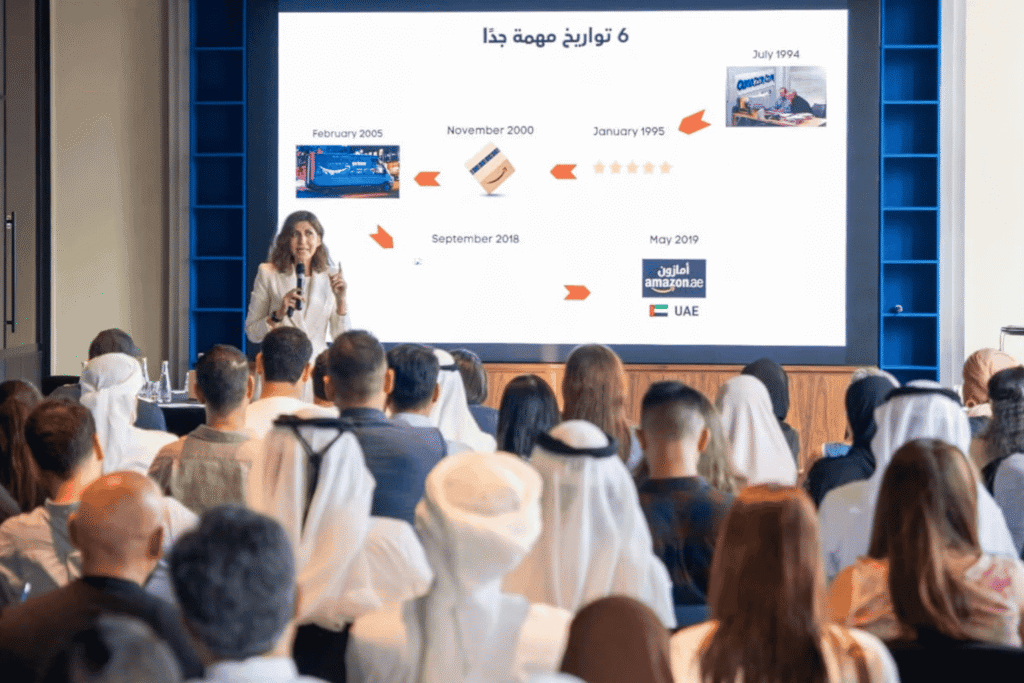
The Dubai Traders programme, launched in September 2024, has reported a strong first-year outcome by onboarding more than 2,400 new e-commerce sellers in just 12 months. The initiative is a flagship of the Dubai Economic Agenda D33 and is jointly run by the Dubai Department of Economy and Tourism (DET) and Dubai Chambers. dubaichronicle.com+1

In addition to new seller registration, the programme also extended growth-support to around 1,000 existing merchants, helping them scale their online operations. More than 370 of the onboarded sellers are Emirati-owned businesses, representing approximately 15% of the total participant base. Zawya+1

Programme structure and partnerships

Dubai Traders provides participating SMEs with a package of services including onboarding support, local-business licensing facilitation, advertising credits, priority product placement on partner marketplaces and dedicated account-management support. The initiative leverages strategic partnerships with major online platforms including Amazon and noon. Zawya+1

Statistics cited by the programme highlight early success metrics: among noon-partner sellers, 42% expanded into new product categories, 63% added new SKUs (stock-keeping units), and one-in-three multiplied monthly gross-merchandise-value within one month of onboarding. Among Amazon-partner sellers, 23% are Emirati-owned and 35% are women-owned businesses; approximately 15% of sellers have already expanded internationally, while another 40% are preparing to do so. Arabian Business+1

Strategic context and economic significance

The Dubai Traders initiative aligns with the D33 agenda’s goal of doubling the size of Dubai’s economy by 2033. By building an ecosystem for SMEs to embrace digital operations and cross-border trade, the programme aims to boost both local entrepreneurship and Dubai’s role as a global e-commerce hub. WAM

Dubai’s infrastructure advantages—such as logistics corridors, free zones and digital-commerce enablement—are complemented by this policy push. For participating SMEs, the initiative reduces entry barriers into online retail and offers access to global marketplaces and fulfilment networks.

Implications for sellers and the ecosystem

For small and medium-sized sellers in Dubai, joining the programme offers several benefits: faster time-to-market, access to marketing support and channel exposure via leading e-commerce platforms, and the potential to scale internationally. For service providers (logistics, marketing platforms, fintech) the growing seller base increases demand for enablement services and digital-commerce infrastructure.

However, the rapid onboarding also increases competitive intensity; with more sellers in the ecosystem, differentiation via brand, product range, fulfilment speed and customer experience will become increasingly important.

Challenges and considerations

While the headline number of 2,400 new sellers is noteworthy, sustaining seller performance and profitability remains a critical test. Metrics such as seller retention, average order value, cross-border expansion success and margin outcomes will matter for the long-term impact of the programme.

Moreover, as the ecosystem scales, logistics, returns-management, fulfilment cost and service quality will present operational challenges for newer sellers. The programme’s effectiveness will depend not just on numbers onboarded but on the quality and growth trajectory of those businesses.

Outlook

In the next phase, expect Dubai Traders to deepen its partnerships with global marketplaces, expand seller-training and financing support, and target export-oriented growth for participating SMEs. Monitoring metrics such as the number of sellers reaching international sales markets, growth in gross-merchandise-value per seller and the diversity of product categories will help assess the programme’s true impact.

If the initiative proves sustainable, it could serve as a model for other cities looking to accelerate SME digital commerce by combining public-sector backing with marketplace partnerships and seller enablement.

BizClik Launches Procurement & Supply Chain LIVE: The Middle East Summit 2026

Global B2B media and events company BizClik, which operates platforms such as Procurement Magazine and Supply Chain Digital, has announced the launch of a new virtual summit, Procurement & Supply Chain LIVE: The Middle East Summit, scheduled for 3–4 February 2026. The two-day event will convene procurement, supply-chain and logistics leaders from across the Middle East and will run alongside its sister event, Sustainability LIVE: The Middle East Summit, on the same online platform. GlobeNewswire

A Dual-Summit Format for 2026

The summit’s agenda emphasises digital transformation, supplier diversity, risk management and sustainable sourcing. More than 20 expert speakers from both global and regional organisations will feature in content tracks such as “Digital Procurement,” “Supply Chain Resilience” and “AI-Driven Operations.” Attendees will have access to interactive sessions including live Q&A and networking via Brella, BizClik’s virtual networking platform. GlobeNewswire+1

The aligning of Procurement & Supply Chain LIVE with Sustainability LIVE is explicitly designed to promote cross-domain collaboration: one ticket grants access to both summits, reflecting BizClik’s strategy to integrate procurement, supply-chain and sustainability discussion into a unified leadership forum. GlobeNewswire+1

Strategic Rationale and Regional Relevance

The Middle East region is navigating rapid transformation in procurement and supply-chain models. Supply-chain complexity, geopolitical risk, digital-upskilling demands and ESG requirements are all converging. By hosting a virtual summit tailored to these themes, BizClik is aiming to provide a platform for senior leaders to share insights on building resilient, technology-enabled supply chains and procurement functions in this region.

For professionals in procurement and logistics, particularly in the Gulf and MENA region, the event signals recognition that local market dynamics—such as logistics cost pressures, sustainability regulations, digitalisation of sourcing are now strategic priorities rather than operational afterthoughts.

What to Expect at the Summit

Key event features include:

  • Content tracks covering procurement strategy, digital tools, supply-chain resilience and sustainable sourcing. Procurement Magazine+1

  • Speaker line-up from relevant organisations with regional presence and global reach. GlobeNewswire+1

  • Networking opportunities for 500+ procurement and supply-chain professionals via Brella. GlobeNewswire

  • Integration with Sustainability LIVE: The Middle East Summit, allowing cross-attendance and thematic overlap on ESG, supply-chain and procurement topics.

Implications for Stakeholders

For procurement and supply-chain executives: the summit provides an accessible platform (virtually) to connect with peers and thought-leaders without travel constraints. The dual-summit format may encourage more holistic approaches linking procurement, supply-chain operations and sustainability strategy.

For service-providers—such as logistics firms, digital-procurement platforms, analytics and AI vendors—the event offers visibility and access to a targeted regional audience looking for solutions and partnerships.

From a regional viewpoint, the event supports the narrative that the Middle East is intensifying its focus on supply-chain transformation and e-commerce enablement, aligning with broader economic-diversification initiatives.

Challenges and Considerations

While the virtual format makes the summit accessible, the value for attendees will depend on content relevancy, speaker quality, networking effectiveness and follow-through after the event. Virtual events face the challenge of engagement fatigue and differentiation in a crowded digital events landscape.

Additionally, while the announcement sets out ambitious themes, actual implementation by participants will hinge on organisational readiness, budget constraints and digital capability—especially in regions where procurement functions may still be evolving.

Outlook

Over the next few months, registrants and sponsors will likely seek clarity on speaker confirmations, detailed agenda breakdowns and platform logistics. Engagement metrics—such as number of registrants, attendee participation and post-event follow-up activity—will serve as early indicators of the summit’s impact.

If successful, the event may become a recurring fixture in the Middle East for procurement and supply-chain leadership engagement, helping shape how businesses in the region respond to disruption, digitalisation and sustainability imperatives.

Experts Weigh Implications of AWS-OpenAI $38 Billion Partnership

Amazon Web Services (AWS) and OpenAI have announced a landmark seven-year, $38 billion cloud-infrastructure agreement enabling OpenAI to leverage AWS’s large-scale computing capacity for its advanced artificial-intelligence workloads. The deal will see access to hundreds of thousands of Nvidia GPUs and tens of millions of CPUs, with full deployment targeted by the end of 2026.

Industry analysts have been quick to assess what this partnership means for the cloud computing market, AI development economics and competitive dynamics among major tech firms.

Key Deal Features

  • Under the agreement, OpenAI will run its major model-training and inference workloads on AWS’s bespoke infrastructure featuring Nvidia GB200 and GB300 accelerators. WIRED+1

  • The contract gives OpenAI immediate access to AWS compute resources, with expansion capacity planned for 2027 and beyond. Reuters+1

  • The scale of the commitment—US $38 billion over multiple years is notable for both parties: a significant vote of confidence in AWS’s infrastructure and a major step for OpenAI’s compute-intensive ambitions.

Analyst Perspectives

Several expert commentators highlight these implications:

  • According to analyst Paolo Pescatore of PP Foresight, “This is a hugely significant deal … clearly a strong endorsement of AWS compute capabilities to deliver the scale needed to support OpenAI.” Reuters

  • Analyst Patrick Moorhead of Moor Insights & Strategy suggests the contract reflects OpenAI’s strategic move to reduce dependence on any single cloud provider, following an exclusive arrangement with Microsoft. WIRED+1

  • Some market watchers raise concerns about the sustainability of such large infrastructure commitments given that OpenAI’s revenue—while growing rapidly remains modest relative to multi-year capital obligations exceeding a trillion dollars across providers.

Strategic Implications

For AWS and the broader cloud market:

  • The deal underscores AWS’s ability to compete for marquee partnerships amid growing AI workload demand, potentially altering market perceptions of its competitive position versus Microsoft Azure and Google Cloud.

  • For OpenAI, the partnership supports its goal to scale frontier AI systems requiring vast compute capacity—an essential capability in the race for next-generation model leadership.

  • The contract may accelerate infrastructure investment, procurement of high-performance chips and expansion of data-centre footprint globally, raising implications for supply-chain, energy demand and cloud-hardware markets.

Risks and Considerations

Despite the ambitious potential, the deal carries risks:

  • Execution risk: Deploying hundreds of thousands of GPUs and tens of millions of CPUs across global datacentres within target timelines is non-trivial, particularly with chip supply constraints, datacentre build-out and logistics to be managed.

  • Economic risk: The large scale of compute commitments may be difficult to monetise if AI-model monetisation, enterprise adoption or hardware cost reduction do not scale as expected. Some analysts view the deal as part of a broader AI-infrastructure spending surge that may resemble a boom-and-bust cycle. WIRED+1

  • Competitive risk: As OpenAI diversifies its cloud-provider relationships, cloud vendors may continue aggressive pricing, service innovation and strategic aligning to lock in key AI customers, potentially compressing margins across the ecosystem.

  • Regulatory and sustainability risk: Massive compute expansions raise environmental, data-sovereignty, security and antitrust considerations, especially as generative-AI infrastructures scale.

What to Watch Going Forward

Key indicators to monitor over the coming 12-24 months include:

  • The pace at which AWS deploys the contracted hardware capacity and the regions covered (U.S., Europe, Asia-Pacific).

  • OpenAI’s growth in model scale, number of inference requests, user base expansion and how this compute capacity translates into revenue and margin improvements.

  • Whether AWS leverages the deal to win additional AI-scale customers, illustrating broader ecosystem positioning.

  • Hardware supply-chain developments: chip availability, power/cooling infrastructure, and datacentre build-out timelines.

  • Market reactions: investor sentiment for AWS, OpenAI, Nvidia and related suppliers may reflect perceived risk/reward of large scale AI-infrastructure bets.

Conclusion

The AWS-OpenAI $38 billion partnership marks a landmark moment in cloud-infrastructure and AI-model economics. By aligning massive compute capacity with frontier-AI development, both firms are positioning for the next chapter of digital-commerce, automation and intelligence. The size and ambition of the deal reflect the scale of the opportunity—but also the scale of the risk. Execution, monetisation and ecosystem response will determine whether the partnership reshapes cloud and AI markets.