WORLDEF Prime Antalya 2026 - Upcoming Event

Register Now

Retailers Must Rethink E-Commerce for an Algorithm-First Future

The e-commerce landscape is poised for a profound shift as AI-powered shopping agents begin making purchases on behalf of humans, according to expert commentary published by Inside Retail Asia on 7 November 2025. Inside Retail

In this impending reality, the “shopper” may no longer be a flesh-and-blood human browsing a site, but instead a software-driven assistant evaluating options, comparing prices, assessing ratings, and completing transactions with ruthless efficiency. The implications for retailers are sweeping: user interfaces optimised for humans (fonts, lifestyle imagery, endless banners) become less relevant, while structured product data, delivery lead-times, verified reviews and real-time fulfilment information become critical.

The Algorithmic Shopper Has Arrived

According to author Simon Porter, “the shopper of tomorrow might not be human… Instead, it could be an AI-powered agent making purchase decisions on behalf of consumers.” Inside Retail These agents will comb online stores, review metadata, parse user preferences, align with personal values (such as sustainability), optimise for lowest cost and fastest delivery—and then act.

In this scenario:

  • UX elements tailored to emotional triggers—such as hero images or lifestyle branding—are deprioritised.

  • Bots operate on logic, feeds and schema: price, stock, delivery promise and verified trust signals.

  • Retailers must ensure their backend systems, product information architecture and real-time logistics are “bot-readable”.

As Porter puts it: “It’s a hard reset for the algorithmic age.”

How Backend Architecture Becomes Front-Line Strategy

Several actionable imperatives emerge for retailers preparing for this algorithm-first future:

1. Optimise product feeds and schema markup
Retailers must ensure SKUs are updated in real-time, product descriptions are machine-readable, price, stock and delivery metadata are precise. Schema markup isn’t optional—it’s the new shelf display. Inside Retail

2. Build trust signals for algorithmic buyers
Since bots evaluate trust through metrics rather than emotional branding, verified reviews, transparent return policies, sustainability credentials, stock-visibility and live inventory become the new differentiators. “Bots will call BS on greenwashing,” the article notes. Inside Retail

3. Prepare for “bot battles”
Retailers should anticipate an arms race where their AI-systems battle shopping-agents on behalf of consumers. “Retailers need to game out these scenarios now,” the commentary warns. Inside Retail

4. Realign value proposition
In this new paradigm, efficiency trumps emotion. Retailers that previously relied on brand heritage or loyalty programmes may be sidelined if their data-and-delivery stack under-performs.

Strategic Implications for Retailers

For online retailers and marketplaces, the shift to algorithmic commerce carries both opportunity and threat.

Opportunities include:

  • Increased automation of purchasing flows, enabling surge-scale, low-margins growth.

  • Data-driven personalisation becoming codified into autonomous systems, leading to higher conversion and retention.

  • Competitive advantage for retailers who transition early to bot-friendly architectures.

Threats include:

  • The erosion of brand-centric differentiation if bots treat products as fungible based on metrics alone.

  • Loss of data-assets if intermediaries (shopping-agents) capture purchase insights outside retailer ecosystems.

  • Legacy retail technology and workflows may become a drag rather than an asset.

Analyst commentary reinforces that this transformation complements prior research, such as from Boston Consulting Group which argued that many US retailers lag in adopting e-commerce innovation, digital marketplaces and GenAI across their value chain. Boston Consulting Group

What to Watch in the Coming Years

Key indicators of success in this algorithm-first world will include:

  • Increase in AI-agent driven transactions (versus human-led).

  • Quality and timeliness of backend catalogue, feed-and-schema updates.

  • Retailers’ ability to integrate real-time fulfilment, delivery-lead time data, stock transparency and return-rates into API-accessible formats.

  • Emergence of standards across marketplaces (e.g., Google Shopping, Amazon, Shopify, Asian platforms) for structured data and bot-friendly integration.

  • Retailers’ internal shift: data-governance, machine learning pipeline, algorithmic merchandising replacing traditional push strategies.

Conclusion

The future of online retail is being reshaped not by faster websites or shinier banners but by the intelligence behind the transaction. As the Inside Retail Asia article argues, when the shopper becomes software, the rules change. Retailers must evolve from designing for humans to designing for their proxies—algorithms.

Those who bake bot-readiness, structured data integrity and rapid fulfilment into their business will own the algorithmic shelf space of tomorrow. For others, the risk is being left behind in a world where efficiency matters more than emotion.


MoEngage Raises $100 Million to Expand Marketing AI Agents and Accelerate Global Growth

Customer-engagement platform MoEngage has secured US $100 million in a funding round led by Goldman Sachs Alternatives and A91 Partners, taking its total funding to over US $250 million. The capital will be deployed to scale its suite of AI-powered marketing agents and expand its presence in North America, Southeast Asia (SEA) and Australia/New Zealand (ANZ). Yahoo Finance+3PR Newswire+3Newswire+3

According to the company, North America now contributes the largest share of revenue after doubling its growth in the region over the past year. TechCrunch+1

Background and Funding Details

MoEngage’s latest capital injection comprises primarily growth-equity funds: around 60 % of the US $100 million is primary capital dedicated to platform development, while the remaining 40 % is a secondary share sale, allowing early investors to exit. TechCrunch+1

The startup will use the funds to accelerate its flagship product suite, called Merlin AI, which includes decision-making agents focused on campaign launch, offer personalization and conversion optimisation. One cited case: client Glance reduced its campaign go-live time by 50 % using Merlin AI. Newswire+1

Executive leadership emphasises the move as evolution from legacy “marketing clouds” toward agile, data-driven engagement platforms built for B2C brands serving mobile-first consumers. CEO and co-founder Raviteja Dodda said the firm is “excited to partner with Goldman Sachs and A91 as we continue our global mission.” TechCrunch

Strategic Implications

1. Product & Technology:
By leveraging the new funding, MoEngage aims to enhance its AI-agent stack—focusing not only on creative-copy generation, but on channel-and-timing decisioning based on first-party data. The company maintains that many enterprises are cautious about exposing data directly to large language models, and positions MoEngage as a secure intermediary layer. The Times of India

2. Market Expansion:
With North America now representing the largest revenue region for the firm, the investment enables further hires in go-to-market and customer-success teams across North America, EMEA, SEA and ANZ. The emphasis on SEA and ANZ reflects growth ambition beyond traditional Indian and Asian markets. Newswire

3. Competitive Landscape:
Analysts view this round as validation of the private-market shift toward alternatives in marketing-technology (martech)—with MoEngage growing at roughly 40 % year-on-year and reporting over 1,350 global brands. The Times of India+1 The ability to migrate large customers quickly (e.g., migrating 120 million users for client SoundCloud) is being cited as a competitive differentiator. TechCrunch

Challenges & Risks

  • Scaling Global Operations: While MoEngage has momentum, executing global expansion across multiple regions (North America, SEA, ANZ) presents complexities in localisation, hiring, support and regulatory alignment.

  • Data Privacy & AI Oversight: As it builds out Merlin AI, handling first-party consumer data and ensuring compliance with privacy standards (GDPR, CCPA) is critical.

  • Platform Differentiation: In a crowded martech-space, maintaining product differentiation and value delivery will be key—especially as legacy players (e.g., Adobe, Oracle, Salesforce) adapt their offerings.

  • Monetisation and Liquidity: The private-markets thesis suggests substantial runway, but converting growth into sustainable profitability and possibly preparing for IPO will be long-term objectives.

What to Watch Next

  • Announcement of new enterprise customers in North America, SEA and ANZ and measurable results (e.g., conversion uplift, campaign-launch speed, retention gains).

  • Monitoring of hire announcements: Go-to-market, customer-success, regional leadership in key growth zones.

  • Technology road-map updates: enhancements in Merlin AI, release of new modules (e.g., offer decisioning, cross-channel orchestration) and partnerships with data or cloud-providers.

  • Competitive response: how other martech firms react or invest to keep pace with AI-agent-led marketing.

  • Potential exit strategy: given MoEngage’s growth and funding scale, whether the company sets sights on IPO or major acquisition within 2-3 years.

Conclusion

MoEngage’s US $100 million funding round represents a significant milestone for the company and the broader martech sector. With AI agents at its core and global expansion in sight, MoEngage is positioning itself as a next-generation partner for brands seeking deeper engagement, higher conversion and faster innovation. However, delivering on this vision will require seamless execution across product, region and scale. The outcome will shape how B2C marketers adapt to the evolving demands of data-driven, AI-powered customer experience.

Schwab Expands into Private Markets with $600 Million Test Acquisition

Charles Schwab Corporation announced its agreement to acquire Forge Global Holdings, a leading private-market trading platform, in a deal valued at approximately US $600 million. Family Wealth Report+2Reuters+2

The transaction underscores Schwab’s strategy to broaden access to private companies and secondary markets. Forge Global enables qualified investors to buy and sell shares of private companies, thereby expanding investment opportunities beyond publicly listed equities. The acquisition aims to build Schwab’s capabilities in the private-markets segment, which many large financial services firms view as a growth frontier.

Deal Overview and Strategic Rationale

Under the terms of the agreement, Schwab will pay $45 in cash per outstanding share of Forge Global. The deal has received unanimous approval from both companies’ boards and is expected to close in the first half of 2026, subject to regulatory and shareholder approvals. Press Room+1

According to Schwab, the acquisition supports several strategic goals:

  • Integrating Forge’s private-market platform with Schwab’s existing brokerage, investment advisory and wealth-management operations. Press Room

  • Leveraging Schwab’s roughly 46 million client accounts and over $11 trillion in assets-under-management to scale private-market access. Family Wealth Report+1

  • Responding to broader industry trends where private-company valuations have grown and many firms delay or forego public-market listings, increasing demand for private-market exposure. Reuters+1

Schwab’s CEO, Rick Wurster, said the move “builds on more than half a century of Schwab innovating on behalf of individual investors, advisors and employers” and emphasised that the combination of Schwab’s reach and Forge’s marketplace “positions us to deepen liquidity, improve transparency, and further democratise access to this increasingly important source of wealth creation for investors.” Press Room

Market and Industry Implications

The acquisition reflects a broader shift in the investment-management industry as asset-managers and brokerages increasingly target private and alternative assets. Analysts estimate that private-wealth capital allocated to alternative asset classes could grow from about $4 trillion today to $13 trillion by 2032. Family Wealth Report+1

For Schwab, the deal may enhance its value-proposition for high-net-worth individuals and advisors looking to access non-listed companies and secondary liquidity. For Forge, the partnership provides scale, distribution and resources to expand its marketplace and interval-fund capabilities.

Competitors are paying close attention. Recent deals such as Morgan Stanley’s acquisition of another private-shares platform signal intensifying competition in this space. NAPA Net

Risks, Challenges and Considerations

While the opportunity is substantial, the move is not without risks:

  • Private-market investments are typically less liquid, more opaque and carry higher fees compared with public equities. Some observers caution that retail investors may face hidden risks. Family Wealth Report

  • Integration of distinct platforms and business models (brokerage + private-market fintech) may present operational and regulatory complexity.

  • The deal’s success will depend on Schwab’s ability to scale the offering, generate new revenue streams, and manage investor expectations around illiquid investments.

Outlook & Next Steps

In the coming months, Burg watchers will focus on:

  • Whether the deal meets its expected closing timeline (first half of 2026).

  • How Schwab plans to integrate Forge’s platform and roll out private-market offerings to its client base.

  • Whether this move catalyses similar acquisitions or partnerships across the wealth-management industry.

  • How regulators respond, particularly in relation to retail-investor protections around private-market access.

If executed successfully, the acquisition may accelerate the institutionalisation of private markets and make them more accessible to a broader investor base — while reinforcing Schwab’s competitive positioning in the wealth-management sector.

UAE Clarifies Corporate Tax Treatment for Family Wealth-Management Structures

The Federal Tax Authority (FTA) of the United Arab Emirates has published detailed guidance clarifying how family wealth-management structures such as family foundations, holding companies, special-purpose vehicles (SPVs) and single- or multi-family offices are treated under the federal corporate tax regime introduced by Federal Decree‑Law No. 47 of 2022 (“CT Law”). The clarification addresses a long-standing grey area, providing critical legal certainty for wealth-structuring and succession planning. Middle East Briefing+1

Why the Clarification Matters

With the UAE corporate tax regime coming into force in June 2023, many high-net-worth individuals, family offices and professional advisers lacked clarity on how vehicles used for asset-holding, investment and succession should be treated. The new public clarification by the FTA defines when such entities may be treated as tax-transparent (and thus avoid entity-level corporate tax) and when they are taxable persons in their own right. Middle East Briefing+1

This development significantly enhances the attractiveness of the UAE as a wealth-management jurisdiction by reducing structuring risk and aligning local practice with international standards of transparency and substance.

Key Elements of the Guidance

1. Scope of Family Wealth-Management Structures
The clarification covers a broad range of entities including family foundations (and trusts or similar vehicles), asset-holding entities, SPVs, and family office vehicles (single-family offices (SFOs) and multi-family offices (MFOs)). Beneficiaries and ownership chains are also considered. Middle East Briefing+1

2. Legal Personality vs Non-Personality Entities
Entities without separate legal personality (e.g., trusts in certain UAE-free-zones) are automatically treated as fiscally transparent under Article 17 of the CT Law. Those with a separate legal personality (e.g., foundations) may apply to the FTA for transparency provided they meet the conditions. Middle East Briefing+1

3. Multi-Tier Ownership Chains
The guidance clarifies that ownership structures comprising an uninterrupted chain of entities wholly owned by a tax-transparent family foundation may also qualify for transparency — subject to strict compliance with governance, ownership, purpose and substance criteria. PwC

4. Family Offices and Free-Zone Relief
SFOs/MFOs that do not meet transparency conditions are treated as taxable persons (subject to 9% corporate tax on income exceeding AED 375,000). However, if they qualify as a Qualifying Free Zone Person and provide regulated investment- or wealth-management services, they may access 0% tax on qualifying income. Middle East Briefing+1

5. Income Treatment for Individual Beneficiaries
The clarification reaffirms that UAE-resident individuals remain outside the scope of corporate tax so long as income arises from passive investment or personal wealth (rather than business activity). This helps preserve the UAE’s appeal for personal wealth-holding and succession vehicles. Mondaq

Practical Compliance and Structuring Considerations

  • Entities seeking transparency should ensure their purpose is asset-holding, investment or succession, not running active business operations or tax-avoidance-driven acts.

  • Substance requirements must be met: governance, documented decision-making, ownership registers, audit records and physical presence may be relevant.

  • Structures should be reviewed especially if they involve multiple tiers, jurisdictions or legacy vehicles established prior to the CT regime.

  • Firms must assess whether their entity qualifies for Free-Zone relief and whether regulated status has been secured where required.

  • Early structuring alignment is advisable — non-compliance risks entity-level taxation and potential retroactive cost for families and advisers.

Strategic Implications

This clarification enhances the UAE’s positioning as a wealth-management hub offering clarity and tax-efficiency for family-office and asset-holding structures. For advisers and global investors, it introduces more certainty into jurisdiction-selection and structuring decisions. For the UAE, it reinforces alignment with global tax standards (including OECD BEPS) while maintaining competitiveness in the private-wealth domain.

What to Watch

  • How family foundations, trusts and SPVs adjust existing structures and submit applications for transparency with the FTA.

  • Whether the FTA issues further interpretive guidance or examples to support multi-tier structure compliance.

  • Uptake of Free-Zone 0% tax relief by family-office vehicles and how those vehicles demonstrate regulated-service status.

  • How cross-border structuring (non-resident beneficiaries, foreign-owned assets) will be handled under substance and treaty considerations.

  • Market perception: whether the UAE garners increased family-office and wealth-management flows as a result of enhanced clarity.

Conclusion

By issuing this comprehensive clarification on the corporate tax treatment of family wealth-management structures, the UAE FTA has removed a key structural-risk barrier for families, foundations and wealth advisers. With clear conditions on transparency, governance and purpose, assets and succession vehicles can now be reviewed, aligned and optimised with confidence. The move strengthens the UAE’s wealth-ecosystem credentials and supports its long-term strategy of private-wealth attraction and economic diversification.

France to Open and Inspect Every Parcel from Shein as Crackdown on Chinese E-Commerce Escalates

In a decisive move that marks one of Europe’s toughest stances against the surge of low-value Chinese imports, the French government has ordered that every parcel arriving from fast-fashion giant Shein and other e-commerce platforms such as TEMU and AliExpress be opened and inspected at Charles-de-Gaulle Airport (Roissy).

Minister of Public Accounts Amélie de Montchalin confirmed that 200,000 parcels and nearly 700,000 individual products from China will now undergo systematic customs checks each day, effectively placing France at the forefront of Europe’s growing campaign to regulate the flow of goods from Asian marketplaces.

Speaking during an inspection visit at Roissy-CDG’s freight terminal, De Montchalin declared: “We are going to open all packages that come from Shein.” Her remarks underline a political and regulatory turning point in Europe’s relationship with low-cost online retail one increasingly associated with tax evasion, counterfeit goods, and unsafe consumer products. (Source)

A New Era of Strict Customs Oversight

The new measure mandates that all parcels arriving from Chinese online platforms must be opened, scanned, and examined by customs agents within a 24-hour period. Those found to violate safety, labelling, or tax regulations will be detained, destroyed, or returned to sender.

Each parcel will be physically opened not merely x-rayed to allow French authorities to verify its declared contents, origin, and value. This systematic inspection represents a radical departure from previous de minimis practices, under which low-value goods (below €150) were allowed to enter the EU with minimal checks.

According to the French Directorate General of Customs and Indirect Taxes (DGDDI), the initiative aims to enforce product-safety standards, intellectual-property rights, and proper VAT collection. Customs officers will work alongside digital-forensics teams equipped with AI-based parcel-scanning systems capable of flagging suspicious shipments for deeper analysis.

Officials describe the 24-hour inspection process as “industrial in scale.” Roissy-CDG handles up to one million packages per day, many of which originate from Shein, TEMU, and AliExpress fulfillment centers in southern China.

The Broader Context: Why France is Acting Now

The French government’s decision comes amid a mounting backlash against fast-fashion and ultra-cheap imports flooding the European market. In recent years, platforms like Shein and TEMU have gained vast market share by shipping directly to consumers, bypassing traditional importers and tax checkpoints.

Critics — including unions, French manufacturers, and environmental groups have accused these platforms of undermining European retailers, evading taxes, and promoting over-consumption through a constant churn of disposable clothing.

Consumer-protection agencies have also raised concerns about the safety and traceability of products such as cosmetics, electronics, and toys imported via Chinese platforms. Investigations have found items lacking EU safety markings (CE labels) or containing hazardous materials.

De Montchalin’s announcement aligns with President Emmanuel Macron’s broader “economic sovereignty” agenda, which seeks to strengthen Europe’s capacity to monitor imports, secure industrial competitiveness, and protect consumers from unsafe or non-compliant goods.

Logistics Impact: Roissy as the Frontline

The Charles-de-Gaulle (Roissy) Airport, Europe’s second-largest air cargo hub, has become the central node for France’s enforcement strategy. Customs agents at Roissy are now working in shifts to handle the enormous daily volume of parcels, assisted by automated sorting systems and scanning robots.

Officials estimate that the new inspection regime could delay deliveries by several days, especially for Shein and TEMU orders, which typically rely on ultra-fast turnaround from Chinese warehouses.

A senior customs officer quoted by Midi Libre explained: “We are no longer talking about random checks. Every parcel will be opened. France is drawing a line between compliant and non-compliant commerce.”

The cost and logistical burden of the process is expected to be absorbed partly by courier companies and partly by the e-commerce platforms themselves a factor that may ultimately lead to higher consumer prices or slower shipping times.

Industry Reactions: Mixed but Predictable

The announcement has generated sharp reactions from the retail and logistics sectors.
French trade associations have welcomed the move, calling it a “necessary act of fairness” that will level the playing field for domestic merchants who pay full import duties and VAT.

E-commerce giants, however, have expressed concern over what they see as disproportionate scrutiny. Shein issued a statement asserting that it “complies with all European product-safety and customs regulations” and will continue cooperating with authorities to ensure a transparent supply chain. TEMU representatives warned that such policies “risk slowing cross-border commerce and hurting consumers seeking affordable goods.”

Meanwhile, European logistics experts warn that the new French model could create a ripple effect across the continent. If similar systems are adopted in Germany, Spain, or the Netherlands, the efficiency and cost structure of Asian cross-border e-commerce could change dramatically.

Consumer Impact and Future Scenarios

For French consumers, the immediate effect will be noticeable in the form of longer delivery times, occasional parcel holds, and potentially higher final prices. However, proponents argue that these are acceptable trade-offs for better safety and accountability.

The measure could also influence purchasing behavior, encouraging shoppers to turn toward local online stores or EU-based marketplaces that already comply with tax and safety rules.

From a geopolitical perspective, France’s crackdown signals Europe’s intention to assert digital and trade sovereignty not just in data and AI regulation, but in the material flow of goods that power the e-commerce economy.

If the inspection model proves effective, the European Commission may push for a pan-European customs reform, integrating AI-assisted parcel tracking and uniform VAT enforcement across all member states.

A Turning Point for Global E-Commerce

The French operation at Roissy-CDG could become a blueprint for other countries confronting the same dilemma: how to maintain open digital trade while preventing tax evasion, counterfeiting, and environmental harm.

It also challenges the economic model of ultra-fast, ultra-cheap e-commerce that relies on fragmented oversight and low shipping costs. Analysts note that if Europe begins to internalize the true cost of compliance, small-parcel e-commerce may enter a new, slower, but more regulated phase.

In essence, France’s decision to open every Shein parcel is not just a customs measure it’s a symbolic act of policy realignment between efficiency and ethics, convenience and compliance.

Conclusion

As France leads the charge in confronting the darker side of global e-commerce, other nations are watching closely. The outcome will determine whether Europe can maintain consumer access to global goods while enforcing its standards for safety, transparency, and fair taxation.

For now, Roissy stands as the frontline of a new trade reality one where every parcel tells a story, and every shipment is a test of how far globalization can bend before it needs to be regulated again.

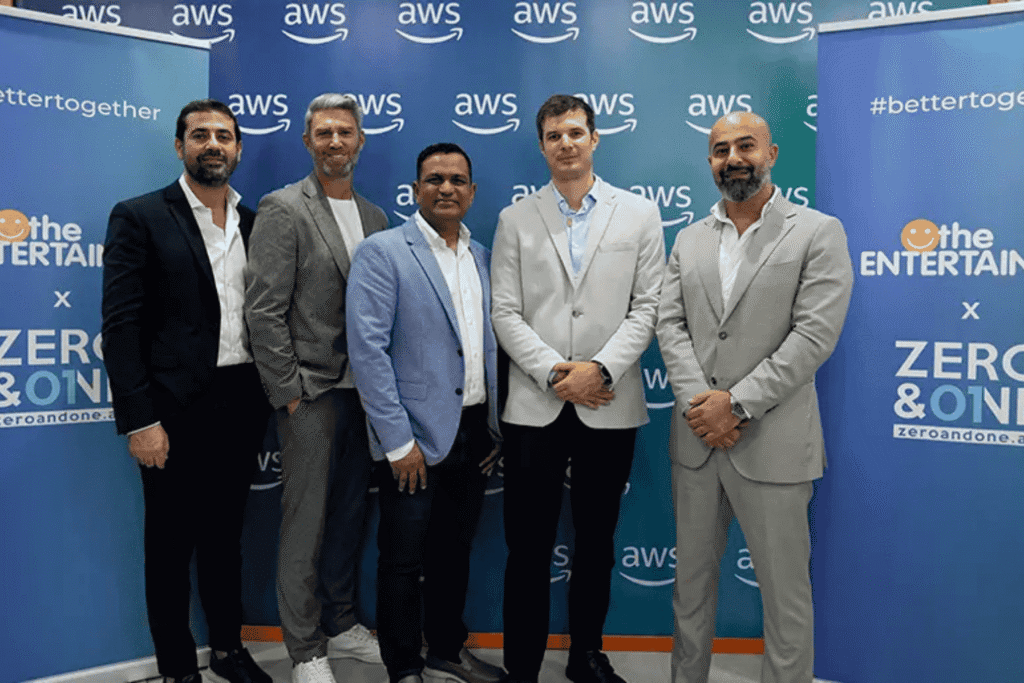
The Entertainer Selects Zero&One as Cloud & Gen AI Partner

UAE-based savings and lifestyle platform The Entertainer has appointed cloud-and-AI consultancy Zero&One as its strategic partner to advance its next-generation digital platform, according to a 7 November 2025 announcement. Consultancy ME

Founded in Dubai in 2001, The Entertainer operates across many Middle East markets including the UAE, Saudi Arabia, Bahrain, Kuwait, Egypt and Oman. The platform offers “2-for-1” lifestyle and retail deals and currently services over 10,000 merchant partners. Consultancy ME The partnership with Zero&One covers migration and modernisation of The Entertainer’s cloud infrastructure plus deployment of generative AI-driven features to enhance user discovery, personalisation and loyalty experiences. Consultancy ME

Strategic Aims & Scope

As part of the collaboration, The Entertainer will leverage Zero&One’s expertise across:

  • Cloud architecture modernisation on Amazon Web Services (AWS) to support scalability and global expansion. Consultancy ME

  • Generative AI-enabled discovery and recommendation engines to deliver more personalised offers across dining, leisure, retail and travel categories. Consultancy ME

  • Managed services including security, data governance and performance operations. Consultancy ME

The Entertainer’s Chief Information Officer noted the initiative will drive a more seamless and responsive customer experience, describing the step as “an important step forward in our commitment to technology-led customer experience.” Consultancy ME

Regional Context & Market Implications

In a region where digital commerce, loyalty platforms and app-based consumer engagement are growing rapidly, the move positions The Entertainer to compete more effectively with global-app alternatives and local fintech/lifestyle players. By investing in cloud-scale architecture and AI-led personalisation, the business is preparing to meet rising consumer expectations for frictionless offers, faster transactions and tailored experiences.

For Zero&One, being named partner by a prominent regional brand reinforces its status as a leading cloud-and-AI consultancy in the Middle East, particularly given its AWS Premier Consulting Partner credentials and generative-AI competency. Consultancy ME

What to Watch

Key performance indicators and milestones to monitor in the coming months include:

  • Time to rollout of the next-gen user experience, new app features and AI-led offer discovery.

  • Impact on member engagement metrics: number of active users, offer redemption rate, time-to-offer-view and basket size.

  • Infrastructure scalability: ability to support peaks (e.g., travel or festival season) and regional expansion.

  • Data governance and security compliance, especially given increased use of AI and personalisation.

  • Market recognition: whether the upgraded platform helps The Entertainer attract new merchant partners, expand into new countries and increase overall loyalty-programme revenue.

Conclusion

The collaboration between The Entertainer and Zero&One underscores how regional lifestyle platforms are investing in cloud and AI capabilities to deepen customer engagement and scale operations. As consumer-facing apps evolve toward greater intelligence and responsiveness, infrastructure modernisation becomes a competitive necessity rather than an optional upgrade. The success of the project will hinge not just on technology rollout, but on how effectively The Entertainer translates these capabilities into measurable user value.

US Tech Firm Gecko Robotics Aims to Begin Manufacturing Robots in the UAE by 2026

US-based robotics company Gecko Robotics, valued at approximately US $1.25 billion, plans to begin manufacturing robots in the United Arab Emirates within the next year, following the signing of several deals with local energy and technology entities. The National

The company’s co-founder and CEO, Jake Loosararian, said the firm would establish local manufacturing in the UAE either through partnerships or a dedicated facility to support its regional operations and reduce dependence on its US supply chain. The move is backed by agreements signed with Abu Dhabi National Oil Company (ADNOC) and its subsidiaries, including AIQ and the ADNOC Technical Academy, to roll out robotics, AI-powered analytics and joint training programmes.

Key Details

  • Gecko Robotics already supplies robotic systems to ADNOC and has been involved in UAE operations for about 18 months. The National+1

  • The company is considering an expanded local presence including hiring regional staff and establishing region-specific governance structures. The National

  • The manufacturing initiative in the UAE is part of Gecko’s strategy to scale globally while adapting to regional requirements and proximity to major users. ADNOC+1


Strategic Implications

For Gecko Robotics, building manufacturing capability in the UAE offers access to Middle-East markets, proximity to key clients, potential logistic advantages and alignment with regional industrialisation agendas. For ADNOC and the UAE, the collaboration strengthens their push in advanced asset-management, robotics, AI and local technology development.

This also complements the broader trend of the UAE seeking to transition oil-and-gas operations toward higher tech, digitalised models of maintenance, inspection and predictive analytics. The deployment of wall-climbing robots and sensor payloads is intended to enhance safety, reduce downtime and extend asset life-cycles in energy-infrastructure operations. Yahoo Finance+1

Challenges & Considerations

Though promising, the success of this initiative depends on multiple factors:

  • Establishing scaled manufacturing locally requires supply-chain setup, certification, quality-control and logistics—these take time.

  • Hiring and training skilled local talent to operate, maintain and innovate robotics and AI systems is essential.

  • Gecko must ensure compliance with local regulations and security standards, especially given the company’s involvement in military-capable systems in other jurisdictions. The National

  • Market uptake will depend on how rapidly regional clients adopt robotics, and whether the cost-benefit case for local manufacturing holds.

Outlook

In the next 12 to 18 months, key indicators will include whether Gecko signs firm commitments for local manufacturing, establishes a UAE-based facility, announces employment or training milestones, and begins supplying regionally-produced robots. The move may set a precedent for more global robotics firms localising production in the Gulf region.

If the initiative succeeds, it could further cement the UAE’s role as a regional hub for advanced industrial-tech manufacturing and support its strategy of economic diversification.

stc Group Conducts MENA’s First 6G Trial on 7 GHz Band in Collaboration with Nokia and CST

Stc Group, in collaboration with the Communications, Space & Technology Commission (CST) and Nokia, has successfully conducted the first field trial in the Middle East and North Africa (MENA) region of the 7 GHz frequency band a key spectrum expected to underpin next-generation 6G networks. thefastmode.com+3TechAfrica News+3cst.gov.sa+3

The trial, carried out in Saudi Arabia, evaluated the potential of the 7 GHz (specifically 7.125–8.4 GHz) band for high-capacity, low-latency communication and examined its coexistence with existing services and infrastructure. cst.gov.sa+1 Nokia’s AirScale Massive MIMO radio was used to benchmark throughput and coverage in comparison with a live 5G Standalone network operating on the 3.6 GHz band. thefastmode.com

Strategic Significance

The successful trial signals Saudi Arabia’s ambition to be at the forefront of telecom innovation. By testing the “golden band” for 6G, stc Group and its partners aim to accelerate spectrum readiness, inform standardisation efforts (including at the International Telecommunication Union), and support future-oriented use-cases such as immersive digital services, smart-city infrastructure and ultra-fast industrial connectivity. Telecompaper+1

For stc Group, the milestone reinforces its positioning as a digital enabler in line with Saudi Vision 2030, while for Nokia it demonstrates its capability to deliver next-generation radio solutions for challenging spectrum bands.

Technical Details & Findings

  • The trial covered the 7.125–8.4 GHz band, testing outdoor and indoor conditions, and explored the physical-layer performance of the band for 6G-style deployment.

  • Results indicated that, despite higher-frequency propagation challenges, throughput and coverage were broadly comparable to the 3.6 GHz 5G SA baseline when using advanced radio units and massive MIMO techniques. thefastmode.com

  • The test also examined coexistence with existing microwave fixed-links and identified regulatory/spectrum-sharing considerations for future commercial rollout. Telecompaper

Implications for the MENA Telecom Ecosystem

For regulators and network operators in the region, this trial provides practical data on how 6G candidate bands can be deployed. It may accelerate discussions on spectrum allocation, licensing and ecosystem readiness for 2030-era networks.

For industry players—such as vendors, infrastructure providers, service operators and enterprise clients—the demonstration underlines the increasing importance of advanced bands and the evolution of network architectures from 5G toward 6G.

What to Watch

Key developments in the coming period include:

  • Further trials and commercial pilots building on the 7 GHz band in Saudi Arabia and potentially other MENA countries.

  • Regulatory actions by CST to allocate the 7 GHz candidate band and update spectrum-licensing frameworks.

  • Commercialisation timelines: when operators may launch services utilising the 7 GHz band or integrate it into a 6G roadmap.

  • Ecosystem readiness: infrastructure investment, chipset and radio-unit availability, device ecosystem support, and enterprise use-case development.

Conclusion

The completion of MENA’s first 7 GHz band trial by stc Group, Nokia and CST represents a significant leap toward the next generation of mobile connectivity. While full commercial 6G remains years away, this milestone underscores how the region is actively preparing for it today. For Saudi Arabia and the broader MENA region, it reinforces their ambition to assume leadership in digital-infrastructure, advanced telecom services and future-industry readiness.

European Retail Media Market Set to Double This Year

The retail-media advertising market in Europe is expected to approximately double in size this year as brands shift larger portions of their marketing budgets to shopping-platform-based ad formats, according to recent research by WARC. Ecommerce News

WARC’s “Future of Commerce Media 2025” report estimates that global retail-media spend will rise 13.7 % this year to €152 billion (US$175 billion), with Europe showing especially high growth compared with more mature markets. Ecommerce News

Key Findings

  • Advertisers in Europe are increasing their spending on retail media significantly, with sellers rethinking their business models to prioritise ad-revenues via their own platforms and marketplaces. Ecommerce News

  • Retail-media in 2026 is forecast to slow growth to around 12.4 %, and 11.6 % in 2027, indicating that the peak acceleration phase is underway. Ecommerce News

  • Retail-media formats include advertising placements within online-shop search results, product listings and apps — with 40 % of media-buyers surveyed describing retail media as a “full-funnel solution”. Ecommerce News

Why It Matters

The acceleration of retail-media spend in Europe reflects several underlying shifts:

  • Retailers are increasingly acting as media-companies, monetising their first-party data and shopper traffic rather than relying solely on product margins.

  • Brands are diversifying from traditional display and social advertising toward commerce-adjacent ad formats where Purchase-intent signals are stronger.

  • For e-commerce players and platforms, this trend offers a dual revenue-stream model: product sales plus advertising income — strengthening long-term monetisation prospects.

Implications for Stakeholders

For brands and agencies: the rise of retail media means media-planning needs to adapt — budgets must be reallocated, measurement frameworks updated and full-funnel strategies revised to include “on-site” and “adjacent” retail-media placements.
For retailers and marketplaces: mature data-capabilities, ad-product design and effectiveness-measurement are becoming core competencies — not just logistics or assortment.
For the broader ecosystem: as growth normalises, standardisation, transparency and measurement will be more important — fragmentation and inconsistent metrics pose risks for effectiveness.

Looking Ahead

The next phase of retail-media growth in Europe is likely to hinge on:

  • How well platforms scale ad-products and offer meaningful attribution and measurement to brands.

  • Whether media-buyers shift more spend from upper-funnel to commerce-driven formats without sacrificing brand-building goals.

  • The extent to which offline and in-store retail-media (digital screens in-store, connected-POS) catch up with online retail-media formats.

  • How regulation (data/tracking/privacy) and competitive dynamics (platforms, social commerce) will impact spending patterns.

Türkiye Announces ₺500 Million “E-Export Support Package” Loan Program

Türkiye’s Minister of Trade, Ömer Bolat, has announced a new loan program designed to boost the country’s growing e-export sector. Speaking at the Ankara E-Export Summit, Bolat revealed that the “E-Export Support Package” will provide ₺500 million in financing for exporters through a collaboration between Türk Eximbank and İhracatı Geliştirme A.Ş. (İGE). (aa.com.tr)

According to the Minister, the credit facility will be offered without the need for additional collateral, backed by a 100 % IGE guarantee. The loans will feature a six-month grace period and a maximum maturity of 12 months, giving exporters more flexibility to manage working capital and expand their digital operations. (haberler.com)

Why It Matters

E-commerce and digital exports have become vital pillars of Türkiye’s new economic strategy. Bolat noted that the nation’s e-commerce volume surpassed ₺3 trillion in 2024, while the number of registered e-exporters jumped by 62 % year-on-year, reaching 11,283 companies. (aa.com.tr)

The Minister reiterated the government’s ambition to increase the share of e-exports to 10 % of total exports by the 2030s, underscoring Ankara’s long-term goal of building a resilient, technology-driven export base. (yatirimx.com.tr)

Key Features of the Support Package

  • No collateral required — the entire loan is backed by IGE’s guarantee.

  • ₺500 million total fund allocated to support e-exporting SMEs and startups.

  • Six-month grace period before principal repayment.

  • Twelve-month total maturity for flexible repayment schedules.

  • Eligibility for companies engaged in or planning to begin cross-border e-commerce.

The package is intended to strengthen liquidity among exporters, enabling investment in logistics, technology, marketing and payment-infrastructure upgrades necessary to compete internationally.

Broader Economic Impact

The E-Export Support Package aligns with Türkiye’s ongoing efforts to integrate into global supply chains and diversify its export base. By improving access to finance, the government aims to empower SMEs and digital-first enterprises to scale internationally, thereby supporting economic growth and employment.

Additionally, it highlights Türkiye’s intent to solidify its role as a regional logistics and digital-commerce hub between Europe, Asia and the Middle East — particularly as cross-border trade becomes increasingly digital.

Challenges and Considerations

While the program is a positive step, its effectiveness will depend on:

  • How efficiently banks and IGE process applications and distribute funds.

  • Whether SMEs can adapt their operations (logistics, marketing, compliance) to meet global e-commerce standards.

  • Interest-rate levels and repayment terms, which will determine real accessibility for smaller exporters.

  • Follow-through support such as training, mentoring and digital-capacity building.

Without complementary measures, financing alone may not guarantee success. Effective implementation and continuous evaluation will be essential for measurable export growth.

Outlook

The ₺500 million E-Export Support Package demonstrates Türkiye’s intent to empower its digital exporters amid global competition. If executed efficiently, the initiative could accelerate the digital transformation of Türkiye’s export sector, attract foreign investment, and expand SME participation in global trade.

As the Trade Ministry monitors early outcomes, key metrics will include the number of firms utilizing the loan, increases in e-export volumes, and market-entry diversification.