WORLDEF Prime Antalya 2026 - Upcoming Event

Register Now

DHL Introduces AI-Powered Agent Platform ‘HappyRobots’ to Elevate Operational Efficiency and Customer Communication

DHL Group has announced the rollout of its new AI-agent platform, “HappyRobots”, designed to enhance customer communications and operational workflows across the logistics operator’s global network. The initiative reflects DHL’s broader push to embed generative-AI solutions and intelligent agentic systems into supply-chain operations. (source: DHL press library)

In the announcement, DHL explained that HappyRobots will assist both frontline customer-touch operations (such as chat, e-mail and self-service support) and backend automation tasks (such as scheduling, routing updates and shipment-exception handling). By doing so, the company expects improved responsiveness, reduced manual workload and enhanced customer satisfaction.

Key Capabilities & Deployment Scope

  • HappyRobots agents are configured to handle inbound queries regarding shipment status, delivery time-frames, return processes and customs clearance updates. They leverage natural-language understanding, contextual dialogue flow and integration with DHL’s tracking & fulfilment systems.

  • Backend workflows empowered by the platform include automatic appointment-slot booking, proactively notifying customers of delays via triggers, dynamically updating routing based on real-time data and escalating to human staff when required.

  • DHL highlighted that the platform will initially be deployed in customer care centres across Europe and Asia-Pacific, before being scaled into the Americas and Middle East during 2026.

  • The company emphasised integration with its existing digital infrastructure: CRM systems, e-commerce-platform APIs, and logistics-execution networks. This allows HappyRobots to operate with live data, ensuring accuracy of status, routing or customs-related information.

Strategic Rationale

DHL’s investment in agentic AI through HappyRobots aligns with its ambition to remain at the forefront of logistics innovation and customer-centric operations. The company faces a rapidly increasing volume of shipments driven by e-commerce growth, shorter delivery windows and higher customer expectations for transparency and speed.
By deploying intelligent agents:

  • DHL aims to reduce frontline call-centre load and enable human staff to focus on exception management and higher-value interaction.

  • The platform supports faster response times, 24/7 service availability and multichannel engagement (chat, voice, app notifications).

  • Improved operational predictability and workflow automation enhance efficiency across routing, fulfilment and delivery networks.

The move also contributes to DHL’s broader digitalisation agenda, including robotics, IoT, data analytics and generative-AI use cases, under its “Strategy 2030” roadmap.

Implications for Customers & Market

For e-commerce merchants and shippers using DHL’s network, the rollout of HappyRobots means:

  • More proactive shipment-status updates and fewer manual checks required.

  • Better self-service options for customers and reduced reliance on human agent back-office support.

  • Potentially improved delivery-predictability and fewer exceptions or delays going unseen.

For the logistics industry, DHL’s adoption of AI agents sets a standard, signalling that major providers are treating conversational AI and workflow automation not as pilot programmes but as mainstream operational tools. Competitors seeking to match or exceed service levels may accelerate their own investments in agentic-AI platforms and integrated communication bots.

Challenges & Considerations

While promising, DHL’s HappyRobots initiative faces several practical considerations:

  • Ensuring the AI agents can manage complex queries, multilingual interactions and local regulatory/customs-specific exceptions without resorting to human escalation too frequently.

  • Maintaining data privacy, compliance (especially across jurisdictions) and transparency in agent responses, given the sensitive nature of logistics-data and cross-border shipments.

  • Measuring return on investment: agent-driven cost savings must be weighed against technology development, integration and ongoing support.

  • Ensuring seamless hand-off between AI agents and human agents for edge-cases and maintaining consistent service quality across delivery network.

What to Watch

Key indicators of success for HappyRobots will include:

  • Reduction in average response times to customer enquiries and escalation rates to human agents.

  • Improvement in customer-satisfaction scores (Net Promoter Score, CSAT) for shipments managed via the agentic platform.

  • Scale-up metrics: number of agents deployed, geographies covered, languages supported and customer segments served.

  • Operational cost metrics: savings in call-centre staffing, back-office workflows automated, routing exceptions reduced.

  • Integration with other DHL innovation initiatives: how AI-agents link with robotics, IoT sensors, delivery-drones or autonomous vehicles.

Conclusion

DHL’s launch of the HappyRobots AI-agent platform marks a notable advancement in how logistics companies communicate with customers and automate operational workflows. By embedding intelligent agents into the heart of its service delivery model, DHL is positioning itself to meet rising e-commerce demands and enhance service-reliability in an increasingly competitive landscape. While execution and scalability remain key to the platform’s impact, HappyRobots may become a differentiator in a sector where responsiveness and transparency are ever more critical.


Consumer Comfort with AI-Powered Shopping Reflected in New Online Transaction Data

New transaction data from Adobe Inc. Analytics reveals that consumer comfort with AI-powered shopping accelerated sharply in October 2025, underscoring how generative-AI sources are driving stronger conversion rates and deeper engagement across online retail. Furniture Today

According to the report authored by Joanne Friedrick, traffic driven by generative AI increased by 1,200 % year-over-year in October. Among visitors arriving via AI-powered paths, conversion exceeded traffic from non-AI sources by approximately 16 %—marking a turning point in how consumers are interacting with digital commerce. Furniture Today

Key Findings from the Data

  • In October, consumers arriving via AI-powered channels (such as chatbot assistants, AI recommendation engines or interactive search tools) were 16 % more likely to convert than those coming through traditional online routes such as paid search, affiliates, email, organic search or social media. Furniture Today

  • Engagement metrics were stronger too: AI-source visitors showed 13.6 % higher engagement—they viewed more content, spent longer on site and were less likely to bounce immediately. Furniture Today

  • E-commerce spend for the month rose to US$88.7 billion, up 8.2 % year-over-year. Mobile devices accounted for a 51.4 % share of spending (~US$45.6 billion). Furniture Today

  • The period also saw spikes in specific categories: for example, holiday-decor spending in October rose 130 % compared to average September levels, and major appliance categories like refrigerators/freezers saw a 55 % uplift. Furniture Today

Why This Matters

This data suggests a significant pivot in consumer behavior: as AI-driven shopping interfaces become more mature, shoppers are increasingly comfortable interacting through assistant-style experiences and completing purchases via these new flows. According to Adobe’s director of digital insights, the fact that AI-driven traffic has now exceeded conversion rates of non-AI traffic for two months in a row signals an inflection. Furniture Today

For retailers, this means the importance of AI-enabled entry points—chatbots, smart search, recommendation engines, voice/image-based discovery—can no longer be treated as experimental. They are increasingly central to the path-to-purchase.

Implications for Retailers & Merchants

  1. Optimising AI-Assisted Entry Channels
    Retailers need to ensure their AI driven discovery and assistant tools are fully integrated with commerce workflows. Because conversion rates for AI-source traffic are higher, ensuring seamless hand-off from AI-agent to checkout is critical.

  2. Raising the Bar on Product Data & Experience
    AI-driven flows rely on structured data (product details, inventory status, pricing, delivery lead-times) more than ever before. Retailers must ensure their back-end systems are configured to serve accurate, machine-readable feeds.

  3. Mobile-First & Instant Fulfilment
    With over half of e-commerce spending coming from mobile, and AI users showing faster intent-to-purchase, retailers must focus on mobile experience, quick site-loading, intuitive assistant interfaces and fast fulfilment.

  4. Emerging Category Opportunities
    The data highlights strong acceleration in categories like holiday décor, large-appliance home goods and mobile-first consumer purchases. Retailers in these segments should double-down on AI-driven personalization and category-specific offers.

Challenges & Considerations

  • Data privacy and transparency: As AI becomes a more significant driver of traffic and conversion, concerns about how consumer data is used, how algorithmic decisions are made and how outcomes are explained will intensify. Retailers must adopt clear governance.

  • Integration complexity: Many retailers have legacy systems; integrating AI assistance with checkout, inventory, logistics and fulfillment can be complex and expensive. The payoff is measurable—but timing matters.

  • Differentiation risk: If all retailers build similar AI-assistant experiences, differentiation may shift to price, fulfilment or brand. Standing out will require unique product-data experiences or specialized assistant workflows.

  • User trust and UX design: Higher conversion by AI-traffic suggests increasing trust—but retailers must design assistants that feel helpful, transparent and reliable, not forced or opaque.

What to Watch

  • Monitor successive months to see whether the conversion advantage of AI-driven traffic continues to widen beyond the 16 % margin seen in October.

  • Check for retailer case-studies: which brands are reporting fastest conversion uplift, greatest reduction in bounce rates, or highest ROI from AI-powered flows.

  • Category-level breakdowns: how do AI-driven shopping behaviours vary across categories (e.g., home furnishings, electronics, apparel)?

  • Impact on fulfilment metrics: if AI-users convert faster, can the supply-chain keep pace with expectations in delivery speed, returns handling or service?

  • Privacy/regulation tracking: whether regulators begin to scrutinize AI-shopping flows, data use, tracking and attribution frameworks.

Conclusion

As the Adobe data reveals, AI-powered shopping is no longer a fringe experiment—it is now driving measurable gains in conversion and engagement. For online retailers, the message is clear: aligning your commerce architecture with AI-entry points should be a strategic priority. The advantage goes not to those who simply adopt AI, but to those who design it throughout the shopper’s path—from discovery, through personalization, to frictionless checkout and fulfilment.

Southeast Asia’s E-Commerce Set for 16% Growth as Video Commerce and AI Accelerate

The digital commerce sector in Southeast Asia is riding a wave of innovation and adoption, with overall growth forecast at around 16% in 2025, driven by a surge in video-based shopping and artificial-intelligence (AI)-powered buying tools, according to the “e-Conomy SEA 2025” report by Google, Temasek Holdings and Bain & Company. Business Standard+2digitalnewsasia.com+2

The report highlights that as consumers increasingly embrace mobile-first shopping, platforms incorporating live-video commerce, algorithmic recommendation and immersive brand experiences are gaining traction. Video-commerce formats—where creators livestream product demonstrations, flash deals and interactive chat shopping—are rapidly becoming mainstream in markets such as Indonesia, Thailand and the Philippines.

Key Drivers of the Growth

Video Commerce Takes Centre Stage
Live-streaming shopping sessions, often hosted by influencers or creators on apps like TikTok and regional equivalents, are reshaping how Southeast Asian consumers discover and buy products. The report finds that video-commerce formats will contribute significantly to growth, as social and entertainment formats converge with e-commerce. Business Standard+1

AI-Powered Shopping Experiences
Retailers and marketplaces are leveraging artificial intelligence to personalise offers, optimise pricing, predict shopping behaviour and recommend products. AI-driven features such as “shop by image”, voice-based search, and smart up-sell/cross-sell engines are becoming standard expectations among consumers. The report notes that advertising revenue in the region is growing at 16% year-on-year, fuelled by the maturity of retail-media networks and AI-enabled ad formats. Temasek Corporate Website English+1

Rising Digital Economy and Consumer Base
The aggregated digital economy of Southeast Asia which includes e-commerce, digital media, ride-hailing, food delivery and fintech — is projected to exceed US$300 billion in gross merchandise value (GMV) by 2025, supported by a decade of strong growth. digitalnewsasia.com+1 Mobile-internet penetration is high across many markets, and younger consumers, especially Gen Z and Millennials, are comfortable purchasing via apps and social-commerce channels.

Market Implications

For Retailers and Marketplaces:
To capitalise on this growth, companies must optimise their storefronts for mobile, video-enabled discovery, and AI-assisted purchase journeys. Merchants that remain reliant purely on traditional e-commerce layouts risk falling behind.

For Brands:
Brands entering the Southeast Asia region will need to adapt to shorter attention spans, interactive livestreaming formats, influencer-driven campaigns and context-rich shopping environments. Differentiation increasingly relies on engaging storytelling in video formats, quick fulfilment and seamless mobile UX.

For Investors and Ecosystem Players:
The structural shift towards video and AI presents opportunities for platforms enabling creators, providing backend AI-infrastructure, inventory and logistics optimisation tools, and social-commerce monetisation models. Advertising-tech firms and retail-media networks are especially well-positioned.

Challenges to Address

While the growth prospects are strong, several factors merit caution:

  • Logistics and delivery remain complex across Southeast Asia’s archipelagos and rural regions; fulfilment cost and time may impact consumer satisfaction and margins.

  • Data-privacy, algorithmic transparency and regulatory oversight of live-commerce and creator-driven sales are still evolving in many countries.

  • As more merchants shift to video-commerce, competition intensifies, raising marketing costs, creator incentives and discounting pressure, which may compress margins.

  • Monetisation of AI-led experiences and ensuring ROI from technology investments remains a medium-term challenge for smaller players.

Looking Ahead

Key indicators to monitor in 2026 and beyond include:

  • Growth rates of live-commerce transactions as a share of total e-commerce in regional markets (especially Indonesia, Vietnam, Thailand, Philippines).

  • Uptake of AI-enabled shopping features (voice search, image-based discovery, recommendation engines) by major marketplaces and brands.

  • Advertising spend in retail-media networks and the effectiveness of AI-driven ad-formats in driving conversion.

  • Infrastructure improvements: delivery lead times, cross-border shipping efficiency, returns management.

If current trajectories hold, Southeast Asia will not only expand its e-commerce market but also lead on innovation in video-commerce and AI-driven retail globally.

Conclusion

Southeast Asia is entering a transformative phase of digital commerce, one where video-based shopping and AI-powered experiences are rewriting the playbook. The forecasted ~16 % growth in 2025 underscores both the scale and speed of change. For retailers, brands and investors, the message is clear: evolve your approach from classic e-commerce to interactive, intelligent, mobile-first commerce or risk being outpaced.

Zid Enters Egyptian E-Commerce Market via Strategic Partnership with Zammit

Saudi-based e-commerce enablement platform Zid has partnered with Egyptian SaaS specialist Zammit to accelerate digital commerce expansion in Egypt, marking a key strategic expansion into North Africa. The collaboration was announced on 6 November 2025. startupresearcher.com+2عرب فاوندرز+2

Under the terms of the agreement, Zammit will assume operational leadership for Zid’s entry into Egypt—covering merchant onboarding, sales, technical support and localisation of the technology stack. startupresearcher.com+1 Zid will contribute its infrastructure—ranging from online-store software, payment integration and logistics tools—to be deployed via Zammit’s local platform. عرب فاوندرز+1

Strategic Rationale

The partnership reflects Zid’s view that localised operations are critical to successful e-commerce expansion in Africa and the Middle East. Instead of a distant launch, Zid chose to integrate with an established Egyptian player (Zammit) that brings regional insight and relationships. Zammit was founded in 2020 and provides SaaS services enabling businesses across Egypt to launch and manage online stores. Arageek+1

For Egypt, the move underscores growing investor confidence in the country’s digital-commerce ecosystem, talent pool and SME growth potential. Zammit’s collaboration with Zid also positions Egypt as a potential regional hub for further expansion into Africa. عرب فاوندرز+1

Operational Impacts & Scope

  • Zammit’s team—led by its existing management—will take on full control of Zid Egypt operations: sales, merchant support, localisation and growth initiatives. startupresearcher.com+1

  • Zid’s technology stack (merchant tools, logistics, payments, storefront management) will be migrated and integrated into the Egyptian platform, enabling smoother merchant experiences and faster scaling. عرب فاوندرز+1

  • The partnership also contemplates establishing a regional tech hub in Egypt, leveraging both companies’ ecosystems for broader African market entry. Arageek+1

Market Implications

As e-commerce adoption in Egypt and the broader MENA/Africa region accelerates, infrastructure and enablement platforms like Zid and Zammit become essential. The collaboration:

  • Provides Egyptian and regional merchants access to advanced tools without needing to build technology from scratch.

  • Enhances cross-border infrastructure, bringing Gulf capital and technology together with Egyptian execution and talent.

  • Signals to investors and startups that regional markets are integrating and that local partnerships may unlock scalability.

Challenges & Considerations

Despite the promise, execution risks remain:

  • Aligning brand identity, technology integration and operational workflows between two distinct organisations must be carefully managed.

  • Onboarding and supporting merchants at scale in Egypt requires localisation, regulatory compliance and high service levels.

  • Expanding into additional African markets via this model will require adapting to varied infrastructures, consumer behaviours and logistics environments.

  • Competition is increasing in regional enablement platforms; success depends on speed, support quality and network effects.

What to Watch Next

Key milestones to monitor include:

  • Number of merchants onboarded via the merged platform in Egypt and the speed of migration to Zid’s infrastructure.

  • Merchant activation metrics: how many launch, transact and scale via the platform within 6- to 12-months.

  • Launch of the regional tech hub and capability expansion (e.g., payments, logistics, SaaS support).

  • Replication of the model into other African markets, signalling the first phase of regional expansion beyond Egypt.

Conclusion

The partnership between Zid and Zammit marks a strategic inflection point in MENA/African digital-commerce enablement. By combining Gulf-based scale with Egyptian local know-how, the collaboration aims to lower barriers for merchants and accelerate regional digital trade. Its success will depend on integration, merchant adoption and execution.

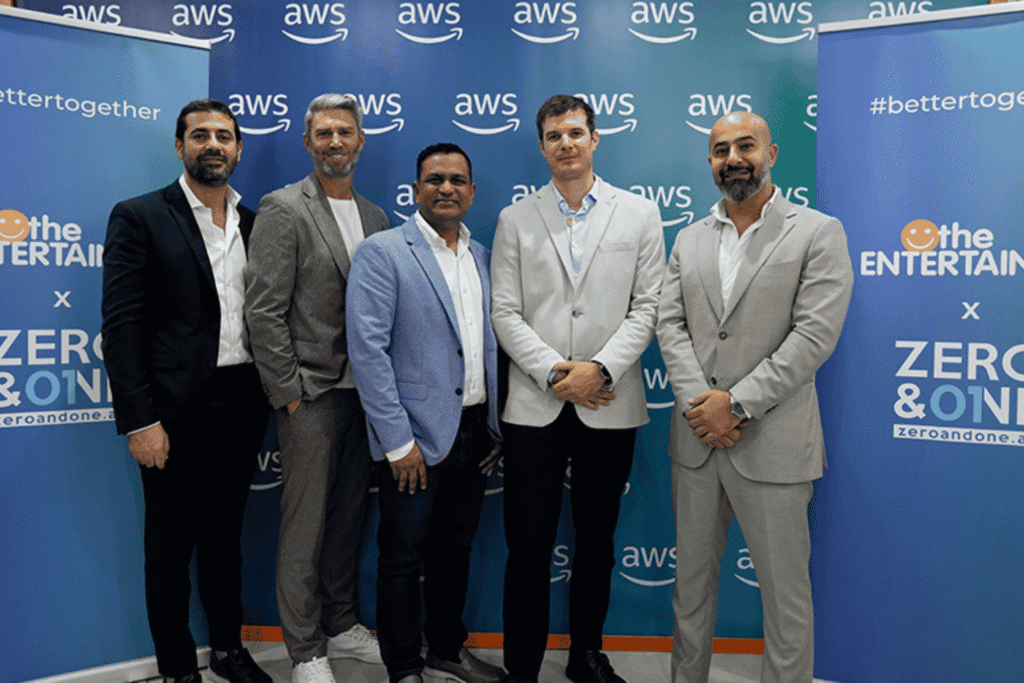
The Entertainer Selects Zero&One as Cloud & Generative AI Partner

UAE-based savings and lifestyle platform The Entertainer has appointed cloud-and-AI consultancy Zero&One as its strategic partner to advance its next-generation digital platform, according to a 7 November 2025 announcement. Consultancy ME

Founded in Dubai in 2001, The Entertainer operates across many Middle East markets including the UAE, Saudi Arabia, Bahrain, Kuwait, Egypt and Oman. The platform offers “2-for-1” lifestyle and retail deals and currently services over 10,000 merchant partners. Consultancy ME The partnership with Zero&One covers migration and modernisation of The Entertainer’s cloud infrastructure plus deployment of generative AI-driven features to enhance user discovery, personalisation and loyalty experiences. Consultancy ME

Strategic Aims & Scope

As part of the collaboration, The Entertainer will leverage Zero&One’s expertise across:

  • Cloud architecture modernisation on Amazon Web Services (AWS) to support scalability and global expansion. Consultancy ME

  • Generative AI-enabled discovery and recommendation engines to deliver more personalised offers across dining, leisure, retail and travel categories. Consultancy ME

  • Managed services including security, data governance and performance operations. Consultancy ME

The Entertainer’s Chief Information Officer noted the initiative will drive a more seamless and responsive customer experience, describing the step as “an important step forward in our commitment to technology-led customer experience.” Consultancy ME

Regional Context & Market Implications

In a region where digital commerce, loyalty platforms and app-based consumer engagement are growing rapidly, the move positions The Entertainer to compete more effectively with global-app alternatives and local fintech/lifestyle players. By investing in cloud-scale architecture and AI-led personalisation, the business is preparing to meet rising consumer expectations for frictionless offers, faster transactions and tailored experiences.

For Zero&One, being named partner by a prominent regional brand reinforces its status as a leading cloud-and-AI consultancy in the Middle East, particularly given its AWS Premier Consulting Partner credentials and generative-AI competency. Consultancy ME

What to Watch

Key performance indicators and milestones to monitor in the coming months include:

  • Time to rollout of the next-gen user experience, new app features and AI-led offer discovery.

  • Impact on member engagement metrics: number of active users, offer redemption rate, time-to-offer-view and basket size.

  • Infrastructure scalability: ability to support peaks (e.g., travel or festival season) and regional expansion.

  • Data governance and security compliance, especially given increased use of AI and personalisation.

  • Market recognition: whether the upgraded platform helps The Entertainer attract new merchant partners, expand into new countries and increase overall loyalty-programme revenue.

Conclusion

The collaboration between The Entertainer and Zero&One underscores how regional lifestyle platforms are investing in cloud and AI capabilities to deepen customer engagement and scale operations. As consumer-facing apps evolve toward greater intelligence and responsiveness, infrastructure modernisation becomes a competitive necessity rather than an optional upgrade. The success of the project will hinge not just on technology rollout, but on how effectively The Entertainer translates these capabilities into measurable user value.

HUMAIN and EY MENA Announce Ambition to Redefine AI-Powered Business Transformation

HUMAIN, a global artificial-intelligence company backed by the Public Investment Fund (PIF) and provider of full-stack AI capabilities, together with EY MENA, a leading professional-services firm, today announced their ambition to integrate EY’s business-AI solutions into HUMAIN ONE — HUMAIN’s agentic-AI platform powered by the Arabic large language model ALLAM. EY+1

Under this collaboration, EY will explore how its proprietary AI assets — spanning human resources, tax, accounting, governance and corporate development — can be redeployed as «intelligent agents» within HUMAIN ONE. By embedding EY’s innovations atop ALLAM, the initiative aims to deliver transformative solutions to both public- and private-sector organisations in Saudi Arabia and, eventually, globally. EY+1

Key Focus Areas

The initial phase of the partnership will focus on six critical corporate functions:

  • Human Resources: AI-driven recruitment, background checks and skills development (via EY Skills Foundry). EY

  • Tax & Zakat: Automated and compliant filings using EY’s AI Tax Factory. EY

  • Accounting & Audit: Streamlined oversight with EY’s Virtual Internal Auditor. EY

  • Risk Management & Governance: AI-powered KYC and compliance processes. EY

  • Corporate Development: Smarter M&A strategy, transactions and valuations through EY Competitive Edge and Transaction Diligence AI Agents. EY

  • Financial Due Diligence & Valuation: Accelerated reviews of financial statements using AI-assisted analytics. EY

Strategic Rationale

The collaboration stems from a shifting enterprise landscape where “agentic AI” — characterised by autonomous, multi-step, decision-capable systems — is becoming central to business transformation. According to the press release, businesses and governments are moving beyond static chatbots toward intelligent agents able to execute complex processes in real time. EY

EY brings to the partnership its global footprint (spanning over 150 countries), deep sectoral expertise and an extensive suite of AI-enabled business platforms. Combined with HUMAIN’s ALLAM model and full-stack infrastructure, the alliance seeks to accelerate the transition of organisations from legacy workflows to AI-first operations. EY

Implications for Clients and Markets

For governments and large enterprises, the partnership offers a blueprint for next-generation digital transformation: more intelligent operational workflows, enhanced compliance, faster decision-making and deeper use of data-driven insights. The focus on the Middle East — particularly Saudi Arabia — aligns with regional ambitions around AI, localisation of model development and economic diversification under Vision 2030.

For EY’s clients globally, the integration into HUMAIN ONE promises access to a powerful combination of enterprise services and agentic AI capabilities. This may reshape how HR, finance, tax, audit and corporate-development functions are organised and automated.

For HUMAIN, the deal bolsters its platform proposition as a world-class AI ecosystem capable of serving enterprise-grade functions beyond the region, leveraging EY’s credibility and reach.

Challenges & Considerations

The partnership is ambitious and comes with execution risks:

  • Deploying agentic AI across functions like tax, audit and governance demands rigorous data governance, regulatory compliance and change-management.

  • Embedding an Arabic-centric large-language model (ALLAM) into global operations requires adaptation for varied languages, jurisdictions and enterprise contexts.

  • Scaling across diverse markets means navigating regulatory frameworks, privacy regimes and ethical-AI standards in multiple jurisdictions.

  • Measuring ROI and adoption in deeply traditional enterprise functions may take longer than typical tech roll-outs, requiring long-term commitment.

What to Watch

In the coming months, stakeholders will track:

  • Pilot roll-outs and client case studies showing tangible impact (e.g., audit cycle time reductions, tax-filing automation gains, HR recruitment speed improvements).

  • Expansion of the collaboration beyond initial focus countries and functions, indicating move from piloting to global scaling.

  • Interplay with other AI models and platforms, and how the HUMAIN-EY alliance competes or integrates within broader AI-ecosystem partnerships.

  • Adoption of governance and ethical frameworks to ensure responsible use of agentic AI across functions and jurisdictions.

Conclusion

The HUMAIN-EY partnership represents a major strategic step in the evolution of enterprise transformation — from automation and analytics to fully agentic AI. By combining HUMAIN’s Arabic-language model and platform infrastructure with EY’s business-AI solutions and global services footprint, the alliance aims to redefine how organisations operate, govern and grow in an AI-first future.

Amazon Q3 2025 Revenue Up 13% as AWS and AI Drive Profit Growth

Amazon.com, Inc. posted a 13% year-on-year rise in net sales for the third quarter of 2025, reaching US$180.2 billion, according to its financial release. Amazon+2Mexico Business News+2 Net income surged to US$21.2 billion, a 37.9% increase compared with US$15.3 billion in the same period in 2024. Mexico Business News+1

The company attributed the growth largely to strong performance in its cloud-business arm Amazon Web Services (AWS) and its expanding use of artificial intelligence across retail and infrastructure. AWS alone recorded sales of US$33 billion, up 20% year-on-year. Amazon+1

Performance by Segment

  • In the North America segment, net sales grew 11% from the prior year to US$106.3 billion. Amazon+1

  • The International segment achieved a 14% increase in sales to US$40.9 billion, driven by global e-commerce and logistics expansion. Amazon+1

  • Operating income for the quarter was US$17.4 billion, but this included two significant charges: a US$2.5 billion legal settlement with the Federal Trade Commission (FTC) and an estimated US$1.8 billion in severance costs related to role eliminations. Without these charges, the operating income would have been approximately US$21.7 billion. Amazon+1

Strategy and Drivers of Growth

Amazon’s strong performance in Q3 reflects how the company is increasingly positioning itself not simply as a retailer but as a global technology and infrastructure platform. AWS continues to serve as a key engine of profitability, while AI-capabilities are being embedded across retail, logistics and product-recommendation systems. CEO Andy Jassy noted that the business added over 3.8 gigawatts of power capacity in the past 12 months and that AWS was growing at a pace “we haven’t seen since 2022”. Amazon+1

In the retail division, Amazon reported that its AI-based shopping assistant “Rufus” is now used by 250 million customers and that those who use it are 60% more likely to complete a purchase. The company also rolled out “Help Me Decide”, a recommendation tool that analyses browsing history and preferences to suggest products. Marketing4eCommerce+1

Context and Market Implications

The results arrive at a time when global consumer spending is facing headwinds, inflationary pressures persist and competition in e-commerce is intensifying. Amazon’s ability to improve both scale and profitability may serve as a benchmark for other digital-commerce players.

For investors, the strong showing in AWS and the focus on AI as a business differentiator indicate that Amazon is shifting its growth emphasis from purely expanding product-sales to building higher-margin infrastructure and technology revenue streams. This transition is in line with broader industry trends where cloud, data and AI are becoming strategic growth pillars for diversified technology companies.

At the same time, Amazon’s holiday hiring plans reflect continued expansion in its fulfilment and logistics operations: the company announced it plans to hire hundreds of thousands of temporary staff globally, including 250,000 in the United States and 150,000 in India for the season. Mexico Business News

Forecast and Outlook

Looking ahead to the fourth quarter of 2025 (which includes the key holiday sales period), Amazon projects revenues in the range of US$206 billion to US$213 billion, implying growth of 10-13% compared to Q4 2024. Operating income is expected to fall between US$21 billion and US$26 billion. Amazon+1

The outlook suggests Amazon is confident in maintaining momentum into the high-season quarter, supported by cloud growth, AI roll-out, and the company’s global fulfilment network.

Challenges and Considerations

Despite the strong performance, Amazon faces several challenges:

  • Competing in low-margin retail remains tough, and continuing to grow while maintaining margin discipline will require efficient logistics, a refined cost structure and differentiated value-propositions.

  • Investment into AI, infrastructure and global logistics is capital-intensive — the execution risk of scaling new capacity, deploying new chips and managing new tools remains significant.

  • Regulatory scrutiny is heightened: the US FTC settlement in the quarter underscores antitrust and consumer-protection risks; global growth may also require navigating varied regulatory environments.

  • Consumer trends remain uncertain: on-line retail growth may slow as macroeconomic conditions persist and as price sensitivity increases in key markets.

Conclusion

Amazon’s Q3 2025 results reinforce a strategic transformation in the company’s business model: from a leading global retailer to a technology-driven ecosystem combining retail, cloud infrastructure, AI-powered services and logistics. The 13% revenue increase, coupled with a 37.9% jump in net profit, illustrates that Amazon is executing on its plan to drive higher-margin growth through AWS and AI.

As the company heads into the holiday season, its ability to deliver on global fulfilment, expand cloud and AI services, and manage operational and regulatory complexity will be key to sustaining momentum into 2026.

Alibaba Merges Global and Domestic E-Commerce Businesses

Alibaba Group Holding Ltd. announced on 21 November 2024 that it will combine its domestic e-commerce operations (including Taobao and Tmall) with its international commerce operations (such as AliExpress, Lazada, and Daraz) into a new unit called the Alibaba E-Commerce Business Group. PYMNTS.com+2TechNode+2

The new structure places all of Alibaba’s e-commerce businesses worldwide under a unified leadership. Former CEO of Alibaba International Digital Commerce, Jiang Fan, has been appointed chief executive of the new group, reporting directly to Eddie Wu, CEO of Alibaba Group. Digital Commerce 360+1

Strategic Rationale and Market Realities

Alibaba’s decision to merge its domestic and international platforms reflects its recognition that e-commerce is evolving: the division between purely domestic sales and cross-border commerce is increasingly blurred. Alibaba stated that “global supply-chain capabilities, fulfilment capabilities and consumer-service capabilities will determine future competitive landscape”. PYMNTS.com+1

Facing intensified competition from players like Temu, Pinduoduo and other global fast-fashion or discount platforms, Alibaba appears to be doubling down on scale, integration and technological leverage. The Paypers+1

By consolidating platforms such as Taobao, Tmall, 1688 (its wholesale marketplace), AliExpress, Lazada and other regional brands into a single entity, Alibaba aims to optimize logistics, merchant onboarding, data analytics and marketing operations. Digital Commerce 360+1

What the New Unit Covers

The newly formed Alibaba E-Commerce Business Group will include:

  • Domestic marketplaces: Taobao and Tmall. Digital Commerce 360+1

  • International and cross-border platforms: AliExpress, Lazada, Daraz, among others. TechNode+1

  • Wholesale and sourcing platforms: 1688.com. Digital Commerce 360

  • Secondary-market/trading platforms: for instance Idle Fish/Xianyu in China. KrASIA

The leadership consolidation means that merchant tools, logistics and fulfilment services will be unified under the new group’s strategy, thereby enabling sellers to operate more freely across domestic and international markets via a single infrastructure.

Implications for Merchants, Consumers and Alibaba

For merchants — especially small- and medium-sized enterprises (SMEs) — the integration simplifies access to both China’s domestic market and overseas consumer audiences. Instead of dealing with separate platforms and infrastructures, sellers can potentially expand globally through a streamlined system.

For consumers, the restructure could mean improved delivery, broader product selection, enhanced cross-border shopping experiences and potentially better pricing as efficiencies are unlocked.

For Alibaba, the move signals a shift from operating segmented e-commerce ecosystems to running a global commerce powerhouse. The integration is expected to yield operational synergies, cost savings in logistics and marketing, and greater scale in data and AI-driven commerce.

Challenges Ahead

While ambitious, the consolidation poses several risks:

  • Merging domestic and international operations involves aligning systems, cultures, merchant networks and regulatory frameworks — a complex task.

  • Cross-border commerce remains exposed to logistics, customs, tax, currency and regulatory risks that may differ significantly from domestic operations.

  • Competitors specialised in ultra-low-cost models or social commerce may still gain ground if Alibaba cannot adapt as fast or as nimbly.

What to Watch in the Coming Months

Key indicators for the new business group’s success include:

  • Growth in international commerce volume and cross-border GMV (gross merchandise value).

  • Improvements in merchant onboarding speeds, fulfilment times, and delivery-cost reductions.

  • Uptake of AI-driven marketing tools, data-analytics enhancements and unified merchant interfaces.

  • How Alibaba balances domestic market growth (which is facing economic slowdown in China) with international expansion.

Conclusion

The merger of Alibaba’s global and domestic e-commerce operations into a singular business group is a bold strategic pivot that acknowledges the evolving shape of online commerce. By uniting scale, technology and merchant networks, Alibaba is positioning itself to compete more effectively across the global digital-commerce landscape. Whether this integration translates into renewed growth and competitive advantage will depend on execution, innovation and the company’s ability to navigate regional complexities.

Ozon Reports Q3 2025 Net Profit of 2.9 Billion Roubles

Russian e-commerce platform Ozon Holdings PLC (MOEX: OZON) announced a third-quarter net profit of 2.9 billion roubles, marking a notable improvement in its financial performance. The company reported revenue of 258.9 billion roubles for the quarter. MarketScreener

This result signals a turning point for Ozon, which has been navigating a difficult macroeconomic and regulatory environment while striving to scale its marketplace, logistics, fintech and fulfillment operations.

Financial Performance & Operational Drivers

For Q3 2025, Ozon’s net profit of 2.9 billion roubles reflects significant progress compared with prior periods. The reported 258.9 billion rouble revenue provides context for the scale of the operations behind the profitability. MarketScreener

Key operational factors likely contributing to the profit include:

  • A larger share of revenue derived from higher-margin services such as marketplace commissions, advertising and fintech related income.

  • Improved logistics and fulfillment efficiencies that reduce cost per order and enable better operating leverage.

  • Strengthening of seller-services and platform monetisation efforts, enabling Ozon to capture value beyond pure retail margins.

While Ozon has not published full line-by-line segment details in the summary cited, analysts suggest that the shift toward marketplace and services revenues has reached a maturity point where profitability becomes realistic.

Strategic Context

Amid Russia’s rapid digital-commerce growth, Ozon is one of the leading players alongside competitors such as Wildberries. The Russian e-commerce market presents both opportunity and challenge: large geography, variable infrastructure, regulatory complexity and consumer demand shifts. Historically, Ozon has made heavy investments in logistics infrastructure, last-mile delivery and fintech services to underpin growth.

With the Q3 result, Ozon appears to be transitioning toward a phase of growth with profitability rather than purely scale-for-scale’s-sake. For stakeholders, this underscores that digital-commerce platforms in large markets can move from rapid growth to sustained business models.

Implications for Investors & the Market

For investors, Ozon’s return to net profit is a strong signal of operational health and the viability of its integrated model—marketplace + logistics + fintech. Specific implications include:

  • Improved cash-flow potential and a stronger platform for future investments without excessive equity dilution.

  • Enhanced capacity to invest in logistics, technology, fulfillment and seller-services, on the back of profitability.

  • A competitive advantage over players lacking end-to-end logistics or monetisation capabilities.

For sellers and partners, Ozon’s improved results may lead to intensified focus on value-added services: advertising on the platform, logistics partnerships and fulfilment options. The profitability milestone may also position Ozon to accelerate expansion of marketplace participation and geographic coverage.

Risks & Considerations

Despite the improved result, several risks remain relevant:

  • The Russian economy remains exposed to currency volatility, inflation, sanctions risk and shifting regulatory conditions—all of which could impact consumer spending and cost structures.

  • Logistics and fulfilment outside major urban centres remain expensive and complex, which may limit margin gains as Ozon grows beyond core areas.

  • Competition remains strong in Russia’s e-commerce space—platforms, local players and international entrants may pressure seller margins and marketplace commission rates.

  • Profitability must be maintained while Ozon continues to invest in growth; balancing investment with margin discipline is critical.

Outlook & What to Watch

Key indicators for the remainder of 2025 and into 2026 include:

  • Growth in gross merchandise value (GMV) and marketplace-services revenues, and whether those expand at higher margins.

  • Metrics around cost-per-order, delivery lead time, warehouse utilisation and logistics-efficiency improvements.

  • Expansion of value-added services—advertising, fintech, fulfilment for third-party sellers—and their contribution to total revenue.

  • Capital expenditure levels and how fresh investment is balanced with profitability targets.

  • Regional expansion efforts within Russia and potential adjacent markets, and whether these scale effectively without eroding margins.

If Ozon can maintain or grow profitability while pursuing selective investments, it may solidify its position as one of Russia’s dominant integrated e-commerce platforms.

Conclusion

Ozon’s Q3 net profit of 2.9 billion roubles marks a meaningful step for the company in a competitive and complex market. While challenges persist, the shift toward profitability suggests the platform’s strategy is maturing. For investors, sellers and market participants, this performance provides a positive signal that large-scale e-commerce enterprises in regional markets can successfully combine growth with discipline.

Amazon Takes Its Low-Cost E-Commerce Service Global to Challenge Shein and Temu

Amazon has officially expanded its low-cost e-commerce service, known as Amazon Bazaar, to 14 additional countries, marking a major strategic step in its global retail expansion and a direct challenge to Chinese fast-fashion giants Shein and Temu. The initiative positions Amazon to compete in the fastest-growing segment of global e-commerce: ultra-affordable shopping driven by mobile apps, algorithmic discovery, and cross-border logistics. (Reuters)

Amazon Bazaar—branded as Amazon Haul in the U.S.—was initially piloted in Mexico in 2024, offering thousands of low-priced products shipped directly from warehouses and partner suppliers. Following the pilot’s success, Amazon confirmed a major rollout across markets including the United Arab Emirates, Saudi Arabia, Hong Kong, Taiwan, the Philippines, Nigeria, and Thailand, among others.

The company says the service aims to “bring affordable everyday products to customers worldwide” while maintaining the quality and reliability associated with the Amazon brand.

Competing Head-to-Head with Shein and Temu

Amazon’s global expansion of Bazaar represents a strategic counter-move against emerging competitors that have dominated the low-cost e-commerce ecosystem. Shein and Temu—both Chinese platforms—have captured massive market share through ultra-cheap pricing, social-media-driven virality, and direct-from-factory fulfillment models.

While Amazon’s traditional marketplace targets mid- to premium-range shoppers, Bazaar focuses squarely on value-driven consumers, offering products under $10, with some listings starting at just $2. Categories include clothing, accessories, beauty, home essentials, phone cases, and novelty items—mirroring the product mix popularised by Temu’s gamified shopping experience. (Reuters)

Industry analysts interpret the launch as Amazon’s most aggressive push yet into the discount-retail segment, signaling that the company no longer intends to cede that space to Asian challengers.

“Amazon only enters a category when it sees long-term profitability and scalability. This move shows it’s serious about taking on low-price rivals in emerging markets,” said Gil Luria, analyst at D.A. Davidson. (Reuters)

A Data-Driven Approach to Affordability

Unlike Shein and Temu, which rely on Chinese factory networks and third-party logistics, Amazon Bazaar leverages the company’s own global fulfillment infrastructure. Orders placed through the service are processed through existing Amazon logistics centers, giving the company greater control over shipping times, tracking accuracy, and returns.

The service also integrates tightly with Amazon Prime delivery channels, allowing customers in select regions to benefit from faster shipping options even for budget items—a unique advantage over cross-border rivals that depend on slower shipping methods.

Amazon has not disclosed pricing for sellers, but early reports suggest commission rates lower than those on the main marketplace, intended to encourage participation by small manufacturers and value-tier merchants.

The company’s internal algorithmic pricing engine—already used across its main retail operation—will reportedly be optimized for Bazaar, ensuring competitive parity with fast-fashion and discount rivals on a real-time basis.

Expanding Access in Emerging Markets

The decision to expand the Bazaar model globally also reflects Amazon’s growing focus on emerging markets, where cost sensitivity and mobile-first shopping dominate consumer behavior.

Regions like Southeast Asia, the Middle East, and Sub-Saharan Africa have seen exponential growth in online retail adoption post-pandemic, driven by rising smartphone penetration and digital-payment infrastructure. Amazon’s expansion into these markets via Bazaar gives it access to new audiences who may not have previously considered Amazon due to higher average pricing.

In the Gulf region, the rollout aligns with broader trends in cross-border e-commerce. Platforms such as Noon, Namshi, and Trendyol are expanding rapidly in the UAE and Saudi Arabia, while Chinese players Temu and Shein have surged in popularity through aggressive price discounts and influencer campaigns.

By introducing a low-cost service that still carries the Amazon reliability and logistics advantage, the company hopes to capture a larger share of this fast-growing market segment.

Impact on Amazon’s Global Strategy

Financial analysts suggest that the Bazaar expansion dovetails with Amazon’s ongoing strategy to diversify its revenue streams while defending its e-commerce dominance.

In Q3 2025, Amazon’s international sales reached $40.9 billion, up 10 percent year-on-year (excluding currency fluctuations). Although margins remain thin in global retail, the company’s growing logistics network and AI-driven supply-chain optimization have reduced delivery costs, creating room to target lower-price tiers. (Reuters)

Furthermore, the expansion helps Amazon gather critical consumer data in emerging economies—feeding its long-term plans for advertising, payments, and logistics services. By onboarding millions of first-time online shoppers via Bazaar, Amazon can nurture loyalty and cross-sell higher-margin services like Prime Video, Audible, or Amazon Pay.

Challenges Ahead

While the move strengthens Amazon’s global presence, it also introduces several strategic challenges:

  1. Margin Pressure: Competing on price with Shein and Temu—both of which operate on ultra-lean cost structures—could erode Amazon’s profitability.

  2. Supply Chain Complexity: Managing millions of low-priced SKUs requires tight logistics and quality control to avoid counterfeit or defective goods.

  3. Regulatory Scrutiny: Governments worldwide are increasing oversight of cross-border e-commerce, especially regarding taxes, data privacy, and product safety.

  4. Brand Dilution Risks: Positioning Amazon simultaneously as a premium and low-cost marketplace could confuse consumers if not clearly differentiated.

Despite these hurdles, experts believe Amazon’s ability to combine its brand trust, logistics infrastructure, and AI-driven operations gives it an edge over competitors reliant on external supply chains.

Industry Reactions

Retail analysts have described the expansion as “Amazon’s answer to Temu.”

“Temu grew exponentially by offering consumers the thrill of discovery at low prices,” said retail consultant Jane Hsu of Retail Economics Asia. “Amazon’s approach is more structured but could be more sustainable—especially in markets with strong trust in its logistics reliability.”

In addition, merchants see potential for new growth opportunities. Local sellers in regions like the Philippines and UAE can now list budget items for international sale without building separate infrastructure, effectively becoming micro-exporters under Amazon’s umbrella.

The Road Ahead

The success of Amazon Bazaar’s global expansion will depend on several key factors:

  • How quickly the company can onboard sellers and maintain inventory freshness.

  • Whether shipping and delivery times can remain competitive with Shein’s and Temu’s direct-from-China models.

  • The extent to which consumers in emerging markets perceive Amazon’s “budget” tier as credible and appealing.

  • Integration with other Amazon verticals—like Prime, ads, and logistics—which could improve long-term monetization.

If executed effectively, Bazaar could mark the beginning of Amazon’s next growth phase—a move from being a global marketplace for everything to being a global marketplace for everyone.

Conclusion

With Amazon Bazaar, the retail giant is signaling a bold commitment to inclusive commerce—making affordability and accessibility key pillars of its next decade of growth. The rollout challenges Chinese fast-fashion dominance and highlights how global e-commerce is fragmenting into price tiers rather than geographies.

As Amazon scales its ultra-low-cost offering across continents, the competition for the world’s budget-conscious consumers is set to intensify—ushering in a new chapter in the battle for e-commerce supremacy.