
WORLDEF Prime Antalya 2026 - Upcoming Event

Register Now

Tens of Thousands of Layoffs Are Being Blamed on AI

Across the U.S., a growing number of companies are attributing recent mass layoffs to advances in artificial intelligence (AI). However, an investigative report published by NBC News suggests that many of these job cuts may reflect broader economic pressures rather than purely AI-driven workforce reductions.

The report highlights that while some employers explicitly cite AI as the reason for downsizing, concrete evidence linking large-scale layoffs directly to automation remains limited. Experts interviewed by NBC News caution that firms may be using AI as a convenient cover for more conventional cost-cutting measures.

The Narrative Around AI and Layoffs

In recent months, headlines have proliferated linking job reductions to AI adoption, particularly in sectors such as content moderation, customer-service operations and white-collar roles prone to automation. According to MIT economist David Autor, many organisations find it “much easier … to say we are laying workers off because we’re realising AI-related efficiencies than to say we’re laying people off because we’re not that profitable or we’re facing a slowing economic environment.”

Yet the NBC News analysis found only a small fraction of current layoffs are explicitly attributed to AI. One cited figure: out of nearly 287,000 job cuts this year, only 75 were clearly tied to automation and around 20,000 to broader technology-driven changes. AdSitePro+1

What’s Driving the Disconnect?

Several factors contribute to the discrepancy between the narrative and the data:

  • User intent and messaging: Companies may favour statements about “automation” or “efficiency gains” rather than directly acknowledging AI-based job elimination, due to concerns about stakeholder reaction.

  • Nature of jobs affected: Many affected positions involve roles such as data-entry, content moderation or customer service areas where generative AI and agent-based tools are starting to make inroads but where full automation remains challenging.

  • Macro-economic landscape: Some layoffs may largely stem from sluggish growth, inflation, or restructuring rather than immediate AI deployment. That complicates attribution.

  • Lag-time to value realisation: Even when AI tools are introduced, substantial workforce reductions may not follow immediately and attributing cuts to AI before significant productivity benefit is realised may be premature.

Strategic Implications for Businesses

For organisations considering workforce changes under the banner of AI integration:

  • Be cautious about attribution: Presenting layoffs as purely AI-driven may invite scrutiny from regulators, investors or workforce groups. Transparent messaging around strategy and timing may build trust.

  • Prioritise reskilling and human-centred roles: Many jobs that incorporate judgment, creativity or interpersonal skills are less likely to be fully automated. Investing in these areas may provide better resilience.

  • Align workforce reductions with measurable AI gains: Before citing automation as a cause for job cuts, companies should validate the actual performance improvement and cost-savings delivered by the AI tools.

  • Monitor policy and regulatory risk: As AI-linked layoffs gain visibility, governments may examine how automation impacts employment, worker rights and sectoral balance. Proactive governance and workforce transition programmes will matter.

What to Watch Moving Forward

Experts anticipate several developments as the relationship between AI and employment evolves:

  • Refined metrics on AI impact: Over time, clearer data may emerge linking automation adoption with workforce change, enabling more accurate attribution and forecasting.

  • Industry-specific patterns: Some sectors — such as white-collar services, call centres and back-office operations — may show earlier and more visible workforce impacts than others like manufacturing or frontline retail.

  • Shift from layoffs to redeployment: Instead of eliminating roles, firms may increasingly redeploy staff into supervisory, governance or content-evaluation tasks that support AI systems, altering job profiles rather than eliminating them.

  • Policy and social responses: With public interest in AI and employment growing, companies may face pressure to disclose automation plans, support worker transitions and invest in human-gallery ecosystem development.

  • Conclusion

The NBC News investigation suggests that while AI is increasingly cited as a driver of workforce reductions, the reality remains complex. Many layoffs appear rooted in broad economic, structural or strategic factors, with AI often referenced more for optics than as the sole cause. Leadership teams must navigate this landscape carefully balancing innovation, transparency and workforce stability—to build sustainable transformations.
Alibaba Halts Further Expansion at Liège Airport

Cainiao, the logistics subsidiary of Alibaba Group, has announced that it will not proceed with the planned second and third phases of its warehouse expansion at Liège Airport in Belgium. The confirmation came from Walloon Economy Minister Pierre‑Yves Jeholet on 29 October 2025.

Strategic Shift and Project Background

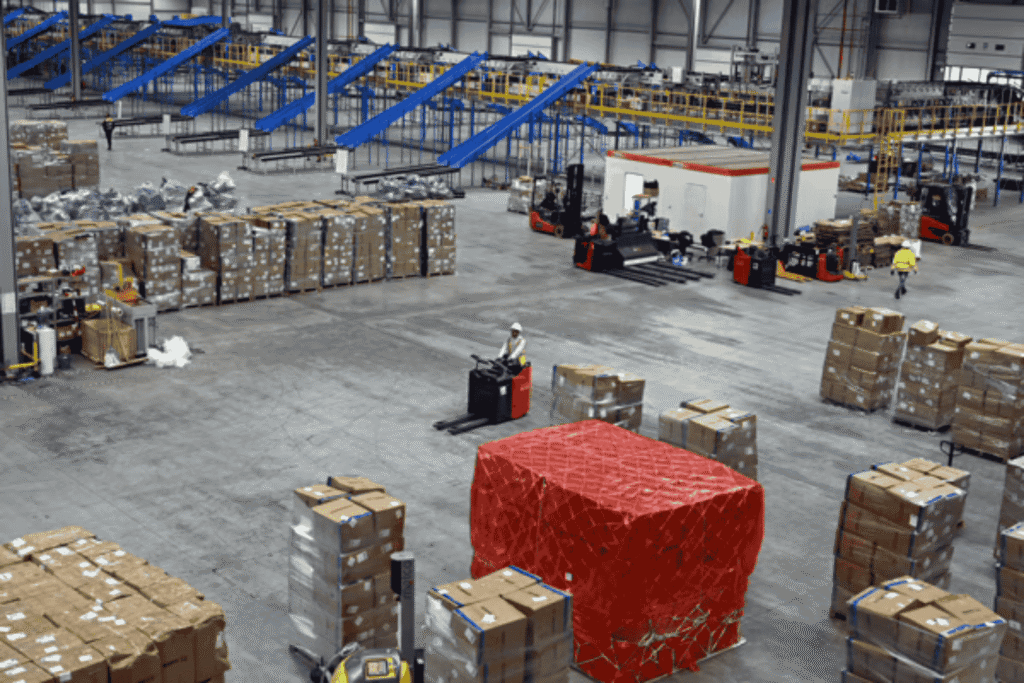
Originally, Cainiao had planned a substantial multi-phase development at Liège Airport, intended to include two additional logistics buildings of 24,000 sqm and 20,000 sqm respectively. The first phase, completed in 2021, comprised a 30,000 sqm warehouse and created 276 jobs.

Minister Jeholet stated that Cainiao has adjusted its global strategy and will instead focus on optimising its existing facilities rather than pursuing further construction at the airport site. Although the project remains active in its first phase, the second and third phases will not go ahead as originally planned. warehouserentinfo.be

Economic and Regional Implications

The decision is a setback for Liège, one of Belgium’s regions with a high unemployment rate and strong aspirations for logistics-driven economic growth. The cancellation means the job promises associated with the expansion — at least 900 direct jobs and some 2,100 indirect jobs according to initial projections will not be realised under the original scope. belganewsagency.eu

From Cainiao’s perspective, the pivot reflects changing strategic priorities within Alibaba Group’s global logistics architecture. By choosing to optimise existing assets rather than scale further in Belgium, the company signals a potential recalibration of its European footprint.

Logistics Sector and Real-Estate Considerations

For the broader logistics market, Cainiao’s withdrawal of the expansion phases opens potential opportunity for other tenants and developers at the Liège airport property. The site’s infrastructure investment and location remain strong, and the land initially earmarked for expansion may be reallocated or made available to other logistics operators. warehouserentinfo.be

However, the withdrawal also raises questions about the long-term demand for greenfield logistics construction at major air-cargo hubs in Europe if global players choose to optimise rather than expand.

Contractual and Operational Details

The original agreement between Cainiao and Liège Airport included clauses such as deadline obligations for construction and job creation, and provisions for land reversion or compensation in case of non-fulfilment. With the second and third phases cancelled, these contractual mechanisms may come into play, depending on how the agreement is interpreted going forward. belganewsagency.eu

Alibaba and Cainiao maintain that the first phase remains in operation and that the company continues to regard Liège Airport as a strategic partner — yet the shift suggests a narrower scope than initially envisioned.

Looking Ahead

Although Cainiao’s expansion will not proceed as planned, the site’s initial presence remains intact and operational. Logistics industry analysts will monitor whether the freed-up land leads to new development by other logistics firms or whether the decision signals a broader slowdown in major air-freight hub expansions.

For Liège Airport, the challenge will be to attract new investors or tenants to the area to offset the lost scale of the original plan. For Cainiao and Alibaba, the decision may reflect a broader optimisation of investment priorities, reinforcing their focus on existing infrastructure rather than large-scale new builds.

Conclusion

Alibaba’s logistics arm Cainiao’s decision to halt the planned expansion at Liège Airport marks a significant adjustment of its European strategy. While the initial facility remains active, the cancellation of subsequent phases has regional economic implications and signals shifting dynamics in the global logistics real-estate market. How the land is repurposed and how demand evolves in the region will be important indicators of future trends.

Chinese Firms Solidify Grip on Southeast Asia Online Shopping

Chinese e-commerce players are rapidly gaining dominance in Southeast Asia’s online retail space, according to a recent report by Bain & Company. In key markets such as Indonesia, Thailand and the Philippines, these firms are now accounting for approximately half of the total e-commerce volume.

The report points to major players including Shein, Temu and TikTok Shop (via parent ByteDance) as the leading forces behind this expansion. Their share of the market is accelerating amidst rising internet penetration, mobile-first behaviours and aggressive growth strategies tailored to value-seeking consumers. Intellectia+1

Drivers of the Shift

Several factors are driving the increasing influence of Chinese firms in Southeast Asia:

  • Low-cost supply chains: By leveraging China-based suppliers and streamlined logistics, firms such as Shein and Temu can offer significantly lower prices compared with some regional incumbents.

  • Mobile-first engagement: Southeast Asian markets have a young, digitally adept consumer base that engages via mobile apps, social-commerce formats and short-video content — channels in which Chinese firms are highly proficient.

  • Rapid geographic rollout: Chinese companies expand quickly across regional borders, replicating successful domestic models and applying lessons around flash sales, micro-influencer marketing and ultra-fast logistics.

  • Platform ecosystems: TikTok Shop, backed by ByteDance, integrates social entertainment with commerce — helping convert discovery into purchases in a manner that traditional marketplaces may struggle to match.

Market Implications

The rise of Chinese e-commerce firms is reshaping the competitive dynamics in Southeast Asia:

For regional players, including local marketplaces and ASEAN-based platforms, this trend represents a significant challenge. These firms must now contend not only with pricing pressure but also with the capability gap in mobile-native marketing and fulfilment efficiency.

For consumers, the benefits are clear: more choices, competitive prices and faster access. However, critics note potential risks such as increased reliance on a small set of dominant platforms, data-privacy concerns, and pressure on regional sellers who may struggle to match scale and cost.

Strategic Considerations for Local Stakeholders

The shift highlights several strategic imperatives for stakeholders in Southeast Asia’s retail-commerce ecosystem:

  • Enhance local logistics: To compete effectively, regional players may need to bolster fulfilment networks, reduce delivery times and improve return processes — matching the speed and efficiency of global entrants.

  • Leverage differentiated value: Local brands can focus on unique selling propositions such as regional design, cultural relevance, local customer service and faster local returns — areas where global entrants may be weaker.

  • Innovate mobile-first experiences: Adapting short-form video, live-commerce, influencer engagement and personalised mobile offers is critical to winning in markets where Chinese firms excel.

  • Regulatory response: Governments and regulators may review competition, data-localisation, import-duty practices and consumer-protection laws in light of the rapid growth of foreign-led platforms.

Potential Risks and Future Outlook

While Chinese firms currently hold significant momentum, future risks may moderate their growth:

  • Supply-chain disruption: Global logistics or tariff shocks could affect the cost base of low-price models and narrow their price advantage.

  • Regulatory crackdown: As dominant platforms expand, regulatory scrutiny around cross-border commerce, data usage and consumer rights may intensify.

  • Local market saturation: In highly penetrated urban centres growth may slow, forcing firms to expand into less developed regions with higher fulfilment costs.

  • Competitive counter-measures: Regional challengers and global platforms may ramp up investment, partnerships or localisation strategies to reclaim share.

Conclusion

Chinese e-commerce companies are now major players in Southeast Asia, capturing roughly half of online-shopping volumes in key markets by leveraging cost advantage, mobile-native marketing and rapid rollout strategies. The shift presents both an opportunity and a threat to existing regional players and challenges the broader retail-commerce ecosystem in the region. As consumer behaviours evolve and competition intensifies, success will hinge on logistics, localisation, innovation and regulatory alignment.

Bill Gates’ Daughter Launches AI Shopping Startup with $8 M Funding

Phoebe Gates, daughter of Bill Gates, has launched a new artificial-intelligence-driven fashion-e-commerce startup called Phia, which recently secured USD 8 million in seed funding. The round attracted celebrity backers including Hailey Bieber and Kris Jenner, highlighting the startup’s high-profile launch despite the fact that Bill Gates did not directly invest. 36Kr

Phia is positioning itself as a next-generation shopping assistant, allowing users to instantly compare prices of new and pre-owned items across multiple platforms. The app is built around a simple “Should I buy this?” button: when users browse a product, Phia scans thousands of retail channels and resale marketplaces, evaluates pricing, and provides a verdict and recommendation. The platform currently supports more than 250 million products via its direct links to platforms such as The RealReal, Vestiaire Collective, ThredUp, StockX and more.

Startup Origins and Team

The company was co-founded by Phoebe Gates and Sophia Kianni, who met while studying at Stanford University. The duo transitioned their dormitory-startup experiment into a formal business in 2023 when they established Phia in New York. The name “Phia” is a fusion of their first names Phoebe plus Sophia. Less than half a year after launching publicly, Phia claims to have amassed over 600,000 users. Many of its engineering and product staff are former employees of major tech firms such as Pinterest, Meta and Amazon.

AI and E-Commerce Convergence

Phia’s ambition taps into a broader theme: the convergence of artificial intelligence and e-commerce. While global online retail has grown more than ten-fold since 2010, from around USD 0.6 trillion to approximately USD 6.4 trillion by 2025, the core user journey in e-commerce has remained largely unchanged — browse, compare, buy, receive. Phia argues that the discovery and decision stages are ripe for reinvention via AI. 36Kr

According to Phia’s public materials, its algorithm interprets browsing patterns in real time, gathers pricing and availability data from thousands of listings, and makes recommendations that factor both brand-new and resale options. For fashion-heavy users, this means the decision-making process is compressed from hours of manual research to a single tap.

Funding and Traction

The USD 8 million seed-round backing validates both the celebrity interest and the perceived market opportunity. Despite being led by a relatively unknown startup, the impressive user-growth rate and celebrity involvement have attracted attention. Phia’s early data indicates more than 40,000 partner websites and over 5,000 direct brand integrations. The emphasis on resale as well as new items positions it in a hybrid category aligning with sustainability and circular-economy trends. 36Kr

Competitive Landscape and Market Opportunity

Phia joins a crowded field of fashion-tech and shopping-automation platforms. However, its AI-assistant interface embedded as a button or browser extension that overlays real-time price-comparison and recommendation logic — differentiates it from passive aggregation services. By supporting both new and second-hand items, Phia also aligns with consumer shifts toward affordability, sustainability and faster decision-making.

The broader online-fashion market remains fragmented and fiercely competitive. For Phia to scale effectively, it must convert user engagement into revenue whether via affiliate links, brand partnerships, subscriptions or commerce facilitation. The challenge will be to maintain recommendation quality, update inventory metadata reliably, and offer sufficient value to encourage repeat use.

Strategic Implications for Retailers and Platforms

For traditional e-commerce and fashion-retail platforms, Phia’s model signals increasing pressure to offer smarter decision-support features. The “Should I buy this?” model could become a standard expectation in browsing experiences. Retailers may need to invest in richer metadata, dynamic pricing, and AI-ready integration in order to stay competitive.

Brands and marketplace operators should take note: consumer expectations are shifting toward instant insight, streamlined decision-making and cross-platform price visibility. Platforms that provide these features may gain advantage in acquisition and retention of value-conscious and digitally sophisticated shoppers.

Challenges and Adoption Hurdles

Despite its promise, Phia faces execution risk. Its business model relies on accurate data connections across thousands of platforms, sustained user engagement and monetisation of what is essentially a decision-support service rather than pure transactional flow. The dependency on browsing behaviour rather than direct marketplace traffic may lengthen the path to profitability.

Moreover, the startup must ensure data privacy, avoid biases in recommendation logic and maintain transparency about how its AI models operate. Navigating resale-market dynamics — including authenticity, quality control and logistics — adds further complexity, especially given the large footprint of second-hand listings.

Outlook

If Phia delivers on its ambition, the startup could spearhead a new category in e-commerce: AI-mediated decision assistants that layer across platforms rather than replacing them. The USD 8 million seed round will enable rapid hiring of engineering talent, refinement of algorithms and expansion of brand partnerships. Startup watchers will monitor user-growth, recommendation-accuracy metrics and conversion into commerce outcomes.

From a longer-term standpoint, Phia’s concept may influence how digital commerce evolves shifting from browsing and transactional flows into assisted decision journeys where AI intervenes intelligently. For consumers, this could mean less “shopping fatigue” and more confident purchases. For retailers, it may mean adapting to a new frontier of intelligent recommendation and participation in an AI-enhanced ecosystem.

Conclusion

Phoebe Gates and Sophia Kianni’s startup Phia represents a fresh take on fashion-e-commerce through the lens of artificial intelligence and real-time comparison. With celebrity investment, early traction and an ambitious vision to redefine how people shop, Phia is one to watch. The success of its “Should I buy this?” proposition may determine whether AI assistants become a standard layer in the future of online retail.

PayPal to Embed Digital Wallet in ChatGPT via OpenAI Partnership

PayPal Holdings announced a landmark partnership with OpenAI to integrate its digital wallet into the ChatGPT platform, enabling users to make purchases directly through the chatbot starting in 2026. The news, first reported by CNBC and confirmed via a regulatory filing, sent PayPal shares surging by approximately 13 % in early U.S. trading. Reuters+1

Under the deal, ChatGPT users will be able to tap into PayPal’s wallet infrastructure to pay for goods and services recommended or enabled by the AI interface. At the same time, PayPal’s merchant network will gain exposure within ChatGPT’s user base, allowing sellers to list their products and enable integrated checkout. CEO Alex Chriss described the arrangement as a key step toward “agentic commerce”, where conversational AI mediates shopping from discovery to checkout with minimal friction.

What the Integration Entails

According to the announcement, the integration involves embedding PayPal’s wallet directly into ChatGPT’s checkout flows. Users who engage with ChatGPT to explore product recommendations will see an option to “Pay with PayPal,” tapping into their existing wallet balance, stored payment methods or bank-account links. It also enables PayPal merchants to be accessible via ChatGPT’s interface without needing a separate setup. Reuters

PayPal will provide merchant routing, payment-validation and back-end orchestration, while OpenAI will surface relevant product offers and handle conversational flows. The collaboration is built on the concept of “agentic commerce protocol”, which enables AI-driven decision-making and checkout coordination — essentially, products discovered in chat can be bought in a few taps. bankless.com+1

Strategic Importance

For PayPal, the tie-up represents a strategic pivot toward embedded payments in AI-mediated commerce, beyond its traditional digital-wallet and P2P transfers business. By positioning itself at the intersection of AI and e-commerce, PayPal aims to capture a new growth vector and deepen engagement with its consumer and merchant base. The company also raised its full-year earnings guidance in tandem with the announcement, signaling renewed confidence in its growth trajectory.

From OpenAI’s perspective, the deal strengthens its vision of turning ChatGPT into a multi-functional platform beyond chat one that can facilitate discovery, advice and direct commerce within the same interface. The partnership with PayPal helps streamline the payment piece, a key gap for AI-based shopping experiences.

Market Implications

This collaboration may accelerate a broader shift in how consumers purchase goods online. If conversational AI platforms can control both discovery and checkout, they may rival traditional e-commerce sites, search engines and marketplaces. Payment companies such as PayPal, by becoming integrated, stand to capture value at the moment of transaction rather than simply processing it.

Merchants and marketplaces alike will need to reconsider their channel strategies being accessible via ChatGPT could become a competitive differentiator. Meanwhile, the move adds momentum to so-called “agentic commerce” where AI agents act on behalf of users to buy products, renew subscriptions or fulfil household needs. The Economic Times

Challenges and Considerations

Despite the promise, there are hurdles ahead. Ensuring the integration is smooth across different geographies, payment-methods and regulatory regimes will be complex. Data-privacy, payment security and consumer-protection frameworks will need to keep pace with the new paradigm. Additionally, the merchant and seller experience must be robust enough to handle the new channel without fragmenting inventory or support flows.

Another risk is consumer adoption: while AI-driven chat commerce is gaining attention, user behaviour change takes time. Payment usage patterns and trust must shift before volumes become significant. Monetising the channel meaningfully will require scale, and both PayPal and OpenAI must demonstrate that this new path adds material value beyond existing channels.

Outlook

Starting in 2026, PayPal wallet users will gain the ability to complete transactions within ChatGPT; merchants will gain access to a new discovery channel. Over time, the partnership may broaden into subscription services, recurring-payments, digital-goods and even global commerce flows. Analysts will watch key metrics such as transaction volume through ChatGPT, merchant adoption rates and the incremental revenue PayPal achieves through the new channel.

If successful, the model could become a template for other payment providers and AI platforms, driving further convergence between conversational interfaces, commerce and payments.

Conclusion

The PayPal-OpenAI deal stands at the forefront of the next evolution in e-commerce — where chat, discovery and payment converge in the same experience. For PayPal, it’s a bet on embedded payments within AI-powered commerce; for OpenAI, it’s a step toward transforming ChatGPT into a full-fledged transactional platform. While execution risks remain, the partnership signals a meaningful shift in how and where consumers will buy in the future.

noon and Jahez Join Forces in Saudi Quick-Commerce Push

Saudi-based on-demand platforms noon and Jahez announced a strategic partnership on 30 October 2025, aimed at combining noon’s quick-commerce infrastructure with Jahez’s extensive food-delivery network to redefine convenience for consumers across the Kingdom. Wamda

Through the collaboration, Jahez app users will gain direct access to noon’s rapid-delivery “noon Minutes” service via a dedicated tile within the app, enabling access to a wider range of retail and grocery categories fulfilled through noon’s dark-store network. At the same time, the noon app will integrate Jahez’s food-delivery offering, connecting its users with Jahez’s network of over 50,000 restaurants operating across more than 100 cities in Saudi Arabia. Wamda

Strategic Motives Behind the Tie-Up

The partnership comes at a time when Saudi Arabia’s quick-commerce and food-delivery markets are becoming fiercely competitive. Analysts estimate the country’s on-demand market could reach around USD 20 billion by 2030. techscoop.io+1

For noon, the alliance provides enhanced scale in the food-delivery vertical without building the restaurant network from scratch. For Jahez, the tie-up accelerates its expansion into quick-commerce beyond food, enabling the company to access noon’s retail infrastructure and dark-store fulfilment capabilities efficiently. As Jahez CEO Ghassab Bin Mandeel stated, the partnership is a “pivotal step” that enhances their vision to elevate everyday lifestyle services for Saudi users. Wamda

Operational Highlights and Roll-Out

The phased roll-out of the integrated services is set to begin in November 2025 with the noon Minutes offering embedded in the Jahez app, followed by full deployment of Jahez’s food-delivery service within the noon app in December 2025. Wamda

This architecture allows both companies to retain operational independence while aligning key fulfilment, logistics and data capabilities. Customers of both platforms will benefit from enhanced delivery speed, broader product selection and unified loyalty perks under their existing subscription models (Jahez Prime and noon One). techscoop.io

Implications for Saudi Arabia’s Quick-Commerce Ecosystem

The deal signifies a broader shift in the region’s delivery market from fragmented competition to consolidation. As market intensity escalates, merging capabilities may offer cost efficiencies, improved customer retention and stronger competitive defensibility. AGBI

For consumers, the integrated offering promises elevated convenience: the ability to order groceries, retail items and restaurant meals within a single-app ecosystem, backed by improved networks and faster fulfilment. For competitors such as HungerStation, Keeta, Careem and Mrsool, this alliance raises the bar for service breadth, speed and user engagement in the Kingdom.

Challenges and Considerations

Despite its promise, the partnership also faces execution risk. Aligning loyalty programmes, delivery-fleet operations, data-systems and fulfilment infrastructures across two major platforms is complex. The companies must ensure service consistency and maintain customer satisfaction amidst the integration.

Additionally, scaling beyond urban centres may challenge economics, as order density, dark-store footprint and delivery cost efficiency vary across the Kingdom’s regions. Differential user behaviour and infrastructure gaps in non-core cities will need strategic handling.

Outlook

If executed effectively, this partnership may accelerate the convergence of quick-commerce and food delivery into a unified on-demand model in Saudi Arabia — and possibly serve as a template for other Gulf markets. As the Kingdom aims to deepen digital-commerce, logistics and fulfilment-infrastructure capability under its Saudi Vision 2030 agenda, such alliances enhance the strategic positioning of local platforms.

Analysts will monitor key metrics including order-frequency growth, average basket size, delivery time improvements and subscription-retention rates to assess the partnership’s impact.

Conclusion

The integration of noon and Jahez networks represents a significant milestone in Saudi Arabia’s on-demand economy. By combining quick-commerce, grocery-retail and food-delivery capabilities, the alliance seeks to offer a seamless, multi-category one-app experience for consumers — while building fortified infrastructure and competitive scale for both companies. How smoothly they manage integration and scale will determine whether this collaboration sets a new standard in Saudi Arabia’s digital-commerce landscape.

Family Offices Brace for Slower Growth, Higher Risks

Global family offices are tempering their expectations amid rising economic headwinds, according to a recent survey by RBC Wealth Management and Campden Wealth. Nearly half of respondents (48 %) said they are focusing on improving liquidity, while one-third (33 %) are actively de-risking their portfolios.

Key Findings

The survey revealed that family offices identify major near-term risks including:

  • U.S. tariff announcements seen as constraining global growth (60 %) Rising inflation (55 %)

  • A potential U.S. recession (47 %) Markets Group

Looking two to five years ahead, these offices also flagged concerns such as excessive government borrowing (56 %), on-shoring of supply chains (31 %) and a potential depreciation of the dollar (31 %) as significant structural risks.

Investment-return expectations for 2025 averaged just 5 % — markedly lower than the 11 % average expected in the prior year. About 15 % of respondents anticipate negative returns. Markets Group

Asset-Allocation Shifts

In response to the less-bullish environment, family offices are making tactical shifts:

  • A majority (52 %) expect cash or cash-equivalents to deliver the best returns in the next 12 months. Markets Group

  • Artificial intelligence remains a top long-term theme, with 75 % of respondents citing it as likely to reward shareholders in the medium term. Clean energy (56 %), growth equities (54 %) and large-cap North American equities (41 %) also featured prominently. Markets Group

  • Private markets remain central, with 88 % of offices retaining private-market exposure, but the share of such assets slipped from 30 % to 29 %. Markets Group

Strategic Implications

The mood among family offices has shifted from opportunity-driven growth to caution and preservation. The findings reflect growing recognition of elevated macro and geopolitical risks, combined with more conservative return assumptions. As one research lead at Campden Wealth noted, “family offices have become notably more cautious stewards of capital.” Markets Group

This recalibration has several implications for asset managers and advisors:

  • Liquidity-management tools are gaining prominence as families prefer flexibility over commitment in uncertain markets.

  • Portfolio construction may lean more toward quality assets and greater diversification — especially in sectors less sensitive to growth cycles.

  • Risk-monitoring frameworks will likely strengthen around macro-tail risks, supply-chain dislocations and regulatory transitions.

  • The push for innovation (such as AI) continues, but deployment timing, scale and return horizons may be extended.

A More Complex Investment Landscape

Family offices now navigate a more complex set of parameters. Tariffs, inflation, stagflation risks, higher policy-rates and structural shifts in technology and supply chains are all shaping decision-making. The expectation of lower returns is leading many to reassess traditional models of growth-oriented portfolios.

Some strategies emerging in this environment include:

  • Higher allocations to liquid assets or short-duration fixed income to preserve optionality.

  • Greater focus on thematic and structural plays (e.g., AI, clean energy) rather than cyclical bets.

  • Increased emphasis on governance, operational resilience and data-driven decision-making.

  • More cautious entry into private markets, given longer investment horizons and exit-path uncertainties.

Outlook

While family offices remain inclined to deploy capital into innovation and private markets, the pace and size of commitments may slow. The shift toward finding “less-risk, more-resilience” in portfolios suggests the next 12-18 months may see incremental rebalancing rather than aggressive expansion.

However, the long-term belief in transformative themes like AI remains strong. For asset-management firms, this environment presents opportunities to service both defensive and growth-oriented mandates tailoring solutions for preservation and innovation simultaneously.

Conclusion

The survey captures a clear pivot in family-office strategy: from optimism about outsized returns to a mindset centered on defence, resilience and prudent growth. As macro-risks rise and expected returns shrink, these institutions are preparing for a slower growth era. Their approach now emphasizes liquidity, diversification and selective exposure — all while keeping a watchful eye on the long-term opportunities that still remain.

Saudi Family Office Boosts Backing of AI-Driven Venture Capital

A Saudi Arabia-based family office, KBW Ventures, is significantly increasing its investments in growth-stage venture capital and AI-centred companies as private equity opportunities expand in the region. The move was detailed in a report published on 28 October 2025. Markets Group

Incoming Chief Investment Officer Ekta Tolani, who joined KBW Ventures in early 2024, disclosed that the firm has tilted its portfolio toward growth-stage firms and international expansion, while honing in on areas of proven commercial traction. “The goal has been to identify pockets of high growth and reallocate capital to where the opportunity truly lies,” she said in a statement.

The strategy comes amid a broader pattern: Saudi Arabia is strengthening its venture ecosystem through state-backed platforms such as Sanabil Investments, Saudi Venture Capital Co. (SVC) and Jada Fund of Funds, in parallel with new mega-project developments such as NEOM. Tolani noted that while most local family offices still favour public equity and real estate, KBW sees the period ahead as a rare window for venture and growth equity deployment.

Portfolio Focus and AI Emphasis

KBW Ventures is concentrating investments on sectors including business-to-business SaaS, gaming, fintech and artificial intelligence. The firm holds stakes in companies such as Turing, HerculesAI, Trifacta, Minerva and Signifyd. Tolani emphasised that each investment is assessed on whether the company truly uses proprietary data to gain competitive edge rather than simply labelling itself as “AI”. “Every pitch today claims an AI component. We assess whether it’s genuinely improving efficiency, accuracy or outcomes,” she added. Markets Group

According to data from PitchBook, global venture and growth equity funding reached approximately USD 480 billion through the third quarter of 2025, with AI-focused companies representing nearly one-third of deployed capital.

Strategic and Regional Implications

The increased activity by KBW represents a microcosm of a larger capital-shift trend in Saudi Arabia. Historically dominated by public markets and real estate, family offices are now repositioning toward private venture and growth-stage investments, especially those aligned with the Kingdom’s Vision 2030 objectives such as AI, fintech, clean tech, digital infrastructure and food security. Tolani pointed out this moment as a “rare window” where policy tailwinds, valuations and innovation converge.

For international investors and affected entrepreneurs, KBW’s shift signals growing capital availability in Saudi markets for technology-enabled companies, especially those with global ambition. It also means that local startups have more choice between regional investors and global capital.

Risks and Challenges to Execution

Despite the optimism, the strategy is not without its risks. Venture capital in Saudi Arabia remains immature compared with more established markets, and the scale of institutional deal-flow is still developing. Key challenges include building operational infrastructure, exit pathways and ecosystem maturity. Tolani acknowledged the need to deploy smart capital into scalable models rather than early product risk ventures. Markets Group

Valuation timing matters too: entry into growth-stage ventures requires disciplined diligence, especially as the global macro-environment remains volatile. Family offices may face a longer timeline to liquidity compared to public market alternatives, meaning patience and portfolio construction become critical.

Outlook

Over the next five years, KBW and similar investors believe that venture capital, AI and growth equity will transition from niche roles to central pillars of Saudi investment strategy. The belief is that the Kingdom is entering a defining investment cycle, where early movers may capture outsized returns. For growth-stage technology firms, this could mean increased funding availability, deeper regional support and integration with large national platforms.

As Tolani suggested, the confluence of policy support, valuation resets and technological adoption forms a backbone for accelerated growth. “We expect venture, AI and growth equity to move from the margins to the core of Saudi investment strategy,” she said. Markets Group

Conclusion

The move by KBW Ventures underscores the changing paradigm within Saudi wealth and investment circles: traditional asset classes such as real estate and public stocks are no longer the sole focus. The attention is shifting to high-growth, technology-enabled opportunities particularly those rooted in artificial intelligence and scalable business models. For the region, this marks a step toward building a more sophisticated, tech-driven economy and investment ecosystem.

Ooredoo Group Partners with Aduna to Enable Telecom APIs Across MENA

Ooredoo Group has announced a strategic partnership with Aduna, a global aggregator of network application-programming interfaces (APIs), to make Ooredoo’s telecom API portfolio available to businesses across the Middle East, North Africa and beyond.

The collaboration allows banks, fintech firms, e-commerce platforms and digital-service providers to integrate directly with Ooredoo’s standardized APIs covering services such as identity verification, SIM-swap, know-your-customer (KYC), payments and communications without needing multiple local integrations or country-specific agreements.

Strategic Rationale

For Ooredoo, this alliance marks a key step in its strategy to monetise network capabilities via the burgeoning global API economy. Chris­tian Werner, Group Chief Strategy Officer and Acting Chief Commercial Officer at Ooredoo, said: “With this collaboration we are turning network intelligence into practical business value. Businesses can now plug Ooredoo APIs into their platforms and deliver safer, faster and more innovative digital services to customers wherever they are.”

By linking its network capabilities with Aduna’s global aggregation layer—and building on standards defined by the GSMA’s CAMARA initiative—Ooredoo aims to remove complexity for enterprise customers, accelerate time-to-market for embedded telecom services, and expand its role beyond a traditional operator into a digital-platform partner. PR Newswire

What the Partnership Offers

The partnership will provide a unified developer experience through Aduna’s platform, enabling access to Ooredoo’s telecom API suite across markets. Key benefits include:

  • Reduced integration overhead for enterprises: rather than negotiating multiple carrier agreements, companies access a standardized API layer once.

  • Faster product launches: fintechs or e-commerce firms can deploy identity or payment workflows leveraging Ooredoo’s network-level services.

  • Cross-border scale: enterprises operating across MENA and globally can use one API connection rather than reinventing local connectivity each country.

  • New revenue models for the operator: Ooredoo can monetise network assets by licensing them via APIs and sharing in innovation built on its infrastructure.

Anthony Bartolo, CEO of Aduna, described the move as “a milestone for the global network-API economy,” highlighting that the collaboration expands Aduna’s regional footprint and enhances the ability of enterprises to innovate at scale. PR Newswire

Market Context and Implications

The telecom industry is being reshaped by open APIs, platform-economy models and embedded connectivity services. Traditionally, network features like SIM-swap or carrier-billing were only available to large operators or tightly controlled ecosystems. By opening these capabilities via standard APIs, operators like Ooredoo seek to participate in new value chains built by fintechs, commerce platforms and digital-service providers.

In this context, the collaboration enables Ooredoo to compete in domains beyond connectivity such as identity-as-a-service, cross-border payments, and embedded communications. For enterprises, it reduces friction, accelerates digital-service development and makes telecom services a plug-and-play module within their offering.

Execution and Roll-Out

The integration of Ooredoo APIs into Aduna’s global platform will be rolled out across Ooredoo’s operating companies through 2027, according to the announcement. Initial phases are expected to involve enterprise onboarding, developer-tooling support, joint innovation labs and sector-specific use cases. PR Newswire

Technical and commercial readiness are both in focus: enterprises will gain access to secure APIs, global documentation, dashboards for monitoring, and standardised SLAs. Ooredoo will align its carriers to the CAMARA open-gateway framework, facilitating interoperability with other networks and platforms.

Challenges and Considerations

While promising, the initiative must overcome several challenges:

  • Regulatory diver­sity across markets may require localisation of compliance, data-sovereignty, privacy and telecom-licensing rules.

  • Commercial models must balance operator margins with competitive pricing for enterprises seeking API access.

  • Developer ecosystem maturity is essential: enterprises must adopt the APIs, build meaningful services and scale usage to justify the operator investment.

  • Operational readiness: carriers must ensure APIs are reliable, performant and secure at scale across geographies.

Outlook

The partnership between Ooredoo and Aduna positions both companies at the cutting edge of telecom-for-commerce. If executed well, it could accelerate the embedding of connectivity and network-services into digital-business workflows, enabling new services in finance, commerce, identity, IoT and mobility.

For Ooredoo, it opens a path to capture value beyond the subscriber connection moving into platform services and ecosystem revenues. For enterprises, it offers a streamlined route to deploy telecom-native capabilities across markets.

Conclusion

The agreement between Ooredoo Group and Aduna represents a strategic leap in network innovation. By making operator-native APIs accessible via a global aggregation platform, the collaboration unlocks possibilities for enterprise digital-services, cross-border commerce, embedded connectivity and fintech integration. As the telecom industry evolves into a services-and-platforms era, operators who enable developer ecosystems and partner with global aggregators may redefine their role and capture new sources of value.

AI-Driven Shopping Arrives in Saudi Arabia

Saudi Arabia is stepping into a new era of retail as generative artificial intelligence begins to reshape consumer behaviour and merchant operations. According to recent data from the Saudi Central Bank, online spending via Mada cards reached SR 29.86 billion (approximately USD 7.96 billion) in July a year-on-year increase of nearly 79.5 percent. Arab News

The growth surge is linked to a young, digitally literate population, widespread internet access and increasing comfort with digital payments. With non-cash transactions already ahead of the 2030 agenda, the region appears ready for a deeper transition where not only humans shop, but AI agents could soon do much of the work on behalf of consumers.

The Rise of “Agentic Commerce”

Experts refer to the next wave of retail as “agentic commerce” an ecosystem where AI-powered agents anticipate needs, evaluate options, auto-order essentials and even manage merchant operations such as invoicing, returns and inventory on behalf of users and businesses.

The article outlines how shops and brands will need to adapt in this environment. Among the key recommendations: ensure product data is machine-readable, checkout is friction-free, rewards programmes are compatible with agent-led purchases, and payments infrastructure integrates seamlessly with AI platforms. Arab News

For example, product pages must include clear dimensions, materials, stock status, tax and shipping details all in formats that a machine agent can parse and act on. A vague promise like “ships fast” is no longer sufficient; specificity matters.

Implications for Merchants

For retailers operating in Saudi Arabia, the message is clear: act early. Those who align their digital shelf, payment processes and customer-data strategy with AI-driven commerce may capture disproportionate value. For traditional merchants, the rise of machine shoppers raises questions about loyalty, discovery and fulfilment.

Brands will need to rethink loyalty programmes if AI agents become repeat buyers on behalf of households. A rewards structure that spans groceries, fashion and travel may win out because machine agents will compare across categories based on efficiency, value and reliability not just human sentiment.

Payment infrastructure also becomes a strategic asset. The piece notes that integrations like the Visa Acceptance Platform, already hosted on a local Saudi cloud, are being fine-tuned to support agent-driven transactions including identity, trust and automated settlement workflows. Arab News

Challenges Ahead

Despite the promise, the article points to key hurdles in adoption. One is a shift in mindset: merchants must allow for intelligent agents to interact with their services rather than only human shoppers.

Another is infrastructure. For AI agents to function reliably, data quality, system interoperability and security are crucial. Agents must be able to trust the transaction flow, while merchants must ensure that product, inventory and delivery systems respond consistently.

Trust is also a major factor. Whether human or machine, consumers expect secure payment, clear returns and accurate delivery. The article suggests that frameworks such as those being developed by Visa for AI-agent payment authentication will play a pivotal role. Arab News

Why Saudi Arabia is Primed for This Shift

Saudi Arabia has already made substantial progress in digital commerce and payments. By 2024, the share of non-cash transactions exceeded 79 percent — surpassing original Vision 2030 targets ahead of schedule. Arab News

With a tech-savvy youth population and high mobile-internet penetration, the Kingdom offers fertile terrain for AI-driven commerce. The combination of consumer readiness and infrastructure maturity means the transition from human-led to agent-assisted shopping could arrive sooner than many expect.

What to Expect Next

According to the discussion, early use cases for AI agents include:

  • Regular replenishment of household essentials (e.g., groceries, toiletries) based on historic patterns

  • Cross-category product bundling and decision-making through conversational AI (e.g., “Please order dinner supplies based on last week’s recipe”)

  • Merchant-side automation: agents that manage stock, schedule replenishment, reconcile transactions and even generate promotions based on user-agent behaviour

Merchants and brands may invest in “agent-ready” systems: enhanced product meta-data, API-friendly inventory feeds, loyalty integration tuned for algorithmic decision-making, and advanced payment flows with agent access.

Conclusion

The notion that machines will shop for people may sound futuristic, but in Saudi Arabia, the infrastructure and consumer behaviour are converging to make it a reality. For merchants, brands and logistics providers in the region, the imperative is no longer only digital transformation it is transformation for machine-empowered commerce.

Success will require rethinking categorisation, checkout flows, loyalty structures and payments — all through the lens of autonomous agents as well as human customers. As the article states, those merchants who prepare now “will put themselves in a strong position to prosper.” Arab News