WORLDEF Istanbul 2026 - Upcoming Event

Register Now

SoftBank’s Bold $100B IPO Vision Signals Powerful Shift in AI Infrastructure

SoftBank’s Bold $100B IPO Vision Signals Powerful Shift in AI Infrastructure

SoftBank Group is preparing to launch a new robotics-focused company aimed at transforming how AI infrastructure is built, while already setting its sights on a potential $100 billion IPO.

The move reflects a broader industry shift: as demand for artificial intelligence surges, the real bottleneck is no longer software innovation, but the physical infrastructure powering it, particularly data centers.

A New Model: Robots Building AI Infrastructure

According to recent reports, SoftBank’s new venture will focus on using autonomous robotics systems to construct data centers more efficiently. Instead of relying heavily on traditional labor, the company aims to deploy robotics and AI to streamline large-scale infrastructure development.

This concept, often referred to as “physical AI”, is gaining traction as tech giants race to scale compute capacity. The idea is simple but powerful: use AI and robotics not just to run systems, but to build the systems themselves.

The company, reportedly named Roze, could go public as early as 2026, with internal targets pointing toward a valuation of around $100 billion.

Strategic Timing in the AI Boom

SoftBank’s timing is deliberate. The global race for AI dominance has triggered massive investments in infrastructure, from hyperscale data centers to energy systems supporting them.

The company has already positioned itself aggressively in this space. It is involved in large-scale initiatives like the Stargate data center project and has expanded its footprint through investments in robotics and digital infrastructure firms.

This new venture consolidates those efforts into a single, focused entity, one that blends robotics, AI, energy, and infrastructure into a unified growth strategy.

Masayoshi Son’s “Physical AI” Vision

Founder Masayoshi Son has long emphasized robotics as the next frontier of AI. While previous consumer-facing robotics bets delivered mixed results, the company is now shifting toward industrial and infrastructure applications, where demand is clearer and margins potentially stronger.

Recent moves including the acquisition of ABB’s robotics division signal a pivot toward large-scale automation in manufacturing and infrastructure development.

The Bigger Picture

SoftBank’s initiative highlights a critical evolution in the AI economy:

  • The next wave of value may lie not in AI models, but in the infrastructure behind them
  • Automation is expanding beyond software into real-world construction and operations
  • Capital-intensive AI infrastructure is becoming a core battleground for global tech players

If successful, SoftBank’s robotics-driven data center model could redefine how AI ecosystems are built, turning infrastructure itself into a competitive advantage.


Source

UAE E-Commerce Sees Strong 20% Growth as Digital Retail Accelerates

UAE E-Commerce Sees Strong 20% Growth as Digital Retail Accelerates

The UAE’s e-commerce sector has recorded a strong 20% increase since February 2026, reflecting a major shift in consumer behaviour as digital shopping becomes a central part of the country’s retail economy.

According to industry data cited by Khaleej Times, the growth has been supported by mobile-first shopping habits, faster delivery services and the UAE’s wider move toward cashless payments. Food and beverage delivery volumes rose by 18% over the past two months, while beauty and personal care increased by 15%. Fashion recorded 14% growth, and long-shelf grocery purchases rose by 11%.

The figures show that online retail demand is expanding across several categories, not only in essential goods. Consumers are increasingly using digital platforms for regular purchases, supported by strong smartphone usage, reliable logistics and broader trust in online payments.

Mobile Shopping Drives Consumer Demand

The UAE’s high internet penetration and advanced digital infrastructure continue to support e-commerce adoption. Mobile shopping has become one of the strongest drivers of this change, with consumers choosing faster, more flexible and convenient purchasing options.

The country’s cashless economy ambitions are also playing an important role. As digital payment usage grows, online transactions are becoming easier and more trusted for both consumers and businesses.

Retailers are responding by investing in omnichannel strategies, marketplace integration and data-led demand planning. These tools help brands manage inventory, improve availability and provide a smoother customer experience across online and offline channels.

UAE Strengthens Its Digital Retail Position

Government initiatives are also reinforcing the sector’s momentum. The UAE Digital Economy Strategy aims to increase the digital economy’s contribution to non-oil GDP to more than 20% over the coming decade. Logistics investments and smart infrastructure upgrades are also improving fulfilment speed and supporting cross-border trade.

With strong connectivity, consumer confidence and continued investment in digital commerce, the UAE is strengthening its position as one of the Middle East’s most advanced e-commerce markets.

Source

Anthropic’s Massive $900B Valuation Push Signals Positive AI Market Momentum

Anthropic’s Massive $900B Valuation Push Signals Positive AI Market Momentum

Anthropic is reportedly considering a new funding round that could value the artificial intelligence company at more than $900 billion, marking another major signal of investor confidence in the AI sector.

According to Reuters, citing Bloomberg News, the Claude maker is entertaining early-stage offers that could place its valuation at more than double its current level. The company has not accepted any offers yet, and discussions remain preliminary.

The report comes only months after it raised $30 billion in February at a valuation of $380 billion. A new round at the reported level would represent one of the largest valuation jumps in the AI startup market.

TechCrunch also reported that Anthropic has received multiple preemptive offers to raise around $50 billion, with valuation proposals ranging between $850 billion and $900 billion. The company is expected to make a decision on the round and valuation during a board meeting in May.

If completed, the deal could place it ahead of OpenAI, which Reuters cited as being valued at $852 billion in March. This would potentially make the company the world’s most valuable AI startup.

Anthropic Eyes $900 Billion Valuation in New Funding Round

The funding discussions come as major technology companies continue to deepen their exposure to the AI market. Anthropic’s key backers include Google and Amazon, both of which have committed multi-billion-dollar performance-based investments to the company.

The potential fundraising also comes ahead of a possible IPO. Bloomberg reported that Anthropic could launch an initial public offering as soon as October, although no final decision has been made.

For the wider AI industry, the reported valuation shows how quickly capital is moving toward companies building foundation models, enterprise AI tools and next-generation AI infrastructure. Investor appetite remains strong despite rising costs linked to computing power, talent and model development.

Anthropic’s Claude has become one of the most closely watched AI platforms in the market, competing directly with OpenAI and other major AI players. A successful round above $900 billion would further strengthen the company’s position in the global AI race.

Source

E-Commerce Has Become Mainstream in Türkiye; Online Card Payment Volume Grew 28 Times in 5 Years

e-commerce

As the development of e-commerce continues in Türkiye, growth figures in sectors connected to e-commerce draw attention. Online card payment volume in Türkiye, which was at the level of TL 260 billion in 2020, reached TL 7.3 trillion as of 2025, growing 28 times. While the average basket amount increased 9.4 times, the number of transactions rose from 848 million to 2.8 billion.

The “Türkiye E-Commerce Ecosystem Report,” prepared in collaboration with KPMG and ideasoft, has been published! The report shows that e-commerce has made a leap in the last five years. According to the report, online card payment volume, which was at the level of TL 260 billion in 2020, reached TL 7.3 trillion as of 2025, growing 28 times. In the same period, the average basket amount increased approximately 9.4 times, while the number of transactions rose from 848 million to 2.8 billion. The average amount per transaction increased from TL 306.7 to TL 2,607. These figures show that consumption habits in the country are shifting to digital.

46.2% of E-Commerce Sellers in Türkiye Are in Istanbul

According to the report, the internet usage rate in Türkiye increased from 79% in 2020 to 90.9% as of 2025. The rate of individuals shopping online increased from 36.5% to 55.7% in the same period. These figures reveal that digital consumption has now become mainstream. This transformation points to strong growth not only on the user side, but also in transaction volumes.

The timing of consumer behavior also draws attention in the report. During the day, e-commerce transaction density reaches its peak especially between 13:00 and 15:00, while on a weekly basis, shopping is seen to take place predominantly at the beginning of the week. When the geographical distribution is examined, 46.2% of e-commerce sellers in Türkiye are located in Istanbul. Ankara follows Istanbul with 9% and İzmir with 6.4%, while other cities show a more fragmented structure.

“E-Commerce Has Become an Area Managed with Insights”

ideasoft CEO Sinan Akdal stated the following in his assessment of the report: “Today, e-commerce has become an area managed with insights. The data we present in the report shows that while e-commerce in Türkiye has made great progress, it has also evolved into a more competitive structure. In particular, the changing balance between categories, the digitalization of daily consumption habits, and the strong increase in transaction volume are among the clearest indicators that the sector has moved into a new phase. Indeed, the 28-fold growth of card payments made only online from 2020 to 2025 clearly reveals the scale that e-commerce has reached.”

Digital Piracy Crackdown in UAE Sees Powerful 400% Surge in Q1 2026

Hacker using laptop and Log On Screen with a code digital on dark background. Cyber attack concept

The United Arab Emirates has significantly intensified its fight against online piracy, blocking 13,667 websites in the first quarter of 2026 as part of an expanding AI-driven enforcement strategy. The figure marks a sharp 400% increase compared to the same period last year, underscoring the country’s accelerating commitment to protecting digital intellectual property.

At the center of this effort is InstaBlock, an artificial intelligence-powered platform designed to detect and process copyright violations at scale. Introduced through the InstaBlock Lab in early 2025, the system enables faster identification of illegal streaming platforms, counterfeit content distribution, and unauthorized media sharing networks. Since its launch, the UAE has blocked a total of 47,667 infringing websites, highlighting both the scale of the issue and the efficiency of the new enforcement model.

AI Strengthens Digital Regulation Framework

The crackdown is being led by the UAE Ministry of Economy in collaboration with the Telecommunications and Digital Government Regulatory Authority, as well as key stakeholders across the media, technology, and entertainment sectors. This coordinated approach reflects a broader national strategy to establish a secure and innovation-driven digital ecosystem.

Authorities have also placed increased focus on high-consumption periods such as Ramadan, when digital content usage rises significantly. Enforcement activity during the holy month has grown dramatically, with blocked websites jumping from just 62 cases in 2023 to 5,677 in 2026. The trend highlights how AI-powered tools are enabling more proactive and responsive regulatory action.

Beyond enforcement, the initiative aims to reshape consumer behavior by encouraging the use of licensed and legitimate content platforms. By limiting access to pirated material, the UAE is reinforcing the value of intellectual property while supporting content creators, distributors, and digital platforms operating within the legal framework.

The rapid expansion of AI-driven enforcement positions the UAE among the leading markets globally in digital regulation. As online content consumption continues to grow, the country’s approach signals a shift toward more advanced, technology-led governance models that balance innovation with compliance.

Source

E-Commerce Tensions Rise: South Korea Calls for “Mutual Respect” in US Dispute

E-Commerce Tensions Rise: South Korea Calls for “Mutual Respect” in US Dispute

South Korea has called for “healthy” and mutually respectful relations with the United States as tensions escalate over an ongoing investigation into e-commerce giant Coupang.

Speaking at a cabinet meeting, President Lee Jae Myung emphasized the importance of maintaining strong alliances while addressing disputes through “common sense and principles.”

The remarks come amid growing friction between Seoul and Washington following a probe into Coupang, a US-listed e-commerce company, after a major data breach exposed the personal information of more than 33 million users.

E-Commerce Probe Triggers Lawmakers’ Pushback Against US Pressure

The issue has sparked political reaction inside South Korea. Around 90 lawmakers have criticized what they describe as US interference in domestic legal matters related to the investigation.

The group plans to formally protest to the US embassy in Seoul, insisting that the probe should proceed independently without external influence.

The dispute has also drawn attention due to Coupang’s lobbying activity in Washington. Reports indicate the company has spent over $1 million this year engaging with US policymakers, including the White House and Congress.

Data Breach at the Center of Diplomatic Friction

At the core of the conflict is a massive cybersecurity incident disclosed in 2025, which compromised sensitive customer data such as names, phone numbers, and delivery details.

The investigation into the breach has triggered broader geopolitical concerns, as US officials and lawmakers have raised questions about whether American firms are being unfairly targeted.

Recent developments suggest the situation is evolving beyond a regulatory issue into a diplomatic challenge, with both countries attempting to balance legal processes and strategic cooperation.

A Test for US–South Korea Economic Relations

The Coupang case highlights the growing intersection between e-commerce regulation, data security, and international relations. While both governments have reiterated their commitment to cooperation, the dispute underscores how digital economy issues can quickly escalate into broader geopolitical tensions.

For global e-commerce stakeholders, the situation serves as a reminder that data governance and cross-border business operations are increasingly tied to political dynamics, especially when major platforms operate across jurisdictions.

Source

Amazon’s Bold AWS Move Brings 3 New OpenAI Products to Enterprises

Amazon’s Bold AWS Move Brings 3 New OpenAI Products to Enterprises

Amazon has moved quickly to bring new OpenAI products to AWS, marking another major shift in the enterprise AI cloud market.

According to TechCrunch, AWS has started offering OpenAI’s latest models through Amazon Bedrock after Microsoft no longer held exclusive rights to OpenAI products. The move follows a broader AWS–OpenAI partnership and gives Amazon a stronger position in the race to serve enterprise AI customers.

AWS announced three limited-preview offerings: OpenAI models on Amazon Bedrock, Codex on Amazon Bedrock and Amazon Bedrock Managed Agents powered by OpenAI. These products are designed to help companies build, test and deploy AI applications using AWS infrastructure, security controls and governance tools.

AWS Bedrock Move Becomes a Key Platform for OpenAI Models

Amazon Bedrock already allows businesses to access models from providers including Anthropic, Meta, Mistral and Cohere. With OpenAI models added to the platform, AWS customers can now compare and deploy frontier AI models through one enterprise cloud environment.

The launch also brings Codex, OpenAI’s coding agent, into AWS workflows. This could support developers with code generation, refactoring, testing and software delivery inside existing enterprise systems.

Amazon Bedrock Managed Agents is another important part of the announcement. The service is designed to help companies build AI agents that can perform multi-step tasks while maintaining security, identity controls, logging and auditability.

For enterprises, the development is significant because it combines OpenAI’s frontier models with AWS’s cloud infrastructure. Businesses can use existing AWS commitments, governance systems and compliance frameworks instead of building separate AI infrastructure.

The announcement also reflects the changing structure of AI partnerships. Microsoft remains a major OpenAI partner, but Amazon’s move shows that cloud competition around AI models and agents is becoming more open and more aggressive.

For more insights on AI, cloud and digital transformation, follow WORLDEF News.

Source

Nvidia Hits Record $5.3 Trillion Value as AI Rally Strengthens

Nvidia Hits Record $5.3 Trillion Value as AI Rally Strengthens

Nvidia has reached a new milestone in global markets, with its valuation climbing close to $5.3 trillion after another strong rally in its shares.

The company’s stock rose around 4%, closing at a new all-time high of $216.61 per share, according to reports. The move pushed it to the highest market capitalization ever recorded by a publicly traded firm, strengthening its position at the center of the artificial intelligence boom.

AI Demand Pushes Nvidia to Historic Market Cap

The latest gain reflects investor confidence in the continued demand for AI infrastructure, especially high-performance chips used by cloud providers, data centers and technology companies. Nvidia has become one of the biggest beneficiaries of the rapid expansion of generative AI, as businesses continue to invest heavily in computing capacity.

The rally also supported broader technology sentiment. The surge came during a period of strong momentum for semiconductor stocks, with investors closely watching AI-related companies ahead of major technology earnings.

Its growth highlights how artificial intelligence has reshaped global equity markets. Once best known for graphics processing units used in gaming, Nvidia is now viewed as a critical supplier for AI development. Its chips are widely used to train and run large AI models, making it a key player in the next phase of digital transformation.

However, the record valuation also brings greater scrutiny. Investors are watching whether AI spending can continue at the same pace and whether major technology companies can translate large infrastructure investments into sustainable revenue growth. Any slowdown in AI demand could put pressure on high-growth semiconductor stocks.

Still, the latest market record shows that investor appetite for AI leaders remains strong. As companies accelerate AI adoption across cloud computing, enterprise software, automation and data infrastructure, Nvidia continues to benefit from its dominant role in the semiconductor ecosystem.

For more insights, read more on WORLDEF News.

Source

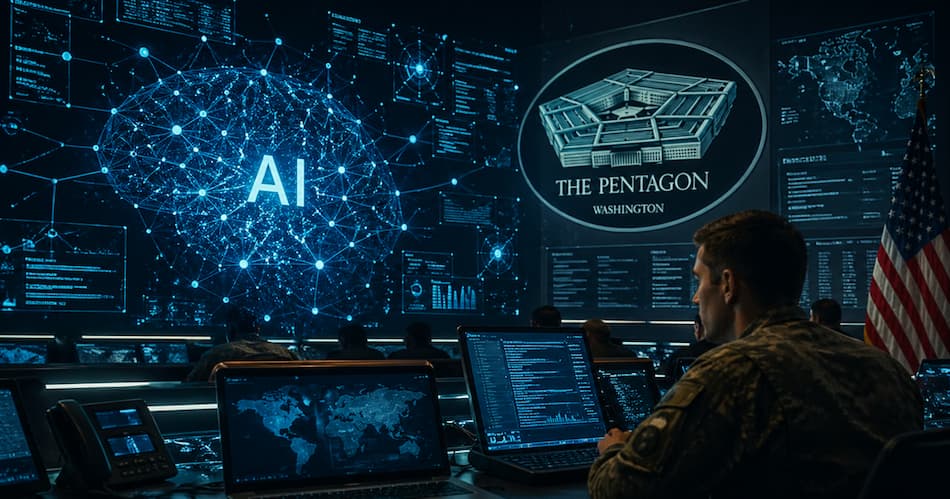
5 Key Impacts of Google Expanding Pentagon AI Access After Anthropic’s Refusal

5 Key Impacts of Google Expanding Pentagon AI Access After Anthropic’s Refusal

Google has significantly expanded the U.S. Department of Defense’s access to its artificial intelligence models, marking a pivotal shift in the relationship between Big Tech and military institutions. The move follows a high-profile refusal by Anthropic to loosen safeguards on its own AI systems for defense use.

According to recent reports, Google’s agreement allows the Pentagon to deploy its AI tools within classified environments for “any lawful government purpose.” This effectively positions Google among a growing group of AI providers, including OpenAI and xAI, supporting sensitive national security operations.

Anthropic’s Refusal Reshapes the Competitive Landscape

The development comes after Anthropic declined Pentagon requests to remove restrictions tied to autonomous weapons and mass surveillance applications. This refusal created a vacuum that competitors were quick to fill.

By contrast, Google’s agreement reportedly includes provisions that allow the government to modify safety settings and filters when necessary, raising questions about how enforceable ethical guardrails remain once systems are deployed in classified settings.

While the contract outlines limitations, such as avoiding domestic mass surveillance and ensuring human oversight in weapons-related use, experts note that these clauses may not fully constrain real-world applications.

Internal Backlash and Ethical Concerns

The deal has sparked significant internal resistance. More than 600 Google employees have voiced concerns, warning that deeper involvement in military AI projects could lead to ethical compromises and reputational risk.

This tension echoes earlier controversies, including Google’s withdrawal from the Pentagon’s Project Maven in 2018 after employee protests. The current agreement suggests a notable evolution in the company’s stance on defense-related AI.

Strategic Implications for the AI Industry

Google’s expanded role underscores a broader trend: AI is rapidly becoming central to modern defense infrastructure. Governments are increasingly seeking partnerships with leading AI firms to enhance capabilities in areas such as mission planning, intelligence analysis, cybersecurity, and battlefield decision support.

At the same time, the divergence between companies like Google and Anthropic highlights a growing split in the industry over how far AI providers should go in supporting military use cases.

A Defining Moment for AI Governance

The situation reflects a deeper, unresolved question shaping the future of artificial intelligence: how to balance national security priorities with ethical responsibility.

As governments push for greater access and control, and companies navigate internal and external pressures, the boundaries of acceptable AI use, especially in defense, are being actively redefined.

Source

Digital Growth 5 Key Moves Powering Malaysia’s AI Economy

Digital Growth 5 Key Moves Powering Malaysia’s AI Economy

Malaysia is accelerating its transition toward an AI-powered digital economy, backed by strong government policy, rising investments, and ecosystem-wide collaboration. The country’s long-term ambition is clear: to position itself as a leading regional hub for artificial intelligence and digital innovation by 2030.

At the core of this transformation is the National AI Action Plan 2026–2030, designed to embed AI across governance, industry, and society. The initiative aligns with Malaysia’s broader MyDIGITAL blueprint, which aims to create a high-income, digitally enabled economy powered by advanced technologies.

AI as a Catalyst for Economic Growth

Malaysia’s digital economy is already showing strong momentum. The country has secured tens of billions in digital investments, driven largely by AI, cloud computing, and data infrastructure. These investments are expected to generate tens of thousands of high-value jobs, reinforcing Malaysia’s role as a regional tech hub.

Government-backed programs are also ensuring that businesses, especially SMEs, can adopt AI solutions to improve productivity and competitiveness. Financial incentives, grants, and tax benefits are being rolled out to accelerate adoption at scale.

Building a Sovereign and Trusted AI Ecosystem

A key pillar of Malaysia’s strategy is trust and governance. Authorities are strengthening data protection laws, cybersecurity frameworks, and AI governance policies to ensure responsible innovation.

Initiatives such as the development of a Sovereign AI Cloud aim to keep data and AI operations within national borders, ensuring security while enabling large-scale deployment of AI technologies.

At the same time, Malaysia is investing heavily in local infrastructure, including data centres and AI platforms, to support domestic innovation and reduce reliance on external systems.

From Policy to Real-World Implementation

Malaysia is moving beyond strategy into execution. Programs like the Government Innovation Initiative (GII) are translating real-world challenges into deployable AI solutions, prioritising locally developed technologies and scalable applications.

Public sector transformation is also underway, with efforts to build an AI-augmented government that uses automation and data-driven decision-making to improve services and efficiency.

Positioning Malaysia as ASEAN’s AI Hub

With sustained investment, strong governance, and a growing talent pool, Malaysia is positioning itself as a competitive AI hub in Southeast Asia. The combination of public-private partnerships, infrastructure development, and policy alignment is creating a scalable ecosystem for innovation.

As global demand for AI solutions continues to rise, Malaysia’s integrated approach, linking policy, infrastructure, and industry adoption, could serve as a model for emerging digital economies.

Source