WORLDEF Prime Antalya 2026 - Upcoming Event

Register Now

GMG and Amazon Form Strategic Partnership to Transform Digital Retail Experience in MENA Region

Global health and retail company GMG has announced a strategic partnership with Amazon aimed at transforming the online shopping experience across the Middle East and North Africa (MENA) region. This collaboration focuses on offering attractive prices and deals in GMG’s core categories such as Sports, Health & Beauty, and Daily Essentials.

GMG’s New Vision for Digital Retail

As part of the partnership, GMG and Amazon will ensure faster delivery of high-demand products in food, lifestyle, and health categories. They also aim to increase access to GMG’s globally recognized and trusted brands, responding to the growing demand for fast, convenient, and quality service.

Through this agreement, GMG will accelerate its omnichannel strategy by leveraging Amazon’s best practices in artificial intelligence (AI), logistics, and customer service technologies. This move supports GMG’s vision to shape the future of retail in the region by seamlessly integrating its strong physical retail presence with digital experiences.

Mohammad A. Baker, GMG’s Vice Chairman and CEO, stated, “This partnership with Amazon marks a significant milestone in our digital commerce strategy. As consumer behaviors evolve, we are committed to delivering exceptional experiences powered by technology, speed, and relevance.”

Ronaldo Mouchawar, Vice President of Amazon Middle East, Africa, and Turkey, added, “We are proud to collaborate with GMG, a partner that shares our innovative spirit, customer-centric focus, and long-term thinking.”

Gambian Entrepreneur Ebrima Fatty Builds Africa-Focused Digital Marketplace

Ebrima Fatty, with over two decades of experience in both finance and technology, is reshaping e-commerce across Africa through AfricaSokoni, the London-based online marketplace he founded in 2017. The platform connects local producers, retailers, and artisans—particularly in East Africa, including Kenya—to regional consumer demand via a user-friendly online interface.

Ebrima Fatty’s AfricaSokoni: Supporting SMEs and Connecting Markets

AfricaSokoni—which means “market” in Swahili—empowers small and medium-sized enterprises (SMEs), farmers, and artisans by providing tools for inventory management, automated ordering, and supplier relationship support. The platform also offers financing, marketing assistance, packaging solutions, and logistic partnerships, creating new export opportunities for local producers.

Consumers benefit from access to a wide array of goods—ranging from electronics and fashion to home appliances and telecom products—through a streamlined online shopping experience. AfricaSokoni integrates order tracking, stock updates, and supplier coordination features that help stabilize supply chains and improve reliability for both businesses and end-users.

Besides entrepreneurship, Ebrima Fatty serves as a product manager at the Islamic Development Bank in Saudi Arabia, combining his public-sector insights with private-sector innovation. He earned a Master’s degree in Accounting and Finance from the University of Maiduguri, Nigeria in 2000, and began his professional career as a senior auditor at Deloitte that same year. Between 2001 and 2005, he served as financial controller for The Gambia’s Capacity Building for Economic Management Project, contributing to reforms in economic policy and private sector development.

Under his leadership, AfricaSokoni focuses on transforming local markets into regionally integrated digital networks. Fatty’s dual background in finance and technology fuels the platform’s mission: to empower African microentrepreneurs, enhance digital trade infrastructure, and expand cross-border e-commerce opportunities. His work signals a growing paradigm in African tech—where homegrown solutions and digital innovation drive inclusive economic growth.

Revolut Expands MENA Presence with Strategic Move into Morocco

Revolut is preparing to enter the Moroccan market as part of its broader push into the MENA region. The company aims to begin with payment and foreign exchange services, gradually establishing itself as a major player in North Africa’s digital financial ecosystem. To support this move, Revolut plans to build a local team of around 60 people. However, it faces strong competition from local fintech leader Cash Plus, which already serves millions of users across the country.

Revolut’s Morocco Strategy: Digital Ambitions Against Local Giants

To lead its Morocco operations, Revolut has appointed Amine Berrada, a former Uber executive, as its country manager. The company intends to start as a licensed payment operator and eventually apply for a full digital banking license from Bank Al-Maghrib. With services such as money transfers, FX, and remote account management, Revolut aims to offer a full-fledged fintech experience built around digital convenience.

Meanwhile, local competitor Cash Plus maintains a dominant position in the market, with its M-Wallet app and a network of over 8,000 branches across the country. The company has built trust among consumers through its broad infrastructure and consistent service in both urban and rural areas.

However, Morocco’s strict financial regulations, non-convertible currency, and data localization requirements could pose significant operational challenges for Revolut. Compliance with anti-money laundering and consumer protection laws will be key to gaining long-term traction.

Still, Revolut’s entry could serve as a catalyst for broader digital transformation in Morocco’s banking sector, inspiring innovation, improving user experience, and setting new standards for mobile and open banking services across the region.

Google Chrome Introduces AI-Powered Store Reviews for Safer Online Shopping

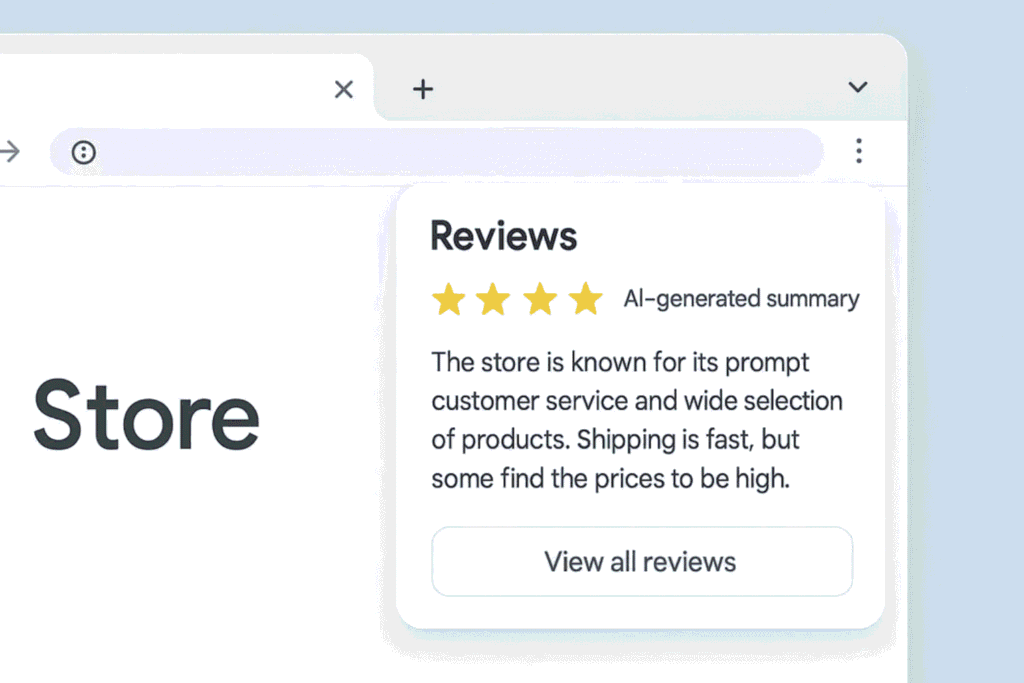
Google Chrome has launched a new AI-powered feature called Store Reviews to enhance safety and transparency in online shopping. Currently available for desktop users in the U.S., this feature summarizes user feedback about e-commerce sites when clicking the store info icon, helping users make informed decisions quickly.

Store Reviews: Instantly Assess Store Trustworthiness

The Store Reviews tool evaluates online stores based on key criteria such as customer satisfaction, product quality, pricing competitiveness, shipping reliability, and return policies. It analyzes user reviews from trusted third-party sources like Trustpilot, ScamAdviser, Reputation.com, and Reseller Ratings to generate a concise summary of each store’s reputation.

Instead of reading through hundreds of individual reviews, users are shown a short AI-generated summary that captures the overall sentiment. For example, a furniture store might be described as offering “high-quality minimalist items, fair prices, and responsive customer service.”

The data is pulled from platforms like Google Shopping and other review aggregators, processed using AI to highlight both positive and negative feedback in a balanced and readable format. The goal is to simplify the evaluation process and reduce the risk of scams or poor shopping experiences.

Currently, the feature is only available in English and limited to desktop Chrome users in the United States. Google has not yet announced when or if the feature will expand to mobile or other regions.

This update is part of Chrome’s broader effort to transform the browser into a more intelligent and shopping-friendly tool. It complements other AI-powered features recently introduced, such as virtual try-ons, price tracking, and smart product suggestions.

By implementing Store Reviews, Google is aiming to build a safer and more trustworthy e-commerce environment while staying competitive with platforms like Amazon.

Swiggy Restructures Board: Noon CEO Faraz Khalid Joins as Independent Director

India-based food delivery giant Swiggy has reshaped its board of directors following its IPO, appointing Faraz Khalid, CEO of Noon, as an independent director. His addition comes after the departure of investor representatives Sumer Juneja from SoftBank and Anand Daniel from Accel.

Faraz Khalid’s Role in Swiggy’s New Vision

Faraz Khalid’s appointment reflects Swiggy’s commitment to a more independent governance structure. Known for building Noon into one of the leading e-commerce platforms in the MENA region and previously co-founding Namshi, Khalid brings deep expertise in quick commerce, fintech, and food delivery—key segments in the evolving digital economy.

Swiggy’s founder and CEO, Sriharsha Majety, emphasized that Khalid’s experience in scaling operations, integrating advanced technology, and designing seamless customer experiences will significantly contribute to the company’s long-term growth strategy. As an independent director, Khalid is expected to play a key role in strengthening Swiggy’s governance and strategic decision-making processes.

The departure of Sumer Juneja and Anand Daniel is seen as part of a typical post-IPO transition, where companies move toward a more independent board composition. These shifts are aligned with global standards of corporate governance, especially for publicly listed entities seeking greater accountability and transparency.

Increasing the proportion of independent directors on Swiggy’s board is likely to support more strategic, shareholder-focused decisions in the long run. This governance evolution marks a new phase for Swiggy—one where sustainable growth, transparency, and leadership continuity are positioned at the core of its public market journey.

Alibaba Challenges Meta with Launch of Quark AI Smart Glasses

Alibaba has introduced its first AI-powered smart glasses, the Quark AI Glasses. This new product marks the company’s strong entry into the wearable technology market, aiming to compete directly with Meta’s Ray-Ban collaboration smart glasses. The Quark AI Glasses operate using Alibaba’s proprietary large language model, Qwen, alongside the Quark AI assistant. Users can make hands-free calls, listen to music, and benefit from advanced features such as real-time translation and meeting transcription.

Technology and Features of Quark AI Glasses

Built on Qualcomm’s Snapdragon AR1 platform, the Quark AI Glasses feature dual operating system support. The combination of Android and a real-time operating system enhances device performance, ensuring smooth and efficient daily use. Additionally, Alibaba has integrated the glasses with its Taobao e-commerce platform, enabling users to compare prices and make payments through Alipay seamlessly. These integrations aim to significantly simplify the shopping experience for users.

Alibaba plans to launch the smart glasses in the Chinese market by the end of 2025. While pricing and detailed technical specifications have yet to be announced, the company appears to be pursuing a strong strategy to compete with rivals like Meta and Xiaomi. Beyond consumer electronics, the product is also expected to provide considerable benefits in business environments, especially for meetings and remote work.

This move highlights Alibaba’s commitment to developing innovative AI and wearable technology solutions. Moreover, it strengthens China’s tech sector competition and supports the company’s goal to become a more influential player in the global market.

Amazon Acquires Bee to Bring AI-Powered Wristband to Health Tracking

Amazon has acquired Bee, a San Francisco-based startup specializing in AI-powered wearable devices. This strategic move strengthens Amazon’s investments in artificial intelligence and wearable technology, aiming to usher in a new era for personal health monitoring and quality of life.

Bee’s AI-Powered Wristband for Health Monitoring

Bee’s AI-enabled wristband tracks users’ daily activities, sleep patterns, and stress levels in real time. The device listens to users’ conversations and converts them into text, creating personalized reminders, summaries, and to-do lists. It also integrates with emails, calendars, location data, and photos to provide more comprehensive analytics.

Bee’s CEO, Maria de Lourdes Zollo, stated that the acquisition will accelerate technology development and that Amazon’s robust infrastructure will further enhance the device’s privacy controls. The wristband will be sold at a price of $49.99, with a monthly subscription fee of $19.

With this acquisition, Amazon aims to go beyond voice assistants like Echo, integrating more deeply into users’ daily lives. This will expand the opportunities AI offers in personal health and productivity. The company plans to integrate Bee’s technology and expertise into its ecosystem to improve users’ quality of life.

This acquisition reinforces Amazon’s innovative approach in the health and technology sectors and is expected to intensify competition in the wearable technology market.

Mataa Secures Investment to Expand Digital Commerce in Libya and North Africa

Mataa, a key player in North Africa’s digital commerce sector, has successfully completed a seed funding round to expand its operations in the region. This investment will strengthen the company’s goal of removing barriers to digital trade and delivering innovative solutions, particularly in Libya and its surrounding markets. Mataa aims to provide consumers with a faster, more reliable, and accessible shopping experience across the region.

Mataa’s Vision to Strengthen Digital Commerce Infrastructure

With this funding, Mataa plans significant improvements in logistics and digital payment infrastructure. The company is developing innovative technologies to overcome the challenges faced by e-commerce in the region, offering solutions that simplify processes for both sellers and buyers. The founding team, led by CEO Ibrahim Shuwehdi, is focused on driving the growth of the digital economy, especially in emerging markets like Libya.

According to Ibrahim Shuwehdi, this investment marks a crucial milestone for Mataa’s mission to accelerate the adoption of digital commerce and create new economic opportunities across North Africa.

The financial support from investors will enable Mata a to strengthen regional supply chains and optimize digital payment systems. Additionally, new projects aimed at enhancing customer experience are set to be launched. These initiatives are considered crucial for unlocking North Africa’s digital economy potential.

Mataa’s success is seen not only as a milestone for its own growth but also as a positive signal for the development of the venture capital ecosystem in the region. The rapid expansion of digital commerce in Libya and surrounding areas is expected to make a significant contribution to the region’s economic development.

Saudi Arabia’s Economy Exceeds Expectations in Q1 2025

Economic data for Saudi Arabia’s first quarter of 2025 reveal that the country’s economy performed stronger than expected. While previously announced growth was 2.7%, the main contribution came from non-oil sectors, which grew by 4.9%. During the same period, contraction in the oil sector remained limited at around 0.5%. Government spending was also one of the important factors supporting growth.

Among the leading sectors, retail and hospitality grew by 8.4%, transportation and communication by 6%, and finance and business services by 5.5%. Domestic demand increased by 4.5%, while fixed capital investments rose by 8.5%.

Saudi Arabia is the Most Active Venture Capital Market in the MENA Region

According to MAGNiTT data, Saudi Arabia was the most active venture capital market in the MENA region during the first half of 2025, completing 114 investment deals and attracting investments exceeding 860 million dollars. These figures highlight the country’s economic diversification and growth targets in innovative sectors.

On the export side, there was a 9% increase in non-oil products, while imports decreased by 10%. These developments positively impacted the trade balance and helped net exports contribute positively to growth.

An increase in oil production limited the contraction of the sector. However, the budget GDP growth for the first half of the year was revised to 3.4%, reaching a level of 101 billion riyals.

This increase also led to a budget deficit being recorded. The Ministry of Finance announced that public expenditures will be reviewed.

Mega projects and infrastructure investments carried out under Vision 2030 are expected to accelerate economic growth throughout the year.

Record Surge in Saudi Arabia’s E-Commerce Sales

Brands Prepare for the Era of AI-Powered “Agentic Search”

A transformative shift is underway in digital marketing strategies with the rise of “agentic search” — a new approach where AI systems respond directly and personally to user queries, replacing traditional search engine methods. Powered by large language models like ChatGPT, this technology enables brands to adopt a new communication style: interactive, instant, and voiced in the brand’s own tone.

Today, instead of turning to search engines with questions like “what’s the best moisturizer?”, users are increasingly asking AI tools, receiving not only recommendations but also tailored suggestions, detailed product insights, and even purchasing guidance.

AI ChatGPT Is Changing How Brands Engage and Convert

For brands, this signals a move beyond simple content creation toward customer engagement via conversational AI. These systems don’t just inform — they drive action, offering stock information, usage tips, and personalized product matches in real time.

Several global brands have already integrated GPT-based chatbots into their websites to adapt to this change. These bots not only enhance the user experience but also introduce new priorities in digital marketing, such as “conversational engine optimization,” replacing traditional SEO strategies. In this model, brands design their digital presence not for search engines, but for AI agents capable of dialogue and persuasion.

However, this evolution comes with certain challenges. Ensuring the accuracy of AI responses, maintaining brand consistency, and protecting user data are key concerns. Nevertheless, experts note that brands using this technology strategically can gain a significant edge in a competitive landscape.

By enabling real-time, human-like conversations, AI is reshaping how brands interact with users and how users discover products — marking the dawn of a new era in digital engagement.