WORLDEF Prime Antalya 2026 - Upcoming Event

Register Now

EU Targets Temu Over Digital Services Act Violations

According to the Commission, Temu exposes users to illegal and unsafe products, fails to ensure adequate consumer protection, and lacks transparency in its algorithms.

In May 2024, Temu reached over 45 million monthly active users in the EU, placing it under the “Very Large Online Platform” (VLOP) category. This status brings stricter obligations and oversight. However, the Commission claims that Temu has not fulfilled its legal responsibilities under this classification.

Mystery shopping tests conducted by the EU revealed significant safety risks in several product categories sold on the platform, particularly children’s toys, small electronic devices, and cosmetics. Authorities stated that the likelihood of encountering unsafe or illegal products on Temu is “high.” Moreover, the company’s submitted risk assessment report was deemed superficial and based on general industry data rather than specific market analysis.

Temu’s addictive design has come under criticism

Temu’s mobile app interface has also come under scrutiny for its use of “gamified” features designed to encourage compulsive buying behavior. The Commission expressed concern over the potential negative impact of such designs, especially on younger users. Furthermore, Temu has failed to provide adequate transparency regarding how its recommendation algorithms work and has restricted access to data for independent researchers.

Temu has been granted the opportunity to respond to the allegations. However, if the violations are confirmed, the platform could face fines of up to 6% of its global annual revenue and be required to implement serious corrective measures. EU officials hope the process will set a precedent for greater accountability in the digital marketplace.


Swiggy Strengthens Board by Appointing Noon CEO Faraz Khalid

India’s leading online food delivery and quick commerce platform, Swiggy, has made a significant move to reinforce its board of directors. The company appointed Faraz Khalid, CEO of the prominent Middle Eastern e-commerce platform Noon, as an independent board member. This appointment comes as part of Swiggy’s transition to a more independent and strategic governance structure following its public listing in 2024.

Faraz Khalid is recognized as a seasoned leader with extensive experience in e-commerce and quick commerce sectors. As CEO of Noon, he has driven the company’s growth and helped establish it as a strong player in the regional market through innovative strategies. Additionally, Khalid played a key role as a co-founder of Namshi, a fashion platform that was acquired by Noon in 2023 through a significant investment. His broad expertise and vision are expected to contribute substantially to Swiggy’s future goals.

“Faraz Khalid’s involvement marks a critical turning point”

Swiggy’s founder and CEO, Sriharsha Majety, highlighted that Khalid’s addition to the board marks a crucial milestone in the company’s growth and innovation journey. He emphasized that Khalid’s strategic and operational experience will enhance Swiggy’s competitive edge in the industry.

Furthermore, to support sustainable long-term growth, Swiggy has reappointed Shailesh Haribhakti as an independent board member starting 2026 and appointed former Tata Group executive Cauveri Sriram as company secretary and compliance officer. These governance measures reinforce Swiggy’s commitment to improving corporate governance standards and boosting investor confidence as a publicly traded company.

These steps are key elements of Swiggy’s strategy to maintain its dynamic structure while strengthening its leadership position in the market.

Google Chrome Introduces AI-Powered Store Reviews

Activated for U.S.-based users on the desktop version, this feature provides quick review summaries about online stores, offering consumers instant insights into their trustworthiness.

By clicking the new icon next to Chrome’s address bar, users can access concise summaries covering product quality, customer service, return policies, and pricing. These insights are generated by AI analyzing data gathered from multiple review platforms. The goal is to give shoppers a clear overview of a store before making a purchase and to minimize potential scams.

Chrome is transforming into a shopping-focused browser experience

This move comes amid growing concerns over security gaps and fraudulent sites in online retail. Evaluating the reliability of small or lesser-known e-commerce stores has always been challenging. Thanks to this system, users gain a digital “first impression” of the store, simplifying their decision-making process.

Beyond enhancing user safety, this feature marks a step toward transforming Chrome into a more shopping-focused browser. When combined with Google’s other tools—like product recognition, price comparisons, and AI-powered recommendations—Chrome is steadily evolving into a powerful shopping assistant.

Currently limited to desktop users in the U.S., this feature is expected to expand to other languages and regions over time. It remains unclear whether mobile browser versions will receive it, but global availability seems likely given positive user reception.

Walmart Discloses Salary Data

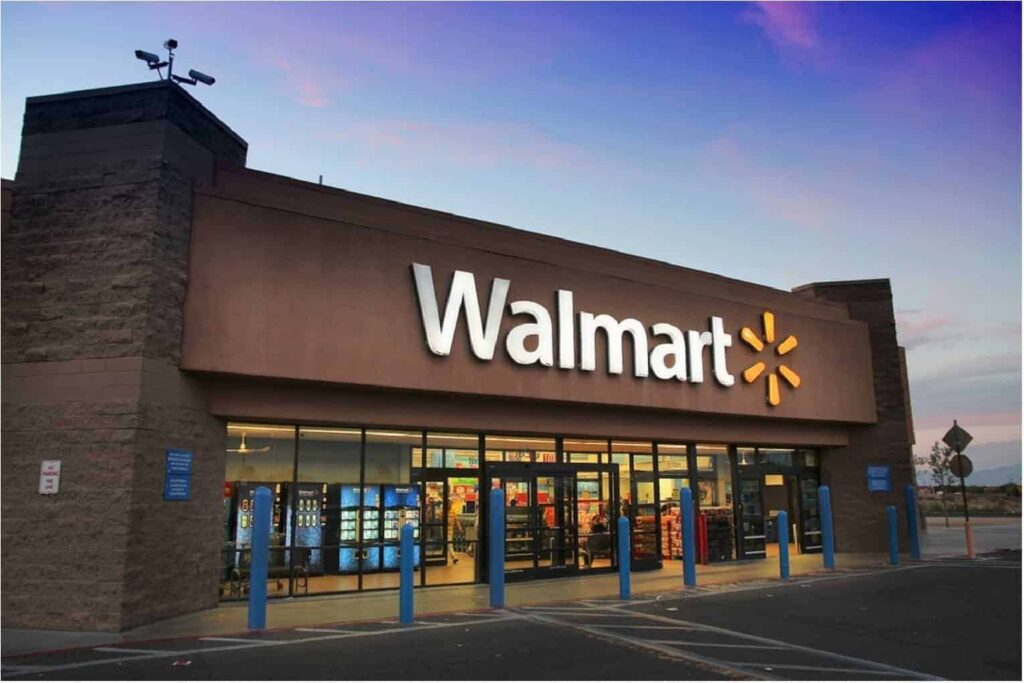
Walmart is working to transform itself from a “grocery chain” into a “global tech giant.” In this process, the company is reshaping its workforce and placing greater emphasis on e-commerce. The disclosed salary data shows that the company is heavily investing in its tech employees. It also suggests that Walmart is enhancing its workforce to compete with rivals such as Amazon, AliExpress, and Google. The data particularly highlights the salary ranges for roles in software development and project management.

According to Walmart’s employee data, a software engineer can earn a base salary of up to $286,000. Company filings submitted to the U.S. Department of Labor show that Walmart aimed to hire around 1,750 foreign workers through the H-1B visa program in the first half of this year. This represents a significant increase compared to approximately 1,100 workers during the same period two years ago. Of Walmart’s 45,000 open positions worldwide, more than two-thirds are in Walmart stores and Sam’s Club warehouses, while approximately 550 are in tech and analytics roles.

How Much Do Walmart Employees Earn?

Here is a breakdown of Walmart salary data:

Software Engineers
• Software Engineer III: $99,244 – $234,000
• Senior Software Engineer: $115,167 – $234,000
• Staff Software Engineer: $127,292 – $286,000
• Principal Software Engineer: $152,027 – $286,000

IT Project Managers
• Senior Product Manager: $121,000 – $286,000
• Staff Product Manager: $136,500 – $286,000
• Principal Product Manager: $145,332 – $286,000

Data Scientists
• Data Scientist III: $108,000 – $234,000
• Senior Data Scientist: $127,304 – $234,000
• Staff Data Scientist: $138,333 – $286,000
• Principal Data Scientist: $158,642 – $286,000

Senior UX Designers
• Senior Design Researcher: $142,002 – $234,000
• Senior Product Marketing Manager: $154,357 – $234,000
• Director of Advertising Sales: $229,477
• Senior UX Designer: $155,000 – $234,000
• Senior Manager of UX Design: $183,227 – $286,000

Team Leaders
• Director of Software Engineering: $190,486 – $312,000
• Director of Data Science: $188,885 – $338,000
• Distinguished Architect: $184,827 – $338,000
• Director of Product Management: $201,323 – $338,000
• Senior Director of Product Management: $208,000 – $416,000

A Walmart spokesperson stated that the company’s compensation packages include base salary, bonus opportunities, and stock awards, and that Walmart invests in the career development of its employees. Walmart’s total global workforce stands at 2.1 million people, approximately 1.6 million of whom are based in the United States.

Chinese Ministry of Commerce Meets with Walmart

Wildberries Has Started Testing Its Taxi Service

The Russia-based popular e-commerce platform Wildberries aims to make its logistics and delivery processes more efficient through the taxi service.

Wildberries’ taxi service is intended to shorten delivery times and increase customer satisfaction, especially during peak shopping periods. Additionally, this service is seen as a new step to improve the overall user experience on the platform.

Wildberries Aims for Reliable Delivery

Company officials plan to expand the taxi service to other cities if the pilot project proves successful. This development is considered an indication of the importance placed on innovative solutions in logistics and delivery within the e-commerce sector.

With this move, Wildberries aims to increase competition in online shopping while offering faster and more reliable delivery options to customers.

Lazada Philippines Empowers Sellers with AI-Driven Solutions

With advanced technology and ongoing learning opportunities, Lazada enables Filipino brands to become more competitive and better prepared for the digital marketplace. Many brands on the platform are leveraging AI in key areas such as inventory management, demand forecasting, and customer engagement to optimize their operations.

AI also offers significant benefits for small businesses. Tools that streamline time-consuming tasks—such as writing product descriptions and enhancing images—help sellers work more efficiently.

Lazada Launches Training Programs for Sellers

Lazada is also taking major steps in education. Through “Lazada University,” the platform regularly provides its sellers with training on marketing strategies, content creation, and platform innovations. These efforts help sellers adapt quickly to shifting market dynamics.

To broaden global perspectives, Lazada Philippines recently sent 11 high-performing sellers to the Lazada-Alibaba E-Commerce Executive Training Program at Alibaba Campus in Hangzhou, China. Participants received expert-led training on digital marketing, AI applications, and international brand management. They also visited the Alibaba Museum and other innovation hubs to witness cutting-edge technologies shaping the future of retail.

“Our Sellers Are the Cornerstone of Our Platform”

Carlos Barrera, CEO of Lazada Philippines, stated, “Our sellers are the cornerstone of our platform. Through our investments in technology and education, we are building a sustainable and inclusive e-commerce ecosystem where anyone in the Philippines can succeed.”

Pauline Castro, Head of User Product Operations at Lazada Philippines, added, “Our investments in AI aim to empower both established brands and aspiring entrepreneurs.”

Sellers on Lazada emphasize that AI also enhances the customer experience. Accurate demand forecasting improves inventory management and reduces delivery times. Targeted marketing and engaging product presentations help consumers find what they need more quickly and shop with greater confidence.


Marketplaces Account for 40% of Global E-Commerce Growth

Marketplaces Account for 40% of Global E-Commerce Growth

According to a new report published by Cymbio, a marketplace and social commerce infrastructure provider, marketplaces accounted for more than 40% of global e-commerce growth as of 2024. The same report states that direct-to-consumer channels contributed only 25% to this growth.

Marketplaces to Drive 53% of E-Commerce Growth by 2030

Cymbio’s analysis, supported by data from Capital One and eMarketer, forecasts that marketplaces will drive 53% of e-commerce growth by 2030. Daniel Hillyer from Cymbio’s Sales and Marketing Division emphasizes that the rapid increase in the number of brands today makes it difficult for consumers to find the right product, and that digital marketplaces serve as a search engine in this context.

Recently, many major retailers have turned to this model. Last year, Nordstrom launched its digital marketplace platform, while Walmart included the Premium Beauty category under its Marketplace. In March, Ulta Beauty announced a marketplace strategy to accelerate its online growth, and in April, Saks Fifth Avenue launched the “Saks on Amazon” initiative to sell selected luxury brands via Amazon.

According to Hillyer, the adoption of the marketplace model by these big names has changed the perception of this structure, which was previously viewed negatively by some brands. “Half of the brands we speak to clearly state that they want to be on the Nordstrom Marketplace,” he says.

New Brands Face Giants as They Enter the Market

However, joining this competition is not easy. As of 2025, new brands entering the market are up against giants like Amazon and TikTok Shop, which pursue aggressive pricing strategies. Amazon’s four-day Prime Day event could generate approximately $23.8 billion in online sales this year—a 28.4% increase compared to the previous year.

Since many brands are listed on the same marketplaces, offering discounts has become almost inevitable in order to stand out. Some platforms even absorb the cost of these discounts to attract consumers. Hillyer notes that players like TikTok Shop are implementing this strategy.

However, not all retailers can bear such financial burdens. For example, in its April financial presentation, LVMH stated that Amazon’s aggressive discounting strategy had negatively impacted Sephora’s digital growth. Therefore, many retailers prefer to step aside during major discount periods rather than trying to compete with Amazon.

E-Commerce Gains Strength in Germany

The data on Germany’s e-commerce ecosystem is promising! In the first six months of 2024, spending on purchasing products online reached €39.84 billion. This figure represents a 3.5% increase compared to the same period in 2023.

The e-commerce sector in Germany experienced a major boom after the pandemic. In the following two years, the market contracted by 8.8% and 11.8%, respectively. However, the latest data shows that this downward trend has ended. The sector is back on a growth path. In 2023, there was a slight recovery of 1.1%. Then 2024 stands out as a “clear year of growth.”

Both Product and Service Spending Increased

In Germany’s e-commerce market, in addition to product sales, online service expenditures also showed a significant rise. This segment, which reached €3.9 billion with a 4.4% increase, reveals the diversification in the digital economy. Although these figures are not adjusted for inflation, which is estimated to be around 2%, they are still viewed positively.

“Shopping Behavior in Germany is Returning to Old Patterns”

Martin Groß-Albenhausen, Deputy Managing Director of the German E-Commerce and Mail Order Association (bevh), stated that shopping behavior in the country is starting to return to previous patterns. Groß-Albenhausen said, “This recovery benefits the e-commerce platforms most influential in digital channels. Through social media, mobile apps, and AI-supported suggestions, online retail reaches consumers in the most direct and effective way.”

Marketplace Sales Grew by 5.9%

According to Germany’s e-commerce data, sales on marketplaces operating in the country grew by 5.9%. Platforms like Amazon are among the biggest beneficiaries of this increase. However, this is not the case for every seller. Groß-Albenhausen emphasizes that this growth is mostly concentrated around large-scale sellers and platforms, while small businesses are not showing the same performance.

Concerns Continue Among Small E-Commerce Sellers

The data published by bevh confirms the 4% e-commerce growth forecast by the German Retail Association (HDE) for 2024. However, a study by Uptain paints a different picture. Small and medium-sized online businesses across Germany, Austria, and Switzerland are not benefiting from the increased spending. In fact, many small sellers are experiencing a decline in revenue.

A New E-Commerce Payment System Developed in Saudi Arabia

SAMA’s new e-commerce payment interface will take Saudi Arabia one step further in the field of digital payment systems. Additionally, it will ensure that the e-commerce ecosystem becomes more secure, efficient, and integrated. The new system allows e-commerce service providers to integrate with the local “Mada” payment network. It also enables them to connect to global payment networks. In this way, consumers can be offered broader, safer, and faster payment options.

The New Payment System Aims to Adapt to the Needs of E-Commerce

The new e-commerce payment interface offers simplified and unified technical specifications for users. At the same time, it makes online payment processes more efficient. This innovation will also provide a centralized registry service for banks and financial institutions, supporting them in offering innovative financing solutions to e-commerce businesses.

This strategic step by SAMA aims to increase the efficiency of the national payment infrastructure and to adapt to the rapidly growing needs of e-commerce. Furthermore, thanks to advanced security technologies such as payment card tokenization, electronic payment transactions will become much more secure.

The new system will help e-commerce businesses grow. At the same time, it will contribute to the goals of Saudi Arabia’s fintech strategy. It will also lead to an increase in digital payment indicators. This move will position Saudi Arabia more strongly in the global payment industry. It will also facilitate the integrated operation of local and international payment gateways.


Record Surge in Saudi Arabia’s E-Commerce Sales

sahibinden.com: “Every Listing is the First Step of a Dream”

sahibinden.com made a breakthrough in Türkiye in 2000 by bringing listings and shopping processes into the digital environment. Its mission is to make life easier for its users and ensure they can find everything they are looking for with ease. Its vision is to always be a user-friendly and innovative platform that focuses on sustainability and technology. sahibinden.com continues to grow as a pioneer of the circular economy and digitalization in Türkiye for a quarter of a century.

sahibinden.com CMO: “There is a Future in Second-Hand!”

Nazım Erdoğan, Deputy General Manager Responsible for Marketing at sahibinden.com, explained how they position sahibinden.com while the global second-hand market makes significant progress: “sahibinden.com, which believes in the power of second-hand products and plays a leading role in this field, increases user awareness with the message ‘There is a Future in Second-Hand,’ focusing on sustainability. By developing services that allow our users to shop for second-hand items with confidence, we contribute to the circular economy and take responsibility in the fight against the climate crisis. In 2024, we established a sustainability committee that includes senior management. We continue to take concrete steps in the field of sustainability with our commitments and published reports.”

Legendary Listings: The Lucky House That Helped Win a Football Match

Touching on interesting listings related to second-hand sales, Nazım Erdoğan said, “In the past, many interesting listings we compiled under the title of ‘Legendary Listings’ attracted great attention from the public. However, one user’s ‘lucky house that helped win a football match’ remained in our memory as one of the legendary listings. Every listing is the first step of a dream; being a bridge in turning these dreams into reality is the most meaningful and satisfying part of our work.”

Erdoğan continued, “Over the years, we have witnessed many colorful listings such as a Star Wars-themed house worth 1.6 million TL, an unused Airbus A300 aircraft, a biscuit wrongly packaged due to a production error, and a mini Mercedes worth 12,000 euros. In addition, many interesting listings have been posted on our platform, ranging from antique collections to props used on movie sets, from scripts for sale to entire TV channels. We are always amazed by the creativity of our users!”

Approximately 550 Million Visits Per Month!

With an average of 64.4 million users per month, sahibinden.com sees 548.5 million visits and 15.4 billion page views. Ranking fourth in the world in the classifieds category and eighth among all internet platforms in Türkiye according to SimilarWeb rankings, sahibinden.com hosts more than 8 million listings in a wide range of categories such as vehicles, real estate, second-hand products, and refurbished electronic devices.