
WORLDEF ISTANBUL 2026 - Early Bird Registration Ends Soon

Register Now

Alibaba Introduced Its New AI Platform, Wukong

Alibaba

Alibaba announced Wukong, its new platform aimed at placing artificial intelligence directly at the center of corporate business processes and operations.

According to Alibaba’s statement, the platform, which is currently in an invitation-only testing phase, will be available as a standalone application and will later be integrated into Ali baba’s corporate communication and collaboration app, DingTalk. According to Reuters, DingTalk currently serves more than 20 million organizational users and a total of 800 million users.

Wukong Is Not Just an Assistant That Produces Content

The key distinction highlighted by Ali baba is that Wukong is not merely an assistant that generates content. The company states that DingTalk’s infrastructure has been rewritten from the ground up, allowing AI agents to perform tasks directly across thousands of enterprise functions within the system, rather than imitating users through an interface. This structure targets use cases such as document editing, meeting note generation, research, spreadsheet updates, and managing task flows through a single screen.

AI Teams Are Being Gathered Under Alibaba Token Hub

The new platform is also part of Ali baba’s broader AI restructuring, which has accelerated in recent days. The company has begun bringing together Qwen, Wukong, and other artificial intelligence teams under a new umbrella called “Alibaba Token Hub.” The fact that CEO Eddie Wu has directly taken charge of this unit indicates that Alibaba now sees artificial intelligence not only as a product area, but as one of the main axes of growth.

Wukong’s launch comes right in the middle of the accelerating “AI agent” race in China and the global market. Ali baba made this move at a time when rivals such as ByteDance, Tencent, Baidu, and Zhipu are also developing similar enterprise agent systems. Baidu’s announcement this week of a new agent package capable of performing multi-step tasks also shows how intense the competition has become.

Wukong Supports Alibaba’s Claim of Becoming an AI-Powered Business Platform

Alibaba says Wukong was designed for enterprise use with features such as security, access control, and cost tracking. The company’s approach is to transform artificial intelligence from a personal productivity tool for employees into a manageable business layer within company budgets and audit processes. In this respect, Wukong is seen not only as a new product in the enterprise software market, but also as the most concrete step in Alibaba’s ambition to become an AI-powered business platform.

Digital Investment Reaches $87.4B in Malaysia as AI Drives Growth in 2025

Digital investment growth driven by AI and data center infrastructure in Malaysia

Malaysia’s digital economy is accelerating at a notable pace, with the Malaysia Digital Economy Corporation (MDEC) securing approximately $87.4 billion in digital investments in 2025. The latest figures underline the country’s growing appeal as a regional technology hub, with artificial intelligence (AI) emerging as one of the primary forces behind this expansion.

The investment surge reflects a broader global trend where businesses are increasingly prioritizing digital transformation. In Malaysia’s case, a combination of government-backed initiatives, infrastructure development and private sector engagement has created a favorable environment for large-scale digital investments.

Artificial Intelligence Takes Center Stage

AI has become a key driver shaping investment decisions across multiple industries. Companies are no longer approaching AI as an experimental tool but as a core component of their operational strategy. From predictive analytics and automation to personalized customer experiences, AI technologies are being integrated into both enterprise systems and consumer-facing platforms.

Industry experts highlight that this shift is also influencing where capital flows. Investors are actively seeking markets where AI adoption is supported by regulatory clarity, digital infrastructure and skilled talent — areas where Malaysia has made significant progress in recent years.

Diverse Growth Across Digital Ecosystems

The $87.4 billion investment is not concentrated in a single segment but spread across a wide range of digital sectors. Key areas attracting capital include cloud computing, data centers, digital services and e-commerce infrastructure.

This diversification signals a maturing digital economy. Rather than relying on isolated growth areas, Malaysia is building a comprehensive ecosystem that supports innovation across multiple layers of the digital value chain. E-commerce platforms, in particular, continue to benefit from improvements in logistics, payment systems and cross-border trade capabilities.

Policy Support Strengthens Investor Confidence

Government initiatives have played a crucial role in sustaining this growth momentum. Through programs led by MDEC, Malaysia has positioned itself as an attractive destination for both regional and global technology companies.

Clear regulatory frameworks, incentives for digital investments and ongoing infrastructure development have helped reduce entry barriers for investors. As a result, multinational firms are increasingly considering Malaysia as a strategic base for expanding their operations in Southeast Asia.

Regional Competition and Strategic Positioning

As Southeast Asia becomes more competitive in attracting digital investments, Malaysia’s performance stands out. The country is competing with major regional markets, yet continues to secure substantial inflows due to its balanced approach combining policy support, infrastructure readiness and talent development.

Analysts note that maintaining this position will require continued investment in digital skills and innovation capabilities, particularly as technologies like AI, cloud computing and data analytics evolve rapidly.

Future Outlook: Sustained AI-Led Growth

Looking ahead, AI is expected to remain a dominant factor shaping Malaysia’s digital investment landscape. As businesses deepen their use of advanced technologies, demand for scalable infrastructure and intelligent systems will continue to rise.

The strong performance in 2025 suggests that Malaysia is not only keeping pace with global digital trends but also positioning itself as a long-term player in the regional digital economy.

Source: TechNode Global (2026)

OpenAI Defers Its Plan for Direct Shopping via ChatGPT

OpenAI

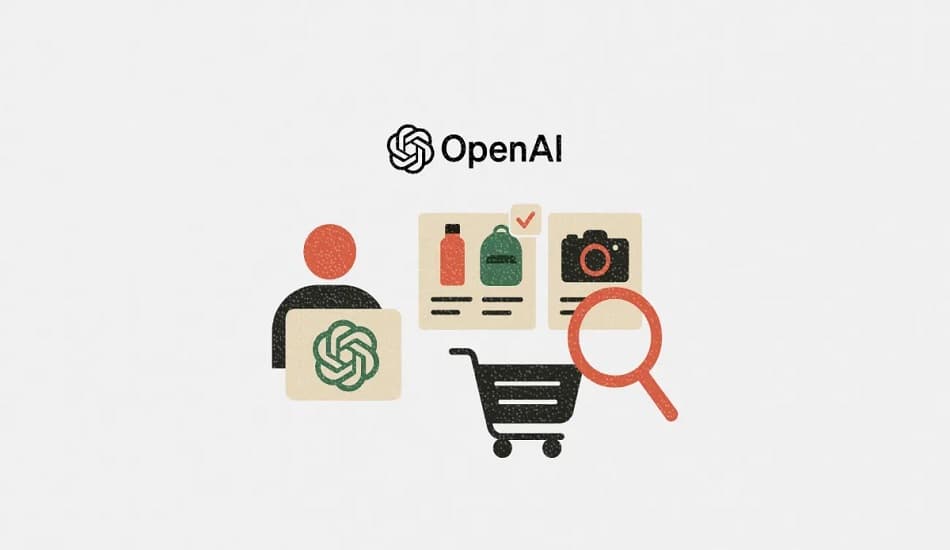
OpenAI is making a significant strategic shift at a time when AI-powered shopping experiences are increasingly being discussed. The company has temporarily suspended the system that would enable direct payments through ChatGPT. Instead, it is reported that the company is focusing on a model that redirects users to brands’ or retailers’ own platforms.

Despite the rapid emergence of the AI-mediated shopping model known as “agentic commerce” in the technology world, OpenAI is said to be reassessing its plans in this area.

ChatGPT Will Remain a Discovery Tool

Rather than launching the integrated payment system planned for ChatGPT, OpenAI prefers to position artificial intelligence as a product search and recommendation engine. In this model, users will be able to discover products through ChatGPT, but they will complete the purchase process through the brands’ or e-commerce platforms’ own applications.

The “Instant Checkout” feature that the company tested last year was developed particularly for Etsy and Shopify sellers. However, it is stated that the system did not attract the expected interest and was used by only a limited number of merchants in the United States.

User Habits Became a Barrier at the Purchase Stage

Studies analyzing user behavior by OpenAI show that the product research and comparison phase within ChatGPT is quite active. However, it has emerged that users are more cautious about completing the purchase process within the AI interface.

A study published by Adobe also presents a similar picture. According to the report, 70 percent of consumers are comfortable with artificial intelligence assisting in shopping processes. However, only 13 percent of respondents trust AI tools to complete purchases on their behalf.

Collaboration Between OpenAI and Stripe Continues

It is reported that OpenAI has not completely abandoned payment processes, but plans to carry out these transactions through different systems rather than within its own platform. Through the infrastructure called the Agentic Commerce Protocol, which the company developed together with Stripe, transactions are expected to be carried out more smoothly. This approach may also open the door for OpenAI to move toward different areas within its revenue model. In particular, advertising and sponsorship-based revenue models built around product discovery and recommendation processes are expected to come to the forefront.

Competition in AI-Powered Commerce Is Intensifying

Competition in the field of AI-based commerce is steadily increasing. While Google is working on a new infrastructure aimed at standardizing e-commerce data on a global scale, Meta is also testing AI-powered shopping features within its social media platforms.

According to experts, although AI-powered shopping technologies are developing rapidly, it will take time for consumer habits to adapt to this transformation. For this reason, the sector is expected to shift toward hybrid models in the short term that strengthen product discovery and decision-making processes, rather than enabling direct purchases through artificial intelligence.