WORLDEF ISTANBUL 2026 - Early Bird Registration Ends Soon

Register Now

24 Hours of Disruption Raise New Concerns for E-Commerce After AWS Issues in Bahrain

24 Hours of Disruption Raise New Concerns for E-Commerce After AWS Issues in Bahrain

Amazon has flagged a disruption in its Amazon Web Services (AWS) region in Bahrain following reported drone activity, highlighting growing risks to global digital infrastructure. The incident reflects how geopolitical tensions are increasingly affecting cloud services that power e-commerce, fintech, and digital platforms worldwide.

Disruption Hits Core Cloud Infrastructure

AWS confirmed that its Bahrain region experienced service disruption linked to drone activity in the area. While the company has not confirmed a direct strike on the facility, it acknowledged operational impact and is assisting customers in shifting workloads to alternative regions.

This marks the second disruption in the region within a month, signaling ongoing instability affecting cloud infrastructure.

Ripple Effects Across E-Commerce and Digital Services

AWS plays a critical role in supporting e-commerce platforms, payment systems, and enterprise applications. Disruptions can impact everything from online transactions to logistics and customer experience.

Earlier incidents in the region caused outages affecting banking systems, delivery platforms, and digital services reliant on AWS infrastructure.

This underscores how deeply integrated cloud infrastructure is within the digital economy.

Geopolitical Risks Enter the Digital Economy

The disruption is linked to broader Middle East tensions and drone activity tied to ongoing conflict.

This situation highlights a new reality: digital infrastructure is no longer isolated from geopolitical risks. Data centers, once considered secure back-end systems, are now potential targets in modern conflicts.

Businesses Shift Toward Multi-Region Strategies

In response, Amazon is urging customers to migrate workloads to other AWS regions to ensure continuity.

This accelerates a growing trend in e-commerce and tech: multi-region and multi-cloud strategies to reduce dependency on a single location.

Companies are increasingly investing in redundancy, disaster recovery systems, and decentralized infrastructure.

A Wake-Up Call for the Global Digital Ecosystem

The Bahrain disruption highlights vulnerabilities in the infrastructure powering global commerce. Structural damage, power disruptions, and service outages reported in earlier incidents show how physical risks can directly impact digital operations.

As e-commerce continues to scale globally, ensuring resilience in cloud infrastructure will become a top priority for businesses and governments alike.

Source: Gulf News

Amazon to Invest €5 Billion in Poland as E-Commerce Market Continues to Expand

amazon to invest euro5 billion in poland as e-commerce market continues to expand

Amazon is planning to invest more than €5 billion in Poland between 2026 and 2028, reinforcing its long-term commitment to one of Europe’s fastest-growing e-commerce markets. The investment comes on top of the over €10 billion the company has already invested in the country since 2012, covering infrastructure, logistics, and support for local businesses.

The move highlights Poland’s growing importance in Amazon’s European strategy. As one of the region’s largest and fastest-developing economies, the country continues to attract major investments from global tech and e-commerce players.

Poland Emerges as a Key E-Commerce Hub

E-commerce in Poland has been expanding steadily, with online sales reaching approximately €21.5 billion in 2025, reflecting a 6.8% annual increase. Growth is expected to continue, with projections pointing to further expansion in 2026.

Consumer behavior is also shifting rapidly. Around 75% of Polish consumers shop online at least once a month, while 71% report feeling safer using online marketplaces, indicating growing trust in digital commerce platforms.

These trends are positioning Poland as a strategic market not only for domestic growth but also for cross-border e-commerce across Europe.

Logistics Expansion at the Core of Investment

A significant portion of Amazon’s new investment will focus on expanding its logistics network. The company plans to open a new 200,000-square-meter fulfillment center in Dobromierz, equipped with advanced automation and more than 5,000 robots.

With this addition, Amazon will further strengthen its operational footprint in Poland, where it already operates multiple fulfillment centers. The expansion aims to improve delivery speed, efficiency, and overall customer experience.

In addition to infrastructure, Amazon is also investing in localized solutions, including payment methods and services tailored to Polish consumers, signaling a deeper integration into the local market.

Competition and Market Position

While Amazon continues to scale in Poland, it still faces strong competition from local marketplace leader Allegro. Despite entering the market in 2021, Amazon has rapidly established itself as a key player, supported by continuous investments and infrastructure development.

The company’s strategy focuses not only on growth but also on strengthening Poland’s role in the broader European e-commerce ecosystem.

Amazon’s €5 billion investment signals more than just expansion – it reflects a long-term bet on Poland’s digital economy. As e-commerce adoption continues to rise and logistics capabilities improve, the country is increasingly becoming a central hub for online retail in Europe.

Source: Ecommerce News Europe

Amazon Becomes the Largest Carrier in the U.S., Delivering 6.7 Billion Packages in 2025

Amazon

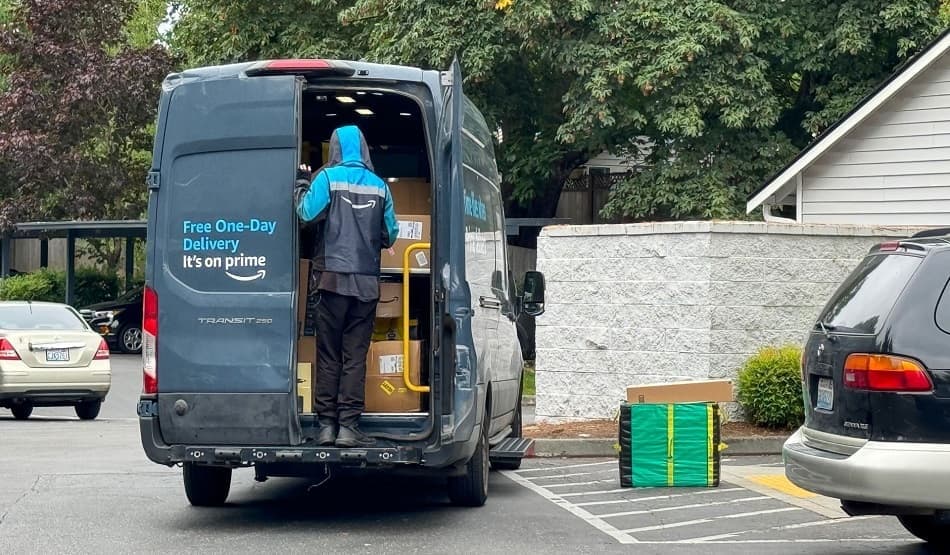
Amazon became the largest carrier in the United States by parcel delivery volume in 2025. According to ShipMatrix data, the company narrowly surpassed the U.S. Postal Service (USPS), delivering 6.7 billion packages in 2025, compared with USPS’s 6.6 billion. During the same period, UPS handled 4.4 billion packages, while FedEx delivered 3.6 billion. This picture shows that Amazon is no longer only an e-commerce giant, but also one of the country’s most powerful last-mile logistics players.

Dependence on USPS Has Declined

Three main factors stand out behind Amazon’s rise: growth in online sales volume, the expansion of its rural delivery network, and reduced dependence on UPS. As Reuters previously reported, Amazon plans to invest more than $4 billion by the end of 2026 to expand its rural coverage. This is helping the company scale its own network while relying less on external carriers.

The U.S. Domestic Parcel Market Reached 23.9 Billion Shipments

Across the market as a whole, growth remained limited. According to ShipMatrix, the U.S. domestic parcel market reached a total of 23.9 billion shipments in 2025, with annual volume growth of only 0.4%. Revenues, however, rose by 4.1%. A major reason for this was that large carriers supported their revenues through price increases. The projected compound annual growth rate for the next three years stands at 3.9%.

The Balance of Power in the U.S. Logistics Market Has Shifted Permanently

Another notable development is that traditional carriers are moving away from low-margin e-commerce deliveries. UPS and FedEx are shifting toward healthcare, data centers, and higher-yield enterprise segments instead of low-value B2C shipments to homes. This is opening space not only for Amazon, but also for Walmart, Target, and smaller parcel carriers. According to ShipMatrix data, the volume of carriers outside the top four increased by 13% year over year in 2025.

Amazon’s overtaking of USPS signals that the balance of power in the U.S. logistics market has changed permanently. Pitney Bowes had previously projected that Amazon would not take the lead until 2028. The company has crossed that threshold earlier than expected.

Amazon to Reduce USPS Package Volume

Meanwhile, Amazon is reportedly planning to reduce the number of packages it ships through the U.S. Postal Service by at least two-thirds by this fall. This shift is expected to accelerate as the current contract expires in the September–October 2026 period. Amazon is not expected to sever ties with USPS completely; however, the company is said to be preparing for a smaller-scale partnership while shifting delivery volume to its own network and alternative carriers.

The most critical impact of this decision may be felt on the USPS side. USPS currently handles about 1.7 billion Amazon packages annually, and the agency has already warned Congress that it could face a cash squeeze in the fall of 2026. It is reported that the Postal Service’s accumulated net losses since 2007 have exceeded $118 billion, while new Postmaster General David Steiner has said the system is not sustainable in its current form.

Amazon to Invest More Than $4 Billion to Expand Rural Delivery Capacity

The picture looks different from Amazon’s side. The company has aggressively expanded its own logistics network in recent years. Amazon plans to invest more than $4 billion by the end of 2026 to increase its rural delivery capacity. In doing so, it aims to reduce its dependence on USPS, especially in rural areas.

For USPS, the issue is not only the loss of Amazon volume; if that volume declines, part of the delivery infrastructure expanded in recent years could also be left underutilized. For that reason, the agency has reportedly launched a competitive bidding process for its last-mile delivery network and has received offers from more than 20 companies. However, Amazon’s decision to reduce volume shows that the center of gravity in U.S. e-commerce logistics is now shifting more clearly toward in-house networks.

Amazon Accelerates Against Walmart; Launches 1- and 3-Hour Fast Delivery in the U.S.

Fast Delivery

Amazon has taken a new step that redefines delivery speed in the United States. By introducing 1-hour and 3-hour delivery options across many markets, including major metropolitan areas such as Los Angeles and Chicago, the company has taken its competition with Walmart in fast delivery to a new stage.

According to information shared by Amazon, the new model was built on top of its same-day delivery infrastructure. Under the new service, customers can order more than 90,000 products, ranging from daily essentials to electronics, in a much shorter time. Amazon states that 1-hour delivery is available in hundreds of cities and towns, while the 3-hour delivery option is accessible in more than 2,000 locations.

Fast Delivery Is Now a New Growth Tool

For Amazon, this move is not only about logistics, but also a commercial strategy aimed at increasing basket size and shopping frequency. The company had previously launched a model called “Amazon Now” in certain parts of Seattle and Philadelphia, offering grocery and everyday essentials delivery in 30 minutes or less.

A New Operational Order Has Been Established

In order to manage these short delivery windows, the company created dedicated workstations within its existing same-day delivery centers. Yellow labels began to be used for the rapid sorting of packages, and on-site signage was also updated to guide delivery partners. Amazon also launched a new “get it fast” page to help users find eligible products more easily.

Prime Has an Advantage, but It Is Not Free

The new fast delivery model is offered for an additional fee. Prime members pay $9.99 for 1-hour fast delivery and $4.99 for 3-hour delivery. For customers without a Prime membership, the fees stand at $19.99 and $14.99, respectively. This shows that while Amazon is strongly playing the speed card, it is also trying to preserve profitability.

Walmart Pressure Was the Decisive Factor

Amazon’s timing is not a coincidence. According to the AP, Walmart says it can provide same-day fast delivery in under 3 hours to approximately 95 percent of the U.S. population. The company is also expanding its drone delivery network. This picture shows that in U.S. retail, competition measured in minutes for delivery has now been added to price competition.

A New Era in Retail: The Cost of Speed

The latest development reveals that customer expectations in e-commerce have now reached the point of delivery not only “the next day,” but “the same day or even within a few hours.” However, the expansion of this model will also bring new debates, including logistics costs, the burden of urban operations, and pressure on small retailers. Amazon’s latest move clearly shows that in U.S. retail, speed is no longer a privilege, but has become an area of strategic competition.

JD.com Launches Joybuy Across 6 European Countries in Bold Expansion

JD.com launches Joybuy e-commerce platform in Europe to compete with Amazon

Chinese e-commerce giant JD.com has launched its new online retail platform Joybuy across six European countries, marking one of the company’s most significant international expansion moves to date. The rollout signals JD.com’s ambition to challenge established players such as Amazon in one of the world’s most competitive digital retail markets.

The platform debuted in the United Kingdom, Germany, France, the Netherlands, Belgium and Luxembourg, offering a broad assortment of products ranging from consumer electronics and home appliances to beauty items and groceries. At launch, the marketplace includes more than 100,000 products from global brands including Apple and Samsung.

JD.com Accelerates Global Expansion

The European launch comes as JD.com looks beyond its domestic market for growth. Competition in China’s e-commerce sector has intensified in recent years, pushing major platforms to explore new international opportunities.

By introducing Joybuy in Europe, JD.com is positioning itself as a direct competitor to Amazon while also expanding the global reach of both Chinese and international brands through its marketplace infrastructure.

Founded by billionaire entrepreneur Liu Qiangdong, JD.com has grown into one of the world’s largest online retailers. The company generated more than $150 billion in annual revenue and has built a reputation for its integrated logistics network and fast delivery capabilities.

Fast Delivery at the Core of the Strategy

A key feature of Joybuy’s European rollout is its focus on rapid delivery. JD.com plans to leverage its logistics infrastructure to provide same-day and next-day delivery services in major cities. Orders placed earlier in the day may arrive within hours, giving the platform a competitive advantage in markets where delivery speed is increasingly critical to consumer choice.

The company has invested heavily in logistics infrastructure across Europe, including dozens of warehouses and distribution centers that support its proprietary delivery network. This integrated supply chain approach has long been a defining feature of JD.com’s operations in China and is expected to play a central role in its European strategy.

Competing in Europe’s Crowded E-Commerce Market

Europe represents one of the most developed and competitive e-commerce markets globally. Amazon currently dominates much of the region’s online retail sector, while Chinese platforms such as Temu and Shein have also been expanding aggressively across Western markets.

JD.com hopes its combination of competitive pricing, global brands and fast delivery will help the company attract European consumers looking for alternatives to existing platforms.

Industry analysts note that the move could intensify competition in the region, particularly as global e-commerce companies continue to expand logistics networks and cross-border marketplaces.

A Long-Term Bet on Overseas Growth

The Joybuy launch represents JD.com’s largest overseas expansion initiative so far and highlights the company’s long-term strategy to reduce reliance on China’s domestic market.

If successful, the platform could become a major new channel for international brands while also giving Chinese merchants broader access to European consumers.

Source: Business Standard

Amazon Tests New Shopping Feature Showing Products From Brand Websites

User browsing products on the Amazon Shopping mobile app

Amazon is experimenting with a new feature that allows shoppers to discover products from external brand websites directly within the Amazon Shopping app.

In a blog post published on February 11, 2025, the company announced it is testing a beta program that displays selected products from other brands’ websites in search results for a limited group of U.S. customers.

Amazon Expands Shopping Experience Beyond Its Marketplace

Under the new feature, users searching in the Amazon app may see products that are not sold directly through Amazon’s marketplace. When a customer taps on one of these items, they receive a notification informing them that they are leaving Amazon and will be redirected to the brand’s official website to review pricing, shipping options and complete the purchase.

Amazon said the experiment is designed to improve product discovery and give customers access to a broader selection beyond the products currently available on its platform.

Amazon Marketplace Already Offers Hundreds of Millions of Products

The company already offers hundreds of millions of items on its marketplace, including more than 300 million products eligible for fast and free Prime delivery across over 35 product categories.

This large product catalog has helped Amazon remain one of the most dominant global ecommerce marketplaces.

Buy with Prime Still Offers Benefits for Members

In cases where brands support Buy with Prime, Amazon Prime members may still benefit from familiar services such as fast delivery, simple returns and 24/7 customer support when purchasing directly from the brand’s website.

This allows customers to enjoy many of the same advantages they receive when buying products directly from Amazon.

Amazon Plans to Expand the Beta Program

Rajiv Mehta, Amazon’s Vice President of Search and Conversational Shopping, said the company continues to explore new ways to improve convenience and expand product selection for shoppers.

The beta test is currently available to a subset of U.S. users on both iOS and Android, and Amazon said it plans to expand the feature to more customers and brands based on feedback from the trial.

The move reflects Amazon’s broader strategy to make its app a more comprehensive shopping discovery platform, even when purchases ultimately take place on external brand websites.

Source:
Amazon

For more insights on global ecommerce trends and digital commerce innovation, explore more stories on the WORLDEF.

Code Error at Amazon Causes Disruption in E-Commerce Infrastructure

Amazon

During a meeting held by Amazon engineers, code written for testing purposes accidentally affected the live system and caused disruptions in some e-commerce services.

It was stated that some of the outages were linked to Amazon’s artificial intelligence coding assistant Q. Following the outage, a 90-day code security reset was initiated across critical engineering systems. The disruption was detected and resolved in a short time. However, the incident once again demonstrated that even a small code change on large-scale e-commerce platforms can affect millions of users.

Amazon is preparing to launch a comprehensive internal review regarding artificial intelligence–assisted software development processes and potential system outages that have recently come to the agenda. The company’s engineering teams and senior executives are planning a series of meetings, particularly to address the impact of AI-assisted code generation on system security and operational continuity.

Code Generation Tools Are Increasing at Amazon

In recent years, Amazon has rapidly increased the use of artificial intelligence–based code generation tools in its software development processes. While these tools help developers write code more quickly, some experts point out that automatically generated code could pose risks if it is integrated into live systems without sufficient testing.

At the center of the discussions are certain technical outages experienced within Amazon’s infrastructure and the question of whether these outages are related to AI-assisted development processes. During internal meetings, engineers are expected to examine the possible causes of system disruptions in detail and conduct evaluations particularly on testing processes, code verification mechanisms, and the security of automation tools.

Millions of Sellers and Hundreds of Millions of Customers in the E-Commerce Infrastructure

Amazon’s technology infrastructure supports a massive e-commerce ecosystem that serves millions of sellers and hundreds of millions of customers. For this reason, even a small software error can create impacts on a global scale. Therefore, the company aims to establish stronger control mechanisms and security layers in artificial intelligence–assisted software development processes.

According to experts, although code generation with artificial intelligence accelerates software development processes, human oversight, comprehensive testing procedures, and secure deployment policies remain critically important. It is stated that the evaluation process initiated by Amazon could serve as an important reference for how AI-assisted software development practices should be managed across the technology sector.

Amazon: It Was Not Caused by Code Written by AI

Amazon stated that some claims reported in the media do not fully reflect the reality and said that the comments suggesting the outages were caused by code written by artificial intelligence are not correct. The company emphasized that it continuously improves infrastructure security and system resilience and that its engineering teams regularly review system performance.