WORLDEF ISTANBUL 2026 - Early Bird Registration Ends Soon

Register Now

WTO Faces 2026 Deadline as U.S. Pushes for Permanent E-Commerce Tariff Ban

WTO headquarters in Geneva during discussions on global e-commerce tariff rules

The United States is intensifying efforts to make the World Trade Organization’s (WTO) long-standing e-commerce tariff moratorium permanent, a move that could significantly reshape global digital trade rules in 2026.

The moratorium, first introduced in 1998, prevents countries from imposing customs duties on electronic transmissions such as software, digital media and other online-delivered goods. While it has been renewed regularly, the current agreement is set to expire by March 31, 2026, unless WTO members reach a new consensus.

U.S. Push for Permanent Global E-Commerce Rules

Washington is now pushing for a permanent extension of the moratorium ahead of the WTO’s upcoming ministerial conference. The proposal aims to provide long-term certainty for businesses operating in the digital economy, particularly those involved in cross-border e-commerce.

Supporters argue that maintaining a tariff-free digital environment is essential for sustaining global e-commerce growth. Without the moratorium, companies could face new costs and regulatory fragmentation, potentially slowing down international digital trade.

The U.S. position is backed by several developed economies and global technology firms, which see the moratorium as a key pillar supporting innovation, entrepreneurship and seamless digital transactions.

Rising Opposition from Developing Economies

Despite strong support from advanced economies, the proposal remains controversial. Several developing countries have expressed concerns that making the moratorium permanent could limit their ability to generate revenue from digital imports.

As more goods and services shift from physical to digital formats, governments risk losing traditional tariff income. For some developing economies, customs duties represent a significant share of public revenue, making the issue both economic and political.

Critics also argue that the current system disproportionately benefits countries with strong digital export capabilities, widening the global digital divide.

High Stakes for Global Digital Trade

The outcome of the negotiations will have far-reaching implications for the future of global e-commerce. If the moratorium is extended permanently, it could reinforce a stable and open digital trade environment.

However, if negotiations fail and the moratorium expires, countries may begin introducing tariffs on digital goods, leading to increased costs for businesses and consumers. Such a shift could fragment global digital markets and create new barriers to cross-border e-commerce.

Outlook: Uncertainty Ahead of WTO Decision

With the deadline approaching, WTO members face mounting pressure to find common ground. The debate reflects broader tensions within the global trading system, where balancing innovation, fairness and economic sovereignty remains a challenge.

As digital trade continues to expand, the decision on the e-commerce tariff moratorium will play a critical role in shaping the next phase of global commerce.

Source: LA Times, WTO, industry analysis

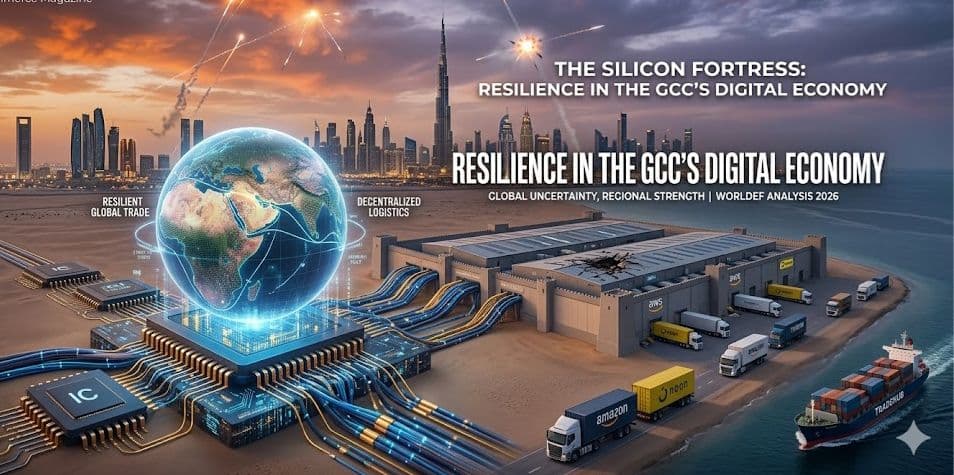
E-commerce in the Shadow of the 2026 Gulf Crisis

e-commerce

E-commerce in the GCC is facing its most significant resilience test to date. The sirens that echoed across Abu Dhabi and Dubai in early March 2026 told two very different stories. To the global news cycle, the sight of air defence streaks over the Burj Khalifa signalled a region at a breaking point. But on the ground, the reality was a testament to the UAE’s sophisticated national readiness. Despite almost 2000 drone and missile threats intercepted by the Ministry of Defence this month, there has been no chaos and no panic. Malls remain open, schools have seamlessly pivoted to remote learning, and the government’s 4-to-6-month strategic reserve of essential goods has kept shelves full and prices stable. Yet, while the streets are quiet, the digital economy, the “invisible engine” of the Gulf, is experiencing a profound and unprecedented stress test.

I. The Physicality of E-commerce: A Logistics Architecture Under Siege

The fundamental paradox of the Middle Eastern digital economy is its reliance on physical bottlenecks. While a consumer in Riyadh interacts with a sleek interface, the fulfilment of that transaction depends on a hyper-efficient network of shipping lanes and air corridors. The current escalation has exposed the jugular vein of this system: the Strait of Hormuz.

With the waterway effectively closed to commercial traffic, the maritime lifeblood of GCC e-commerce has slowed to a trickle. War-risk insurance premiums for containers have jumped to 1% of hull value, a staggering increase from the 0.02% seen in January. For the high-volume, low-margin world of digital trade, these costs are transformative. Furthermore, the GCC’s status as an aviation hub has been tested by the imposition of rolling airspace closures. With air-cargo capacity slashed, the “Next-Day Delivery” promise has, for many, been replaced by a “Wait-and-See” reality.

II. E-commerce Platforms as Geopolitical Infrastructure

In this crisis, e-commerce platforms have ceased to be mere marketplaces; they are now critical national infrastructure. The “real damage” became clear on March 1st, when Amazon Web Services (AWS) confirmed drone strikes damaged two data centres in the UAE and one in Bahrain. This was the first publicly confirmed military strike on a hyperscale cloud provider, and the ripple effects were immediate.

Amazon’s Defensive Pivot: Amazon temporarily shuttered its Abu Dhabi fulfilment centre and suspended deliveries across the emirate. While nearly 300,000 third-party sellers face delays, the company’s decision was rooted in a “safety-first” protocol rather than a failure of the system itself.

The Noon Resilience: Conversely, Noon has leveraged its hyper-local “dark store” network to maintain service. While global giants have paused, local players are proving that a decentralised, regional-first logistics model is better suited for a kinetic environment.

The Fintech Pulse: The strikes on cloud infrastructure led to “higher error rates” for digital payment gateways such as Tabby, Tamara, and PayTabs. However, the UAE’s rapid shift to software-based recovery paths has prevented a total financial freeze, allowing the domestic economy to continue functioning even as its global links are strained.

III. Supply Chain Fragility in a Digital Marketplace

The current crisis has effectively broken the traditional drop-shipping and cross-border models. The UAE, long the region’s re-export hub, is navigating a pincer movement of geopolitical risk.

  1. Inventory Paralysis: As container routes are rerouted around the Cape of Good Hope, restocking lead times have doubled. For B2B platforms like Tradeling, this means empty shelves and stalled projects.
  2. The Logistics Heavyweights: While Aramex and DHL continue to move goods, they are doing so under a “war-risk” framework. The rerouting of shipments to alternative ports and the rise in surcharges have made “free shipping” a relic of the pre-war era.
  3. The Ambition Test: The GCC’s goal of becoming a $135 billion e-commerce market by 2025 is currently facing the reality of $90+ oil and 300% insurance spikes. This is a moment of forced evolution for every player from Namshi to Talabat.

IV. Solutions and the Path Forward

The damage is real, estimated to be a 1.8-percentage-point drag on 2026 GDP forecasts, but the solutions being forged in the heat of this crisis will define the next decade.

The Saudi Land Bridge: To bypass the Strait of Hormuz, the region is accelerating rail and road corridors connecting the UAE directly to Saudi Arabia’s Red Sea ports.

Sovereign Digital Rails: There is an urgent push for domestic payment systems and “Hardened Edge Computing”, smaller, decentralised data centres that can survive localised strikes without bringing down the entire regional network.

Decentralised Warehousing: The era of the “Mega-Fulfilment Centre” is giving way to a “Micro-Hub” strategy, distributing inventory across more locations to minimise the impact of a single facility’s closure.

Conclusion: A Negative Shock, a Positive Evolution

The outlook for the Gulf’s digital economy is a complex binary. In the short term, the outlook is negative: the loss of momentum during the crucial Ramadan season and the physical damage to infrastructure are significant setbacks. However, the long-term outlook is overwhelmingly positive.

By stripping away the illusion of “frictionless” trade, this crisis is forcing the GCC to build the world’s most resilient, sovereign digital ecosystem. The UAE and its neighbours are not just surviving a war; they are redesigning the architecture of the 21st-century economy. The “Silicon Mirage” has vanished, replaced by a “Silicon Fortress”, a digital economy that is as rugged as it is ambitious. The Gulf is no longer just a place where the world’s goods pass through; it is becoming the place where the future of resilient trade is written. The Gulf is moving from being a “transit hub” for global goods to a “fortress of inventory,” a shift that will ultimately make it the world’s most resilient digital market by 2027.

Burak Yalım

Editor in Chief

Global E-Commerce Access Expands for Women Entrepreneurs in 2026 Through Postal Networks

Global e-commerce access for women entrepreneurs supported by postal networks and small business logistics

Global postal networks are playing an increasingly important role in expanding e-commerce opportunities for women entrepreneurs, helping to reduce long-standing barriers in global trade participation.

New insights from the Universal Postal Union (UPU) show that postal systems are evolving beyond traditional delivery services to become key enablers of inclusive digital commerce. The findings were highlighted במסגרת the UN Trade and Development (UNCTAD) “eTrade for Women” initiative, which focuses on empowering women-led businesses in the global digital economy.

Postal Networks Support Women Entrepreneurs in E-Commerce

With one of the most extensive physical infrastructures worldwide, postal networks offer critical support for small businesses, especially in underserved and rural areas. Their broad reach allows women entrepreneurs to access international markets, even where logistics and digital tools are limited.

Postal services help simplify cross-border trade by enabling shipping, facilitating customs processes and connecting businesses to global customers. For many women-led enterprises, this infrastructure provides a practical entry point into e-commerce.

Women Entrepreneurs Benefit from Digital and Financial Services

Beyond logistics, postal operators are increasingly offering digital and financial services that support business growth. These include digital payment solutions, e-commerce platforms and financial tools that help entrepreneurs manage and scale their operations.

Access to such services is particularly important for women entrepreneurs, who often face challenges in accessing traditional banking systems and digital resources. By integrating logistics with financial inclusion, postal networks are helping create more accessible pathways into global e-commerce.

E-Commerce Growth Creates Opportunities for Women Entrepreneurs

As global e-commerce continues to expand, demand for efficient and reliable delivery systems is rising. Postal networks are well-positioned to handle the growing volume of small parcels, making them essential partners for micro, small and medium-sized enterprises.

Initiatives led by UPU aim to simplify export procedures, improve coordination with customs authorities and reduce trade barriers. These efforts are helping women entrepreneurs participate more actively in cross-border e-commerce and reach new customer bases.

Toward a More Inclusive Digital Trade Ecosystem

The transformation of postal networks reflects a broader shift toward more inclusive digital economies. By combining logistics, digital services and financial tools, postal systems are evolving into key infrastructure supporting global trade participation.

Looking ahead, continued collaboration between governments, international organizations and postal operators will be essential to scale these solutions. Expanding access for women entrepreneurs will remain a critical factor in building a more balanced and inclusive global e-commerce ecosystem.

Source: Universal Postal Union (UPU)

Digital Investment Reaches $87.4B in Malaysia as AI Drives Growth in 2025

Digital investment growth driven by AI and data center infrastructure in Malaysia

Malaysia’s digital economy is accelerating at a notable pace, with the Malaysia Digital Economy Corporation (MDEC) securing approximately $87.4 billion in digital investments in 2025. The latest figures underline the country’s growing appeal as a regional technology hub, with artificial intelligence (AI) emerging as one of the primary forces behind this expansion.

The investment surge reflects a broader global trend where businesses are increasingly prioritizing digital transformation. In Malaysia’s case, a combination of government-backed initiatives, infrastructure development and private sector engagement has created a favorable environment for large-scale digital investments.

Artificial Intelligence Takes Center Stage

AI has become a key driver shaping investment decisions across multiple industries. Companies are no longer approaching AI as an experimental tool but as a core component of their operational strategy. From predictive analytics and automation to personalized customer experiences, AI technologies are being integrated into both enterprise systems and consumer-facing platforms.

Industry experts highlight that this shift is also influencing where capital flows. Investors are actively seeking markets where AI adoption is supported by regulatory clarity, digital infrastructure and skilled talent — areas where Malaysia has made significant progress in recent years.

Diverse Growth Across Digital Ecosystems

The $87.4 billion investment is not concentrated in a single segment but spread across a wide range of digital sectors. Key areas attracting capital include cloud computing, data centers, digital services and e-commerce infrastructure.

This diversification signals a maturing digital economy. Rather than relying on isolated growth areas, Malaysia is building a comprehensive ecosystem that supports innovation across multiple layers of the digital value chain. E-commerce platforms, in particular, continue to benefit from improvements in logistics, payment systems and cross-border trade capabilities.

Policy Support Strengthens Investor Confidence

Government initiatives have played a crucial role in sustaining this growth momentum. Through programs led by MDEC, Malaysia has positioned itself as an attractive destination for both regional and global technology companies.

Clear regulatory frameworks, incentives for digital investments and ongoing infrastructure development have helped reduce entry barriers for investors. As a result, multinational firms are increasingly considering Malaysia as a strategic base for expanding their operations in Southeast Asia.

Regional Competition and Strategic Positioning

As Southeast Asia becomes more competitive in attracting digital investments, Malaysia’s performance stands out. The country is competing with major regional markets, yet continues to secure substantial inflows due to its balanced approach combining policy support, infrastructure readiness and talent development.

Analysts note that maintaining this position will require continued investment in digital skills and innovation capabilities, particularly as technologies like AI, cloud computing and data analytics evolve rapidly.

Future Outlook: Sustained AI-Led Growth

Looking ahead, AI is expected to remain a dominant factor shaping Malaysia’s digital investment landscape. As businesses deepen their use of advanced technologies, demand for scalable infrastructure and intelligent systems will continue to rise.

The strong performance in 2025 suggests that Malaysia is not only keeping pace with global digital trends but also positioning itself as a long-term player in the regional digital economy.

Source: TechNode Global (2026)

ASEAN Negotiators Move Closer to Landmark Digital Economy Agreement in Manila Talks

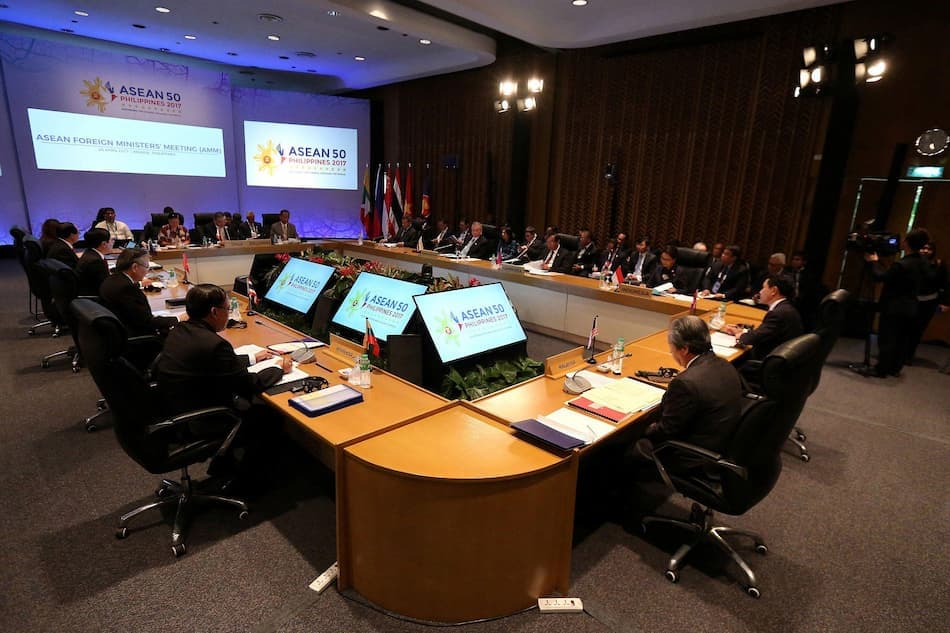
ASEAN officials meeting in Manila to discuss regional digital economy agreement

The ASEAN digital economy framework took another step forward as negotiators convened in Manila to advance a landmark regional agreement.

Officials and technical experts from the Association of Southeast Asian Nations (ASEAN) met in Bonifacio Global City from March 8 to 10 for the 18th meeting of the ASEAN Digital Economy Framework Agreement (DEFA) Negotiating Committee, alongside a second session involving legal experts reviewing the draft provisions of the agreement.

The meeting represents another step toward building a unified regional framework designed to support the growth of digital commerce, cross-border services and technology-driven innovation across Southeast Asia.

Toward a Unified ASEAN Digital Economy

The proposed ASEAN Digital Economy Framework Agreement is intended to establish common rules and standards for digital trade among the bloc’s 10 member states.

Regional policymakers say the agreement could play a critical role in accelerating digital integration, improving interoperability between national systems and reducing regulatory fragmentation that currently complicates cross-border digital transactions.

Southeast Asia has become one of the fastest-growing digital markets in the world. According to regional estimates cited by officials, the ASEAN digital market could reach $2 trillion by 2030, fueled by expanding internet access, mobile adoption and a rapidly growing e-commerce sector.

By introducing shared frameworks for digital payments, electronic documentation, cybersecurity cooperation and consumer protection, the agreement aims to create a more seamless digital marketplace across ASEAN countries.

Boosting Cross-Border E-Commerce

One of the core objectives of the digital economy agreement is to support the continued expansion of cross-border e-commerce throughout the region.

Online commerce has grown rapidly in Southeast Asia over the past decade, with millions of consumers increasingly relying on digital platforms to purchase goods and services from across borders.

Officials involved in the negotiations say the framework could make it easier for companies to operate regionally by simplifying digital trade procedures and promoting compatible regulations between countries.

The agreement is also expected to benefit micro, small and medium-sized enterprises (MSMEs), which form the backbone of many ASEAN economies. By lowering barriers to digital trade, smaller businesses could gain easier access to international markets and new customer bases.

Improved interoperability between digital payment systems and electronic documentation could also help reduce costs and improve transaction efficiency for businesses operating online.

Legal Review and Next Steps

During the Manila meetings, negotiators worked to narrow remaining differences on key provisions while legal experts reviewed sections of the agreement that have already been finalized.

This process, often referred to as “legal scrubbing,” ensures that the text of the agreement is consistent, clear and ready for final approval once negotiations conclude.

The digital trade initiative is among the Philippines’ priority economic projects during its ASEAN leadership agenda in 2026. Regional officials have expressed optimism that negotiations could be completed within the year if discussions continue progressing as expected.

If finalized, the ASEAN Digital Economy Framework Agreement would become one of the most comprehensive regional frameworks dedicated specifically to digital economic cooperation, potentially reshaping how digital trade operates across Southeast Asia.

The agreement is widely seen as a major step toward creating a more connected regional digital market capable of supporting innovation, investment and long-term growth.

Source: Philippine Information Agency (PIA)

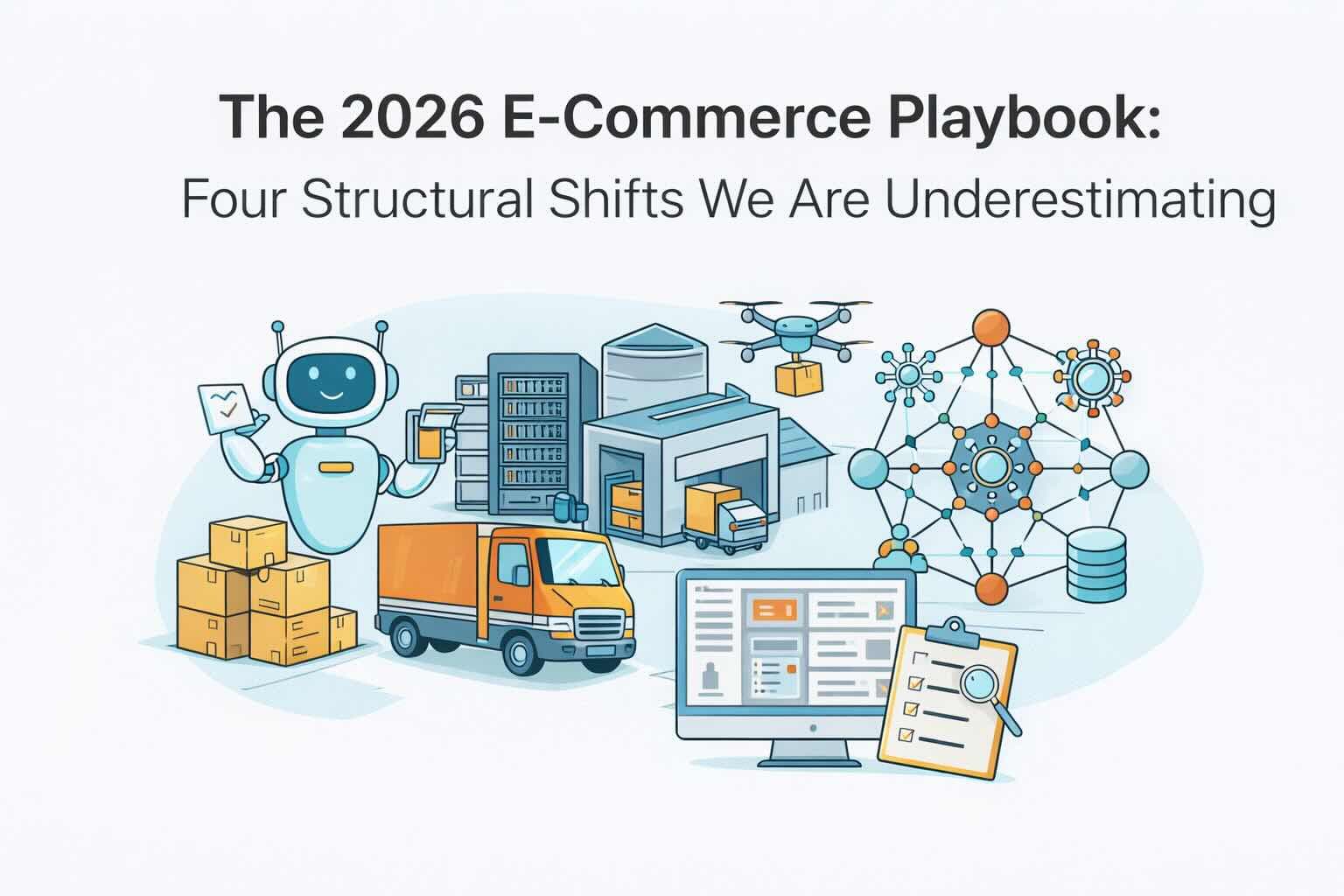
The 2026 E-Commerce Playbook: Four Structural Shifts We Are Underestimating

The 2026 E-Commerce Playbook

Each year, e-commerce enters the new calendar with a familiar ritual: predictions, trend lists, and bold claims about the “next big thing.” In recent years, that conversation has been almost entirely absorbed by artificial intelligence. Chatbots, personalization engines, and generative content tools dominate conference stages and LinkedIn feeds alike.

Yet, from where I stand, observing the industry across regions, platforms, and supply chains, the most consequential transformation of e-commerce is not taking place on the screen. It is happening behind it.

In 2026, e-commerce will no longer be defined by how effectively brands attract demand, but by how well they can absorb, process, and deliver that demand without breaking their operational backbone.

Most global outlooks now converge on one reality; nearly all established brands expect continued growth in cross-border and platform-based order volume. Demand, in other words, is not the problem. The real question is whether existing operational models are structurally capable of carrying that demand profitably and sustainably.

The following four shifts are not speculative. They are already unfolding. What is surprising is how many businesses are still unprepared for them.

From Storefront Excellence to Operational Credibility

For more than a decade, e-commerce success was measured primarily at the front end. Traffic acquisition, conversion optimization, and brand storytelling defined competitive advantage. In 2026, this logic no longer holds.

The decisive battlefield has moved from the digital storefront to the warehouse, the routing system, the compliance workflow, and the data layer connecting them all. The 2026 E-Commerce Playbook

What we increasingly observe is a widening imbalance. Many brands have rapidly adopted artificial intelligence in marketing and customer engagement, yet far fewer have applied the same intelligence to logistics planning, inventory orchestration, or cross-border execution. The result is an ecosystem that generates demand faster than it can fulfill it efficiently.

In this environment, fulfillment is no longer a back-office function. It actively shapes demand. Delivery speed, reliability, and post-purchase experience now influence platform visibility, marketplace algorithms, customer trust, and repeat purchase behaviour. Operational readiness has become a growth multiplier or a growth ceiling.

Entering new markets is no longer the hard part. Delivering consistently within them is.

Asian Platforms Are Rewriting Global Expectations

Platforms originating from Asia are not merely expanding geographically. They are exporting an entirely different logic of commerce.

TikTok Shop, Shein, and Temu operate on a fundamentally different premise from traditional search-driven marketplaces. Demand is no longer initiated by deliberate intent. It is algorithmically constructed through content, discovery, and impulse. The purchase often precedes conscious recognition of need.

This shift matters because consumer expectations do not reset between platforms. Speed, price transparency, and frictionless fulfillment become baseline assumptions everywhere else. The 2026 E-Commerce Playbook

What we are witnessing is not platform competition, but psychological conditioning at scale. As consumers become accustomed to instant gratification and seamless delivery loops, tolerance for operational friction disappears. This places extraordinary pressure on brands whose supply chains were designed for slower, more predictable demand curves.

The long-term consequence is clear. The more commerce becomes algorithm-driven, the less forgiving it becomes of operational weakness.

The Customer Is No Longer Human Only

One of the most under-discussed transformations in commerce is the rise of machine decision-makers. Algorithmic agents that browse, compare, and select products on behalf of users are no longer theoretical. They are already shaping visibility and conversion across platforms.

This introduces a profound shift in how products must be presented to the market. The 2026 E-Commerce Playbook

A human customer can be influenced by emotion, storytelling, and aspiration. An algorithm cannot. It evaluates structure, completeness, consistency, and risk. In this emerging environment, product data is no longer a support function. It is the primary interface between brand and buyer.

If product attributes are incomplete, inconsistent, or poorly structured, algorithms simply bypass them. Visibility is not lost gradually. It disappears entirely.

Brands are therefore transitioning from persuasion-based marketing to machine readability. The question is no longer how compelling your product page looks, but whether it can be fully understood, classified, and trusted by non-human decision systems.

Returns Are No Longer a Failure Signal

Returns have historically been treated as a necessary cost of doing business online. In the emerging commerce model, this perspective is increasingly outdated.

In an environment shaped by impulse purchasing and algorithmic discovery, a clear and frictionless return process becomes a trust mechanism. It lowers psychological barriers to purchase. But more importantly, returns generate one of the most valuable data streams a brand can access. The 2026 E-Commerce Playbook

Every return is a documented mismatch between expectation and reality. Whether the cause is sizing, imagery, description, or usage context, it reveals precisely where the sales narrative failed.

Brands that systematically analyse return reasons are not merely reducing costs. They are refining product design, improving content accuracy, and increasing conversion at the source. Returns, when treated correctly, are not a loss. They are operational feedback loops with measurable return on investment.

The 2026 E-Commerce Playbook: A Final Question for 2026

The unifying theme across all these shifts is structural maturity.

The future of e-commerce is not defined by louder marketing, faster content, or newer tools. It is defined by quieter capabilities: logistics discipline, data integrity, operational resilience, and system-level thinking.

Global demand will continue to grow. That is not in doubt. What remains uncertain is which organizations have built foundations strong enough to carry that growth without turning it into operational risk.

As we move toward 2026, every brand should ask itself one honest question:

Is our operational infrastructure designed to amplify growth, or is it the very thing that will eventually constrain it?

I believe this is the conversation that matters most.

Burak Yalım – Editor in Chief

The 2026 E-Commerce Playbook – The 2026 E-Commerce Playbook – The 2026 E-Commerce Playbook