WORLDEF ISTANBUL 2026 - Early Bird Registration Ends Soon

Register Now

1 Shift Is Strengthening Bol’s Checkout Strategy

Bol Expands Checkout in 2026 as Customers Shop Beyond Its Platform

Dutch e-commerce platform Bol is extending its reach beyond its own marketplace by allowing customers to complete purchases on external online stores using their Bol accounts.

Following a pilot phase, the new service, bol.checkout, is already active across more than 300 online stores. The move signals a strategic shift as the company begins positioning its technology not just as a marketplace tool, but as a broader e-commerce infrastructure solution.

From Marketplace to E-Commerce Infrastructure

The expansion reflects Bol’s ambition to go beyond its own ecosystem. By enabling checkout on third-party websites, the platform is effectively embedding itself deeper into the online shopping journey.

According to the company, allowing customers to pay through a familiar environment reduces friction and improves conversion rates. Consumers can use trusted payment methods such as iDEAL or “pay later” options, creating a smoother and more consistent checkout experience.

Initially rolled out to existing sales partners, the service is expected to expand further to online stores that are not currently part of the Bol marketplace.

A Shift Toward Platform-Led Commerce

The move aligns with a broader trend in global e-commerce, where leading platforms are transforming into infrastructure providers rather than remaining closed ecosystems.

By opening its checkout technology, Bol is following a model similar to major global players that monetize not only transactions, but also the tools and systems behind them. Integrations with platforms such as WooCommerce and Magento are already available, making adoption easier for merchants.

This approach allows Bol to scale beyond its traditional marketplace limits while strengthening its role in the wider digital commerce landscape.

What This Means for E-Commerce

For merchants, the introduction of bol.checkout offers access to a trusted payment and checkout system already familiar to millions of users. This can improve trust, reduce cart abandonment, and simplify integration processes.

For consumers, it creates a more unified shopping experience across different online stores, removing friction at one of the most critical points in the purchase journey.

As previously highlighted in WORLDEF’s coverage of evolving marketplace models, the future of e-commerce is increasingly shaped by platforms that extend their capabilities beyond their own environments.

Bol’s latest move reinforces this direction. Checkout is no longer just a final step in the transaction. It is becoming a strategic layer where platforms compete for control of the customer experience.

Source: RetailDetail
3 Signals Show China’s Trade Momentum Strengthening as Global Markets Shift

3 Signals Show China’s Trade Momentum Strengthening as Global Markets Shift

China is reinforcing its position in global trade as officials highlight steady progress in foreign trade performance and continued efforts to strengthen economic resilience.

At a recent briefing by the State Council Information Office (SCIO), authorities emphasized that China’s trade activity remains stable, supported by strong industrial capacity and ongoing policy measures aimed at improving trade quality and structure.

The update reflects a broader strategy focused not only on maintaining trade volumes but also on enhancing value creation and long-term sustainability.

Trade Structure Shifts Toward Higher Value

China is increasingly prioritizing the quality of its trade over sheer volume. Officials highlighted improvements in the composition of exports, with a growing share of high-value and technology-driven products.

This transition signals a move toward more advanced manufacturing and innovation-led trade. At the same time, efforts are underway to promote more balanced import and export dynamics while strengthening global supply chain stability.

Cross-Border E-Commerce Remains a Key Driver

Cross-border e-commerce continues to play a central role in China’s trade strategy. Digital platforms and streamlined logistics systems are enabling businesses to access global markets more efficiently.

Authorities have emphasized ongoing improvements in trade facilitation, including customs processes and digital infrastructure, to support faster and more reliable international transactions.

As global demand for online commerce grows, China is further integrating digital trade into its broader economic framework.

What This Means for Global Markets

China’s latest signals point to a more structured and resilient global trade environment. While geopolitical and economic pressures remain, the country’s focus on innovation, diversification and digitalization is shaping the next phase of international commerce.

As previously highlighted in WORLDEF’s coverage of global trade trends, the future of cross-border trade is increasingly defined by efficiency, data-driven systems and strategic expansion.

China’s direction reflects this shift. Trade is no longer driven by scale alone, but by the ability to adapt to a more complex and competitive global landscape.

Source: SCIO

Lille in 2026 Selected to Host New EU Customs Authority as Trade Pressures Rise

Lille in 2026 Selected to Host New EU Customs Authority as Trade Pressures Rise

The European Union has selected the French city of Lille as the headquarters of its new Customs Authority, marking a major step in the bloc’s efforts to modernise its trade and customs systems.

The decision follows a competitive bidding process involving several European cities, including Rome, Warsaw, The Hague and Bucharest. In the final round, Lille secured the position, reinforcing France’s central role in shaping the future of EU customs operations.

The new authority is expected to be established in 2026 and could become fully operational by 2028, although timelines remain subject to final negotiations.

A Central Hub for EU Customs Reform

The creation of the EU Customs Authority is part of a broader overhaul of the EU customs framework. The reform aims to address growing challenges linked to rising trade volumes, fragmented national systems and the rapid expansion of e-commerce.

In particular, the surge in low-value shipments and cross-border online trade has placed increasing pressure on existing customs infrastructure. The new authority is expected to play a key role in improving coordination, strengthening enforcement and supporting a more unified approach across member states.

Beyond enforcement, the authority will also contribute to the development of a more digital and data-driven customs system, aligning with the EU’s wider strategy to modernise trade operations.

Why Lille Was Selected

Lille’s selection reflects both strategic and operational advantages. Located at a key crossroads of European trade routes, the city offers strong logistics connectivity and proximity to major markets, including the UK and Northern Europe.

France also highlighted its experience in managing large trade flows and its established customs infrastructure as part of its bid. The country remains one of the EU’s primary entry points for goods, handling a significant share of incoming parcels.

In addition, Lille presented a ready-to-use infrastructure plan and committed to supporting operational costs, strengthening its position in the final decision process.

What This Means for E-Commerce and Trade

The establishment of the EU Customs Authority comes at a time when global trade is becoming increasingly complex. Geopolitical tensions, shifting tariffs and the continued rise of e-commerce are forcing governments to rethink how goods are monitored and regulated.

For e-commerce businesses, the move signals a shift toward more structured and centralised customs processes. Combined with upcoming regulatory changes such as the removal of de minimis thresholds, the EU is moving toward tighter control over cross-border flows.

As previously highlighted in WORLDEF’s coverage of customs and e-commerce trends, the future of cross-border trade will be defined less by speed alone and more by compliance, data accuracy and operational resilience.

The decision to base the authority in Lille underlines the EU’s intention to build a more integrated and technologically advanced customs system. For businesses operating across borders, this marks another step toward a more regulated, but also more predictable, trade environment.

Source: Euronews

3 Key Changes in EU De Minimis Rules and What It Means for UK E-Commerce Growth

EU Ends De Minimis in 2026 and UK E-Commerce Must Adapt Fast

The European Union (EU) is preparing to remove its de minimis threshold, a decision that will reshape how cross-border e-commerce operates across the region. For UK-based brands, the change goes beyond regulation. It directly affects pricing, logistics, and the overall customer journey.

For years, shipments valued under €150 could enter the EU without customs duties. This allowed brands to keep costs low and move goods quickly across borders, supporting the rapid growth of direct-to-consumer models. That advantage is now coming to an end.

From July 2026, all goods entering the EU will be subject to customs duties, regardless of value. A simplified flat-rate duty, expected to be around €3 for low-value shipments, will replace the previous exemption. The result is clear. Small parcels will no longer benefit from duty-free treatment.

Rising Costs and Changing Customer Expectations

The shift is part of a broader effort by EU regulators to bring more control and balance to the market. As cross-border volumes have surged, authorities have moved to close gaps in the system, improve tax collection, and create fairer conditions for domestic retailers.

For UK e-commerce brands, the impact will be immediate. Products that once moved across borders with minimal cost will now carry additional charges, putting pressure on already tight margins. This is particularly relevant for low-value, high-volume categories where even small cost increases can affect profitability.

There is also a direct link to customer experience. Higher landed costs, especially when passed on at checkout or delivery, can reduce conversion rates and increase cart abandonment. What used to be a seamless cross-border purchase may become more complex and less predictable for consumers.

Operational Pressure Is Increasing

At the same time, operational expectations are rising. Every shipment will require accurate and complete customs data, including product classification, origin, and declared value. As all goods fall under full customs procedures, enforcement is expected to become stricter.

For many brands, this means moving away from simplified processes and investing in more structured compliance systems. As previously highlighted in WORLDEF’s coverage of global e-commerce regulation shifts, cross-border trade is becoming increasingly defined by compliance, transparency, and operational precision rather than speed alone.

How Brands Are Preparing for 2026

With the 2026 deadline approaching, brands are starting to rethink their strategies. Pricing models need to be recalculated to reflect new duty structures. Shipping approaches, particularly the balance between delivering duties paid upfront or passing costs to the customer, are becoming more critical.

Product strategies are also under review. Some low-value items may no longer be commercially viable under the new conditions, pushing brands to reassess their assortments. At the same time, interest in EU-based fulfillment is growing, as local distribution offers a way to reduce friction and maintain delivery performance.

The removal of de minimis is part of a wider global shift. As international e-commerce continues to scale, governments are moving toward more controlled and transparent systems. Duty-free thresholds are gradually disappearing, replaced by frameworks designed to manage volume, ensure compliance, and protect local markets.

The change is coming fast. For UK brands, adapting early will not just reduce risk, it will define their ability to compete in a more structured and cost-sensitive e-commerce environment.

Source: GFS Deliver

ASEAN Digital Economy Set for Breakthrough: 1 Regional Pact Could Unlock $2 Trillion Growth

ASEAN Digital Economy Set for Breakthrough: 1 Regional Pact Could Unlock $2 Trillion Growth

Southeast Asia is moving closer to a landmark agreement that could redefine the future of e-commerce and digital trade across the region.

As the Philippines leads ASEAN in 2026, negotiations are accelerating around the ASEAN Digital Economy Framework Agreement (DEFA) – a comprehensive regional pact designed to harmonize digital trade rules, reduce barriers, and strengthen cross-border e-commerce.

A Unified Digital Market in the Making

The proposed agreement aims to create a more integrated digital economy by aligning regulations across ASEAN member states. Currently, differences in data governance, cybersecurity, and consumer protection frameworks create challenges for businesses operating across borders.

DEFA seeks to address these gaps by introducing:

  • interoperable digital systems
  • smoother cross-border data flows
  • stronger cybersecurity standards
  • more efficient digital payments and paperless trade

By simplifying these processes, the agreement is expected to make it significantly easier for businesses – especially SMEs – to expand regionally.

Boosting E-Commerce and SME Growth

One of the key goals of the pact is to unlock new opportunities for micro, small, and medium-sized enterprises (MSMEs), which form the backbone of ASEAN economies.

By reducing operational friction, the agreement could:

  • lower costs through digitalization
  • enable faster and safer transactions
  • expand market access across Southeast Asia

Over time, this is expected to drive job creation, improve digital skills, and support more inclusive economic participation.

A Rapidly Expanding Digital Economy

The urgency behind the agreement is clear. ASEAN’s digital economy is projected to grow rapidly, with estimates suggesting it could reach $2 trillion by 2030.

In the Philippines alone, the digital economy is expected to nearly double in value – highlighting the region’s strong growth trajectory and the increasing importance of digital trade frameworks.

Strategic Priorities: Integration, Trust, and Skills

Beyond trade facilitation, the agreement also focuses on building a future-ready digital ecosystem.

Key priorities include:

  • establishing trusted and interoperable digital infrastructure
  • ensuring secure and transparent data exchanges
  • strengthening workforce skills for digital transformation

These elements are seen as essential to supporting sustainable growth and enabling businesses to scale in an increasingly digital-first economy.

What Comes Next?

ASEAN aims to finalize negotiations and sign the agreement later this year, potentially during the ASEAN Summit in November.

If implemented, DEFA would become the world’s first region-wide digital economy agreement, positioning ASEAN as a global leader in digital trade governance.

Source: Philippine News Agency, Inquirer Opinion

Global Strategy Is Breaking Old Rules as 6 Forces Reshape the Business Landscape

AI Market Transformation 2026 Brings 5 Critical ChangGlobal Strategy Is Breaking Old Rules as 6 Forces Reshape the Business Landscapees for Organizations Worldwide

Corporate strategy is entering a more volatile era in 2026, as global business leaders warn that uncertainty is no longer a temporary disruption but a permanent operating condition. According to insights shared at the World Economic Forum’s Industry Strategy Meeting in Munich, companies are being forced to rethink how they plan, invest and grow amid geoeconomic fragmentation, AI disruption, energy volatility and mounting workforce pressure.

The meeting brought together around 330 strategy leaders, alongside policymakers and academics, to discuss what serious strategy leadership now requires. Rather than simply naming the risks, participants focused on six urgent needs that are reshaping the corporate agenda in 2026.

Global Strategy Must Adapt to a New Baseline of Uncertainty

One of the clearest messages from the meeting was that the old foundation of corporate planning has eroded. Stable trade rules, predictable capital flows and relatively reliable multilateral structures can no longer be taken for granted. For many companies, uncertainty has become the baseline rather than the exception.

This shift is already changing how businesses design supply chains and allocate capital. Cost efficiency alone is no longer enough. Companies are increasingly prioritizing resilience, diversification and the ability to respond quickly to geopolitical shocks and tariff dynamics. Scenario planning, once treated as a periodic exercise, is now becoming a core strategic discipline.

AI Strategy Moves Beyond Pilots Toward Proven Business Value

AI was another major theme at the meeting, but the conversation has clearly evolved. In 2026, the challenge is no longer experimenting with AI tools. The focus is now on proving real business value.

Leaders argued that many organizations spent the last year running pilots and proofs of concept without generating meaningful returns. The next phase requires a more strategic approach, starting with business outcomes and redesigning processes around them. Executives also stressed that top-down vision alone is not enough. AI adoption must also be earned from the bottom up through trust, explainability and employee involvement.

This marks a broader shift in how AI is being positioned inside companies. Rather than being treated as an isolated innovation layer, AI is increasingly becoming part of the operational flow of work itself.

Digital Sovereignty Becomes a Competitive Question

Another major issue raised by strategy leaders was sovereignty. In practice, this goes far beyond regulation. It includes questions around where data is stored, whose infrastructure companies depend on, and whether proprietary business logic remains under enterprise control.

This debate is becoming especially important in Europe, where leaders pointed to the gap between innovation and large-scale commercialization. Rather than calling for isolation, participants emphasized the need for standards and regulatory frameworks that allow companies to use global technologies without losing control over critical systems and data.

Workforce Transformation Is Now a Leadership Challenge

The workforce transition also emerged as a central strategic issue. Participants repeatedly argued that the biggest barriers to AI deployment are not purely technical. They are organizational, cultural and psychological.

That means leaders must do more than introduce new tools. They need to build trust, reshape incentives and guide employees through a changing work environment. Discussions also highlighted the broader structural challenges of retraining, policy coordination and market signals that still reward labor reduction more than long-term transformation.

Energy Strategy and Long-Term Thinking Return to the Forefront

Energy volatility added another layer of pressure to the discussion. Participants highlighted grid infrastructure, transition planning and climate-related risk as central issues for long-term competitiveness. New investment decisions are increasingly being judged not only by growth potential, but also by resilience, affordability and alignment with sustainability goals.

At the same time, leaders stressed that strategy cannot become entirely reactive. Even in a fast-moving environment, companies still need long-term thinking. The challenge is balancing immediate disruptions with a broader view of industrial competitiveness, technological change and planetary boundaries.

Outlook for Global Strategy in 2026

The World Economic Forum’s Industry Strategy Meeting makes one thing clear: the rules of strategy have changed. In 2026, success depends less on operating in stable conditions and more on building organizations that can adapt continuously.

For global businesses, the new strategic agenda is no longer just about growth. It is about resilience, AI execution, workforce leadership, energy readiness and the ability to make decisions in a structurally uncertain world.

Source: World Economic Forum

E-Commerce Under Pressure: Why 1 Retailer Is Shutting Down Its Online Store

E-Commerce Reality Check: Why 1 Retailer Is Shutting Down Its Online Store

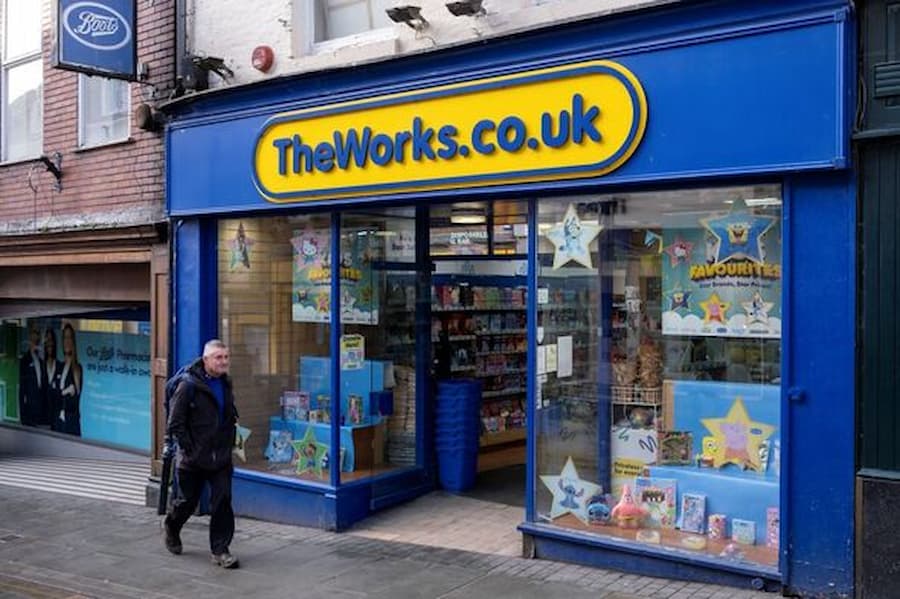
The decision by UK retailer The Works to exit e-commerce is drawing attention across the retail industry, highlighting a growing shift toward profitability over digital expansion.

After more than a decade of online operations, the company has chosen to close its e-commerce channel and refocus entirely on its physical store network – a move that challenges the assumption that online retail is always essential for growth.

Why The Works Is Leaving E-Commerce

The Works first launched its e-commerce platform in 2012, but online sales never became a core revenue driver. More than 90% of total sales continued to come from physical stores, reflecting strong in-store customer demand.

At the same time, maintaining an online operation introduced ongoing challenges, including:

  • high operational costs
  • dependency on third-party logistics
  • complexity in managing fulfillment

Over time, these factors made it difficult for the company to achieve sustainable profitability online.

Refocusing on What Works

By exiting e-commerce, the retailer aims to simplify its business model and improve financial performance. The move is expected to reduce costs and allow the company to concentrate on its strongest channel – its extensive store network.

Rather than serving as a transactional platform, the company’s website will now act as a product browsing tool, encouraging customers to visit physical stores to complete purchases.

A Strategic, Not Emotional Decision

Industry insight suggests that this move has been under consideration for some time. For retailers operating on tight margins, e-commerce can introduce more pressure than value if not executed at scale.

In such cases, focusing on a store-led strategy can offer:

  • greater control over costs
  • improved margins
  • stronger customer engagement in physical locations

A Wider Signal for Retail?

While global e-commerce continues to expand, The Works’ decision reflects a more nuanced reality:

👉 Digital is not always profitable
👉 Omnichannel is not always necessary

Retailers are increasingly reassessing whether their digital channels truly support long-term growth – or simply add complexity.

What This Means for E-Commerce

The closure of The Works’ online store does not signal a decline in e-commerce itself, but rather a shift toward more disciplined, profit-driven strategies.

As the retail landscape evolves, businesses are moving away from “being everywhere” toward focusing on channels that deliver real value.

For some, that may still be digital-first.
For others, like The Works, the answer is clear – back to stores.

Source: InternetRetailing

E-Commerce at Risk? 1 Critical WTO Decision Could Reshape the Digital Economy

E-Commerce at Risk? 1 Critical WTO Decision Could Reshape the Digital Economy

The global digital economy is approaching a decisive moment as the upcoming WTO Ministerial Conference (MC14) puts the future of digital trade rules under intense scrutiny.

At the center of discussions is the long-standing e-commerce moratorium, a policy that has prevented countries from imposing customs duties on electronic transmissions such as software, digital content, and cloud-based services.

For over two decades, this rule has supported the rapid expansion of global e-commerce by ensuring that digital trade flows remain largely frictionless. Now, however, WTO members are divided on whether to extend or terminate it – a decision that could significantly impact the future of cross-border digital commerce.

A Turning Point for Global E-Commerce

The continuation of the moratorium would maintain a stable and predictable environment for businesses operating across borders. It would allow companies – from large enterprises to emerging startups – to continue accessing international markets without additional cost barriers.

On the other hand, removing the moratorium would give governments the ability to introduce tariffs on digital products and services. This could increase operational costs for companies relying on:

  • cloud infrastructure
  • SaaS platforms
  • digital marketplaces
  • streaming and content distribution

Such changes may not only affect large corporations but also disrupt smaller players that depend heavily on affordable digital tools.

The Revenue Debate

Supporters of ending the moratorium argue that governments are losing potential tax revenue by not applying tariffs to digital goods.

However, studies suggest that the fiscal impact is relatively limited. In many cases, countries already collect revenue through mechanisms such as VAT or GST on digital services. As a result, the additional income generated from tariffs may not be as significant as anticipated.

Who Faces the Biggest Impact?

The potential introduction of digital tariffs could disproportionately affect:

  • small and medium-sized enterprises (SMEs)
  • developing economies
  • women-led digital businesses

These groups often rely on accessible and low-cost digital infrastructure to participate in global trade. Any increase in costs could reduce their competitiveness and limit their ability to scale internationally.

Beyond Tariffs: A Governance Challenge

The debate extends beyond taxation. It also raises broader concerns about the future of global trade governance.

The e-commerce moratorium has been one of the few unified frameworks within the WTO addressing digital trade. If it is removed, there is a risk of fragmented national regulations replacing a coordinated global approach.

This could complicate cross-border operations and create uncertainty for businesses navigating multiple regulatory environments.

What Comes Next?

As WTO members prepare for MC14, the outcome of this decision will play a defining role in shaping the next phase of the digital economy.

Whether the moratorium is extended or not, one thing is clear:
the rules governing global e-commerce are entering a new era – one that will determine how digital trade evolves in the years ahead.

Source: Diplomacy.edu

Babylonstoren Brings a New Luxury E-Commerce Model to South Africa in 2026

Babylonstoren Brings a New Luxury E-Commerce Model to South Africa in 2026

South Africa’s e-commerce landscape is evolving with the expansion of Babylonstoren into the digital retail space, introducing a curated marketplace model focused on premium products and brand-driven experiences.

Rather than following the traditional mass-market marketplace approach, Babylonstoren is building a platform centered on quality, exclusivity, and storytelling. The marketplace brings together carefully selected products across categories such as food, homeware, and lifestyle—creating a refined online shopping environment that reflects the brand’s premium positioning.

Moving Beyond Traditional Marketplaces

Most e-commerce platforms in South Africa compete on scale, pricing, and product variety. Babylonstoren, however, takes a different route by focusing on a curated commerce model, where product selection is limited and intentional.

This approach aligns with a broader global shift in e-commerce, where consumers are increasingly drawn to platforms that offer clarity, trust, and premium experiences rather than overwhelming choice.

A Marketplace Built on Brand Experience

One of the key innovations behind Babylonstoren’s marketplace is its emphasis on experience over transaction. The platform is designed not just to sell products, but to create a cohesive brand environment where presentation, content, and storytelling play a central role.

Instead of standard product listings, the marketplace highlights:

  • Carefully curated collections
  • Strong visual identity
  • Integrated brand storytelling
  • A seamless and premium user journey

This model mirrors the experience of high-end physical retail, translated into a digital format.

Controlled Ecosystem for Premium Brands

Unlike traditional marketplaces that standardize seller presence, Babylonstoren offers a more controlled ecosystem where products align with a consistent brand vision.

This creates a “closed marketplace” environment, ensuring that every product fits within the platform’s premium positioning. As a result, the marketplace avoids the fragmentation often seen in larger, open platforms.

Differentiation in a Competitive Market

South Africa’s e-commerce sector is becoming increasingly competitive, with major players focusing on scale and fast delivery. Babylonstoren differentiates itself by targeting a niche segment of consumers who value quality, authenticity, and curated experiences.

This strategy allows the platform to stand out without directly competing on price-focusing instead on brand value and customer experience.

A New Direction for E-Commerce in Africa

Babylonstoren’s move into e-commerce reflects a broader transformation in how digital retail is evolving across Africa. As consumer expectations grow, there is increasing demand for platforms that combine commerce, content, and brand identity.

By introducing a curated luxury marketplace model, Babylonstoren signals a shift toward more specialized and experience-driven e-commerce platforms in the region.

Source: MyBroadband

Africa Postal Transformation Gains Momentum: 5 Key Insights from the 44th PAPU Council

44th PAPU Council: 4 Strategic Moves Advancing Africa’s Postal Transformation

Africa’s postal sector is undergoing a major transformation as leaders gather in Kampala for the 44th Ordinary Session of the Administrative Council of the Pan-African Postal Union (PAPU). The high-level meeting brings together ministers, regulators, and industry stakeholders to redefine the future of postal services across the continent.

Once seen as a traditional mail delivery system, the postal industry is now evolving into a critical pillar of digital trade, logistics, and economic development. This shift is largely driven by the rapid growth of e-commerce and the increasing need for efficient last-mile delivery solutions.

From Mail to E-Commerce Infrastructure

Globally, the postal and courier sector is valued at over $400 billion, handling billions of items annually. Today, its role extends far beyond letters-serving as a backbone for e-commerce logistics, cross-border trade, and digital services.

In Africa, postal networks process more than one billion items each year, supporting small businesses and enabling access to wider markets. As online shopping grows, these networks are becoming essential in connecting digital transactions with physical delivery.

Driving Financial Inclusion and Accessibility

Postal systems are increasingly being used to expand financial inclusion, particularly in underserved and rural communities. By integrating digital payment solutions, postal infrastructure provides access points for individuals and small businesses to participate in the formal economy.

In countries like Uganda, post offices are being transformed into citizen service centers, offering government services and digital access to populations with limited internet connectivity.

Technology at the Core of Transformation

Emerging technologies are at the center of this transformation. Industry leaders emphasize the adoption of track-and-trace systems, digital addressing, and data-driven logistics to improve efficiency and transparency.

These innovations are helping postal operators meet modern consumer expectations, including real-time tracking, faster delivery, and reliable cross-border logistics.

Supporting Africa’s Trade and Integration

The modernization of postal networks is also aligned with broader continental initiatives such as the African Continental Free Trade Area (AfCFTA). By strengthening logistics and delivery infrastructure, postal services are playing a vital role in boosting regional trade and economic integration.

This positions the postal sector as a strategic enabler of Africa’s digital economy, supporting both local entrepreneurs and international commerce.

A Strategic Asset for the Digital Future

Experts at the PAPU session highlighted that postal networks are no longer just service providers but strategic national assets. They now sit at the intersection of logistics, digital connectivity, and public service delivery.

As discussions continue in Kampala, policymakers are expected to focus on practical strategies to modernize operations, enhance efficiency, and strengthen cross-border logistics systems.

The outcomes of this session are set to shape a more connected, inclusive, and resilient postal ecosystem-one that supports Africa’s rapidly growing digital economy.

Source: Ministry of ICT and National Guidance Uganda