WORLDEF ISTANBUL 2026 - Early Bird Registration Ends Soon

Register Now

Uzbekistan Targets 11% E-Commerce Share in 2026 as Digital Growth Accelerates

Uzbekistan Targets 11% E-Commerce Share in 2026 as Digital Growth Accelerates

Uzbekistan sets new e-commerce growth target

Uzbekistan is aiming to increase the share of e-commerce in its retail trade to 9–11%, as part of a broader strategy to accelerate digital transformation and modernize its economy.

The target was outlined during a government meeting led by President Shavkat Mirziyoyev, where new proposals were presented to strengthen the country’s e-commerce ecosystem.

Market shows strong growth momentum

Uzbekistan’s e-commerce sector has already experienced rapid expansion in recent years.

The market has grown nearly 20 times over the past eight years, reaching an estimated value of $1.3 billion, reflecting increasing consumer adoption and digital infrastructure development.

Despite this progress, e-commerce currently accounts for only around 4–4.6% of total retail trade, significantly below the global average of approximately 22%.

New strategies focus on infrastructure and customs reform

To support further growth, the government is focusing on improving logistics and trade processes.

A key priority is the development of bonded warehouse infrastructure, which allows imported goods to be stored under customs control with deferred payment of duties and taxes.

In addition, authorities are considering a system where customs duties are paid at the point of sale. This approach is expected to simplify trade operations and improve the investment climate.

Investment potential and global alignment

Officials estimate that the proposed reforms could attract up to $500 million in investment, supporting the expansion of digital commerce and related infrastructure.

Similar customs and logistics models are already widely implemented in countries such as China, the UAE, the United Kingdom, and Germany, indicating Uzbekistan’s alignment with global best practices.

Strengthening the digital economy

The initiative forms part of Uzbekistan’s broader efforts to develop its digital economy and increase the role of online commerce in overall economic activity.

With a young and increasingly connected population, the country is positioning e-commerce as a key driver of future growth, while continuing to invest in infrastructure and regulatory improvements.

Source:
https://menafn.com

Wildberries Enters Ethiopia in 2026 as Digital Trade Growth Surges

Wildberries Enters Ethiopia in 2026 as Digital Trade Growth Surges

Wildberries has officially launched operations in Ethiopia, opening its marketplace to local sellers and enabling them to reach international customers.

The move marks a significant step in the company’s expansion strategy, positioning Ethiopia as one of its first major entry points into the African e-commerce landscape.

Ethiopian products reach global audiences

Through the platform, Ethiopian businesses can now offer a wide range of goods to international buyers, including coffee, textiles, leather products, and handmade items.

The integration into the marketplace is expected to strengthen export potential for small and medium-sized enterprises while increasing global visibility for locally produced goods. It also provides sellers with access to a structured digital environment that simplifies cross-border trade.

Cross-border e-commerce gains traction

The launch reflects a broader trend of growing cross-border e-commerce activity, particularly in emerging markets.

By leveraging Wildberries’ logistics and marketplace infrastructure, Ethiopian sellers are able to access international markets more efficiently, reducing traditional barriers such as distribution complexity and limited reach.

Partnership supports digital economy development

The entry into Ethiopia follows cooperation with Ethiopian Investment Holdings, aimed at supporting the country’s digital economy and e-commerce ecosystem.

Through this initiative, Wildberries is contributing to improvements in logistics capabilities, technology transfer, and the creation of new opportunities for local businesses to scale beyond domestic markets.

Two-phase marketplace rollout

In its initial phase, Ethiopian products will be made available to international consumers through Wildberries.

A second phase is expected to introduce foreign sellers to the Ethiopian market, further expanding trade flows and strengthening the country’s position within global e-commerce networks.

Source

Dubai Free Zones Launch 4 Measures to Boost Business Stability

Dubai Free Zones Launch 4 Measures to Boost Business Stability

Dubai Integrated Economic Zones Authority (DIEZ) has introduced a package of measures aimed at supporting businesses operating across its free zones, as part of broader efforts to maintain economic activity and ease operational pressure.

The initiative applies to companies in major zones including Dubai Airport Freezone (DAFZ), Dubai Silicon Oasis (DSO), and Dubai CommerCity.

Measures focus on cost relief and flexibility

The newly announced support package includes a range of financial and operational incentives designed to improve liquidity and business continuity.

Key measures include:

  • Flexible rental payment options, including monthly instalments
  • Waivers on certain administrative and service fees
  • Deferred payment options for selected charges
  • Stable rental rates upon contract renewal

These steps are intended to reduce immediate financial pressure on companies while maintaining operational stability.

Part of a broader economic support strategy

The move follows Dubai’s wider economic support programme, which includes a AED 1 billion package introduced to strengthen business resilience amid ongoing regional challenges.

The measures are being implemented for a limited period, with the goal of enhancing flexibility and supporting both businesses and the broader economic ecosystem.

Supporting business continuity and investment

Authorities said the initiative is designed to ensure companies can continue operating efficiently while adapting to current market conditions.

Free zones play a key role in Dubai’s economy, offering benefits such as full foreign ownership, tax advantages, and streamlined business setup processes.

By introducing additional flexibility, Dubai aims to reinforce its position as a competitive global business hub and maintwain investor confidence.

Source

For more insights and updates on global e-commerce and business trends, read more on WORLDEF.

E-Commerce and Logistics Demand Is Driving the Packaging Tape Market

Packaging Tape

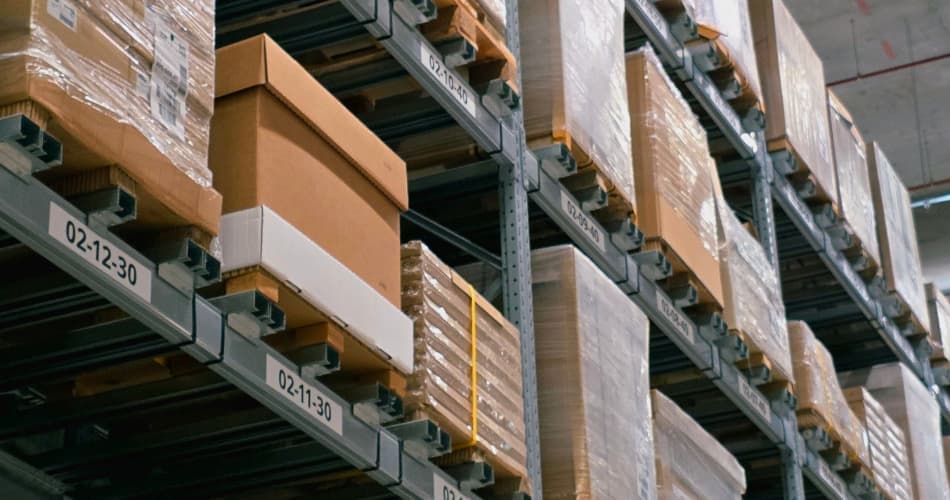
The global packaging tape market is gaining momentum alongside the growth of e-commerce and industrial logistics. According to recent reports, demand for sealing and strapping packaging tapes is expected to increase significantly by 2035. The rising volume of online orders and the expansion of global supply chains are emerging as the key drivers behind this growth.

Double-digit growth rates in the e-commerce sector are directly increasing the need for packaging materials. In recent years, the global e-commerce volume reaching the trillion-dollar level has dramatically expanded the scale of packaging processes. According to experts, each online order involves the use of more than one packaging material on average. This translates into continuously increasing demand for tapes, boxes, and protective packaging products.

The Packaging Tape Market İs Expected To Experience Sustained Growth Until 2035

According to IndexBox’s latest report on the global Sealing and Strapping Packaging Tape market, the market is entering 2026 with a broader demand base, more disciplined supply behavior, and a more regionally diversified supply architecture. The report forecasts long-term and steady growth in the packaging tape market. Demand is increasing more rapidly in regions with intensive logistics operations, while industrial production and warehousing activities are also among the factors supporting the market.

North America, Europe, and the Asia-Pacific regions hold the largest share of the market, while increasing e-commerce penetration in developing countries is creating new growth opportunities.

Efficiency and Durability Take Priority in Logistics

The transformation in the packaging tape market is not limited to volume growth. Companies are shifting toward more durable, environmentally friendly, and cost-efficient products. In particular, recyclable and sustainable materials are among the most important trends of the new era. In addition, packaging solutions compatible with automation systems are emerging as critical elements that enhance operational efficiency in warehouses and fulfillment centers.

A Small but Critical Component in the Supply Chain

Although packaging tape may seem like a small product, it plays a critical role in the uninterrupted functioning of global trade. As a fundamental component ensuring that every shipment is delivered securely, this product category is gaining strategic importance as e-commerce continues to grow. As the expansion of e-commerce and logistics sectors continues, the importance of essential products such as packaging tape will further increase. Despite its low visibility, this market will continue to play a critical role in the sustainability of global trade.

AI and Smart Labels Are Transforming $200B Retail and E-Commerce in Latin America

AI and Smart Labels Are Transforming $200B Retail and E-Commerce in Latin America

Retail in Latin America is entering a new phase one defined not just by growth, but by intelligence.

Artificial intelligence and smart labeling technologies are reshaping how products are priced, tracked, and sold, turning traditional retail environments into real-time, data-driven ecosystems.

At the center of this transformation are smart labels digital price tags and connected systems that go far beyond static product information.

From Static Retail to Real-Time Commerce

Retail has traditionally operated on fixed pricing, manual updates, and delayed decision-making.

That model is now being replaced.

With AI-powered systems and electronic labels, retailers can update prices instantly, respond to demand fluctuations, and optimize promotions in real time. This shift enables what industry leaders describe as dynamic commerce a model where operations are continuously adjusted based on data.

The result is a more agile retail environment where pricing, inventory, and customer experience are no longer disconnected.

Smart Labels as a Strategic Tool

Smart labels often powered by technologies like RFID, NFC, or digital shelf displays are becoming a key interface between products and data.

They allow retailers to:

  • Automate price changes across thousands of SKUs
  • Improve inventory visibility and tracking
  • Enable real-time promotions and personalized offers
  • Reduce operational errors and manual workload

More importantly, these labels create a bridge between physical stores and digital commerce systems, aligning offline retail with e-commerce logic.

This convergence is critical in a region where omnichannel strategies are rapidly evolving.

AI Is Redefining Decision-Making

Artificial intelligence is not just supporting operations it is redefining them.

Retailers are increasingly using AI to analyze consumer behavior, predict demand, and automate decisions that were once handled manually. From pricing strategies to shelf optimization, AI enables a level of responsiveness that traditional systems cannot match.

In Latin America, adoption is accelerating as companies aim to keep pace with global innovation and rising consumer expectations.

Why Latin America Is a Key Growth Region

The region’s e-commerce market is projected to surpass $200 billion, making it one of the fastest-growing globally.

This growth creates the perfect environment for innovation.

However, challenges remain fragmented infrastructure, logistics complexity, and varying digital maturity. AI and smart technologies offer a way to overcome these limitations by improving efficiency and reducing operational friction.

The Bigger Shift: Retail Becomes a Data Platform

The real impact of AI and smart labels goes beyond efficiency.

Retail is evolving into a data platform, where every product, shelf, and transaction generates actionable insights. The store is no longer just a sales channel it becomes part of a connected, intelligent system.

In this model, success is not defined by scale alone, but by how effectively businesses can turn data into decisions.

Source

Vietnam’s $31B E-Commerce Market Holds 85% Untapped Cross-Border Opportunity

Vietnam’s $31B E-Commerce Market Holds 85% Untapped Cross-Border Opportunity

Vietnam’s e-commerce market has reached a defining moment. Valued at $31 billion, it is one of the fastest-growing digital economies in Southeast Asia driven by high internet penetration, mobile adoption, and a new generation of online consumers.

But behind this rapid growth lies a striking imbalance.

An estimated 85% of cross-border e-commerce potential remains untapped, revealing a significant gap between Vietnam’s domestic success and its global reach.

A Market Growing Inward, Not Outward

Vietnam has all the ingredients of a global e-commerce exporter. Its manufacturing base is strong, its workforce is competitive, and its digital adoption continues to accelerate.

Yet most of this growth remains concentrated within national borders.

While local platforms and domestic demand are expanding, international channels where higher margins and long-term brand value exist are still underutilized. For a country deeply integrated into global trade, this disconnect is increasingly difficult to ignore.

The Missing Link: From Production to Brand

One of the core challenges lies in how Vietnamese businesses operate globally.

A large portion of exports still follows a contract manufacturing model, where products are produced locally but sold under foreign brands. This limits visibility, pricing power, and long-term value creation.

Cross-border e-commerce offers a different path one where companies can build their own brands, engage directly with consumers, and control the full customer journey.

But making that shift requires more than supply it requires strategy.

Logistics Still Defines the Limits

Despite progress, logistics remains the biggest constraint.

Cross-border delivery costs, customs complexity, and fragmented infrastructure continue to slow down international expansion. For many SMEs, these barriers create uncertainty, making domestic growth the safer option.

At the same time, limited experience in digital marketing, marketplace management, and international compliance further widens the gap.

In other words, the opportunity is clear but execution remains uneven.

A Shift Already in Motion

There are early signs of change.

Vietnamese sellers are increasingly entering global marketplaces, particularly in categories like fashion, home goods, and lifestyle products. Awareness around cross-border opportunities is rising, and more businesses are exploring direct-to-consumer models.

The mindset is evolving from exporting products to building global businesses.

Policy Could Be the Turning Point

Government initiatives may accelerate this transition.

With a new e-commerce law expected to take effect in 2026 and a broader digital economy roadmap in place, Vietnam is working to create a more structured and supportive environment for cross-border trade.

If these efforts translate into better logistics, clearer regulations, and stronger SME support, the country could unlock a significant portion of its untapped potential.

From Opportunity to Advantage

Vietnam does not lack demand, supply, or capability.

What it lacks at least for now is full alignment between its domestic momentum and global ambition.

Closing that gap could redefine the country’s role in global e-commerce. Because in today’s market, success is no longer about how fast you grow locally but how effectively you scale internationally.

Source

ENOC & 7X Partner to Unlock 5 New Digital Logistics Opportunities in UAE

ENOC & 7X Partner to Unlock 5 New Digital Logistics Opportunities in UAE

The UAE is taking another major step toward building a future-ready e-commerce logistics ecosystem. In a newly announced partnership, ENOC Group and 7X have signed a strategic agreement to accelerate digital transformation and last-mile innovation across the country.

The collaboration brings together ENOC’s extensive retail network with 7X’s logistics and transport capabilities creating new opportunities for faster, smarter, and more accessible delivery solutions.

A Strategic Move Toward Smarter Last-Mile Delivery

At the core of the partnership is a shared vision: improving last-mile efficiency, one of the most critical challenges in modern e-commerce.

As part of the agreement, both companies will explore integrating 7X’s logistics infrastructure such as pick-up and drop-off (PUDO) points and smart lockers into ENOC’s nationwide retail network.

This move is expected to significantly enhance customer convenience while reducing delivery times and operational complexity for businesses.

Expanding Digital & Retail Capabilities

The collaboration goes beyond logistics. It also includes joint initiatives across:

  • E-commerce and quick commerce (q-commerce)
  • Retail innovation and digital services
  • Transport-ready and logistics-enabled solutions

These areas highlight a broader shift in the region: blending physical infrastructure with digital ecosystems to create seamless customer experiences.

For ENOC, this aligns with its growing role as more than just an energy provider evolving into a retail and mobility platform. For 7X, it strengthens its position as a key enabler of logistics innovation in the UAE.

Why This Matters for E-Commerce

This partnership reflects a larger trend reshaping global commerce: the rise of hyper-local fulfillment and integrated logistics networks.

By turning everyday locations like fuel stations into logistics touchpoints, companies can:

  • Reduce last-mile delivery costs
  • Improve delivery speed
  • Increase accessibility for customers
  • Support omnichannel retail strategies

In markets like the UAE where consumer expectations for speed and convenience are rapidly increasing these innovations are becoming essential rather than optional.

A Glimpse Into the Future of Logistics

The ENOC–7X partnership signals a future where logistics is no longer a backend function, but a customer experience driver.

As digital infrastructure, retail networks, and logistics systems continue to converge, we can expect:

  • More decentralized delivery models
  • Increased use of smart lockers and PUDO systems
  • Stronger integration between online and offline commerce

Ultimately, the companies that succeed will be those that can combine technology, infrastructure, and customer-centric design into one seamless ecosystem.

Source

The Data Crisis in E-Commerce Deepens; Brands Are Seeking Solutions in AI

data

The long-standing notion in the e-commerce world that “data is gold” has now given way to a new problem: the inability to take action within an abundance of data. Recent research reveals that although large-scale brands are successful in generating data, they struggle to convert this data into meaningful business decisions.

Analyses conducted particularly on brands with revenues exceeding 300 million dollars show that teams are getting lost among dozens of dashboards and that decision-making processes are slowing down. While 56 percent of participants identify data trust and data quality as the biggest issue, 46 percent state that data cannot be turned into action.

The Agency Model Is Reaching Its Limits

The agency model, which has played a critical role in e-commerce operations for many years, is also at a serious breaking point. Although 76 percent of brands still work with agencies, the sustainability of this model is now being questioned.

According to the research, brands allocate 15 to 30 percent of their budgets to agencies. However, 55 percent believe that the results are not proportional to the cost, while 40 percent complain about the slow response times of agencies. Especially on platforms where algorithms change hourly, these delays lead to significant competitive losses.

AI Agents Are Becoming the New Standard

This situation is pushing e-commerce leaders toward new solutions. According to the research, 82 percent of companies plan to increase their AI investments in the next 12–18 months. Moreover, 71 percent are already familiar with or actively using AI agents.

Artificial intelligence stands out particularly in areas where speed is critical. Retail media optimization, product page content management, and demand forecasting are among the top investment areas leading up to 2026. Global research firms such as McKinsey and Gartner similarly predict that AI-powered decision systems can increase efficiency in e-commerce by 20–30 percent.

Trust and the Human Factor Remain Critical

However, the most important issue in the transition to AI is trust. The majority of e-commerce leaders remain cautious about “black-box” AI systems that lack transparency. While 82 percent of participants state that an integrated data structure is critical, 53 percent prioritize security and regulatory compliance.

In addition, 43 percent emphasize that human oversight must be part of the process. This shows that the future model will not be full automation, but rather “AI + human collaboration.”

The New Era Is Not About Data, But Action

In e-commerce, competition is no longer determined by who collects more da ta, but by who can turn that data into faster and more accurate action. Although artificial intelligence plays a critical role in this transformation, successful brands will be those that combine technology with the right strategy and human intelligence. In the coming period, the winners will not be those who increase the number of dashboards, but those who can turn da ta into meaningful decisions and actions.

E-Commerce Compliance Shift 4 Ways Fulfillment Rules Create Competitive Advantage

E-Commerce Compliance Shift 4 Ways Fulfillment Rules Create Competitive Advantage

Compliance is no longer just a regulatory requirement in e-commerce it is rapidly becoming a key competitive advantage. As fulfillment ecosystems grow more complex, especially across major platforms, operational precision and compliance are now directly tied to profitability and scalability.

From Back-Office Function to Growth Driver

In today’s e-commerce environment, compliance has moved beyond documentation and legal checks. It now plays a critical role in fulfillment performance, inventory flow, and overall business efficiency.

Errors in product preparation, labeling, or documentation can lead to penalties, delays, or even blocked inventory directly impacting revenue. In high-volume ecosystems, even small compliance gaps can scale into major operational risks.

The Hidden Cost of Non-Compliance

Non-compliance is no longer just a risk, it is a cost center.
Businesses that fail to meet fulfillment requirements often face:

  • Additional fees
  • Inventory disruptions
  • Reduced platform visibility
  • Lower customer satisfaction

These challenges highlight a key shift: compliance is not separate from operations, it is part of the core business model.

Fulfillment Complexity Is Increasing

As e-commerce platforms evolve, fulfillment requirements are becoming more detailed and strict. From packaging standards to inbound logistics rules, businesses must align with increasingly complex systems to operate efficiently.

This complexity is especially visible in marketplace-driven ecosystems, where standardized processes leave little room for error. Companies that adapt quickly can maintain smoother operations and stronger margins.

4 Ways Compliance Creates Competitive Advantage

Forward-thinking brands are now treating compliance as a strategic capability rather than a burden. By investing in systems, automation, and standardized processes, they are able to:

  1. Reduce operational friction
  2. Improve delivery speed
  3. Avoid costly penalties
  4. Scale more efficiently

In this context, compliance becomes a differentiator not just a requirement.

The Shift Toward Operational Excellence

The broader trend in e-commerce is clear: growth is no longer driven solely by demand or marketing, but by operational excellence. Compliance is a key pillar of that shift.

Companies that integrate compliance into their fulfillment strategy will be better positioned to compete in increasingly regulated and performance-driven marketplaces.

Read more on WORLDEF

Source: Forbes

ChatGPT Shopping Rise 50M Daily Queries Reshape E-Commerce Discovery

ChatGPT Shopping Rise 50M Daily Queries Reshape E-Commerce Discovery

OpenAI is transforming how consumers discover products online, positioning ChatGPT as a powerful new entry point for e-commerce. With millions of users already turning to AI for recommendations, the company is now introducing a more advanced and visually immersive shopping experience inside ChatGPT.

From Search to Conversation

Traditional online shopping often requires users to jump between tabs, compare multiple sources, and manually evaluate options. OpenAI is changing that model by turning product discovery into a conversation.

Users can now describe what they are looking for in natural language, refine their preferences interactively, and receive tailored product suggestions in real time. This significantly reduces the time and friction involved in decision-making.

Visual and Smarter Shopping Experience

The latest update introduces richer and more visual product browsing within ChatGPT. Instead of static lists, users can now explore products visually, compare options side-by-side, and access up-to-date information all within a single interface.

What previously required hours of research across different platforms can now be completed in seconds through AI-assisted discovery.

Powered by Agentic Commerce

At the core of this shift is OpenAI’s Agentic Commerce Protocol (ACP), which enables ChatGPT to deliver more relevant, accurate, and real-time product information directly to users.

This approach moves beyond traditional search engines, positioning AI as an active participant in the shopping journey rather than just a passive tool.

A New Discovery Channel for E-Commerce

ChatGPT is rapidly emerging as a significant product discovery channel. Reports suggest the platform processes around 50 million shopping-related queries daily, highlighting its growing influence in consumer decision-making.

This shift signals a major change for brands and retailers, who must now optimize not only for search engines but also for AI-driven discovery environments.

What It Means for Brands

As AI becomes a central interface for shopping, brands will need to rethink their digital strategies. Visibility within AI-driven platforms, structured product data, and accurate information will become critical for reaching consumers.

The evolution of ChatGPT into a product discovery engine reflects a broader trend: the convergence of AI, search, and commerce into a single, seamless experience.

Read more on WORLDEF

Source: OpenAI