
19 WTO Members Agree on Customs Duties in E-Commerce

Nineteen member countries of the World Trade Organization (WTO) agreed among themselves not to impose customs duties on e-commerce. The agreement came into effect on Friday, May 8. While Brazil maintained its four-year veto against the extension of the e-commerce moratorium, Türkiye reportedly withdrew its objection, having previously opposed the extension of the e-commerce moratorium. Experts emphasize that “the new agreement cannot replace the expired global e- commerce moratorium.”
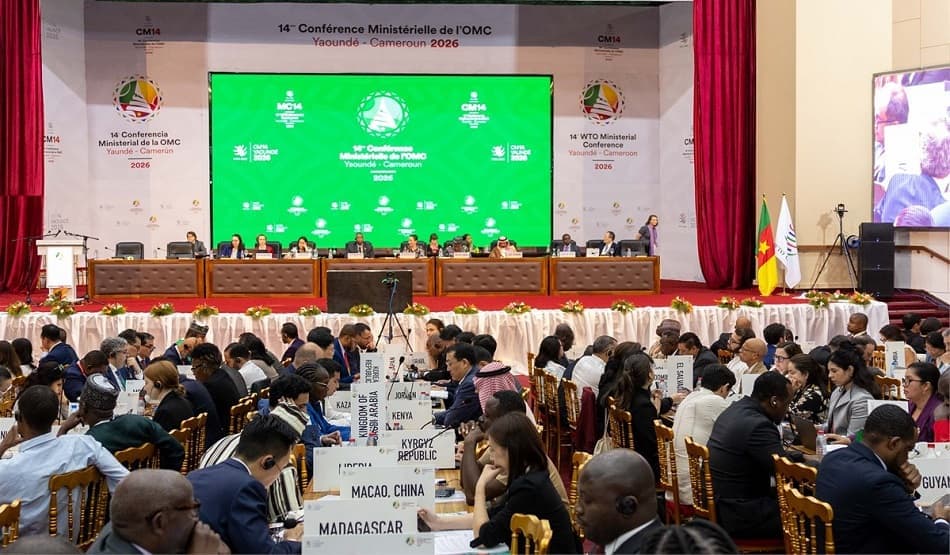
At a high-level WTO meeting held last March in Yaounde, Cameroon, the long-standing e-commerce moratorium on customs duties for cross-border streaming and downloads could not be renewed. At the WTO talks in Geneva on Thursday, May 7, an important step was taken regarding global e-commerce customs duties.
Brazil Did Not Step Back; Türkiye Withdrew Its Objection
At the talks in Geneva, 19 WTO countries launched an agreement among themselves on Thursday not to impose customs duties on e-commerce after no agreement could be reached to end the deadlock with Brazil. Brazil maintained its opposition to extending the global agreement for four years. A WTO member stated that Türkiye had withdrawn its previous objection. The 19 countries that reached the agreement include the U.S., Japan, South Korea, Singapore, Australia, Norway and Argentina.
What Is the E-Commerce Moratorium?
The moratorium, adopted in 1998 and regularly renewed since then, prevents the imposition of customs duties on cross-border electronic transmissions such as music or film streaming and software downloads. WTO members with large digital economies, such as the U.S., the European Union, Canada and Japan, argue that it provides predictability for global digital trade and want it to be made permanent.
The Agreement of 19 Countries Came Into Effect on May 8
At the talks in Geneva, 19 WTO countries announced that they had agreed among themselves not to impose customs duties on electronic transmissions for an unspecified period. The final text came into effect on May 8. The document stated: “Nonetheless, this group of Members remains committed to doing what we can to provide businesses and consumers with a measure of predictability and certainty in the absence of the multilateral E-Commerce Moratorium.”
At MC13 in March 2024, WTO members adopted the most recent ministerial decision on the issue, extending the practice of not imposing customs duties on electronic transmissions until the 14th Ministerial Conference or March 31, 2026, whichever came earlier.
What Does the New Agreement Mean?
The lapse of the WTO e-commerce moratorium weakens one of the longest-standing global understandings underpinning e-commerce. A 19-member agreement may preserve duty-free treatment among participating economies, but it also points to a more fragmented environment in which rules for electronic transmissions could increasingly depend on partial arrangements rather than WTO-wide consensus.
Read more on
Related
WTO E-Commerce Talks Stall as 66 Members Push Interim Global Digital Trade Framework
Surprise in the E-Commerce Moratorium: 23 Countries Reached an Agreement Among Themselves!
WTO Moratorium Debate Moves to Geneva After 14th Ministerial Conference Deadlock

Global Digital Trade at Risk as WTO E-Commerce Moratorium Collapses After 28 Years

The week in commerce, before your competitors.
1,463 stories since January 2025, distilled into three newsletters. Pick the ones you want.