Global e-commerce is entering a critical phase as WTO negotiations continue to stall, exposing deep divisions over the future of digital trade. While discussions remain unresolved, 66 member countries have taken a proactive step by advancing an interim framework to move forward without full consensus.
This shift signals a growing reality: global e-commerce can no longer wait for unanimous agreements. Instead, leading economies are beginning to shape the rules independently, accelerating the transition toward a fragmented but evolving digital trade system.
A Shift from Consensus to Coalition
The WTO has traditionally operated on consensus, but the current deadlock highlights the limitations of this model in a fast-moving digital economy. By pushing an interim framework, participating countries are effectively redefining how global e-commerce governance may evolve through coalitions rather than universal agreements.
With at least 45 members required for the framework to take effect, the initiative reflects both urgency and strategic alignment among key players in digital trade.
Why This Matters for E-Commerce
For global businesses, the implications are significant. A coalition-driven approach could lead to:
Faster implementation of digital trade rules
Increased regional alignment
Potential fragmentation in global standards
This creates both opportunities and risks. While companies may benefit from clearer rules in participating markets, differing frameworks across regions could complicate cross-border operations.
The Bigger Picture
The WTO’s stalled negotiations are not just a policy issue they reflect a broader transformation in how global e-commerce is governed. As digital trade grows faster than traditional regulatory systems, countries are being forced to adapt in real time.
The interim framework may not solve all challenges, but it marks a decisive step toward a new era of e-commerce governance one that is more flexible, faster-moving, and potentially more fragmented.
After World Trade Organization (WTO) members failed to reach an agreement on extending the long-standing e-commerce moratorium, a group of countries agreed among themselves not to impose e-commerce customs duties.
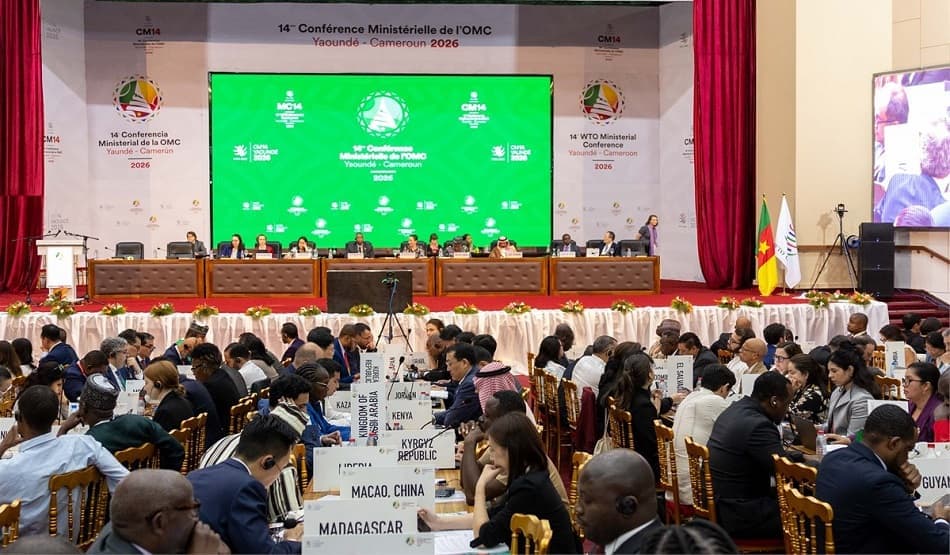
Days of talks were held among trade ministers of WTO member countries in Yaounde, the capital of Cameroon. The meeting broke up on Monday after Brazil and Türkiye blocked the attempt to extend the WTO e-commerce moratorium, which had been in place for 28 years.
23 Countries Signed the Agreement
According to a document seen on Thursday, a group of WTO member countries agreed among themselves not to impose e-commerce customs duties. The 23 countries that signed the e-commerce moratorium agreement included countries such as the United States, the United Kingdom, Japan, and Mexico. The WTO has 166 members, and consensus is required to conclude global negotiations.
The issue is expected to be raised again by the broader membership at a meeting to be held in Geneva in early May. It is still not clear whether any country has already introduced new duties that could apply to digital downloads and streaming services.
What Is the WTO E-Commerce Moratorium, and Why Does It Matter?
The e-commerce moratorium is a global agreement among World Trade Organization (WTO) members that prohibits customs duties on electronic transmissions such as digital downloads and streaming. This policy was established during the WTO’s Second Ministerial Conference held in Geneva in 1998 in order to promote digital trade.
It covers cross-border transmissions such as software downloads, e-books, music and movie streaming, and video games. The e-commerce moratorium, which was initially temporary, was renewed approximately every two years. It was most recently extended for two years at the 13th conference held in 2024. The e-commerce moratorium expired on March 31, 2026, when the 14th WTO Ministerial Conference held this month in Yaounde, Cameroon, came to an end.
Supporters of the extension, including major digital economies such as the United States, the European Union, Canada, and Japan, argue that it provides stability for global digital trade and protects businesses from new duties that could increase costs. More than 200 global business organizations called for the extension of the moratorium. They warned that its end would increase costs and hinder cross-border e-commerce.
Some developing countries, including Türkiye, India, and Brazil, opposed the extension. These countries argue that the e-commerce moratorium prevents them from obtaining customs revenue necessary for infrastructure and from addressing the digital divide. Research points to significant potential revenue losses for these countries; however, some studies show that these losses could be offset by other forms of taxation.
At the last conference, four proposals regarding the moratorium were presented: the African, Caribbean and Pacific Group requested a temporary extension, while the United States sought a permanent extension. Other groups proposed both permanent extensions and the establishment of committees on digital trade.
Differences over the period for which the moratorium could be extended caused the 14th Ministerial Conference in Yaounde to remain inconclusive. The driver of the idea of longer extensions beyond two years was the United States, which sought a permanent extension. Later in the negotiations, it reduced this demand to four years. Other members were willing to move along with the United States, but Brazil and Türkiye held their ground for only a two-year extension, which has been the norm since the moratorium was first imposed in 1998.
Deadlock Over the E-Commerce Moratorium in WTO Talks
The WTO’s 14th Ministerial Conference, which began on March 26 in Yaounde, the capital of Cameroon, ended on Monday, March 30, with an “e-commerce deadlock.” At the conference, talks were held among trade representatives and high-level officials from approximately 166 countries. Tense negotiations were conducted for four days.
Brazil objected to the e-commerce decision in protest over issues stemming from a separate debate related to agriculture. The e-commerce agreement was blocked at the last minute by Brazil. The United States had sought a permanent extension of the moratorium on taxes in such transactions, while Brazil requested an agreement for it to continue for only four more years.
WTO Director-General Ngozi Okonjo-Iweala also said that the United States and Brazil in particular “need more time” to resolve their disagreements over imposing duties on cross-border online orders.
A U.S. official, commenting on the talks, said, “This is not the United States versus Brazil. This is Brazil and Türkiye versus 164 members.” Brazil, meanwhile, accused Washington of “wanting the sky.”
E-Commerce Tariffs Will Be Discussed in Geneva
WTO representatives said that the talks will continue at the headquarters in Geneva until at least May. International Chamber of Commerce Secretary General John Denton said that failure to reach an agreement on e-commerce tariffs at the meeting “risks further increasing policy uncertainty at exactly the wrong time for the real economy.”
Denton said, “Now, a determined effort must be made to restart the talks in Geneva without delay. Reinstating the WTO’s e-commerce moratorium should be an urgent priority. Exposing digital services, one of the few drivers of global growth, to the threat of customs duty barriers makes no sense at all in an already fragile economic environment.”
India Backtracks: ‘We Are Open to a Longer Moratorium in E-Commerce’
Meanwhile, in a significant strategic reversal, India announced at the WTO that it is open to extending the moratorium on e-commerce taxation beyond the standard two-year period.
As part of this change in stance, India said at the World Trade Organization (WTO) that it is ready to consider extending the moratorium on taxation of cross-border electronic transmissions beyond the traditional two years, citing the need to provide predictability to businesses.
Commerce and Industry Minister Piyush Goyal said, “India’s stand was that we should look at a little longer period so that businesses can plan their business activities for a longer period. This is still under discussion among various countries, and will be finalized in the next one or two months in Geneva.”
India had been expressing the view that the moratorium in place since 1998 should not be extended. This position was also reiterated at the WTO General Council meeting held in December 2025. The e-commerce moratorium expired on March 31, 2026.
The future of global digital trade has become more uncertain after World Trade Organization members failed to extend the long-standing moratorium on customs duties for electronic transmissions. The breakdown came after four days of talks in Yaounde, Cameroon, ended without consensus, marking the first time in 28 years that the measure has expired.
Why the WTO E-Commerce Moratorium Matters for Global Trade
The WTO e-commerce moratorium has long prevented governments from imposing customs duties on digital products and transmissions such as software downloads, streaming services and other cross-border digital content. Its expiry now raises new questions for businesses operating in international e-commerce, especially as governments rethink how digital trade should be taxed and regulated.
According to the report, Brazil and Turkey blocked the proposal to extend the moratorium, despite efforts to bridge differences through both temporary and permanent renewal options. Several developing countries have argued that keeping the moratorium in place limits their ability to generate tax revenue from the growing digital economy.
Shift Toward Fragmented Digital Trade Rules
The United States responded by signalling that it may increasingly pursue digital trade arrangements outside the WTO framework. US Trade Representative Jamieson Greer said Washington would work with like-minded partners if the moratorium is not restored, adding that the US already has agreements with dozens of countries not to impose tariffs on American digital transmissions.
The failed talks also add to wider concerns about the WTO’s role in shaping modern trade policy. Analysts said the outcome reflects growing strain on the multilateral system, while industry voices warned that digital trade negotiations are becoming more politicised. At the same time, 66 WTO members agreed to move ahead with a baseline framework for digital trade rules, signalling that smaller plurilateral deals may become more common.
That shift could create new complications for global commerce. Experts warned that overlapping side agreements may lead to a fragmented trade environment, making compliance harder for businesses operating across multiple markets. For e-commerce players, the absence of a unified global approach could increase uncertainty around tariffs, digital market access and future cross-border trade rules.
WTO Director-General Ngozi Okonjo-Iweala said discussions would continue in Geneva, leaving the door open for a possible reinstatement of the moratorium. Still, the latest breakdown highlights a deeper divide between developed and developing economies over how digital trade should evolve and who should benefit from its growth.
For the global e-commerce sector, the message is clear: digital trade policy is entering a more fragmented and politically sensitive phase, and the WTO e-commerce moratorium may no longer be treated as a guaranteed pillar of the system.
The United States is intensifying efforts to make the World Trade Organization’s (WTO) long-standing e-commerce tariff moratorium permanent, a move that could significantly reshape global digital trade rules in 2026.
The moratorium, first introduced in 1998, prevents countries from imposing customs duties on electronic transmissions such as software, digital media and other online-delivered goods. While it has been renewed regularly, the current agreement is set to expire by March 31, 2026, unless WTO members reach a new consensus.
Washington is now pushing for a permanent extension of the moratorium ahead of the WTO’s upcoming ministerial conference. The proposal aims to provide long-term certainty for businesses operating in the digital economy, particularly those involved in cross-border e-commerce.
Supporters argue that maintaining a tariff-free digital environment is essential for sustaining global e-commerce growth. Without the moratorium, companies could face new costs and regulatory fragmentation, potentially slowing down international digital trade.
The U.S. position is backed by several developed economies and global technology firms, which see the moratorium as a key pillar supporting innovation, entrepreneurship and seamless digital transactions.
Rising Opposition from Developing Economies
Despite strong support from advanced economies, the proposal remains controversial. Several developing countries have expressed concerns that making the moratorium permanent could limit their ability to generate revenue from digital imports.
As more goods and services shift from physical to digital formats, governments risk losing traditional tariff income. For some developing economies, customs duties represent a significant share of public revenue, making the issue both economic and political.
Critics also argue that the current system disproportionately benefits countries with strong digital export capabilities, widening the global digital divide.
High Stakes for Global Digital Trade
The outcome of the negotiations will have far-reaching implications for the future of global e-commerce. If the moratorium is extended permanently, it could reinforce a stable and open digital trade environment.
However, if negotiations fail and the moratorium expires, countries may begin introducing tariffs on digital goods, leading to increased costs for businesses and consumers. Such a shift could fragment global digital markets and create new barriers to cross-border e-commerce.
Outlook: Uncertainty Ahead of WTO Decision
With the deadline approaching, WTO members face mounting pressure to find common ground. The debate reflects broader tensions within the global trading system, where balancing innovation, fairness and economic sovereignty remains a challenge.
As digital trade continues to expand, the decision on the e-commerce tariff moratorium will play a critical role in shaping the next phase of global commerce.